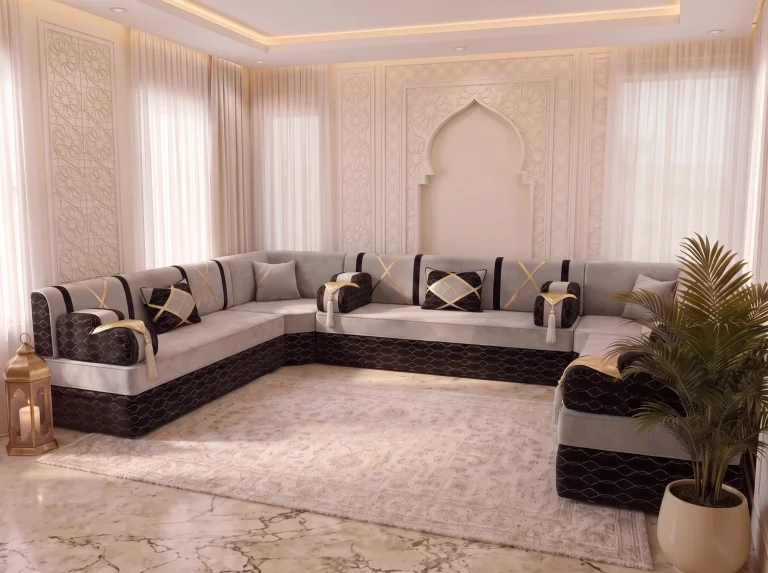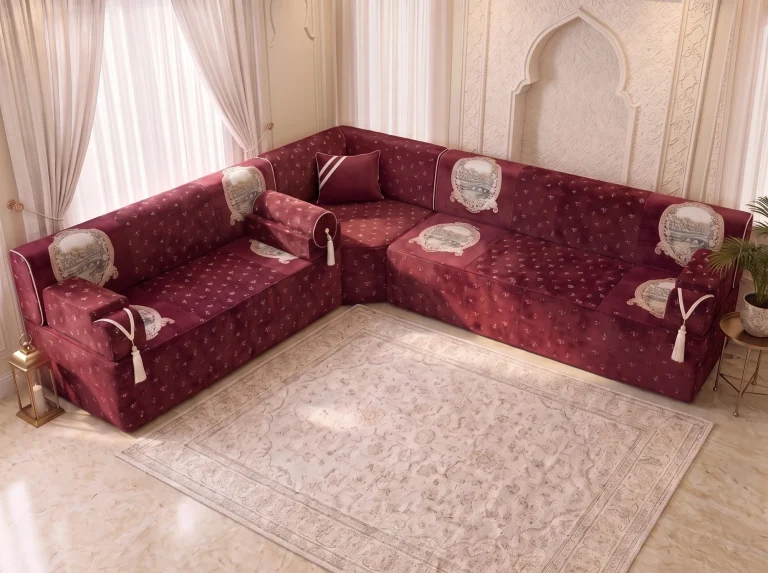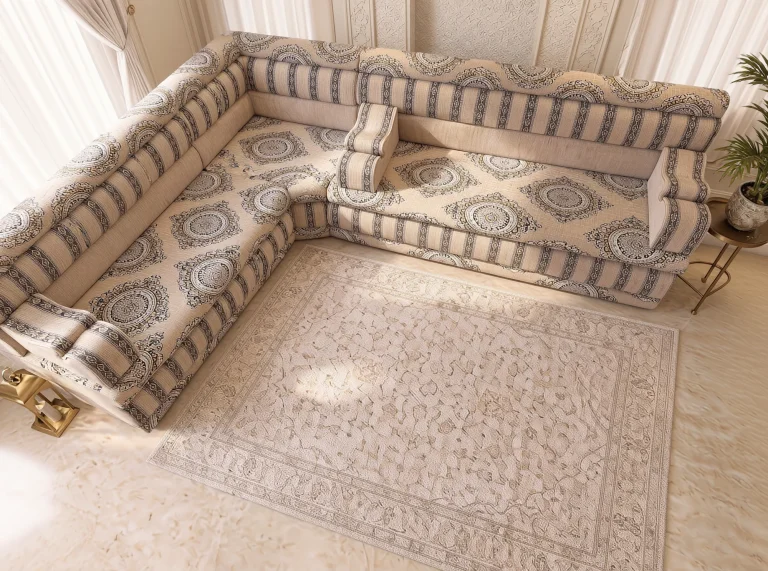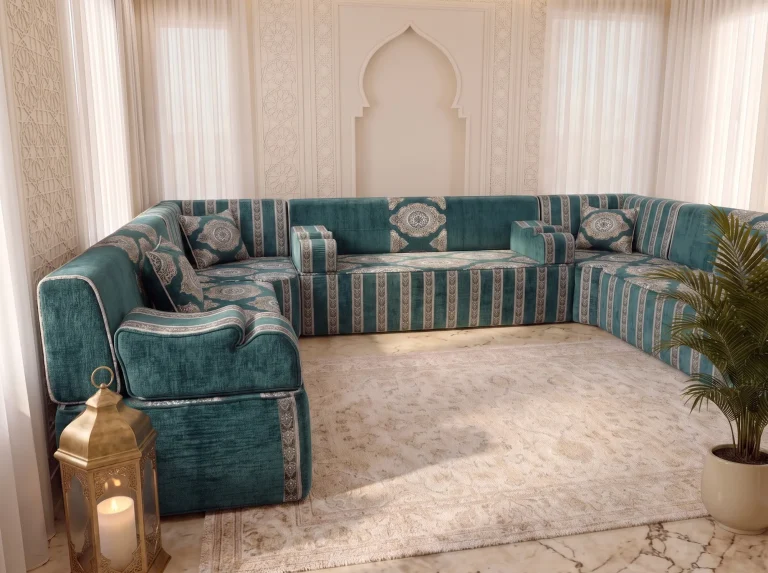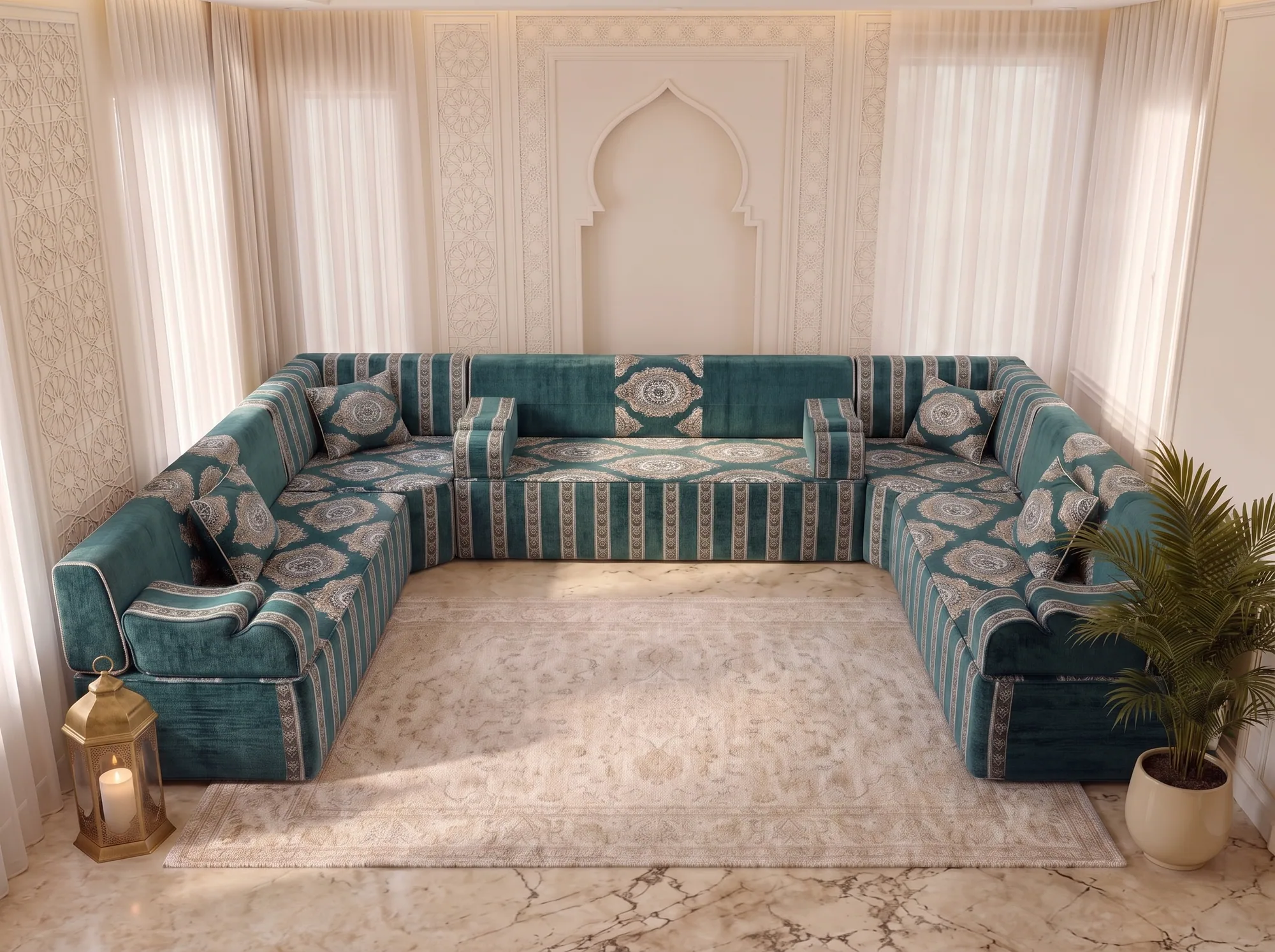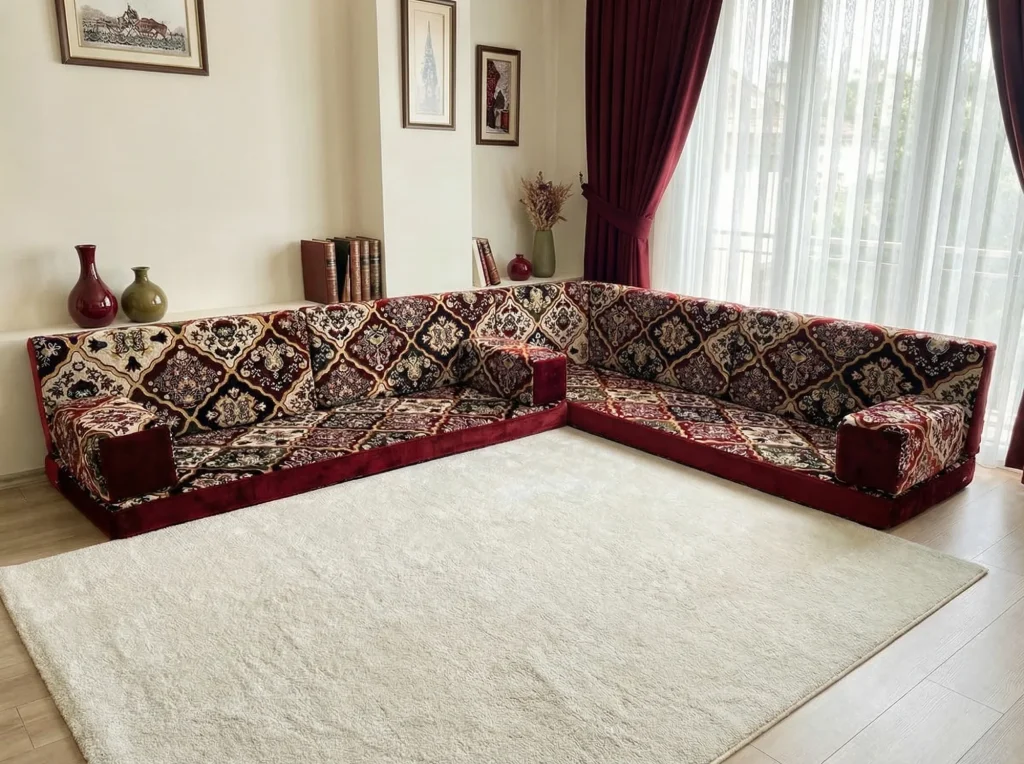
The difference between majlis and diwan is one of origin and place. Majlis is Arabic for a place of sitting and is the usual word in the Gulf. Diwan is Persian for a council and names a reception room in Yemen and a long seat in Türkiye. Jalsa means the seating set itself. Sofhu makes all of these forms to measure.
- Majlis
- Arabic: a place of sitting. Gulf, Saudi Arabia, Yemen
- Jalsa
- Arabic: a sitting. The seating set, Gulf and Levant
- Diwan
- Persian: council. Yemen, Iraq, Kurdistan, Türkiye
- Diwaniya
- Kuwaiti men's reception hall and its gathering
- Sedari
- Moroccan banquette on a wooden base
- Marbouaa
- Libyan guest reception room
- Sedir
- Turkish built-in raised seat
- Toshak
- Afghan floor mattress
On this page
The difference between majlis and diwan is the question that brings most people to this page, and the honest answer is that it depends on the country. The same custom of seating around the walls of a room is a majlis in Riyadh, a diwan in Sana’a, a diwaniya in Kuwait City and a marbouaa in Tripoli. Some of the names describe the room, some the gathering, some a single cushion. This glossary sorts them out, country by country.
The glossary table
Each entry below is expanded in the sections that follow. “Seat level” describes the tradition as documented, not what any one family does today.
| Name | Where | Literal meaning | Seat level |
|---|---|---|---|
| majlis (مجلس) | Gulf, Saudi Arabia, Yemen | Place of sitting | Floor or low |
| jalsa (جلسة) | Gulf and Levant shops | A sitting, a session | Floor or low |
| diwan (ديوان) | Yemen, Iraq, Kurdistan | Council, register | Floor |
| diwaniya (ديوانية) | Kuwait, Iraq | From diwan | Varies; little documented |
| mafraj (مفرج) | Yemen | Top-floor social room | Floor |
| madafa (مضافة) | Jordan, Palestine, Syria | Place of hosting | Floor |
| sablah (سبلة) | Oman | Community hall | Built-in benches |
| marbouaa (مربوعة) | Libya, western Egypt | Guest room | Little documented |
| sedari (سداري) | Morocco | Banquette | Bench height |
| sedir | Türkiye | Built-in wall seat | Raised |
| şark köşesi | Türkiye | Oriental corner | Floor or low base |
| poshti (پشتی) | Iran | For the back | Floor |
| toshak (توشک) | Afghanistan | Mattress | Floor |
Two things stand out. First, most of these words are not synonyms. A toshak is a mattress, a poshti is a backrest, a sedari is a wooden banquette and a diwaniya is an institution. Second, not every tradition is on the floor, which matters when you decide what height to order.
The difference between majlis and diwan
Majlis vs diwan comes down to language of origin and local habit.
Majlis is Arabic. It is formed from jalasa, to sit, and means the place of sitting. It is the broadest and safest word, understood everywhere Arabic is spoken, and it covers the room, the gathering and the furniture. Our page on majlis meaning in English goes through the grammar.
Diwan is Persian. It first meant a register of documents, then the office that kept them, then a council of state and the chamber it met in. The long cushioned seats lining that chamber took the name, and the word spread across the Ottoman world in both senses. So a diwan can be a room or a seat depending on where you stand:
- In Yemen, a diwan is a large reception room.
- In Kuwait and Iraq, the related diwaniya is a men’s reception hall.
- In Kurdish and Persian, a diwan-khane is a chief’s guest house.
- In Türkiye, a divan is a backless, legless sofa.
- In English, a divan is a long seat without a back, or a bed base.
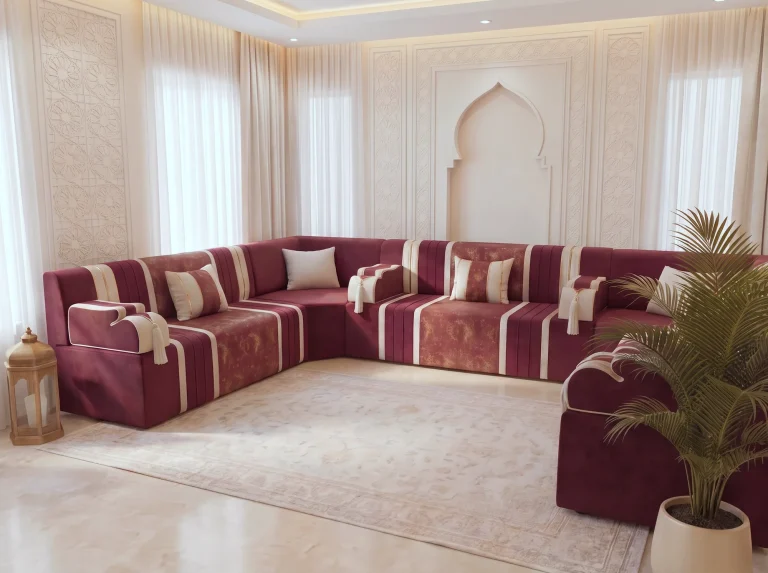
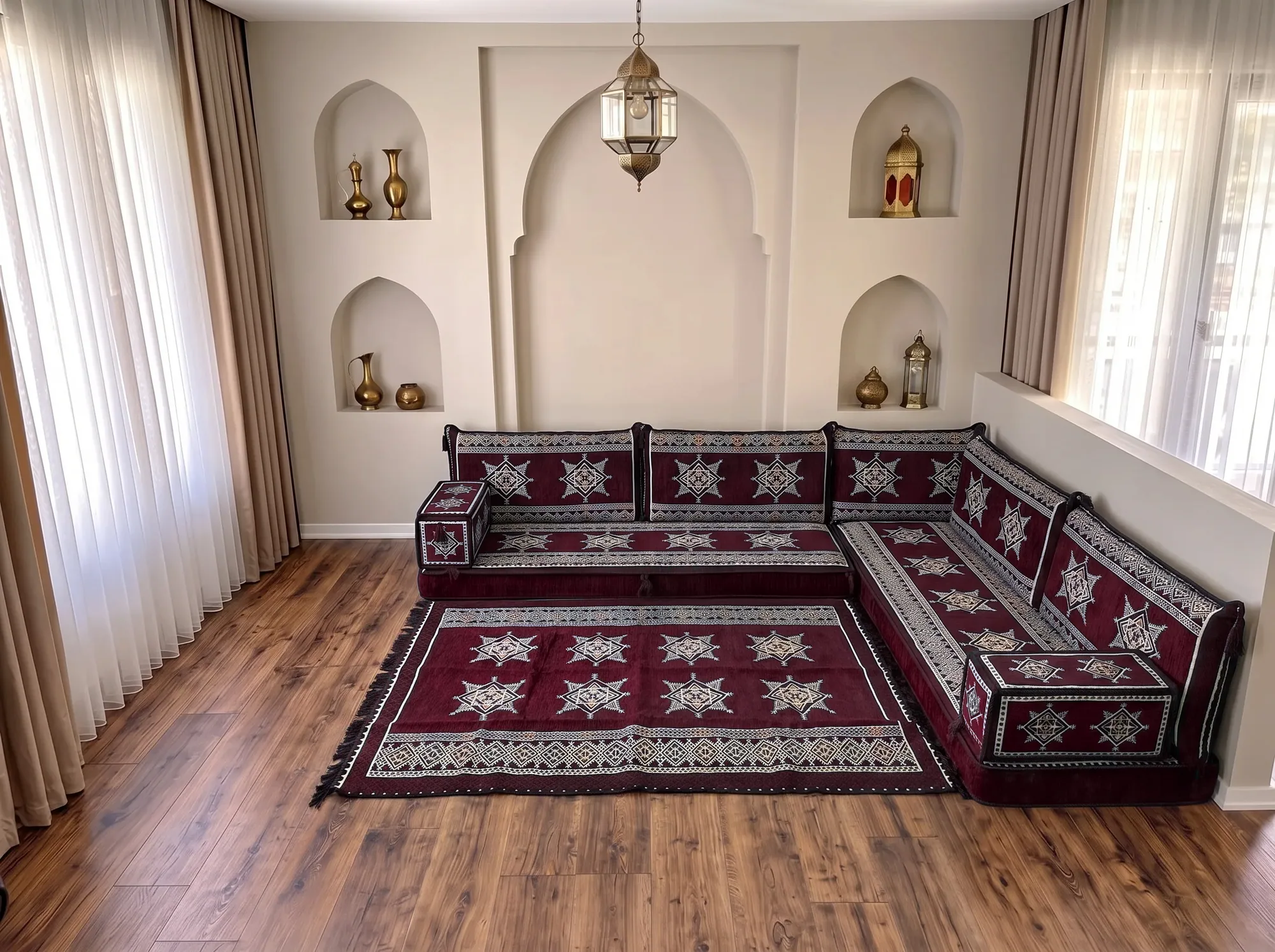
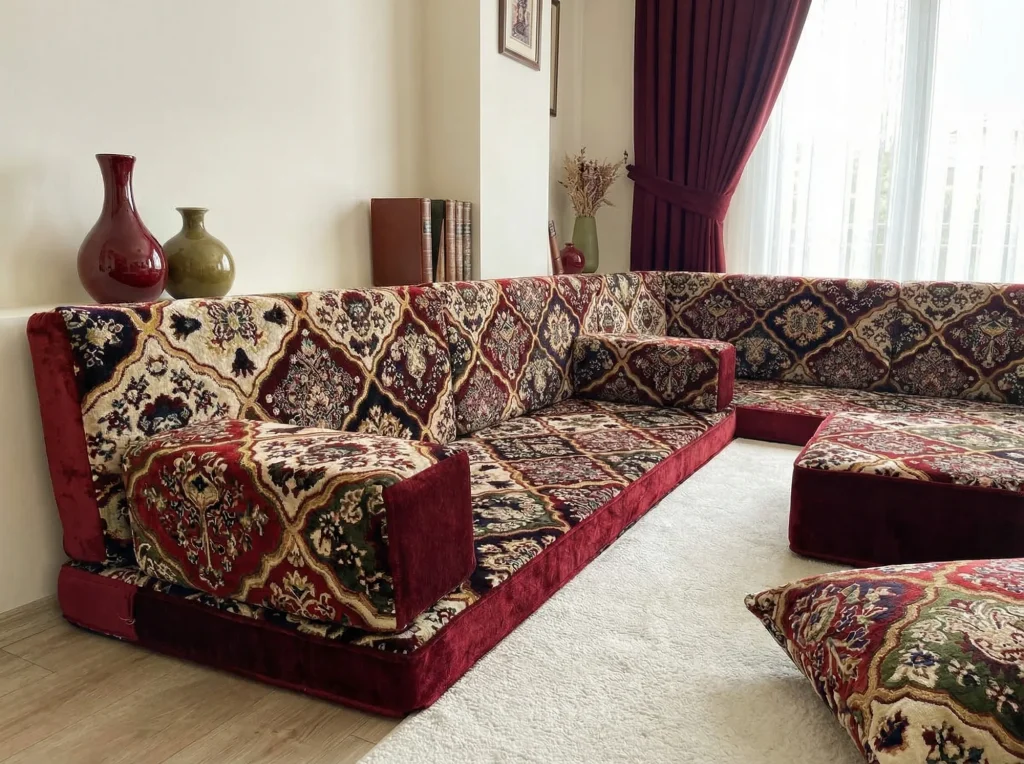
What is a diwan sofa, then? In today’s furniture trade it is a long, low, cushioned seat set against a wall. Sofhu uses the word for its own diwan floor sofas, the thick-cushion floor sofa models like the burgundy velvet one below. If a seller offers you a majlis and another offers a diwan, compare the layout, the foam and the fabric, not the label.
Gulf: majlis, jalsa and diwaniya
Across Saudi Arabia, the Emirates, Qatar, Bahrain and Oman, the room is a majlis. UNESCO describes it as typically a large space with carpets on the floor and cushions against the wall, with a stove or fire for coffee. The Saudi majlis, the Qatari majlis and the Bahraini majlis each have their own page.
Jalsa is the word shoppers use. It means a sitting or a session, and in Gulf and Levant retail it means the seating set itself, especially a low or floor one. Jalsa arabiya is “Arabic seating”. Majlis vs jalsa is therefore a question of emphasis: majlis points at the room and the custom, jalsa at the thing you buy. The hubs for the Arabic jalsa and the combined jalsa majlis cover the furniture, and the Emirati and Dubai jalsa page covers the Emirates.
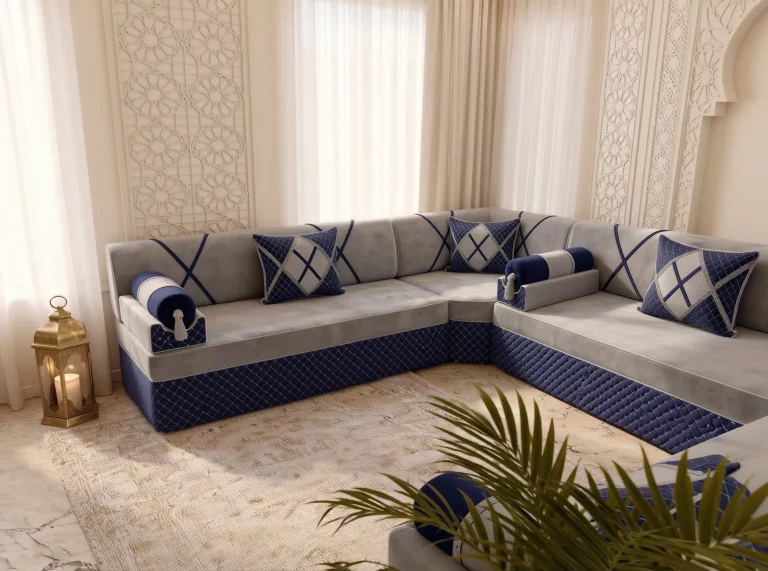
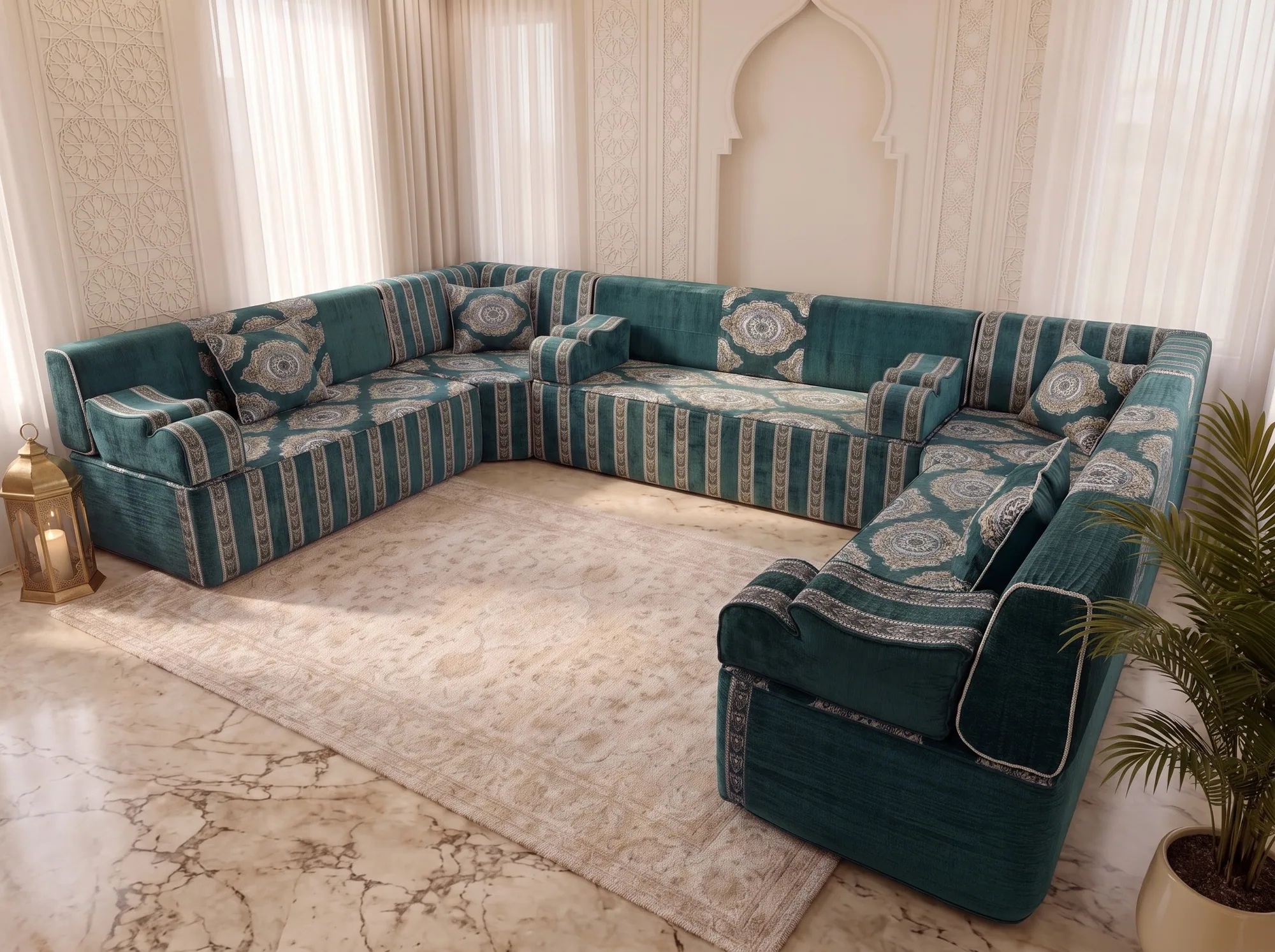
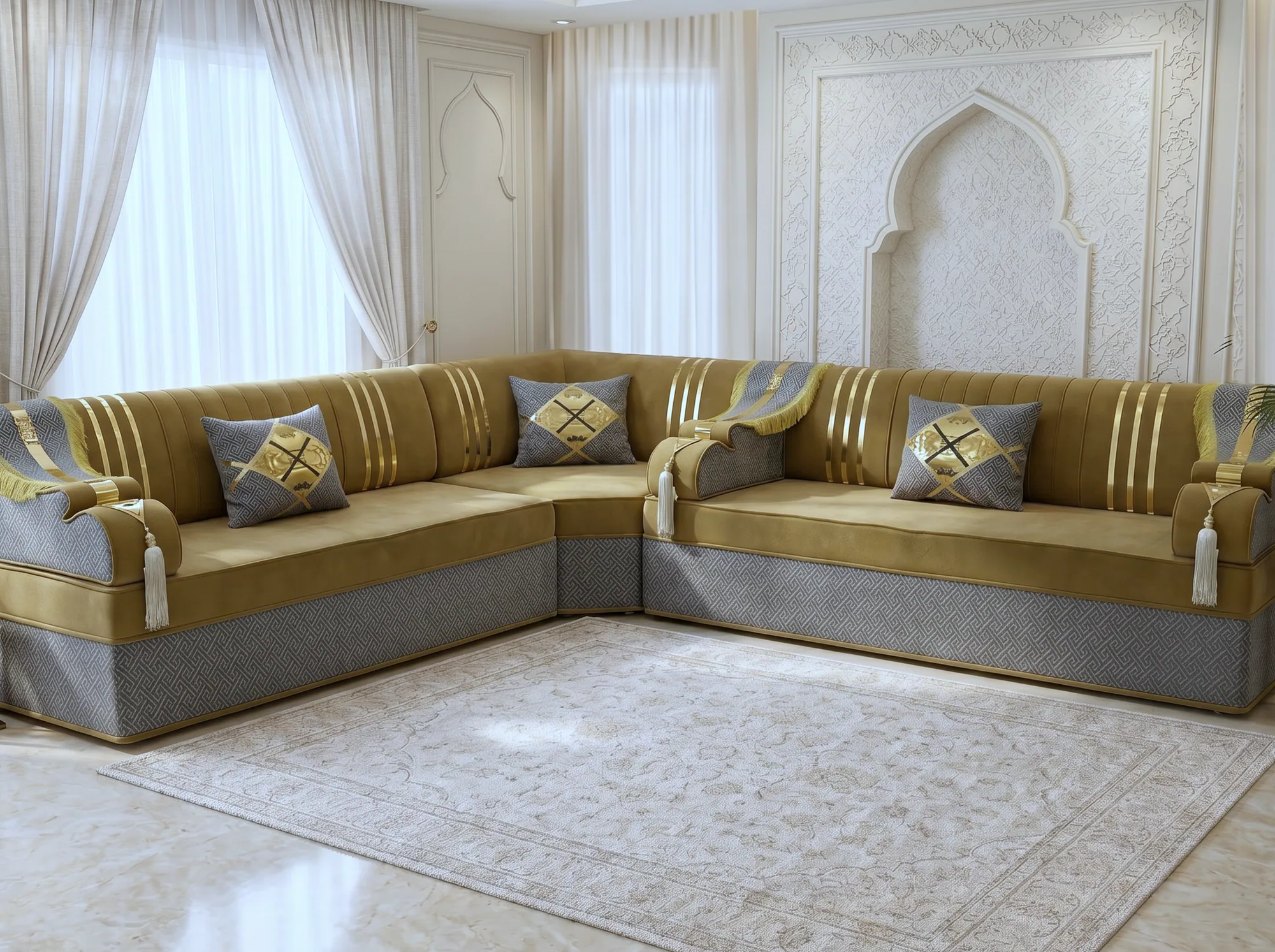
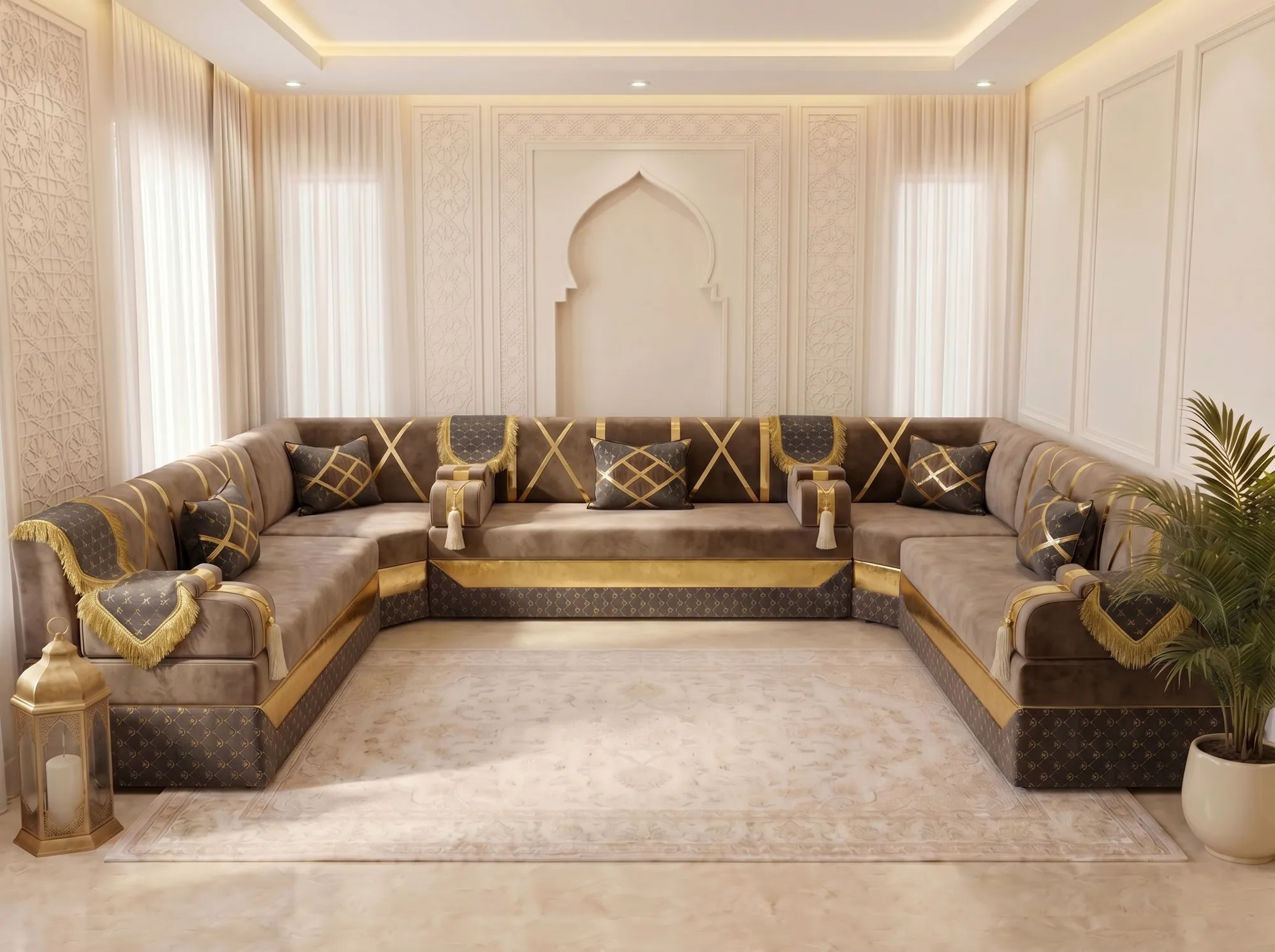
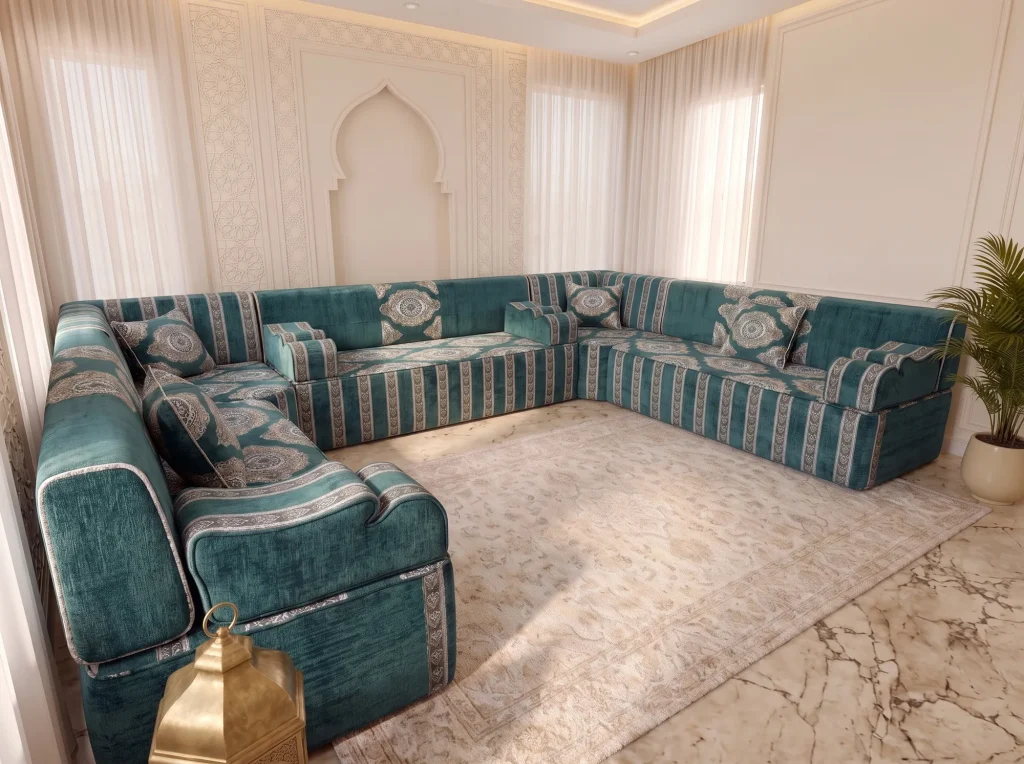
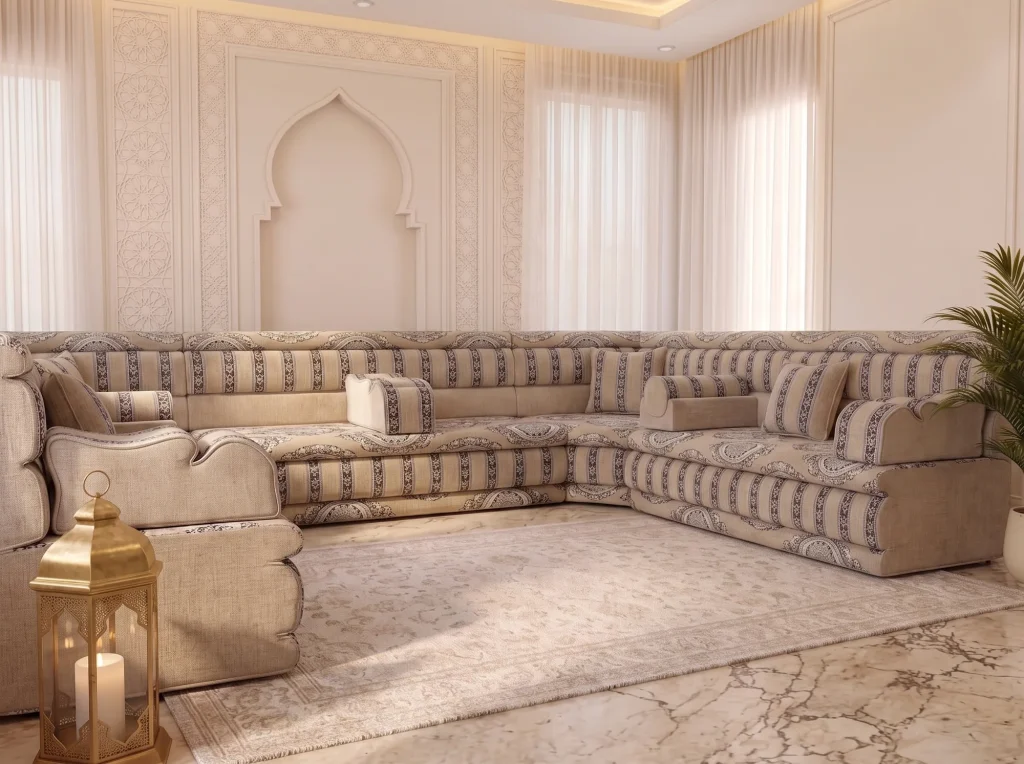
Sofhu’s own product names are narrower than the everyday words, because it makes two different things. Its Arabic majlis is raised, sofa-height seating in upholstered units with fixed backs and arm bolsters, like the teal set further down. Its Arabic floor sofa is the low cushion set at floor level, with loose back cushions, an ottoman and floor pillows.
Diwaniya is Kuwait’s word, and the diwaniya meaning goes beyond furniture. It is a reception hall that is part of the house but has its own door to the street, and it is also the regular evening when men gather there. The family diwan is usually a U-shaped hall with elders seated at the head. Election candidates tour diwaniyas, and casual ones host card games and televised sport. See the Kuwaiti diwaniya page. The word is also used in Iraq, where a sheikh in Anbar is quoted as saying a home is planned around the diwaniya first. The Iraqi diwaniya page adds the reed-built mudhif of the southern marshes.
Oman has one more word. The sablah is a communal hall where elders meet and settle local disputes. It is described as a sparse room with benches built into the walls, so it is a neighbourhood space with fixed seating, not a family room with cushions. The Omani sablah and majlis page explains how a floor or bench set relates to it.
Yemen: diwan and mafraj
Yemen uses three words for rooms in the same house.
The mafraj is the top-floor room of a Sana’a tower house, with low windows on three sides and coloured glass fanlights above. It is where friends and family sit in the afternoon and early evening, and it is often the most ornate room in the building. The diwan is a sitting room in the same kind of house, usually the larger one, used for bigger occasions. Majlis is understood and used too, and it is the word many Yemeni families abroad use when they look for seating.
The afternoon gathering itself has a name, the maqil. It is long and unhurried, which is why families ordering a Yemeni set care most about seating that stays comfortable for hours.
Read more on the Yemeni diwan and mafraj page, or see Sofhu’s existing Yemeni majlis range.
Levant and Egypt: madafa, qa’a and mandara
In Jordan, Palestine and Syria the guest hall of a family, clan or village is a madafa, from the word for guest. The seating sold there today is called jalsa arabiya or qa’da arabiya, and it comes as a kit of seat mattresses, backrests and armrests. The Jordanian and Palestinian madafa page describes it.
Old Damascus houses had a formal reception room called the qa’a. Guests left their shoes in a small lower antechamber and stepped up to a raised seating area that was carpeted and lined with a low sofa and cushions. So the Levantine tradition is low, but on a platform. See Syrian and Levantine Arabic seating.
In Egypt the ground-floor room for receiving male visitors is the mandara. Nineteenth-century accounts describe a raised dais around three walls, covered with rugs or mattresses, on which guests reclined. The Egyptian Arabic seating page covers the modern qa’da arabi corner.
North Africa: sedari, marbouaa and salon
The sedari meaning is specific: it is the wooden banquette of a Moroccan salon. A sedari is a frame, often carved, with a fitted seat mattress on top and back cushions behind. The set occupies most of the walls of the room and faces a low round table, because meals are eaten there. The fitted fabric covers are called tlamet.
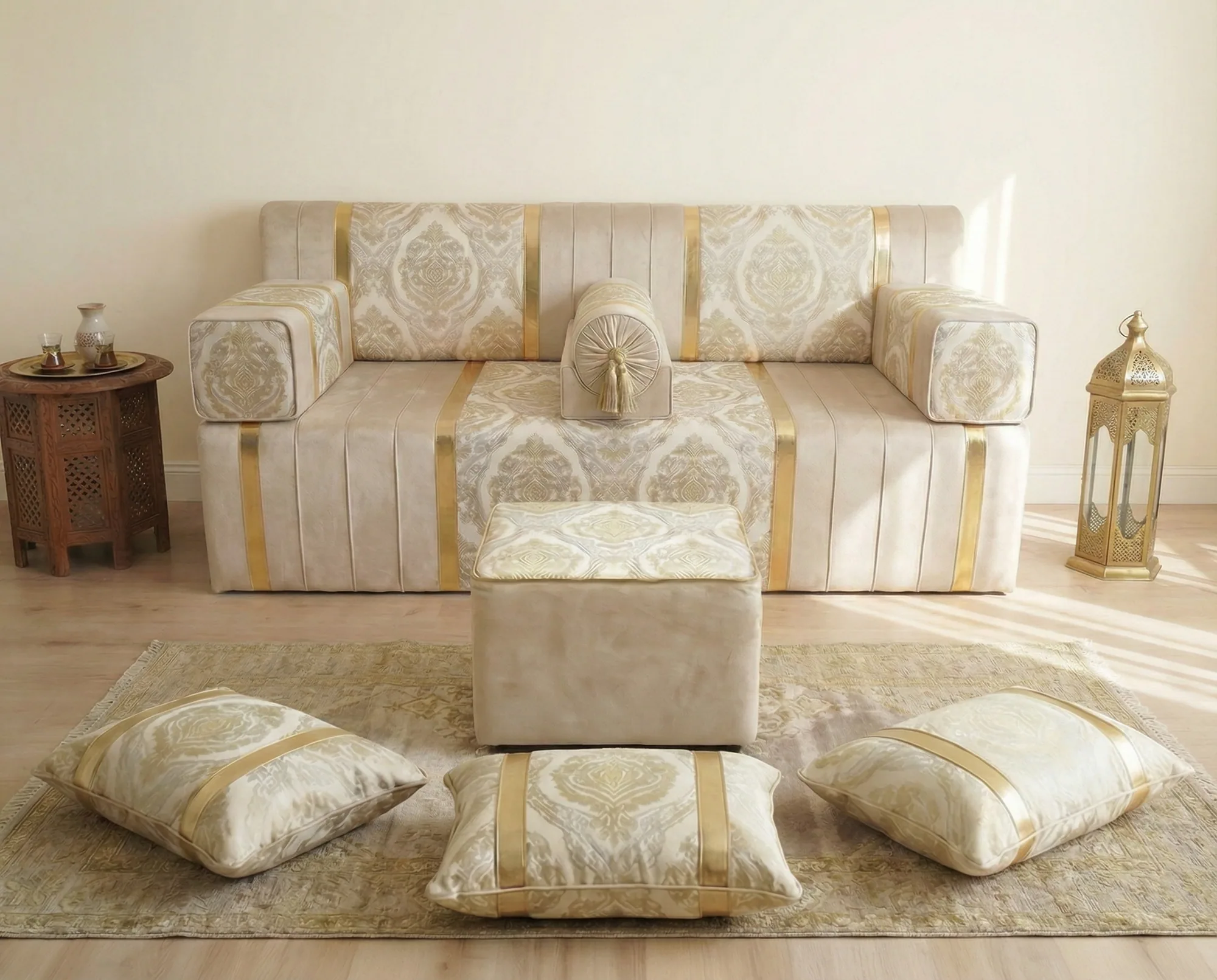
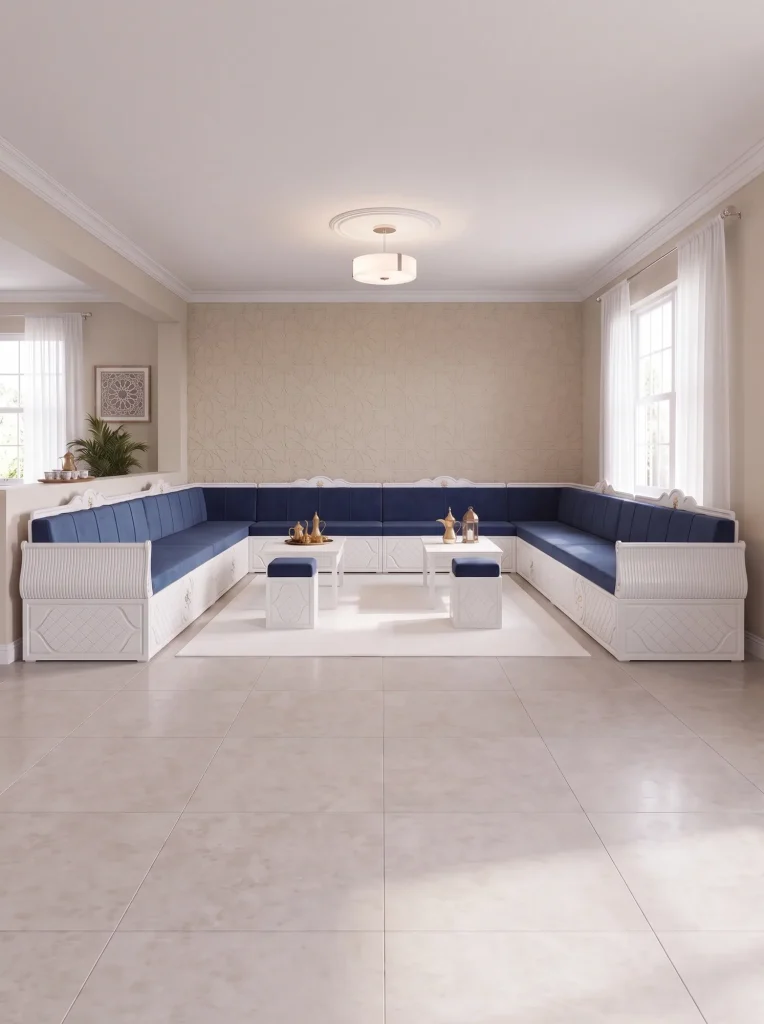
This is the clearest contrast in the whole glossary. Moroccan seating is at bench height on a wooden base, made to measure for the room, and centred on a dining table. Gulf seating is traditionally low and centred on coffee. The Moroccan sedari page explains how a raised set matches the salon tradition; the white-framed majlis below is the nearest form Sofhu makes. In French-speaking shops, Algerian and Tunisian families tend to search for salon oriental or salon arabe; see the Algerian salon oriental and Tunisian majlis pages.
Marbouaa (also marbu’a) is the Libyan word for the guest reception room, and it is used in the Siwa oasis of western Egypt for the men’s social room. The Libyan marbouaa page covers it.
Further south, Sudanese homes traditionally seat and sleep guests on the angareb, a low wooden frame strung with rope. It is at bed height, not on the floor. The Sudanese seating page is frank about how a floor set fits alongside it.
Türkiye, Iran and Afghanistan: sedir, poshti and toshak
East and north of the Arab world the words name parts more than rooms.
The Turkish sedir is a raised seat built against the wall of a traditional house, often under the windows and on up to three sides, with cushioned backrests. It is architecture, made when the house is built. Seating order on a sedir signals status, and the place of honour is the corner farthest from the door. The modern retail cousin is the şark köşesi, the “oriental corner”: a set of large firm cushions on a low base or directly on the floor, usually in a kilim-pattern fabric. See the Turkish sedir page and Sofhu’s carved-frame Turkish majlis.
The Persian poshti is a backrest. Traditionally it is a small hand-knotted carpet, stuffed and stood against the wall, with a thin seat pad in front and a large carpet on the floor. The name means “for the back”. See Persian poshti seating.
The Afghan toshak is a mattress. It lines the walls, serves as seat and bed, and is leaned against with a loose bolster called a balesht. There are no fixed armrests. Our explainer on what a toshak is and the Afghan toshak style page go further, and Sofhu’s existing Premium Afghan Toshak page shows the range.
Two more names belong here. In Kurdish the chief’s guest house is the diwanxane, covered on the Kurdish diwan page. And the oldest form of all, the goat-hair tent with rugs and cushions around a coffee hearth, is described on the Bedouin majlis and sadu page.
Which word to use when you shop
Use the word your family uses. A maker who knows the traditions will understand it. A few practical points help the conversation.
- Say floor-level or raised. This is the real dividing line between the traditions. Gulf, Levantine and Afghan seating is traditionally low or on the floor, while a sedari or sedir sits on a wooden base. Sofhu makes both: the floor sofa for the first, the raised majlis and wooden bench sets for the second.
- Say how the room is used. A room for long afternoon gatherings needs a place and an armrest for each sitter. A salon where meals are served needs a seat height that suits a table.
- Give the wall lengths. Sofhu is a manufacturer and cuts every set to the customer’s measurements. Floor sofas lean against the wall behind them, so the walls decide the layout: single row, L-shape or U-shape.
- Ask about the foam. Sofhu seats are filled with 32 kg/m³ (32 DNS) high-density foam, with a softer or firmer feel available on custom orders.
Sets are made in Türkiye and shipped free worldwide. Duties or taxes may apply depending on the destination, and you can ask about that before ordering. For an overview of the furniture under its English names, see Middle Eastern sofas. To start an order, send your measurements through the quote page or on WhatsApp.