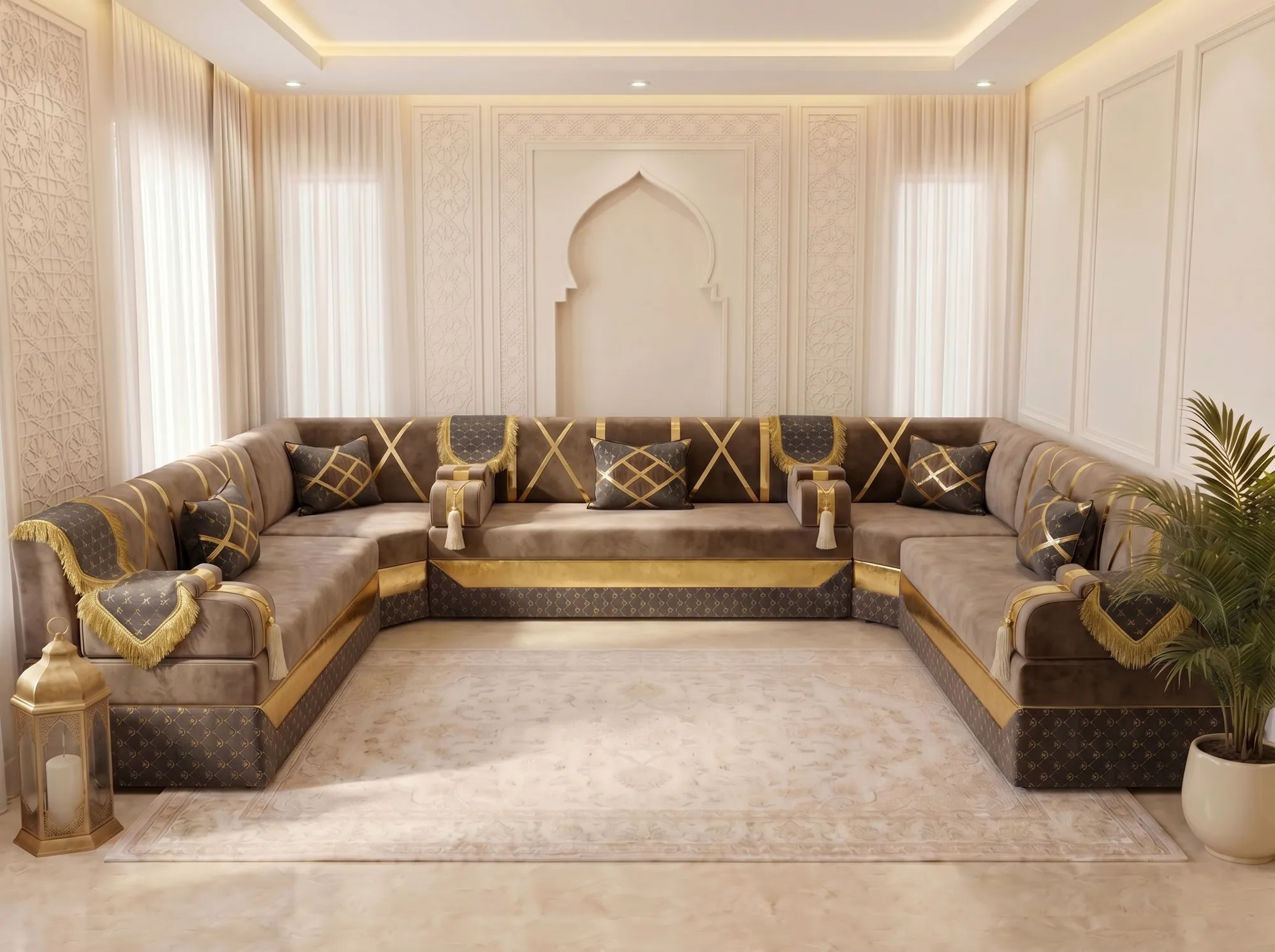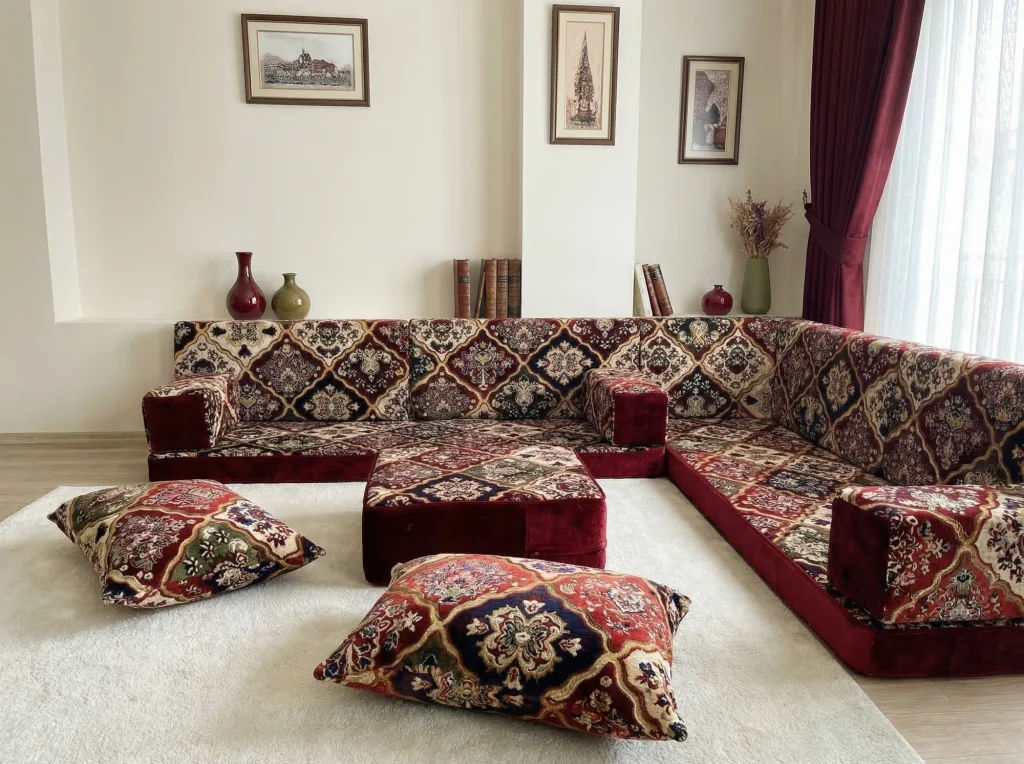
A Kurdish diwan, or diwanxane, is the guest house or guest room where a host receives visitors for tea, discussion, song and storytelling. A Kurdish sofa in this sense is low seating placed around the walls of that room. Sofhu makes such floor sofa sets in Türkiye to your wall measurements, with 32 kg/m³ foam and free worldwide shipping.
- Kurdish
- دیوەخان / dîwanxane (diwanxane, diwan-khane, diwakhan)
- Meaning
- Guest house or guest room of a host or chieftain
- Used for
- Tea, community matters, singers and storytellers
- Seating record
- Not documented in sources we could find
- Layouts
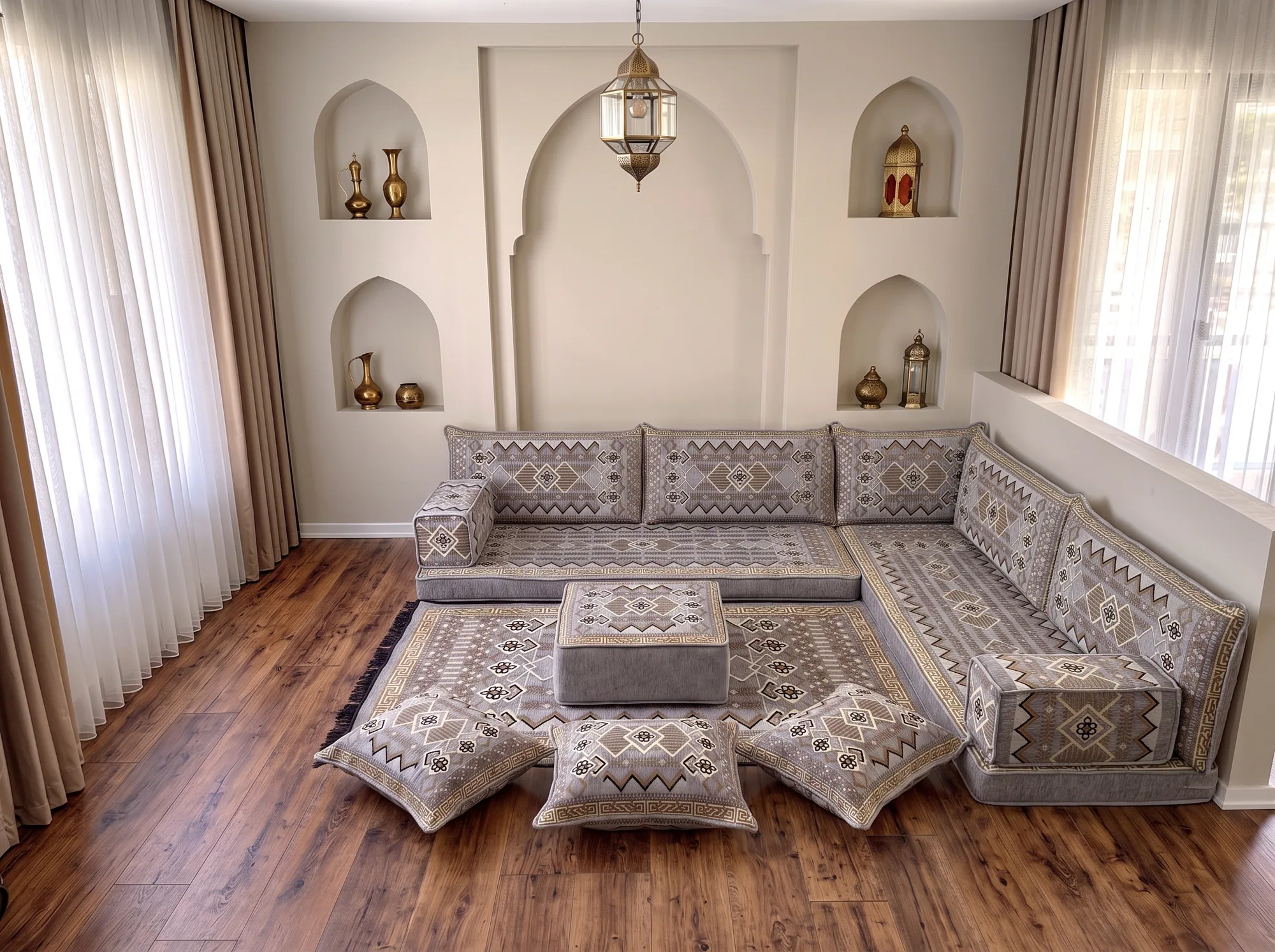
- Single row, L-shape or U-shape along the walls
- Filling
- 32 kg/m³ (32 DNS) high-density foam, no springs
- Sizes
- Cut to your wall measurements
- Shipping
- Free worldwide from Türkiye
On this page
A Kurdish sofa, in the sense most people mean when they search for one, is the seating of the diwan: low, lining the walls, and made for a room full of guests. The diwan itself is better recorded than its furniture. This page gives the short answer first, then what is known about the Kurdish diwanxane, what is not, and how to plan a set for your own home.
Kurdish sofa and Kurdish diwan: the short answer
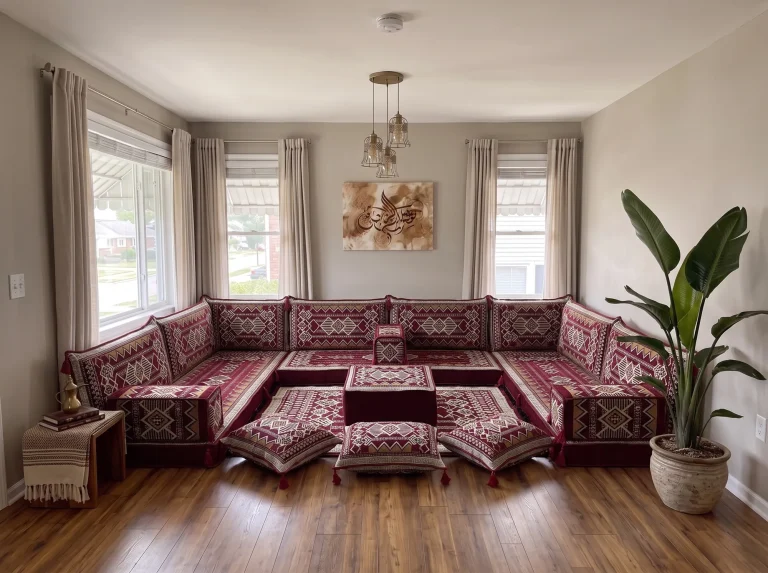
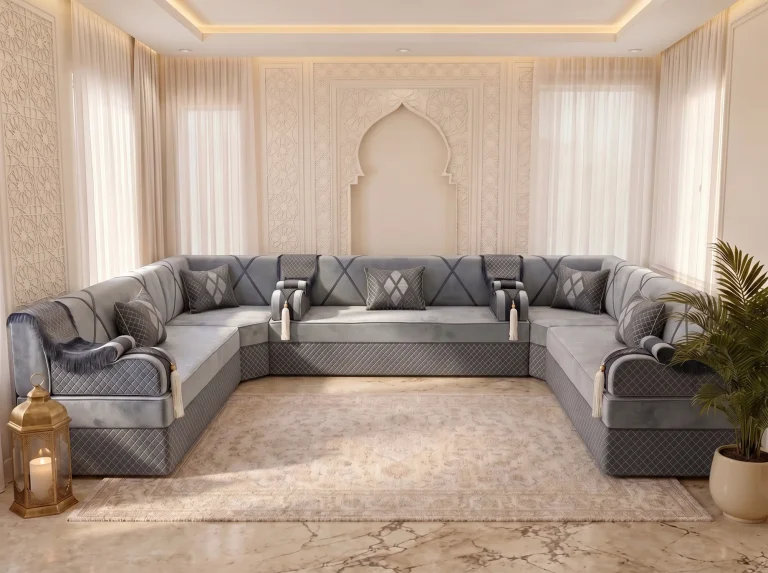
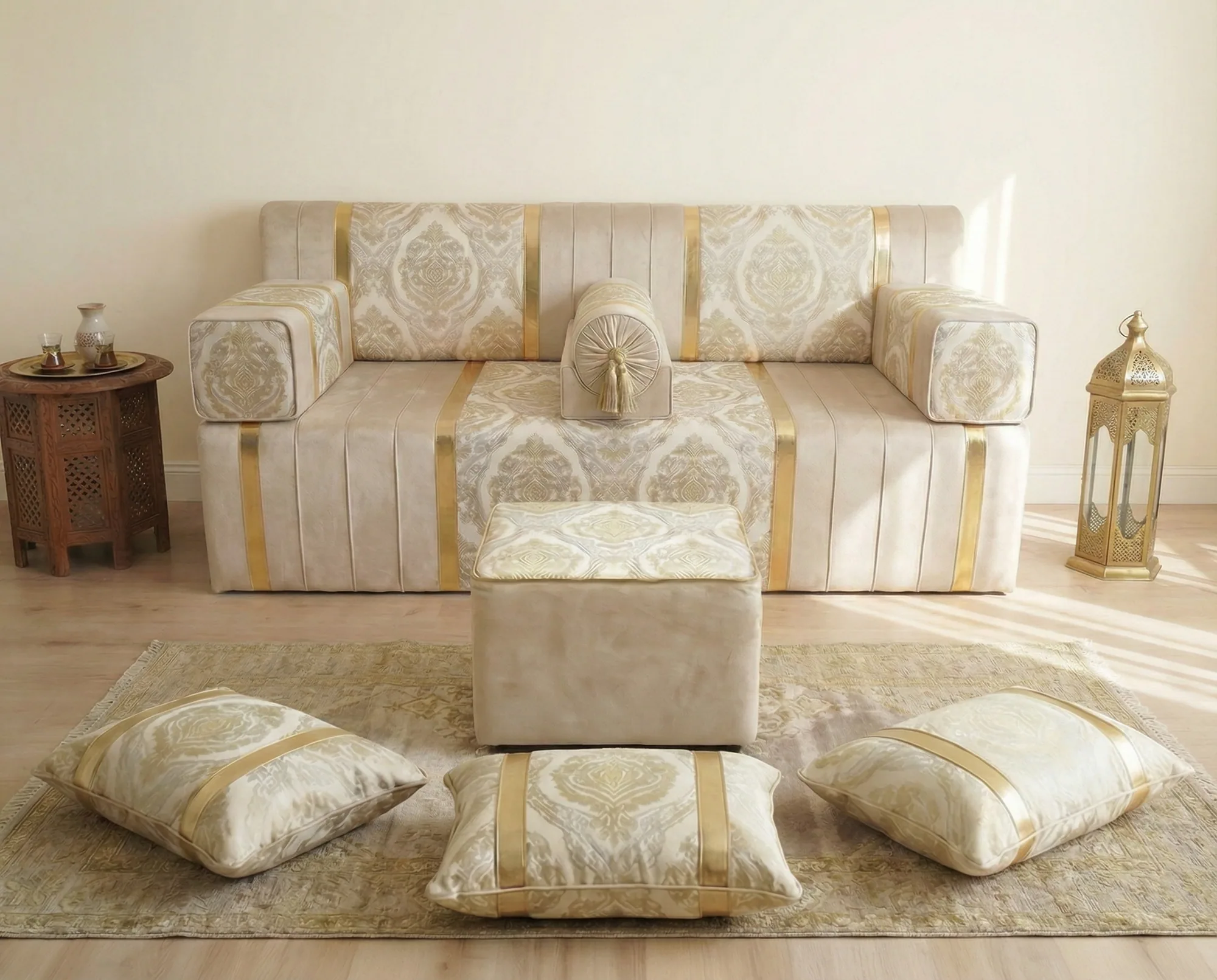
If you want a Kurdish diwan at home, you want perimeter seating: seat cushions along the walls, backrests behind, and the middle of the room open for the tea tray. That is what Sofhu builds, to the length of your walls. It builds it two ways. The Arabic floor sofa, a low seat mattress with loose back cushions, armrests and an ottoman, is the closer reading of the diwan described here. The Arabic majlis is the raised alternative: sofa-height upholstered units with fixed backs and arm bolsters.
What we cannot give you is a single certified “Kurdish design”. We found sources for the institution and none for the upholstery. So this page treats the room as the tradition and leaves colour and fabric to you.
The diwanxane: a guest house before it was a seat
Diwanxane (دیوەخان, also diwan-khane or diwakhan) means roughly “court house”. It was the guest house, or the guest room, of a tribal chieftain, the agha. The political and social affairs of the tribe were conducted there. It has been compared to the great hall of a medieval European house, and its closest living relative in the Arab world is the dewaniya of the Gulf.
The word shares its root with every other diwan in the region. In Kuwait it became the diwaniya, the men’s social hall. In Iraq the same idea appears as the Iraqi diwaniya and mudhif. In Türkiye, divan came to mean a piece of furniture, as the page on the Turkish sedir and şark köşesi explains. Among Kurds it stayed attached to the place and the host.
The institution is not only history. Below the citadel in Erbil, the diwan of one long-established family is still a place where older men return, in the words of one account, “to talk, eat and conduct business”.
Tea, talk and song
What marks the Kurdish diwan out is what happens in it. Male guests gathered there to drink tea, to discuss the matters of the community, and to listen to singers and storytellers. Where the Gulf majlis is organised around coffee, the Kurdish one runs on tea and on the voice.
That has a bearing on furniture. A room meant for listening wants everyone facing inward and within earshot, which is exactly what seating along the walls gives. It also wants seats people can stay in for hours. Those two requirements, a shared circle and lasting comfort, are a better brief for a Kurdish guest room than any pattern.
What is not documented about the seating
No source we could find describes the cushions of a Kurdish diwan. It is commonly said that guests sat on thin wool-filled mattresses around the room, with loose cushions, on flat-woven kilims in strong geometric patterns. That may match your own memory of a grandparent’s house. We cannot source it, so we mention it only as something often said, not as fact, and we do not use unverified Kurdish names for the pieces.
Two things can be said safely. The neighbouring traditions seat guests along the walls: the Turkish corner set to the north-west, the Persian poshti arrangement to the east, the Iraqi diwaniya to the south. And the Kurdish diwan is described as a room for many guests at once. Low perimeter seating is a reasonable reading, not a documented fact.
Planning Kurdish floor seating for your room
Plan from the walls inward. Kurdish floor seating in a modern home follows the same three layouts as any floor set, and the right one depends on the room you have.
| Layout | Best for | Keep in mind |
|---|---|---|
| Single row | A narrow room or one free wall | Add floor cushions for extra guests |
| L-shape | A living room with a window wall | Put the corner away from the door |
| U-shape | A dedicated guest room | Needs three walls clear of doors |
A floor set is not freestanding: the backrests must lean on a wall or another solid surface. Mark radiators, sockets and inward-opening doors on your sketch, because each one shortens a run. If older relatives will use the room daily, ask for thicker seat cushions or consider a raised majlis for that room.
Colour, fabric and what goes inside
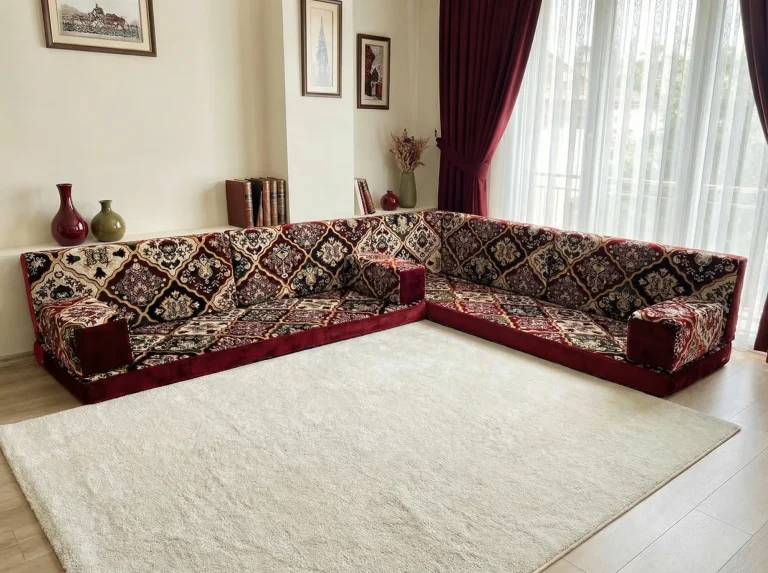
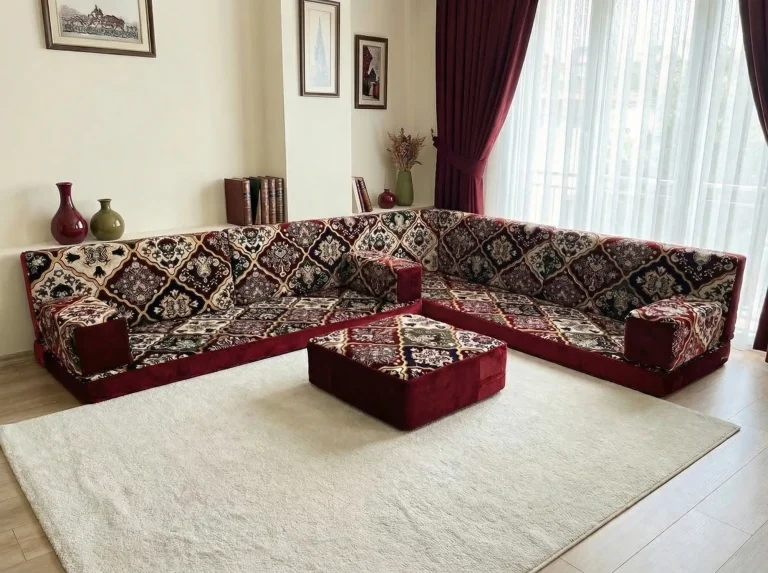
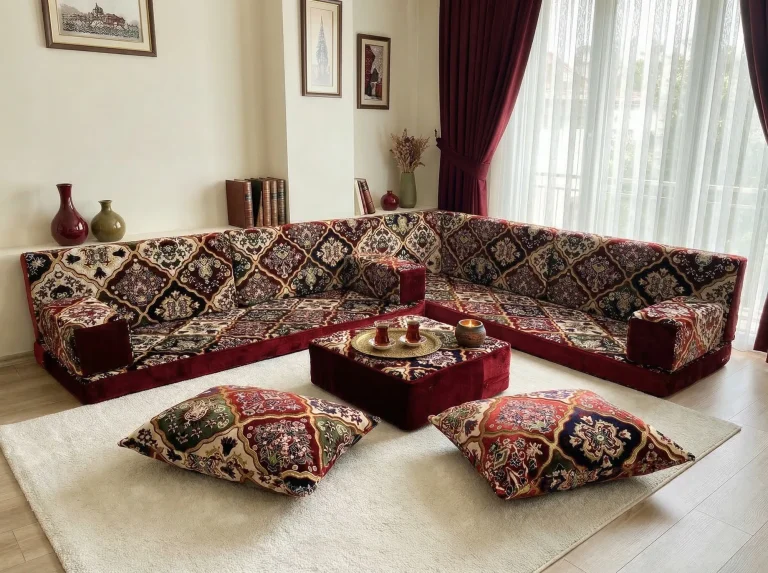
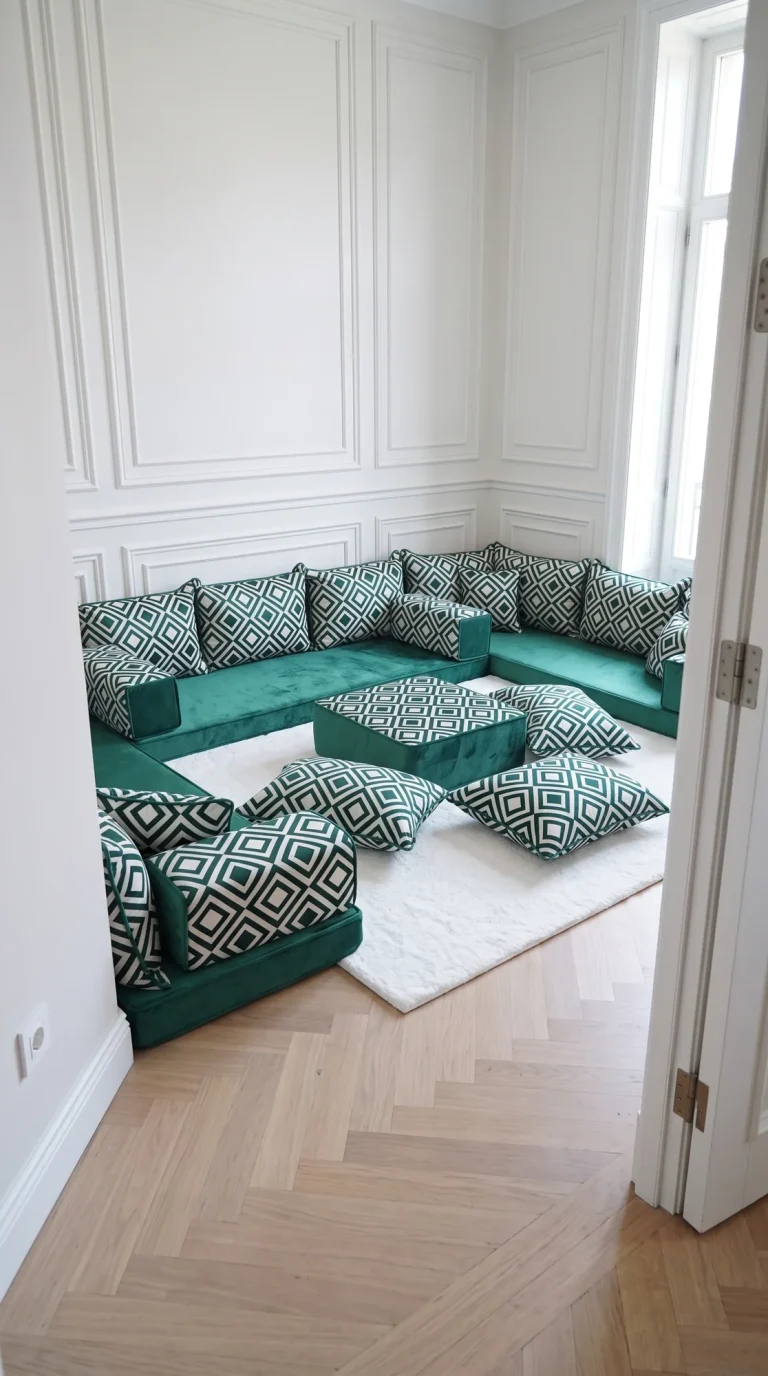
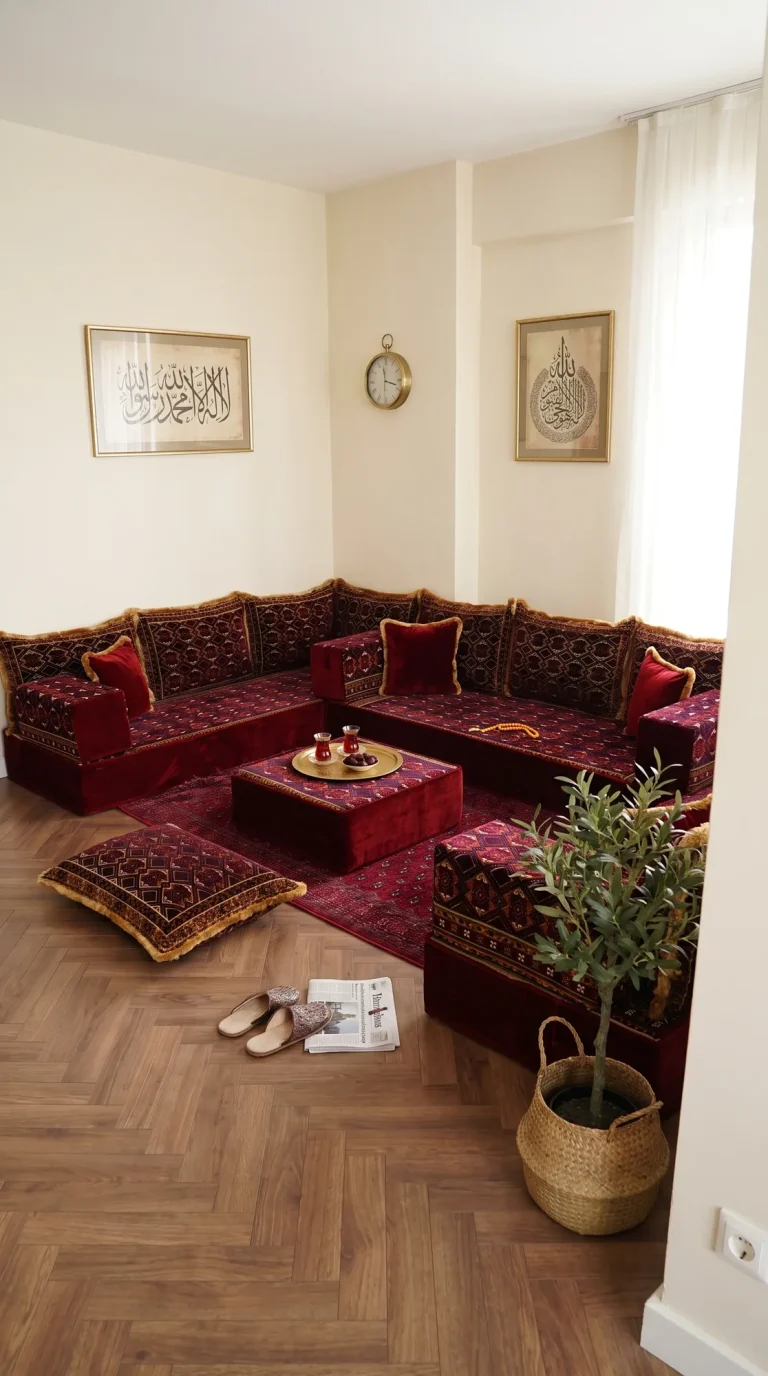
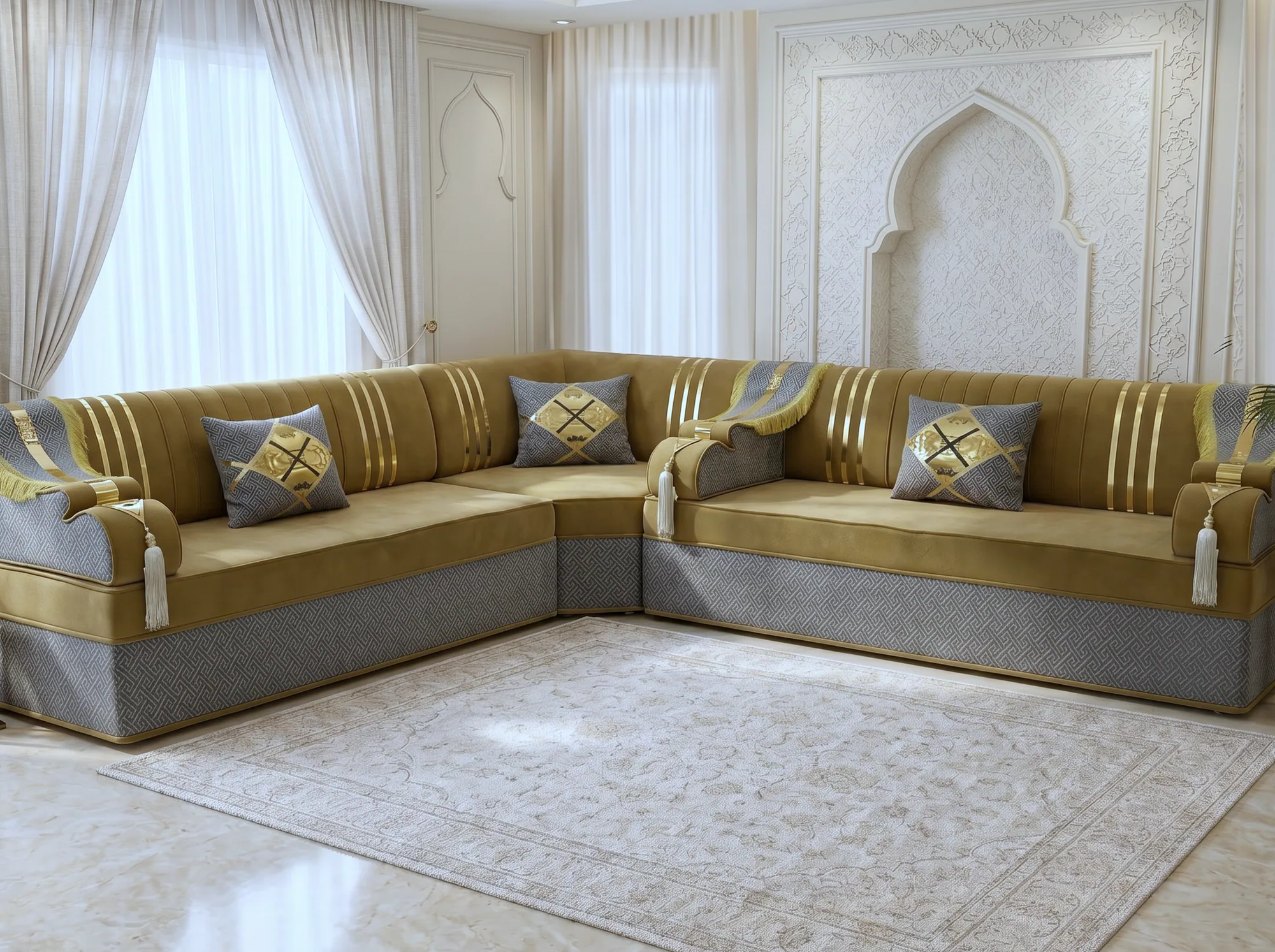
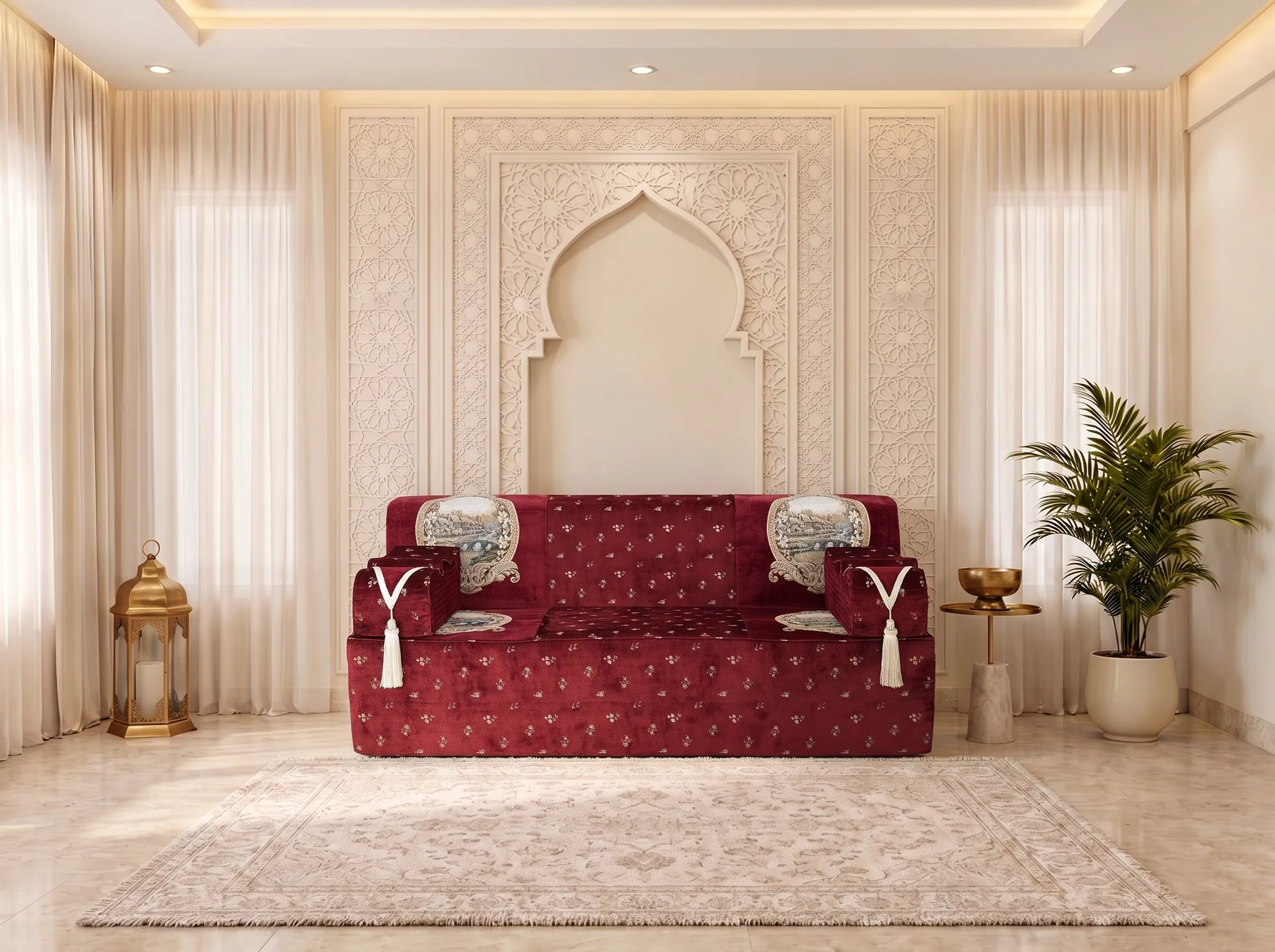
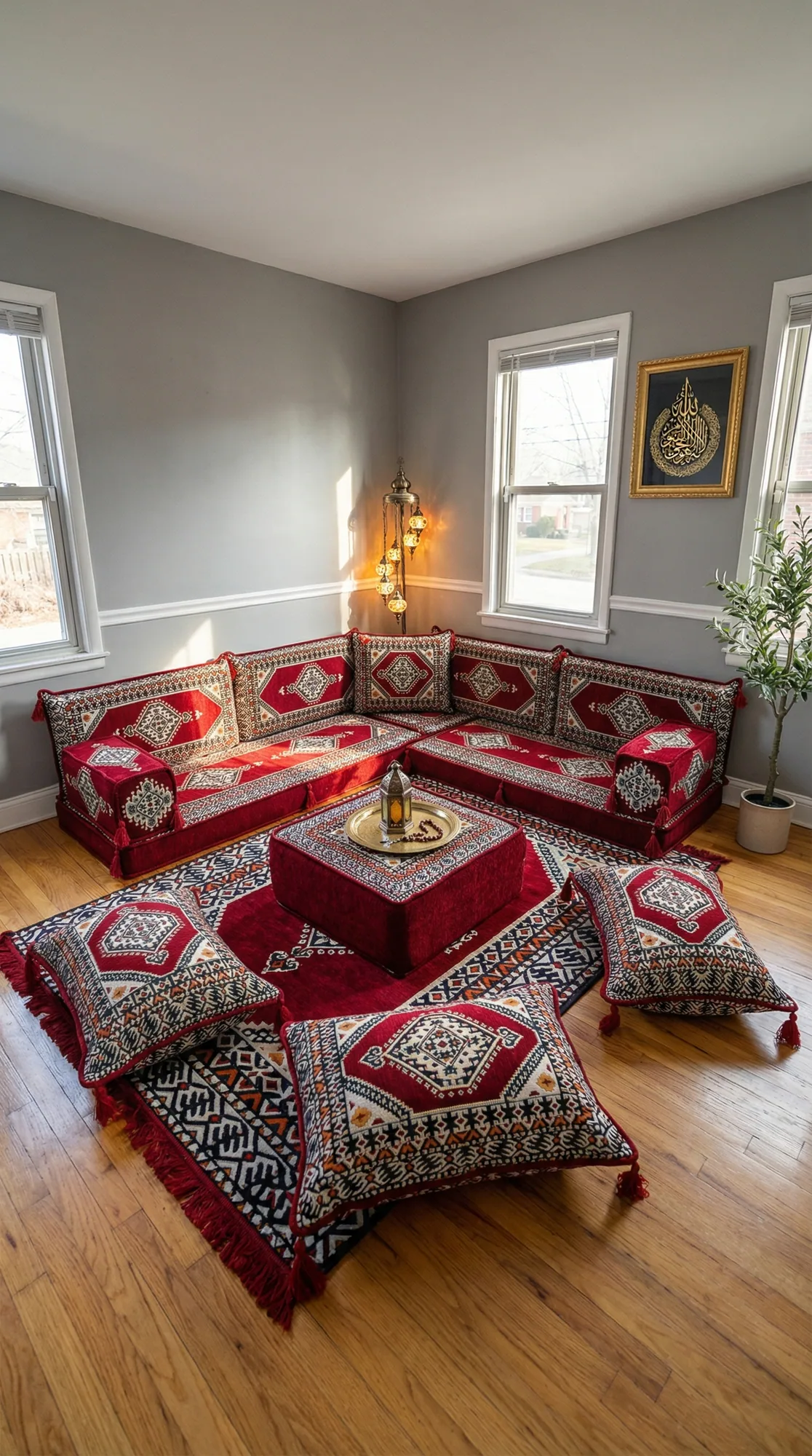
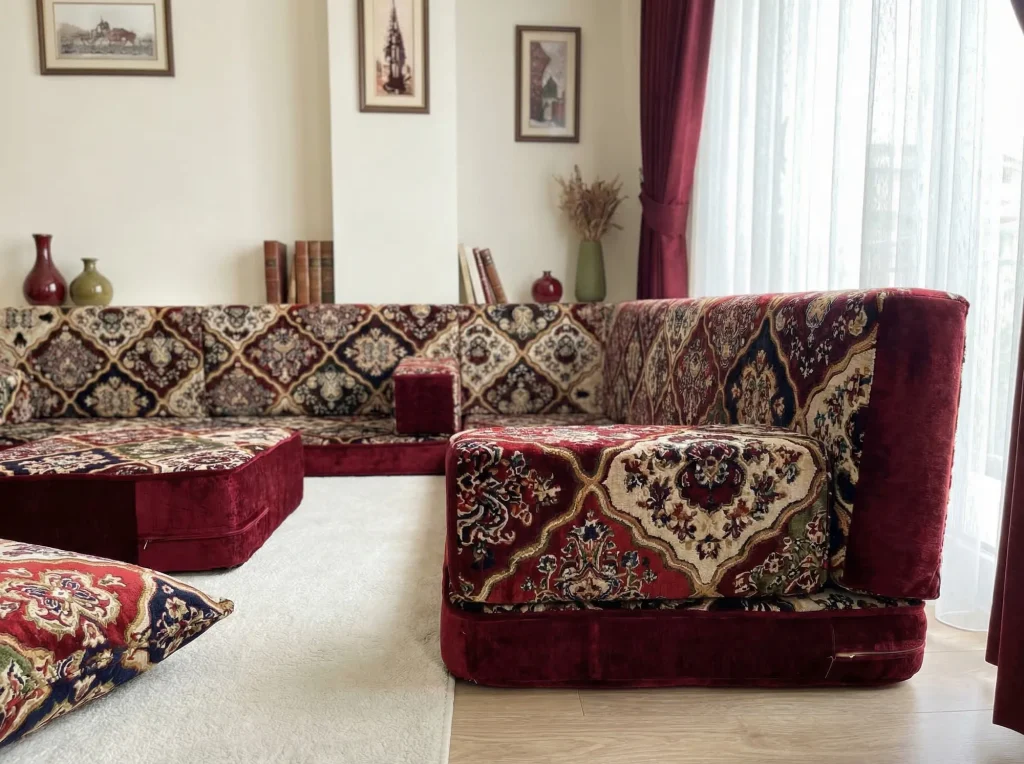
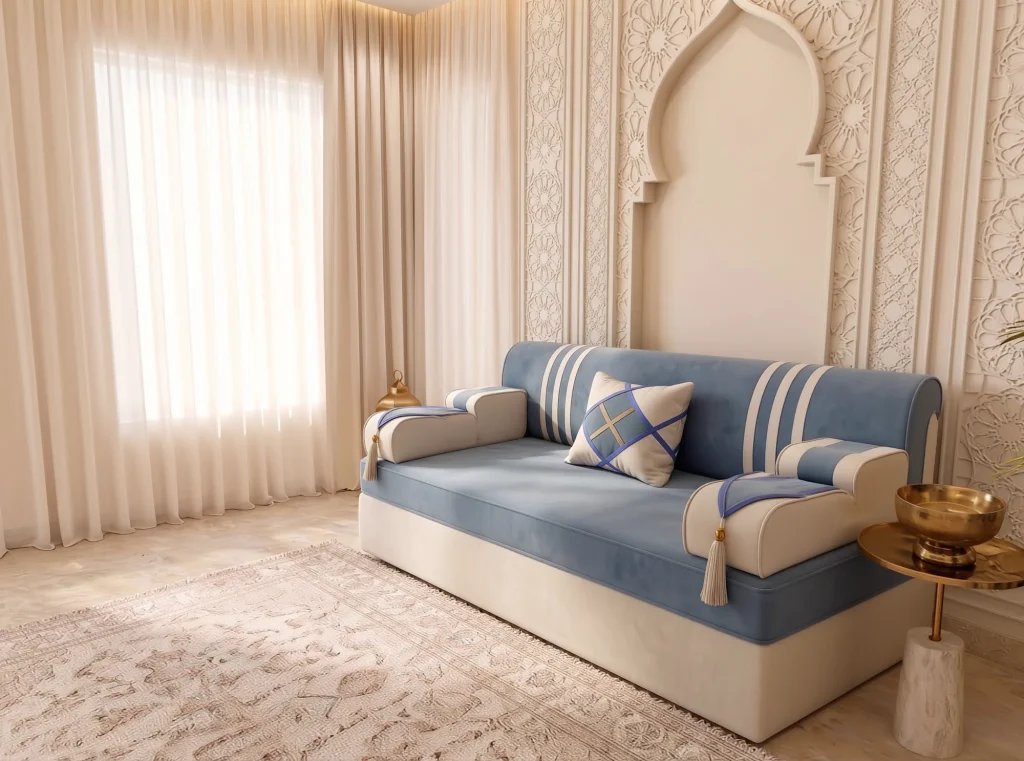
Choose colour to suit the rug, since in this kind of room the floor is seen as much as the seats. The burgundy floor sofa at the top of the page uses a carpet-pattern fabric, with matching floor cushions and an ottoman, and it suits a plain rug. If you already own a strongly patterned kilim, a plain velvet works better: emerald or maroon on a floor sofa, or grey or the sky blue shown above on a raised majlis. The black and gold majlis ideas article shows how the darker sets look in a formal guest room, and Sofhu’s velvet floor sofas page describes the fabric.
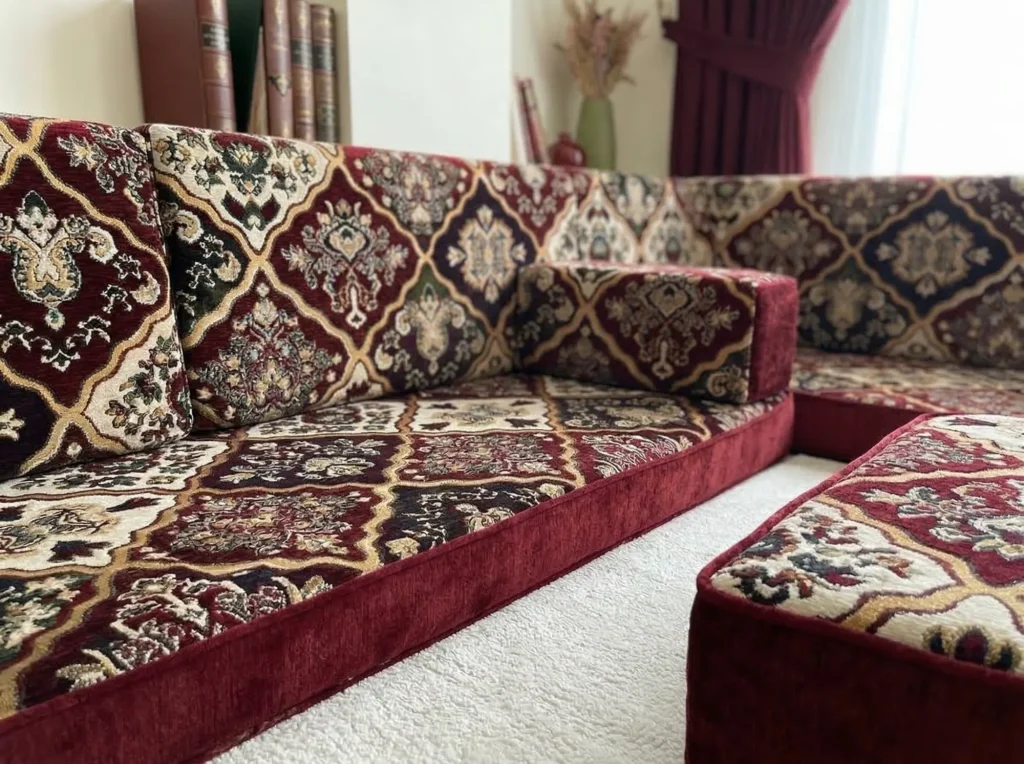
Inside every cushion is 32 kg/m³ foam, written 32 DNS in the Turkish trade. It means a cubic metre of the foam weighs about 32 kg. Density is the quantity of material, not the hardness, and the Polyurethane Foam Association notes that denser foam generally keeps its support and shape better over time. That is the property that matters in a room where people sit for a whole evening. The cushions have no springs, the covers unzip, and on custom orders you can ask for a softer or firmer feel.
Kurdish diwan sets abroad
Many Kurdish families today live far from the houses where they first saw a diwan. Germany has by far the largest Kurdish population in Europe, spread across Berlin, Hamburg, Munich, Frankfurt, Stuttgart, Hanover, Kiel and Essen. There are large communities in France, Sweden, the Netherlands and Britain, and in the United States the best-known is in Nashville, Tennessee.
Sofhu has no shops in any of these places. Each set is made to order in Türkiye, vacuum packed, and shipped free to the door. Existing pages cover ordering in Germany and Tennessee. Duties or taxes may apply depending on the destination, so ask before you order.
How to order
Send the length of each wall that will carry seating, the positions of doors and windows, a photo of the room and, if you have one, a photo of the rug. Say which layout you want and roughly which colours. Sofhu is the manufacturer, so fabric, cushion thickness and firmness can all be adjusted, and design help is available by video call.
The step-by-step guide on how to order a custom majlis online walks through the process. For the wider range see Middle Eastern sofas and couches and jalsa majlis sets. When you are ready, get a quote by measurement or message Sofhu on WhatsApp.