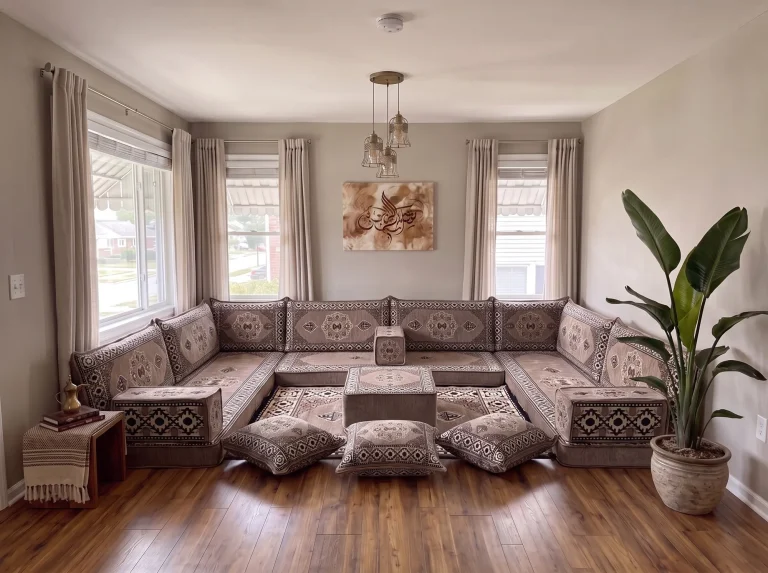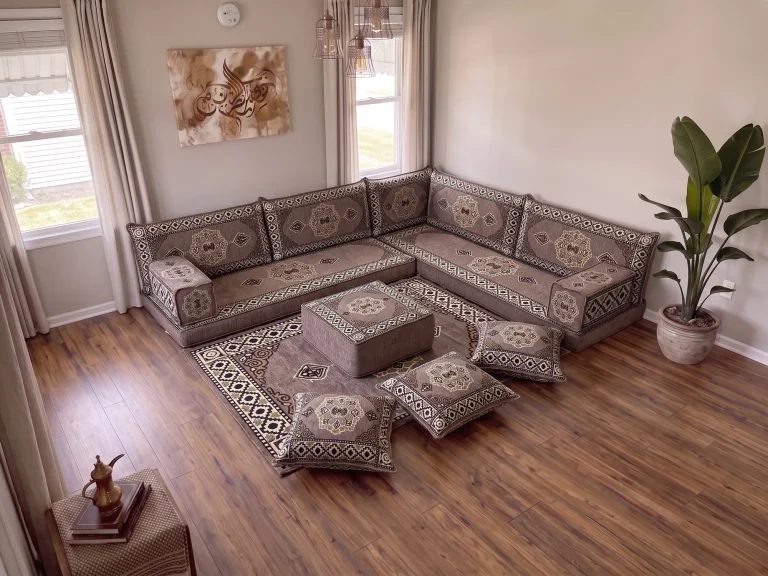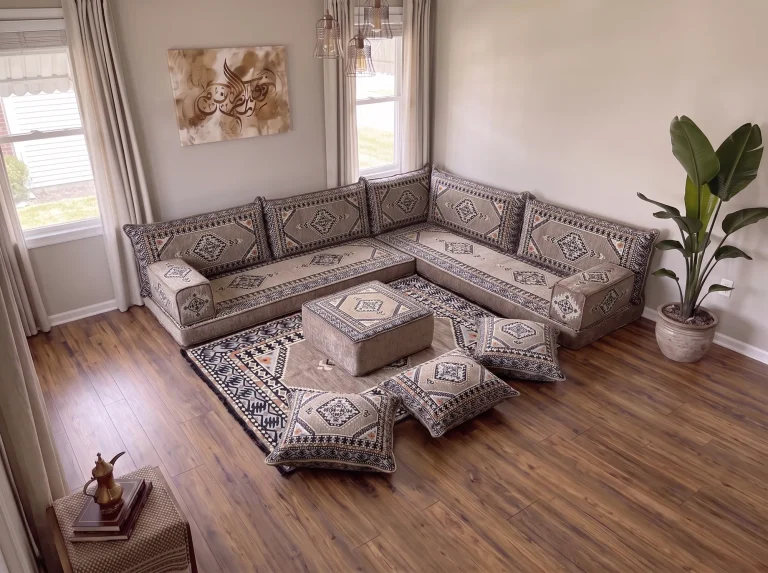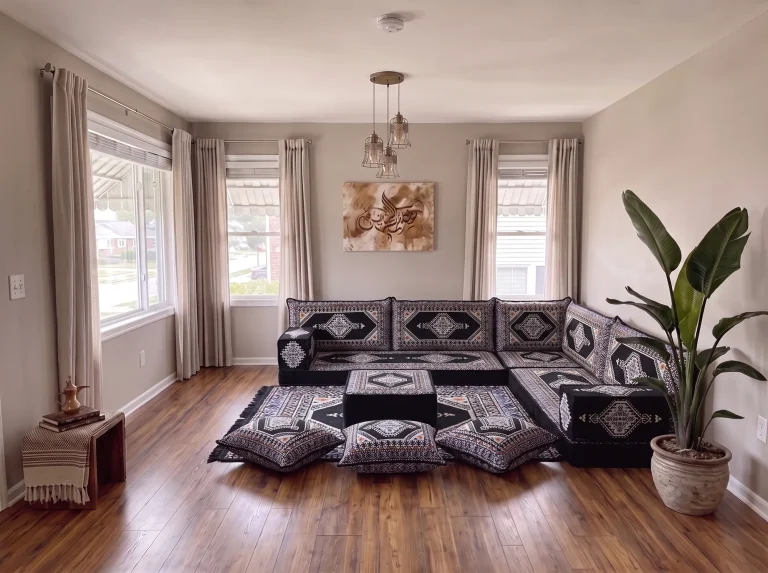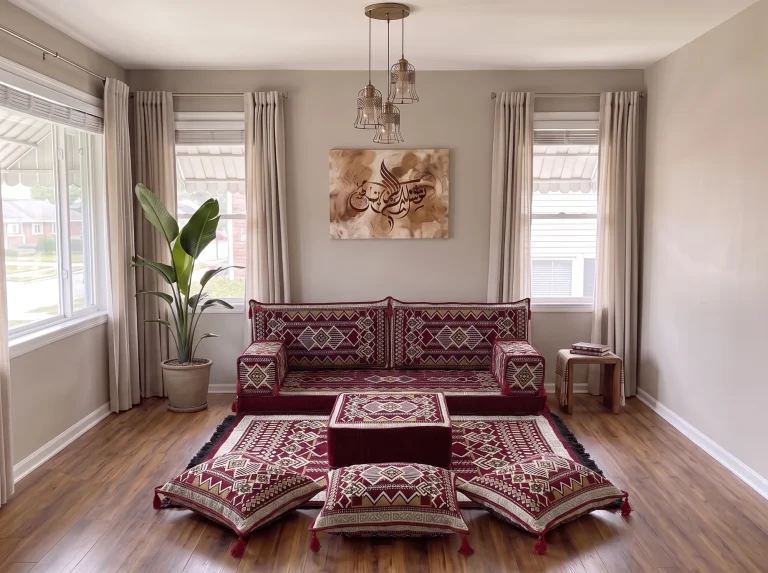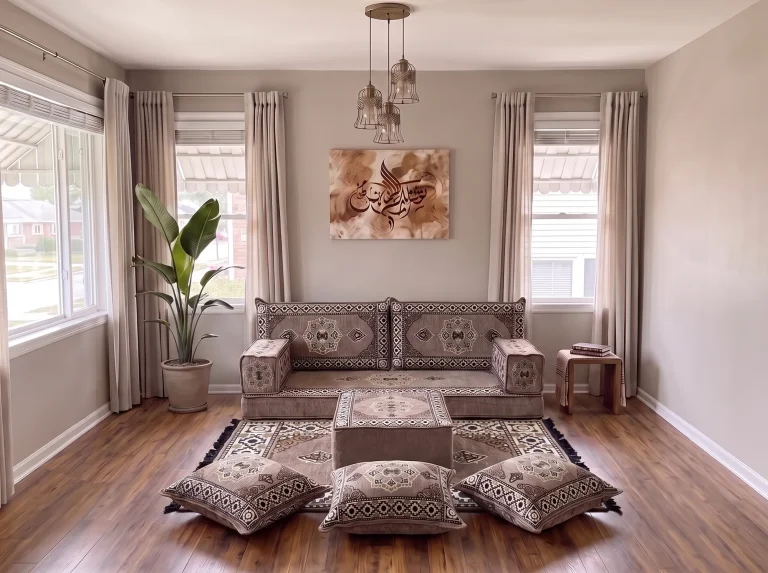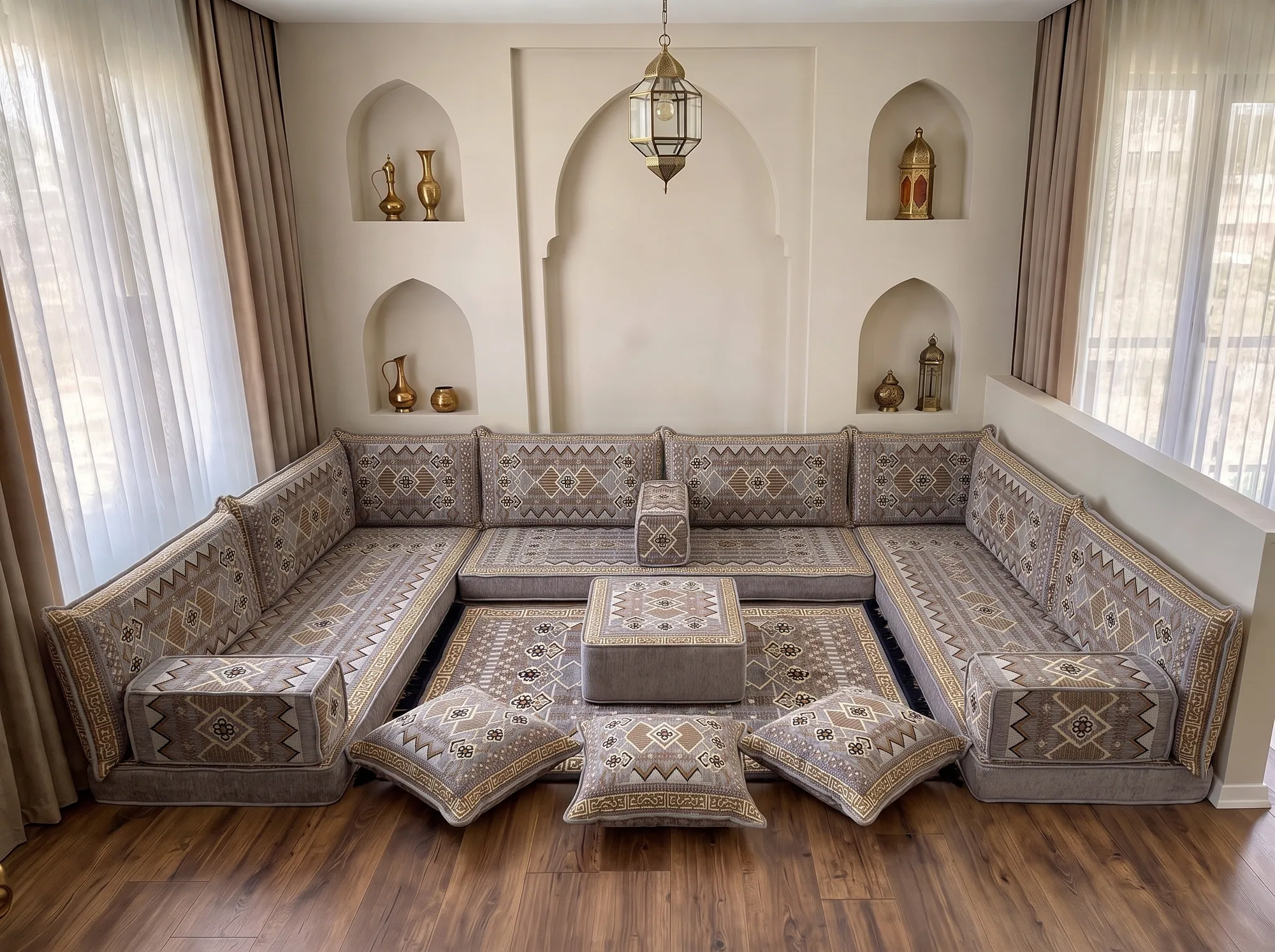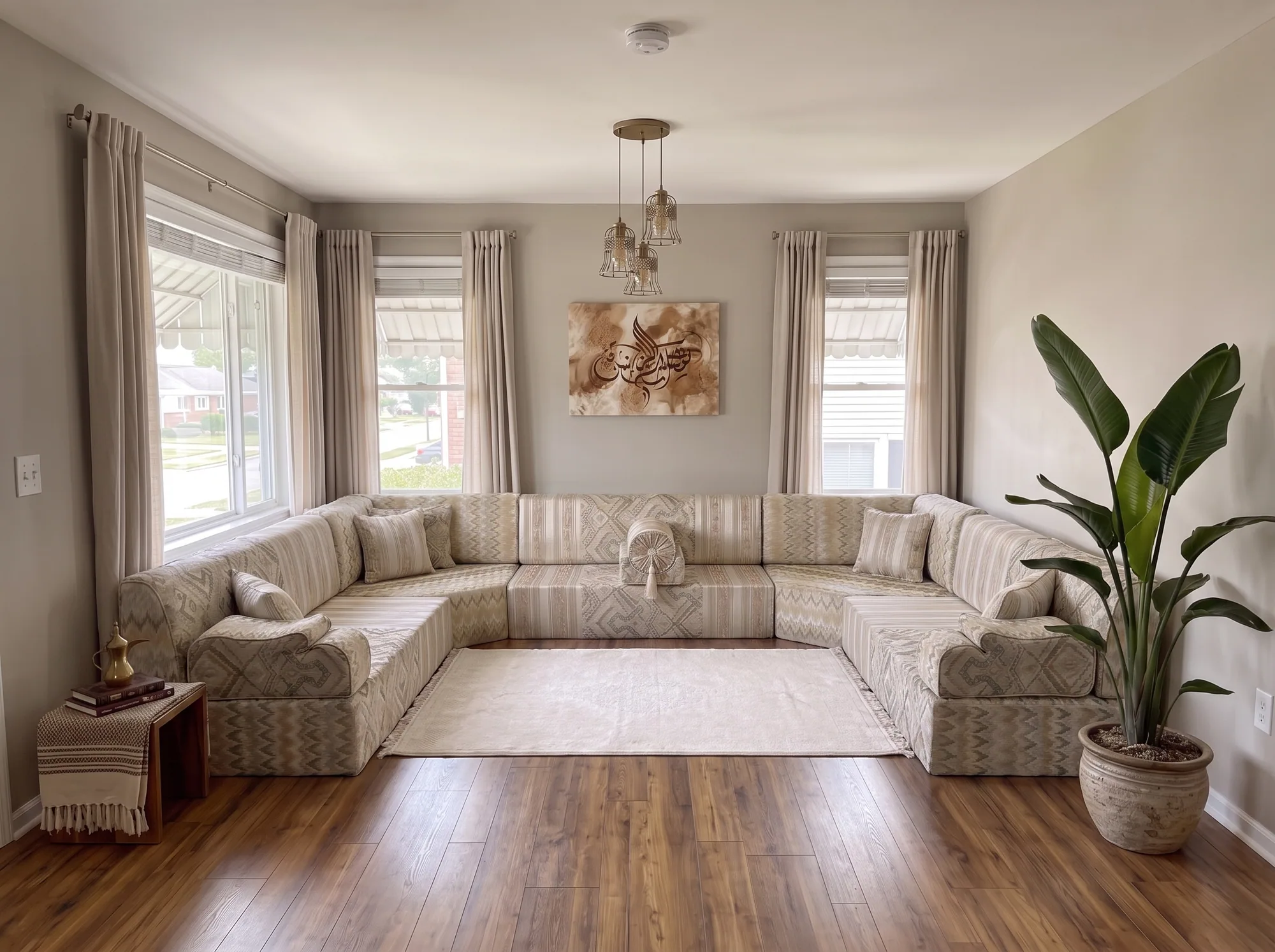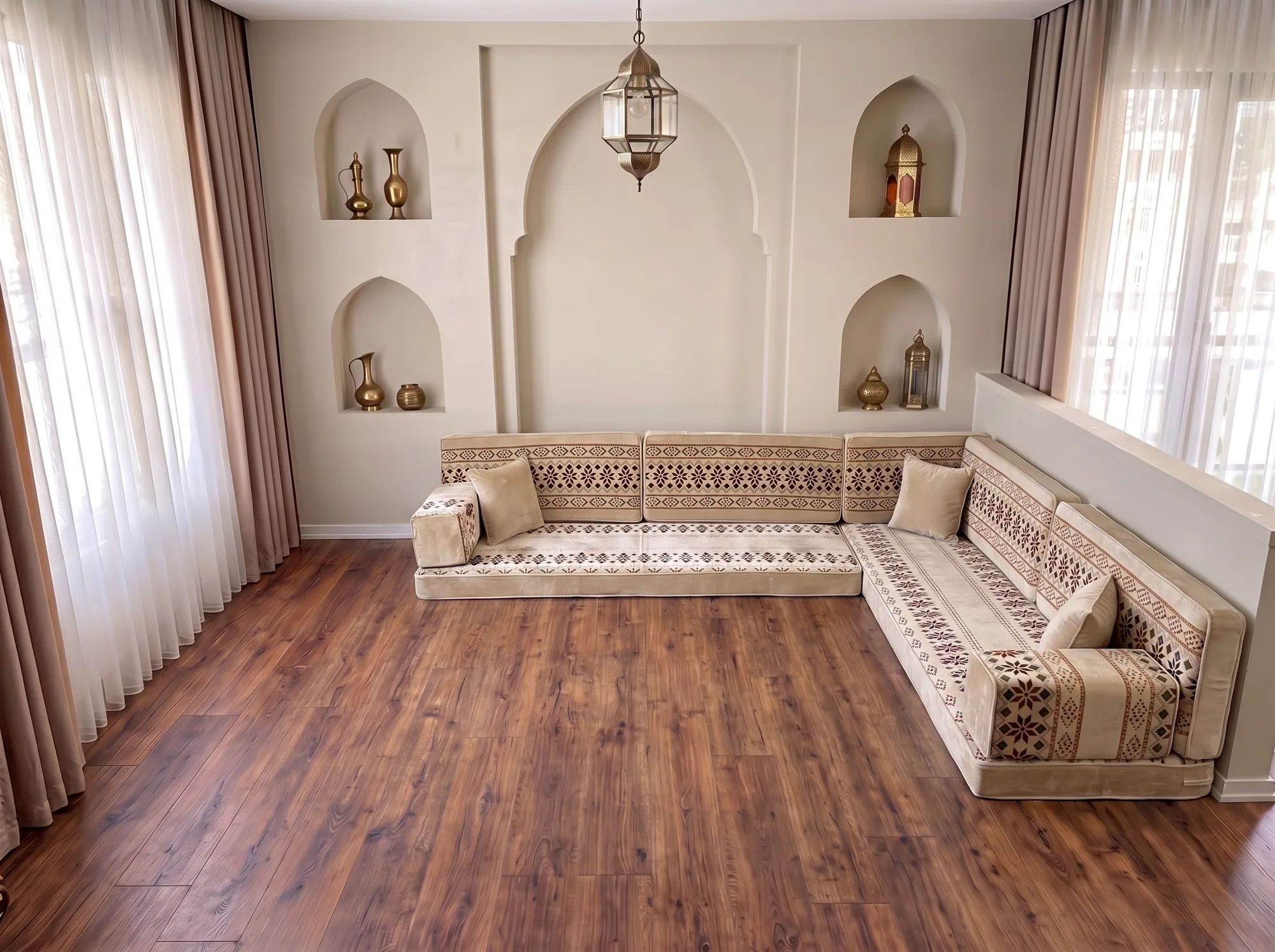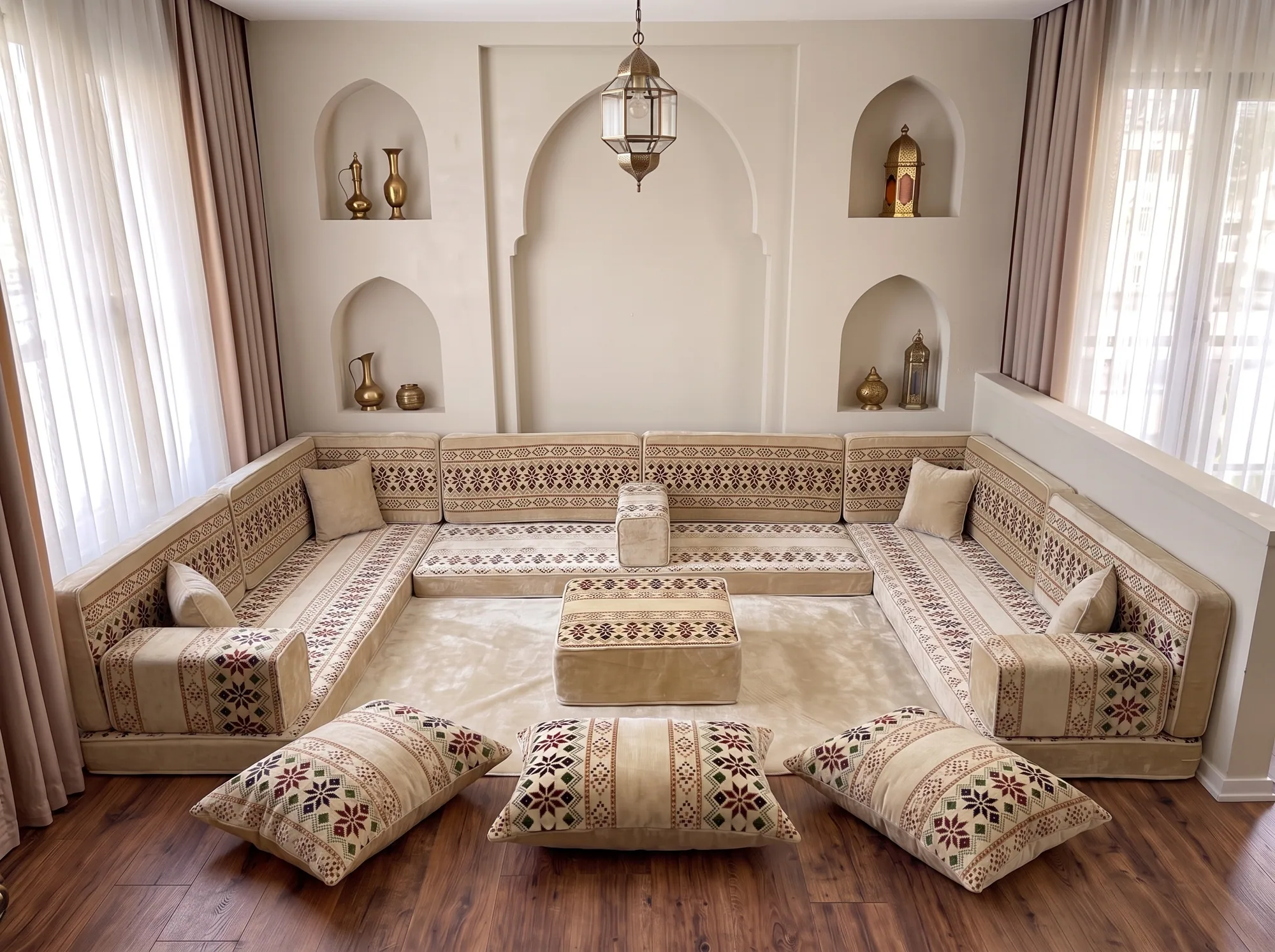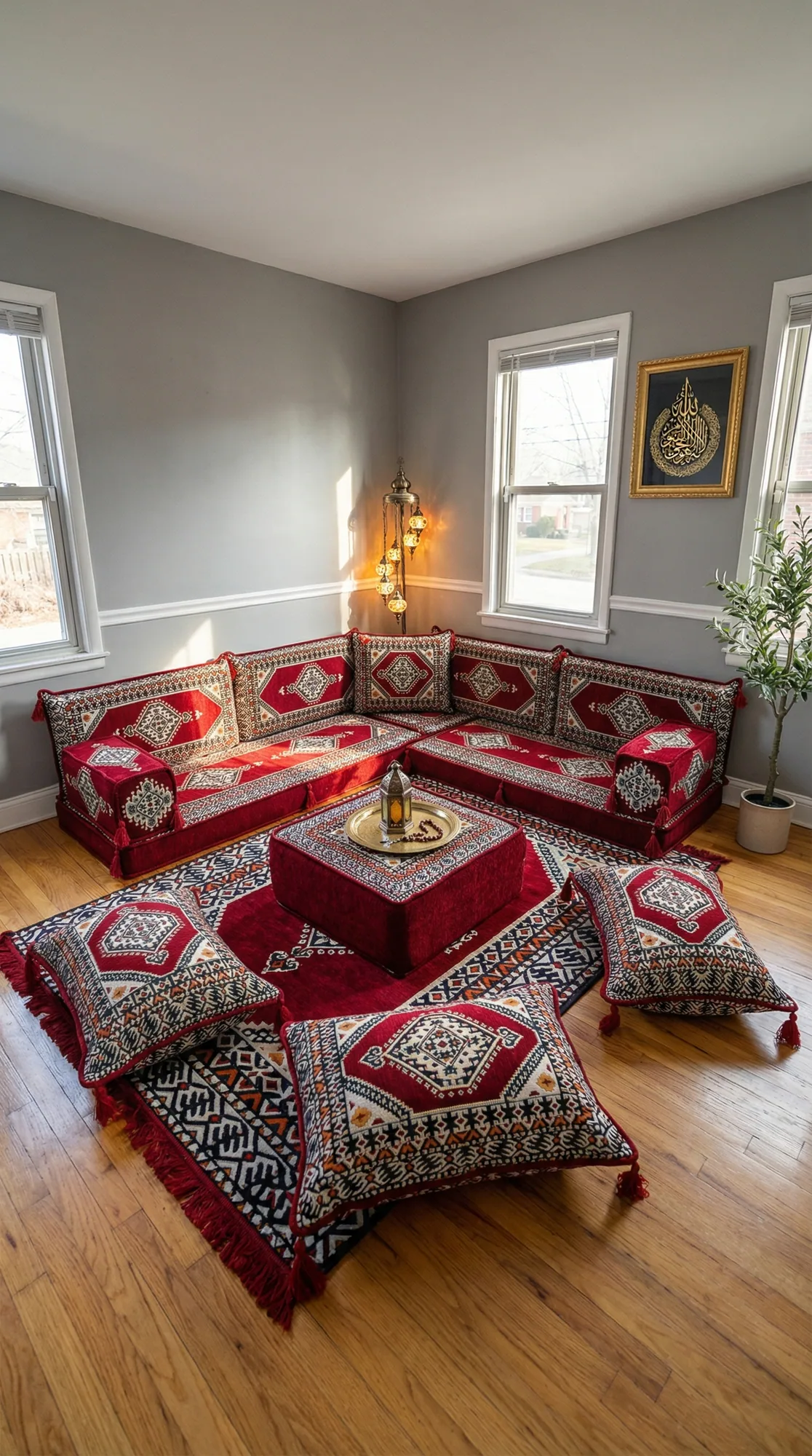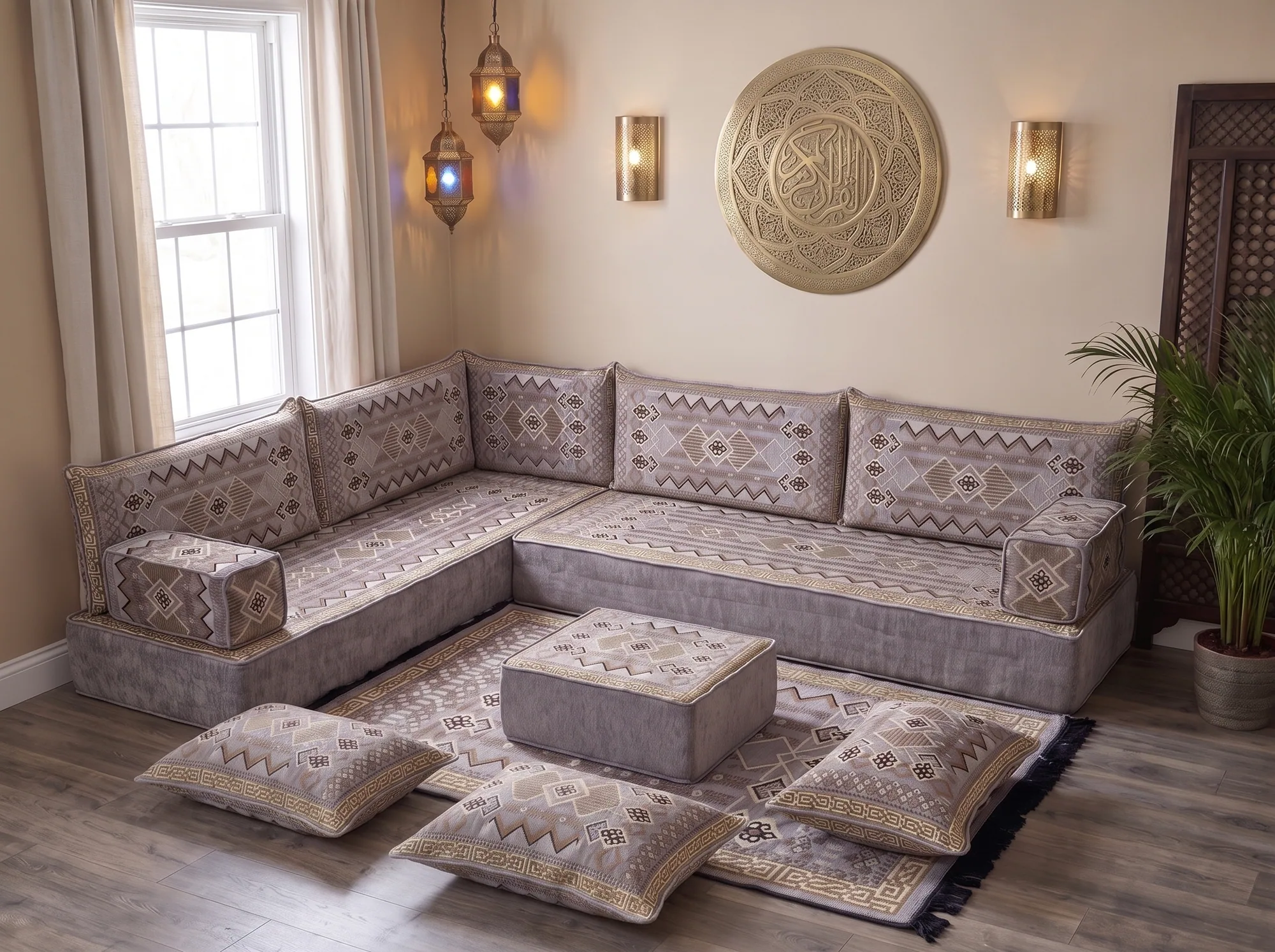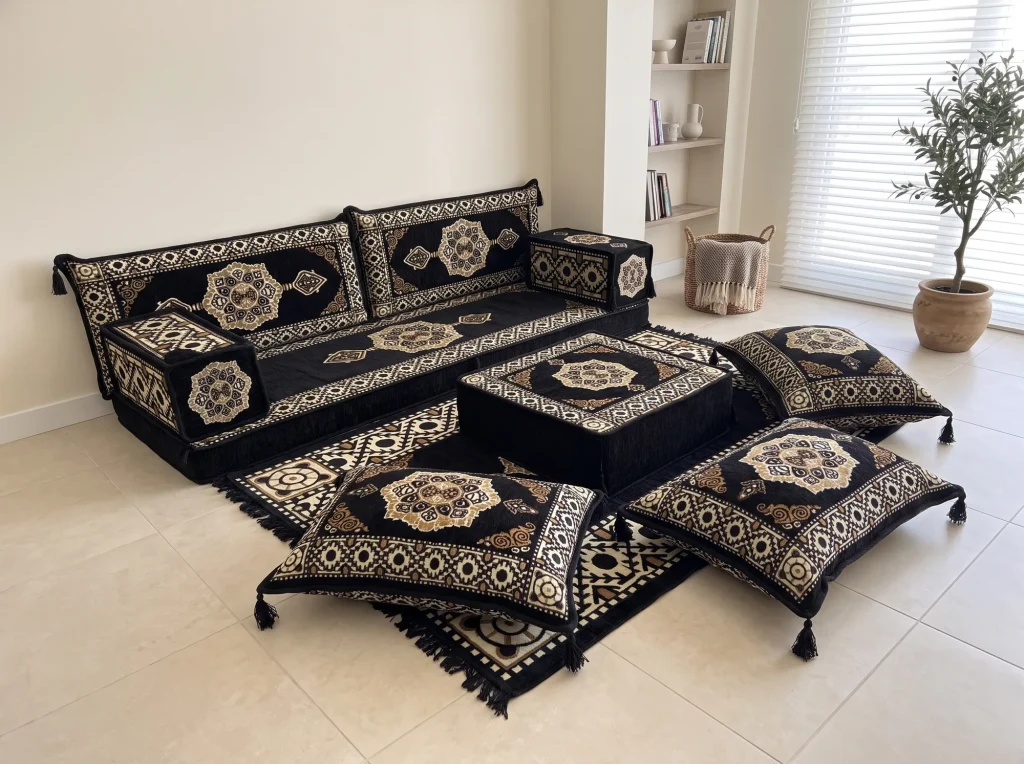
A toshak (توشک) is the long, narrow floor mattress used in Afghan homes for sitting, eating and sleeping. Toshaks are laid end to end along the walls, with loose bolsters called balesht behind the back. Traditionally filled with cotton, they are now often made with foam. Sofhu makes toshak sets to measure with 32 kg/m³ high-density foam.
- Word
- توشک, toshak (also tushak, doshak)
- Meaning
- Mattress
- Where
- Afghanistan and Afghan homes abroad
- Back support
- Balesht or poshty, loose bolsters
- Traditional filling
- Cotton
- Sofhu filling
- 32 kg/m³ (32 DNS) high-density foam
- Covers
- Zippered, machine washable in cold water
On this page
What is a toshak? It is the floor mattress of an Afghan home: a long, narrow cushion laid on the carpet along the wall, used as a seat by day and a bed by night. Many Afghan households sit on toshaks instead of chairs, including for meals. This guide explains the parts of a toshak set, what goes inside one, how the room is used, and where a toshak differs from an Arabic floor sofa and from the raised Arabic majlis.
Toshak in one sentence
A toshak (توشک, also written tushak or doshak) is a mattress placed directly on the floor and used for sitting, eating and sleeping. The plural in English is toshaks. In Dari the toshak meaning is plain: it is the ordinary word for a mattress, and the furniture takes its name from the object, not from the room.
That is the first difference from Arabic seating. Majlis names a room and a gathering. Toshak names one piece, the thing you actually sit on.
Parts of a toshak set
A toshak set is simple, and that is deliberate. Everything in it can be lifted, stacked and moved by one person.
| Part | Dari | What it does |
|---|---|---|
| Mattress | toshak (توشک) | The seat and the bed |
| Bolster | balesht (بالشت) | A firm pillow behind the back or under the elbow |
| Back cushion | poshty (پشتی) | A cushion leaned against the wall behind the sitter |
| Floor cloth | dastarkhan | Spread on the floor for meals, then folded away |
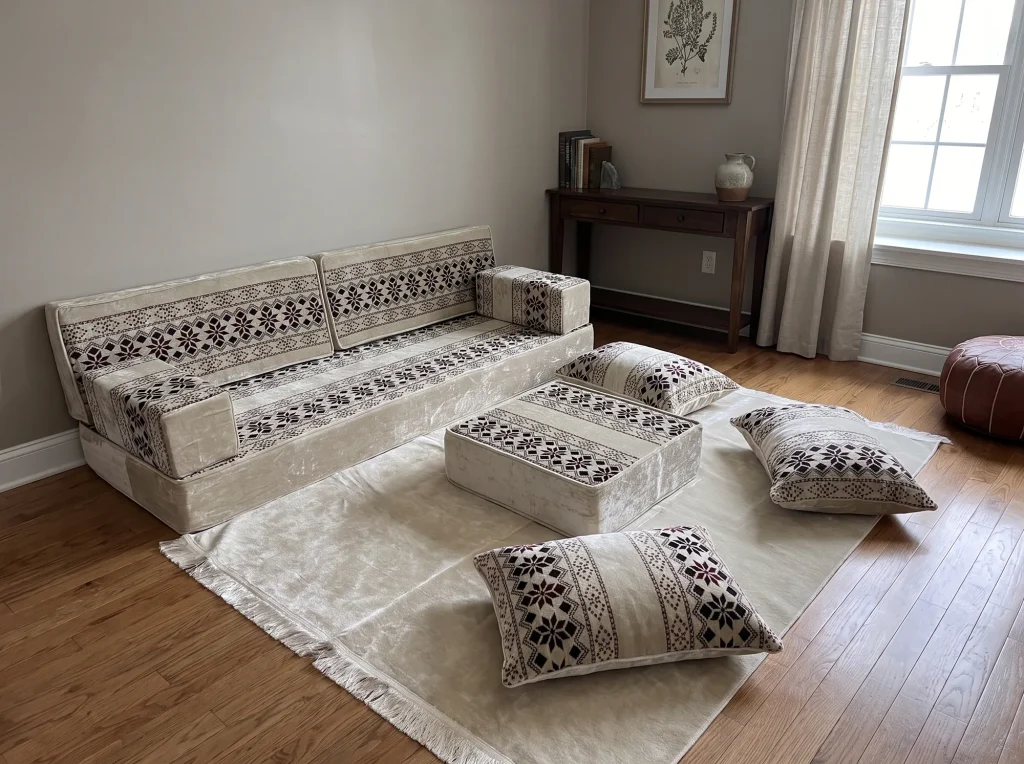
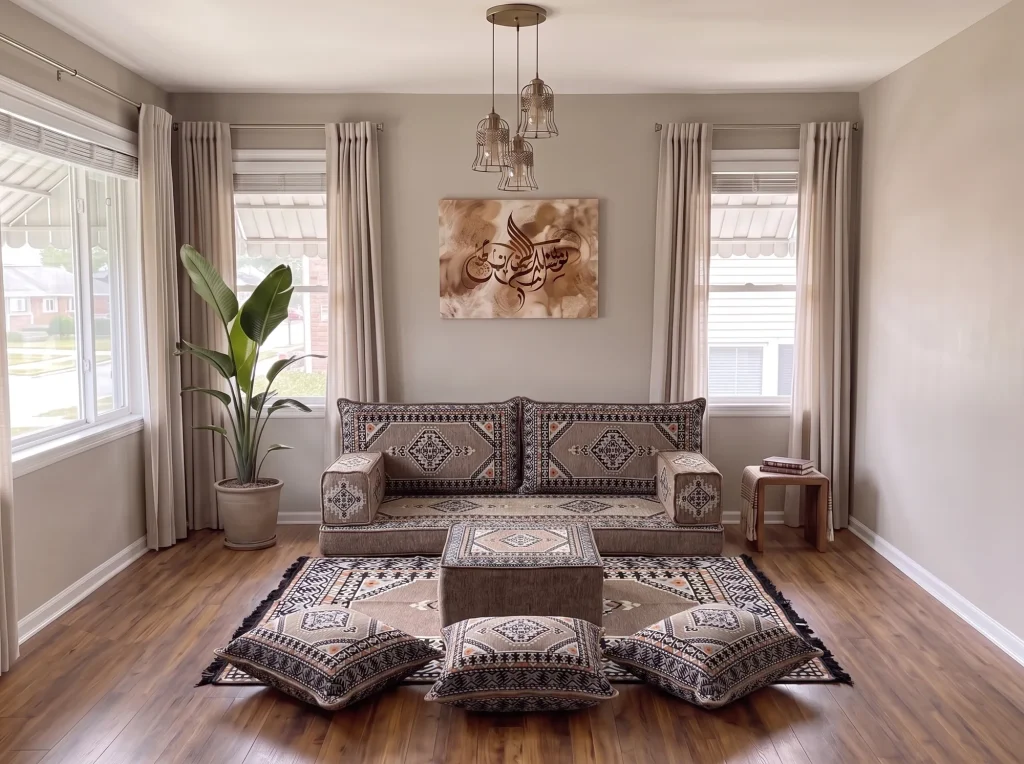
The toshaks are laid end to end around the walls. People lean back on a balesht or poshty, which are closer to large pillows than to the upright back cushions of an Arabic floor sofa. There are no fixed armrests. A carpet covers the centre of the room, and that open carpet is as much a part of the arrangement as the cushions.
In winter many families add a sandali: a very low table with a quilt, the lihaf, draped over it. Everyone sits on toshaks around it with the quilt over their legs. It is often compared to the Japanese kotatsu.
Sofhu’s Afghan toshak style page shows how these parts are put together in a made-to-measure set.
Typical sizes and thickness
There is no fixed toshak size, and anyone who quotes you one is quoting a particular maker. What can be said is how the proportions come about.
- Length follows the body. A toshak has to work as a bed, so it is about as long as an adult lying down.
- Width follows the seat. It needs to be wide enough to sit cross-legged or with the legs folded to one side.
- Thickness is a balance. Thin enough to fold or stack in a corner during the day if the room is needed, thick enough that you do not feel the floor.
A minimal toshak, the kind people now search for when they want a plain modern look, keeps these proportions and drops the heavy pattern: one colour, clean piping, flat cushions.
Sofhu does not publish fixed sizes, because each set is cut to the room. You send the length of each wall you want to cover and the positions of doors and windows, and the pieces are worked out from there. For the figures, ask for a quote by measurement.
Filling: cotton traditionally, foam today
What a toshak is filled with decides how it feels in the first month and how it looks after several years.
Cotton is the traditional filling. It is dense and heavy, and it has one known habit: with use, cotton wadding packs down and shifts, so a cotton mattress needs airing and reshaping from time to time. Wool, or a wool and cotton mix, is sometimes used instead.
Foam is now common, especially in homes abroad. It is lighter to lift, it keeps an even surface without maintenance, and it can be cut exactly to length.
With foam, the number to ask about is density. Density is the weight of foam in a cubic metre. It tells you how much material is in the cushion, not how hard it feels. Denser foam generally keeps its height and support longer. Low-density foam can feel firm when new, but in published datasheets it recovers less well from compression. Sofhu fills its seating with 32 kg/m³ (32 DNS) high-density polyurethane foam. The cushions contain no springs, and on a custom order you can ask for a softer or firmer feel.
Two related guides go further: foam vs cotton vs wool filling compares the three materials, and foam density for floor seating explains what the density figure does and does not tell you.
How toshaks are used through the day
One room, one set of cushions, several uses. That is the logic of Afghan floor seating, and it is why the pieces are kept loose.
Morning and daytime. The toshaks sit against the walls with the bolsters behind them. This is the family’s ordinary sitting room.
Meals. A cloth, the dastarkhan, is spread on the carpet and the dishes are set on it. Everyone sits on the toshaks around the cloth. When the meal is finished the cloth is folded and put away, and the room is a sitting room again.
Guests. Visitors are given the most comfortable place and the extra bolsters. Tea follows.
Night. Blankets and pillows come out and the toshaks become beds. A house with guests can sleep many more people than it has bedrooms.
This is useful to know before ordering. If your toshaks will be slept on regularly, mention it. If they will stay in place as a sitting room and never be stacked, a slightly more structured set with fitted backrests may suit you better.
Toshak and Arabic majlis side by side
The toshak belongs to the floor sofa family. Its nearest Arabic relative is the Arabic floor sofa, and the Arabic majlis, as Sofhu uses the word for a product, is a different, raised piece.
| Afghan toshak | Arabic floor sofa | Arabic majlis | |
|---|---|---|---|
| Seat | Thin mattress on the floor | Thicker seat mattress near the floor | Raised, sofa height, on an upholstered base |
| Back | Loose balesht and poshty | Back cushions against the wall | Tall fixed back |
| Armrests | None fixed | Armrest blocks between sitters | Arm bolsters |
| Room | Sitting, dining and sleeping | Family and guest rooms | Mainly receiving guests |
The closest relative of the toshak is the Persian arrangement of a seat pad with a carpet-faced backrest. The Arabic floor sofa is firmer in outline, and its armrests divide the run into places.
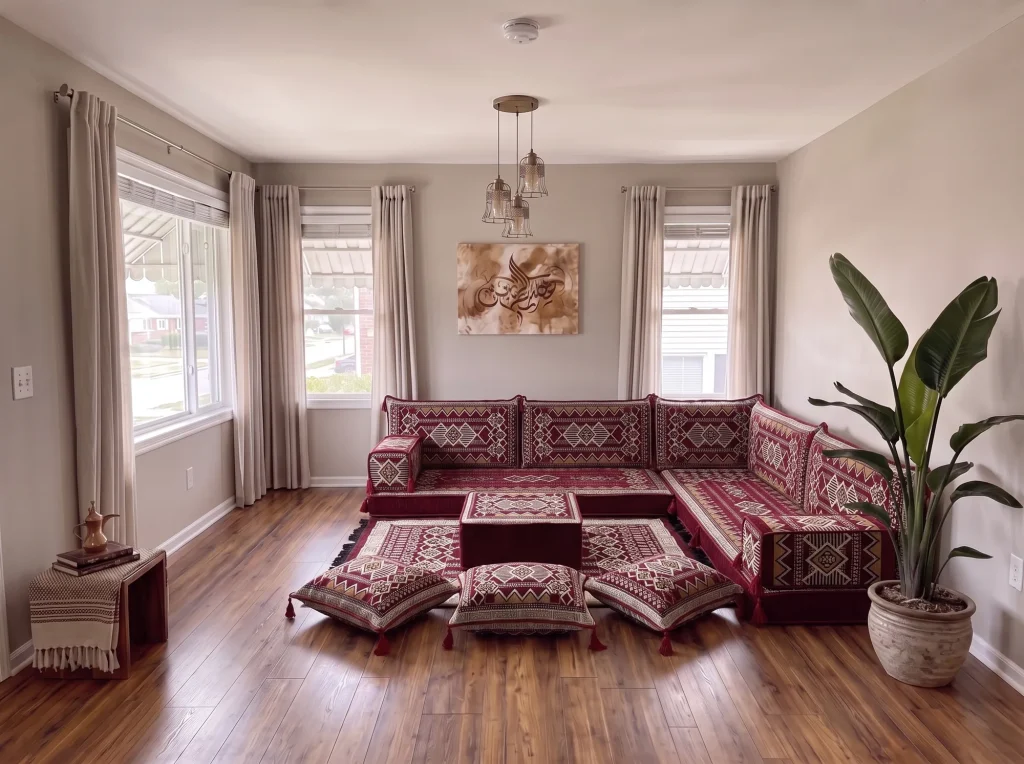
Some Afghan families abroad choose something in between: the loose, low feel of a toshak with the tidy back cushions of an Arabic floor sofa, in a plain fabric. Our comparison of Afghan toshak vs Arabic majlis sets the two out in more detail, the Arabic floor sofa page shows the low Arabic form, the Arabic majlis page shows the raised one, and modern Arabic sofas covers the pared-back designs.
Ordering a toshak set from Sofhu
Sofhu is a manufacturer, based in Türkiye, and each toshak set is made to the customer’s measurements. Covers are zippered, so they can be taken off and machine washed in cold water, turned inside out. Sets are vacuum packed for transport and shipping is free worldwide. Import duties or taxes may apply depending on your country, so ask before you order if that matters to your budget.
To get a quote, send three things: the length of each wall, a photo or sketch of the room showing doors and windows, and the fabric or colour you have in mind. The existing Premium Afghan Toshak page shows Sofhu’s toshak range, and readers in the American Midwest may also want the Minnesota Afghan toshak page. For the wider family of names, from sedari to diwan, see floor seating names by country.