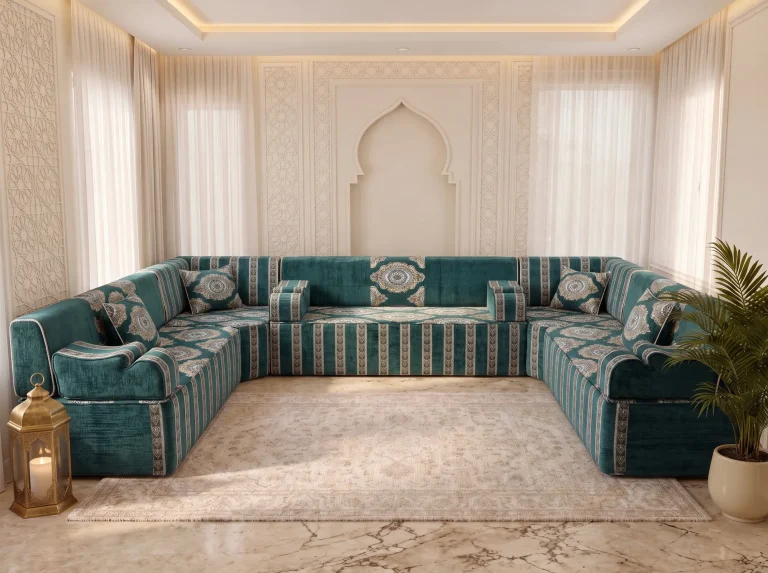
A Saudi majlis (مجلس سعودي) is the hall of a house set aside for receiving guests, with seating around the walls and coffee at its centre. Najd, the Hijaz, Asir and the north each give the room a different architecture. Sofhu makes raised majlis sets and Saudi-style floor sofas in Türkiye to your wall measurements, filled with 32 kg/m³ foam and shipped free worldwide.
- Arabic
- مجلس سعودي (majlis saudi); also مجلس عربي, جلسة عربية
- The room
- A hall for receiving guests, seating along the walls
- Regional forms
- Najd, the north, the Hijaz, Asir, Eastern Province
- Parts
- Seat mattress, backrest (masnad), armrest (marka)
- Filling
- 32 kg/m³ (32 DNS) high-density foam, no springs
- Sizes
- Cut to your wall measurements
- Shipping
- Free worldwide from Türkiye
On this page
- What a Saudi Arabian majlis is
- Najdi majlis: carved plaster and the coffee hearth
- Hijazi majlis: the men’s rooms of the roshan house
- Asir and the Eastern Province
- What the record does not say about the seating
- Saudi floor seating from Sofhu: the pieces and the foam
- Sadu pattern, colour and fabric
- Layout: seating along the walls
- Ordering in Saudi Arabia and abroad
Walk into a traditional house in Riyadh, Hail, Jeddah or Abha and the first room you are shown is the same one: the majlis. A Saudi majlis is the hall kept for receiving guests, usually on formal social occasions, and its design says where the family comes from. The seating runs around the walls. Coffee is made and poured in front of the people it is meant for. Everything else, from the plaster on the walls to the place of the hearth, changes with the region.
This page sets out what is documented about each regional form, where the record stops, and how Sofhu builds seating to fit a real room.
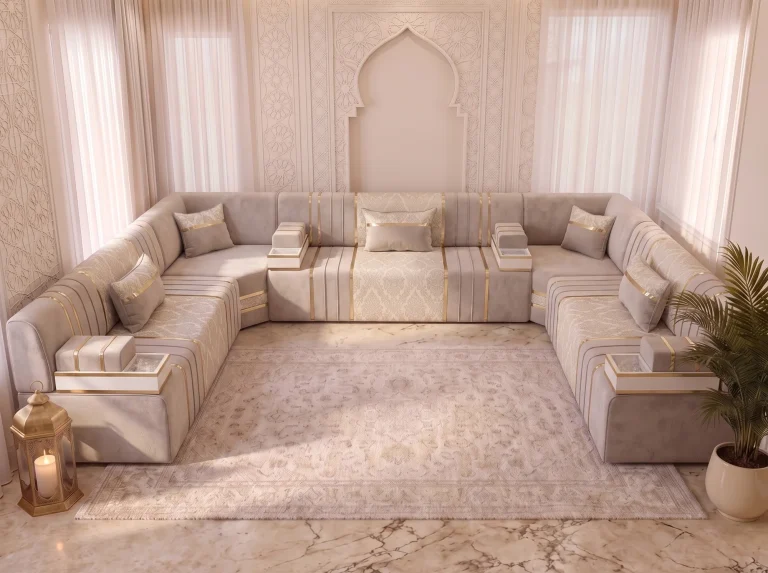
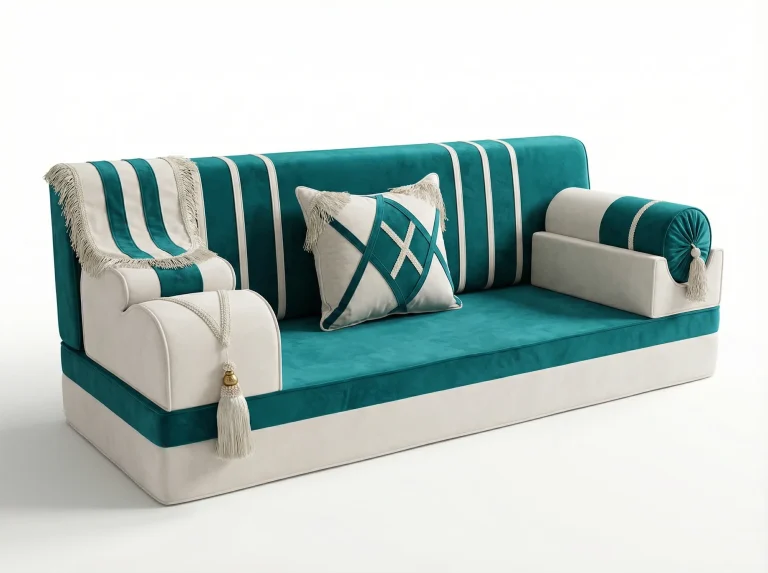
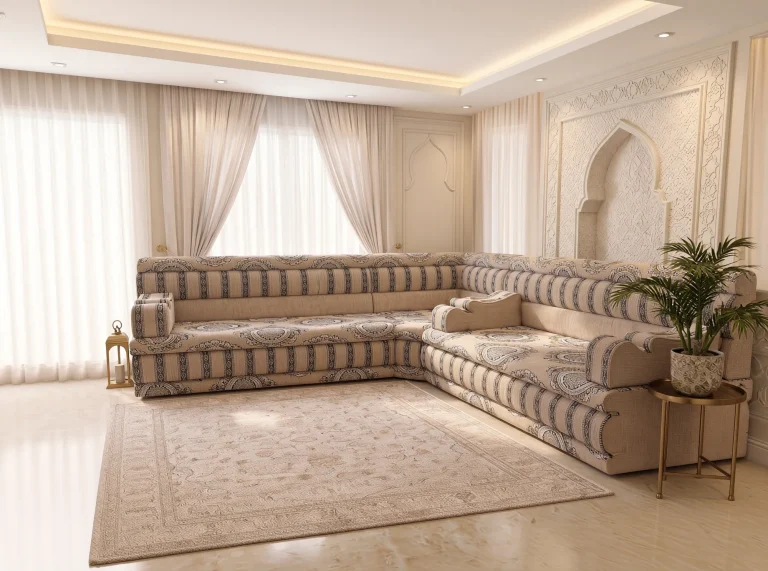
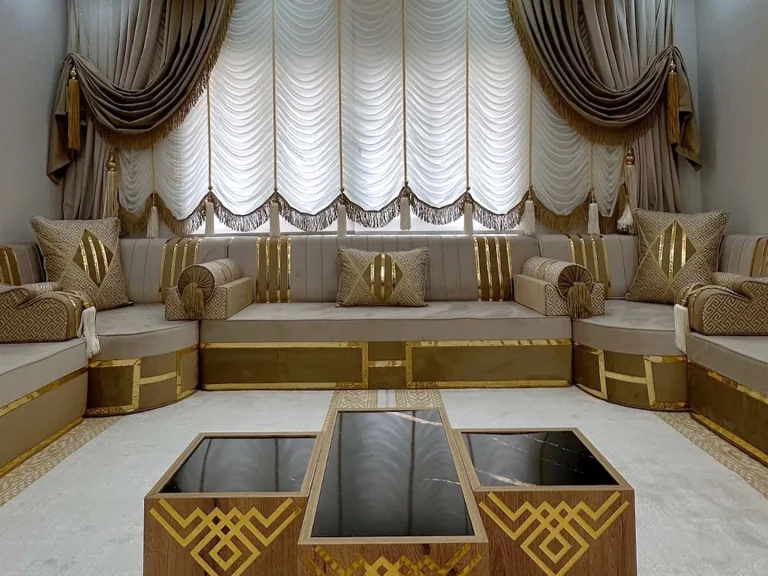
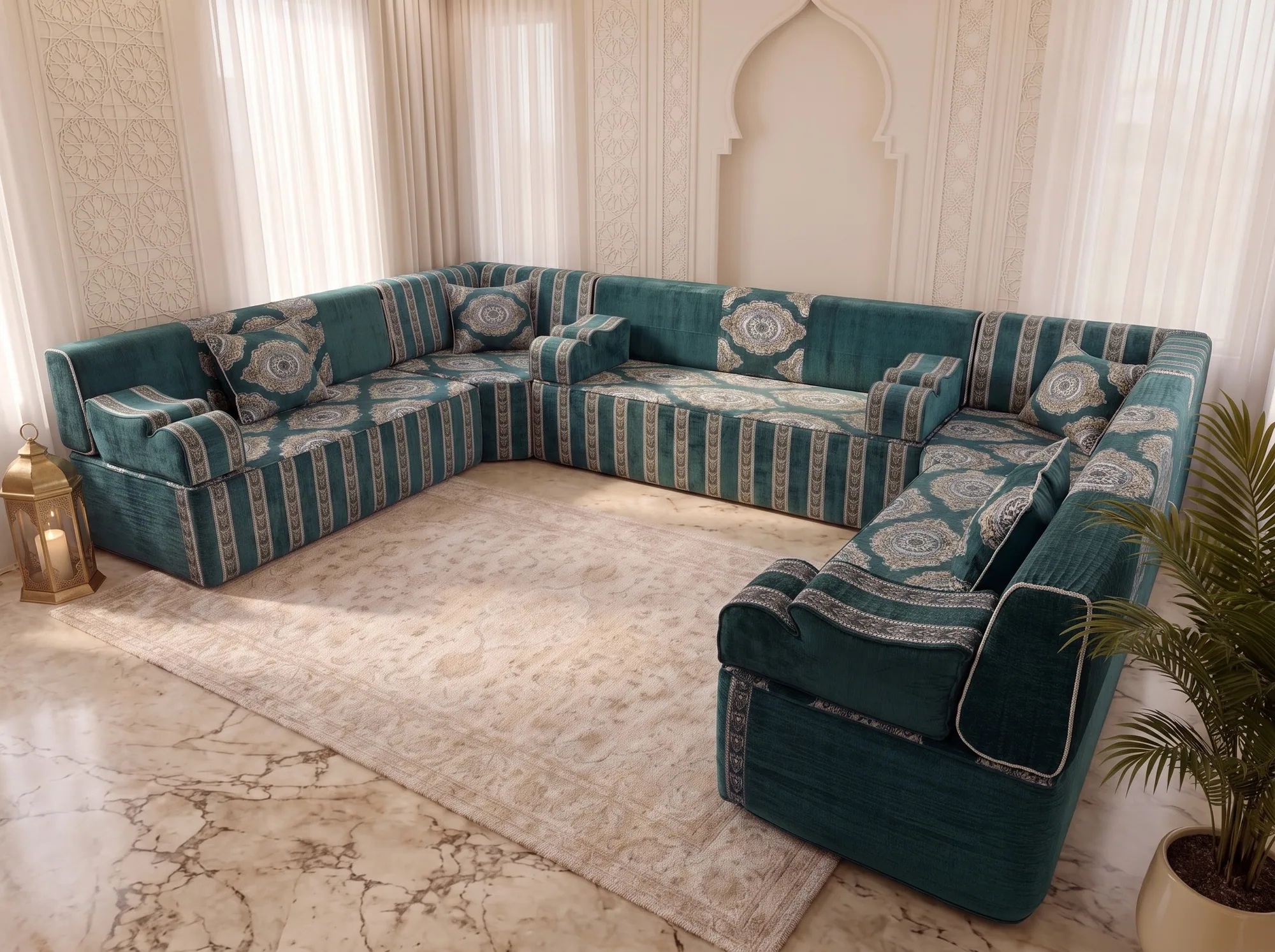
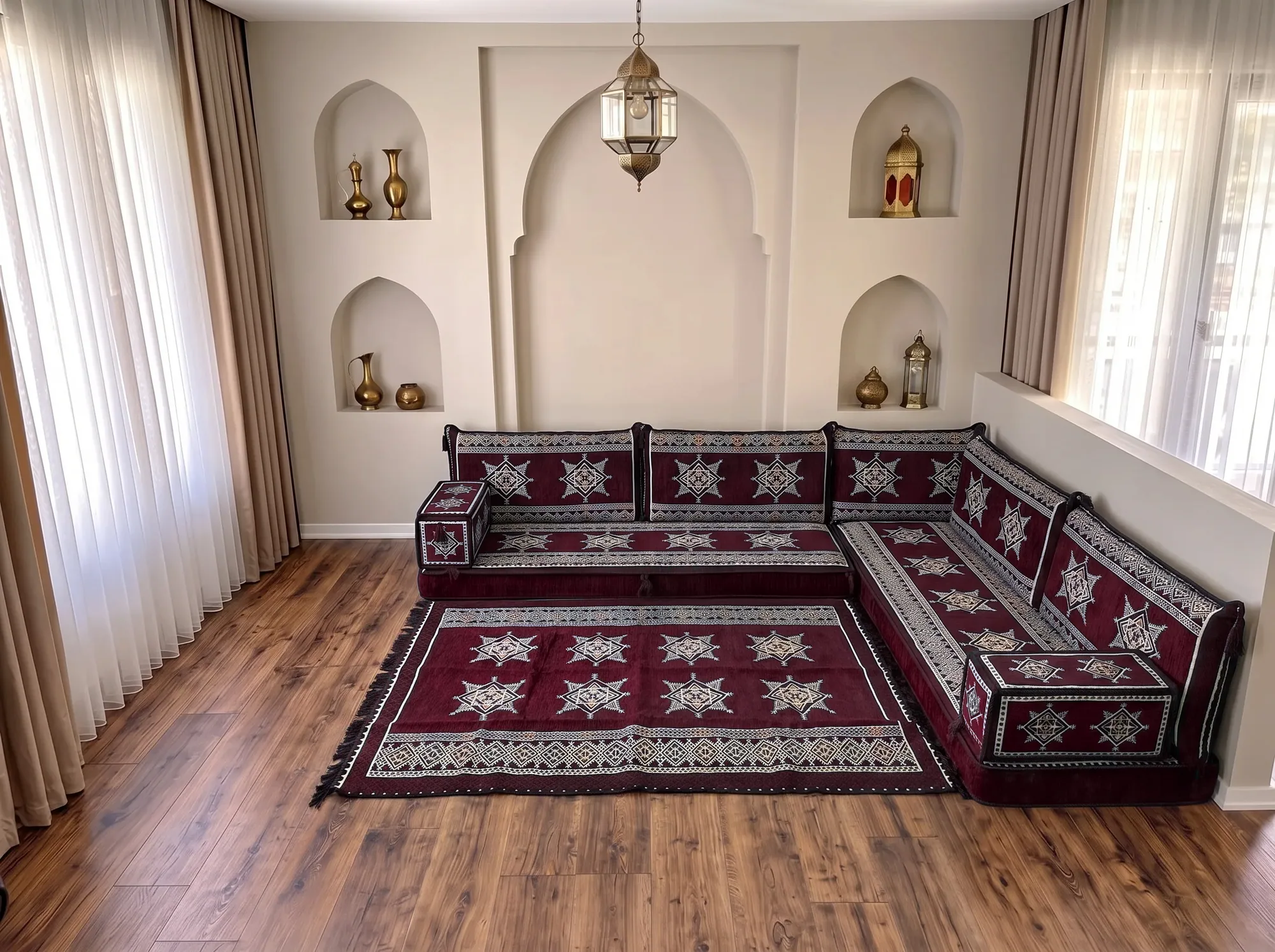
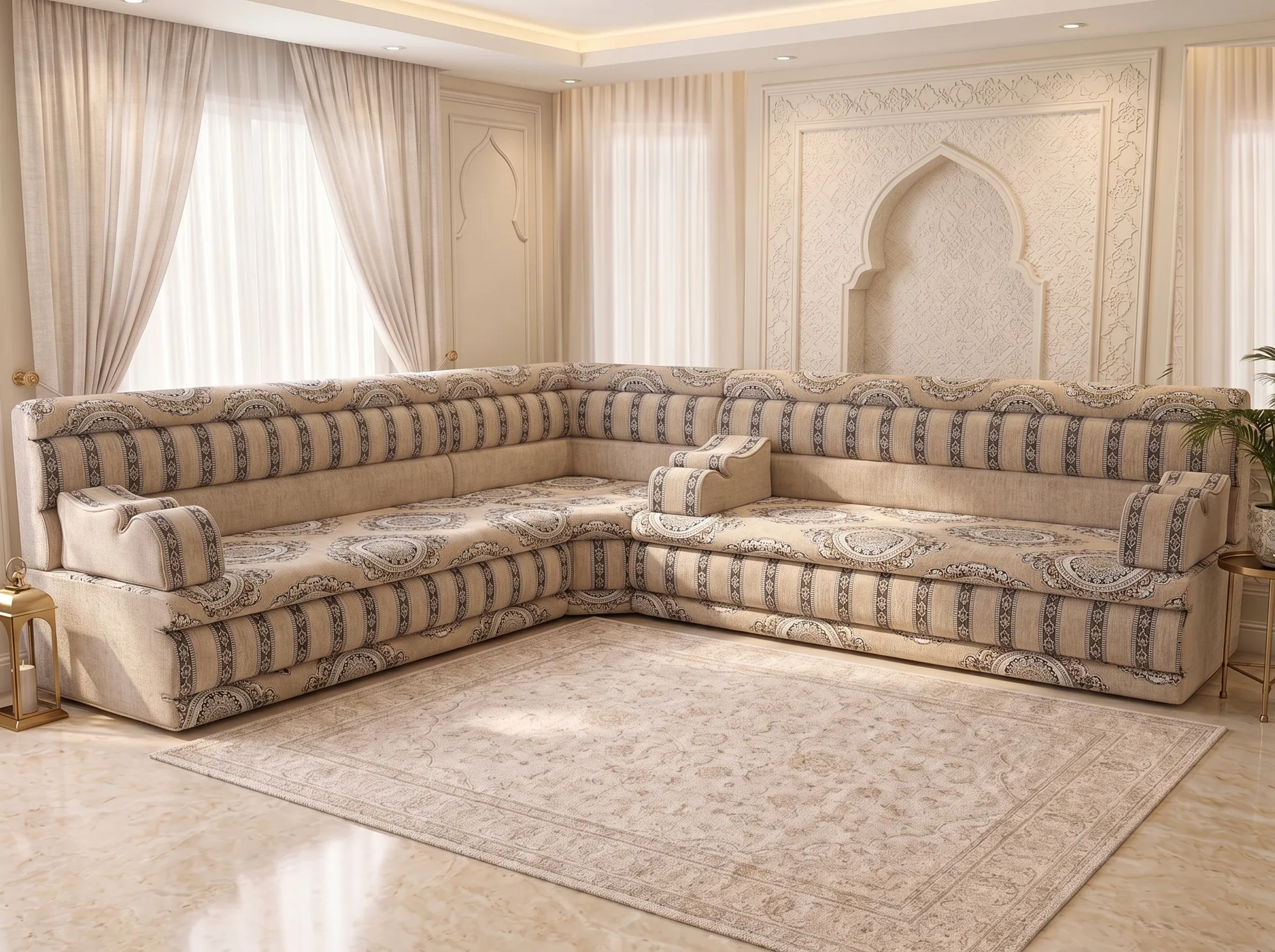
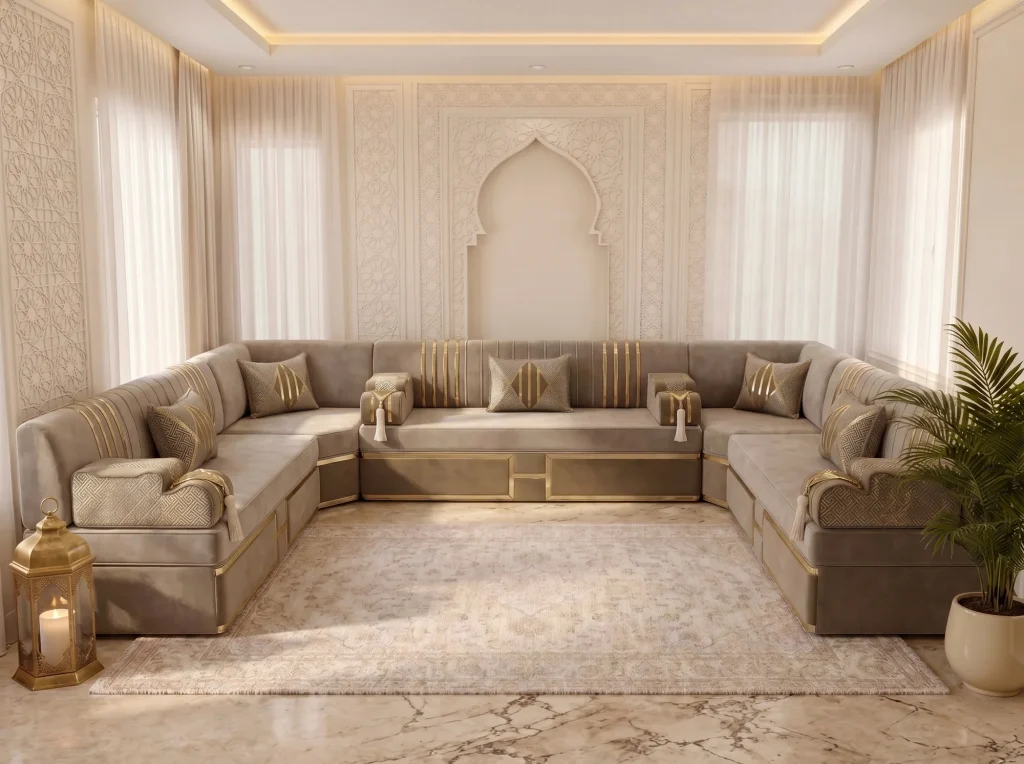
Sofhu makes two products for that room, and they should not be confused. The Arabic majlis, like the beige velvet U-shape at the top of this page, is raised to sofa height: structured, fully upholstered units with a solid base, tall fixed backs and arm bolsters. The Arabic floor sofa is the low set: a seat mattress at floor level, loose back cushions, armrest blocks and usually an ottoman.
What a Saudi Arabian majlis is
The majlis is a room, a gathering and a habit of hospitality at once. Saudi Arabia is one of the four countries, with the UAE, Oman and Qatar, that put the majlis on UNESCO’s Representative List of Intangible Cultural Heritage in 2015. UNESCO describes it as a large space with carpets on the floor and cushions against the wall, usually with a stove or fire for preparing coffee. What was recognised is the social practice, not a furniture style. You can read more in our piece on the majlis and UNESCO’s heritage list.
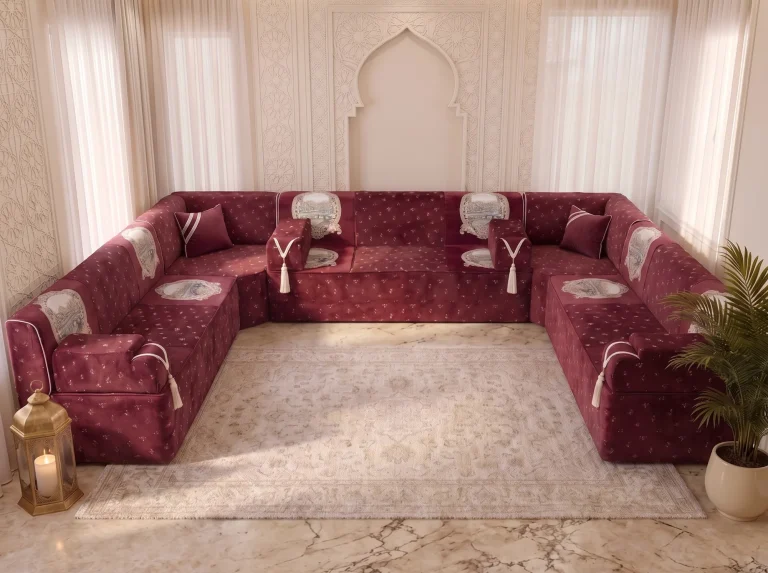
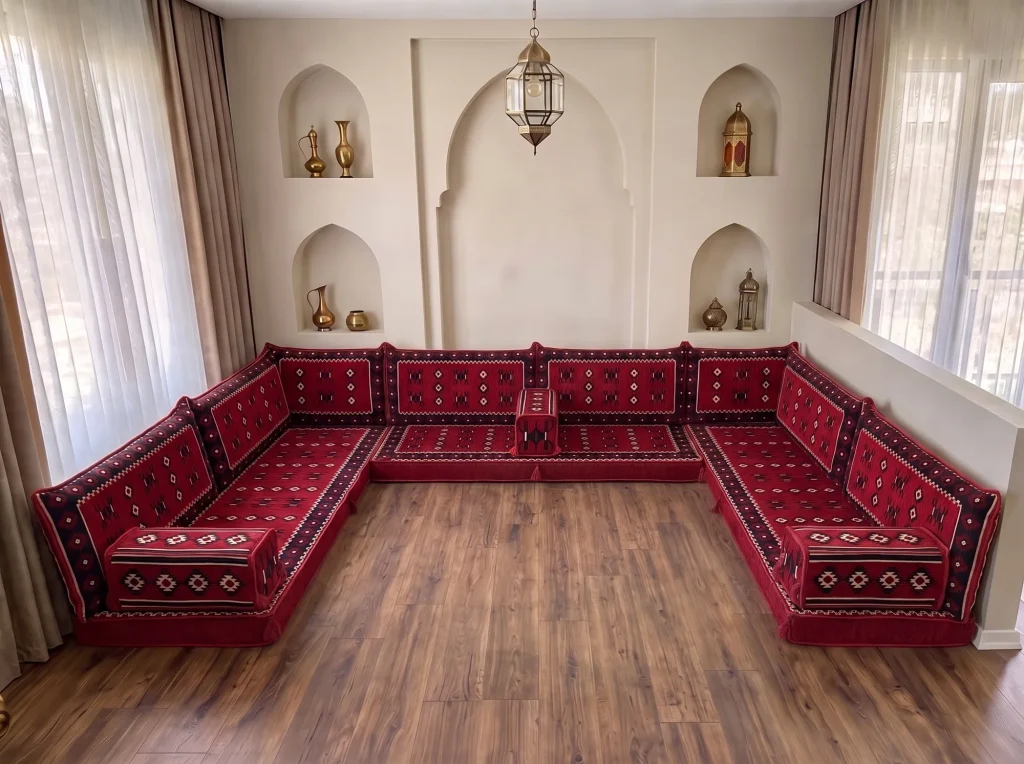
In practice the cushions sit around the walls, either on the floor or on a raised shelf. The three working parts have plain Arabic names. The seat mattress is the farsha. The backrest that leans on the wall is the masnad. The armrest bolster placed between sitters is the marka. A Saudi account of old Najdi houses names exactly these pieces, maraki and masanid, in the carpeted upper guest room. The red floor sofa below shows all three.
Najdi majlis: carved plaster and the coffee hearth
The Najdi majlis is defined by its walls and its fire. In the mud-brick houses of Riyadh and Qassim the plaster around the majlis is incised with stars and geometric designs, most densely around the coffee hearth and above the place where guests sit. Qassim used a hard white plaster and Riyadh a plainer clay finish.
Guests sat on rugs and leaned against cushions. Beside the hearth a shelf niche called the kamar held the coffee pots, and a vent in the roof let the smoke out. Some houses also had an upper guest room, carpeted and furnished with armrests and backrests.
Further north, in Hail and the Northern Borders, the hearth is a stone fireplace called al-mashab. It often sits in the middle of the room, opposite the main guest seat, so coffee is prepared in full view.
Hijazi majlis: the men’s rooms of the roshan house
In the Hijaz the majlis is one room in a sequence. The old houses of Jeddah, Makkah and Madinah are several storeys tall, with carved wooden roshan bay windows over the street. The men’s section is made up of the dihliz (entrance hall), the maq’ad, the majlis and the qa’a. These public rooms were for male visitors, and the upper rooms belonged to the family.
That vertical plan matters if you live in a narrow townhouse or an apartment today. The Hijazi majlis is one of several reception rooms stacked into a tall house, not a single great hall, and a compact L or a single run along the best wall follows the same logic.
Asir and the Eastern Province
Asir is known for colour on the walls. In Abha and the southwest, the walls of the rooms used for hosting are painted with al-Qatt al-Asiri, geometric shapes on a white gypsum base, traditionally by women. UNESCO inscribed it in 2017, and the same painting is found across the border in Saada in Yemen. In the Eastern Province the plaster fretwork follows a different line, related to Indian traditions and distinct from Najdi work.
| Region | Cities | What marks the majlis |
|---|---|---|
| Najd | Riyadh, Qassim | Incised star and geometric plaster, hearth with kamar niche |
| North | Hail, Northern Borders | Stone fireplace, al-mashab, opposite the main guest seat |
| Hijaz | Jeddah, Makkah, Madinah | Roshan houses with a suite of men’s reception rooms |
| Asir | Abha and the southwest | Al-Qatt al-Asiri wall painting on white gypsum |
What the record does not say about the seating
Here honesty is more useful than a neat story. The sources describe regional differences in walls, hearths and house plans. We have not found a reliable source stating that Najdi, Hijazi and Asiri floor sets differed in height, in the number of cushions or in fabric. You will see shops label a low red set “Najdi” and a brighter one “Asiri”. Treat those as shop labels.
So a Saudi-style set is a choice you make, not a specification. Choose the seat level your guests are comfortable with, a raised majlis or a floor sofa, the colour that suits your walls, and a pattern you will be happy to see for years. Our guide to majlis seat height and the comparison of floor seating and a raised diwan cover the practical side.
Saudi floor seating from Sofhu: the pieces and the foam
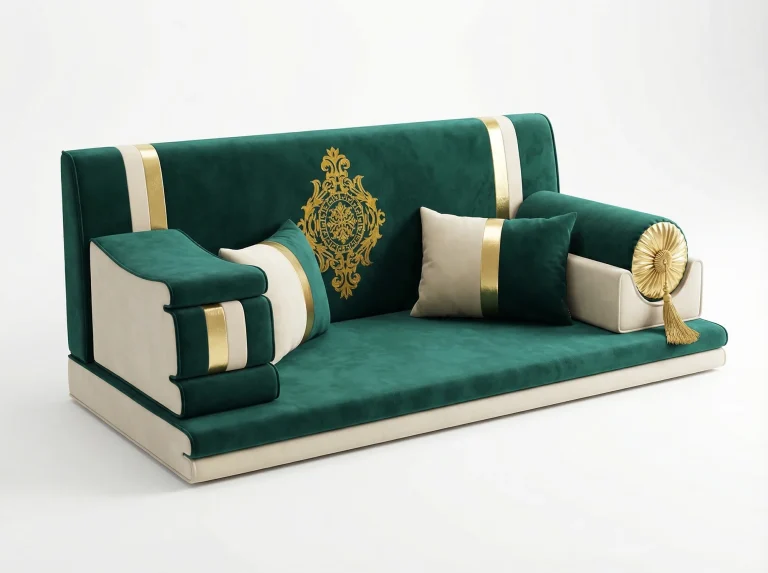
A Sofhu floor sofa is the same three parts the tradition names: seat mattresses, backrests and armrests, cut to the length of your walls. Rugs, an ottoman, loose floor cushions and curtains can be added to match.
The cushions are filled with 32 kg/m³ (32 DNS) polyurethane foam and contain no springs. Density tells you how much material is in the cushion, not how hard it feels. Denser foam generally keeps its height and support longer, which matters in a room where the same seats are used every evening. On a custom order you can ask for a softer or a firmer feel, and for a different seat thickness. The foam density guide explains the numbers.
Every cover is zippered and comes off for washing at 30°C. Floor sofas are modular, so pieces can be rearranged when the room changes. They are not freestanding: the backrests need a wall behind them. A raised majlis is fixed in shape once it is made, with its backs built in.
Sadu pattern, colour and fabric
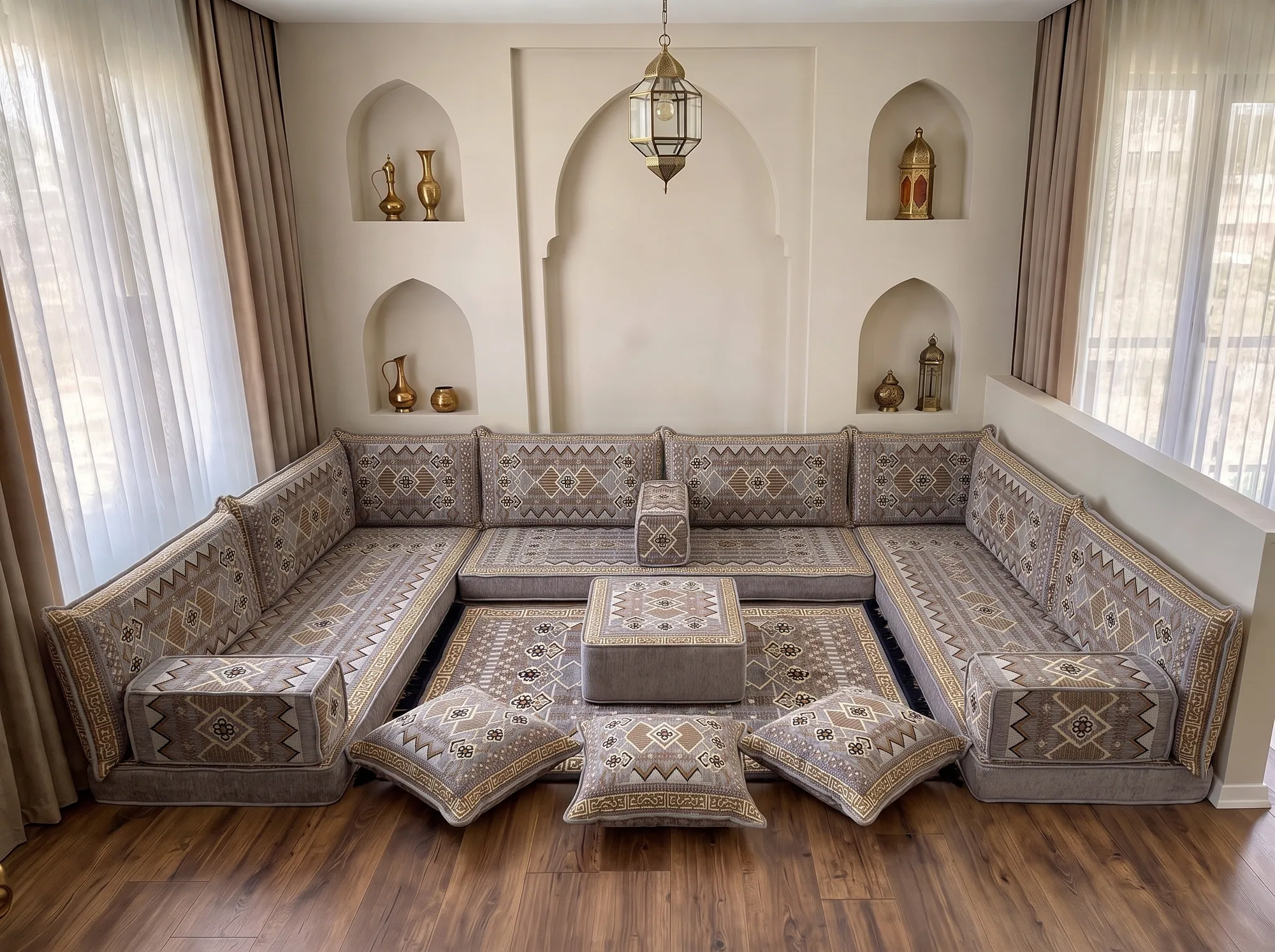
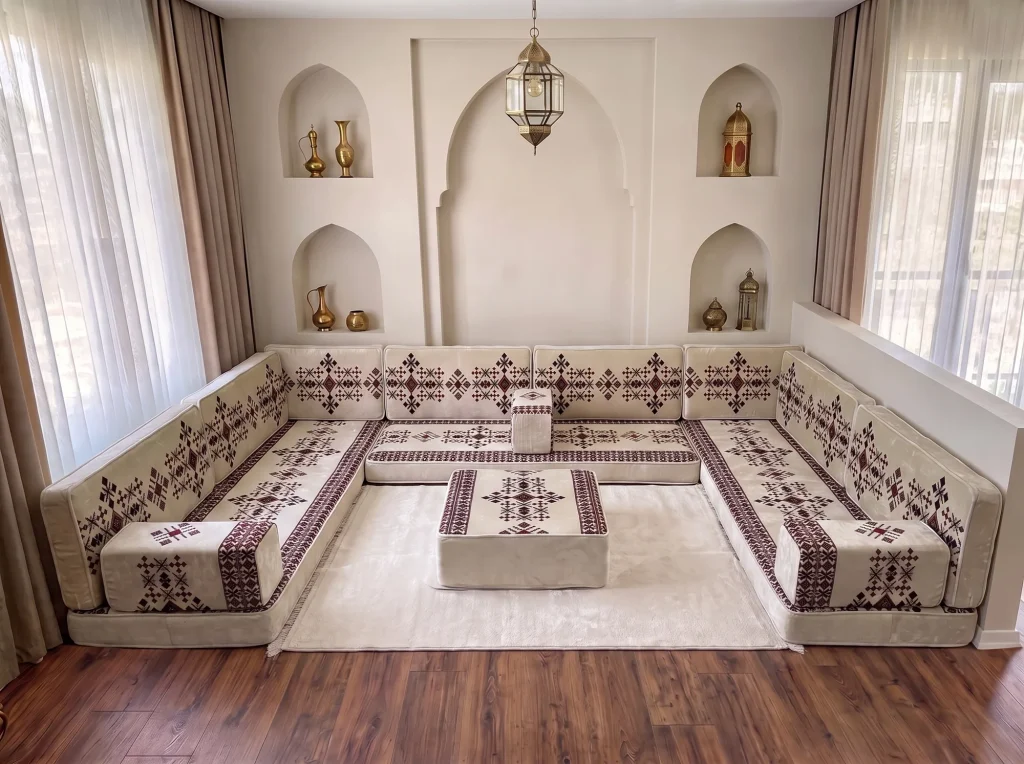
The pattern most often associated with Saudi-style seating is sadu. Sadu is the Bedouin weaving of narrow geometric bands, and Saudi Arabia’s sadu weaving joined the UNESCO list in 2020. The red floor sofa shown earlier on this page uses an upholstery fabric with black and white sadu-style motifs. The cream floor sofa above carries the same idea in burgundy on a pale ground, which sits more quietly in a modern villa. Neither is hand-woven sadu, and we say so plainly. The background is on our Bedouin majlis and sadu page.
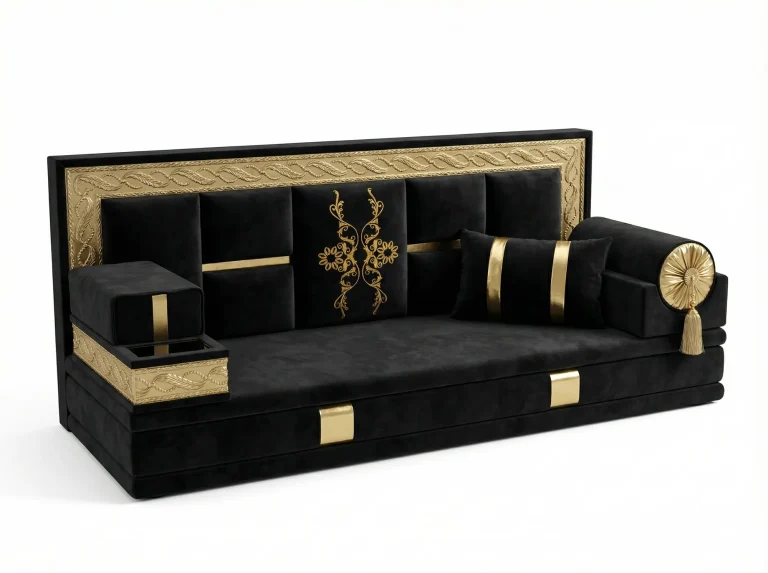
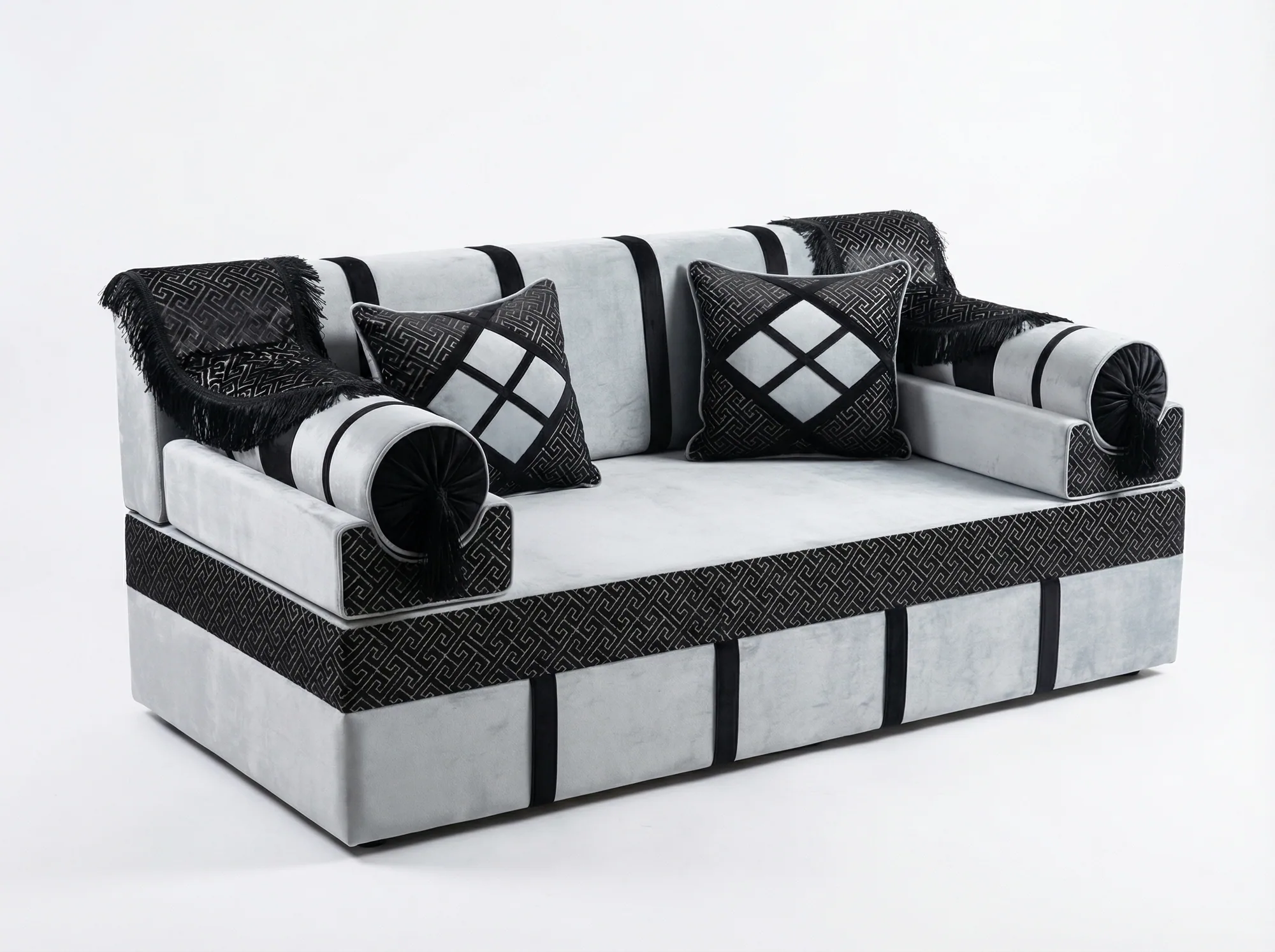
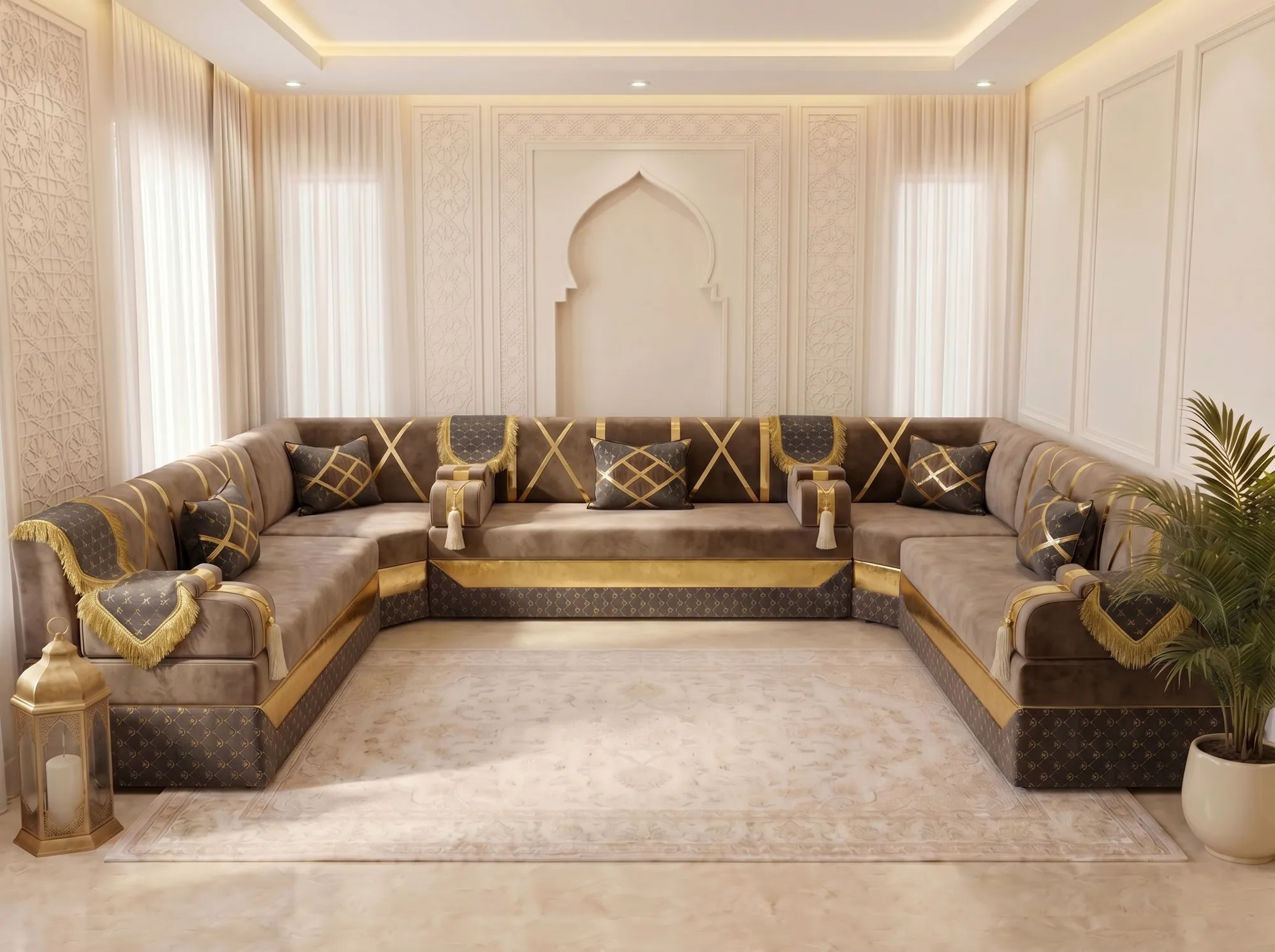
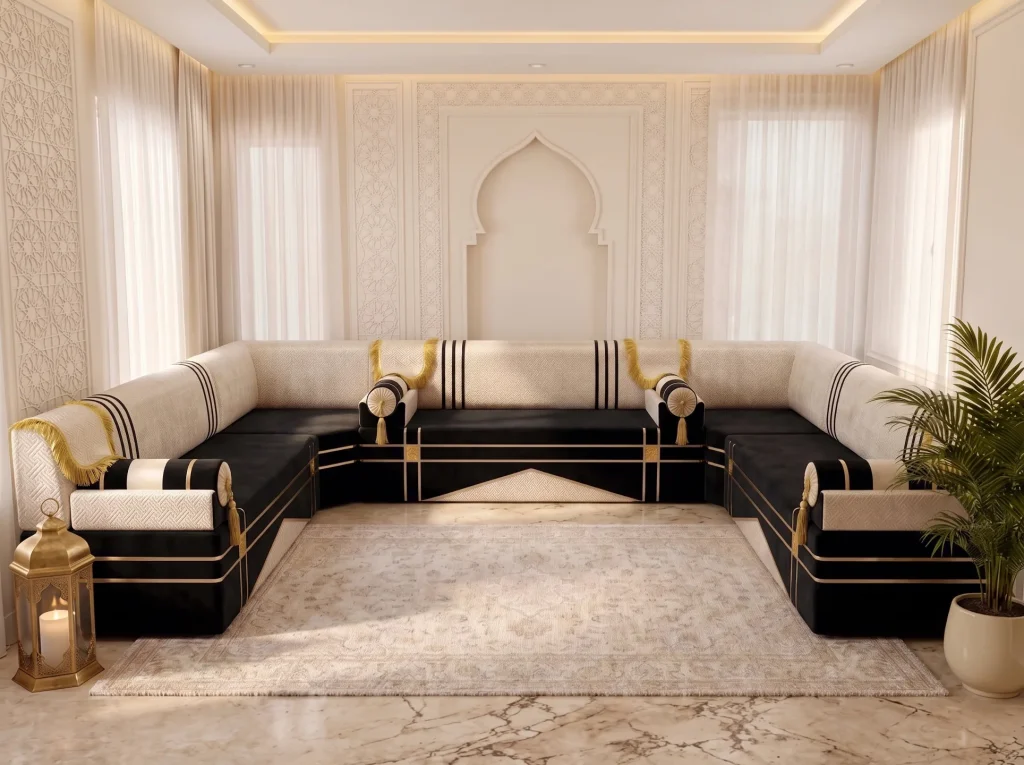
For a formal reception room there is another direction: a raised majlis in plain velvet with gold detail, such as the black and cream set below with its gold trim lines.
For heat, Sofhu’s linen fabrics are described as porous, with a cooling feel in hot weather, while velvet suits a formal, air-conditioned guest room. The fabric series page lists the names, and velvet, linen and jacquard compared helps you decide.
Layout: seating along the walls
A majlis is perimeter seating, so the layout follows the walls you have. One wall gives a single run. Two walls give an L. Three give the U that fills a dedicated guest room. If the room has a hearth or a coffee corner, leave the main guest seat facing it, as the northern houses do.
To get a quote, we need four things:
- The length of each wall that will carry seating, measured at floor level.
- The position and width of doors, windows that reach the floor, columns and sockets.
- A phone photo or a rough sketch of the room.
- The colour or model you like, and whether you want a rug, ottoman or curtains.
The step-by-step method is in how to measure a room for a majlis, and the L-shape and U-shape layouts page shows each plan.
Ordering in Saudi Arabia and abroad
Sofhu is the manufacturer. Sets are made in Türkiye, vacuum packed, and shipped free worldwide to your door. We have no local shops in the Kingdom or anywhere else, so every order starts with your measurements and ends with a delivery. Duties or taxes may apply depending on the destination, and you can ask us about that before you order. Ordering a majlis from Türkiye to the Gulf sets out the process, and our existing Arabic sofa in Saudi Arabia page shows more of the range.
If you are weighing this style against its neighbours, compare it with the Kuwaiti diwaniya and the Yemeni diwan and mafraj, or see the whole Arabic majlis range. When you are ready, send your measurements through get a quote or on WhatsApp.