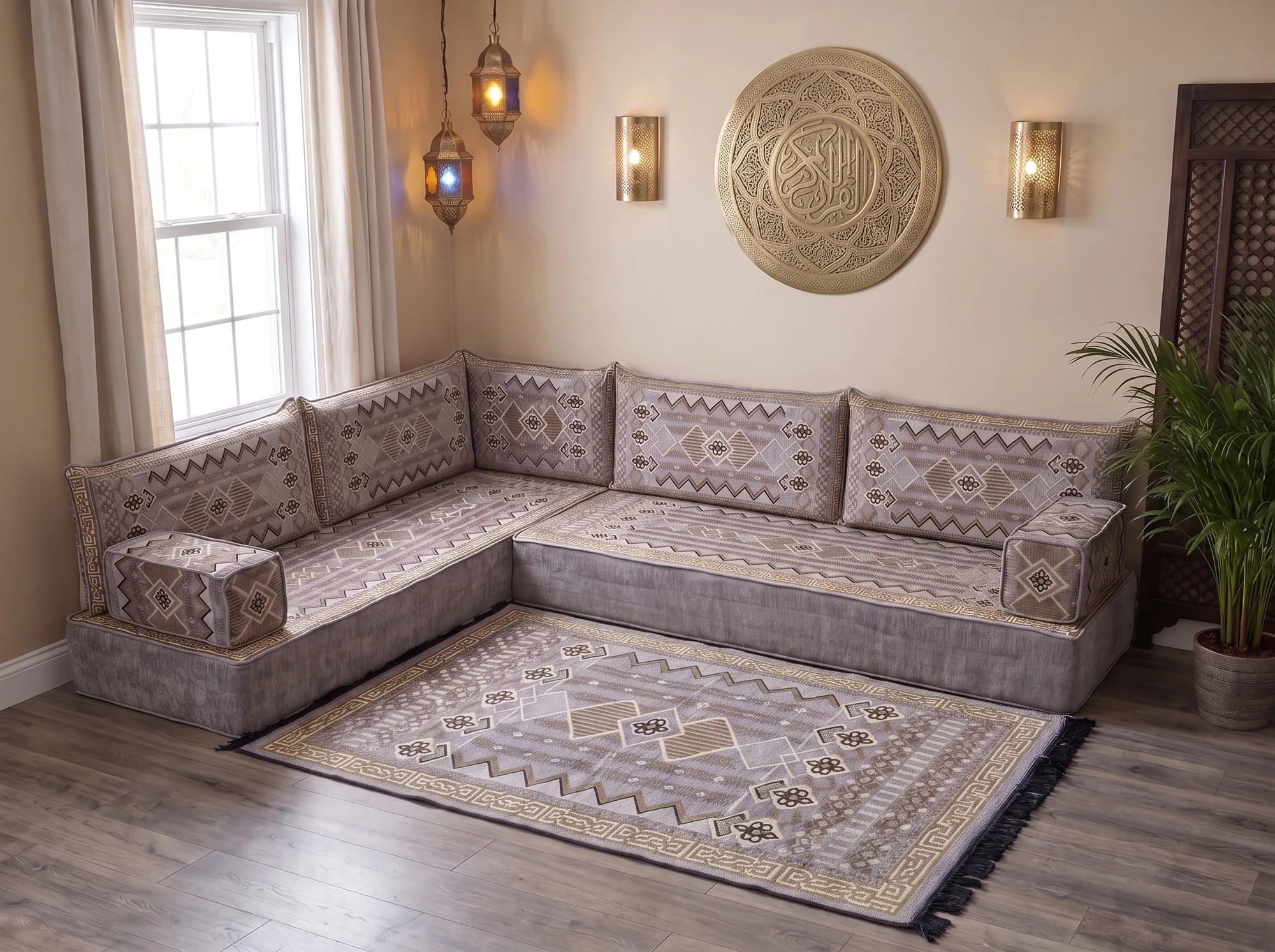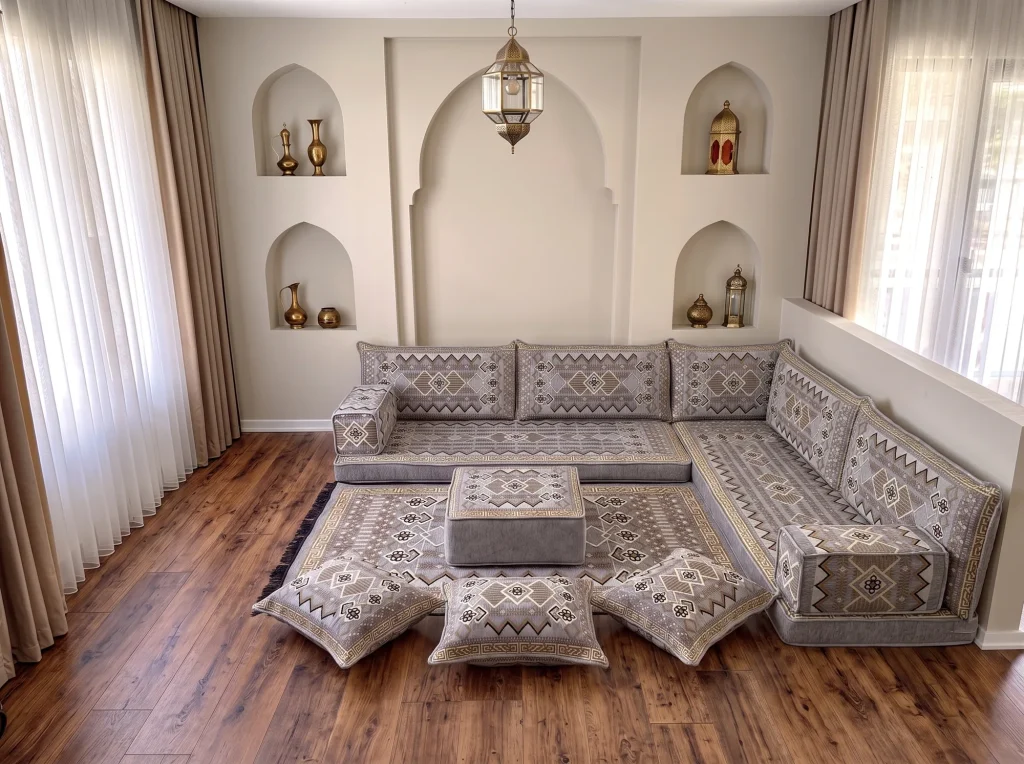
A Turkish sedir is a raised seat built against the wall of a traditional house, usually under the windows, and cushioned for sitting cross-legged. Its modern descendant is the şark köşesi, a corner of firm kilim-patterned cushions on the floor or a low base. Sofhu, a manufacturer in Türkiye, makes floor sofa sets and wooden bench sets to measure and ships free worldwide.
- Turkish
- sedir; şark köşesi (oriental corner); minder (floor cushion)
- Sedir
- A raised seat built in against the wall
- Şark köşesi
- A corner set of firm cushions, on the floor or a low base
- Place of honour
- The corner farthest from the door
- Typical pattern
- Kilim geometry
- Sofhu filling
- 32 kg/m³ (32 DNS) high-density foam, no springs
- Made in
- Türkiye, to your wall measurements
- Shipping
- Free worldwide
On this page
- Turkish sedir: a seat that is part of the house
- The Ottoman majlis: from houses to palaces
- The corner seat: who sits where
- Şark köşesi: the oriental corner of today
- Sedir, şark köşesi and Arabic floor sofa side by side
- Kilim patterns and upholstery
- What Sofhu makes: floor sets and wooden-base sets
- Ordering a Turkish floor seating set
The Turkish sedir was never bought in a shop. It was built with the house: a platform of wood, stone or mud-brick along the wall, covered with cushions and placed where the light and the view were. The şark köşesi sold today, a corner of firm patterned cushions, is what remains of that idea once the platform is taken away. This page explains both, shows where each sits beside an Arabic floor sofa and the raised Arabic majlis, and sets out what Sofhu makes in its own country’s tradition. For the carved-frame product line, see the existing Turkish Majlis by Sofhu page.
Turkish sedir: a seat that is part of the house
The sedir is architecture first and furniture second. In the traditional Turkish house it is a fixed raised seat against the wall, often made during construction, with cushioned backrests added on top. It usually runs along the windowed wall, and often continues round three sides of the room.
Its height had a purpose. The platform was set so that a seated person could rest an arm on a cushion and look out of the window. The form goes back to life in tents: a raised surface for sitting cross-legged by day, on which bedding could be laid at night. Like the Afghan toshak, it made one room serve several uses.
The Ottoman majlis: from houses to palaces
What some people call an Ottoman majlis was simply the ordinary way of sitting across Ottoman society. The sedir was universal, found in village houses, town mansions, offices and palaces alike. It lost ground only from the nineteenth century, when Western chairs and sofas arrived and gradually pushed it out of fashionable rooms.
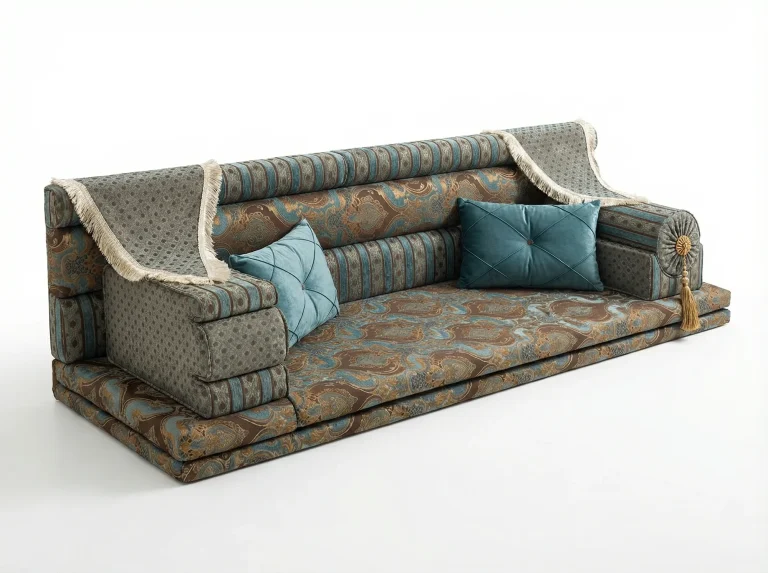
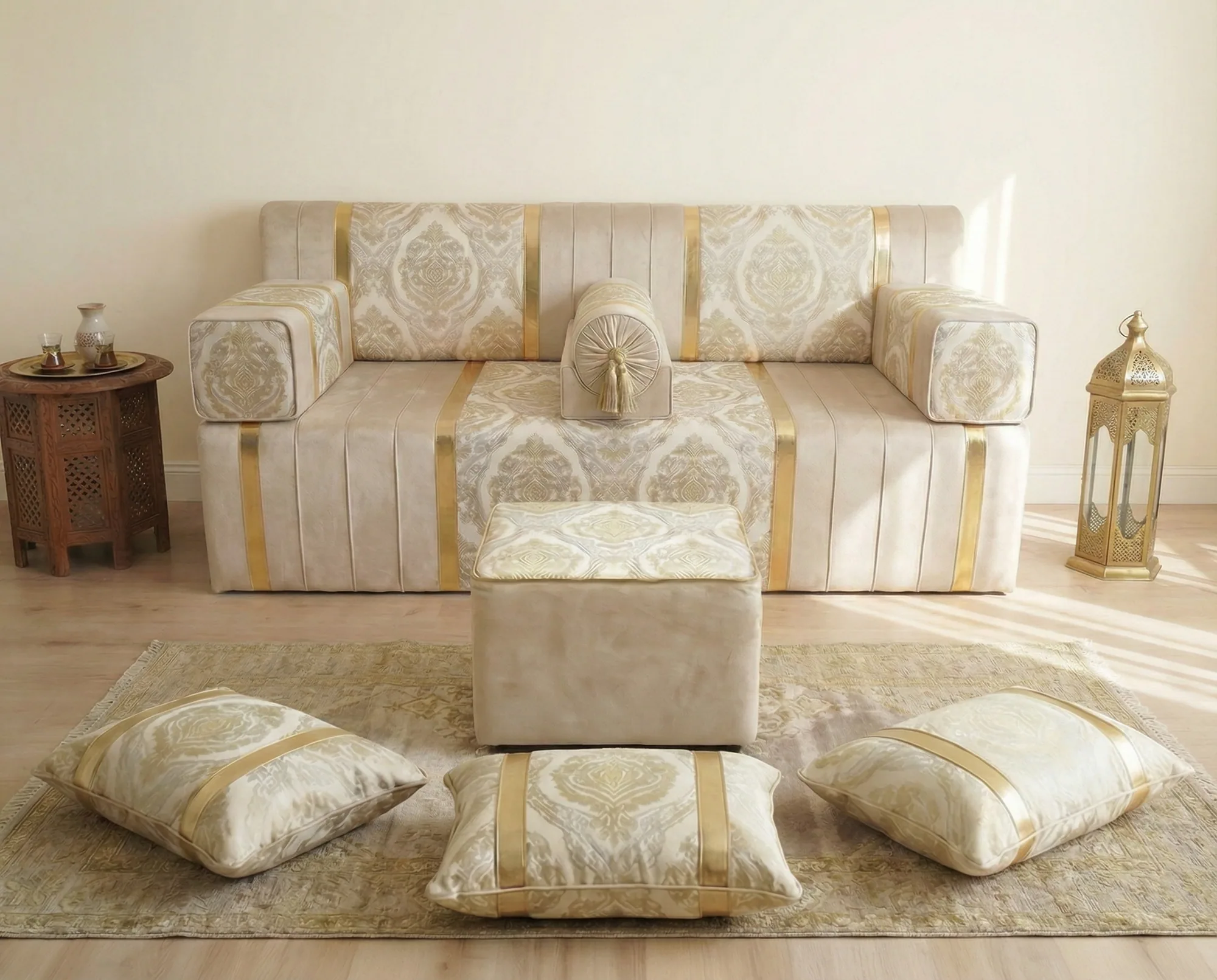
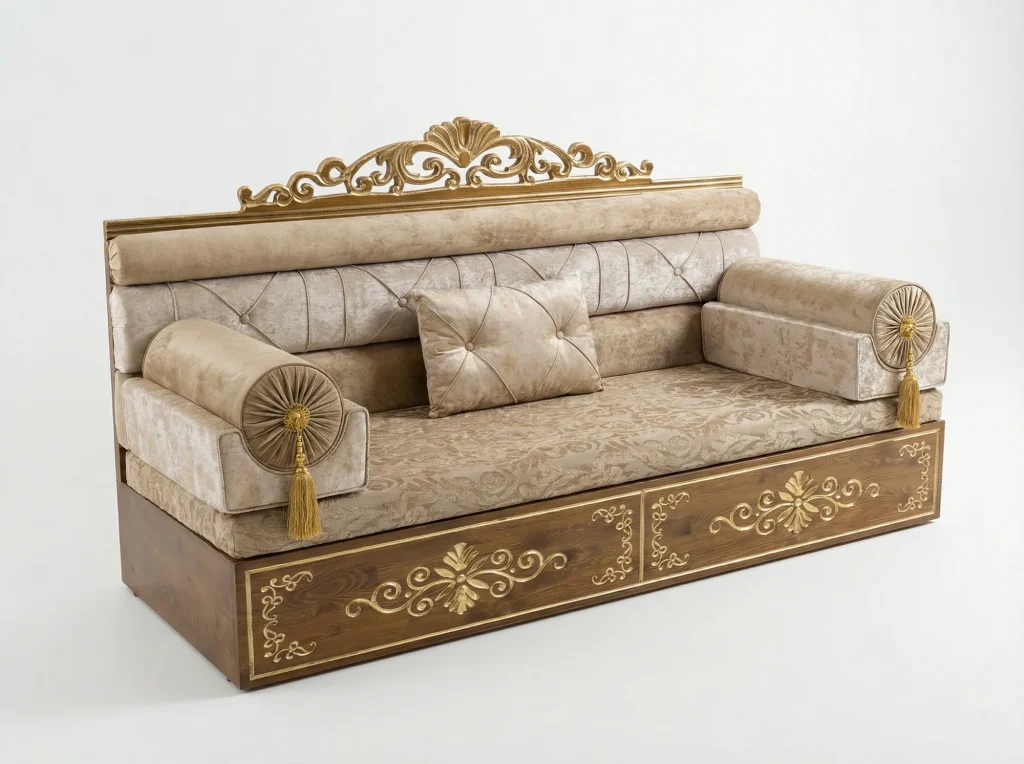
That history left a mark on English. Sofa, divan and ottoman all travelled west from this world, as the article on furniture words English took from the East explains. Sofhu’s bench-form pieces, like the champagne one above with its carved crest, are modern designs in an Ottoman manner. They are not copies of a museum piece and we do not present them as such.
The corner seat: who sits where
On a sedir, position carries meaning. The corners rank above the middle of the run, and the place of honour is the corner farthest from the door. An honoured guest is led there.
This is worth knowing when you plan a set. If you build an L-shape, put the corner on the side away from the entrance so the best seat is where tradition puts it. It is also a seat that looks back across the whole room towards the door.
Şark köşesi: the oriental corner of today
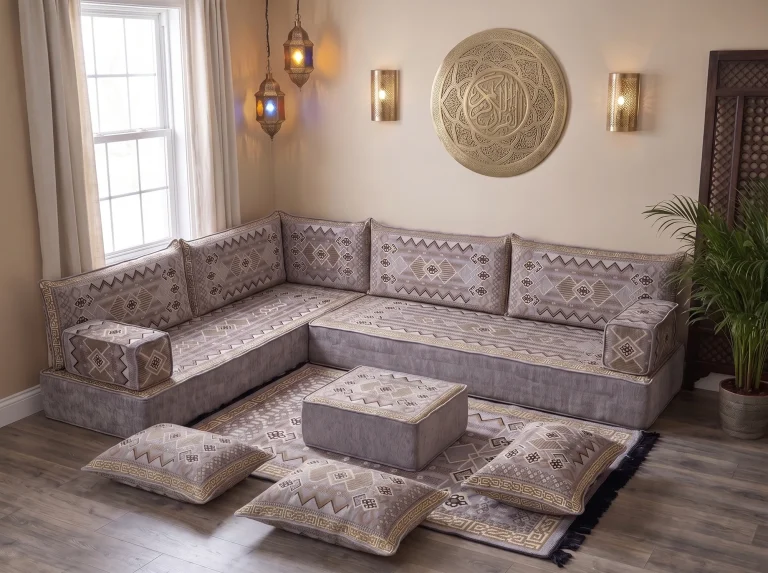
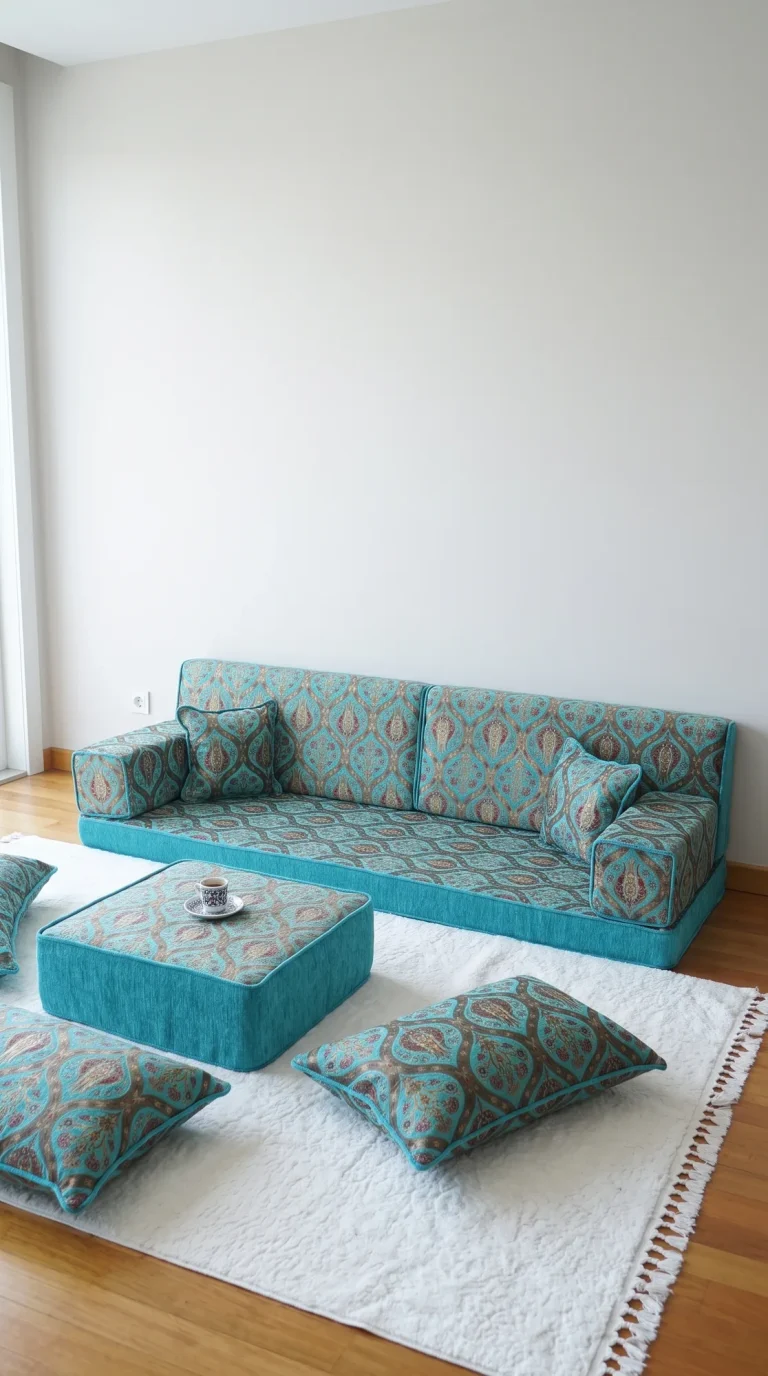
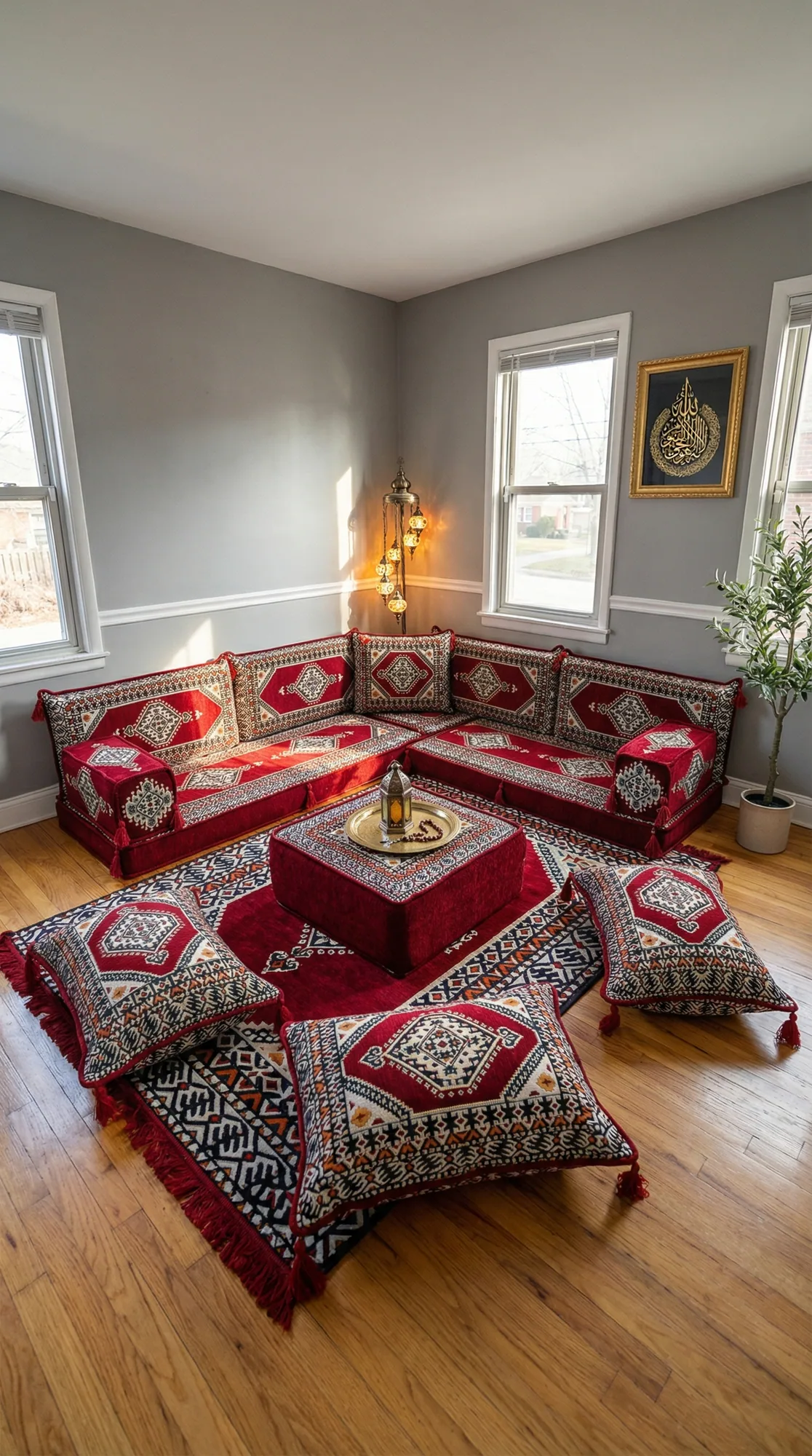
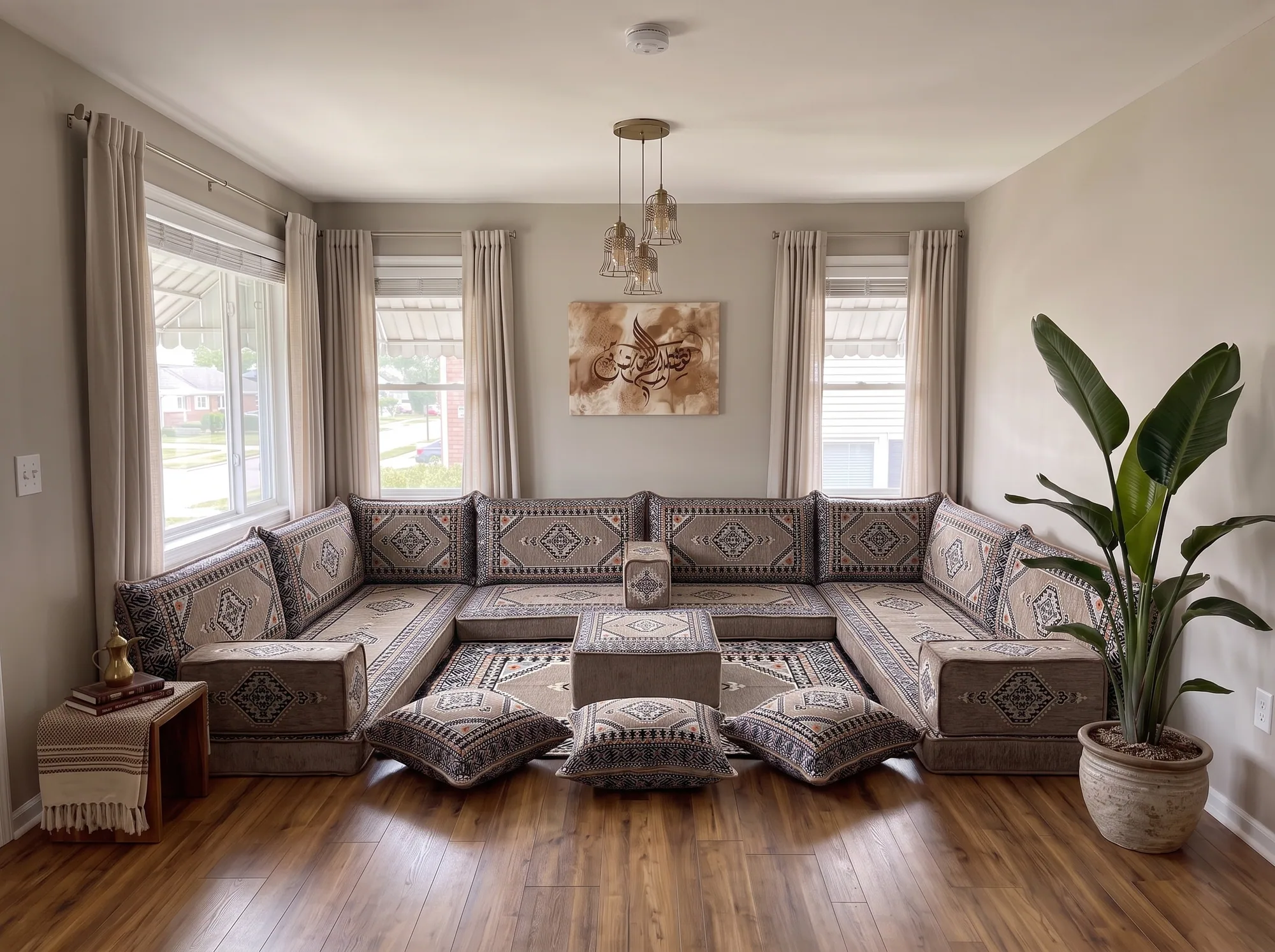
Şark köşesi means “oriental corner”, and it is the retail name in Türkiye for a low cushion corner set. It is made of large, firm foam cushions, placed either directly on the floor or on a low wooden base, and covered in kilim-pattern upholstery. Turkish shops sell it as a set of many pieces, covering seats, backs, armrest cushions and loose pillows.
Related words you will meet:
- minder or yer minderi: a floor cushion
- yer sediri: a floor-level sedir, another name for the same low set
- divan: a legless, backless sofa
Among Turkish families in Germany the term is often written without its accents as sark kosesi, and the German-language page on the Sark Köşesi covers it for that audience. There is also a Turkish-language page on the şark köşesi takımı.
Sedir, şark köşesi and Arabic floor sofa side by side
The three are related but not interchangeable. The differences are in the base, the footprint and the cloth.
| Sedir | Şark köşesi | Arabic floor sofa | |
|---|---|---|---|
| Seat level | Raised, built in | Floor or low base | Floor |
| Footprint | One to three walls, under windows | An L in one corner | Full perimeter |
| Moves with you | No | Yes | Yes |
| Typical cloth | Cushions on a platform | Kilim pattern | Velvet, sadu or brocade |
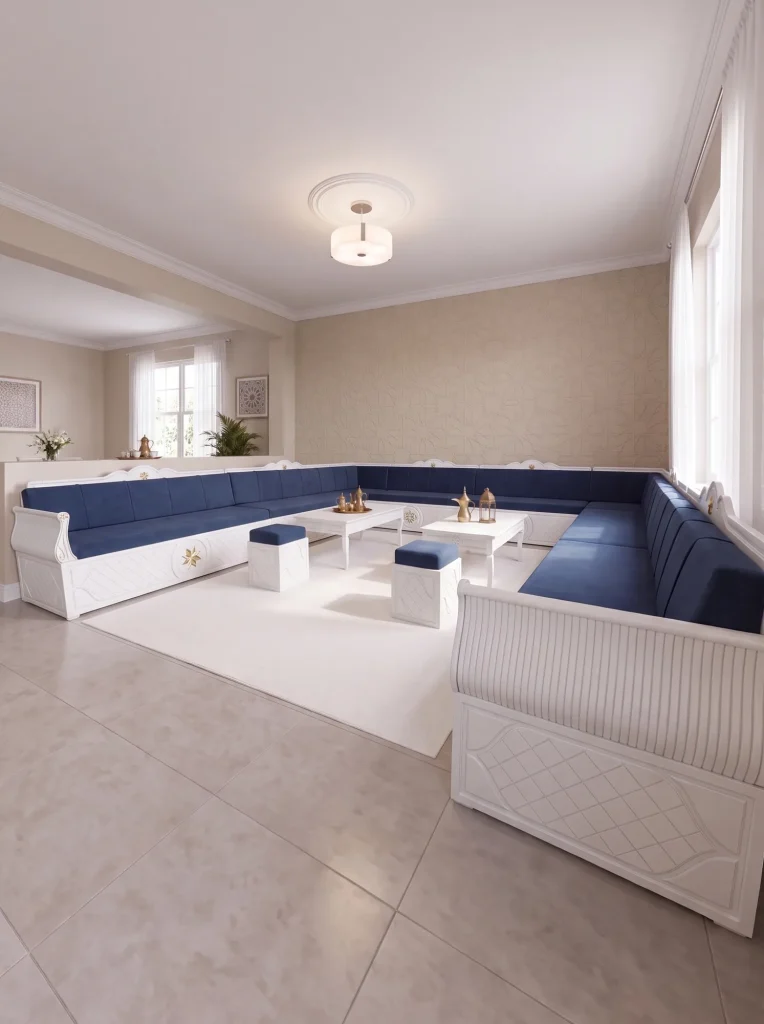
So a Turkish floor sofa and an Arabic floor sofa can be built from the same kind of cushions. What makes one Turkish is the corner plan and the kilim geometry. Sofhu’s Arabic floor sofa page covers that low product. The Arabic majlis is a different one: raised to sofa height on a solid upholstered base, with fixed backs and arm bolsters, and in height closer to the old sedir than to the cushion corner. The guide comparing floor seating and a raised diwan helps if you are undecided about height.
Kilim patterns and upholstery
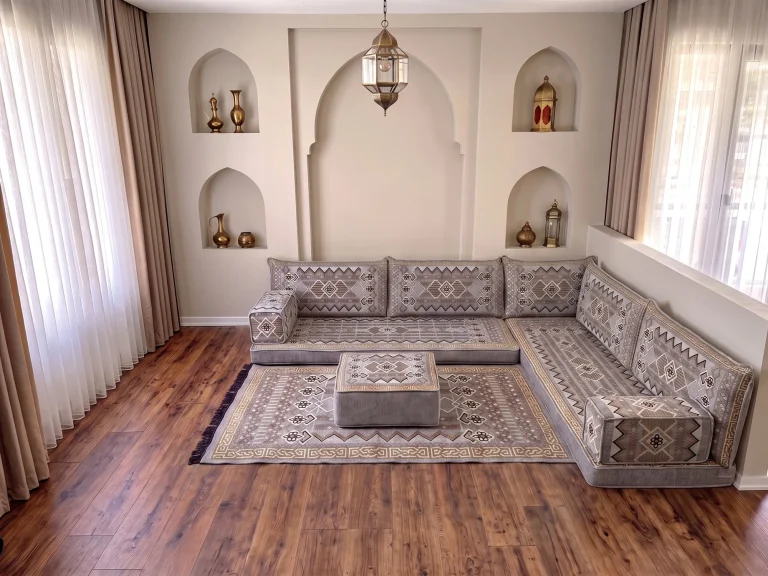
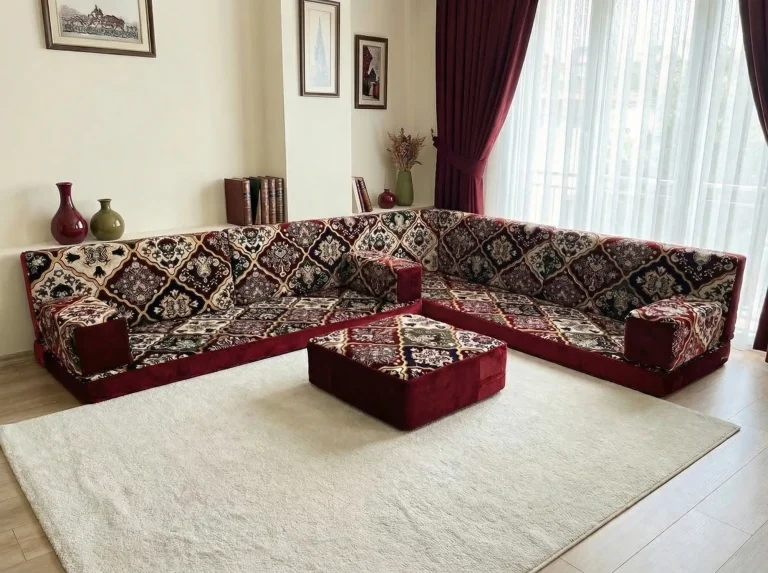
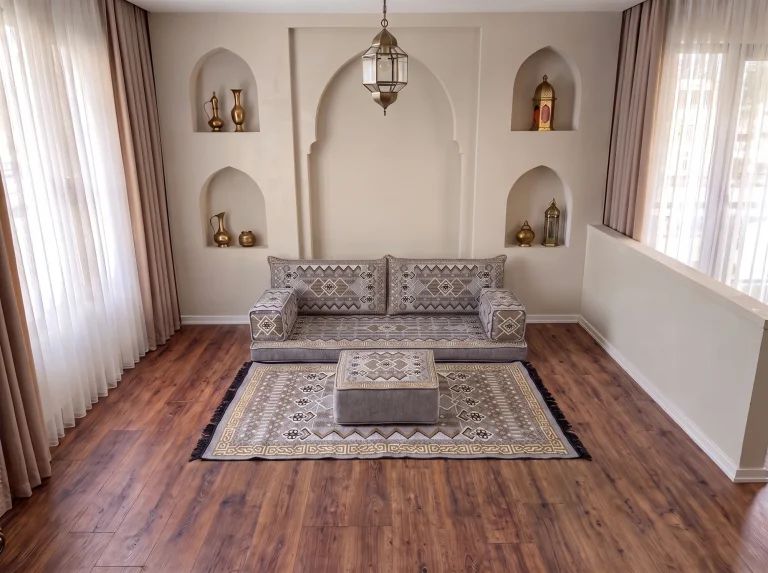
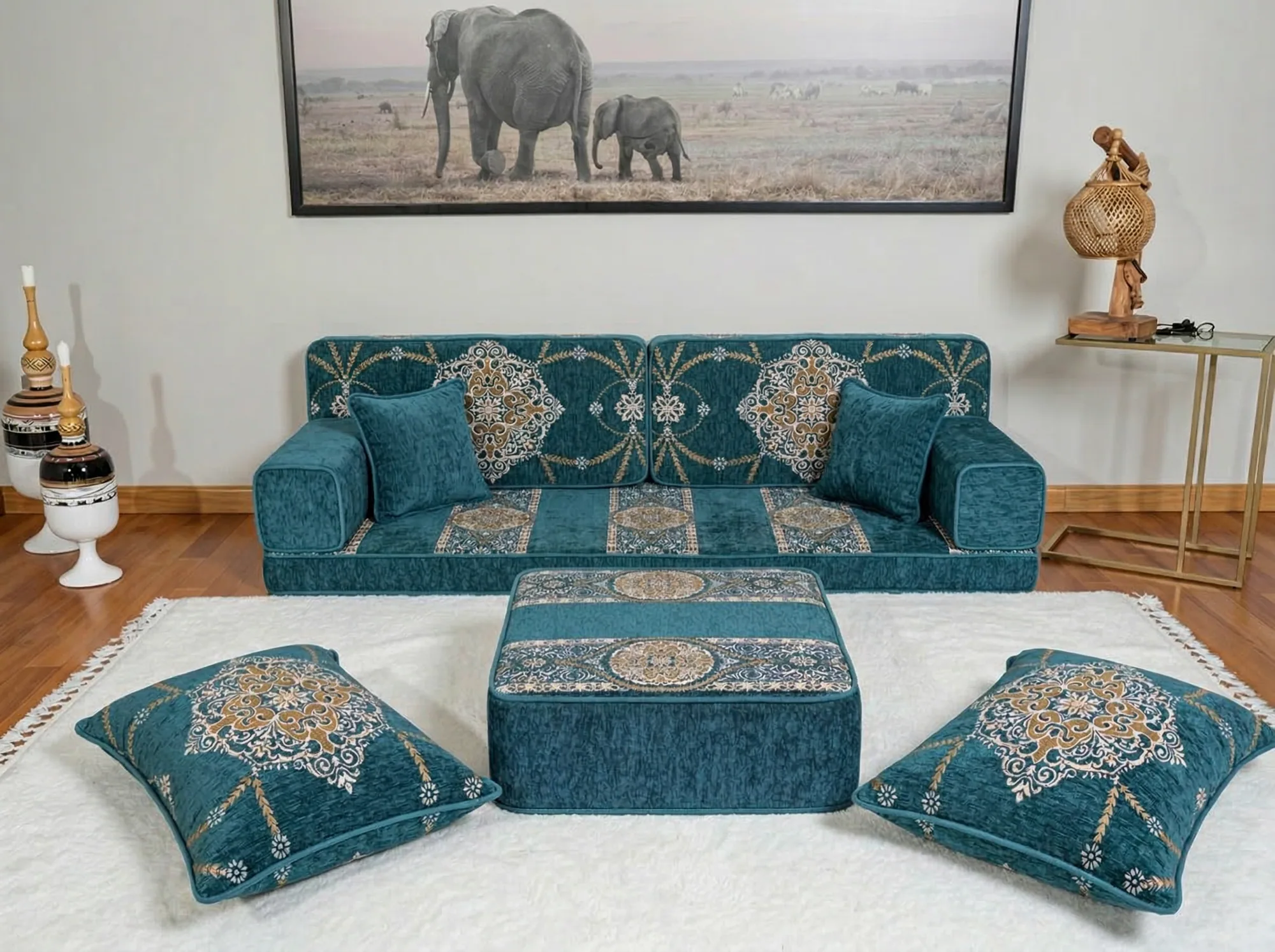
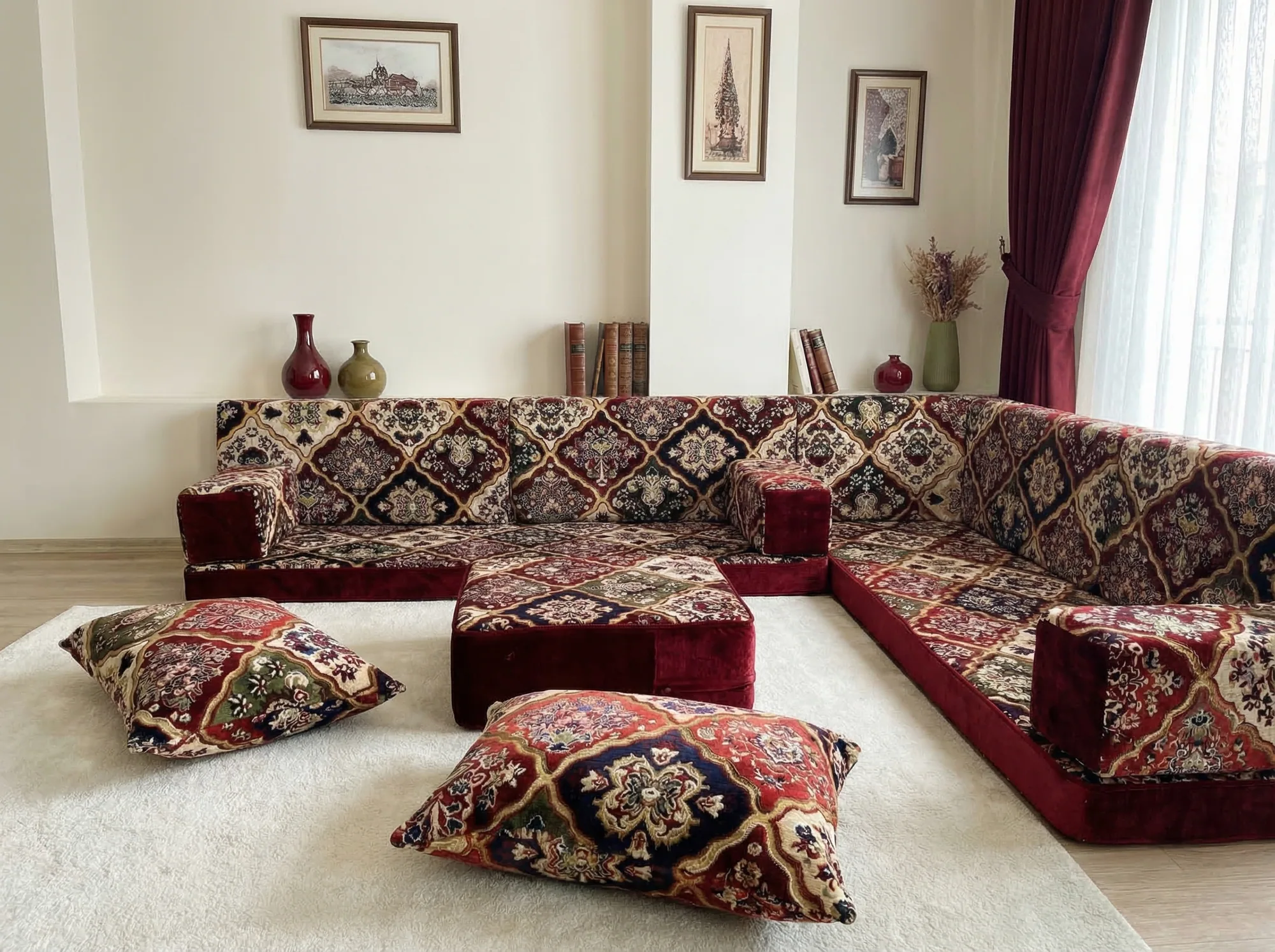
Kilim geometry is the signature of Turkish floor seating: stepped diamonds, hooked borders and banded stripes, in place of the sadu stripe or the Gulf brocade. Sofhu’s Gray Gold set at the top of this page is a calm version, with gold and beige motifs on grey. The burgundy floor sofa below carries a bolder medallion.
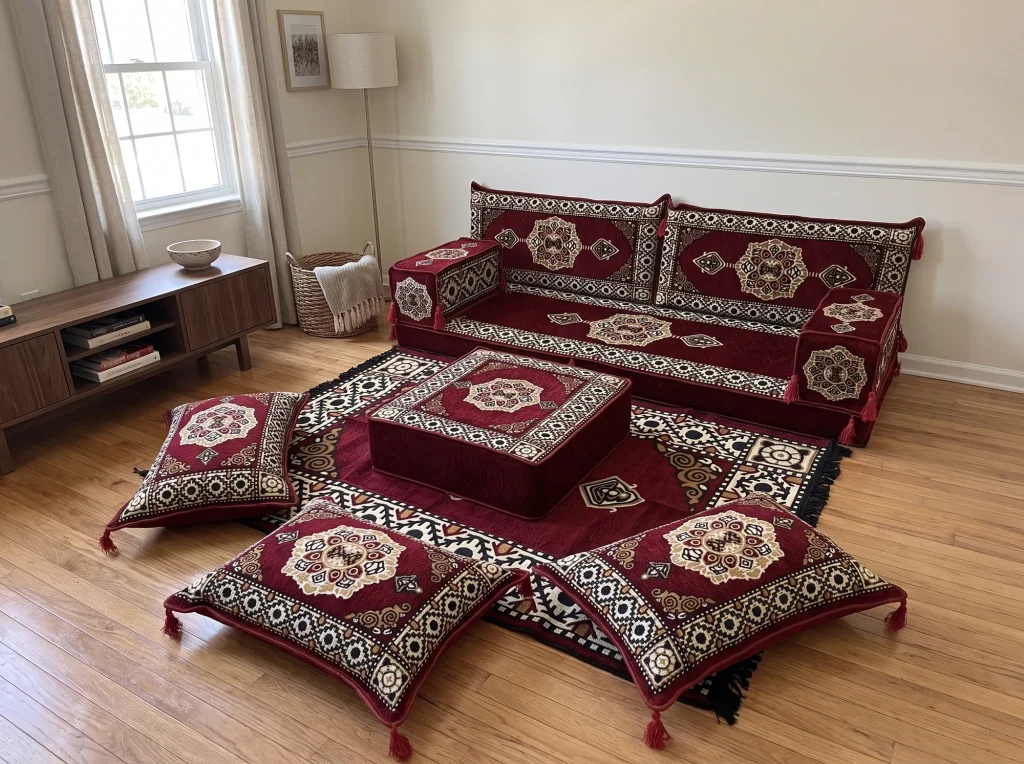
On Sofhu’s carved Turkish majlis line, the upholstery is described as a richly patterned, velvet-textured carpet fabric, with woven ethnic fabric on the armrests. For floor sets you can choose from the wider range, including chenille, velvet, woven and linen fabrics. Patterned weaves forgive daily use better than plain pale cloth, which is one reason the kilim look has stayed popular in family rooms.
What Sofhu makes: floor sets and wooden-base sets
Sofhu is a manufacturer in Türkiye, so this is the home tradition, and it is made in three forms.
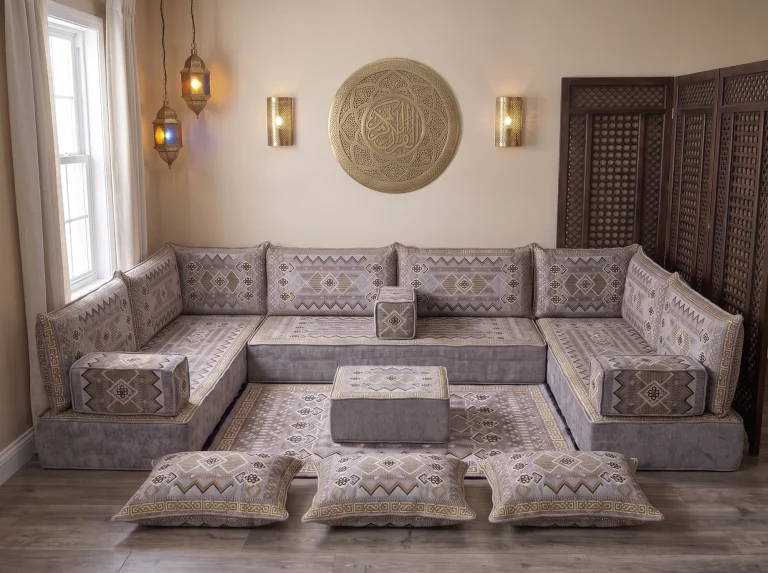
- Floor-level sets. Seat cushions on the floor with backrests and armrests, as a single row, L-shape or U-shape. These need a wall behind them.
- Wooden bench sets. Cushions on a handmade wooden frame, the closest thing to a movable sedir. The site lists them as cedar Arabic majlis sets, where “cedar” stands for the word sedir.
- Carved Turkish majlis sets. A frame that Sofhu states is solid beech with hand-carved accents, including the Althahabi model.
All cushions are filled with 32 kg/m³ foam, called 32 DNS in the Turkish trade. The figure is the weight of one cubic metre and tells you how much material is in the cushion, not how hard it is. The Polyurethane Foam Association notes that denser foam generally holds its original properties better. There are no springs, and covers are zippered and removable.
Ordering a Turkish floor seating set
Each set is cut to the room, which is in keeping with a tradition where the seat was built to the wall. Send the length of each wall, the position and sill height of the windows if you want the seat beneath them, the location of the door, and a photo. Say whether you want the cushions on the floor or on a wooden base.
The set is vacuum packed and shipped free worldwide. Turkish communities in Germany are spread across Berlin, Hamburg, Cologne, the Ruhr cities, Frankfurt, Stuttgart and Munich, and the existing page on Arabic sofas in Germany covers ordering there. Duties or taxes may apply depending on the destination, so ask first.
Related traditions are the Kurdish diwan and Persian poshti seating, and the broader guides are oriental sofa sets and Middle Eastern sofas. With measurements in hand, get a quote by measurement or message Sofhu on WhatsApp.