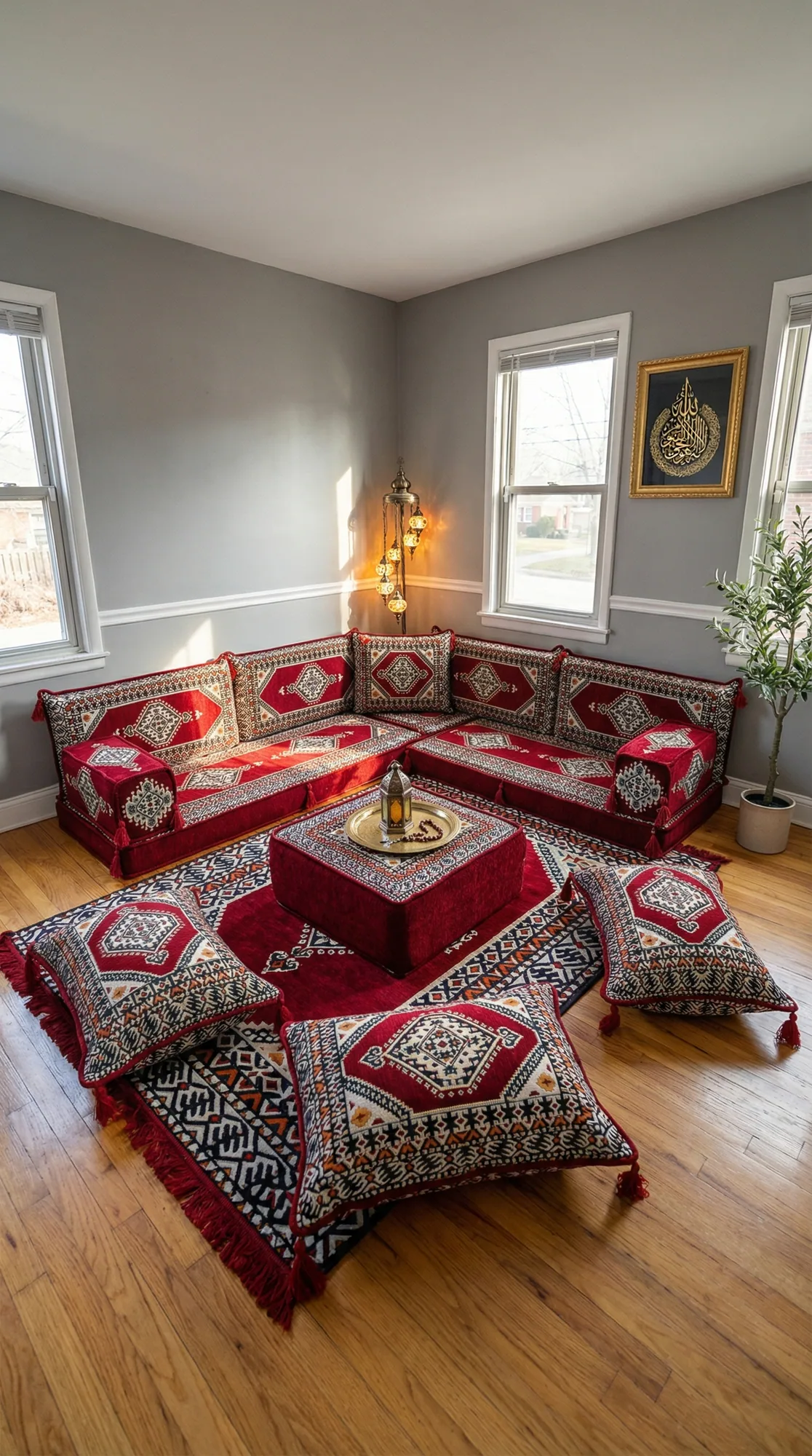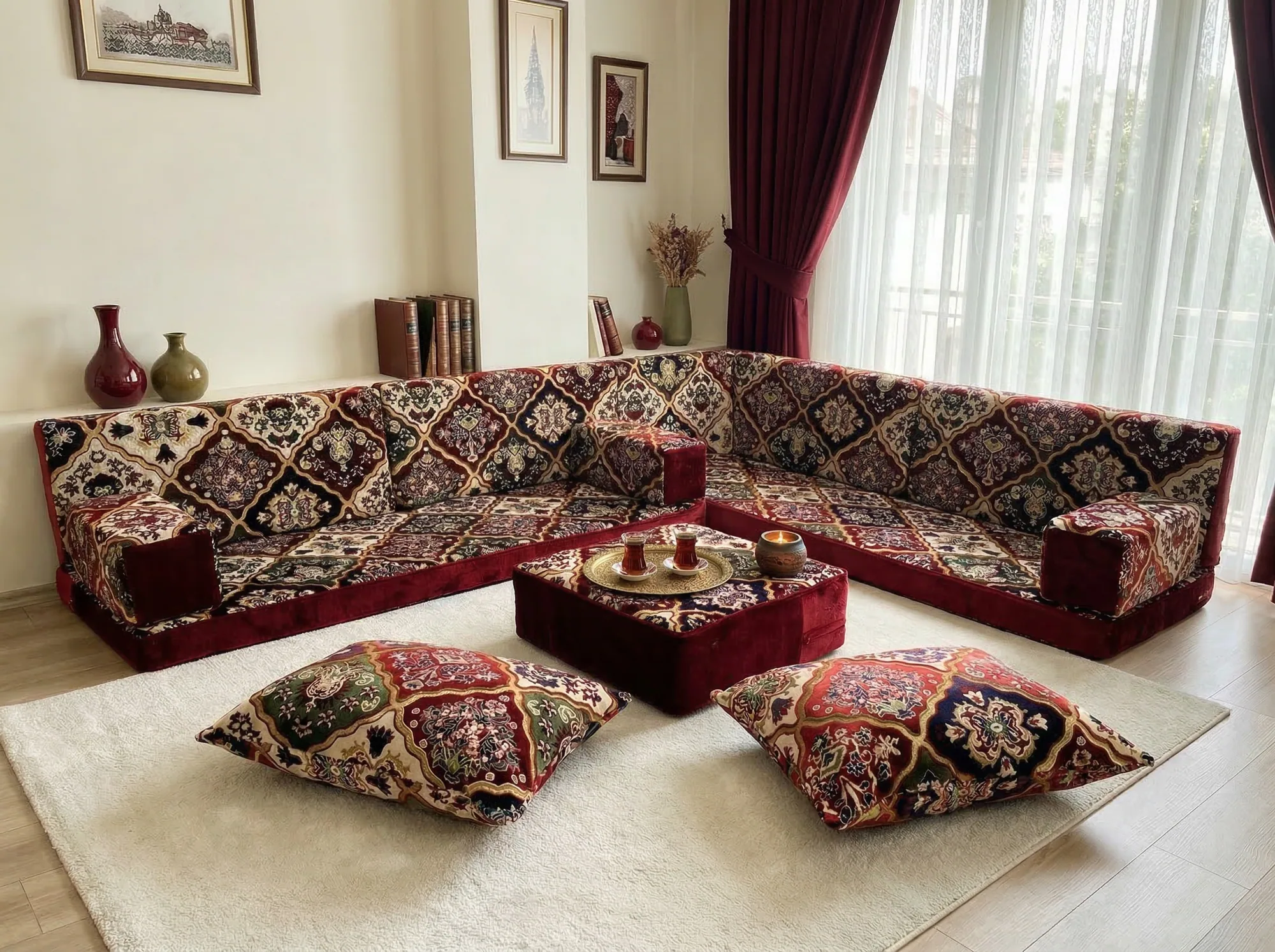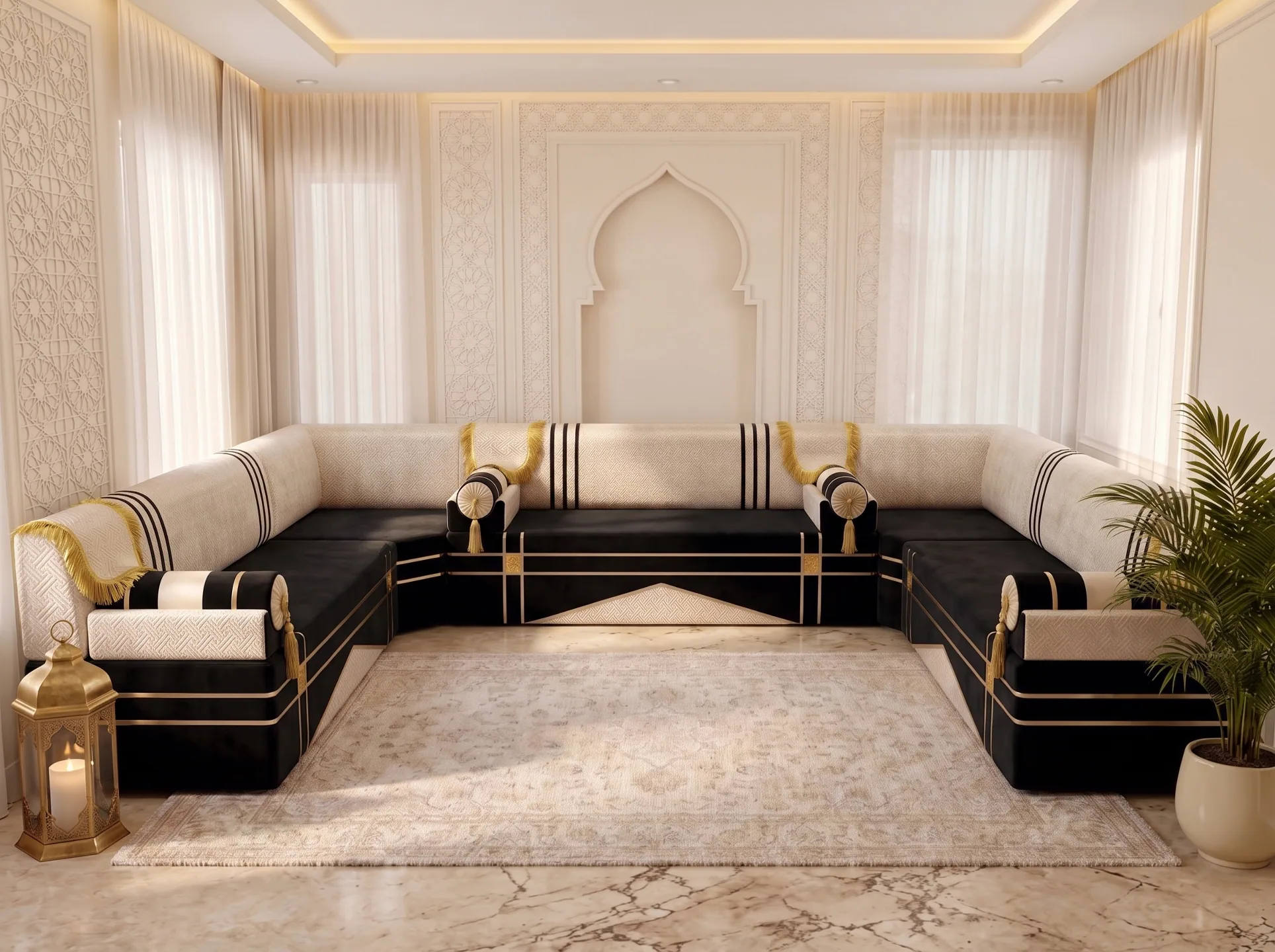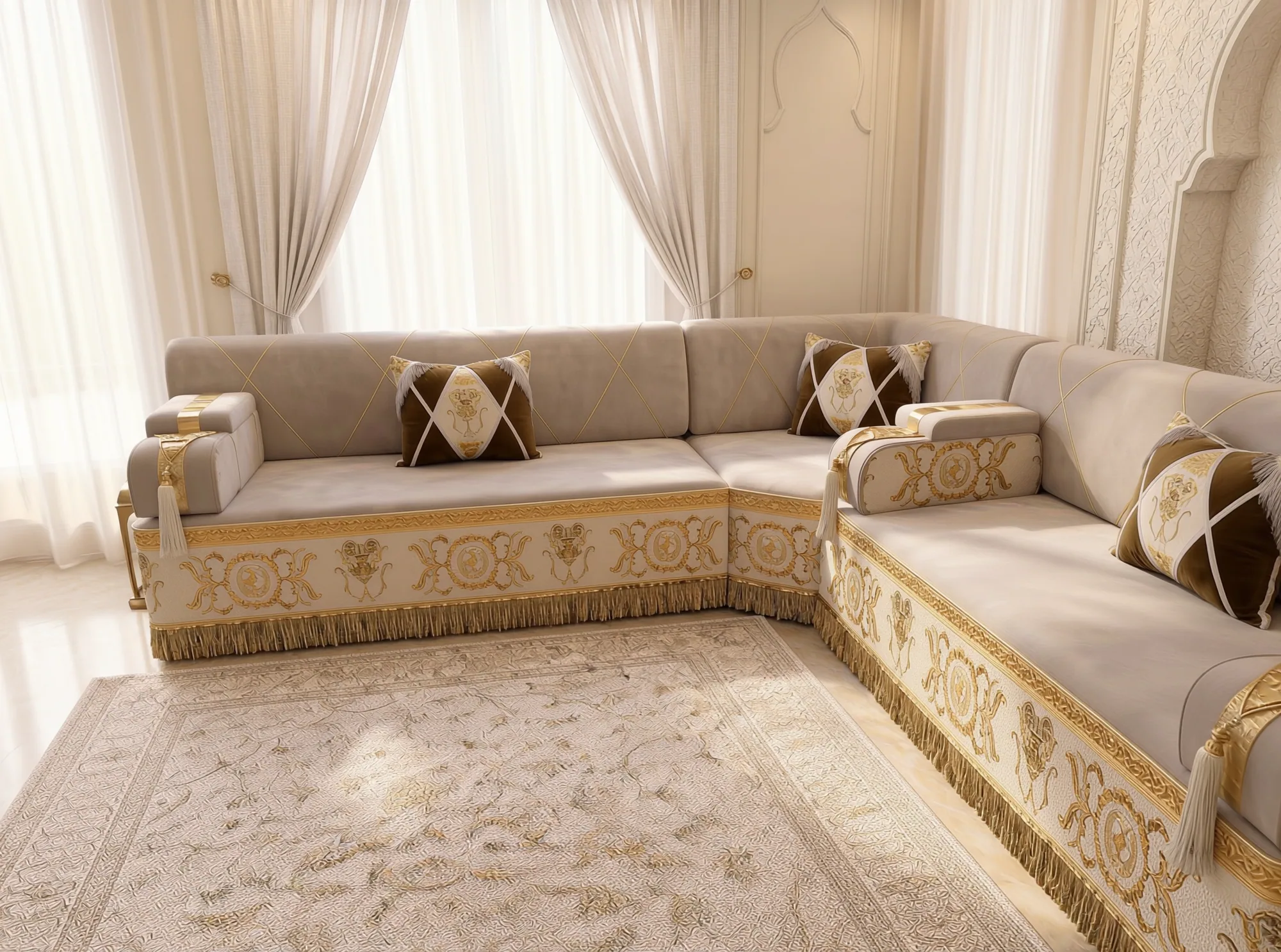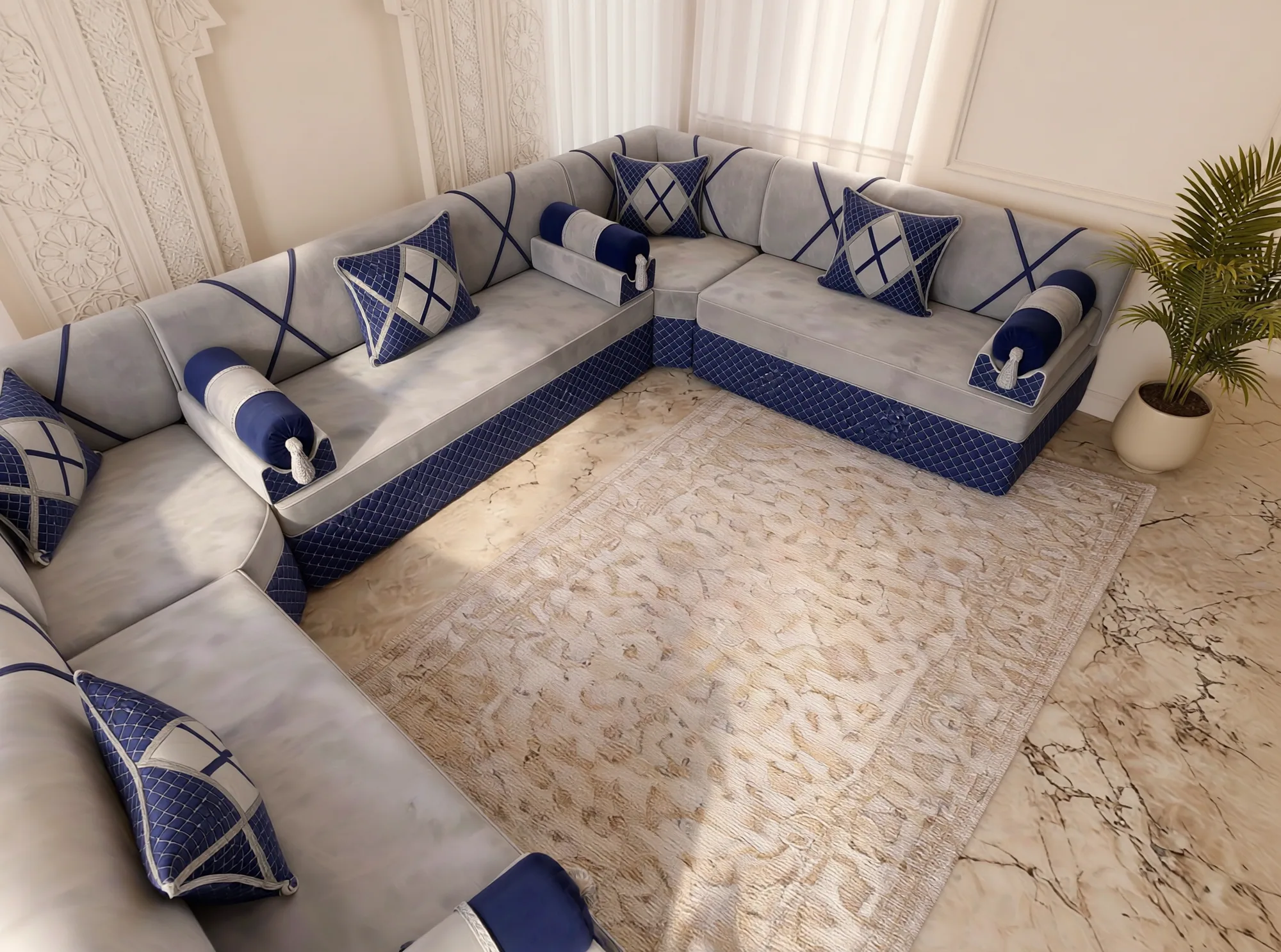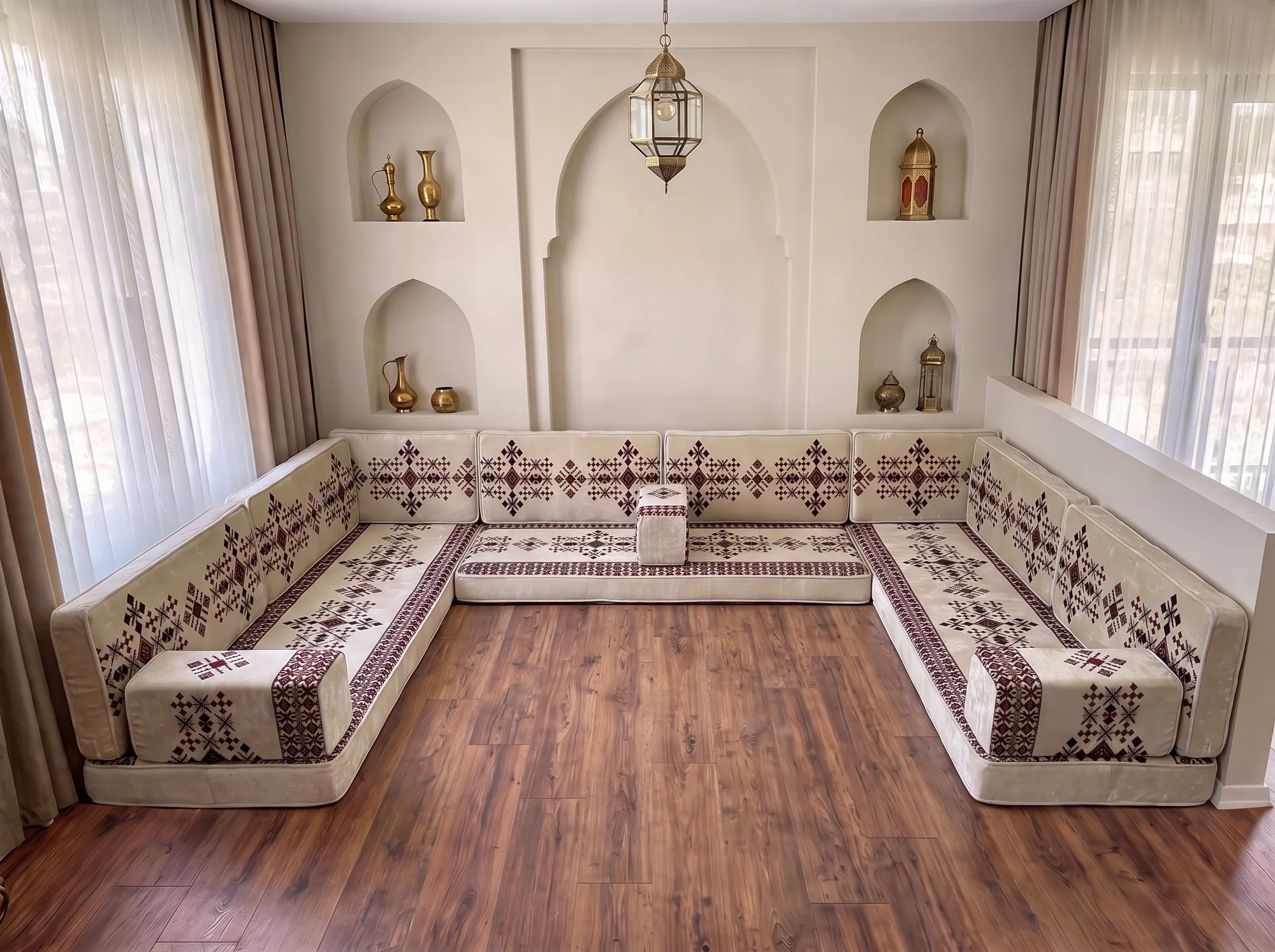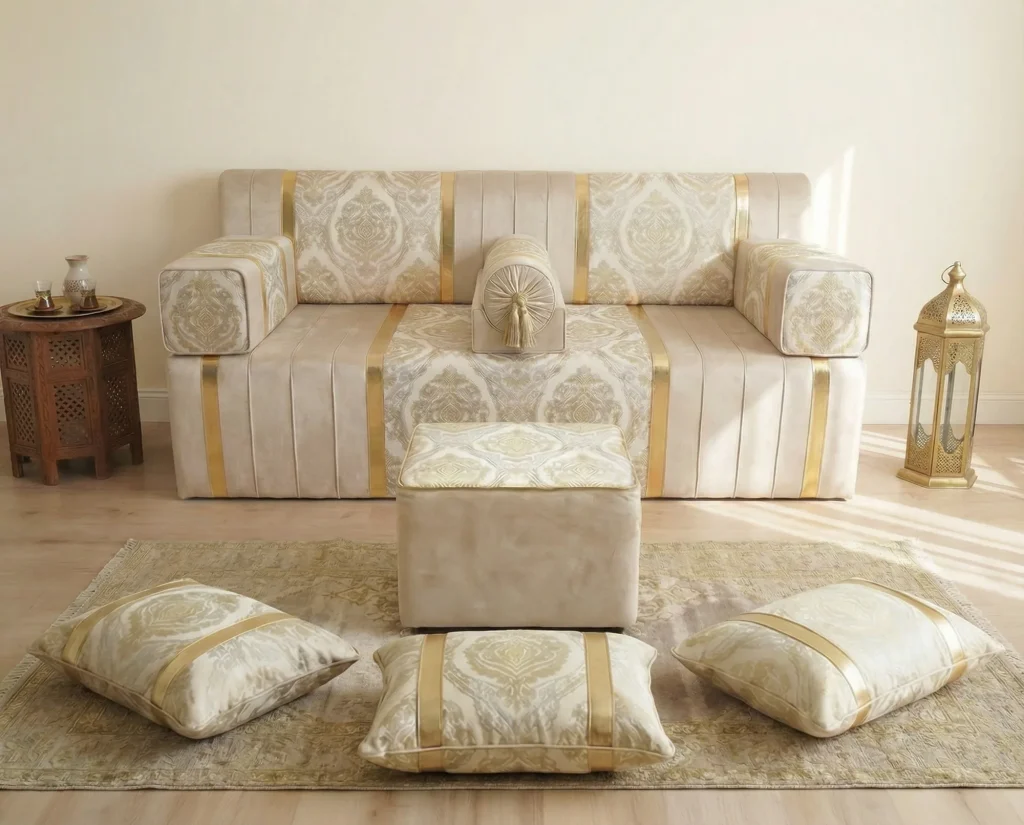
A Moroccan sedari is the wooden banquette of a salon marocain: a raised base that carries a seat mattress, fitted back cushions and a removable cover, run wall to wall around a low table. It is bench height, not floor seating. Sofhu makes raised majlis sets, including wooden-frame designs, and low Arabic floor sofas to measure in Türkiye, with free worldwide shipping.
- Sedari (سداري)
- The wooden banquette frame; plural sdader
- Mtarba or ponge
- The seat mattress on the frame
- Tlamet
- The fitted, removable fabric cover
- Zarbiya
- The Moroccan rug
- Seat level
- Bench height on a wooden base, not floor level
- Layout
- Wall to wall around a central low table
- Sofhu options
- Raised majlis and wooden-frame sets, or low floor sofas, made to measure
- Sofhu foam
- 32 kg/m³ (32 DNS) high-density foam
On this page
The first thing to know about a Moroccan sedari is that you do not sit on the floor. The sedari is a wooden bench, and the salon marocain built from it puts guests at ordinary sofa height, shoulder to shoulder along the walls. That one fact separates it from almost every other tradition in our style guide, and it should shape what you order.
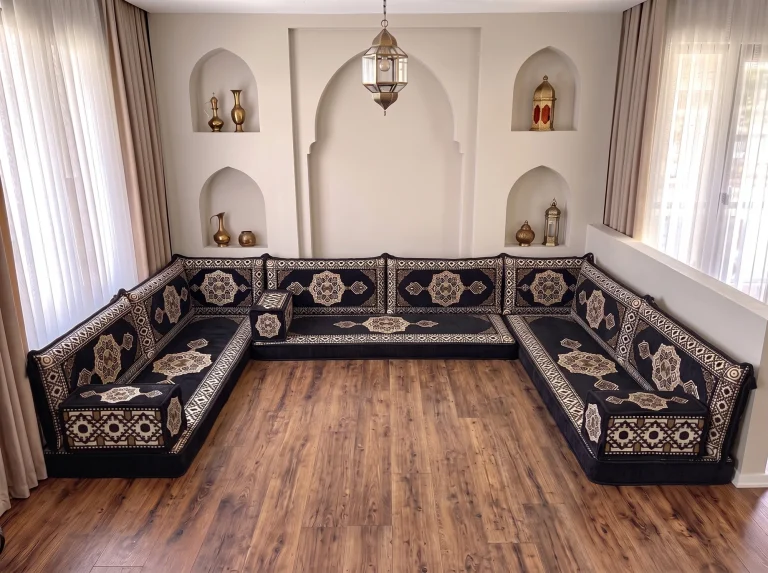
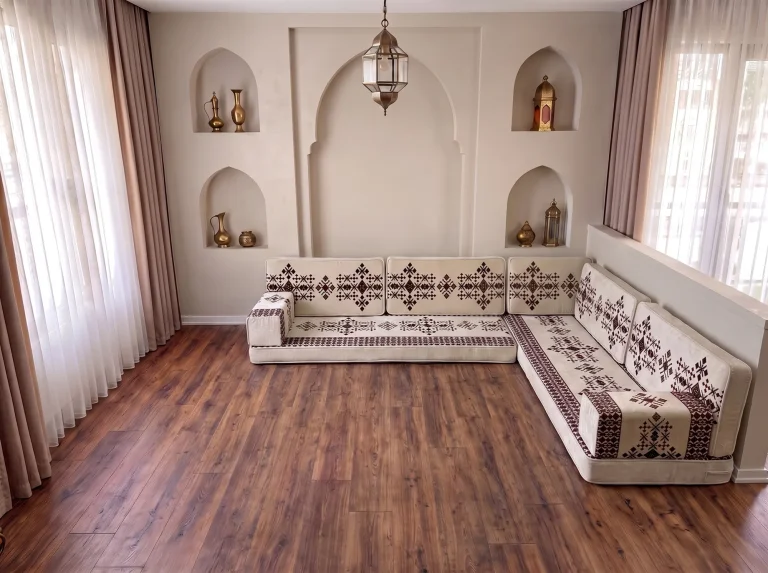
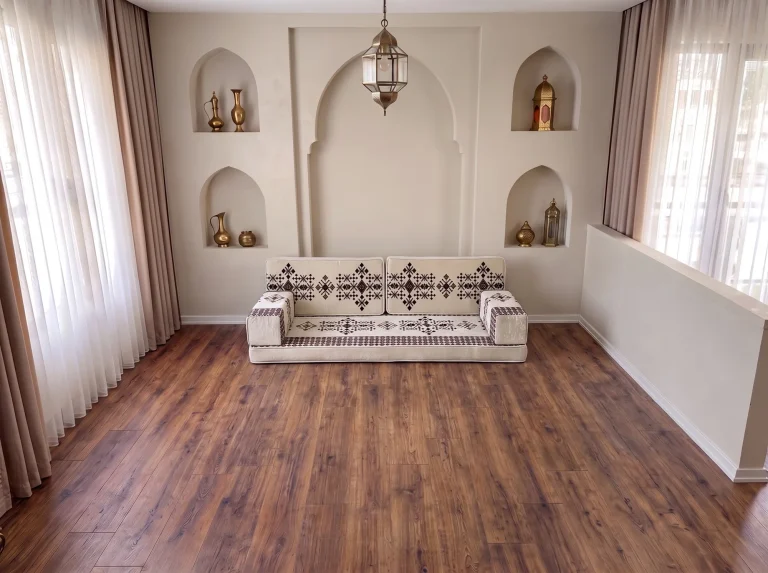
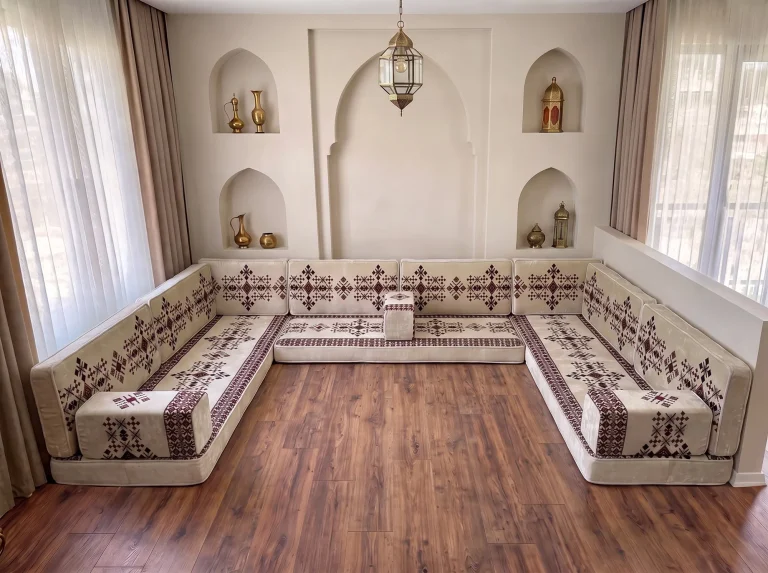
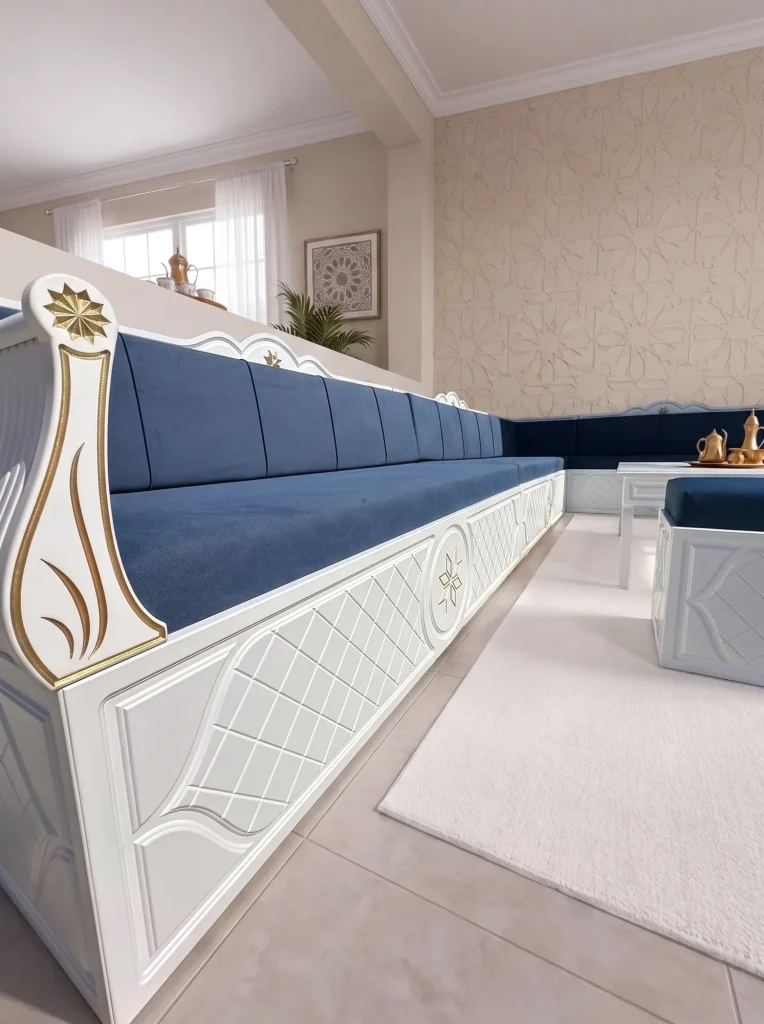
Sofhu makes two products that relate to it. The Arabic majlis is raised, sofa-height seating built as upholstered units, and its wooden-frame version is the closer relative of the sedari. The Arabic floor sofa is a low cushion set at floor level. The photograph at the top of this page shows a floor sofa in ivory and gold damask, the low alternative; the wooden-frame majlis appears further down.
What a sedari is
A sedari (سداري, also written seddari or sdari; plural sdader) is the wooden frame of the Moroccan banquette. In a traditional salon it is often carved, and fine examples are inlaid with bone, metal or mother-of-pearl. Three more pieces complete the seat:
- Mtarba, also called ponge: the seat mattress that lies on the frame. Traditional fillings include cotton and straw; modern ones use foam.
- Back cushions, fitted in a row along the wall.
- Tlamet: the tailored fabric cover over the mattress. It comes off, and in Morocco replacement tlamet are sold on their own when a family wants a new look.
On the floor in front lies the zarbiya, the rug. People use “sedari” loosely for the whole seat, and “Moroccan sofa” or “Moroccan style couch” for the same thing in English.
The salon marocain as a room
A salon marocain is a set of banquettes and cushions that occupies most of the walls of the room and leaves the centre open. In the middle stands a large, low, usually round table, placed so that every guest can reach the shared dish. Meals are eaten here. This is the room where visitors are first received and tea is served, and it is often the most carefully furnished room of the house, even in a modest home. Many families save for years to do it properly.
The setting matters as much as the seating: zellige tilework, carved plaster and cedar ceilings in the old houses, and curtains chosen to match the cushions. Symmetry is part of the taste. A salon where the left wall does not answer the right looks unfinished.
Raised bench, not floor seating: where Sofhu fits
Sofhu is known for floor-level Arabic seating, so it is worth being plain about how our sets relate to a Moroccan salon.
| Moroccan sedari | Arabic floor sofa | |
|---|---|---|
| Seat level | Bench height on a wooden frame | Mattress on the floor |
| Armrests | Not usual between sitters | Bolsters between sitters |
| Centre of the room | Dining table | Rug, coffee tray |
| Run | Continuous, wall to wall | Modular pieces, wall to wall |
There are three ways to order from us with a Moroccan room in mind.
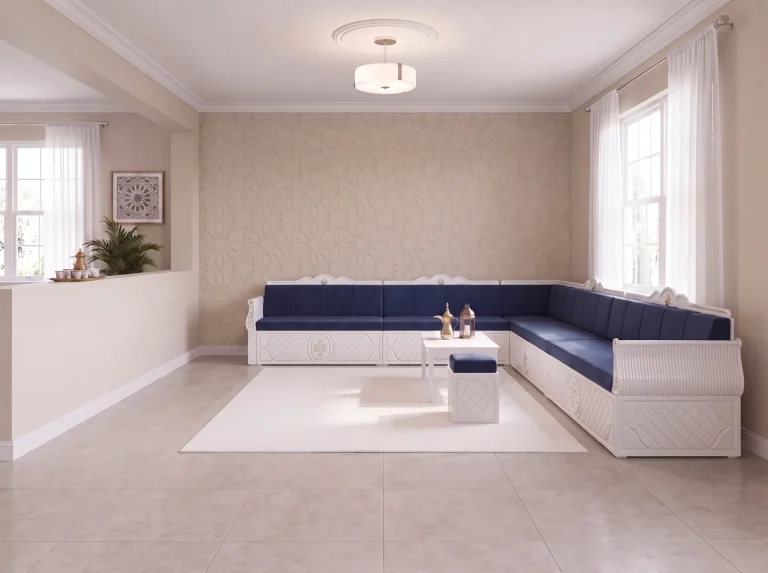
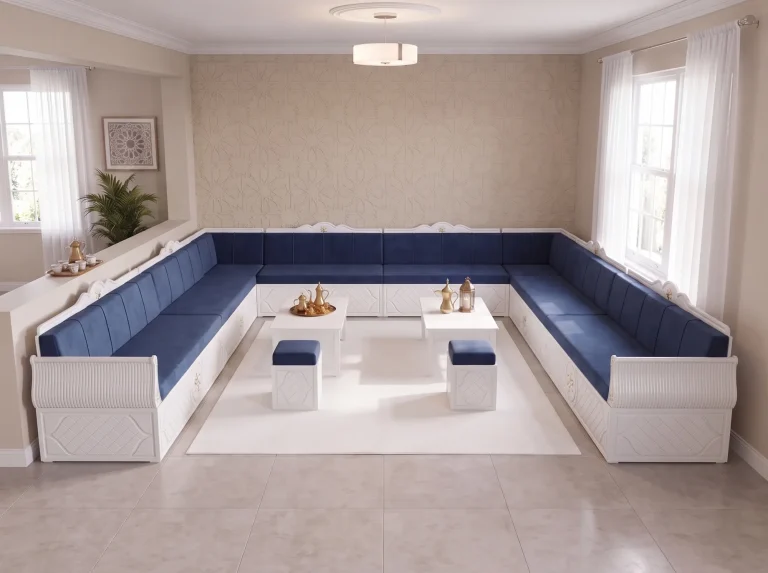
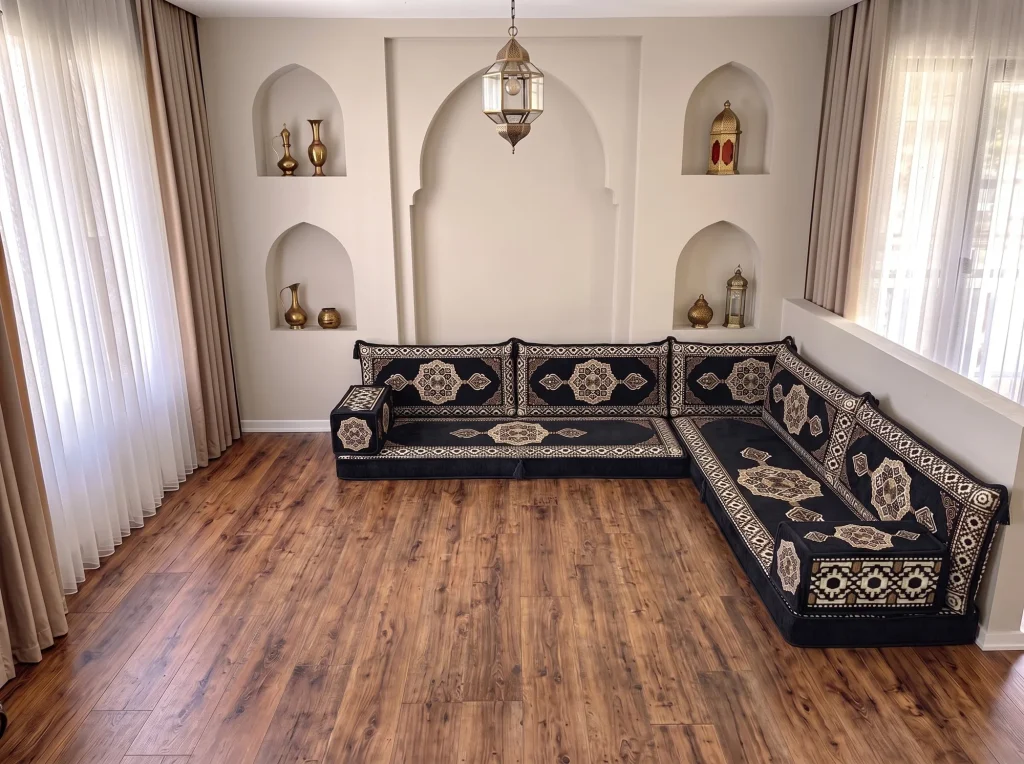
Raised, on a wooden base. Sofhu makes wooden bench-frame sets: handmade wooden bases along the wall with seat and back cushions on top. This is the closer relative of the sedari. The wooden-frame majlis in the photographs on this page, a white carved frame with navy velvet cushions, shows the idea: one long seat, a fitted row of back cushions, and low tables in the open centre. The carved Turkish majlis line is built on a solid beech frame.
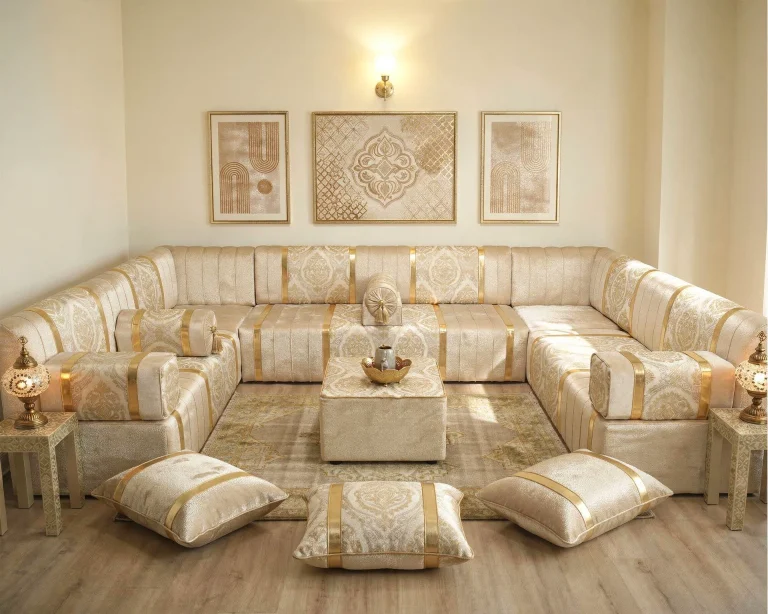
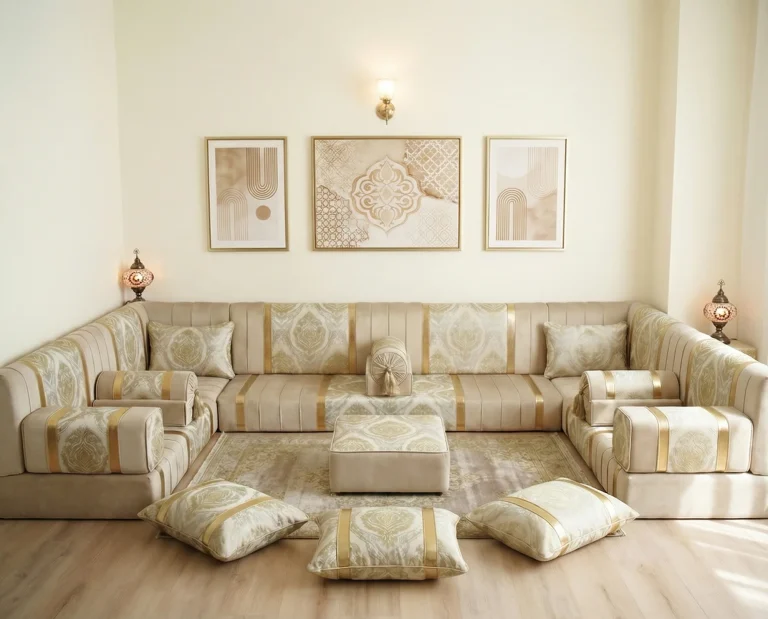
Raised and fully upholstered. An Arabic majlis gives the same bench height with no wood showing: a solid upholstered base, a tall fixed back and arm bolsters.
Floor level, in a Moroccan mood. If you like the colours and medallions of Moroccan textiles but want to sit low, an Arabic floor sofa in the right fabric does that. It is not a sedari and we will not call it one, but it suits a family room or a riad-style corner.
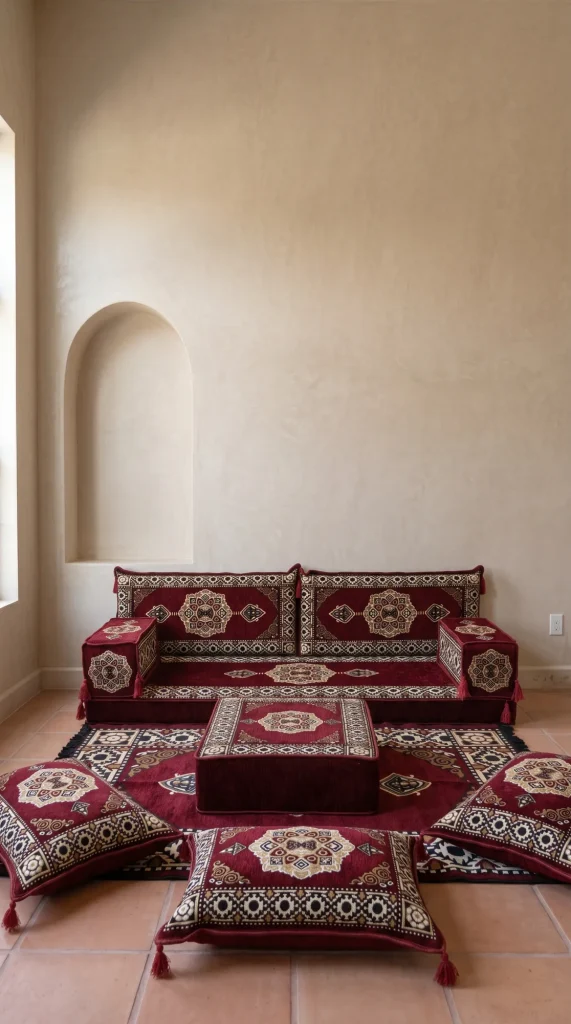
The article on floor seating versus a raised diwan helps you choose between the two, and Yemeni vs Saudi vs Moroccan majlis shows the three side by side.
Regional styles inside Morocco
Morocco does not have one salon. Writers on Moroccan interiors describe at least three regional tempers, and they are a useful guide when you choose fabric.
- The north (Tangier, Tetouan). Embroidery, carved wood and a cooler palette, with Andalusian influence.
- Fes and Rabat. The refined city salon: velvet, fine woodwork and a formal finish.
- The Sahrawi south. Simpler and warmer in tone, built for long sittings.
You do not have to copy any of them. But knowing which one your family’s taste comes from makes the choice of colour much quicker.
Fabrics and colour
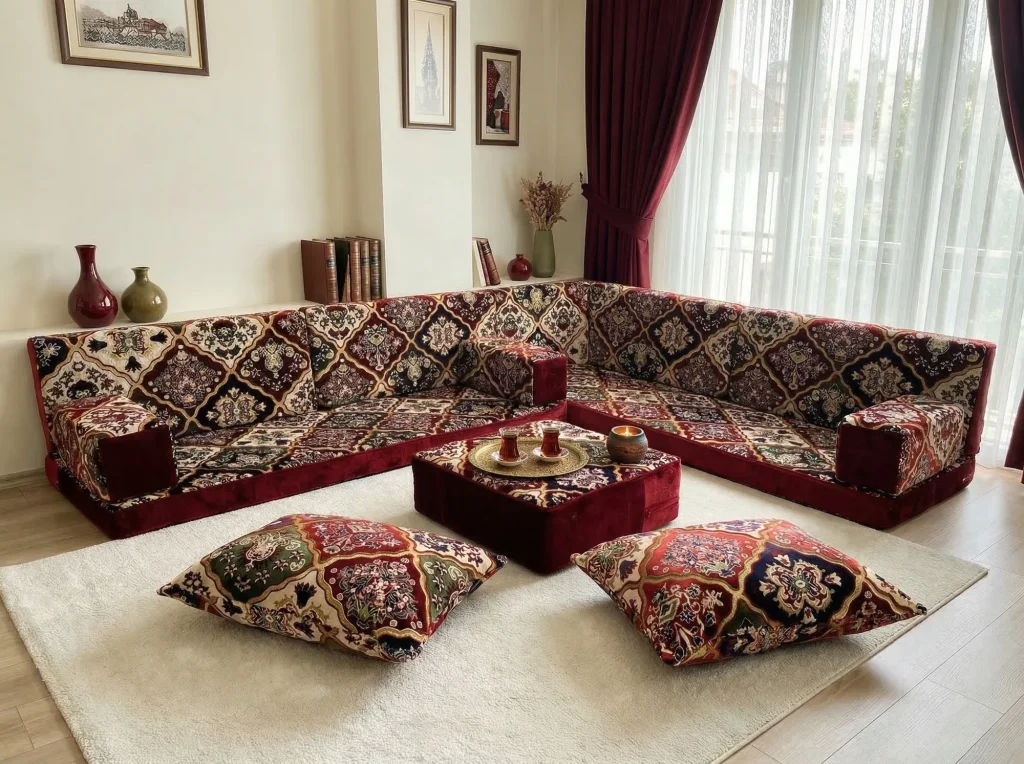
Moroccan salons are dressed in jacquards, velvets and silks. Sofhu’s range covers the first two well: velvet series for depth and a formal sheen, and woven jacquards with medallion and lattice patterns. We do not offer silk. The full list of series is on the fabrics page.
Three practical points:
- Pick the curtain and the cushion together. In a salon marocain they match. Sofhu supplies curtains as a complement to its sets, so ask for both to be quoted in one go.
- Let one pattern lead. If the seat carries a medallion, keep the back cushions plainer, or the reverse.
- Think about the table. Food is served in this room. A patterned weave is more forgiving than a pale plain velvet, and removable zippered covers make cleaning realistic.
Inside the cushions Sofhu uses 32 kg/m³ (32 DNS) high-density foam with no springs. Density is the weight of foam per cubic metre, and denser foam generally holds its shape longer. You can ask for a softer or firmer feel on a custom order, which matters on a bench where people sit upright to eat.
Made to measure, wall to wall
A salon marocain is made for its room. The runs reach from corner to corner, and a gap at the end of a wall is a fault. That is exactly how Sofhu works: the set is cut from your wall measurements.
Send us:
- the length of each wall the seating will follow;
- the position of doors, windows, radiators and sockets;
- whether you want a raised majlis, a wooden base or a floor sofa;
- the size of table you plan to put in the centre, if you have one;
- a colour direction or a photo.
We reply with a quote for that set. Use the quote by measurement form or WhatsApp. The custom majlis page explains what else can be changed.
Moroccan homes in Europe and North America
Many people searching for a sedari in English, French, Dutch or Spanish live outside Morocco. The largest communities are in France and Spain, followed by Italy, the Netherlands, Belgium and Germany. In the Netherlands most Moroccan-Dutch families live in the Randstad cities; in Belgium, Brussels and Antwerp; in Spain, Catalonia. In Canada the community is concentrated in Montreal.
A flat in one of these cities rarely has a room that can be given over entirely to a salon. An L-shape on two walls of the living room, with a round table that can be pulled close for meals, is the usual answer. Sofhu builds to order in Türkiye and delivers to your door with free shipping; there is no shop to visit. Duties or taxes may apply depending on the country.
We have country pages for France, Belgium, the Netherlands and Spain, and a French-language page on the salon marocain sur mesure. For the neighbouring traditions, read about the Algerian salon oriental and the Tunisian majlis, or browse all oriental sofa sets and Arabic sofa sets.