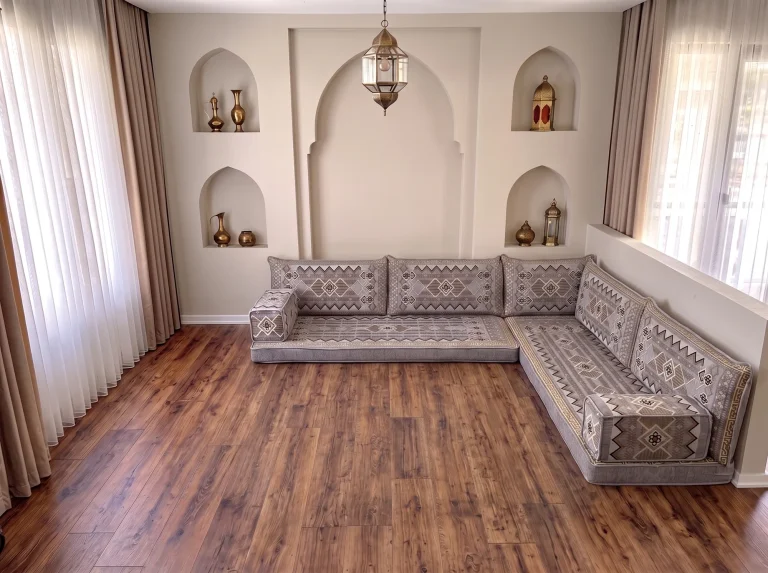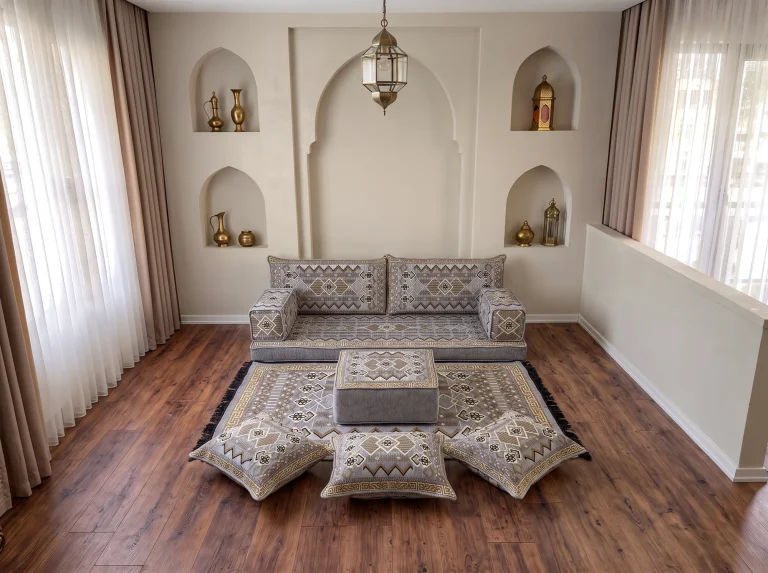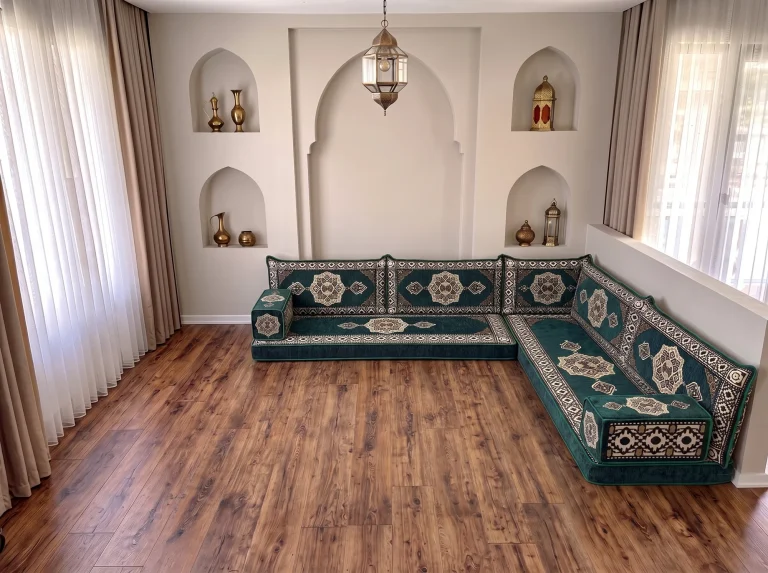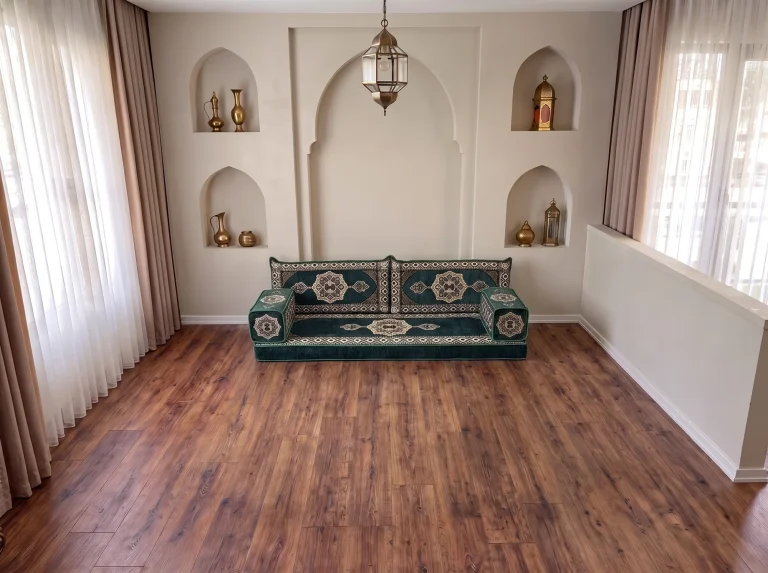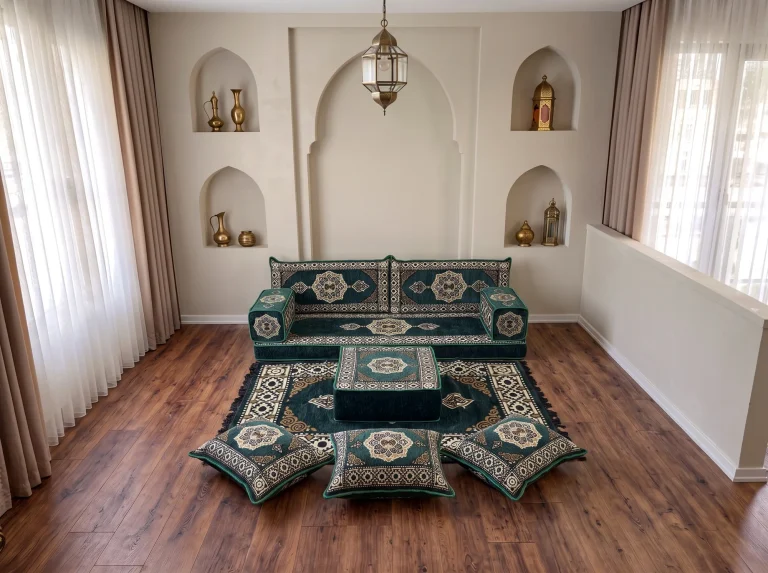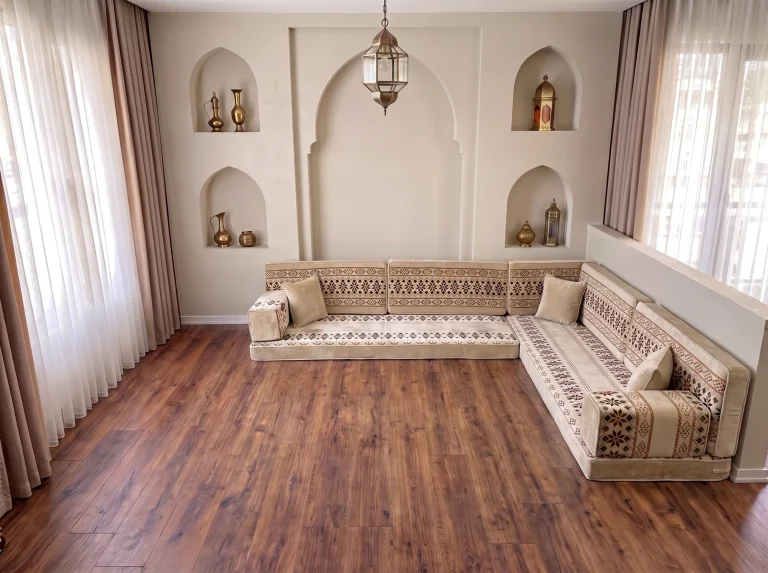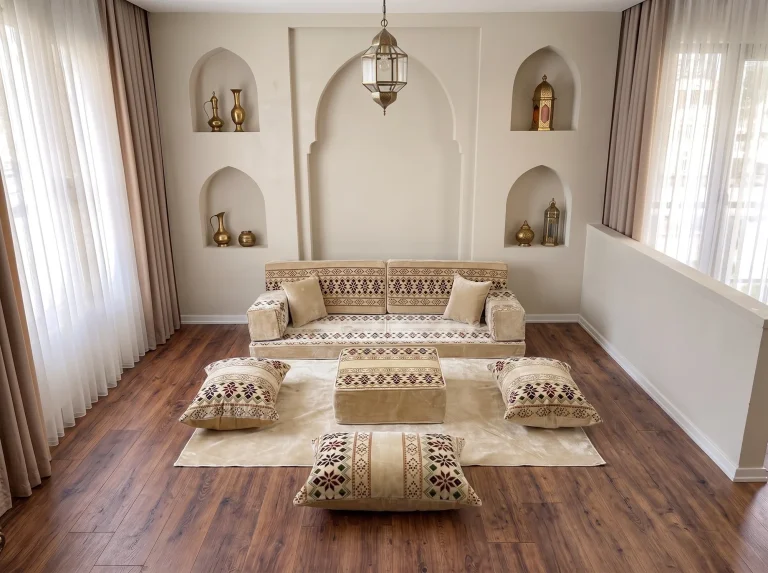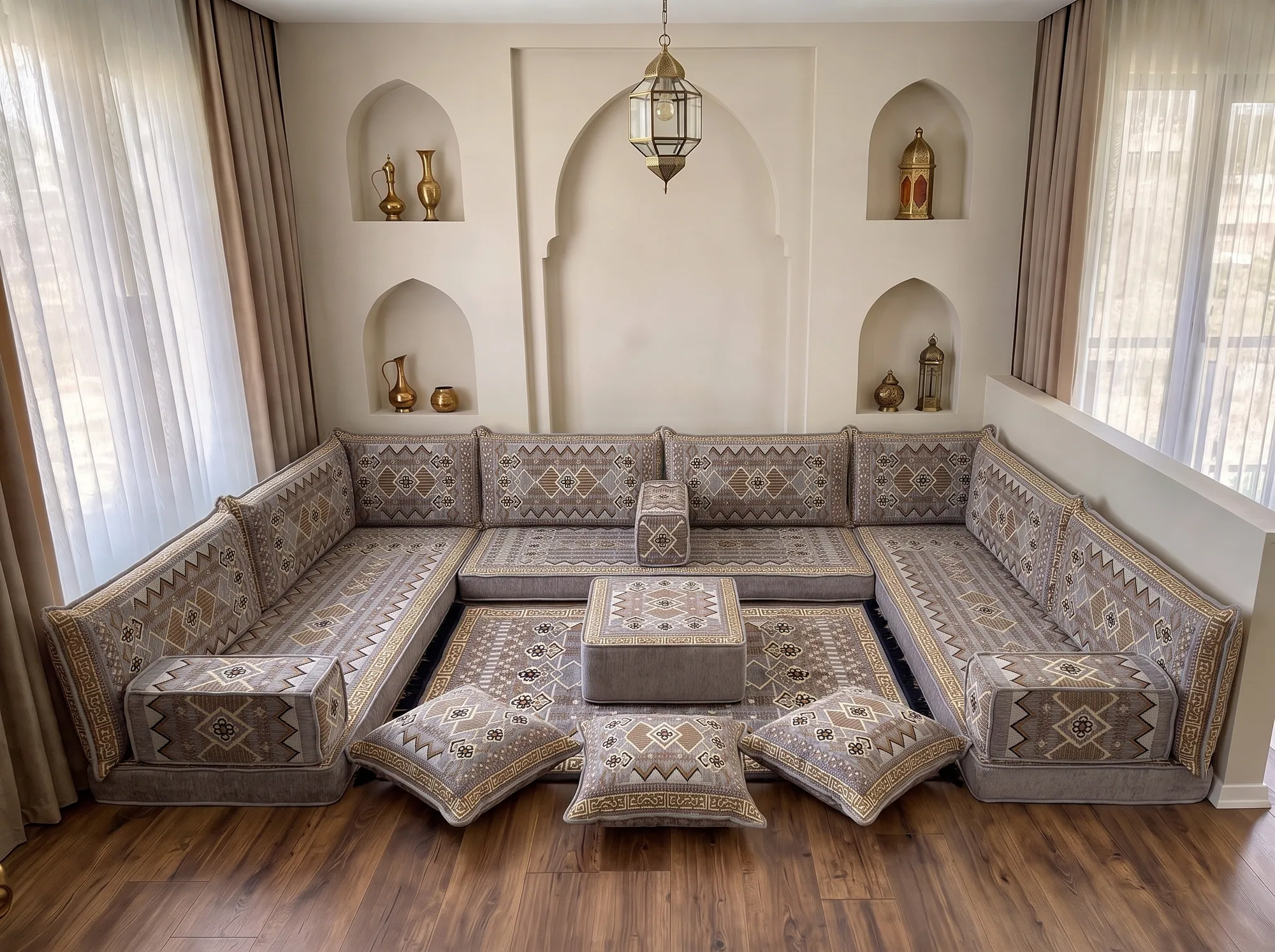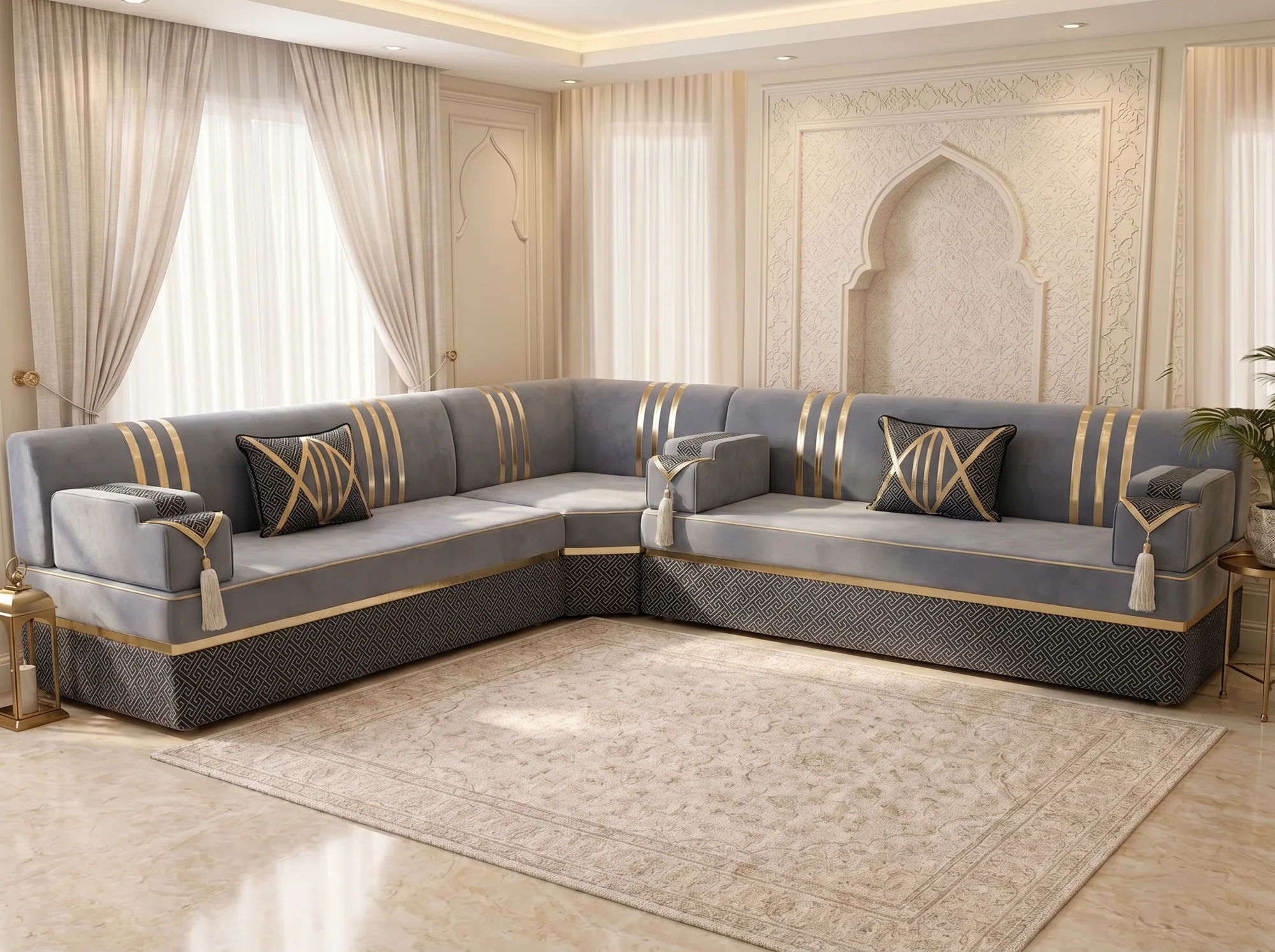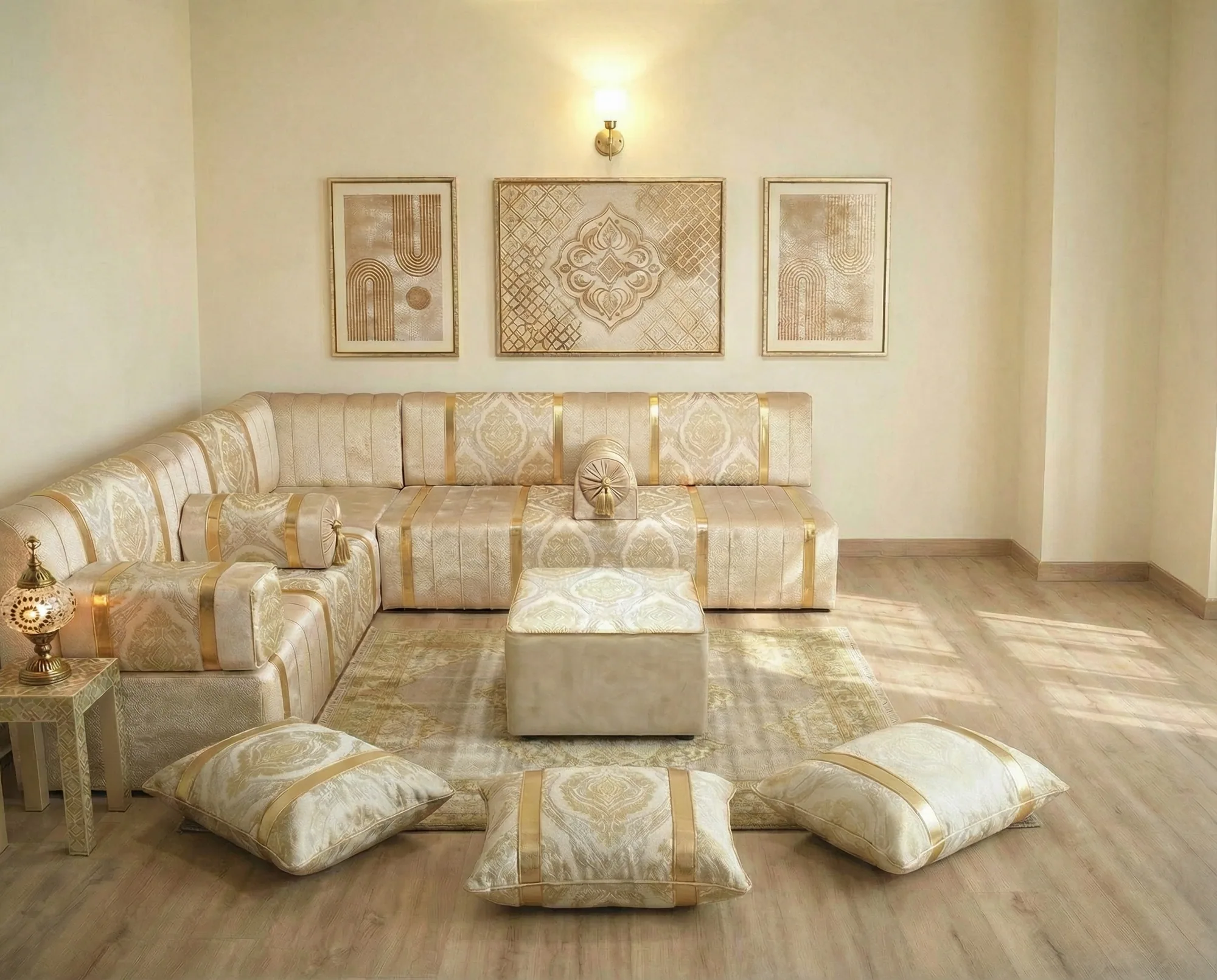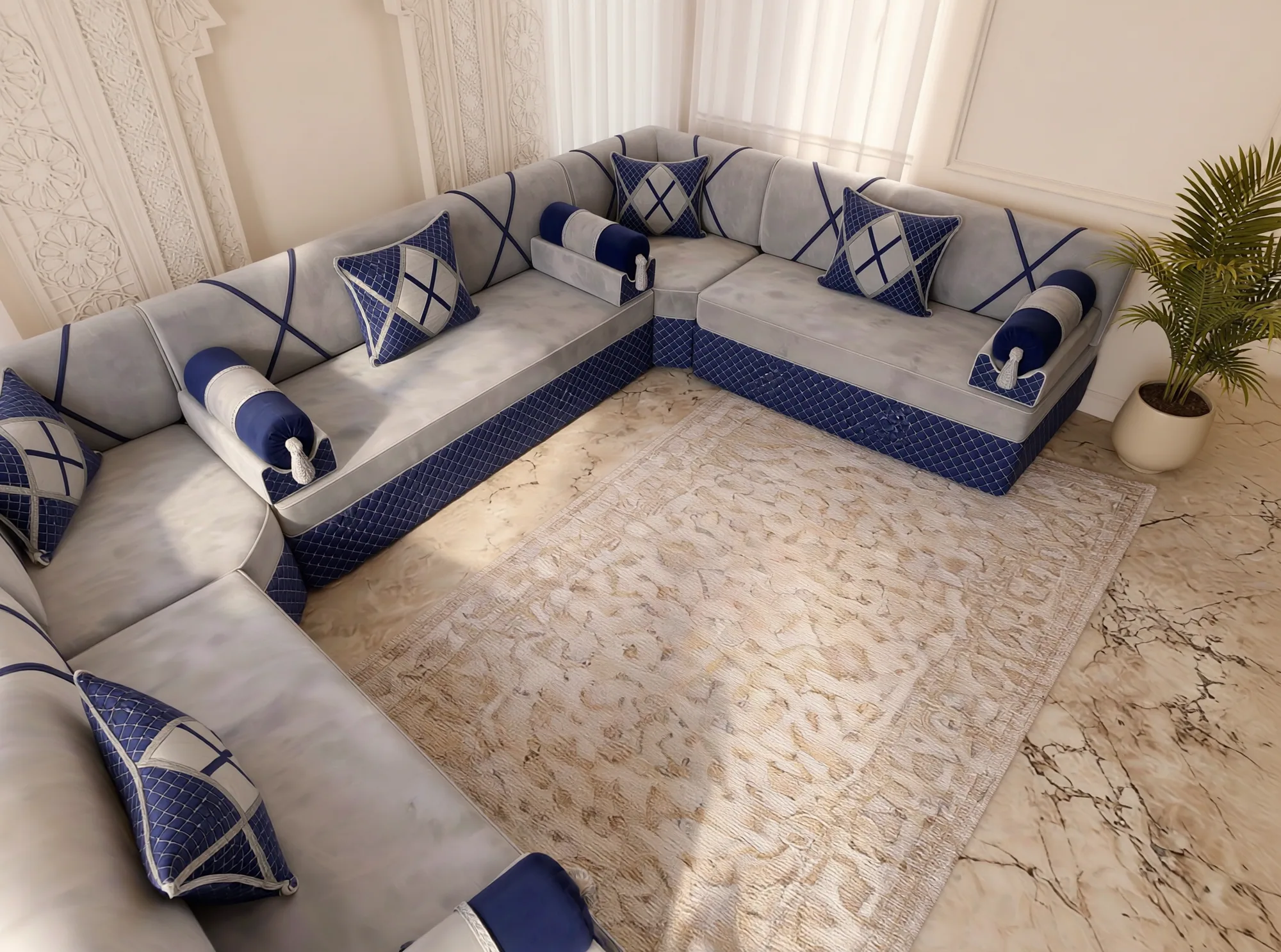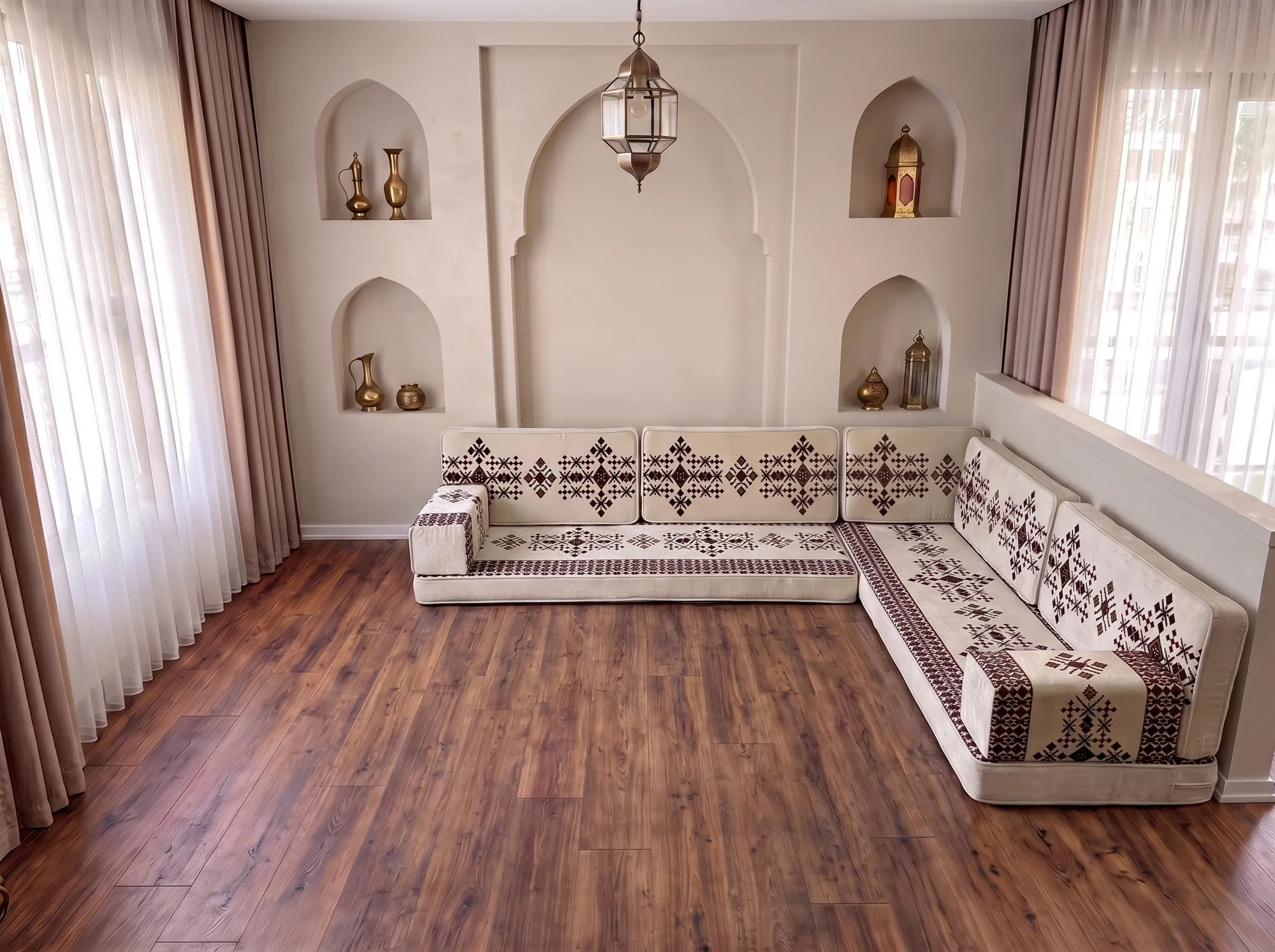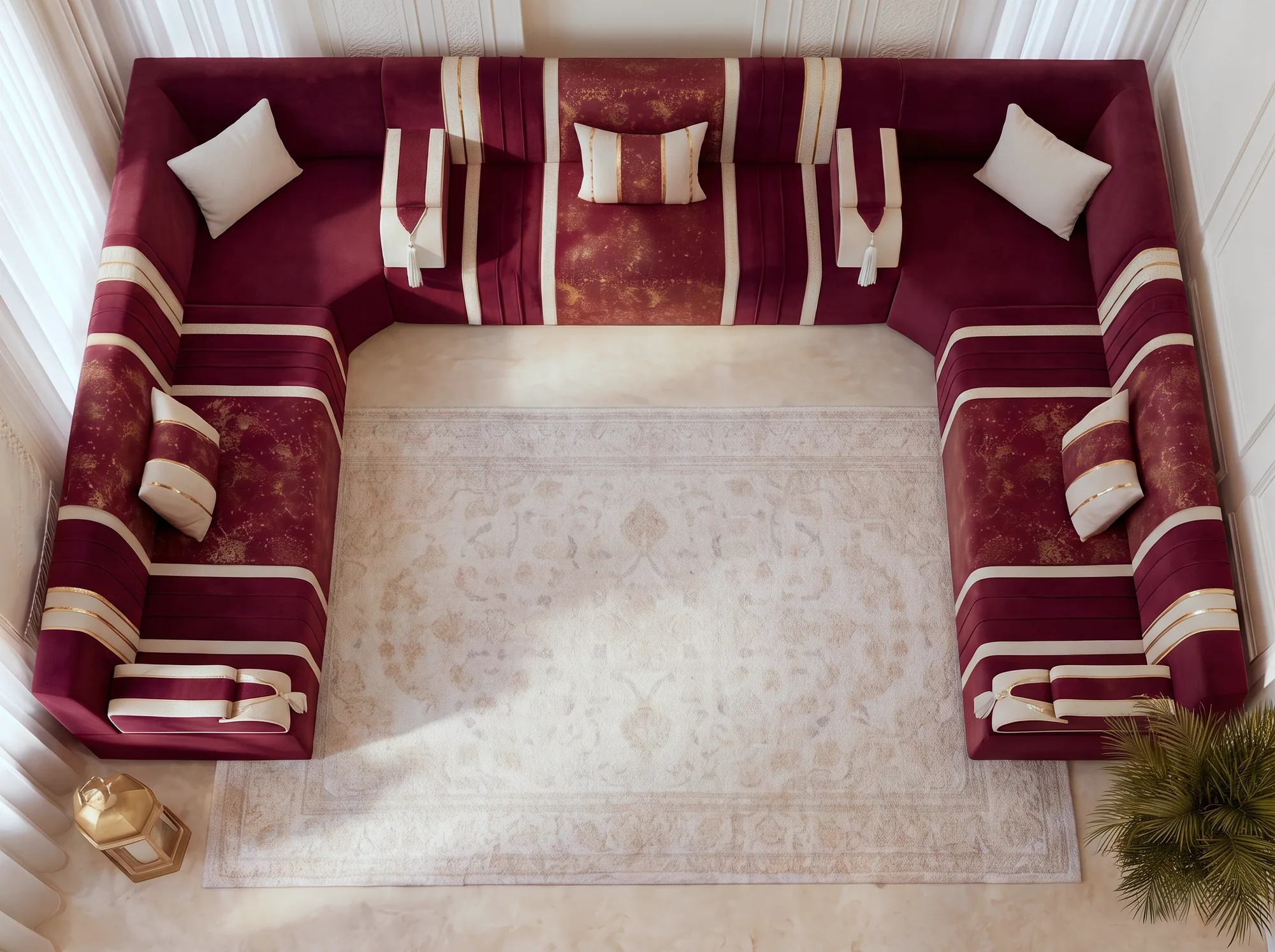
The Libyan marbouaa (مربوعة) is the guest reception room of the house, where visitors are received and hospitality is offered. Its seating is typically arranged around the walls, and descriptions mention one large rug covering the floor. Sofhu makes marbouaa seating to measure in Türkiye, as low floor sofas or raised majlis sets cut to your walls, filled with 32 kg/m³ foam and shipped free worldwide.
- Name
- Marbouaa (مربوعة), also spelt marbua, marbu'a, marboua; plural marabi'
- What it is
- The guest reception room of a Libyan home
- Also used in
- Siwa and Egypt's western desert
- Typical plan
- Seating around the walls, one large rug across the floor
- Sofhu foam
- 32 kg/m³ (32 DNS) high-density foam, no springs
- Sizing
- Each run cut to your wall length
- Shipping
- Free worldwide
On this page
A marbouaa is furnished from the walls inward. The seating follows the edge of the room, the rug fills the middle, and the centre stays open for the tray. So the first thing we need to know about your room is simple: how long is each wall, and where is the door. Everything in a Libyan marbouaa set from Sofhu is cut from those numbers.
What a marbouaa is
Marbouaa (مربوعة) is the Libyan word for the sitting room where guests are received and hospitality is offered. You will see it written marbua, marbu’a, marboua and marbou3a; the plural is marabi’ (مرابيع). The same word is used in Siwa and the oases of Egypt’s western desert, where it names the room of the house set aside for men’s social life.
That is the part every source agrees on. A marbouaa is a guest room first and a furniture style second. People who search for a Libyan majlis or Libyan floor seating are looking for the same thing under a more international name, which is why this page uses all of them.
What we know, and what we leave to you
Written descriptions of how a marbouaa is furnished are thin, and we would rather say so than fill the gap with guesses. One detail does turn up in descriptions: a single very large rug covering the whole floor. Beyond that, the customs of the room belong to your family and your city, and a furniture maker in Türkiye has no business reciting them back to you.
What we can do is build what you describe. If your family’s marbouaa has seating on three walls and a cabinet on the fourth, we cut for three. If it runs around all four with a gap at the door, we cut for four. If the elders want a firmer, higher seat on one side, that run can be made thicker. Tell us how the room is used and we will make the set fit that, not a catalogue.
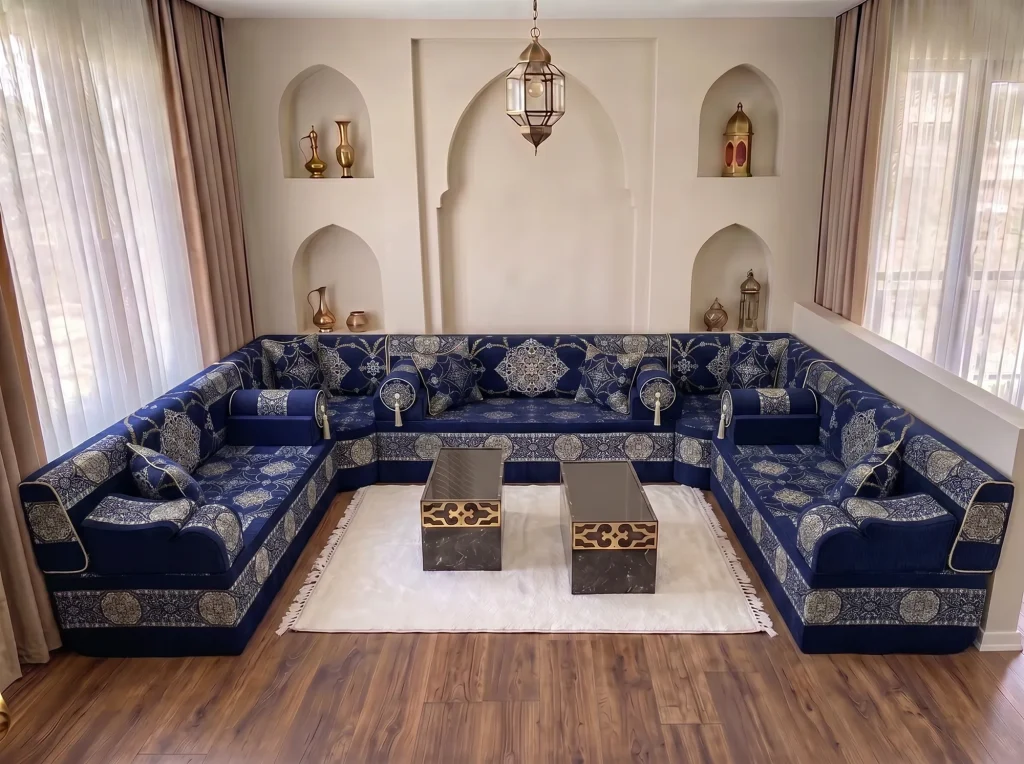
Planning seating for four walls
Seen from above, a marbouaa set is a frame of cushions around an open floor. The plan is easy to draw once you settle four questions.
- Where does the door open? The seating has to stop before the door swing. Measure from the corner to the edge of the door frame, then take off the width the door needs.
- Which wall is the head of the room? Most rooms have one wall that guests naturally face, usually the one opposite the door. Put the longest unbroken run there.
- How are the corners handled? A corner piece joins two runs so the seat is continuous. Without it you get either a dead square of floor or two mattresses fighting for the same space.
- Where do the armrests go? Armrests divide a long run into places. Spacing them evenly gives every guest something to lean on and makes the room look ordered when it is empty.
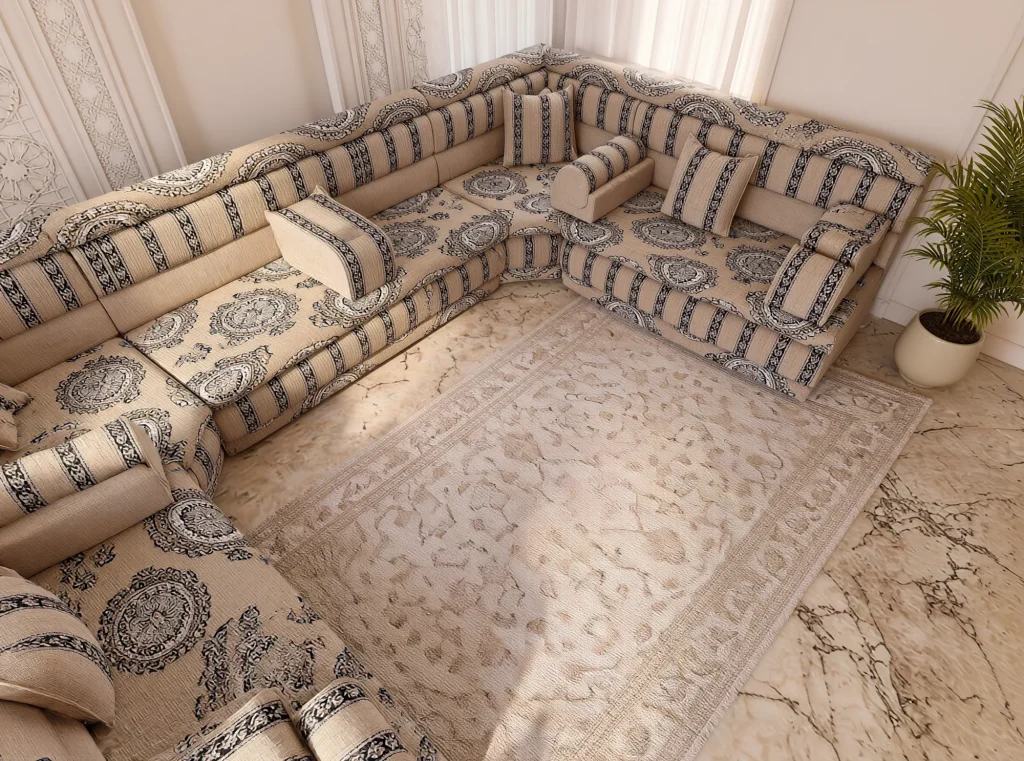
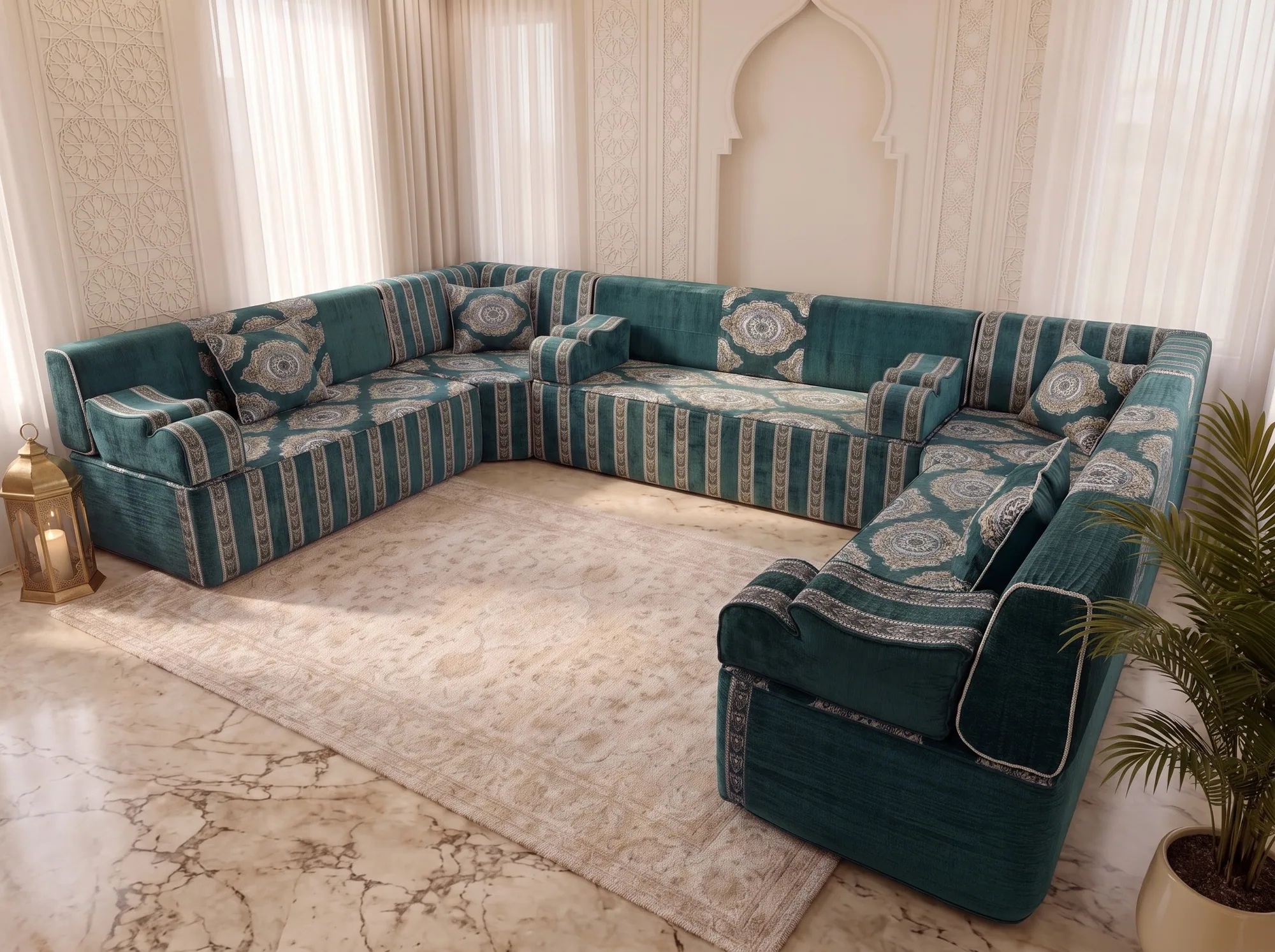
A room seated on three sides is a U-shape. A room seated on four is a U with a short return beside the door. Both are covered in the guide to L-shape and U-shape majlis layouts, and the method for taking the numbers is in how to measure a room for a majlis. If you want to know how many guests a given wall length will hold, see how many people a majlis seats.
Remember that neither a floor sofa nor a majlis is freestanding. Every run needs a wall or another solid surface behind it, so a run cannot float across the middle of the room.
The rug comes first
Because one rug carries the whole floor, it sets the colour of the room before the seating does. Choose it early. There are two workable approaches.
- Patterned rug, calm seating. If the rug is richly patterned, keep the seat fabric to one or two colours taken from it. Burgundy with cream piping, navy with a silver weave or a plain grey all sit quietly over a busy floor.
- Plain rug, patterned seating. If the rug is a single pale colour, the seating can carry the pattern: medallions, kilim geometry or stripes along the base.
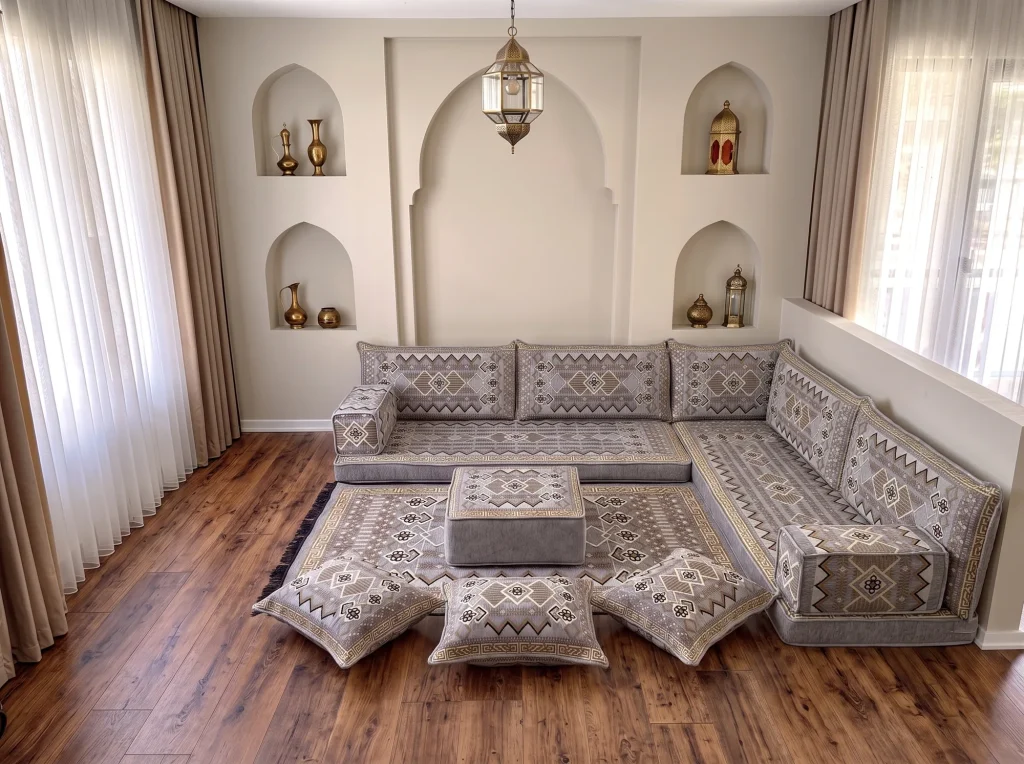
Sofhu supplies rugs and kilims as complements to its sets, so the two can be quoted and matched together. For sizing, the guide to what size rug goes with a majlis explains how far the rug should run under the front edge of the seating. Loose floor cushions in the same fabric are useful for the nights when the room fills beyond its seats.
Foam and fabric for long sittings
A guest room is judged by how it feels in the third hour, not the first minute. That comes down to the filling.
Sofhu fills its cushions with 32 kg/m³ (32 DNS) high-density foam. The figure is a weight per volume: a cubic metre of this foam weighs about 32 kg. It is a measure of how much material is in the cushion, and it is not the same thing as hardness. As a general rule, denser foam keeps its height and support for longer. Light budget foam can be made to feel just as firm when new, which is why density is the number worth asking any seller for. The cushions contain no springs, and on a custom order you can ask for a softer or firmer foam.
For fabric, consider heat and use together:
- Linen-type weaves breathe and are described by Sofhu as refreshing in hot weather. They suit a room that is used through the summer.
- Velvet gives a formal guest room its depth of colour and is described as durable and easy to clean.
- Woven jacquards are forgiving in a room that sees tea, coffee and many visitors.
All covers are zippered and removable, and Sofhu states they can be machine washed at 30 degrees. The complete list of fabric series is on the fabrics page.
Marbouaa, majlis and salon compared
Libya sits between two seating worlds, and it helps to know which side your own room leans towards before you order.
| Tradition | Seat level | Layout |
|---|---|---|
| Gulf and Yemeni majlis | Low or sofa-height seats with backrests and armrests | Around the walls |
| Libyan marbouaa | Seating around the walls over one large rug | Around the walls |
| Moroccan salon | Bench height on a wooden base | Wall to wall, around a table |
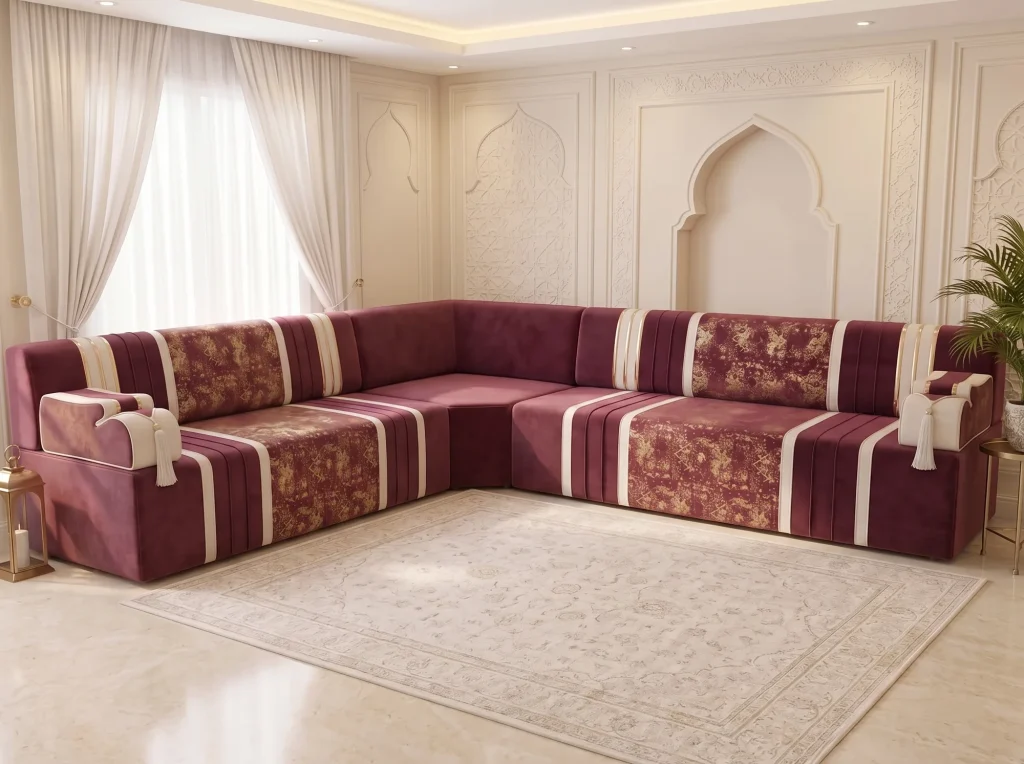
Sofhu makes two products for a room like this. The Arabic floor sofa is the low one: a seat mattress at floor level with loose back cushions, armrest blocks and usually an ottoman, like the kilim and medallion sets in the gallery. The Arabic majlis is raised to sofa height on an upholstered base, with tall fixed backs and arm bolsters, like the navy and burgundy sets pictured in the text. If your family prefers a raised seat, say so when you request your quote. For the neighbours, read about Egyptian qa’da arabi, where the western-desert marbu’a shares the name, and the Tunisian majlis and salon to the west.
Ordering from Libya or from abroad
Sofhu is the manufacturer and builds every set to order in Türkiye. There is no local shop to visit, in Libya or anywhere else; the set is made for your room and delivered to your door, and shipping is free worldwide. Libyan families abroad order the same way as families at home.
The cushions are vacuum packed for the journey. Open the sealed bags carefully, keep blades away from the fabric and give the foam time to recover its full shape. Import duty or tax may apply depending on the destination, so ask us before ordering.
To start, send your wall lengths, the door position and a colour direction through the quote by measurement form or on WhatsApp. For the wider range, browse the raised sets on the Arabic majlis hub and the low ones on the Arabic floor sofa page.