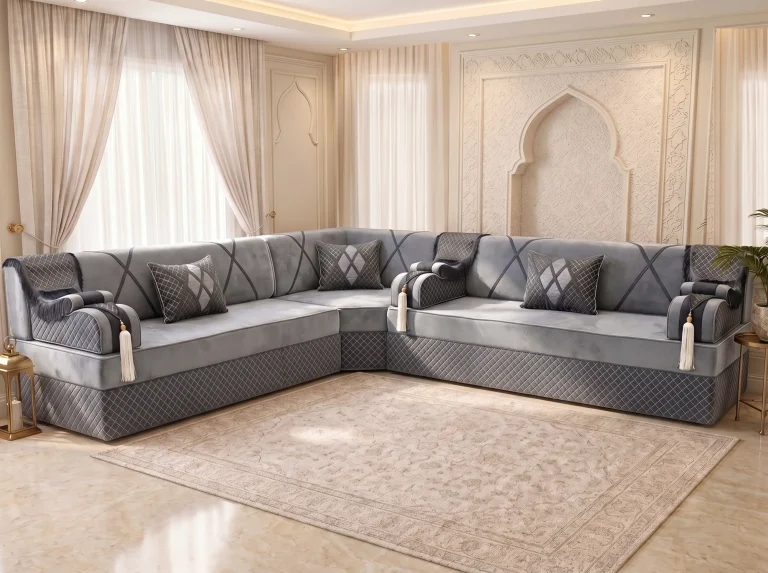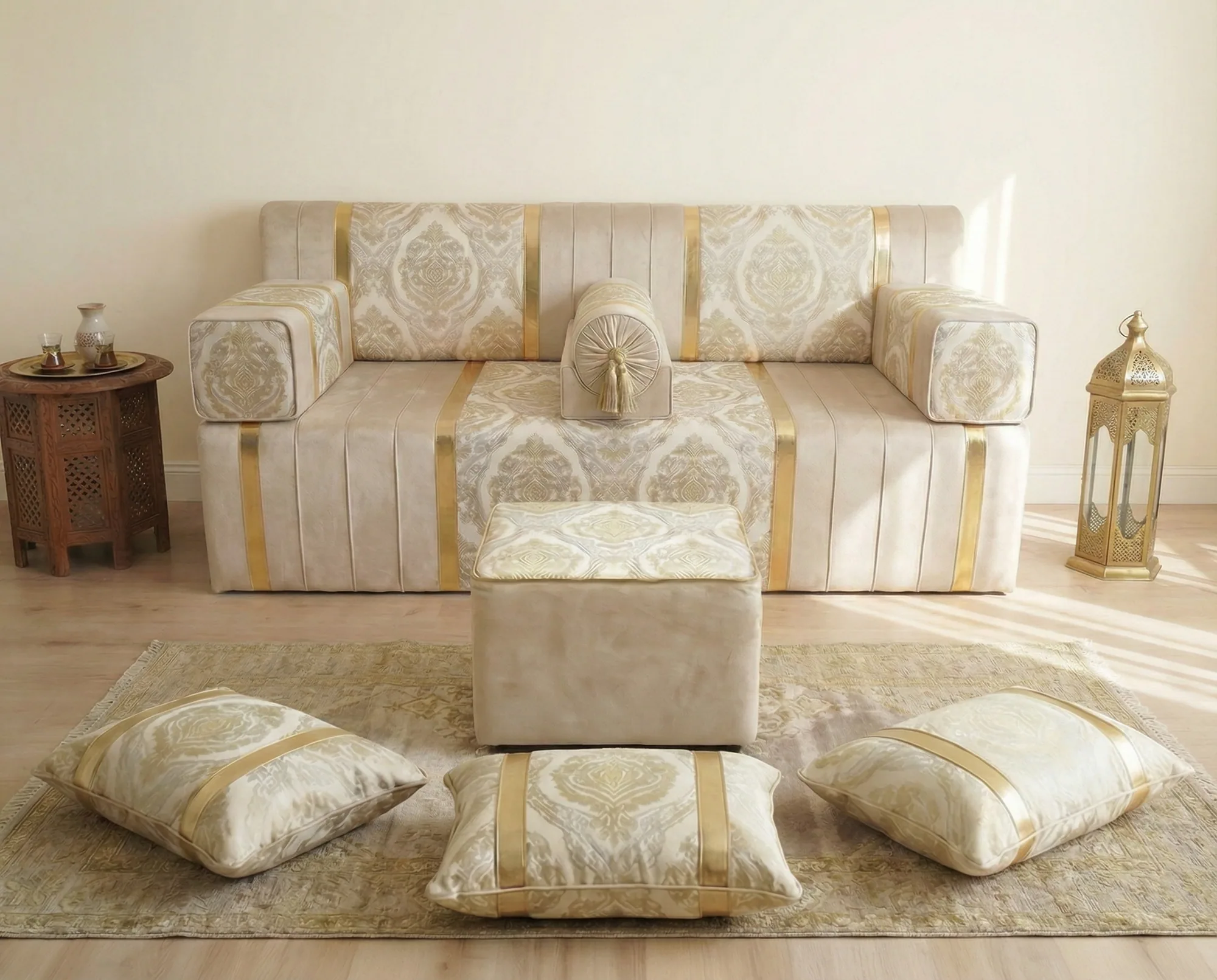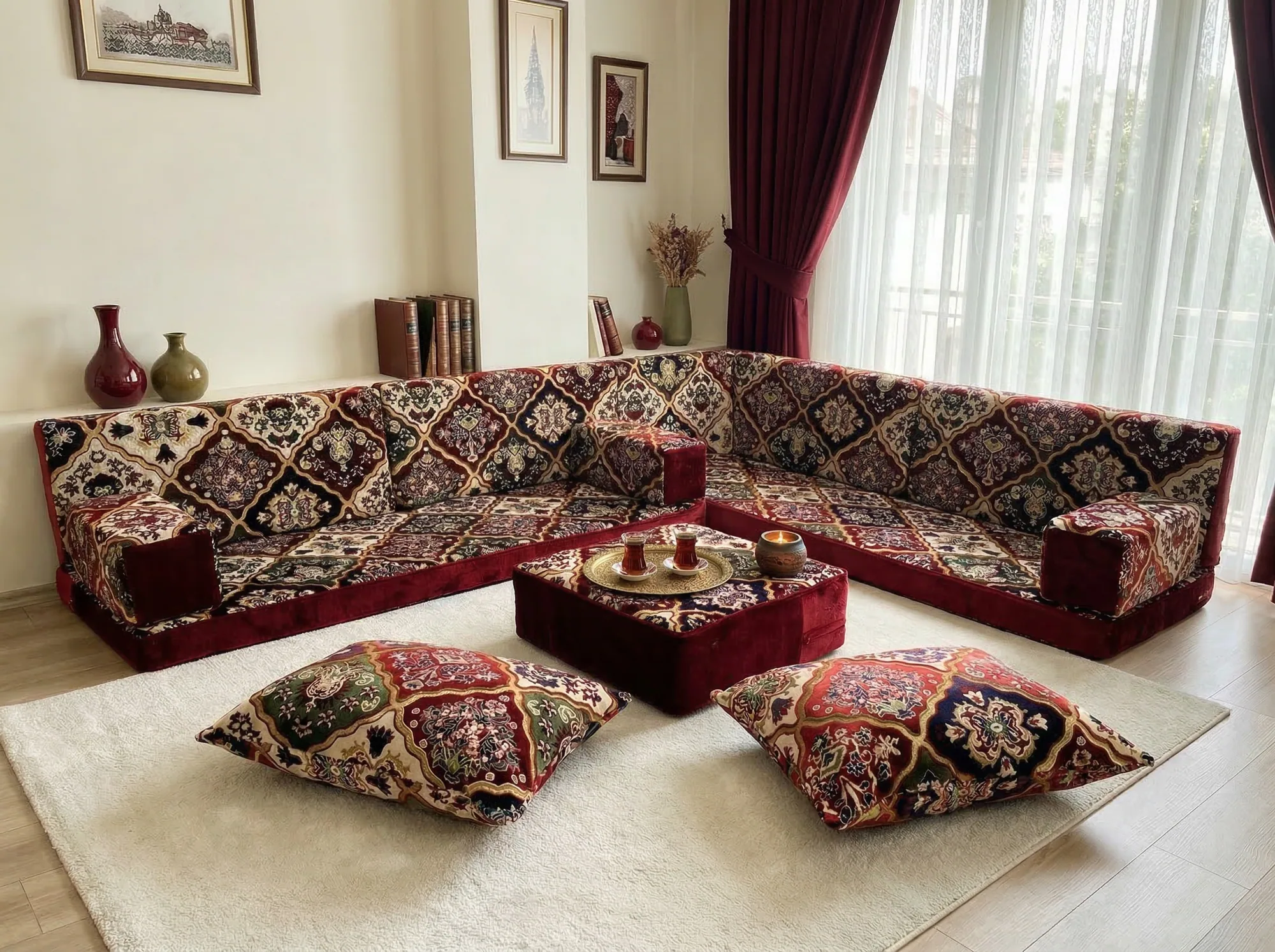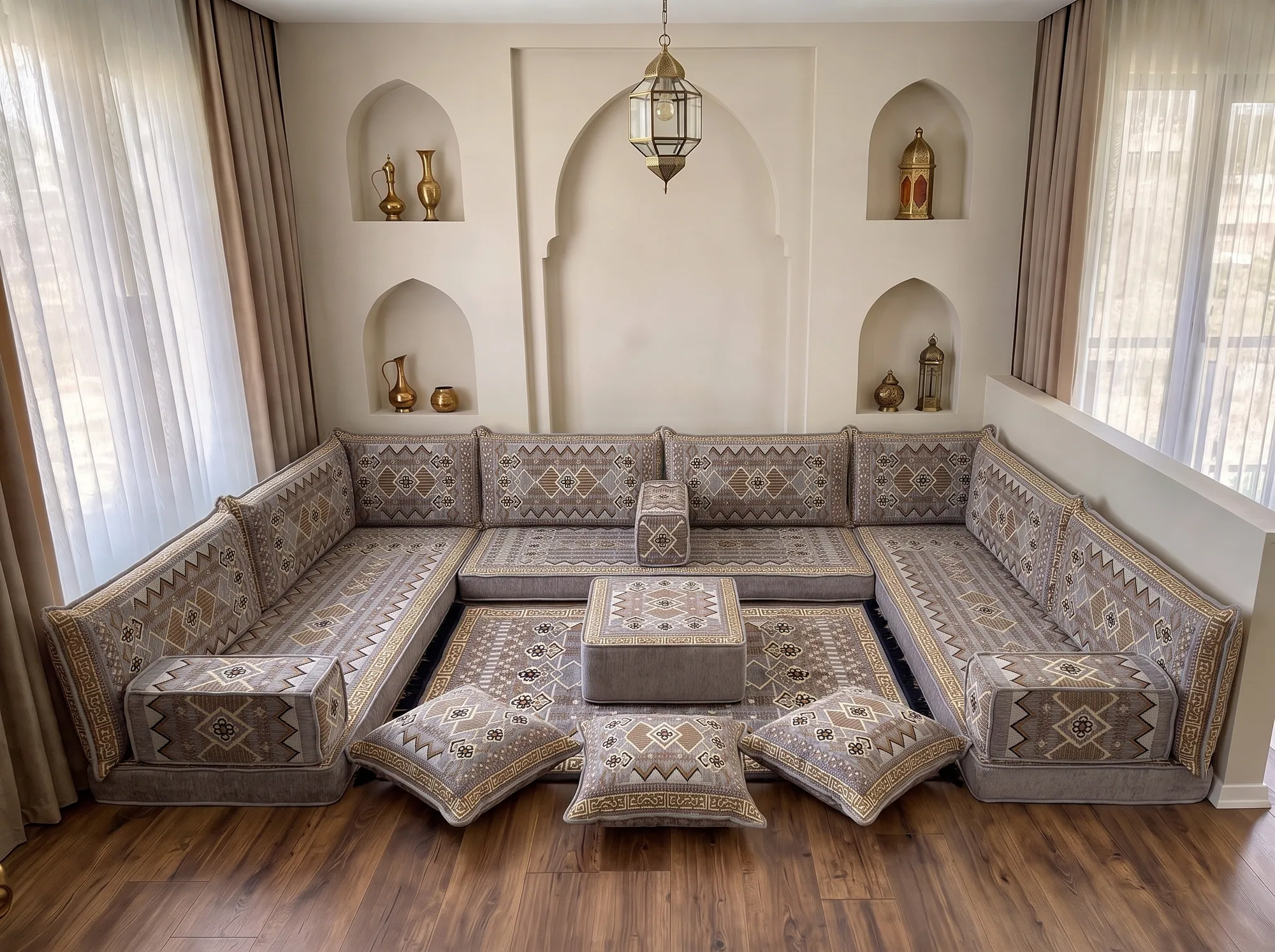
An oriental sofa is low, cushioned seating in the Turkish, Arabic, Moroccan or Persian manner: firm seat pads along the wall, upright back cushions and bolster arms, most often arranged as a corner. Sofhu makes oriental sofa sets to order in Türkiye, cut to the customer's wall measurements, filled with 32 kg/m³ foam and shipped free worldwide.
- What it covers
- Turkish, Arabic, Moroccan and Persian low seating
- Typical layout
- L-shaped corner; also single row or U
- Made by
- Sofhu, manufacturer in Türkiye
- Foam
- 32 kg/m³ (32 DNS) high-density, no springs
- Covers
- Zippered, removable, washable at 30°C
- Sizing
- Made to measure from your walls
- Shipping
- Free worldwide
On this page
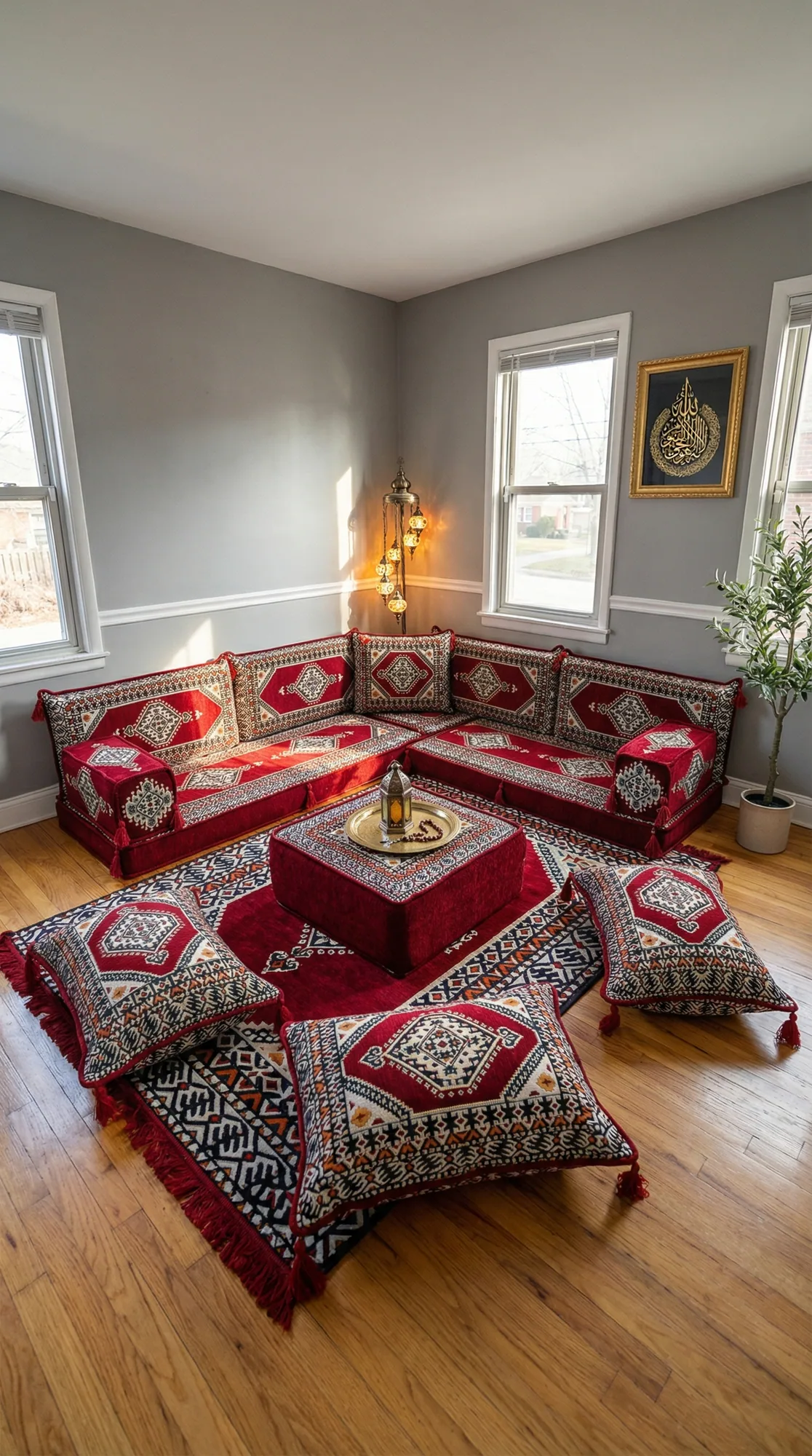
A red kilim-patterned seat tucked into the corner of a grey room, a low ottoman with a brass tray, three big cushions on the rug and a mosaic lamp glowing beside it. That picture is what most people in Europe and North America have in mind when they search for an oriental sofa. The word is a Western one, and it gathers several distinct seating traditions under a single name. Knowing which one you actually want makes ordering much easier.
What people mean by an oriental sofa
An oriental sofa is any low, cushion-built seat from the lands between Morocco and Afghanistan. In German the search is orientalische Sitzecke, in French salon oriental or canapé oriental, in Turkish şark köşesi, which translates literally as oriental corner. Four traditions sit behind the term, and they are not the same piece of furniture.
| Tradition | Local name | Seat level | Signature |
|---|---|---|---|
| Turkish | sedir, şark köşesi | Built-in bench, or floor corner | Kilim patterns, corner layout |
| Arabic | floor sofa, jalsa ardiya | Floor | Perimeter seating, loose back cushions |
| Moroccan | sedari | Bench height on wood | Wall-to-wall run, central table |
| Persian and Afghan | poshti, toshak | Floor, on carpet | Carpet-faced backrests, thin mattresses |
The Turkish sedir was a raised seat built along the windowed wall of the traditional house, with cushions for the back, and the corner farthest from the door was the place of honour. Today’s şark köşesi is its movable descendant: a corner of large firm cushions on the floor or a low base, covered in kilim-pattern fabric. The Arabic floor sofa lines the whole room with low cushions. The Moroccan salon is raised and built for eating together. The Persian poshti is a small carpet used as a backrest, and the Afghan toshak is a mattress for sitting and sleeping.
Sofhu’s sets come out of the Turkish and Arabic branches, and are made in Türkiye. Sofhu makes two products and keeps them apart: the low Arabic floor sofa, which is what this page shows, and the Arabic majlis, a raised, fully upholstered set at sofa height for a formal guest room. Each tradition has its own page: Turkish sedir and şark köşesi, Moroccan sedari, Persian poshti and Afghan toshak. For the Arabic side start with Arabic sofa sets or the wider Middle Eastern sofa page.
How an oriental seating corner is put together
An oriental corner sofa is assembled from loose pieces, with no frame and no tools. Working from the wall outward:
- Seat pads are laid on the floor along two walls until they meet in the corner.
- Back cushions stand on the seat and lean against the wall. The wall does the work of a frame, which is why this kind of oriental couch is not freestanding.
- Bolster arms close each open end and can be dropped in mid-run to mark places.
- The ottoman goes in the angle of the L, within reach of every seat.
- Floor cushions and a rug complete the circle on the open side.
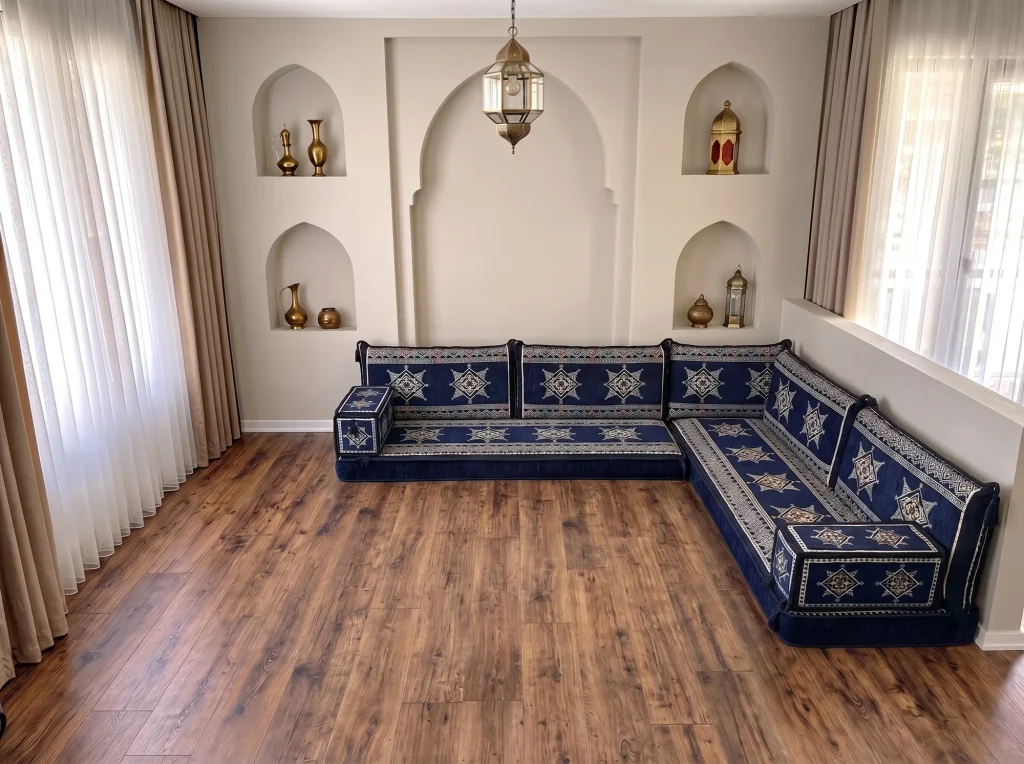
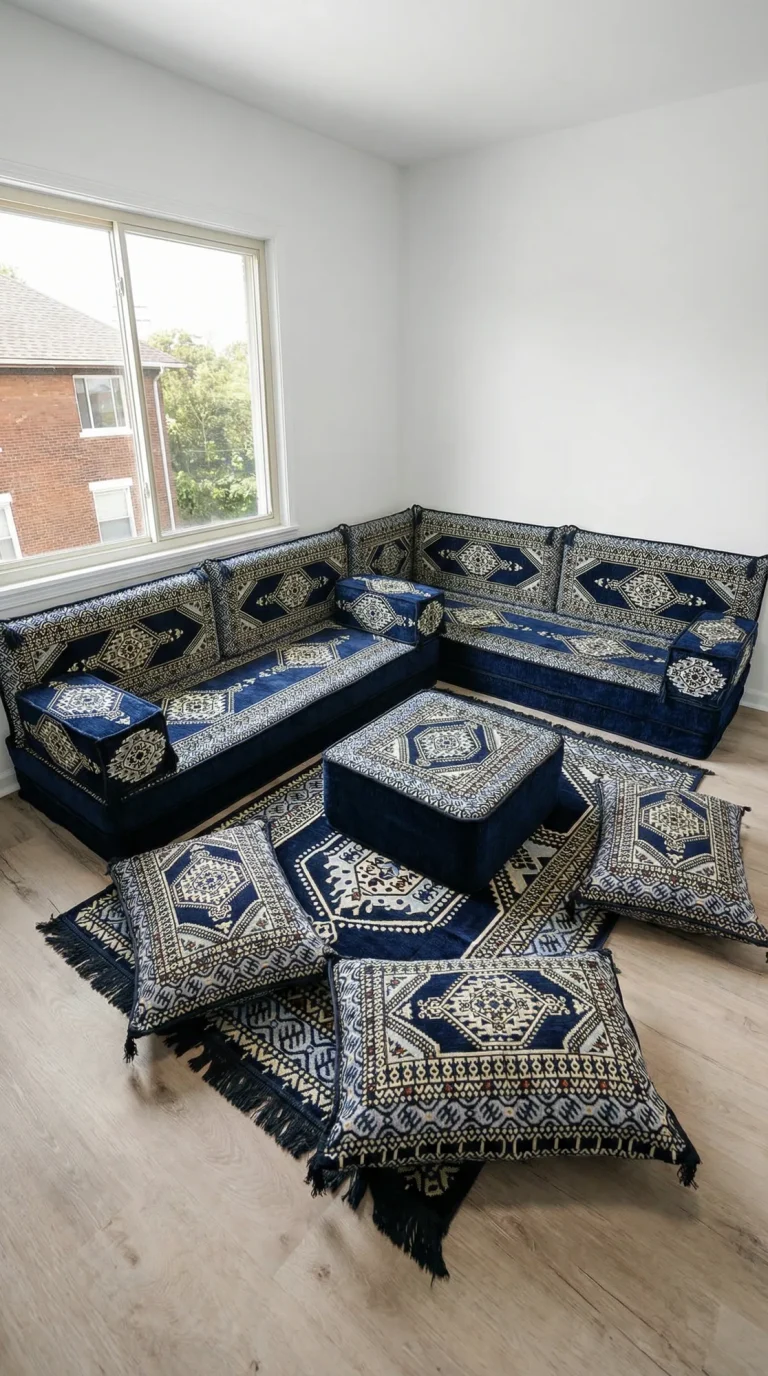
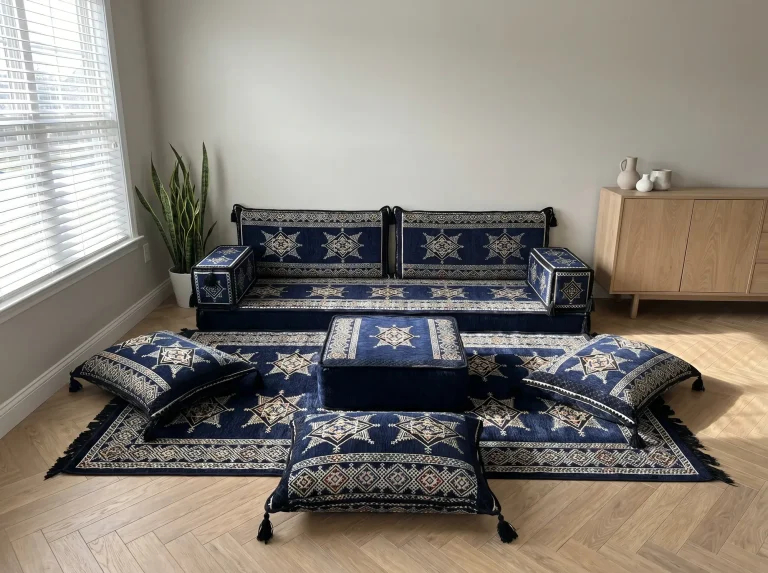
The navy star-pattern floor sofa above shows the structure clearly because nothing else is in the picture: two runs of seat meeting in the corner, back cushions standing against the walls and the floor left bare.
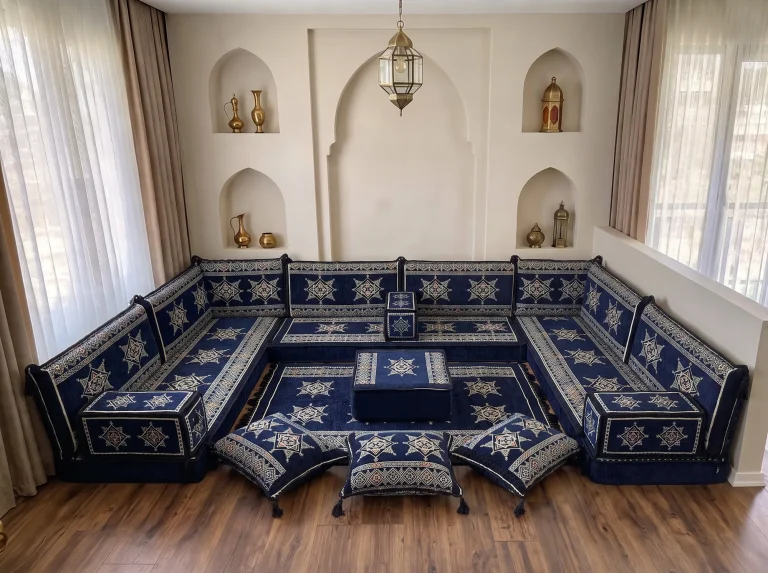
Because the pieces are modular, the same oriental sofa set can be rearranged as a single straight row in a narrower room, or extended along a third wall into a U when the family grows. The L-shape and U-shape layouts page explains where each arrangement works, and the L-shape gallery shows corners in real rooms. Extra floor cushions can be ordered with any set.
Fabrics and patterns for oriental sofas
Pattern is what makes a low sofa read as oriental, and three families cover almost every taste.
Kilim-inspired jacquard. Diamonds, hooks and stepped medallions woven into the cloth, in the reds, blacks and creams of Anatolian flat-weave rugs. This is the look of the şark köşesi and the boldest of the three. The pattern is woven into the cloth, not printed on it.
Velvet. Plain or with a contrast stripe, a gold band or a damask panel. Velvet deepens colour and gives the oriental style sofa its formal, evening character. Sofhu’s velvet covers are zippered and can be washed cool.
Linen and plain weaves. Pale, matte and quiet. Linen breathes and absorbs moisture, so it is the comfortable choice in a warm or sunny room, and it lets a strong rug or lamp take the attention.
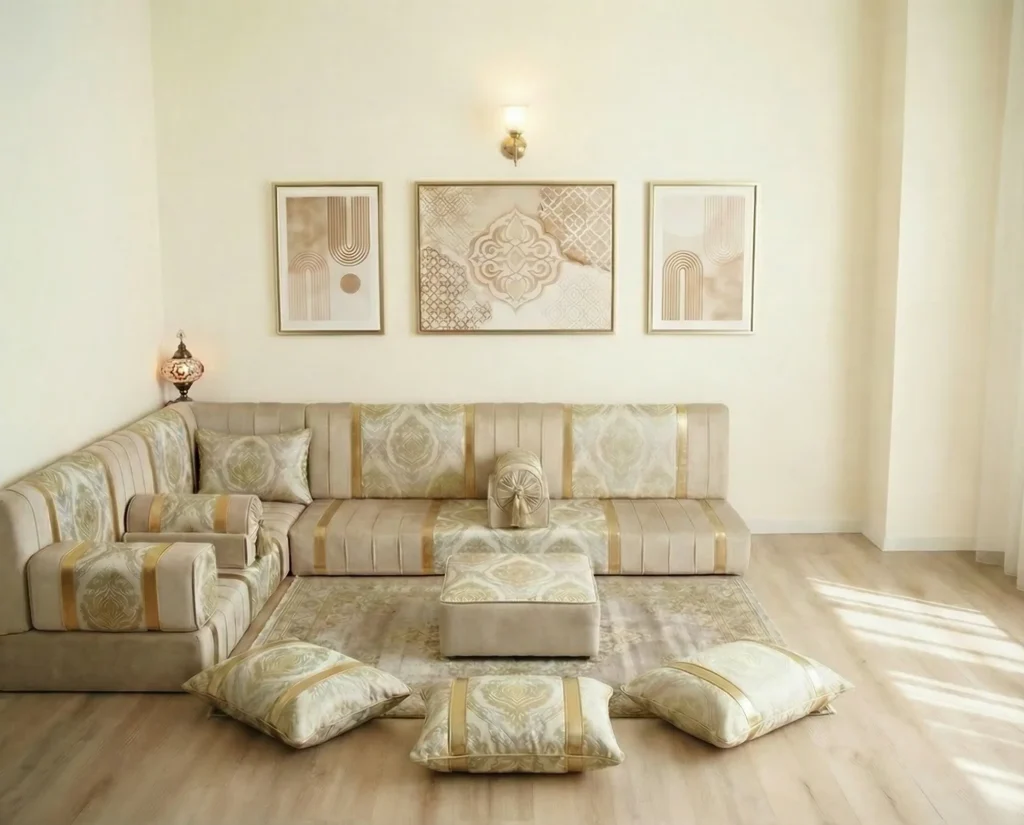
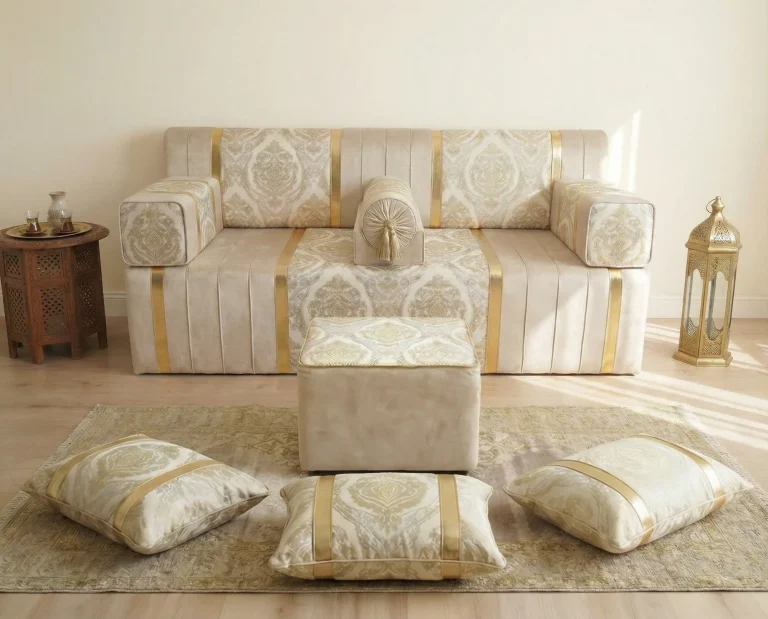
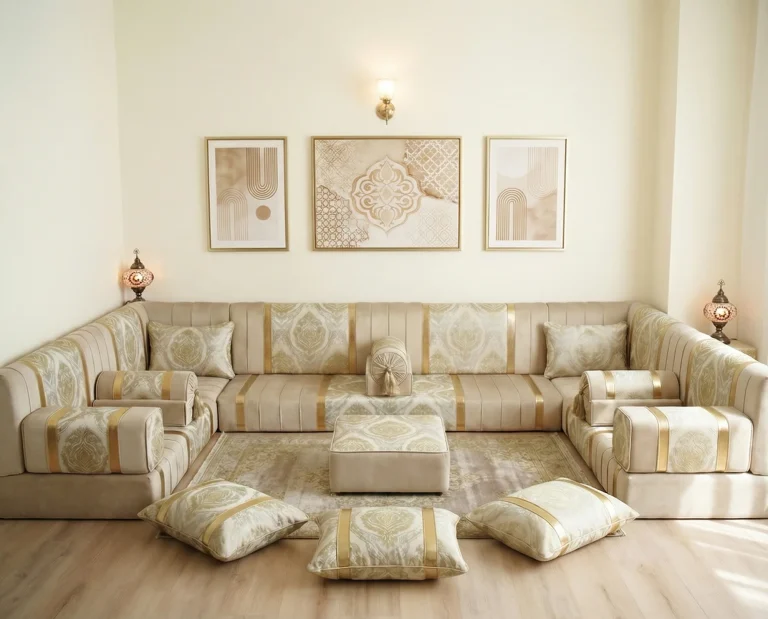
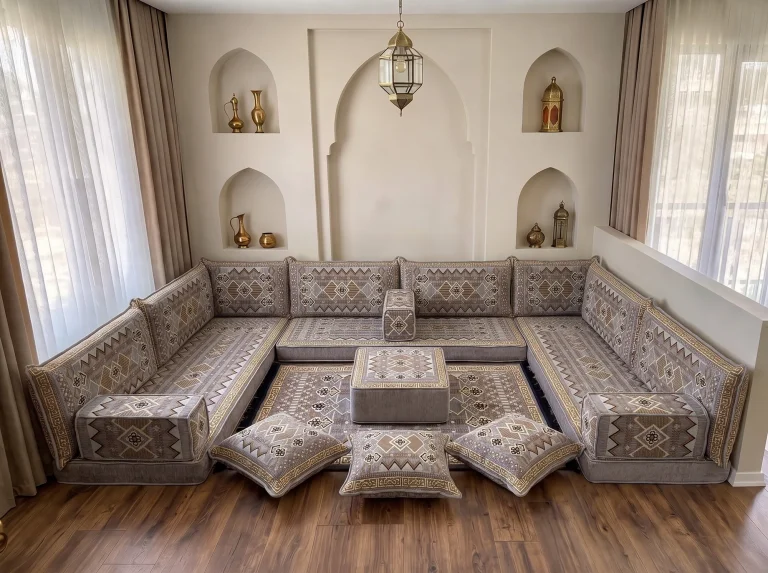
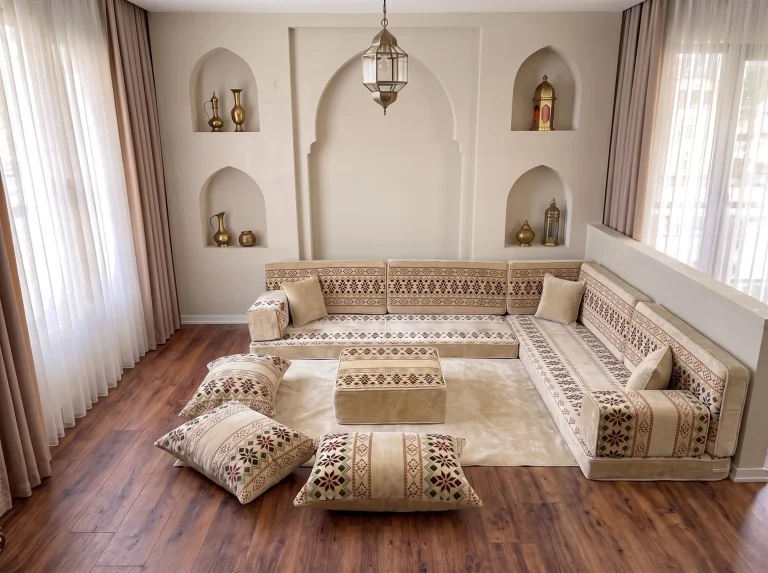
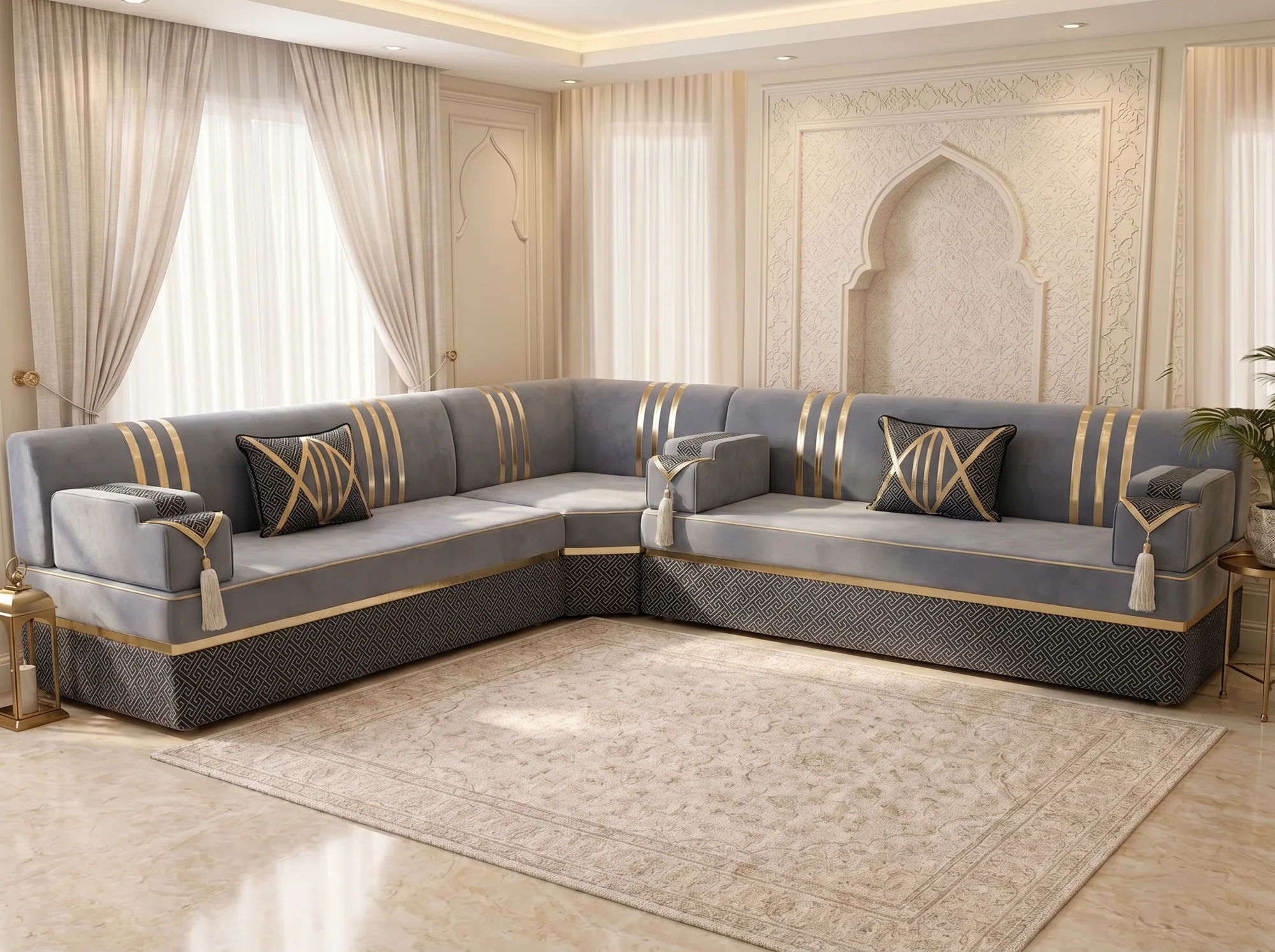
The ivory and gold set above is the lighter end of the range: damask panels on a soft base, in a daylit room with a single mosaic lamp. At the other end is the gray and gold kilim weave shown further down. Series names and properties are on the fabrics page; the three families are compared in velvet vs linen vs jacquard, and the motifs themselves in majlis patterns and motifs.
Styling an oriental corner: rugs, tables and lamps
Three things around the sofa do most of the work: what is under it, what is in front of it and how it is lit.
The rug. It should be large enough for the floor cushions to sit on it and for feet to rest on it from every seat. A matching rug comes with Sofhu’s complete sets; a kilim or a plain wool rug works equally well with a plainer fabric. Sizing by layout is covered in what size rug goes with a majlis.
The table. Keep it low. The upholstered ottoman in the set is designed to carry a tray, and it can be pushed aside when children want the floor. For wooden and brass alternatives and the heights that suit a floor seat, see coffee and side tables for floor seating.
The light. Low seating looks best under low, warm light. A pendant lantern over the ottoman or a mosaic floor lamp in the corner throws colour across the wall behind the backrests. Our pieces on the Turkish mosaic lamp and on pairing mosaic lamps with Arabic sofas show how.
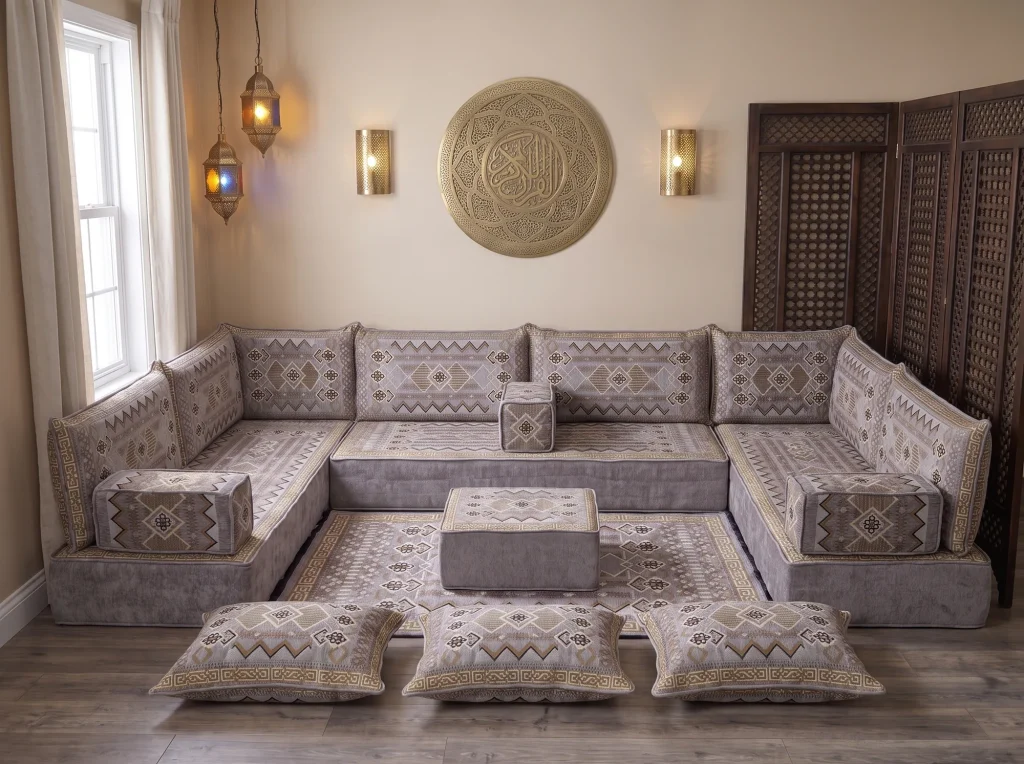
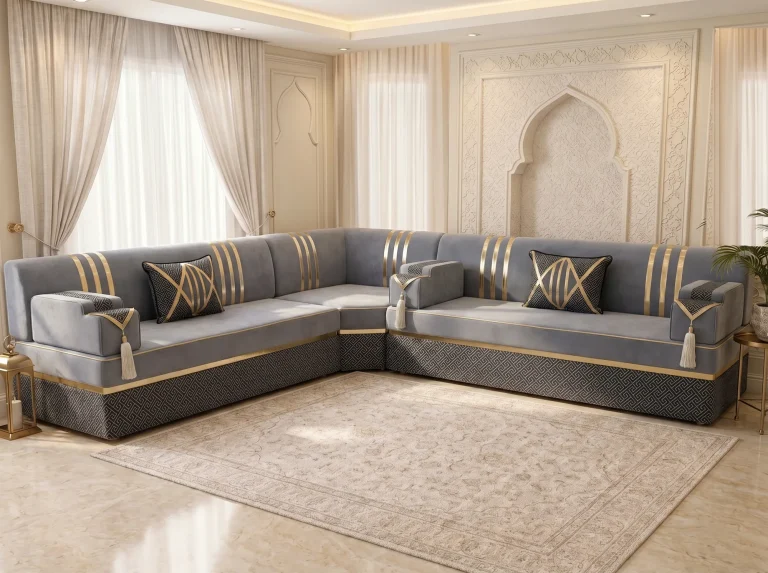
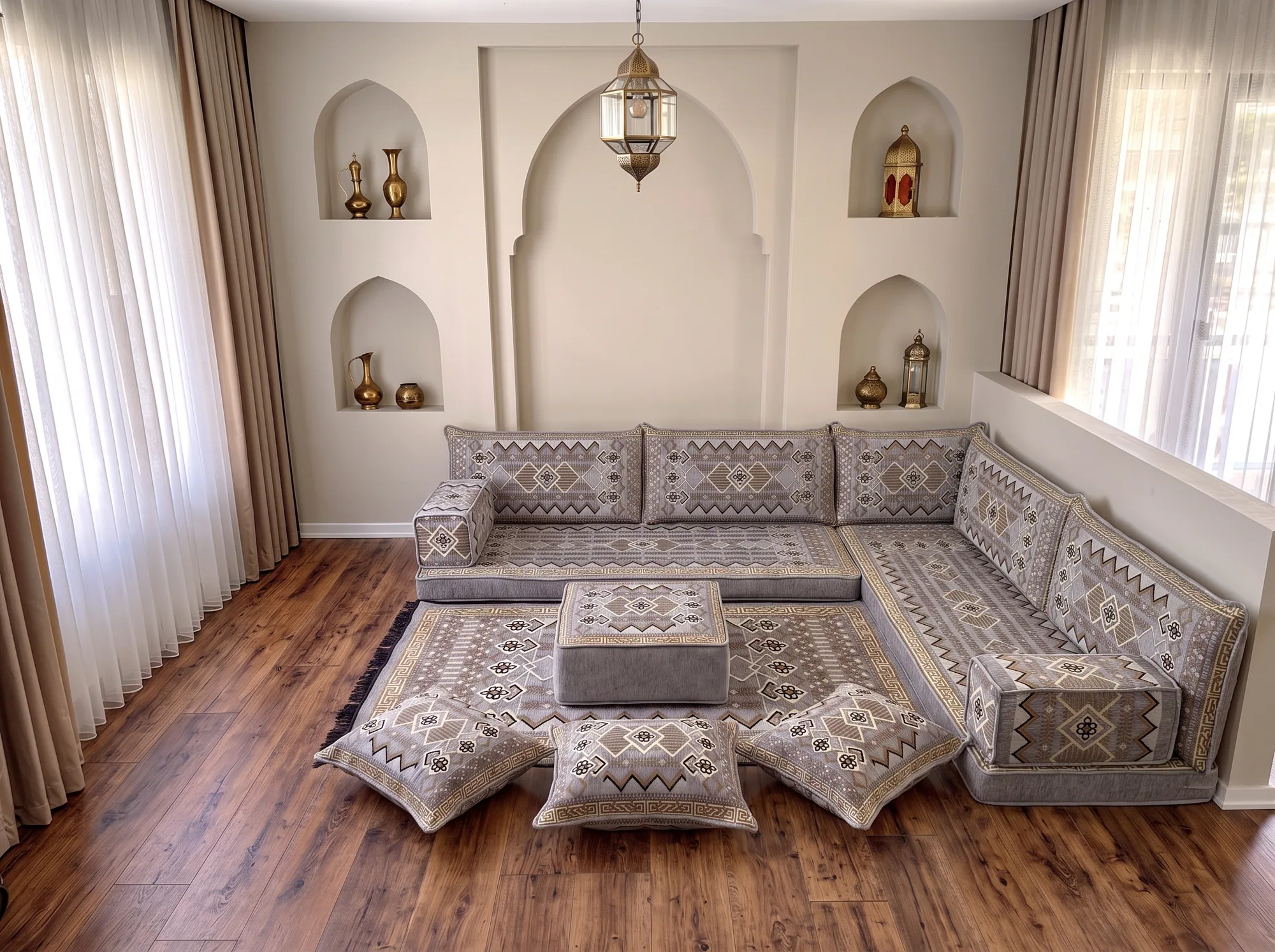
In the room above, a gray and gold kilim-pattern set is finished with hanging lanterns, pierced brass wall lights, an engraved brass plate and a carved wooden screen. None of it is necessary, and all of it can be added over time. More ideas are in decoration tips from Sofhu, and if the rest of your home is modern, read mixing a majlis with Western furniture.
Sizes and custom builds
Sofhu does not sell oriental sofas in fixed sizes. Each set is made from the measurements of the wall or corner it is meant for, so the seat ends where your wall ends.
For a corner, send two numbers: the length of each wall from the corner to the point where the seating should stop. For a whole room, send every wall, and mark doors, windows, radiators and sockets. A photo helps. Then choose a fabric and tell us whether you prefer the seat low to the floor or thicker and easier to rise from; several thicknesses are available. The method is set out in how to measure a room for a majlis.
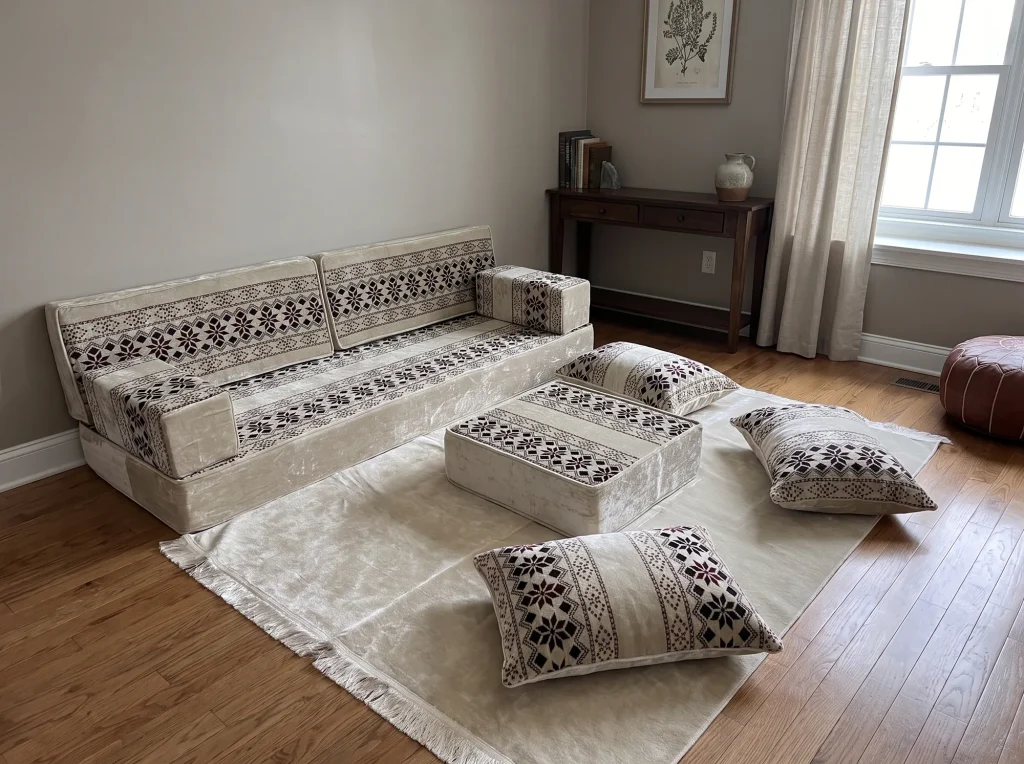
Inside every seat is 32 kg/m³ high-density foam, called 32 DNS in Türkiye. That figure is density, the weight of a cubic metre of foam, and it indicates how well a cushion keeps its height over years of sitting, not how hard it feels. Sofhu describes its cushions as firm, there are no springs in them, and a softer or firmer foam can be requested on a custom order. Read more in foam density for floor seating.
Oriental floor seating or a raised oriental couch
Pick the height by who will sit there. Oriental floor seating is the traditional form: relaxed, good for sitting cross-legged, easy for small children to climb on, and the lowest visual line in a room, which makes a small space feel larger.
A raised version suits guests who find it hard to get up from the floor. Sofhu builds the Arabic majlis, a raised and fully upholstered set, and wooden-frame bench sets that keep the oriental look on a higher seat, which is also how a Moroccan salon is traditionally built. The two can be mixed in one room. See floor seating vs raised diwan and majlis seat height for the trade-offs.
Shipping to Europe, the UK and North America
Sofhu is the manufacturer and ships free worldwide from Türkiye. There are no local shops in Europe or North America: every set is built to order and delivered to the customer’s door, vacuum packed to reduce the volume of the parcels. Import duties or taxes may apply depending on the destination country, and you can ask us about yours before ordering.
Country and state pages give more local context: Germany, France, the United Kingdom, New York, New Jersey, Michigan and Virginia. German and French readers will find native-language pages at Orientalische Sitzecke and Canapé oriental.
To start, send your wall measurements and a note on fabric through the quote by measurement form or by WhatsApp.