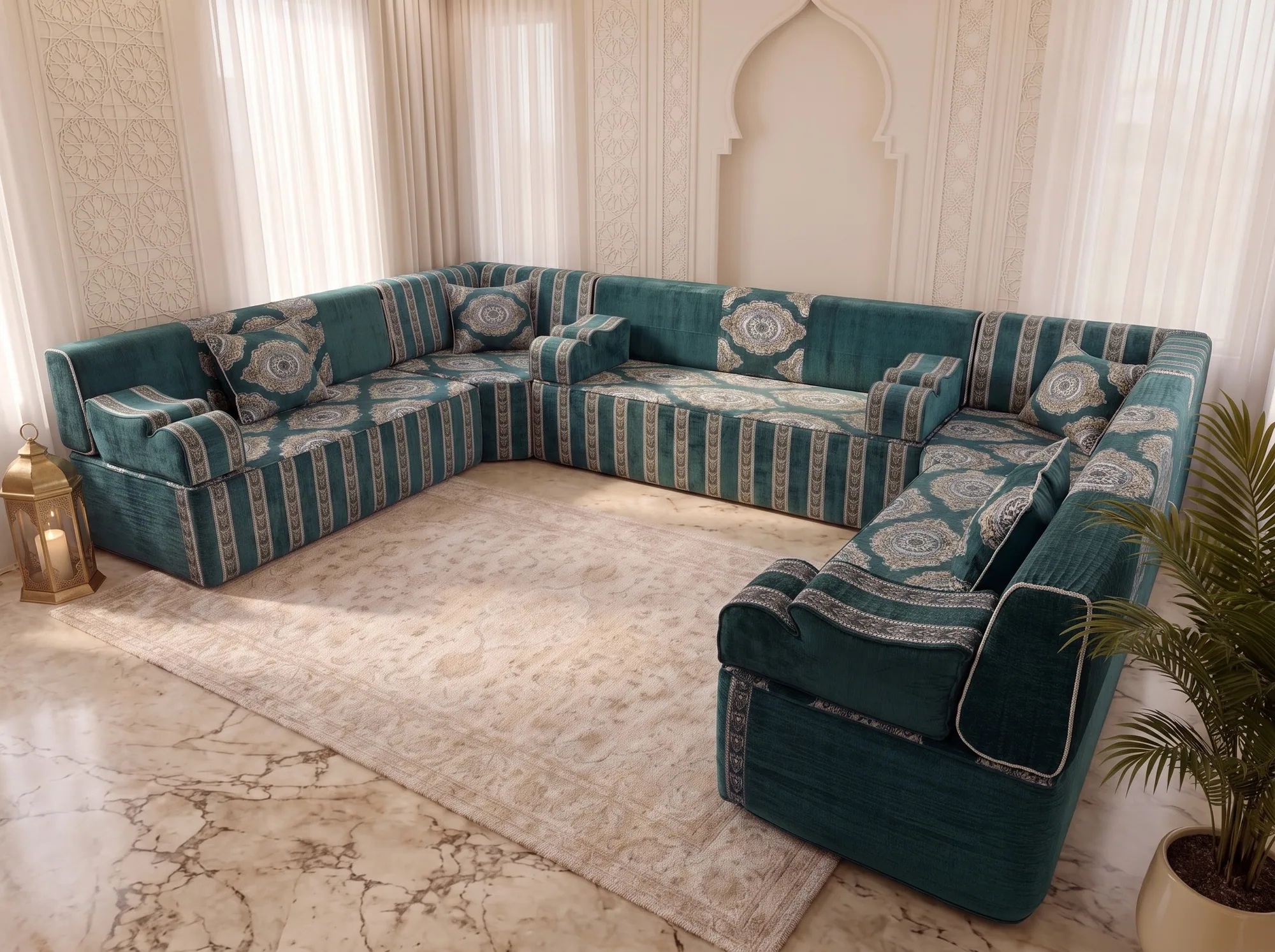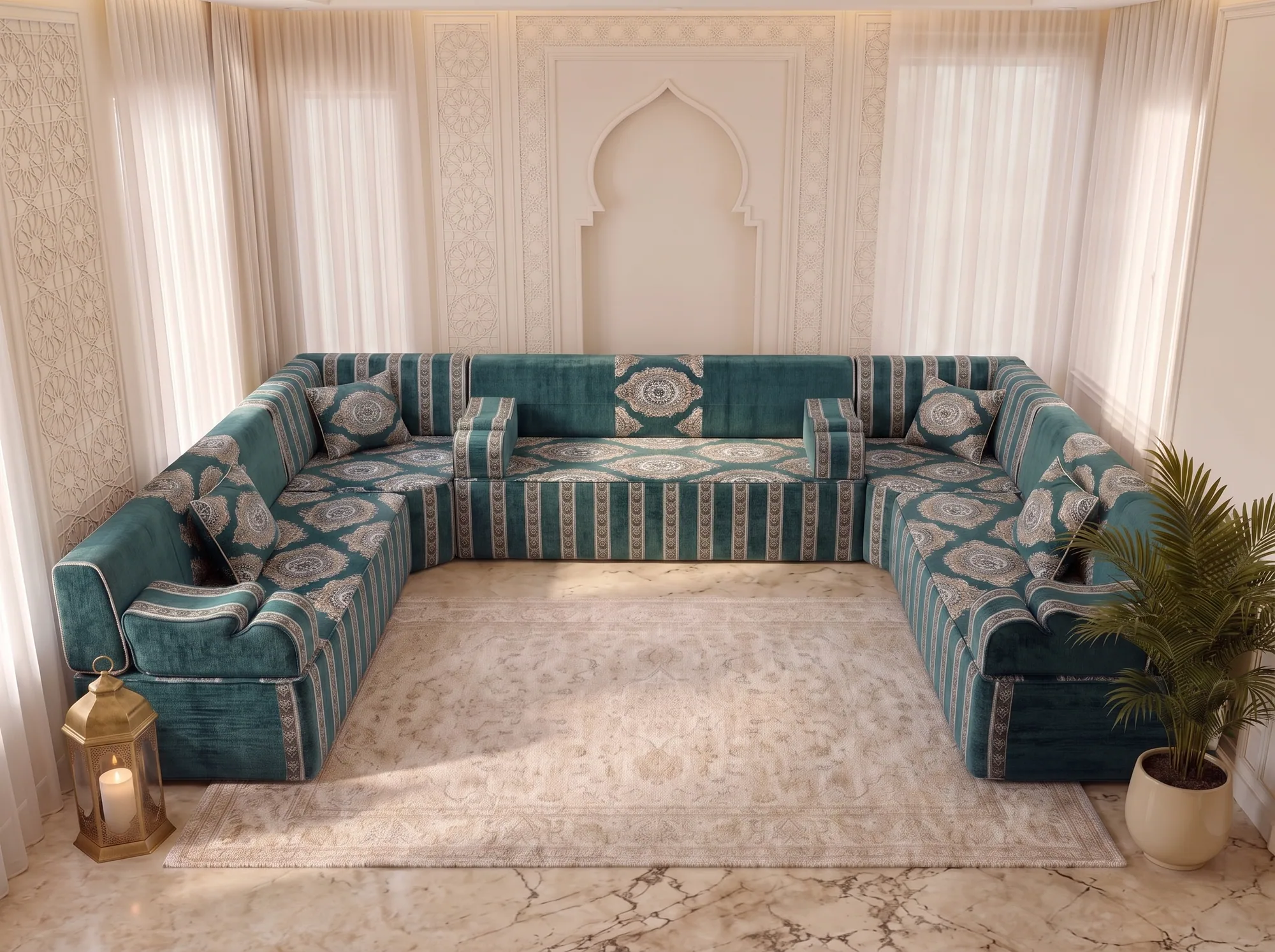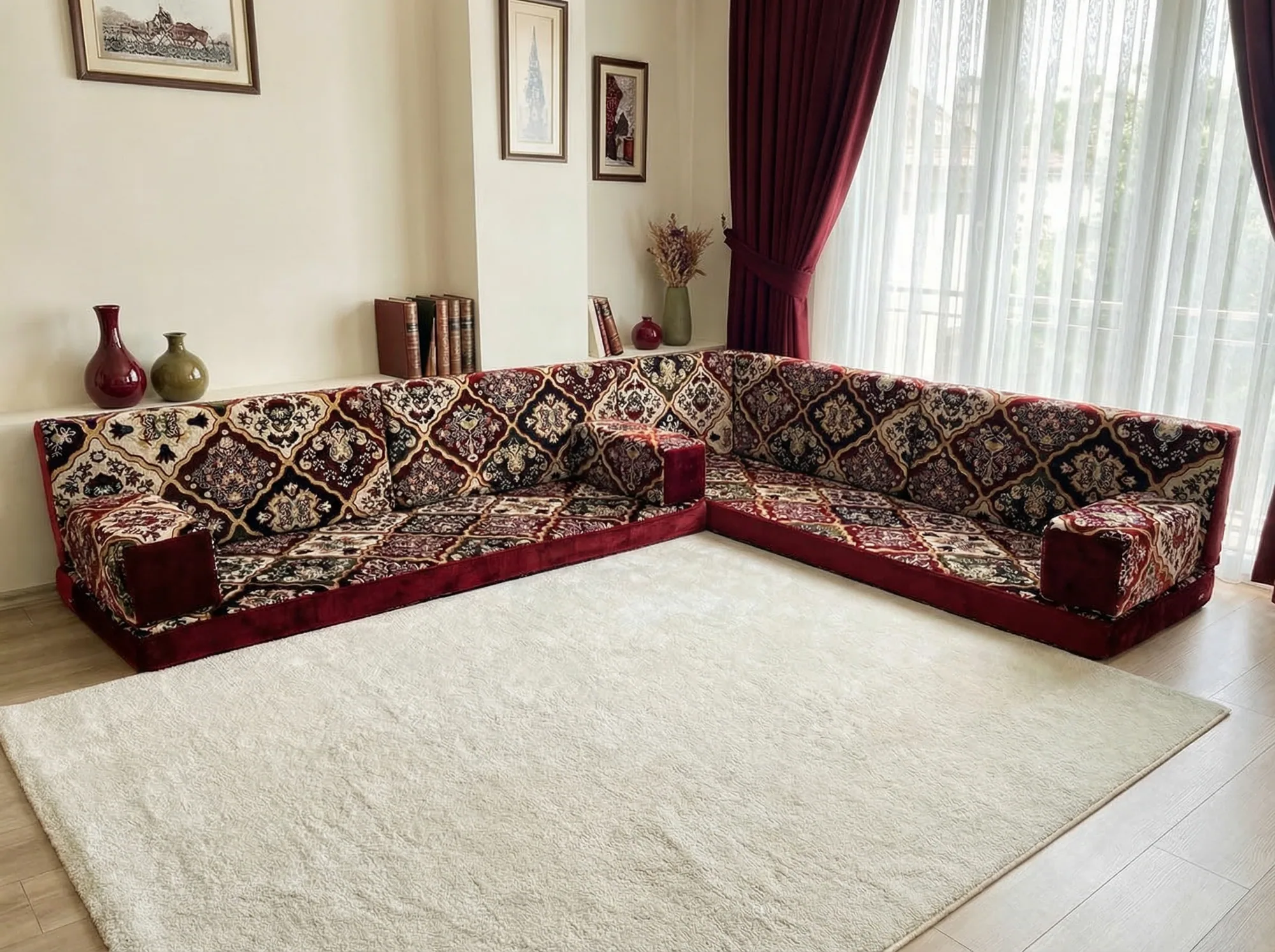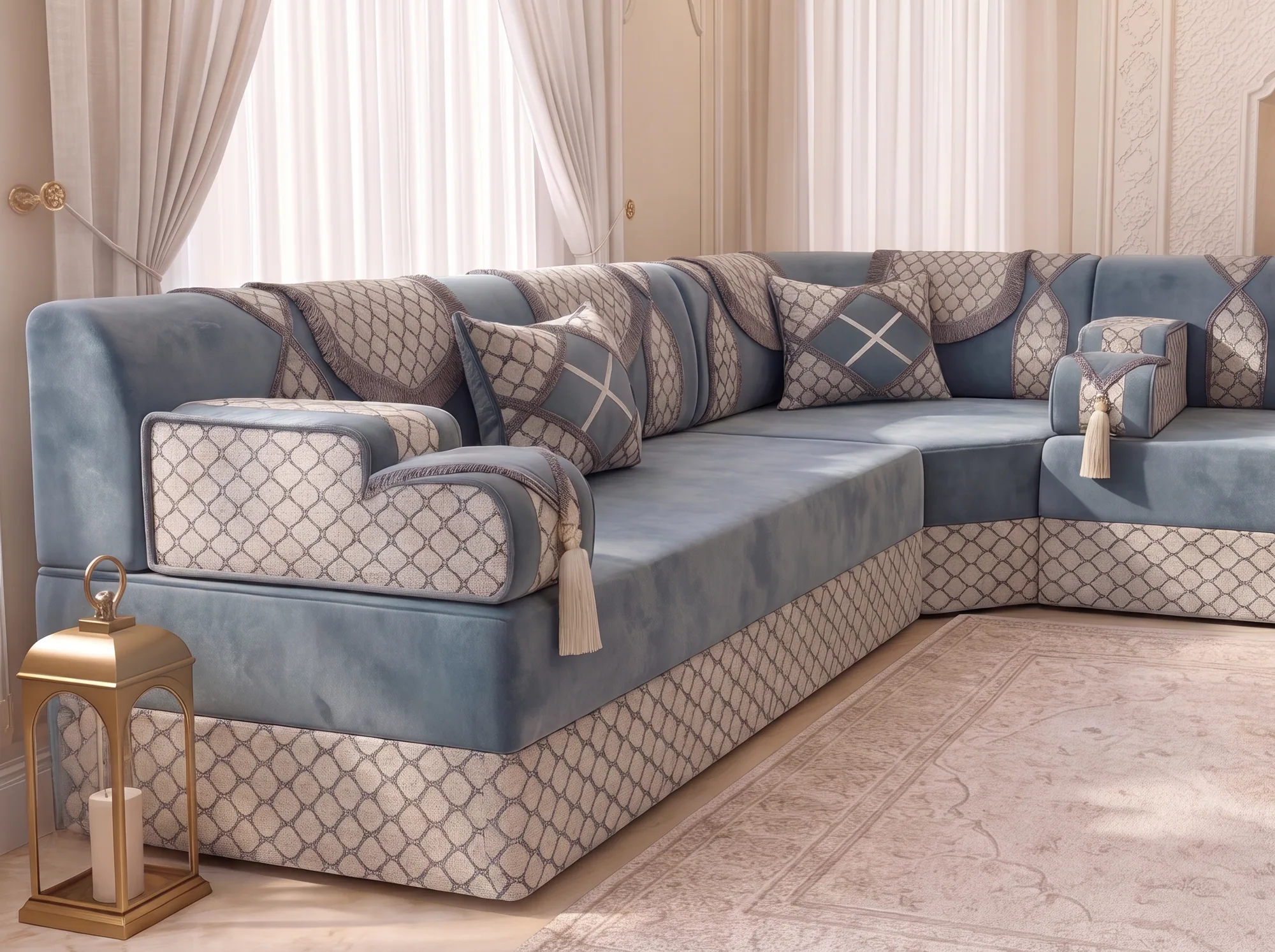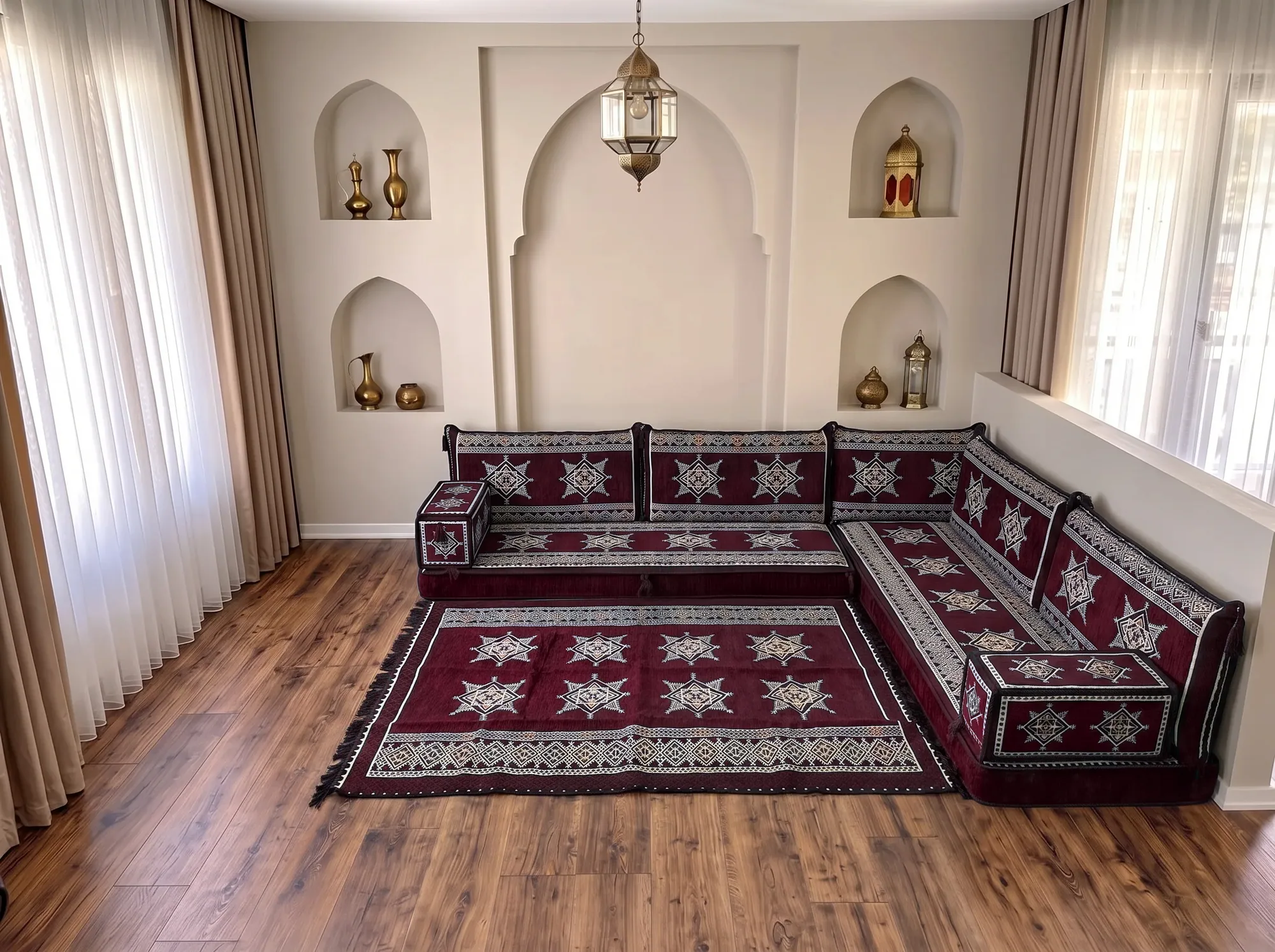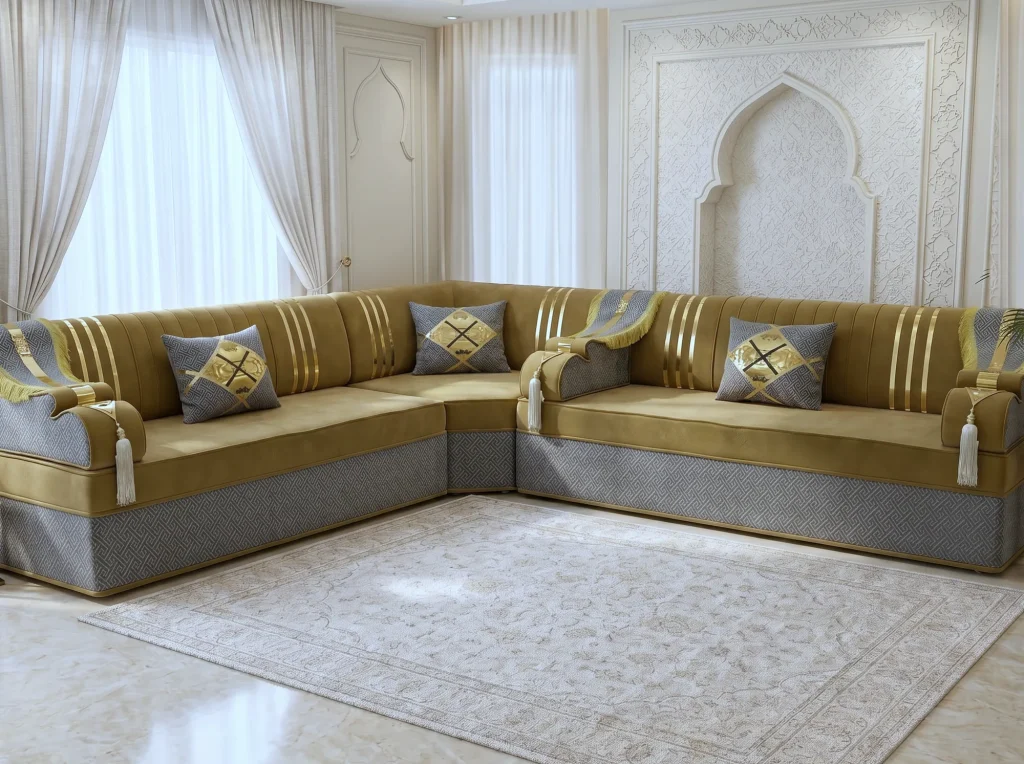
Majlis is the room and the gathering held in it; jalsa is the seating set that furnishes it. A jalsa majlis is therefore one thing: raised, upholstered Arabic seating with fixed backs and arm bolsters, built in runs along the walls. Sofhu makes these sets in Türkiye with 32 kg/m³ foam, cuts them to your wall measurements and ships them free worldwide.
- Majlis
- The guest room and the gathering in it
- Jalsa
- The seating set itself
- Layouts
- Single row, L shape, U shape
- Foam
- 32 kg/m³ (32 DNS) high-density foam, no springs
- Covers
- Zippered, removable, washable at 30°C
- Sizing
- Made to your wall measurements
- Made in
- Türkiye, by Sofhu as manufacturer
- Shipping
- Free worldwide
On this page
People type “jalsa majlis” into a search box for a simple reason: the family calls the room one thing and the shop calls the furniture another, and nobody wants to miss the right result. The two words belong together. A jalsa majlis is a set of raised, upholstered Arabic seating made for the room where guests are received, and this page explains the names, the pieces and how to order one cut to your own walls.
Jalsa and majlis: the room and the set
Majlis is the room, jalsa is what you sit on. Majlis (مجلس) comes from the Arabic verb jalasa, to sit, and means “place of sitting”: the reception room, and by extension the gathering that happens there. Jalsa (جلسة) comes from the same root and means “a sitting”. In everyday retail use across the Gulf and the Levant it has become the word for the seating set itself.
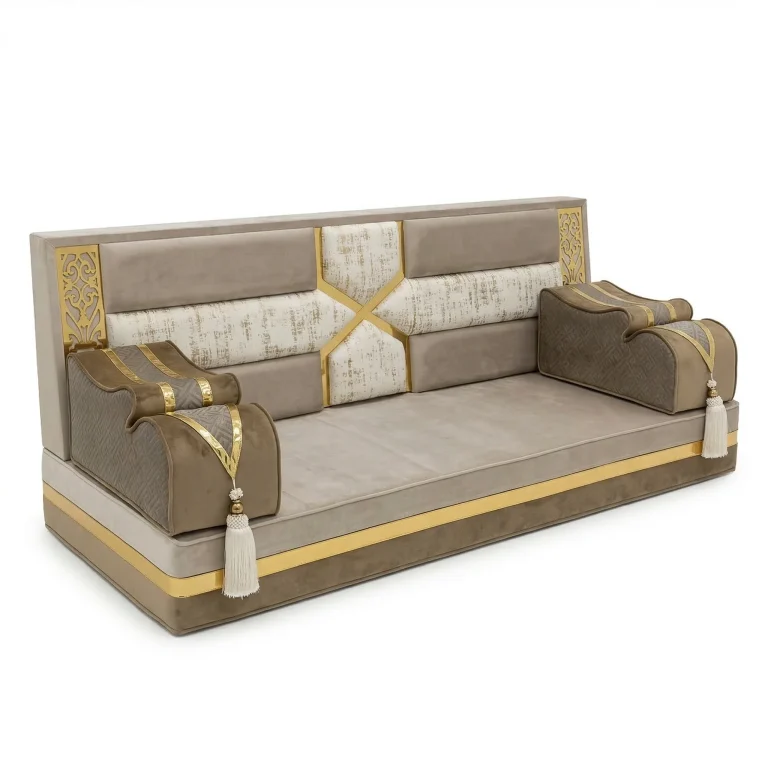
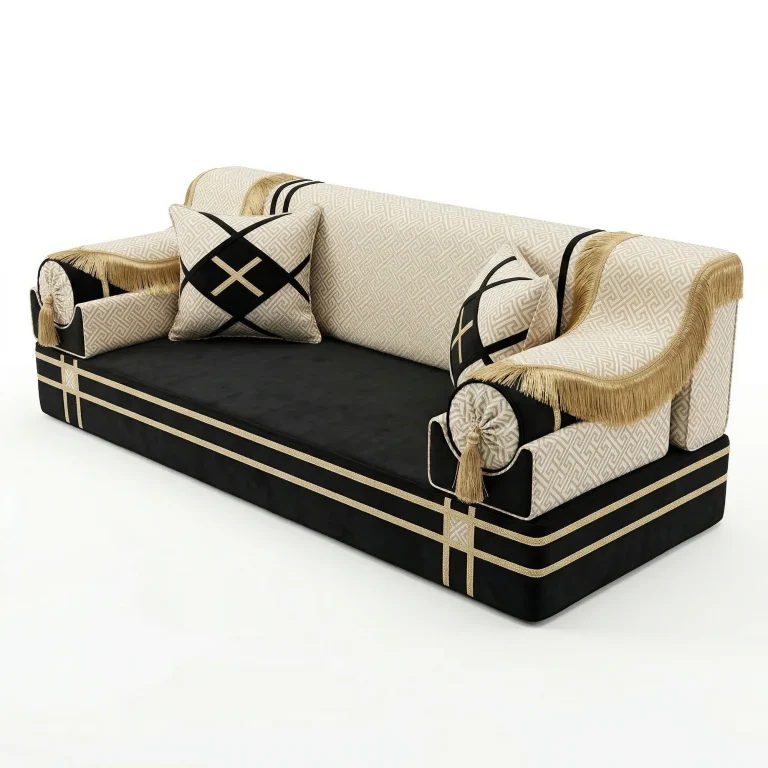
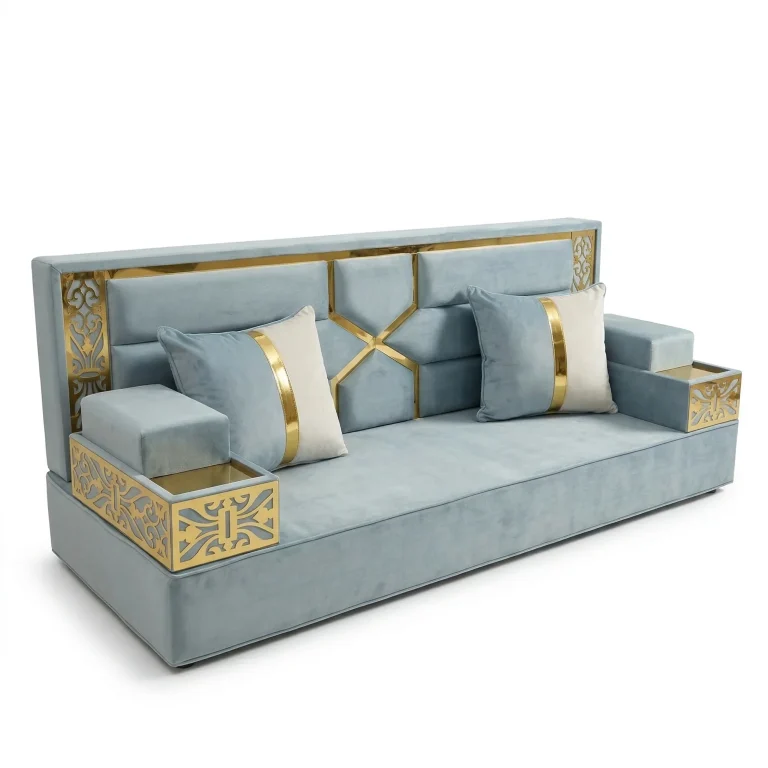
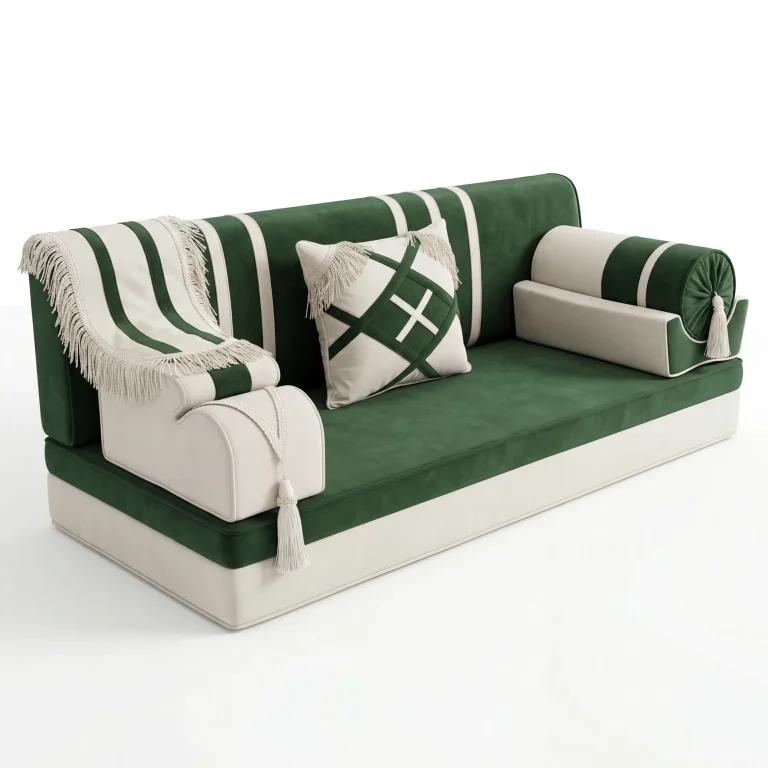
Sofhu makes two products for that room and keeps their names apart. An Arabic majlis, the jalsa majlis of this page, is raised to sofa height: an upholstered base, tall fixed backs, arm bolsters, piping and trim. An Arabic floor sofa is the low version, a seat mattress at floor level with loose back cushions, armrest blocks and usually a matching ottoman.
So “majlis vs jalsa” is not a choice between two products. One word names the space and the custom, the other names the furniture. When someone says they are buying a majlis they almost always mean the jalsa that goes in it. That is why product names so often carry both words, and why the spellings jalsa, jalsah and jalsat all appear for the same thing.
If you want the longer story of the word, read what majlis means in English. For the other names used from Morocco to Afghanistan, see floor seating names by country.
What a full jalsa majlis set includes
A set is built from a small number of repeating pieces, and the layout decides how many of each you need.
- Base and seat. An upholstered base that lifts the firm foam seat to sofa height. Several units are placed end to end along a wall.
- Backrest. A tall back fixed to the unit, often with a striped, tufted or framed panel.
- Armrest. A bolster or tray-top block at the ends of a run and between sitters.
- Throw pillows. Loose cushions for comfort and colour.
- Complements. A matching kilim or rug, an ottoman, floor cushions, curtains and wall decor can be made alongside the seating.
A majlis is planned against the walls, not floated in the middle of the room. Each run follows one wall, and that one fact shapes every layout.
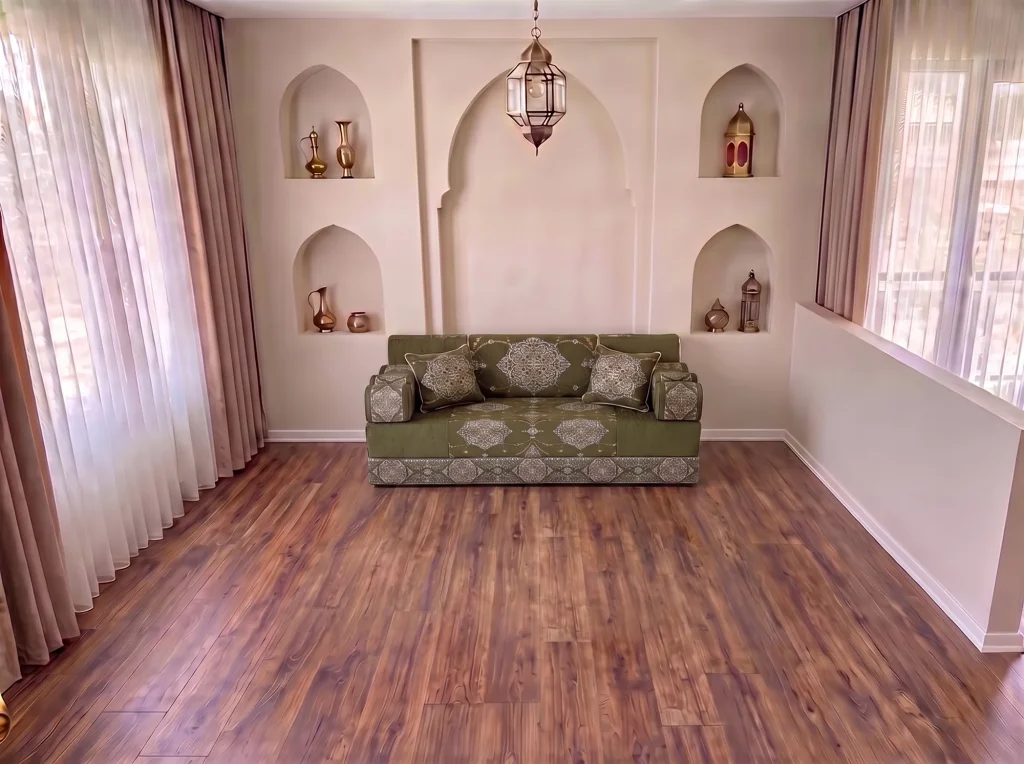
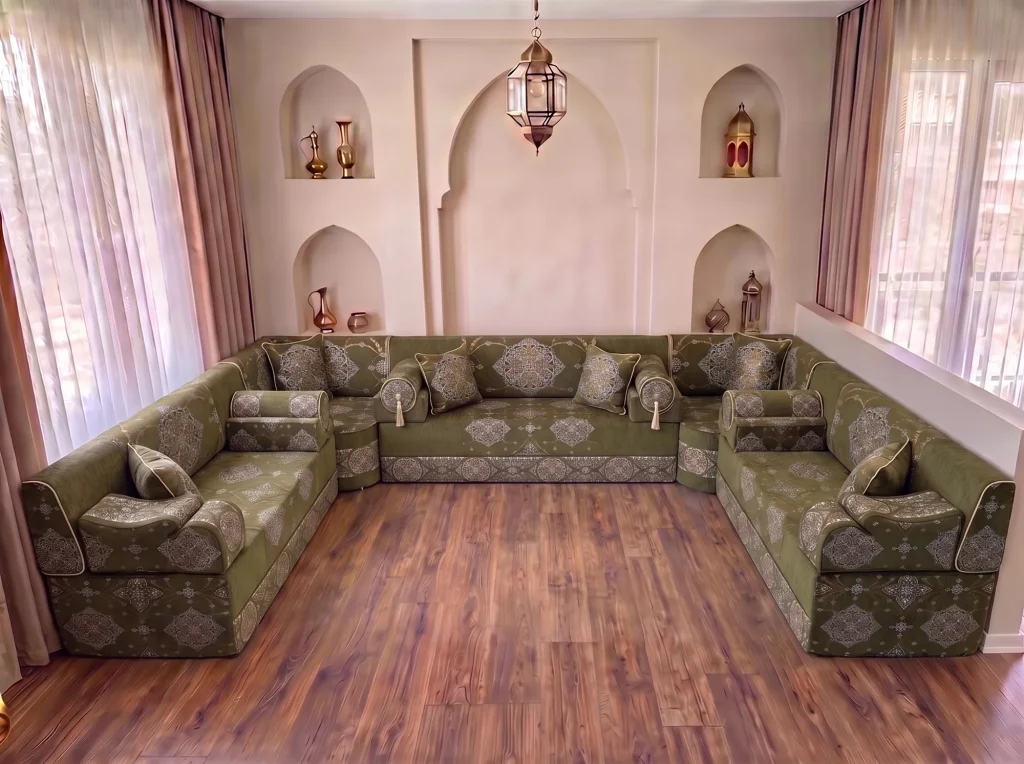
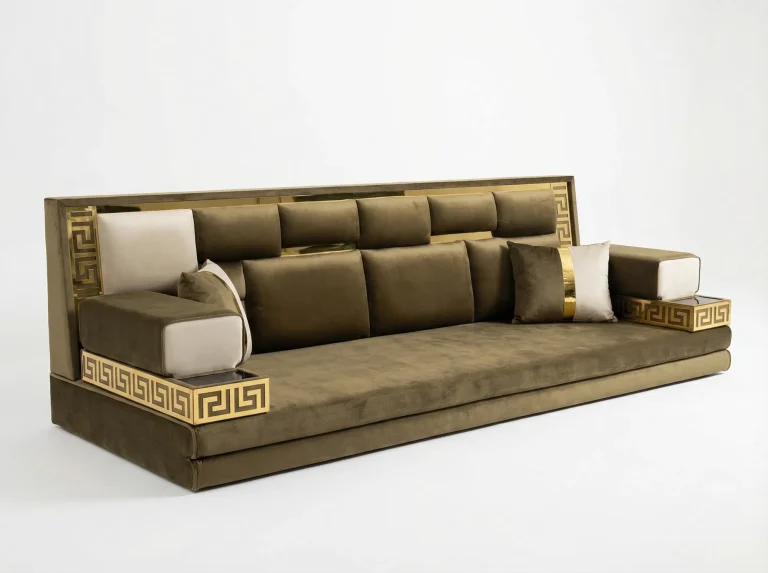
The two photographs above show the same khaki model as a single row and as a U shape. Nothing about the pieces changes between them. Only the count does.
| Layout | Walls used | What changes |
|---|---|---|
| Single row | One | One run of seats and backs, an armrest at each end |
| L shape | Two | A second run and a corner where the two meet |
| U shape | Three | Three runs and two corners, the centre left open |
We do not publish fixed piece counts, because a set is cut to the room rather than picked from a size chart. The guide to the parts of a majlis set names every cushion, and the L-shape and U-shape layouts page shows how corners are handled.
Choosing a jalsa majlis sofa by room
The right set depends on who uses the room and how often.
Family sitting room. This is the room that is used every day, by children as much as adults. Choose a fabric you are happy to wash, since all covers are zippered and removable, and a colour that forgives daily life. A single row or an L leaves floor space for play and for a table.
Guest majlis. The room kept ready for visitors is usually the most carefully furnished in the house. A U shape around three walls lets everyone face one another, which is the point of the room. Matching curtains and a rug finish it.
Men’s majlis. Where a household keeps a separate room for male guests, the sittings tend to be long, so support matters more than softness. Armrests between places give each guest something to lean on.
Women’s majlis. Women’s gatherings are an established part of the tradition, with their own room in many homes. The seating is the same; the choice of colour and trim is where the room becomes personal.
Many homes abroad have one living room that has to do all four jobs. An L-shaped Arabic jalsa majlis in a corner, as in the mustard set at the top of this page, keeps the hosting tradition without giving up the whole room.
Star-pattern and plain models
Patterns divide roughly along product lines: the bold star sets are floor sofas, while the majlis units run from plain two-tone velvet to gold-trimmed stripes and medallions.
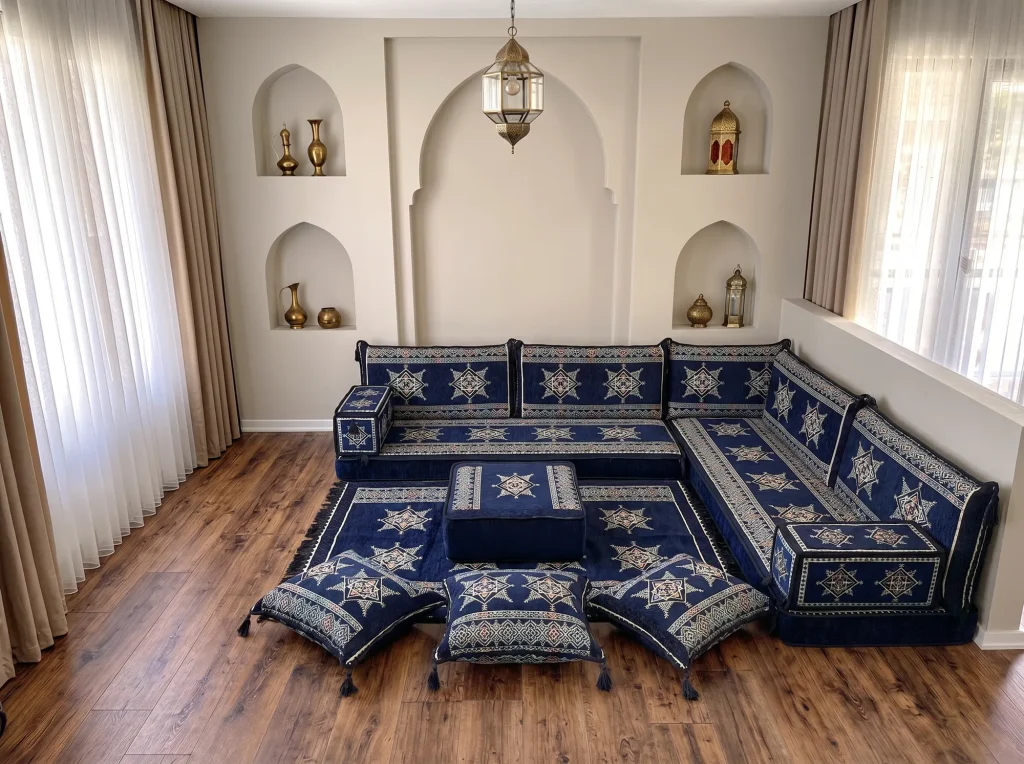
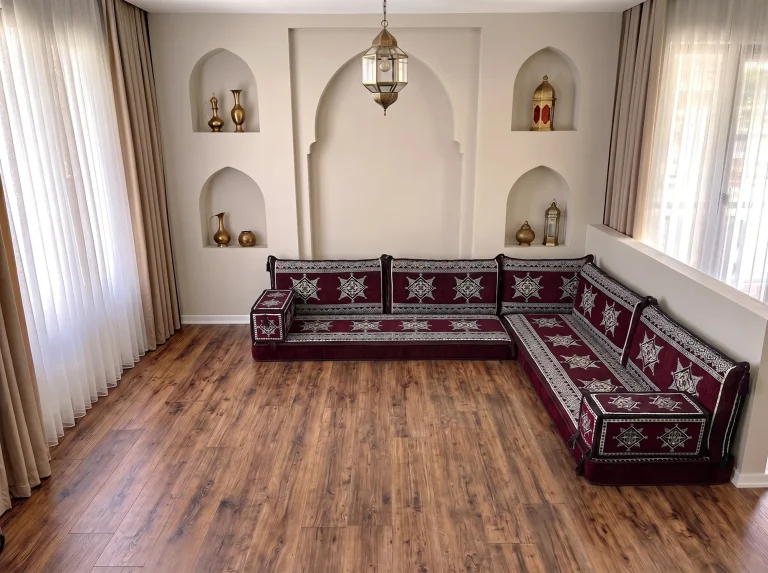
The navy set above is an Arabic floor sofa, shown here for comparison. Sofhu’s star designs place a pale eight-point star on a deep ground such as navy or burgundy, on low floor-level cushions with a matching rug, ottoman and floor cushions. Many of these sets have been sold under Yemeni majlis names, although they are floor sofas. The star itself is a Sofhu design and we describe it that way; the Yemeni part is the full-room arrangement, which you can read about on the Yemeni diwan and mafraj seating page and on the existing Yemeni majlis from Sofhu page.
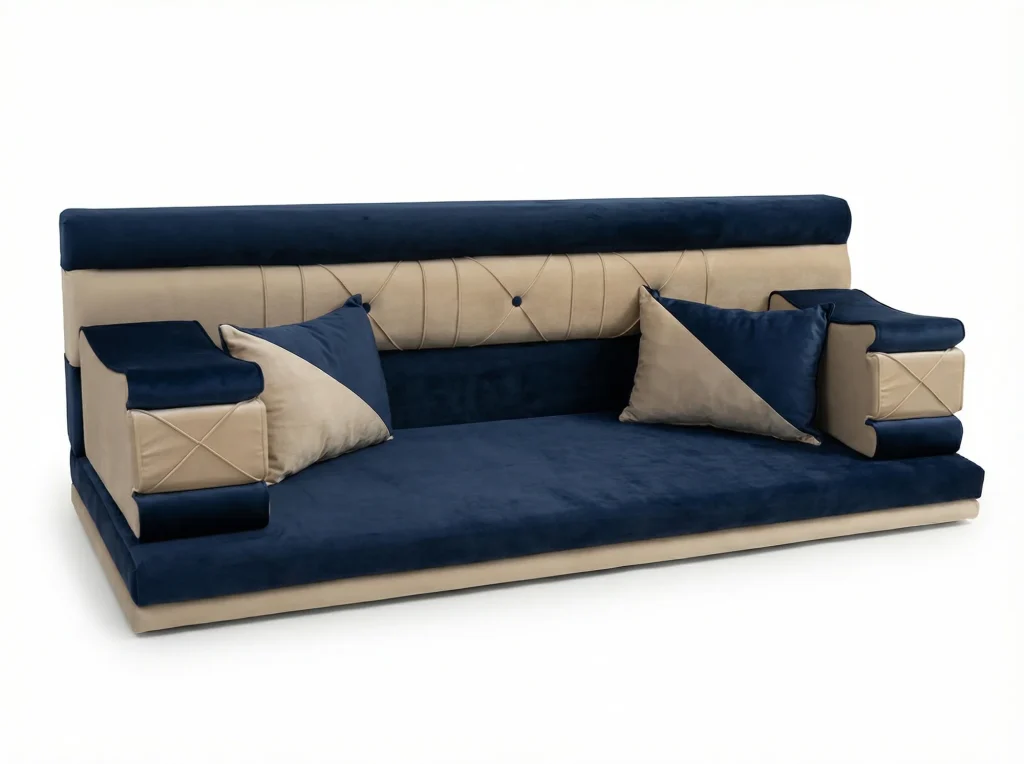
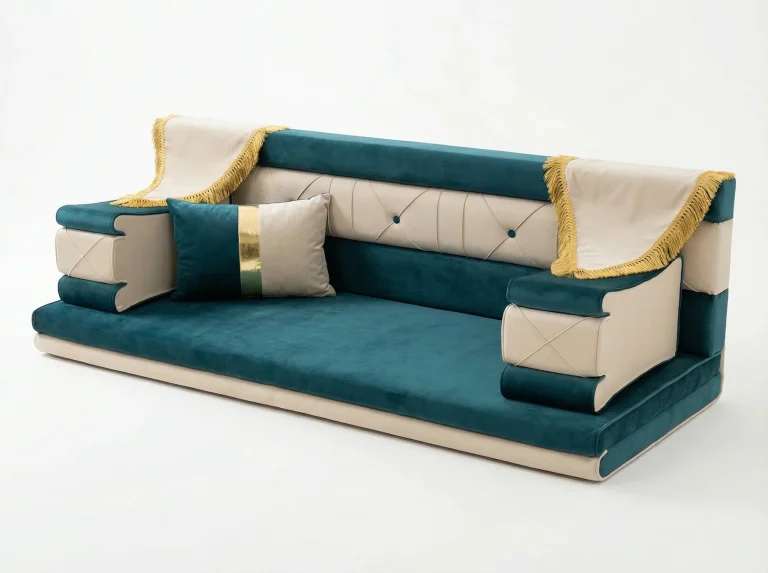
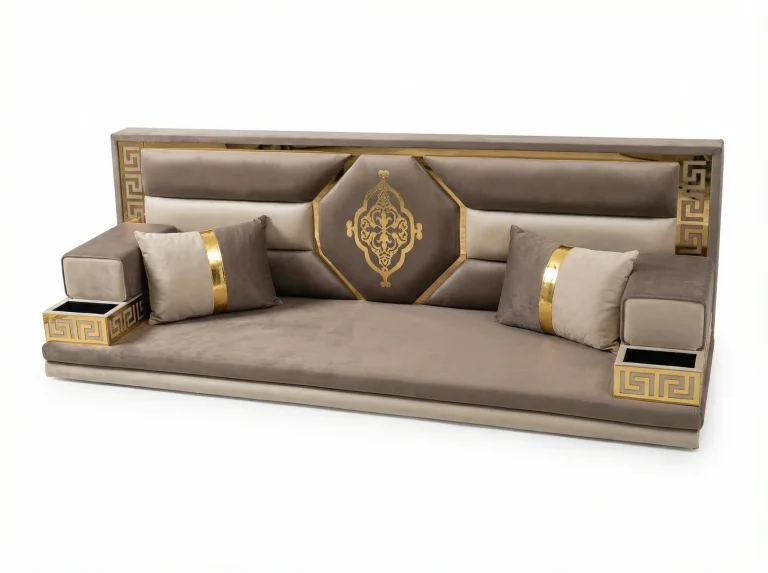
The majlis range starts with plain two-tone velvet units like the navy and beige piece above, with a tufted backrest and no metallic trim. From there it moves to striped, key-pattern and medallion designs with gold fringe or inlay. The gallery on this page shows a range of single majlis units on a white background so the detail is easy to compare, with one burgundy star floor sofa at the end for contrast. For the background to stripes, stars and sadu bands, see majlis patterns and motifs. The full catalogue is in the Sofhu shop.
Foam, covers and sizes
Every Sofhu set shares the same construction, whatever the pattern.
- Foam. 32 kg/m³ polyurethane foam, written 32 DNS in the Turkish trade. The figure means one cubic metre of the foam weighs about 32 kg. Density tells you how much material is in the cushion, not how hard it feels, and denser foam generally keeps its height and support longer.
- No springs. The cushions are foam only, with no metal inside.
- Covers. Every cover is zippered and comes with its foam insert. Covers come off, and Sofhu states they can be machine washed at 30°C.
- Fabric. Velvet, chenille, linen and woven fabrics are offered, and the choice can be made per order.
- Sizes. There is no standard size. Seat lengths, cushion thickness and the number of pieces are set from your room.
How ordering and delivery work
A majlis jalsa set starts with a tape measure, not a shopping basket.
- Measure each wall the seating will run along, and note doors, windows, radiators and sockets.
- Choose a model or send a photo of a set you like, with your preferred colours.
- Send the measurements through the quote by measurement form or on WhatsApp.
- Sofhu replies with a layout and a price for your room. Design questions can be settled on a video call.
- The set is made in Türkiye, vacuum packed and shipped to your door.
Shipping is free worldwide. Duties or taxes may apply depending on where you live, so ask before you confirm. Buyers in America can also read the existing page on Yemeni majlises for the USA, and anyone still comparing words and styles can continue to the main Arabic majlis and Arabic jalsa pages.