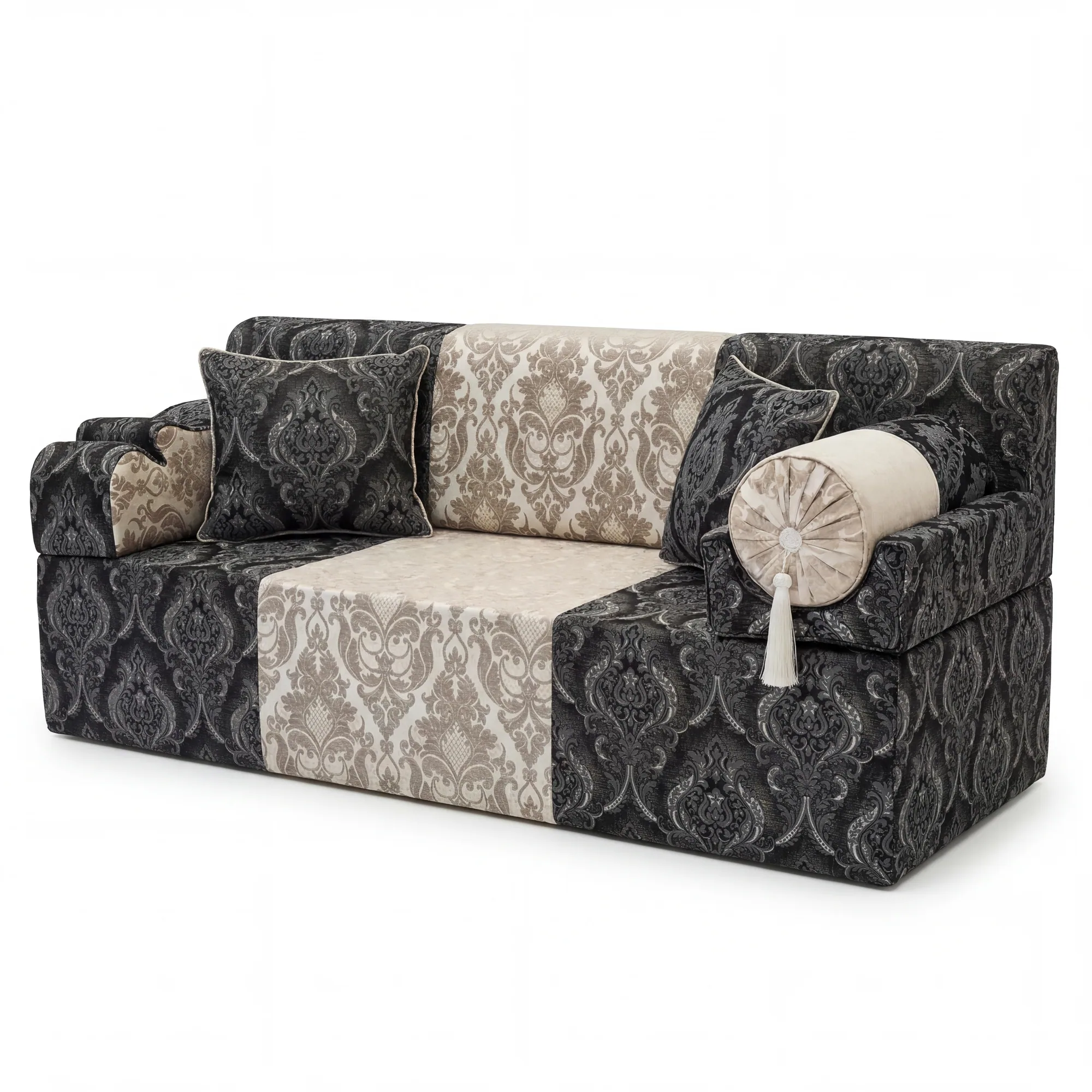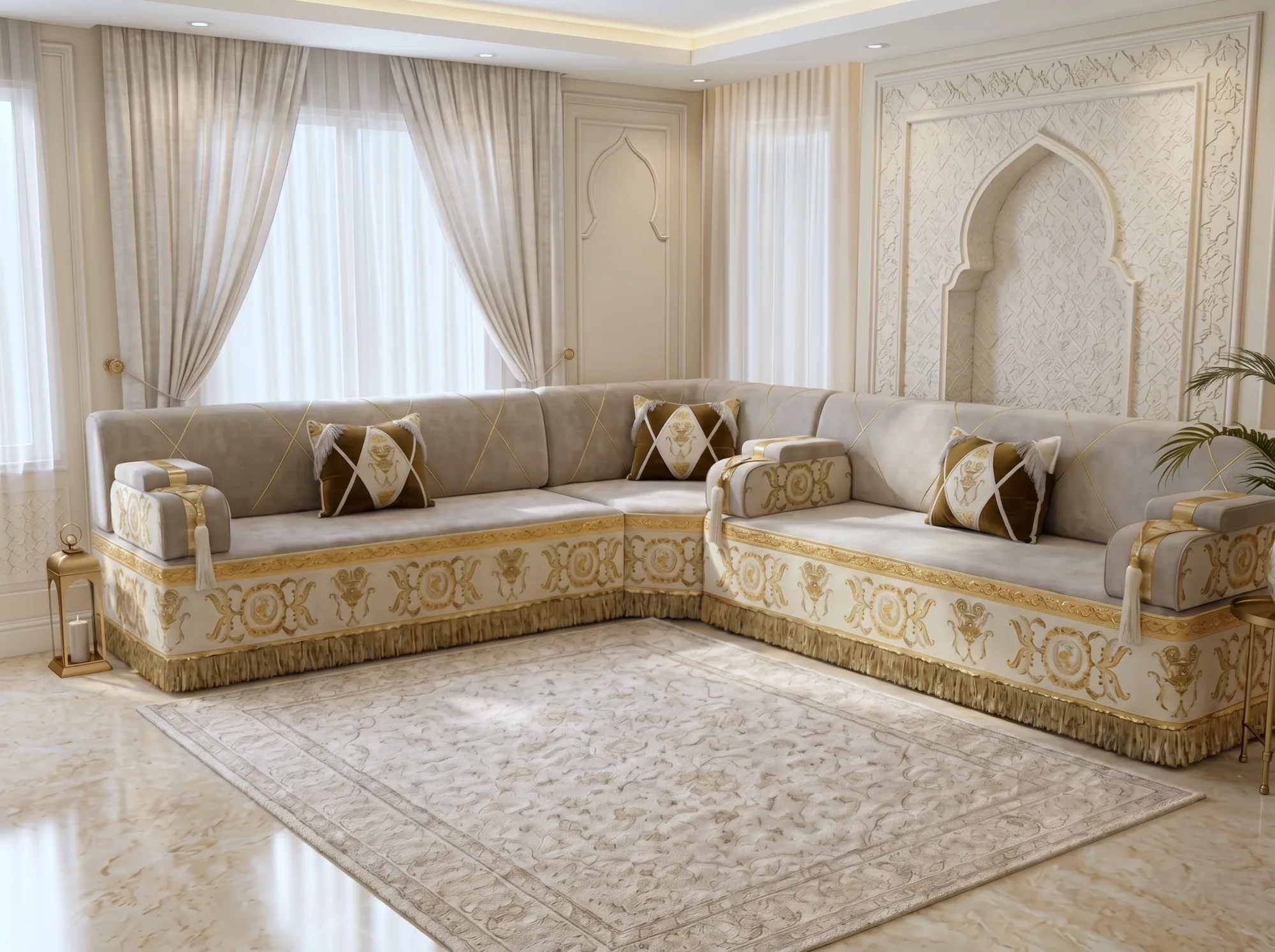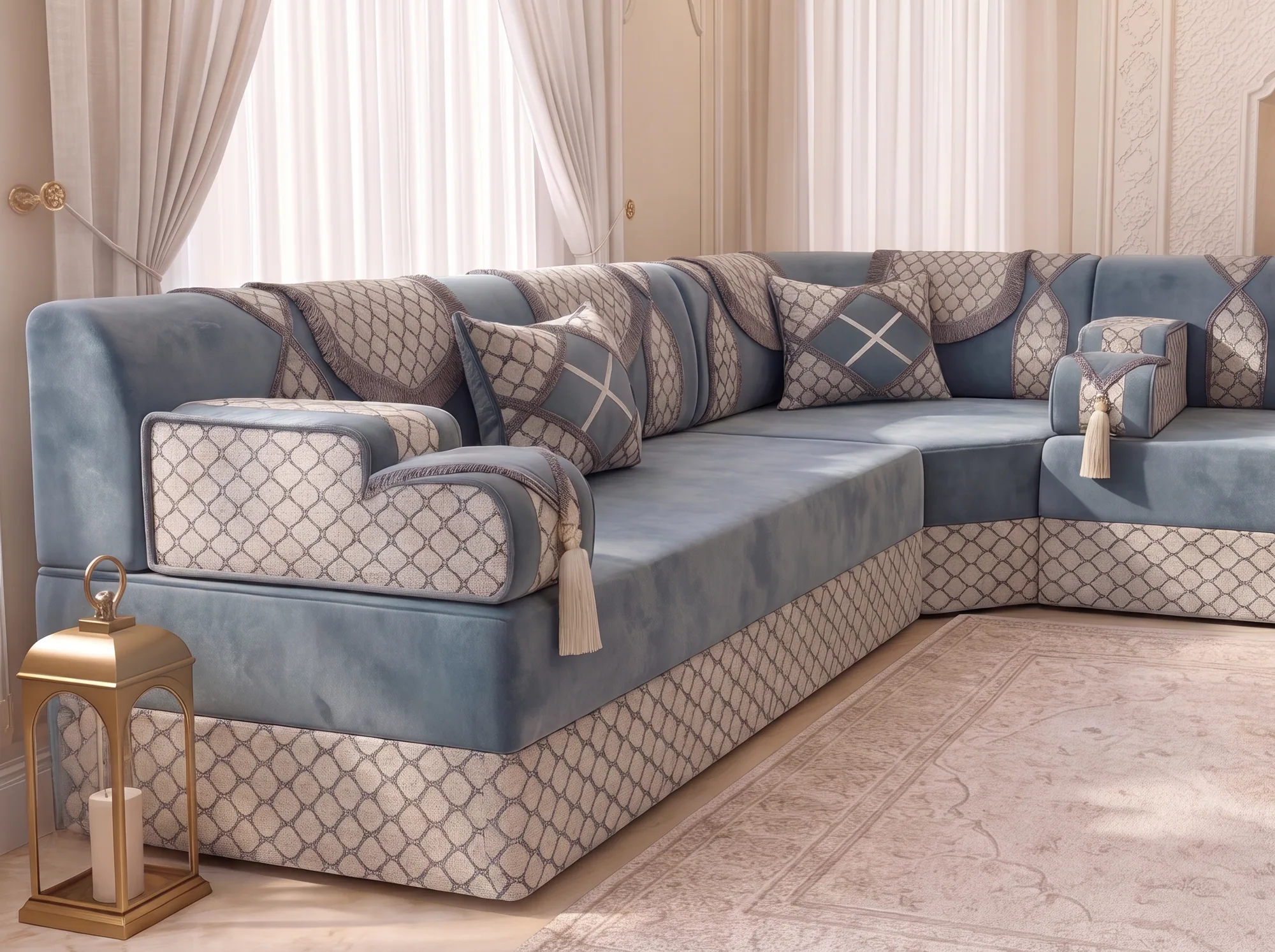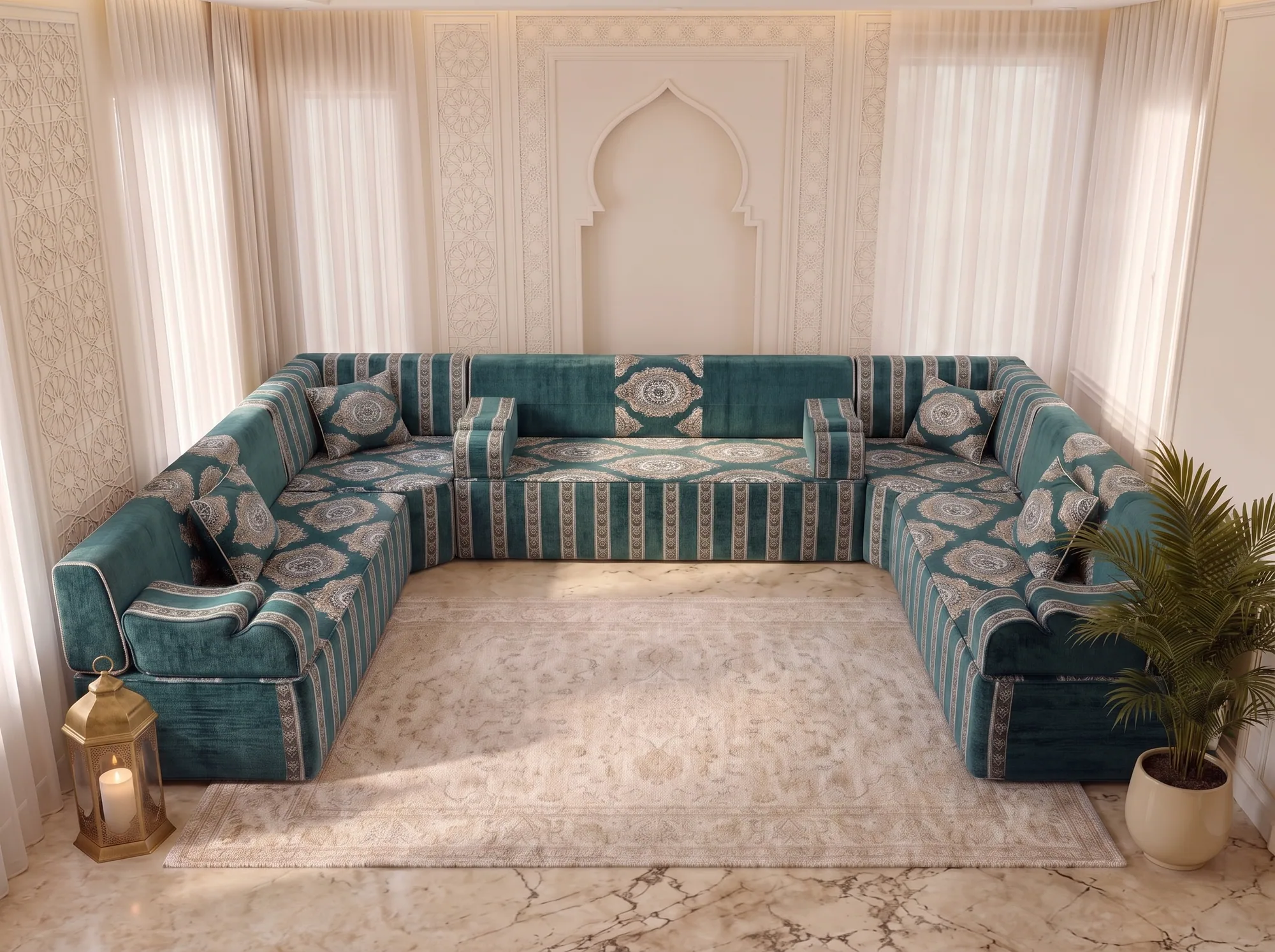
An Arabic jalsa (جلسة عربية) is a seating set that lines the walls of a guest room. Jalsa means a sitting, and in shops across the Gulf and the Levant it names the furniture where majlis names the room. Sofhu uses the name for its raised, upholstered majlis sets and makes the low cushion version as an Arabic floor sofa. Both are built in Türkiye to your wall measurements, filled with 32 kg/m³ foam and shipped free worldwide.
- Arabic
- جلسة عربية (jalsa arabiya), plural jalsat
- Also spelled
- jalsah, jalsat, jalsa arabia
- Core pieces
- Upholstered seat and base, fixed backrest, armrest bolster
- Filling
- 32 kg/m³ (32 DNS) high-density foam, no springs
- Covers
- Zippered, removable, washable at 30°C
- Sizes
- Cut to your wall measurements
- Shipping
- Free worldwide from Türkiye
On this page
Ask for a majlis in a Gulf furniture market and the seller may ask which room you mean. Ask for a jalsa and he will show you the set. That is the practical difference between the two words, and it is why people who type “arabic jalsa” into a search bar are usually ready to choose one. This page is for them: what the pieces are, how they go together in a real room, what is inside the cushions and how to have an Arabic jalsa made to your own walls.
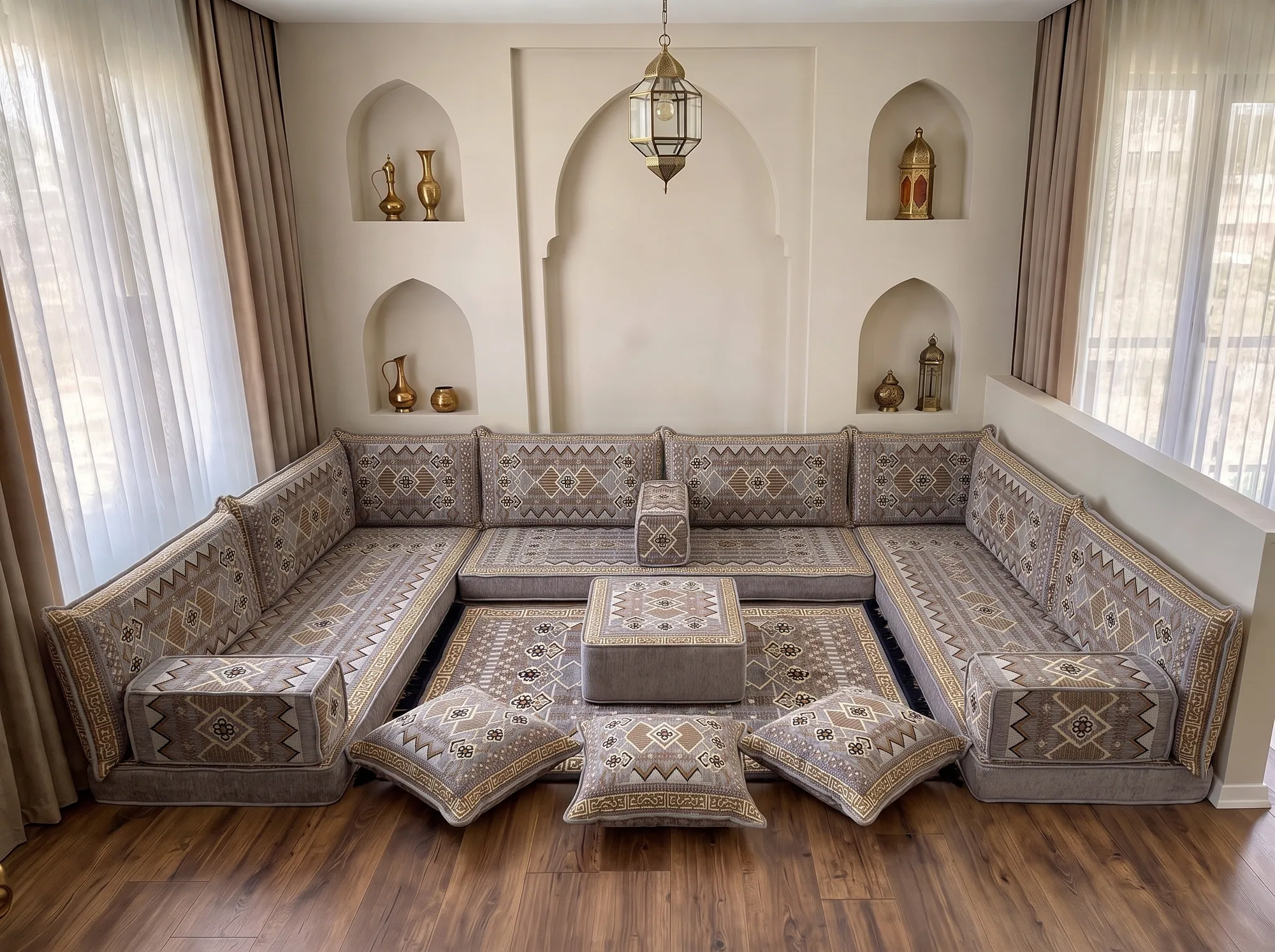
One distinction first, because Sofhu makes two products. The Arabic jalsa, or Arabic majlis, is raised seating built as structured, fully upholstered units with a solid base, a tall fixed back and arm bolsters. The Arabic floor sofa is the low set: a seat mattress at floor level with loose back cushions, armrest blocks and usually an ottoman. This page is about the first and points to the second wherever the floor version suits a room better.
What jalsa means and how it is spelled
Jalsa (جلسة) means a sitting or a session, from the same root as majlis. Jalsa arabiya (جلسة عربية) is Arabic seating, and jalsa ardiya (جلسة أرضية) is floor seating. In English you will meet three spellings of one word:
- jalsa: the plain transliteration, most common in searches.
- jalsah: the same word with the final letter written out.
- jalsat: the plural, used for sets or for a shop’s whole range.
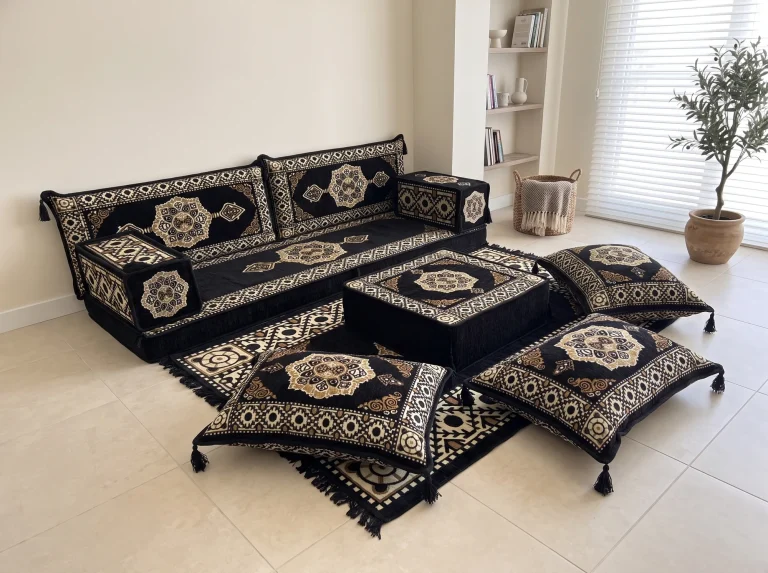
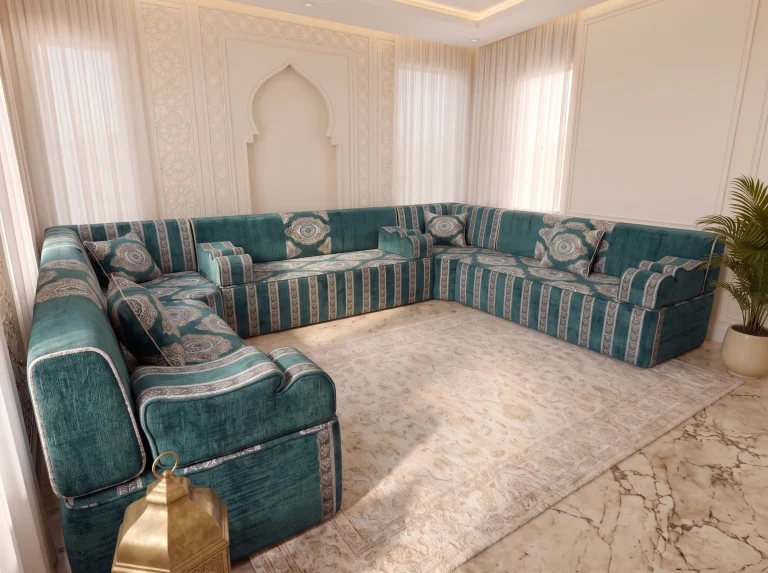
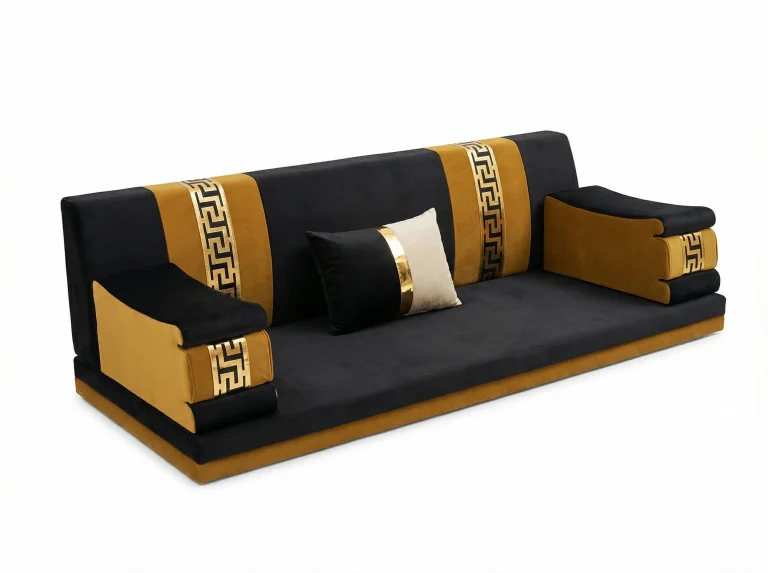
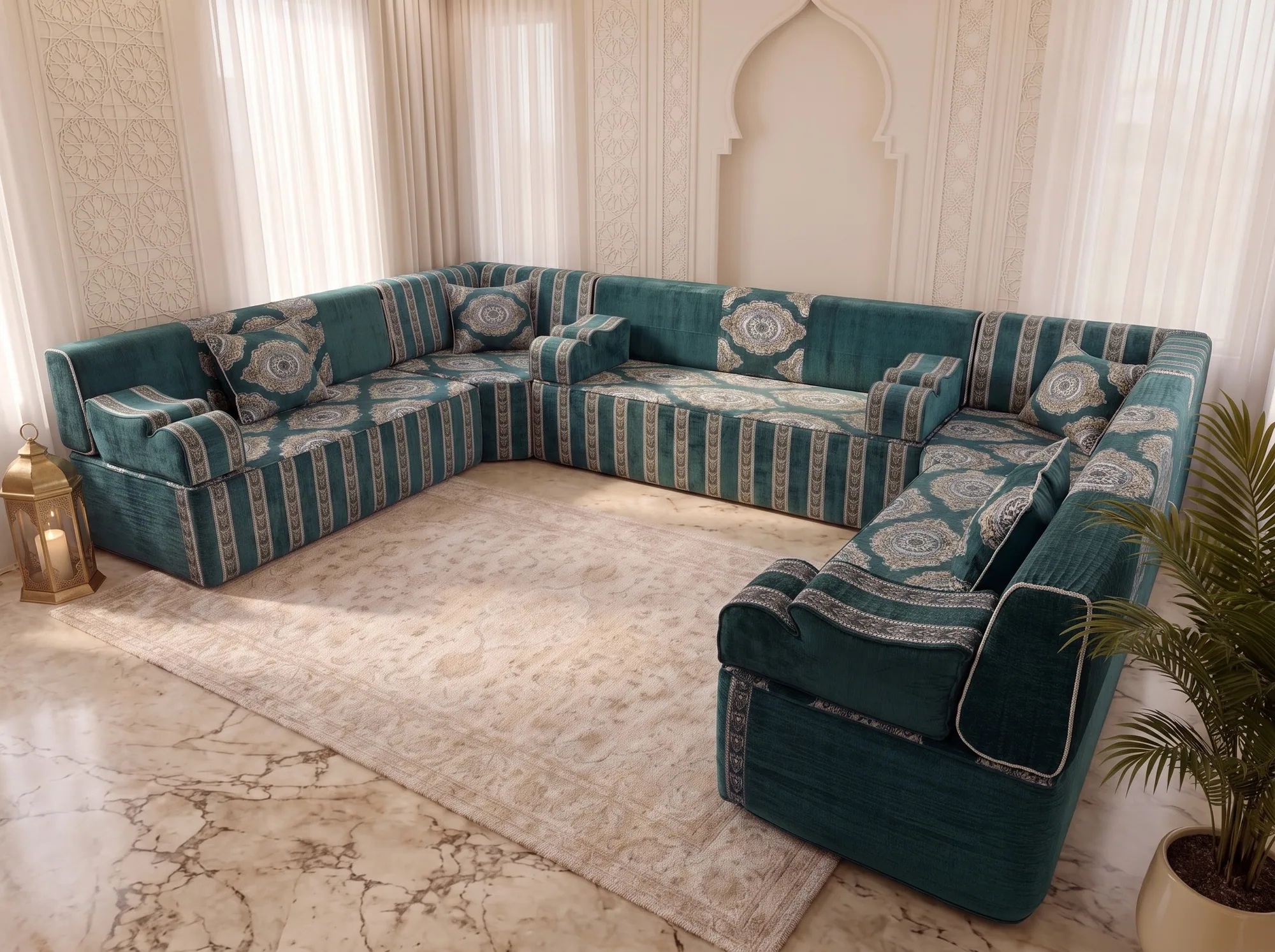
What it looks like does not change with the spelling. In its old floor form, the jalsa ardiya, it is a run of firm mattresses along the wall with a cushion behind each sitter and a bolster between places. In Sofhu’s range the name belongs to the raised form: an upholstered base, a tall fixed back and arm bolsters, finished with piping and trim. The fabric is often the first thing you notice, as on the teal velvet set at the top of this page with its ivory medallion cushions and striped base.
For how these names shift between countries, see majlis, diwan, jalsa, sedari and toshak by country. The overlap between the two commonest words has its own page, jalsa majlis.
The pieces of an Arabic jalsa set
The traditional names describe three working parts, and Sofhu’s sets keep all three, with accessories around them.
| Piece | Arabic name | What it does |
|---|---|---|
| Seat | farsha (فرشة) | The firm seat: on an upholstered base in a raised jalsa, a mattress on the floor in a floor sofa |
| Backrest | masnad (مسند) | Holds you upright: fixed on a raised jalsa, a loose cushion against the wall on a floor sofa |
| Armrest bolster | markā (مركى) | Marks each place and supports the elbow |
| Corner piece | (no fixed name) | Joins two runs so the seat does not gap |
Sofhu’s complete sets can add an ottoman, large floor cushions, throw pillows and a matching rug. All covers are zippered and come with their foam inserts.
On dimensions: the only published figures we can point to are from marketplace listings in Jordan, where floor-level kits are sold with mattresses around 14 to 15 cm thick. That is what one market sells, not a standard, and it is not Sofhu’s specification. Our seats are made in different thicknesses and every length is cut to your wall, so the honest answer on size is your own measurements. The article on parts of a majlis set explains each piece in more depth, and standard majlis dimensions collects what general sources say.
One thing to plan for: an Arabic floor sofa is not freestanding, because its loose backrests need a wall or something solid behind them. A raised jalsa is planned along the walls as well, which is how the room keeps its open centre.
Indoor jalsa layouts: family room, guest room and corner
Where the jalsa goes decides its shape. Three situations cover most homes.
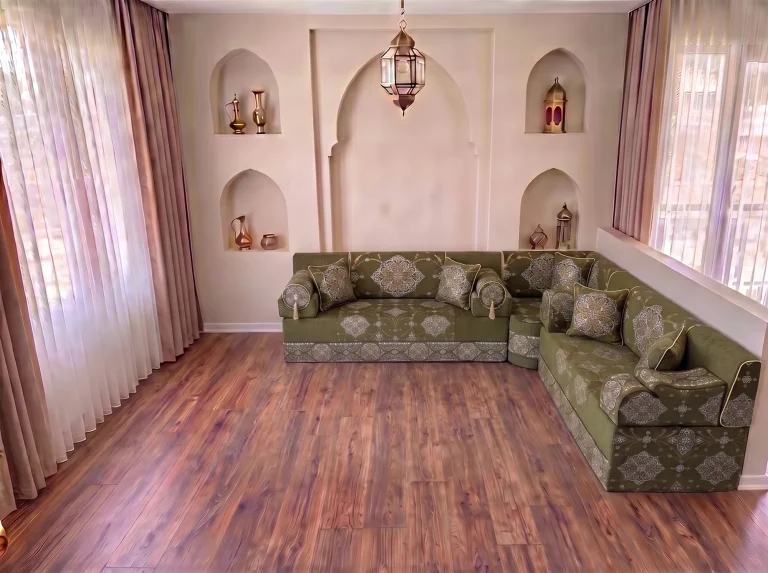
The family room. A single row along the longest wall, with a rug in front, keeps the rest of the room free for children, a television or a dining table. It is the least furniture for the most use.
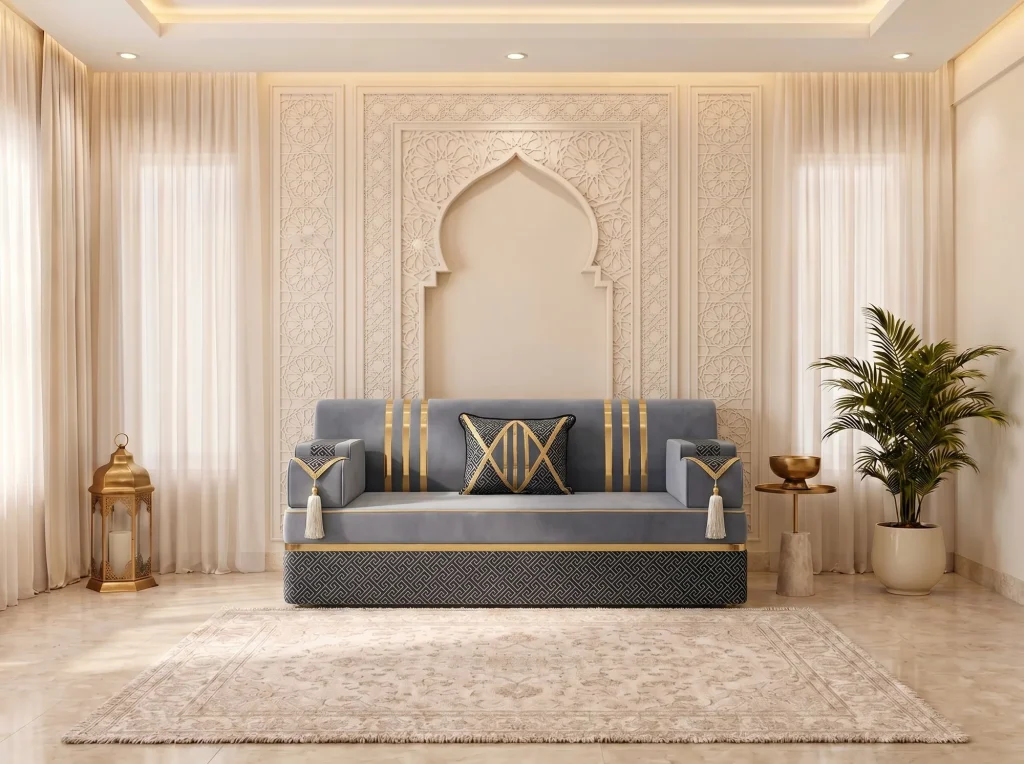
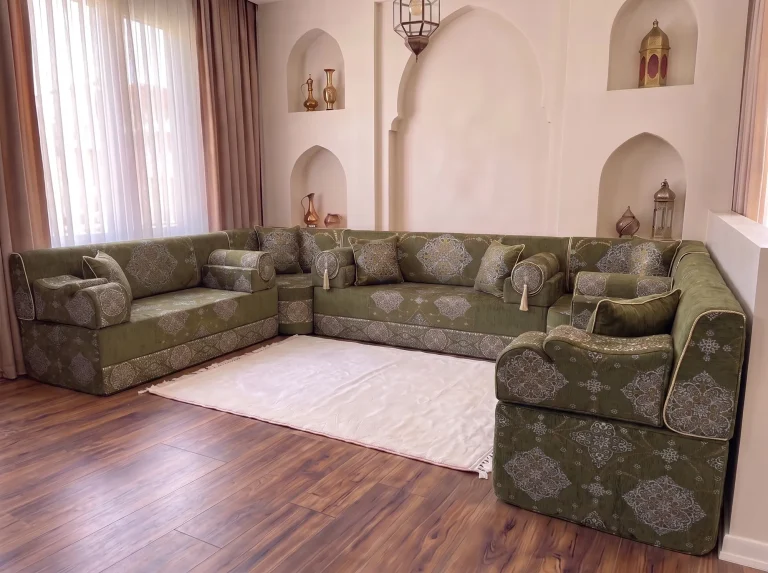
The guest room. A U around three walls is the full jalsa seating arrangement: everybody faces the middle, the tray sits in the centre, and the host can reach every guest. It needs three walls without a door in the way.
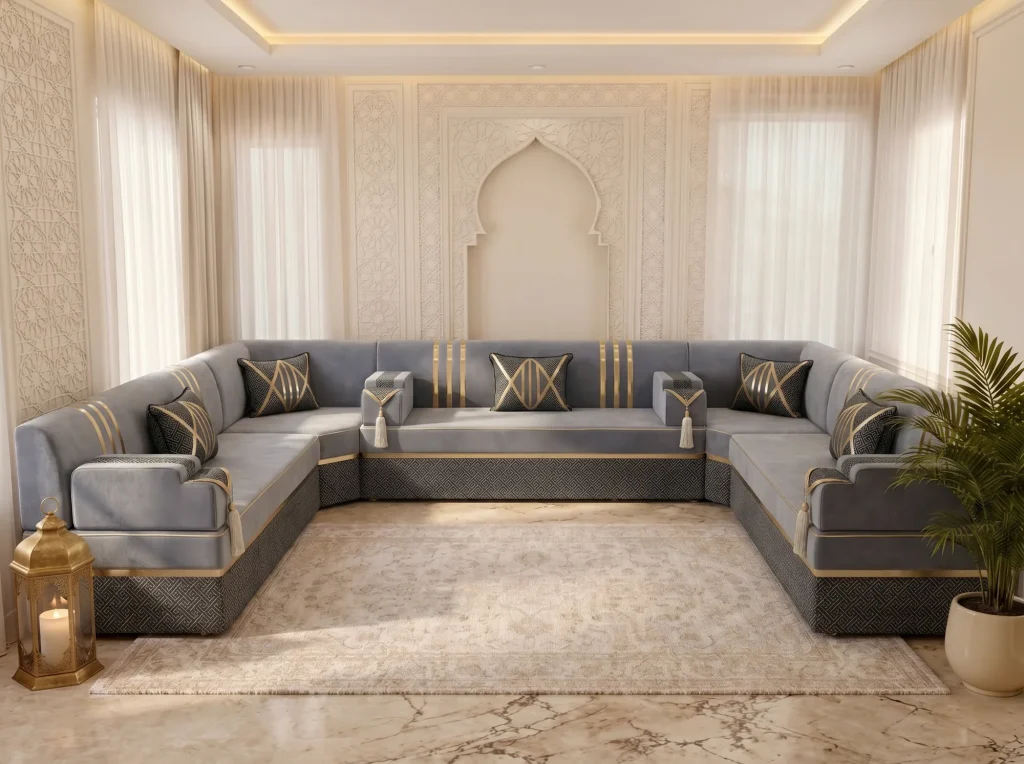
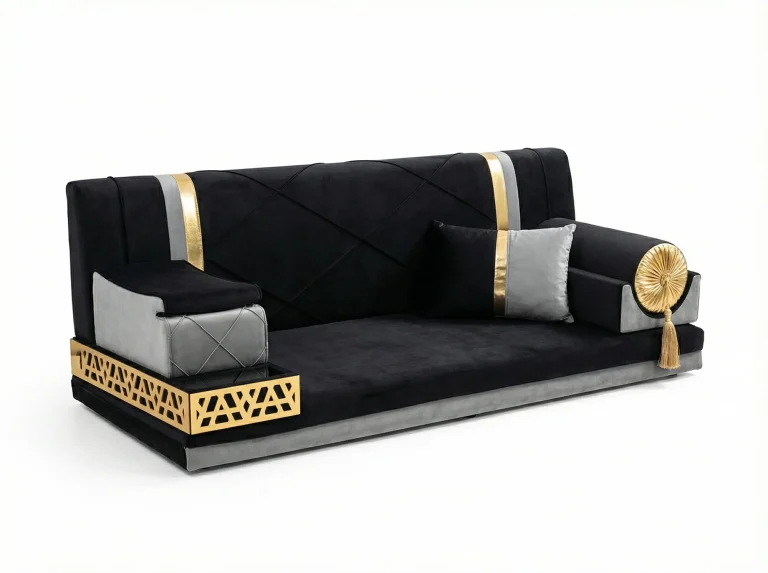
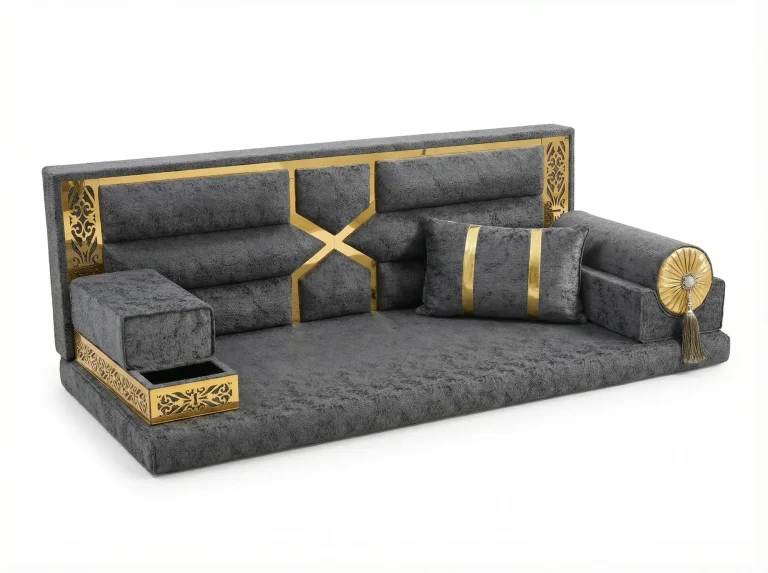
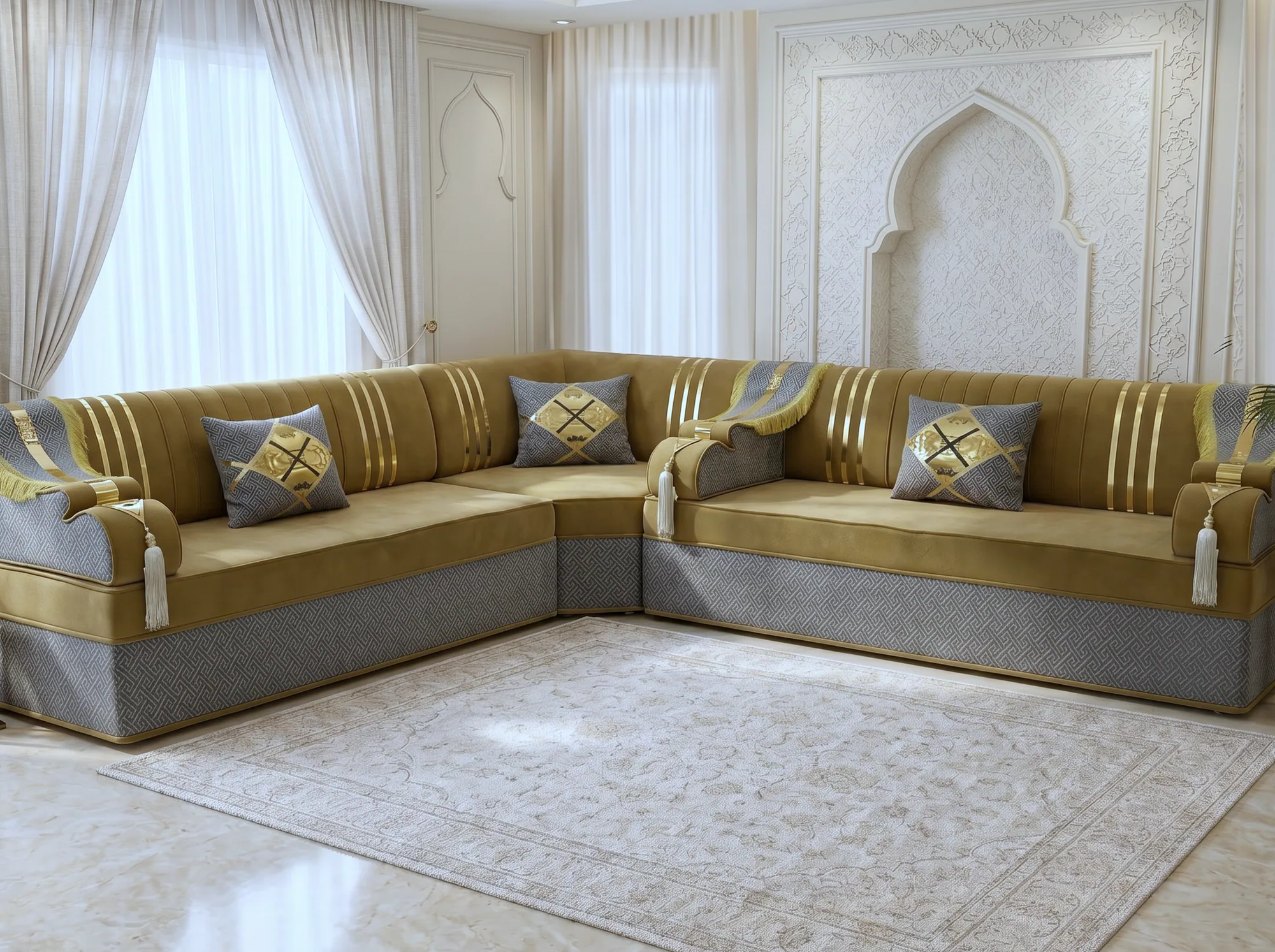
The two photos show the same grey velvet jalsa with gold stripes, first as a single seat and then as a U along three walls. Nothing changed except the number of units, which is the point of a modular set.
The corner jalsa. An L on two walls suits a living room that is also a passage, or a flat where one wall is a window. It gives a deep corner place that children and grandparents tend to claim.
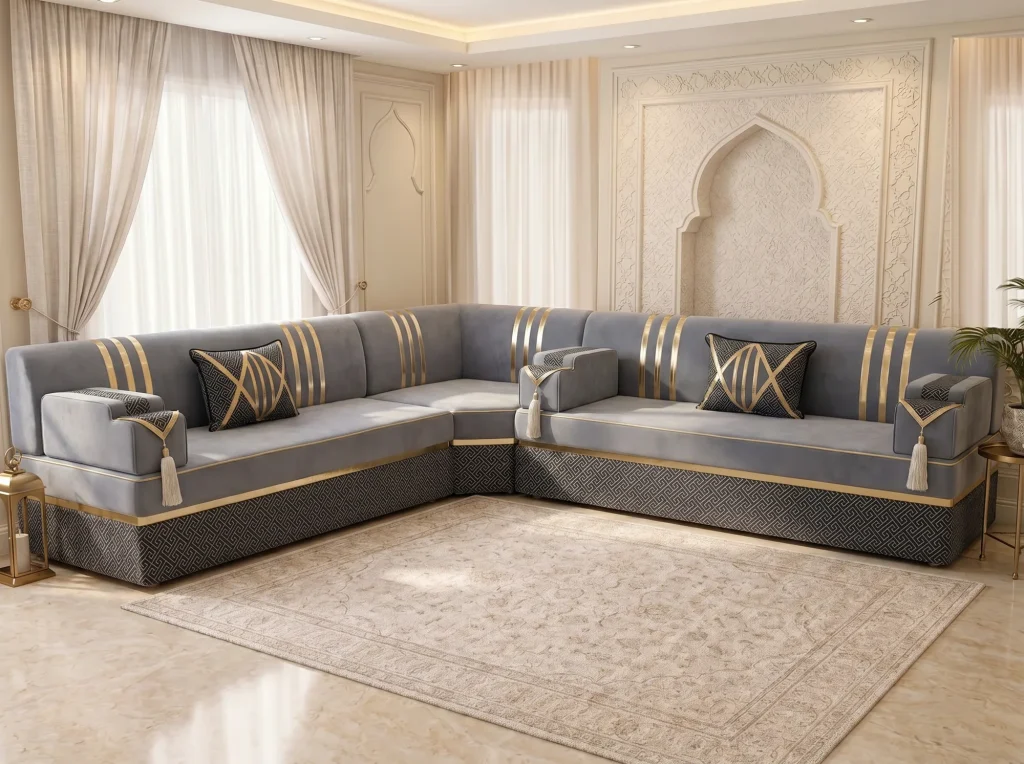
Corners are where measuring matters most, because two runs have to meet cleanly. Follow how to measure a room for a majlis and send both wall lengths. For tight spaces, a majlis in a small apartment shows layouts that work in a single room, and how many people a majlis seats helps you estimate places.
Foam and comfort over long sittings
A jalsa is sat on for hours, so the foam has to hold its shape under the same people in the same places. Sofhu fills its seats with 32 kg/m³ foam, written 32 DNS in the Turkish trade. The figure is density: one cubic metre of the foam weighs about 32 kg.
Density is not the same as hardness. A cheap, light foam can be made to feel hard in the shop. What density tells you is how much material is there to resist flattening. In published datasheets, low-density foam of roughly 18 to 25 kg/m³ recovers less well from compression than 32-density foam, and the Polyurethane Foam Association states the general rule that denser foam retains its properties better. For a seat that is used every evening, that is the number worth asking any seller for.
Sofhu describes its cushions as firm, and there are no springs inside. Firm is right for sitting cross-legged or with legs folded to one side, because the hips do not sink below the knees. On a custom order you can ask for a softer or firmer feel. Two guides go further: what foam density is best for floor seating and is floor seating comfortable, which covers posture and getting used to a low seat.
Fabric and pattern choices for a jalsa sofa
Choose the fabric for the room’s use first and its look second.
- Velvet for a formal jalsa sofa in a guest room. Deep colour, soft hand, and Sofhu’s velvet covers unzip for a cool wash.
- Linen for hot rooms and everyday family use. It breathes and absorbs moisture, which helps where the climate is humid.
- Woven and chenille fabrics for pattern. Medallions, key bands, kilim geometry and star motifs are woven in, so they do not rub off.
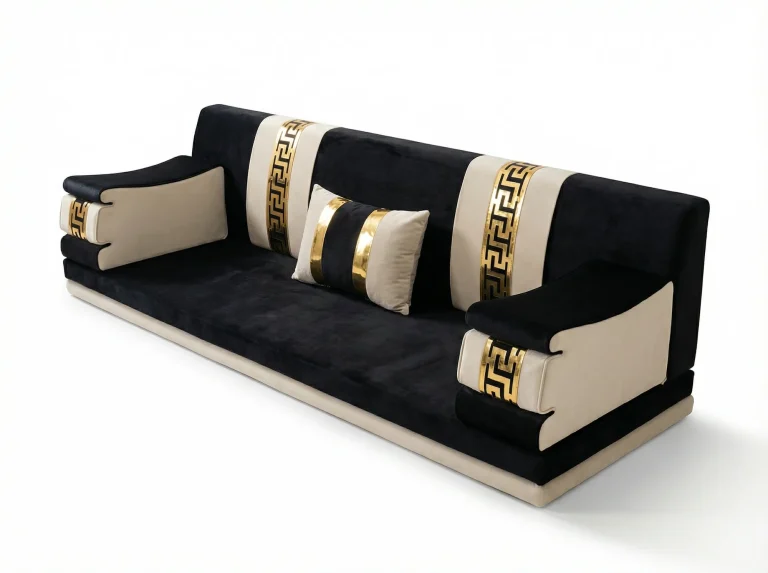
Pattern families have their own associations. Sadu is the Bedouin weaving of narrow geometric bands, in the UAE tradition in black, white, brown, beige and red, and sadu-style fabric, which Sofhu uses on its floor sofas, is the natural choice for a Gulf-looking room. The eight-point star seen on several Sofhu floor sofas is a Sofhu design, popular with customers furnishing Yemeni-style rooms. Plain velvets with a contrast stripe or gold band read as modern.
The series are listed on the fabrics page, the differences are weighed in velvet vs linen vs jacquard, and motifs are explained in majlis patterns and motifs. To see models, open the shop or the single-row gallery.
Jalsa for restaurants, cafes and tents
Commercial jalsa seating follows the same construction with a harder life. A mandi restaurant, a shisha cafe or a hotel lounge needs covers that come off for washing between services and foam that survives many sitters a day, which is where removable zipped covers and 32-density foam earn their place. Sofhu takes project orders for dining rooms, booths and lounges; see Arabic jalsah for restaurants, majlis for cafes and shisha cafes and the overview of jalsah for every environment. Planning notes are in floor seating restaurant design.
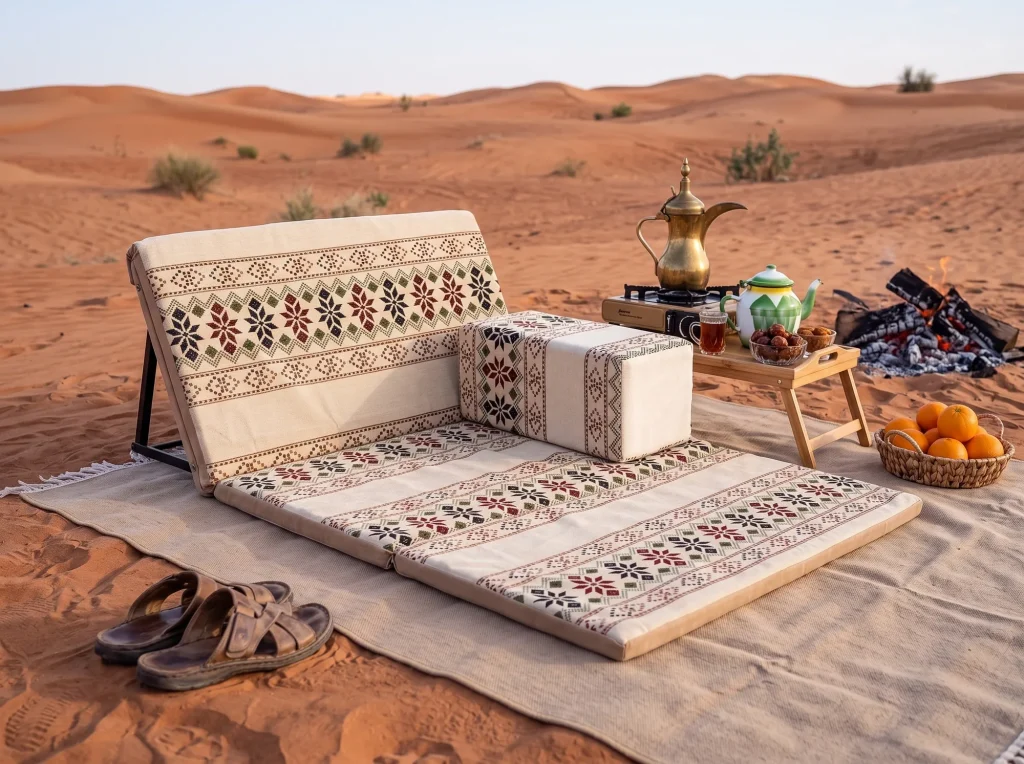
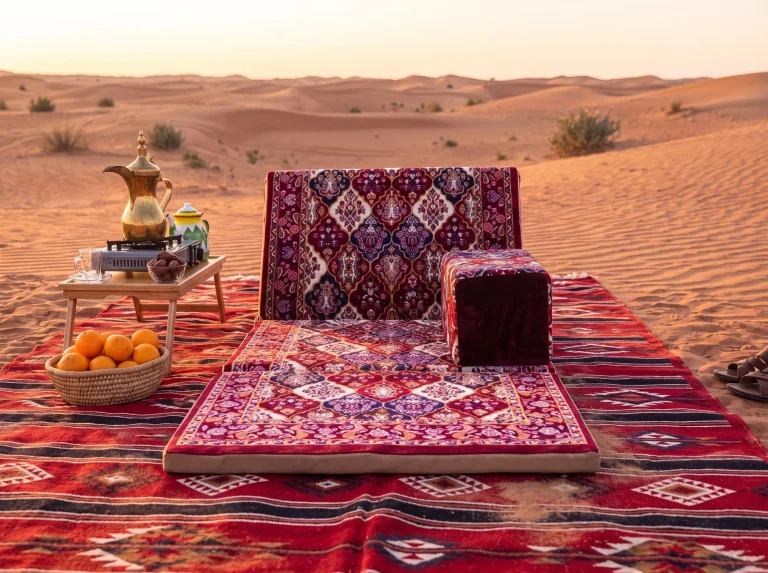
Outdoors, the jalsa goes back to where it started: a rug on the ground, a backrest and coffee on the fire. Sofhu’s outdoor range uses water-resistant fabric that shrugs off spills and light rain, and includes the Arabic sunbed shown above, a folding lounger with a backrest that travels in a car boot. See outdoor majlis seating and the existing outdoor sofas and mats page.
How to order a custom Arabic jalsa set
Ordering takes four pieces of information. Have them ready and the quote can be prepared without a second round of questions.
- Your wall lengths. Each wall the seating will touch, with doors and windows marked.
- The layout. Row, L or U. If you are not sure, send a photo of the room and ask.
- Fabric and colour. A model name, a screenshot or just “navy velvet, gold trim”.
- Any preferences. Seat thickness, softer or firmer foam, extra floor cushions, a rug.
Send them through the quote by measurement form or on WhatsApp. Sofhu is the manufacturer, so the answer comes from the people who will make the set, and designers can join a video call to go over the room. The jalsa is made in Türkiye, vacuum packed and shipped free worldwide to your door. Duties or taxes may apply in some countries; ask us about yours before ordering. Step-by-step help is in how to order a custom majlis online, or simply contact us.