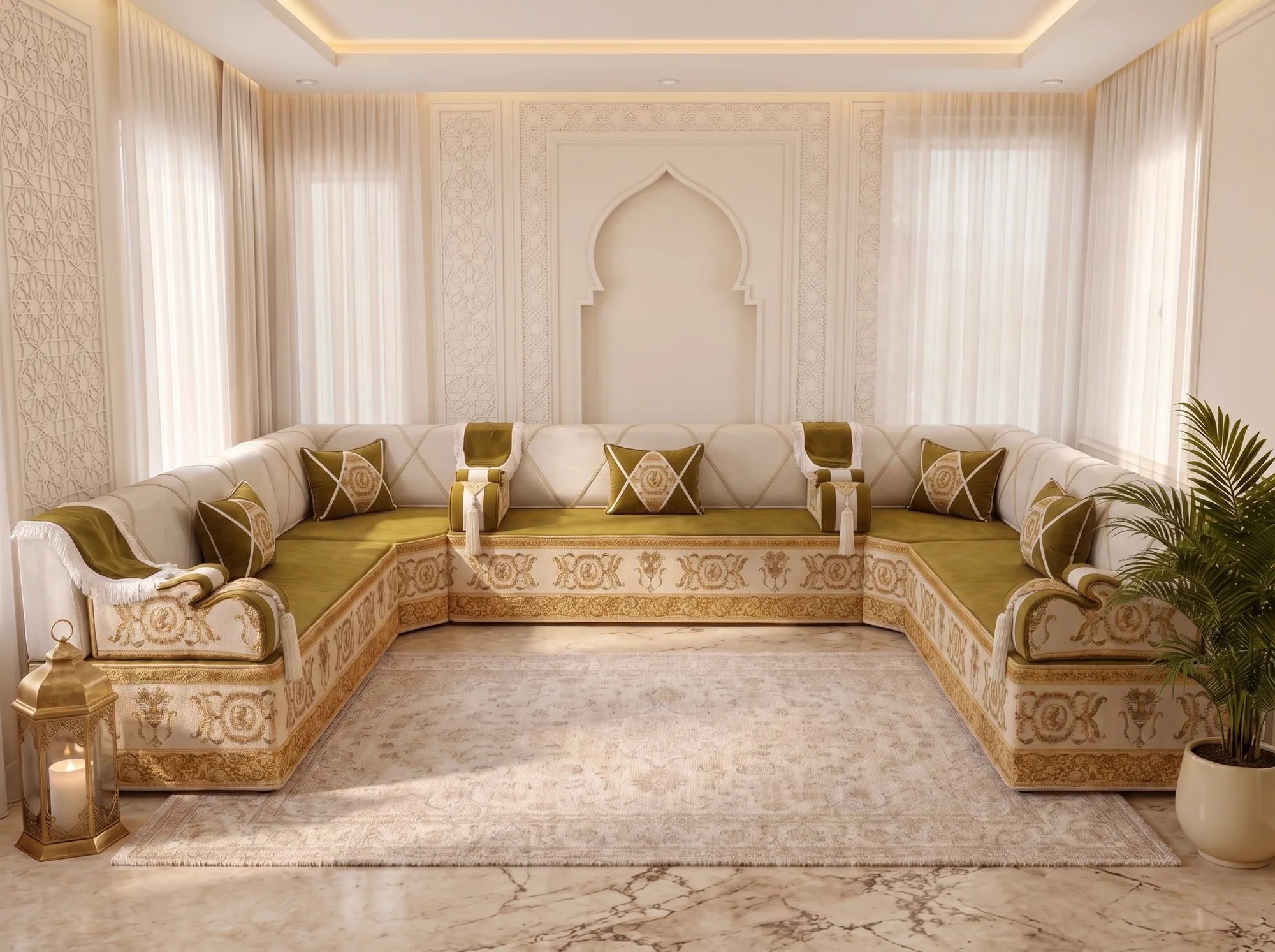
Syrian and Levantine Arabic seating, the jalsa arabiya, descends from the Damascene reception room, where guests stepped up onto a raised, carpeted platform lined with a low sofa and cushions. Today it is sold as a set of mattresses, backrests and armrests. Sofhu makes both a low floor sofa and a raised, upholstered majlis to the customer's wall measurements and ships free worldwide.
- Native names
- جلسة عربية (jalsa arabiya), قعدة عربية (qa'da arabiya)
- Historic room
- The qa'a, the enclosed winter reception room of a Damascus house
- Its seating
- A raised platform (tazar) with carpets, a low sofa and cushions
- Village form
- The madafa, a guesthouse for community gatherings
- Modern form
- Mattress, backrest and armrest sets
- Sofhu sets
- Raised majlis or low floor sofa, cut to your wall lengths
- Filling
- 32 kg/m³ (32 DNS) high-density foam, no springs
On this page
In an old Damascus house you do not walk straight into the reception room. You enter a small lower space, leave your shoes, and step up. The raised floor ahead of you is covered with carpets and edged on three sides with a low sofa and cushions. That step is the key to Levantine seating, and it explains why a “Syrian majlis” is not quite the same thing as a Gulf one.
Majlis is the word most people type, so we use it here. At home the seating is more often called jalsa arabiya or qa’da arabiya, Arabic seating. This page follows it from the courtyard house to the sets Sofhu makes today.
The qa’a: a room you step up into
The enclosed reception room of a Damascene courtyard house is the qa’a. It has two levels. The lower antechamber, the ‘ataba, is where guests arrive. The raised square beyond it, the tazar, is where they sit. Coffee, water pipes and braziers were kept on shelves in the antechamber and carried up to the guests.
The raised area was usually covered with carpets and lined with a low sofa and cushions. So the sitter was low, close to the carpet, but on a platform and on a made seat, not on cushions laid straight on a bare floor. The walls around were the showpiece: painted and gilded wood panelling.
Compared with its neighbours, the qa’a stands out for that threshold. A Saudi majlis is traditionally at floor level, with cushions against the wall. The Egyptian reception hall also used a raised dais, as described on our Egyptian Arabic seating page.
Summer iwan, winter qa’a
A Damascus house had two reception spaces and used them by season. The iwan (also liwan) is a tall recess open to the courtyard on one side, shaded and airy, for the hot months. The qa’a is closed and was used in winter.
The habit of having a cool-weather and a warm-weather sitting place is worth copying. If you have a balcony, terrace or garden room as well as an indoor salon, plan the seating for both at once. Linen covers suit the open space; Sofhu describes its linen as breathable, with a refreshing effect in hot weather. Velvet suits the closed room.
The madafa in the villages
Outside the city, hospitality had a building of its own. The madafa is a guesthouse. Among the Druze of Sweida in southern Syria it has been studied as a place that hosts community and political discussion as well as visitors. It is a room for many people sitting for a long time, which calls for a full perimeter of seating and an open centre. The same word and the same institution are found further south, as our Jordanian and Palestinian madafa page describes.
From the low sofa to the jalsa arabiya set
Today’s Levantine Arabic seating is sold as a kit. Marketplace listings in the region describe a jalsa arabiya as a number of seat mattresses (farshat), backrest cushions (masanid) and armrests, bought together to fit a room. It is the old low sofa broken into parts that a family can carry, wash and rearrange.
Sofhu makes two products that carry this forward. The Arabic floor sofa follows the kit logic directly, built by a manufacturer instead of pieced together:
- Seat mattresses filled with 32 kg/m³ (32 DNS) high-density polyurethane foam, with no springs. The figure is a density, the weight of a cubic metre, and denser foam generally keeps its height and support longer than light foam.
- Back cushions that lean on the wall. A floor sofa is not freestanding and needs a wall or other firm surface behind it.
- Armrests that divide the run into places and can be lifted out to seat more people or to lie down.
- Covers with zips, supplied with their foam inserts and washable at 30°C.
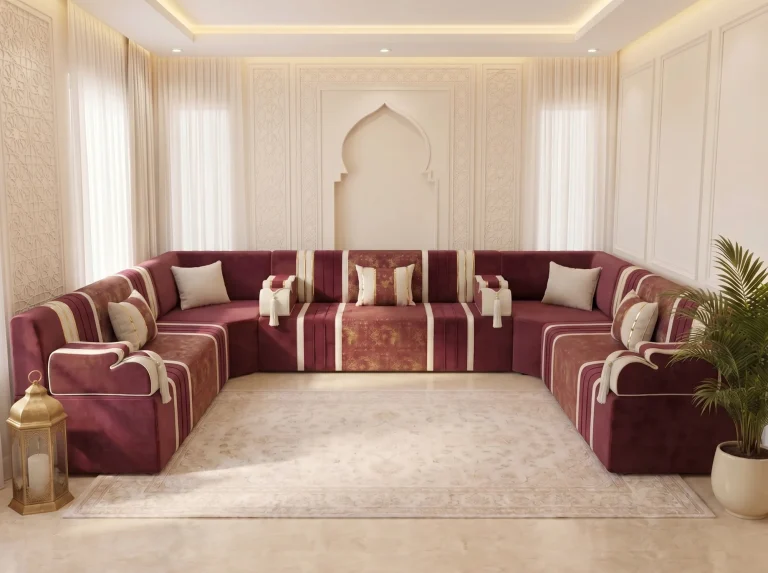
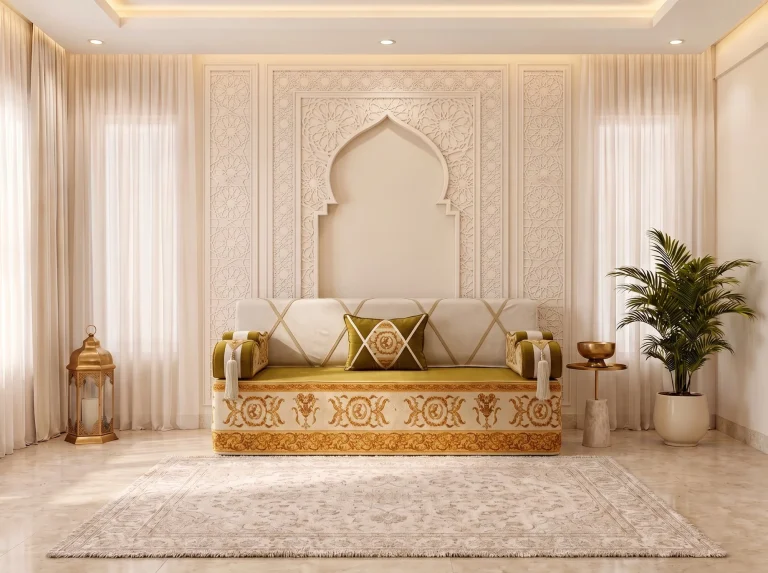
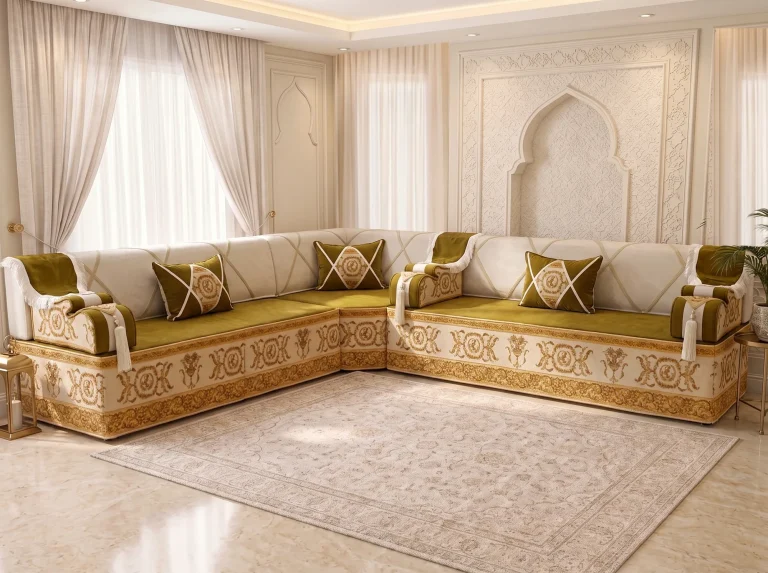
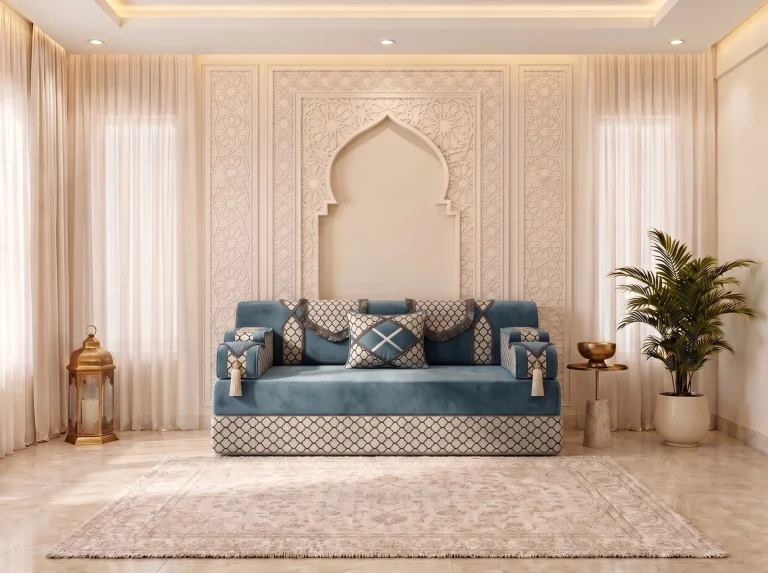
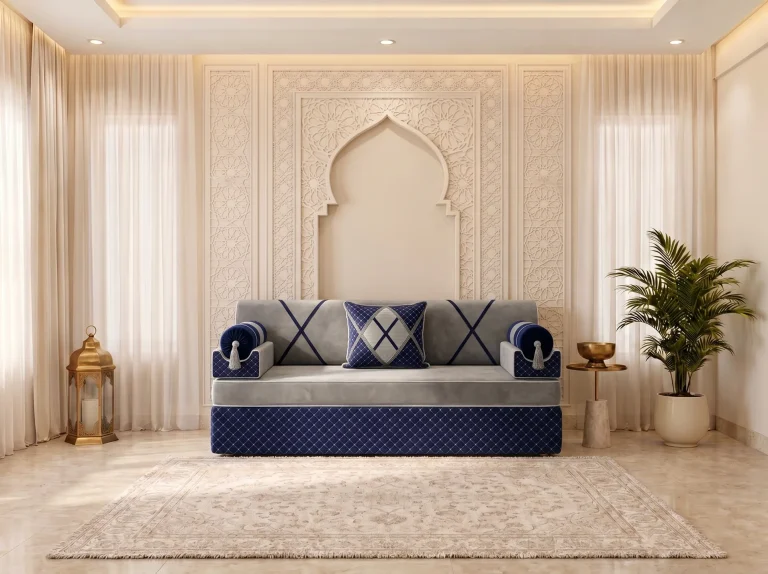
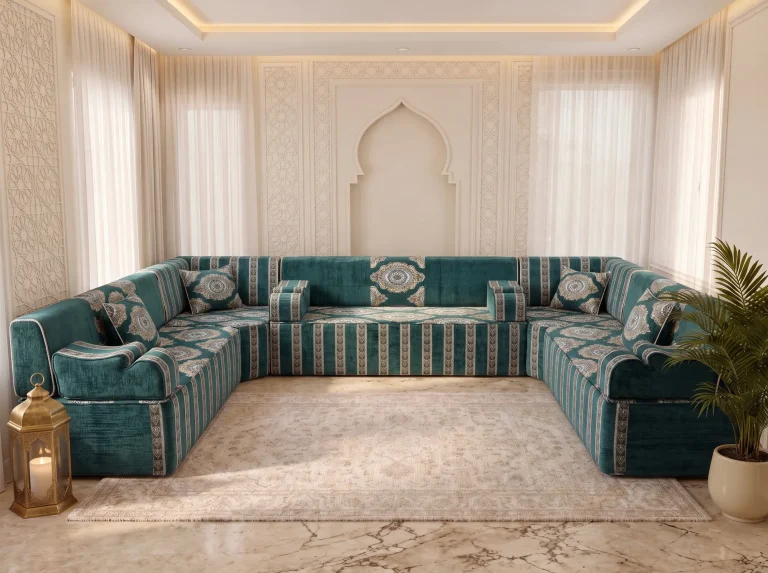
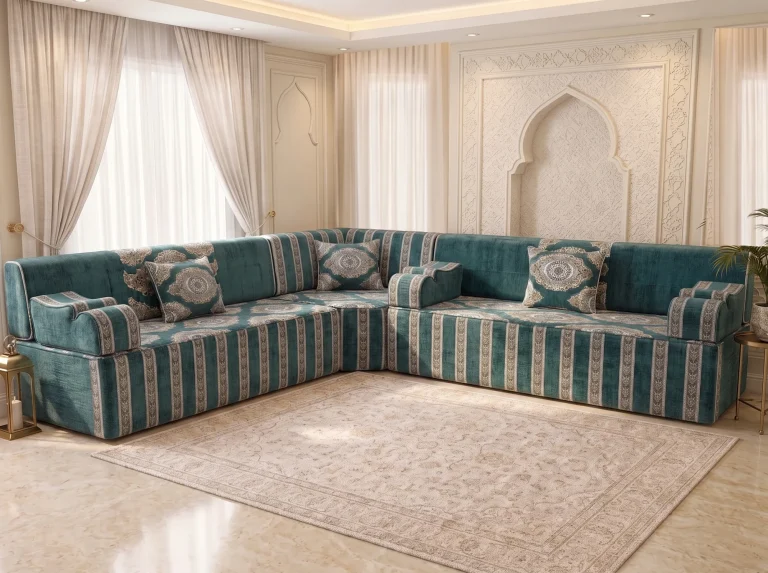
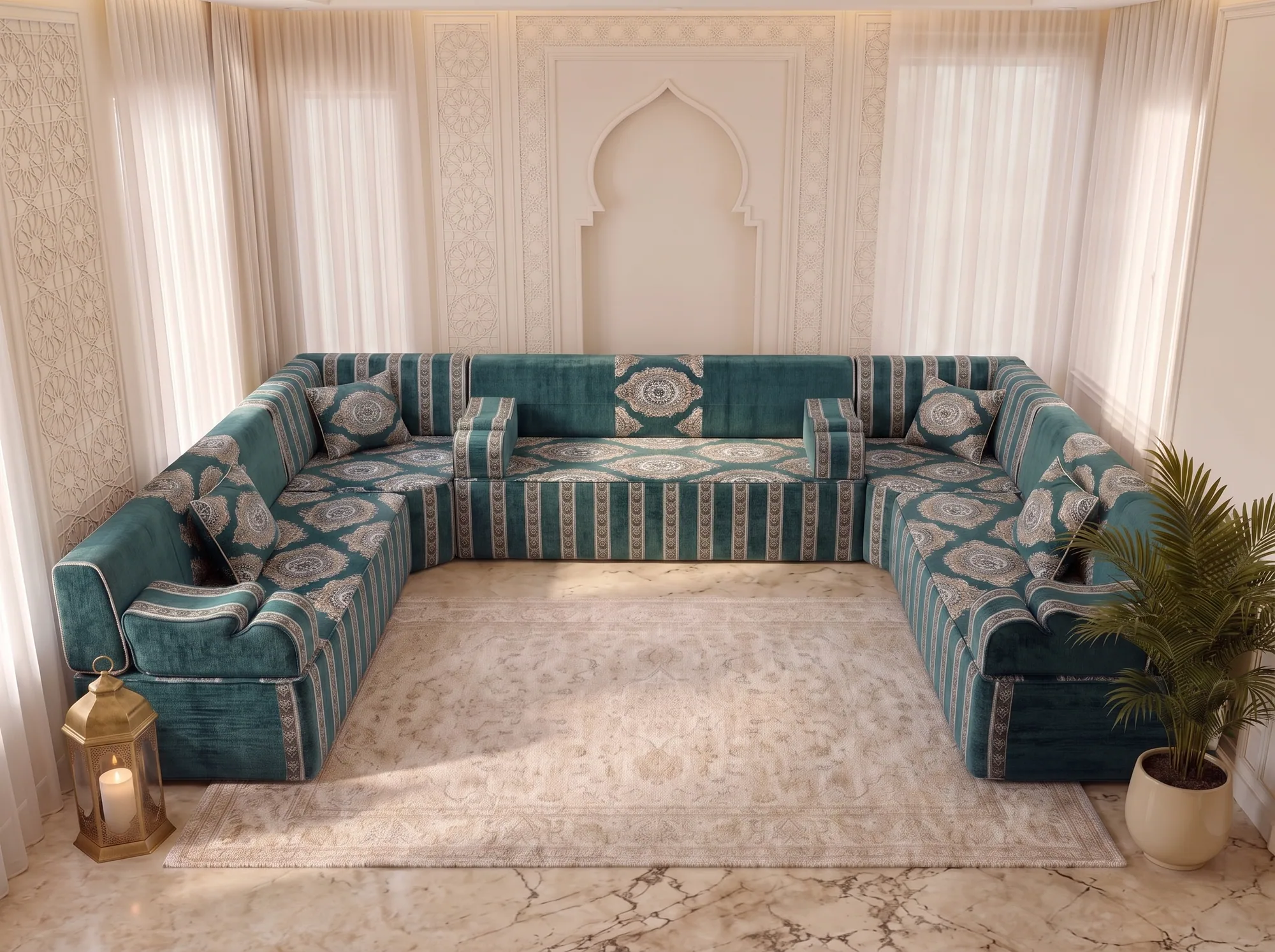
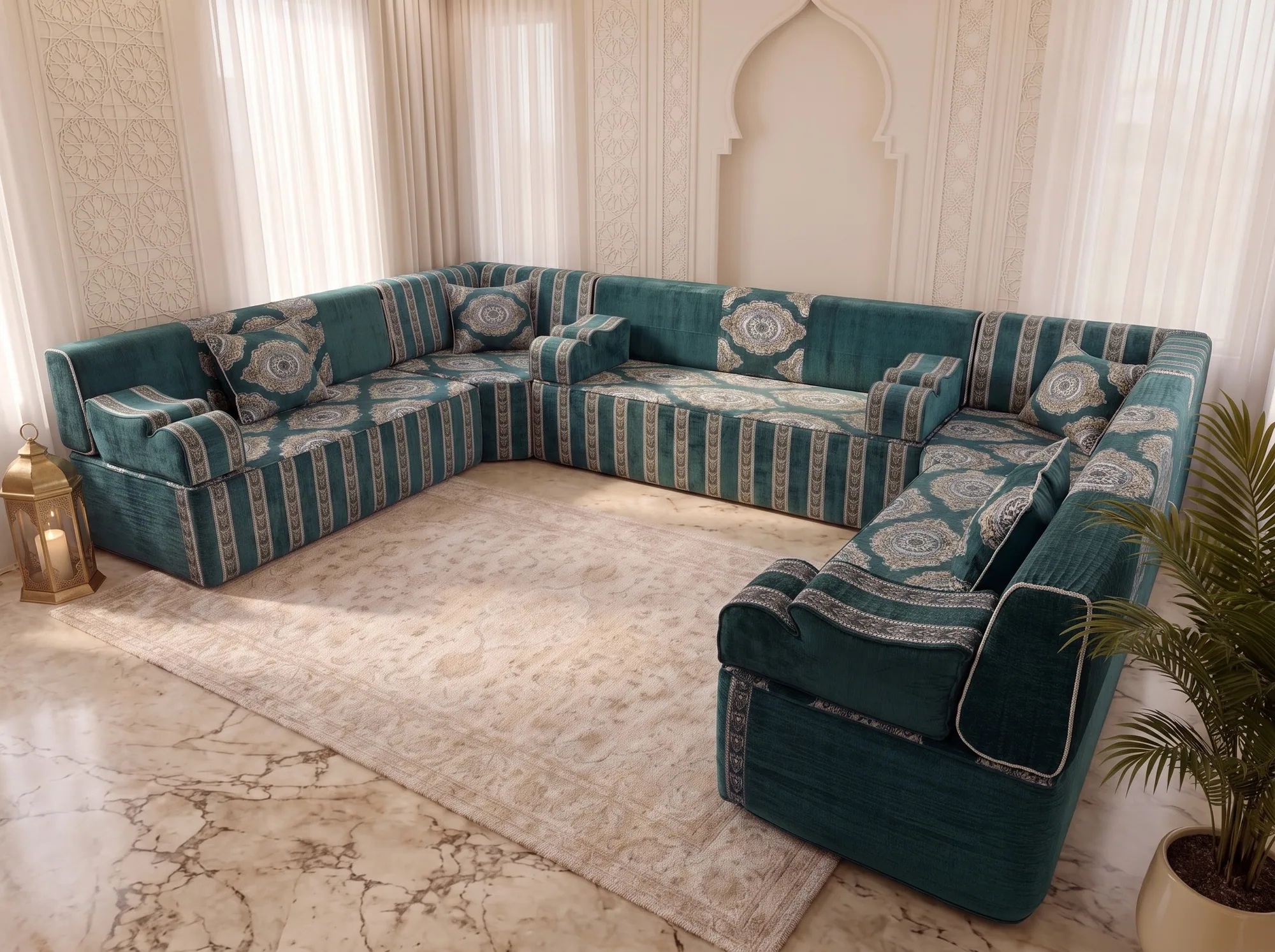
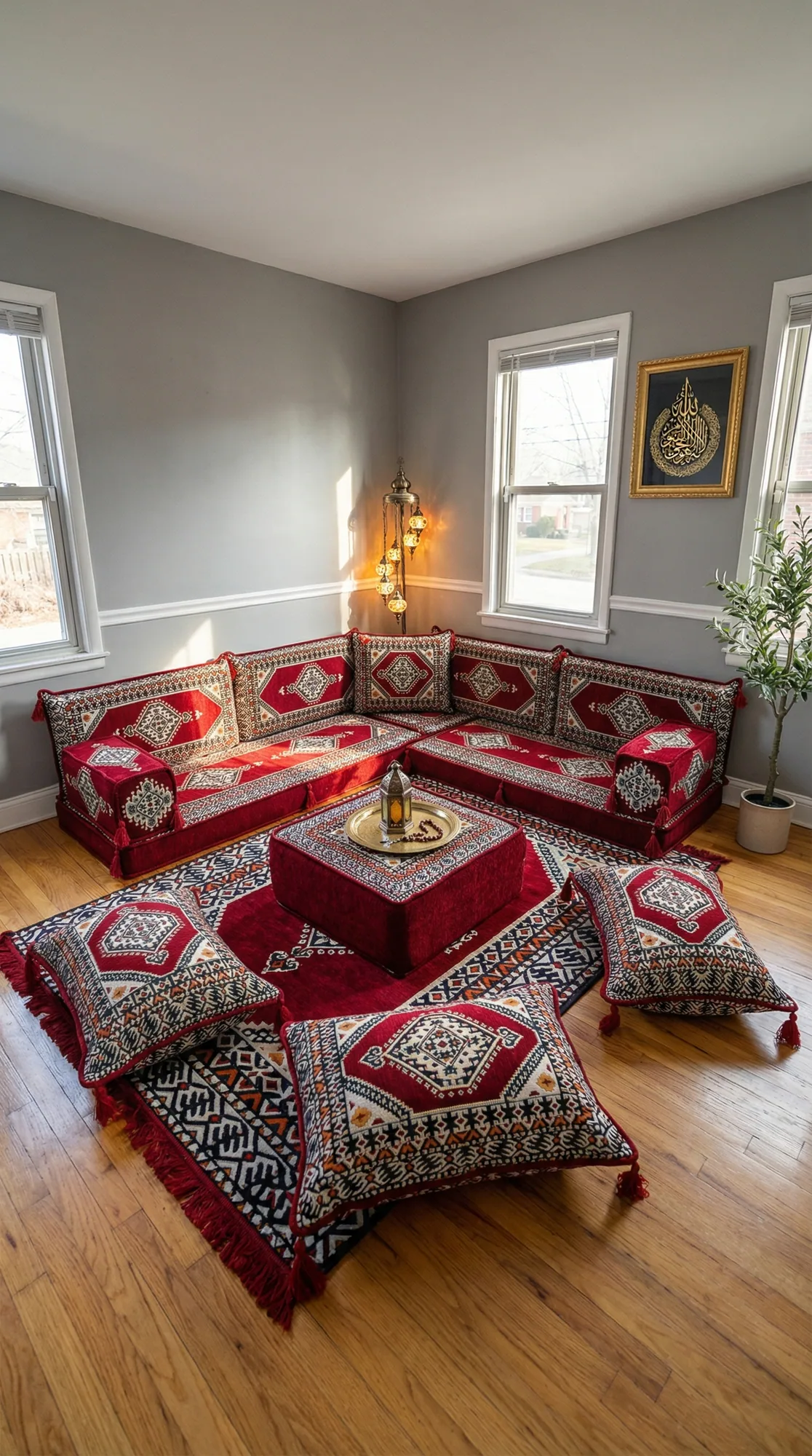
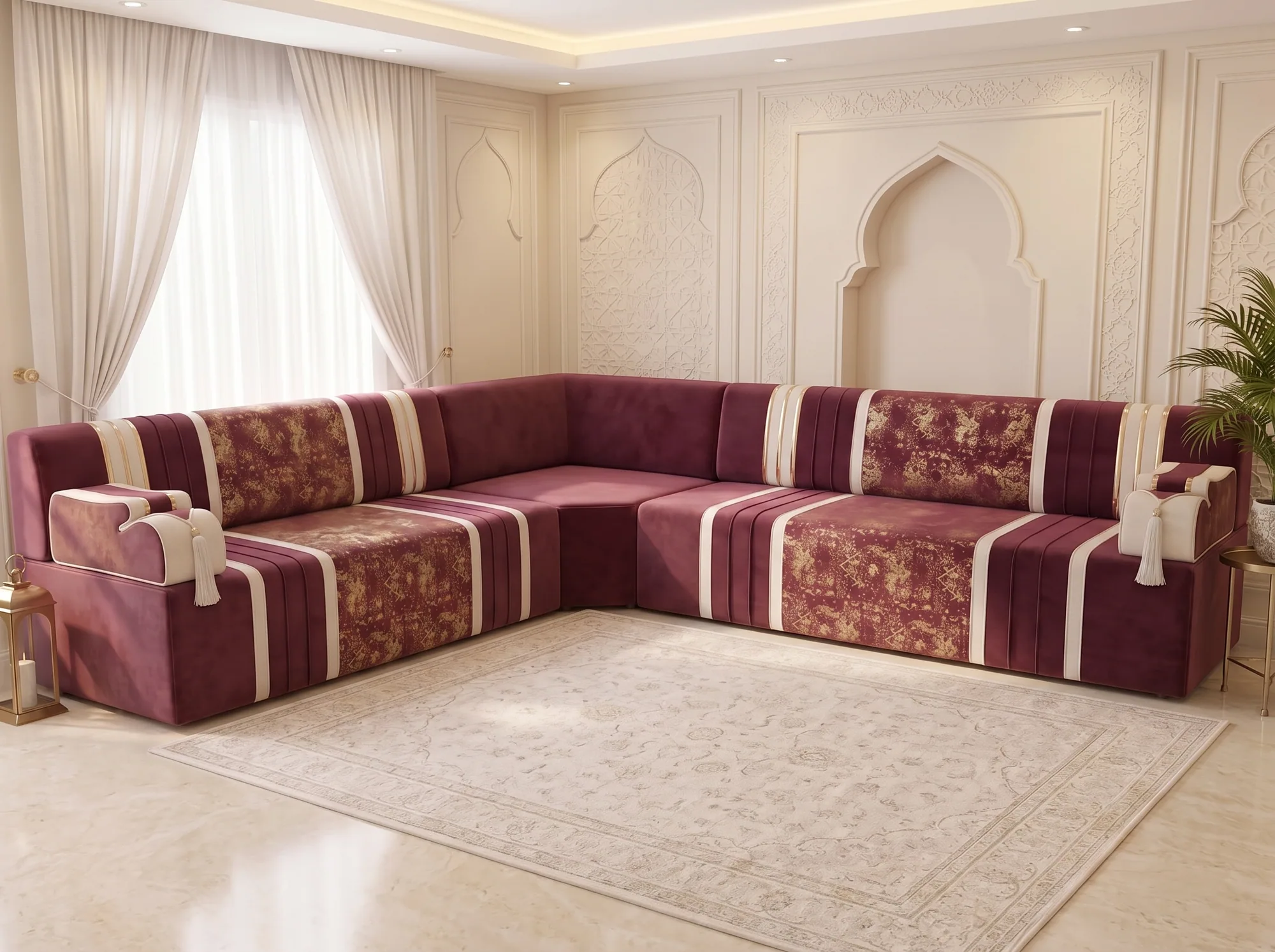
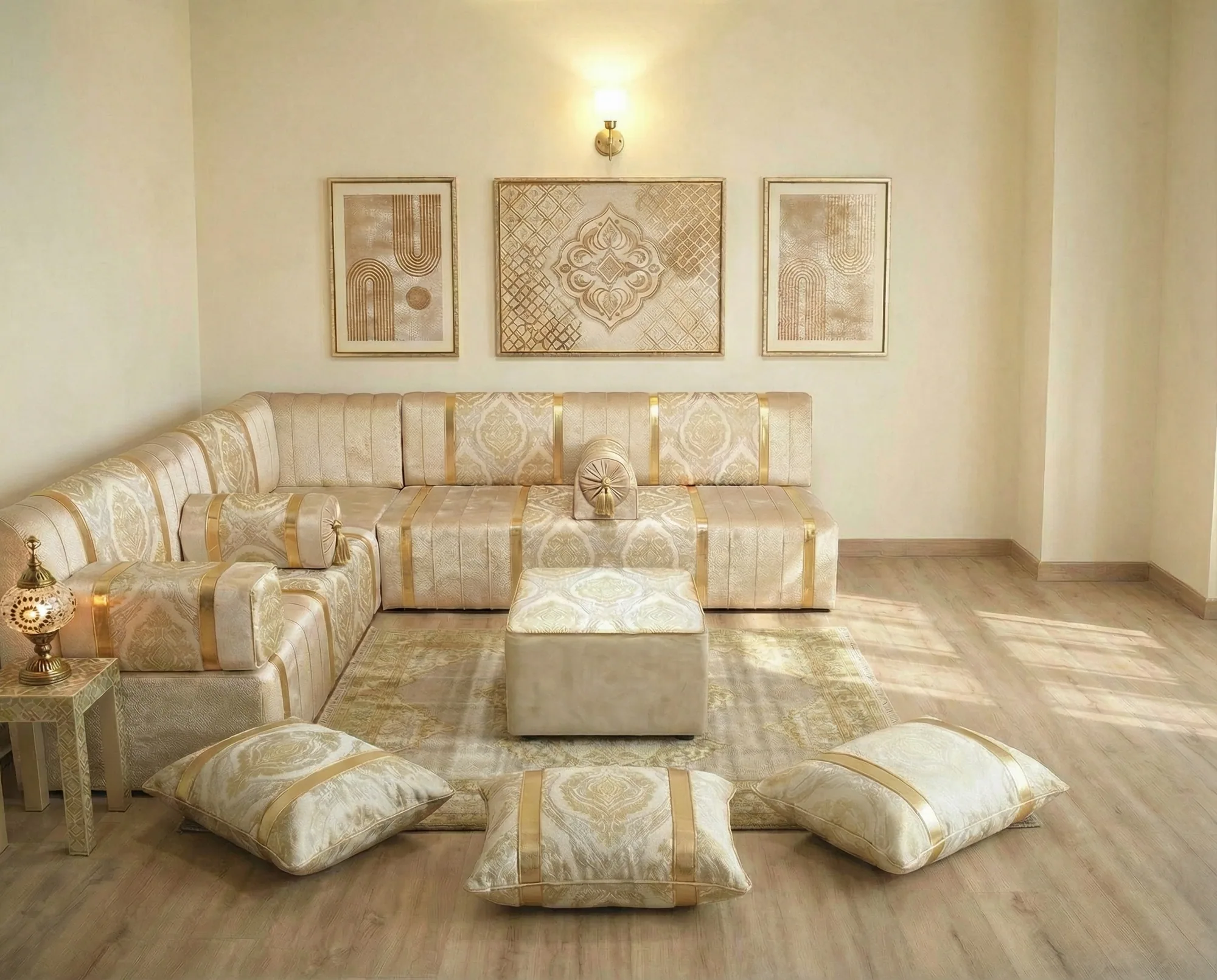
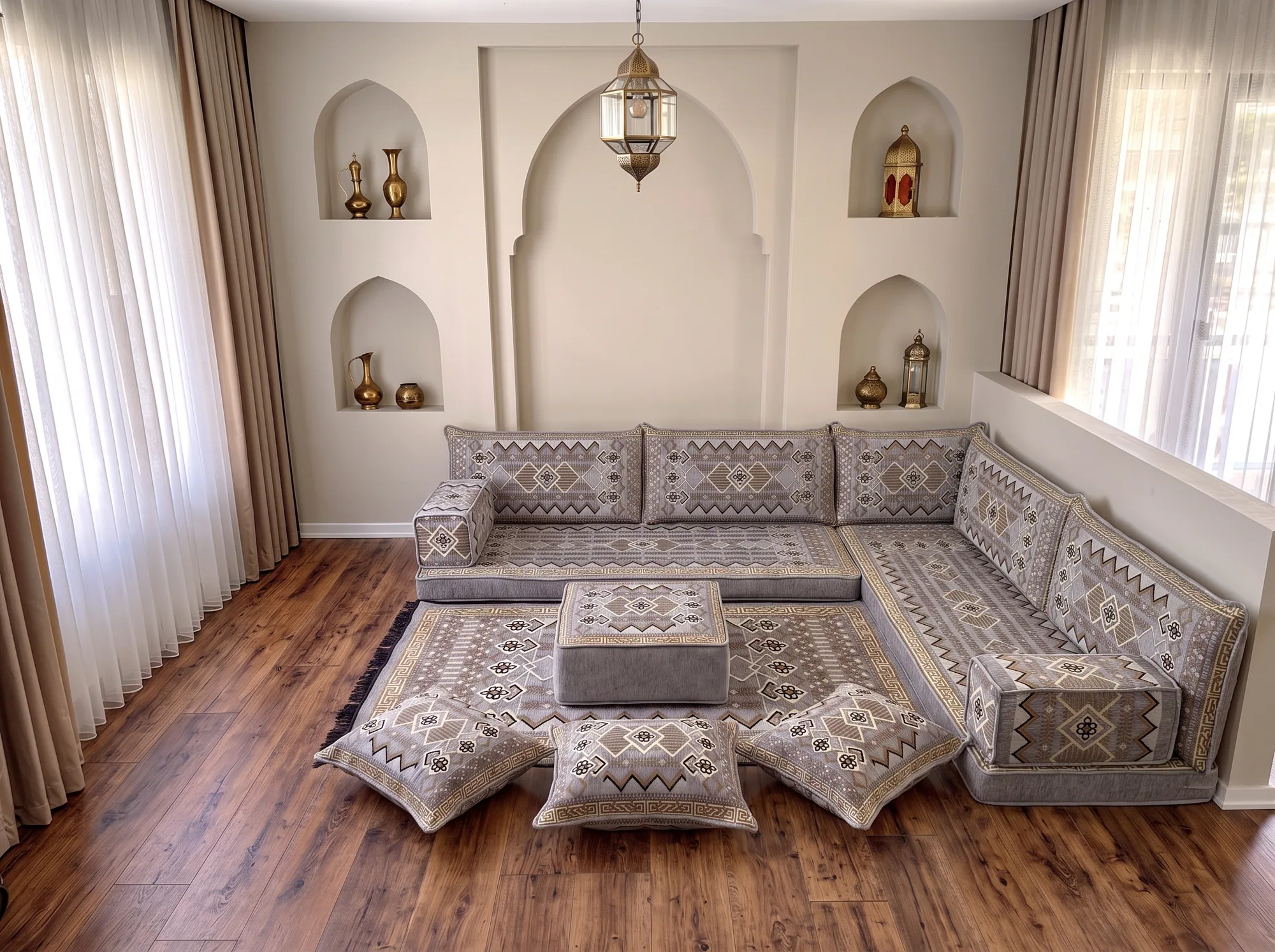
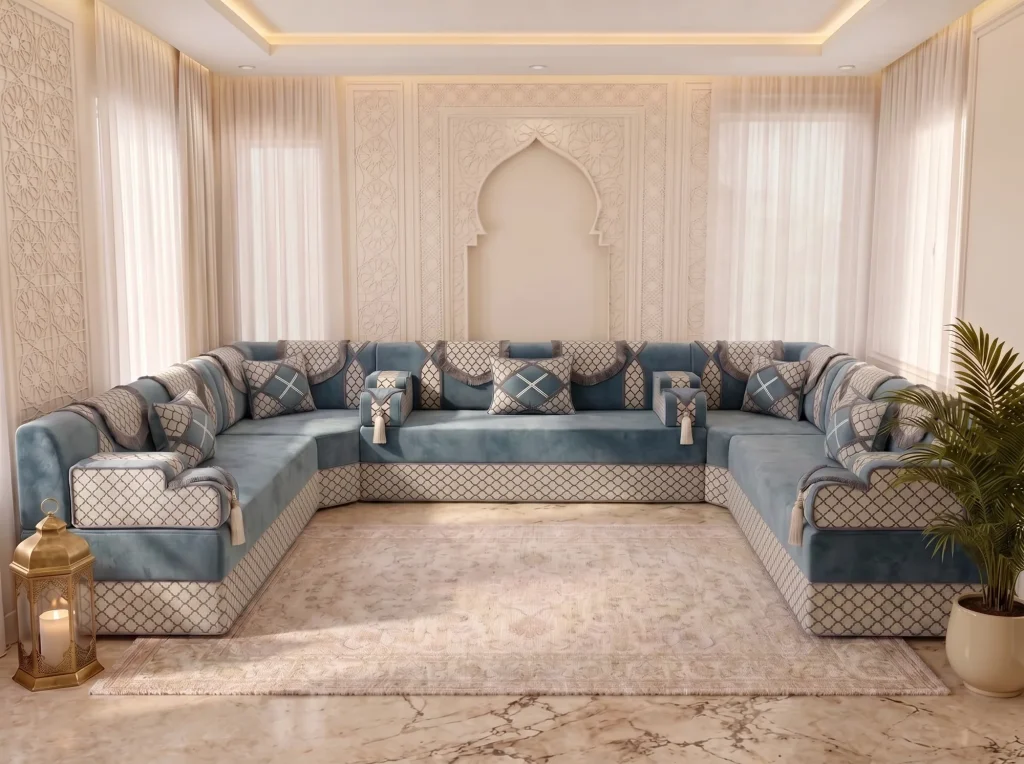
The Arabic majlis is the raised one: sofa-height units with a solid upholstered base, tall fixed backs and arm bolsters, finished with piping and trim. It uses the same foam, it is the closer match to the low sofa on the tazar, and it is what every photo on this page shows.
The Arabic jalsa page lists the parts of a set in full.
Choosing a seat level for a Levantine room
Because the tradition is low seating on a raised floor, either of our two products can be right. Decide by the room.
| Your room | Closest to the tradition | Why |
|---|---|---|
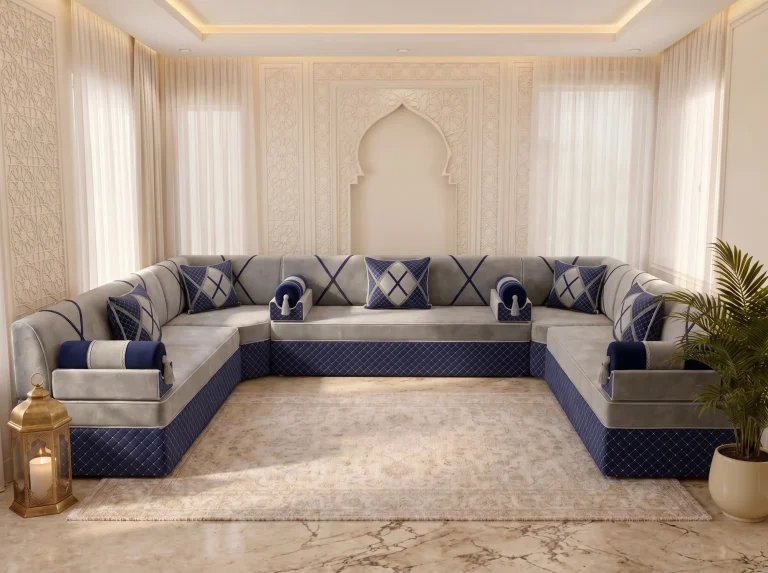
| Formal salon for guests | U-shaped majlis | A continuous sofa on three sides, as on the tazar |
| Family sitting room | Floor sofa, L or U | Relaxed, easy for children, doubles as a place to stretch out |
| Balcony or garden room | Floor sofa in linen, single row or L | A summer seat in the spirit of the iwan |
| Arabic corner beside a Western sofa | Short L | Keeps both ways of sitting in one living room |
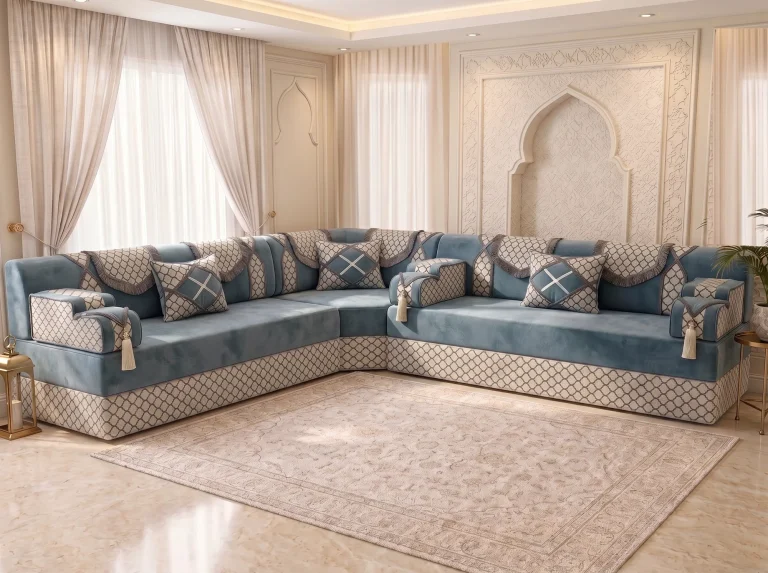
The olive and ivory majlis at the top of this page is the first row of that table: a U with gold scrollwork along the base and a carpet in the middle. The dusty blue majlis above is the same plan in a quieter palette, with a trellis-pattern base.
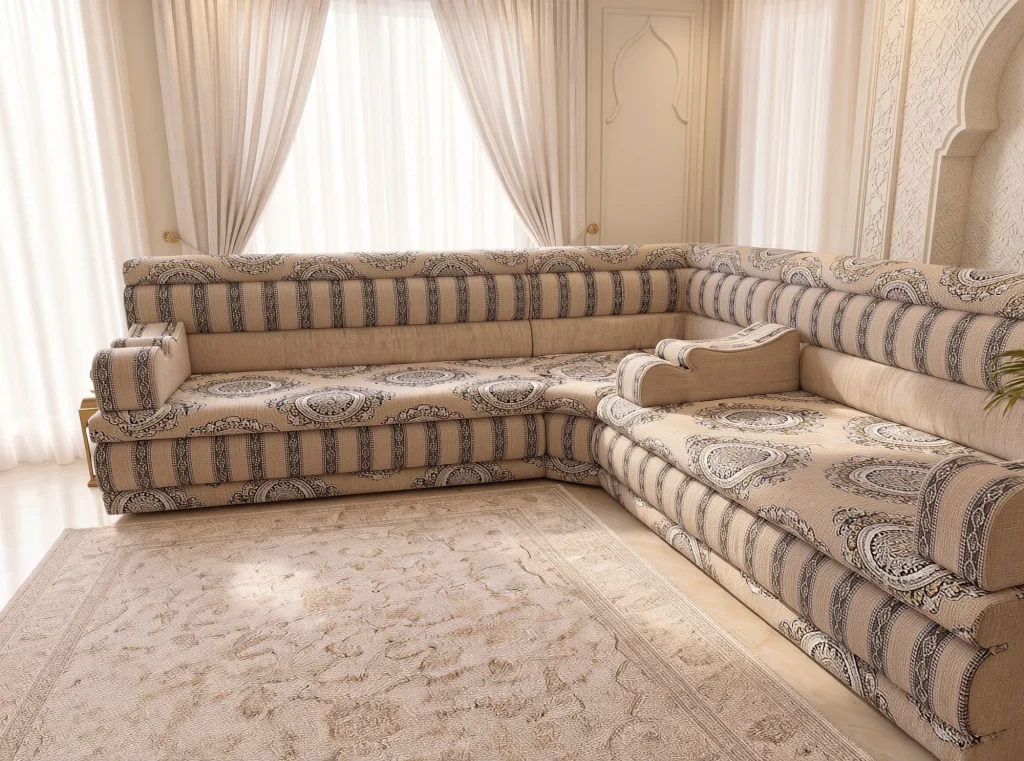
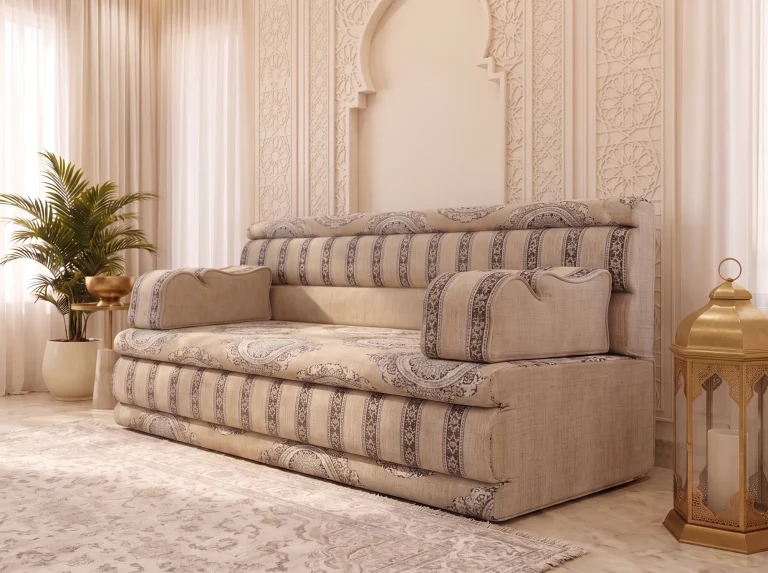
The beige medallion L here is also a majlis, in a calmer woven fabric that suits a family room. If you want to sit closer to the carpet, ask for a floor sofa. Our comparison of floor seating and a raised diwan weighs the two. We do not publish heights, because each set is made to order; tell us who will sit there and we will recommend a seat height with your quote.
Fabrics: what we can and cannot say
Damascus has a long reputation for fine cloth. We have not been able to verify the specific claims that are often repeated about brocades and striped satins, so we make none, and we do not describe any Sofhu fabric as Damascene or Syrian.
What we can describe is what we make. Sofhu works with velvet, linen, chenille, satin, knitted and woven fabrics; the series are shown on the fabrics page. If your room has carved or painted woodwork, mother-of-pearl furniture or a strong carpet, choose a plain or tone-on-tone seat fabric and let those pieces lead. In a plain modern flat, a patterned base or medallion cushion can carry the decoration.
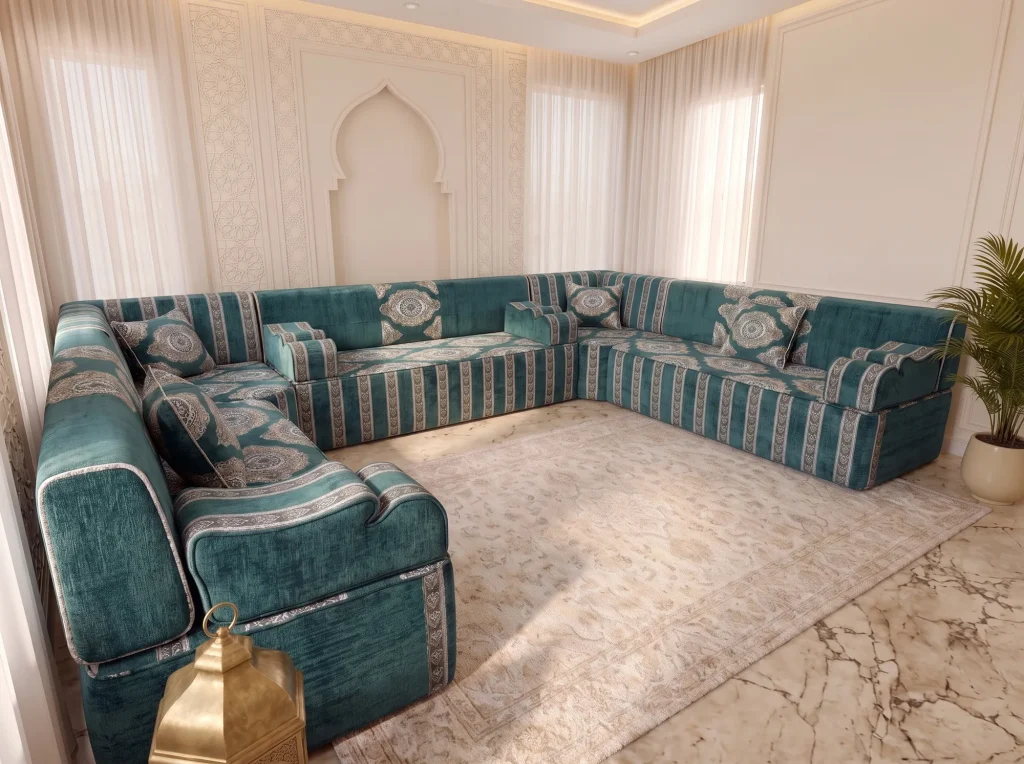
The teal majlis here is a useful example of pattern used with restraint: striped panels and medallion cushions set against teal velvet, photographed from one end so you can see how the three runs meet at the corners.
Syrian and Lebanese homes abroad
Germany is home to the largest Syrian community in Europe, with Berlin, Bremen, Hamburg and Essen among the main cities, and Sweden and France have long-established communities too. Lebanese families are among the largest Arab-origin groups in the United States, Canada and Australia, with well-known communities in Sydney and Melbourne.
Where a flat has no spare reception room, the Arabic seating shares the living room. An L along the two longest clear walls is the simplest solution, and a rented flat is no obstacle because nothing is fixed in place. For European orders, see our note on ordering a majlis from Türkiye to the EU and the page on Arabic sofas in Germany.
Ordering a Syrian majlis or jalsa arabiya
Sofhu is the manufacturer. Sets are made in Türkiye from your measurements, vacuum packed and shipped free worldwide to your door. We have no local shops.
Send the length of each wall, the positions of doors, windows and radiators, a photo of the room and the layout you have in mind through get a quote by measurement or on WhatsApp. Shipping is free; duties or taxes may apply depending on the destination, so ask us before ordering. The wider range is on the Arabic majlis and oriental sofa pages, and the related built-in tradition is described under Turkish sedir.