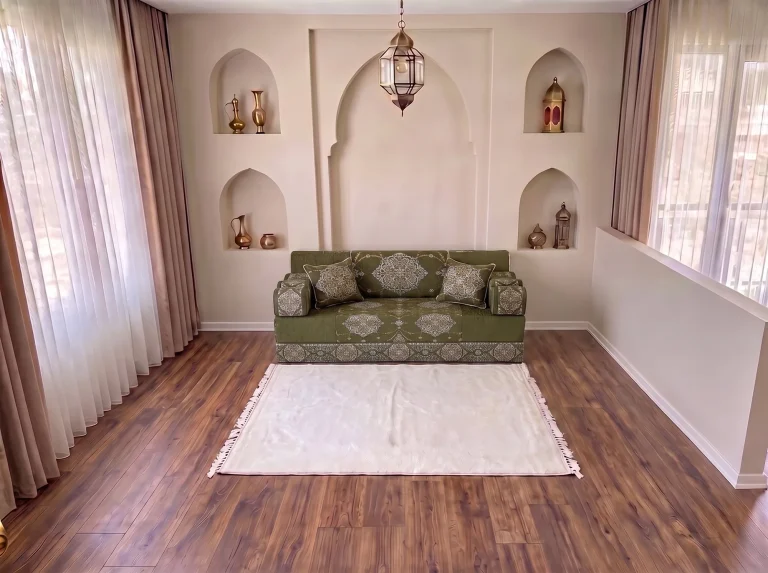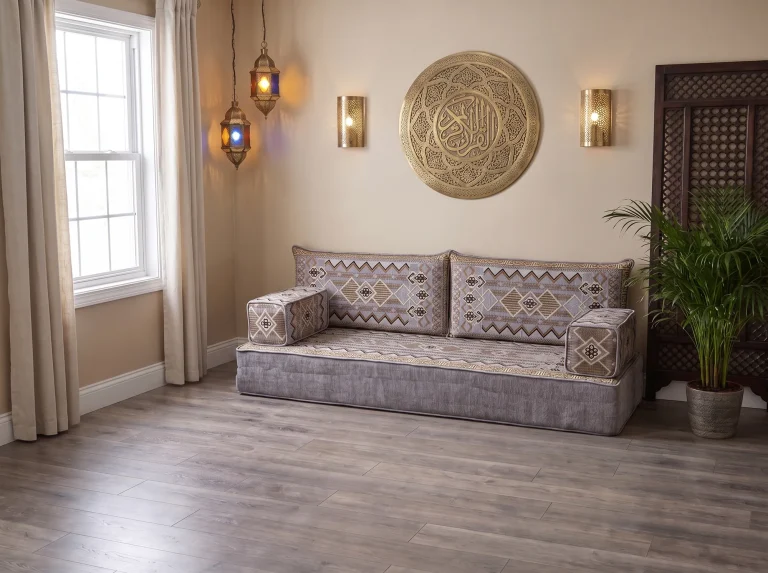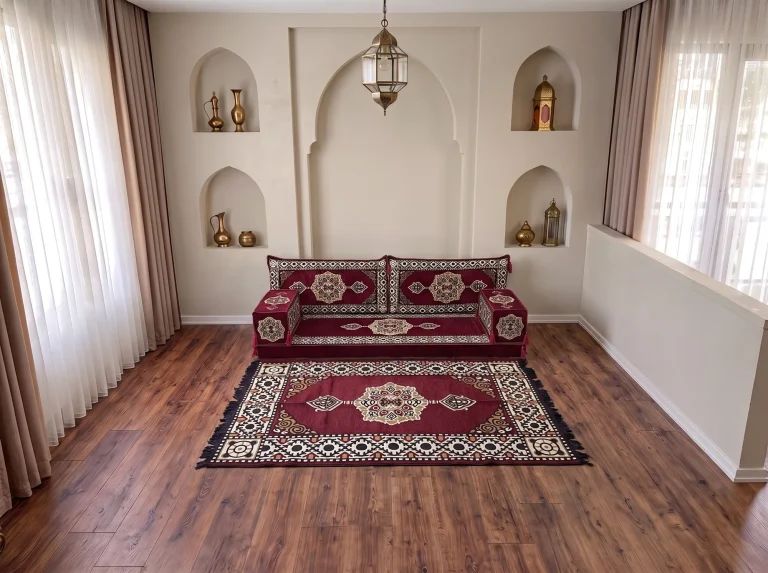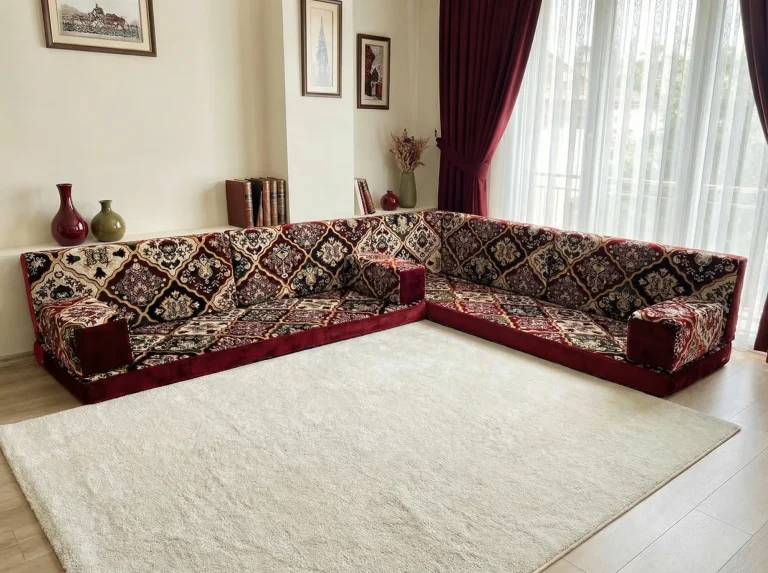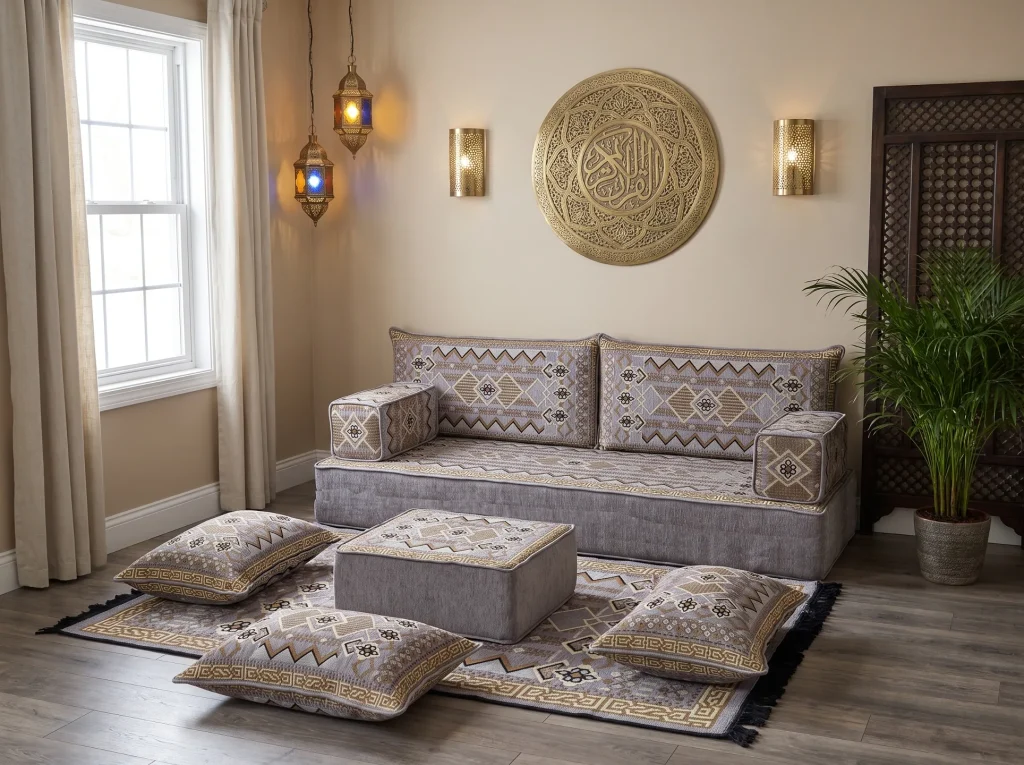
Pick floor seating if your guests sit cross-legged, the room is small or low-ceilinged, and children use it daily. Pick a raised diwan if older relatives need to stand up easily, the floor is cold, or the set shares a room with ordinary chairs. Sofhu makes low Arabic floor sofas and raised Arabic majlis sets with the same foam, so the choice is about height, not quality.
- Floor-level set
- Arabic floor sofa: cushions on the floor, backs against the wall
- Raised set
- Arabic majlis units, or floor sofa cushions on a base or bench
- Cushion thickness
- Selectable on order
- Foam
- 32 kg/m³ (32 DNS) high-density foam, no springs
- Wall needed
- Yes, floor-level sets are not freestanding
- Layouts
- Single row, L shape or U shape
- Sizes and heights
- By quote from your measurements
On this page
Somebody in the family will have an opinion on this before any fabric is chosen. The floor seating vs raised sofa decision is about one thing, how far the seat is from the ground, and it affects who can use the room comfortably more than any colour or pattern will. Both are proper seating for a majlis room. Neither is the cheap version of the other.
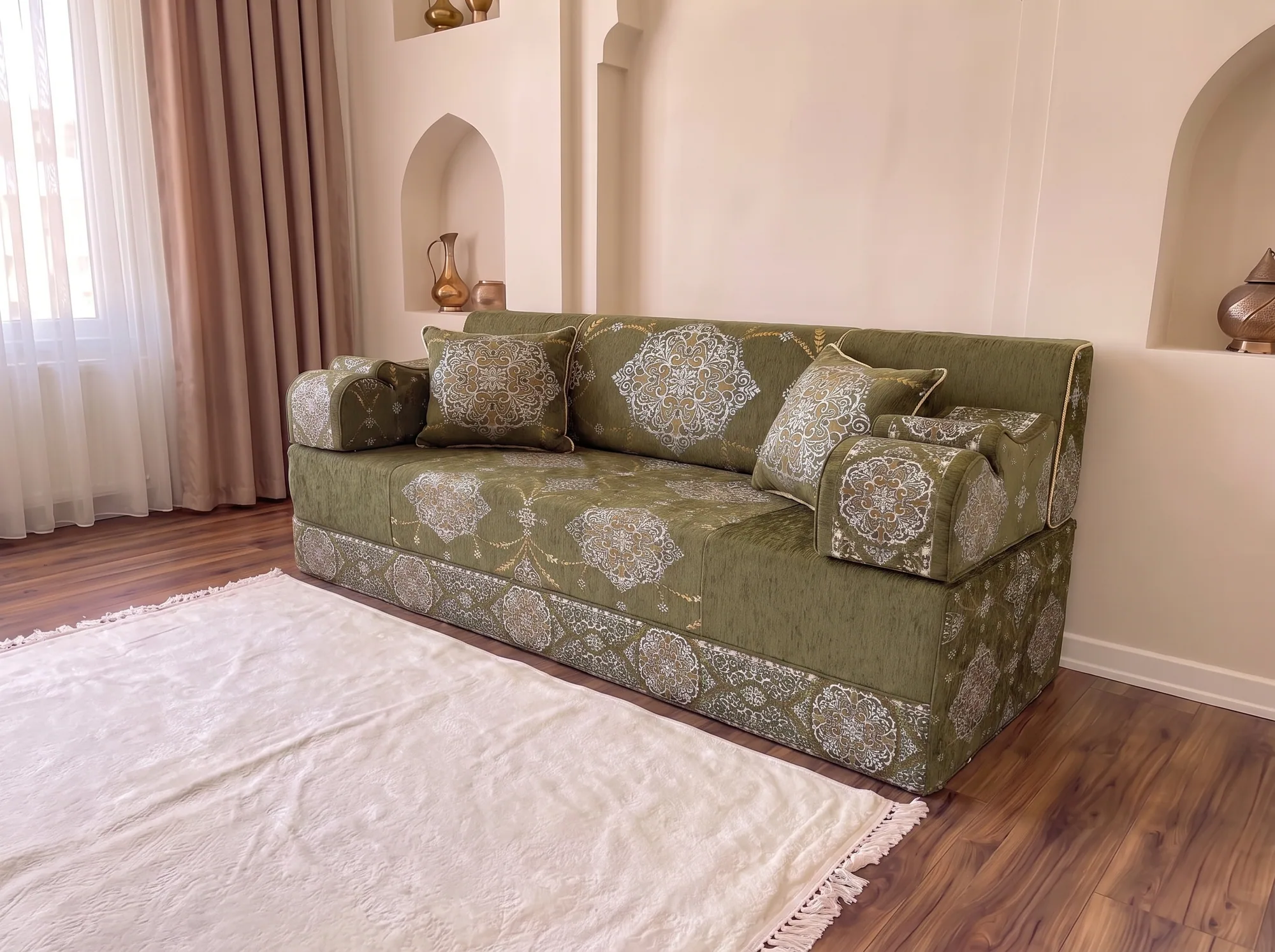
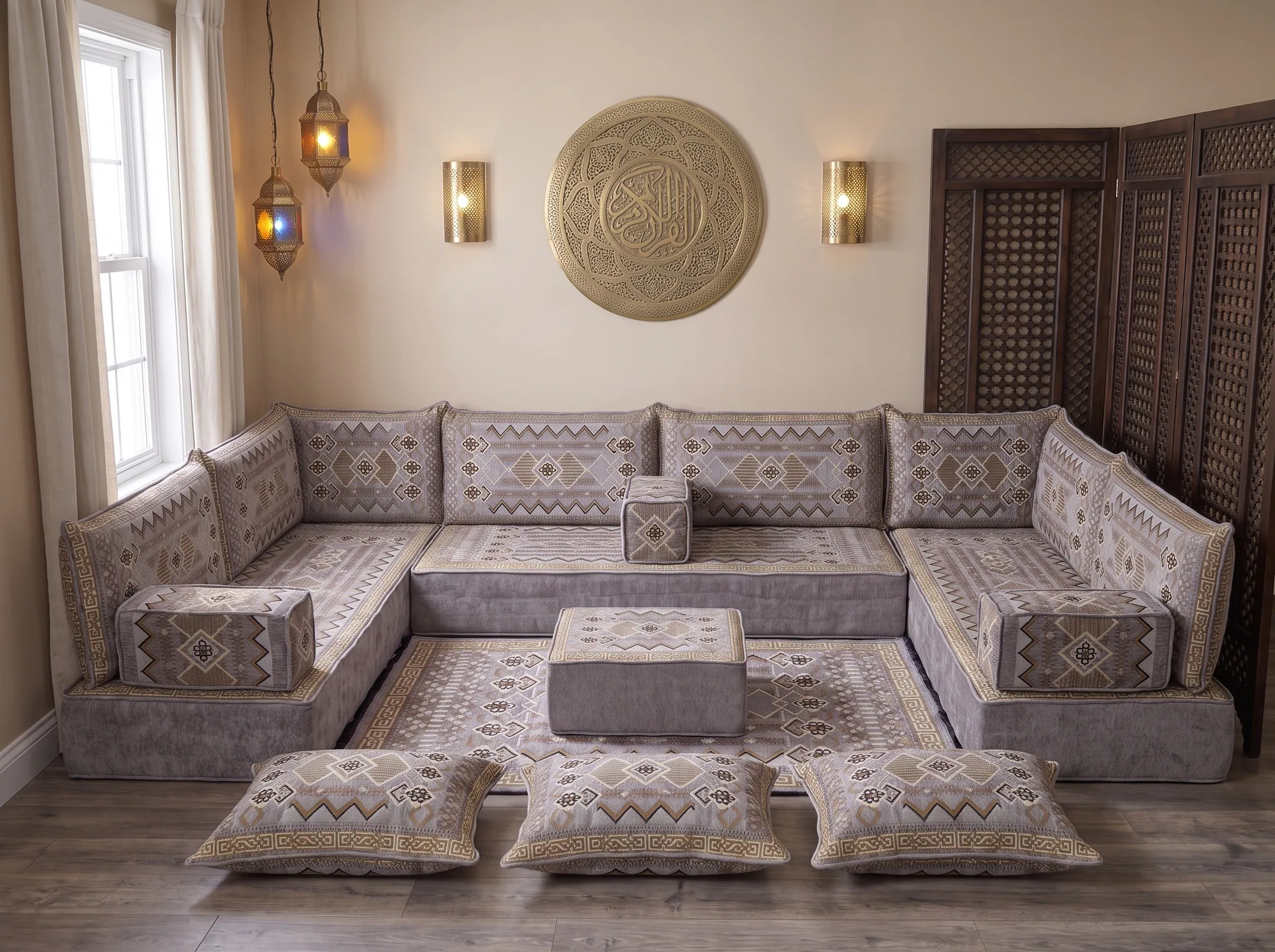
Sofhu makes both heights as separate products. An Arabic floor sofa is a seat mattress laid on the floor with loose back cushions leaning on the wall. An Arabic majlis is raised, sofa-height seating built as upholstered units with fixed backs and arm bolsters. Between them, the diwan floor sofa range can lift floor sofa cushions on a taller base or a wooden bench. The existing diwan floor sofas page covers the product itself. This page is about choosing the height.
A quick decision tree
Work through these questions in order and stop at the first clear answer.
- Does anyone who uses the room daily struggle to get up from a low seat? If yes, go raised, or raise at least one section.
- Do you eat from a cloth on the floor, pray in the room or sit cross-legged by habit? If yes, stay on the floor.
- Is the floor cold tile or stone with no underfloor heating? Raised, or floor-level with a thick rug.
- Is the room small, or the ceiling low? Floor-level. Low furniture leaves more wall showing and the room reads larger.
- Will the set share the room with a dining table, armchairs or a Western sofa? Raised, so seat heights match.
- Do small children play there? Floor-level. There is nothing to fall from.
If you reach the end with no clear answer, you probably want the common compromise: a floor-level set with a thicker seat. Cushion thickness is one of the options Sofhu offers, and a thicker seat lifts you without a base.
Floor seating vs raised sofa: comfort and mobility
The comfortable height depends on the posture, not on the person. At floor level your legs have options. You can fold them, tuck them to one side, kneel or stretch them toward the middle of the room. The carpet in front of the seat is part of the furniture. This is why a floor sofa suits long evenings where people shift, lean on an armrest and turn toward whoever is speaking.
On a raised diwan your legs have one natural position: knees bent, feet flat on the floor. That is the posture of an ordinary chair and it is the easiest to hold while eating at a table, working on a laptop or talking formally with a visitor. Sitting cross-legged on a raised seat is possible but takes up more of the seat.
Getting up is where the two differ most. From a raised seat you lean forward and stand. From the floor you first have to bring your weight over your feet. Young people do it without thinking. For grandparents, pregnant women and anyone recovering from an injury it can decide whether they sit with the family at all. If that describes your household, read floor seating for elderly guests before ordering.
The feel of the seat itself does not change with height. Sofhu uses 32 kg/m³ (32 DNS) high-density foam in both, with no springs, and you can ask for a softer or firmer foam on a custom order. A floor seat rests on a hard surface, so the foam does all the work, which is the reason density matters.
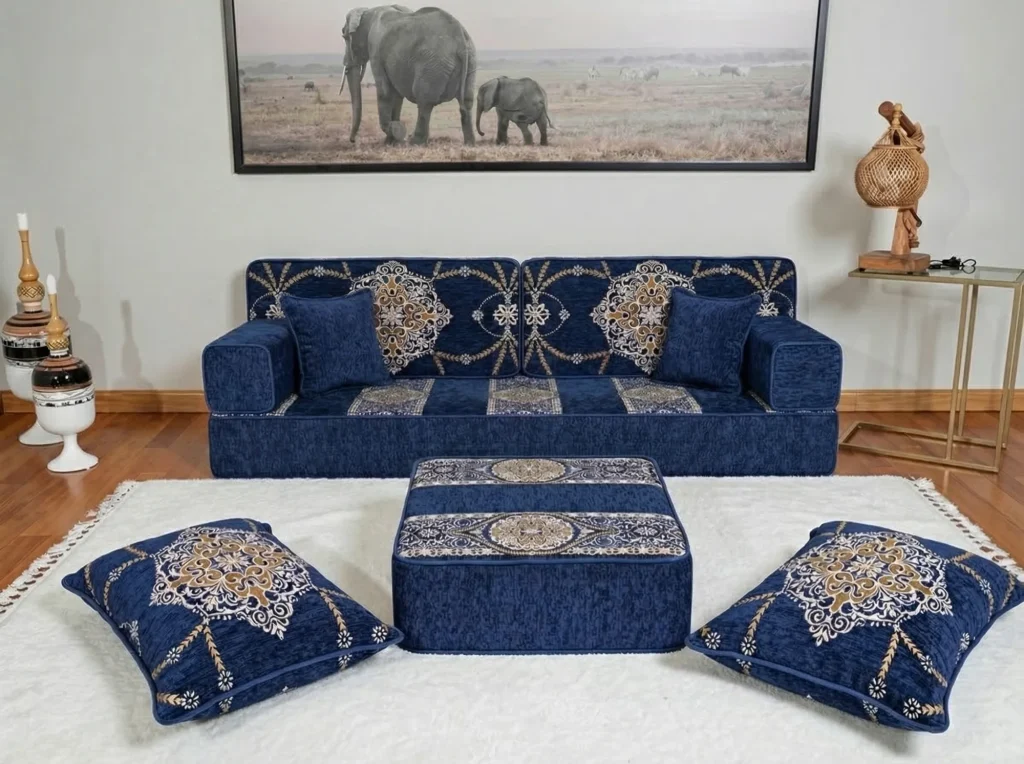
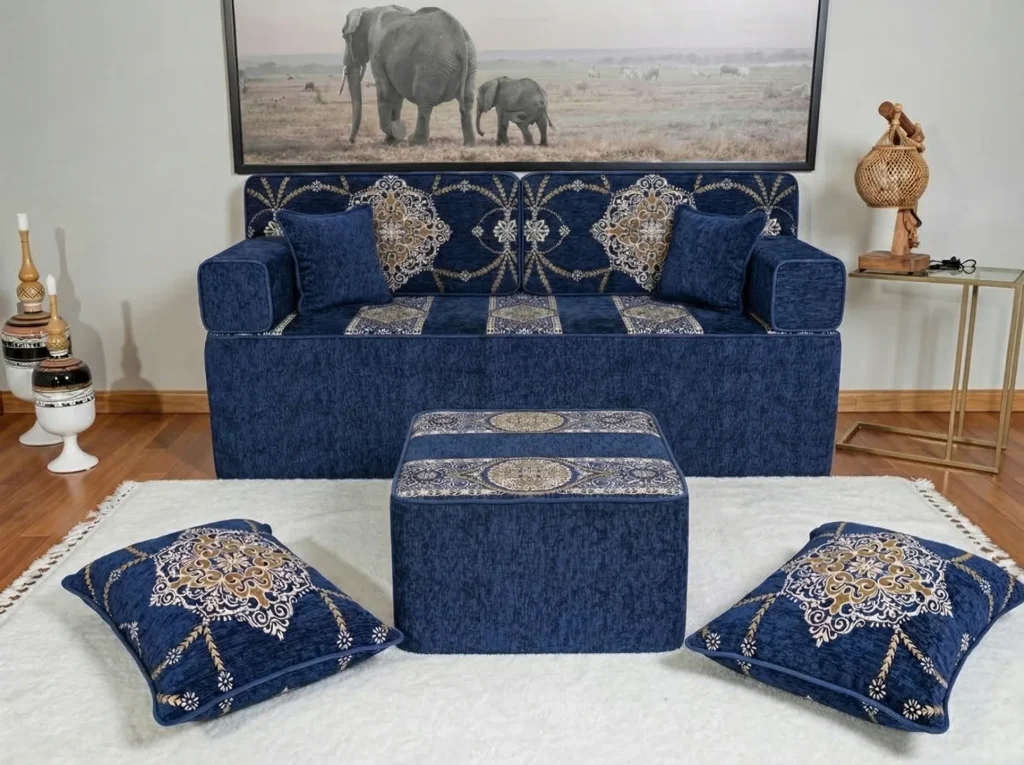
The two photographs show one navy diwan floor sofa at two heights: close to the floor, and on a tall base that brings it up to ordinary sofa height. The cushions, fabric and pattern are the same.
Cleaning, airflow and floors
Neither height is harder to live with, but the chores differ.
| Floor-level | Raised on a base | |
|---|---|---|
| Dust underneath | None, it sits flat | Collects below, easy to reach |
| Mopping | Lift the seats aside | Pass the mop under an open base |
| Air under the seat | None | Yes |
| Contact with the floor | Soft fabric base | Feet or plinth of the base |
A floor-level sofa has no legs, and Sofhu notes that the design does not scratch floors. That is welcome on timber and in rented homes. The other side of sitting flat is that no air passes beneath. On a ground floor that feels damp, or over tiles that are washed often, stand the seats up against the wall from time to time so the underside can air. A rug under the set helps as well and keeps feet warm.
A raised set keeps the cushions off the floor altogether. Where the base is open, a vacuum goes straight under. Where the base is a solid plinth, nothing gets underneath at all. If you plan a majlis with base, ask which kind suits your floor and whether the base has protective feet.
Covers are identical in both cases: zippered, removable and, as the site states, washable at 30°C.
Look and proportion
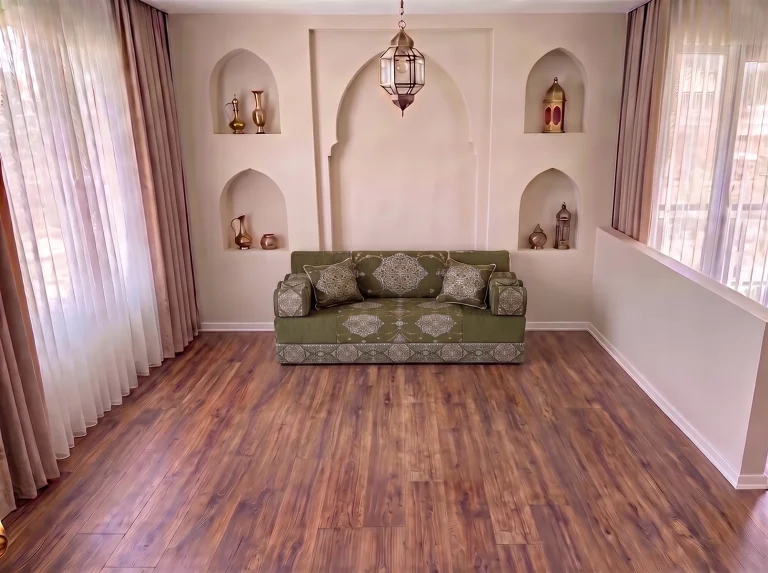
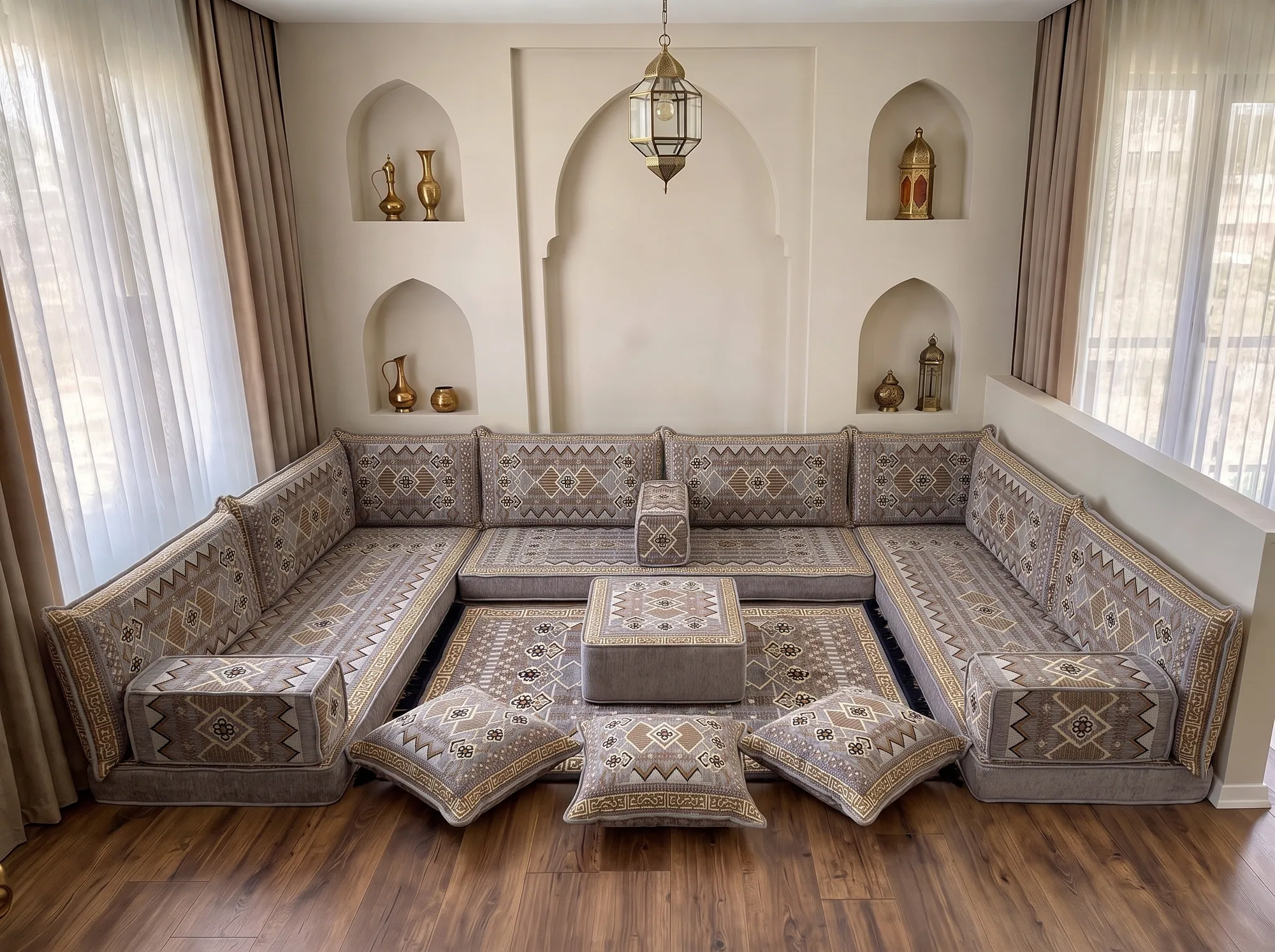
Height changes how the whole room looks. A floor sofa keeps the furniture below the window sills. More wall is visible, pictures and niches sit clear above the backrests, and the room feels calm and wide. It is the look of the traditional guest room, where carpets cover the floor and cushions line the wall.
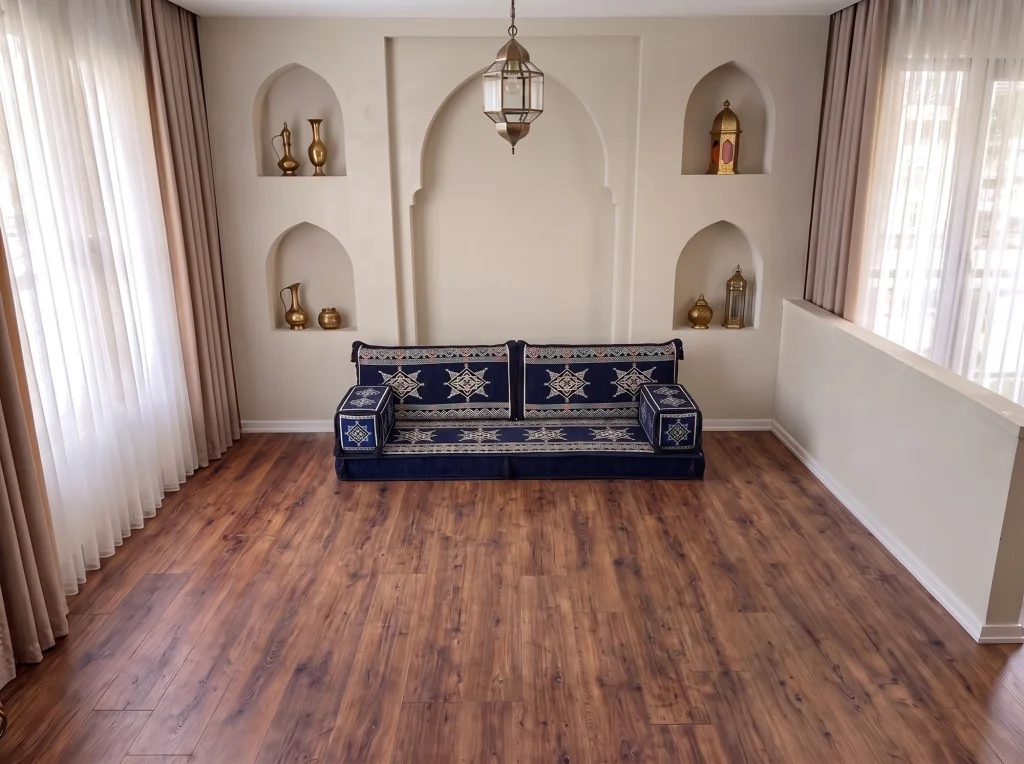
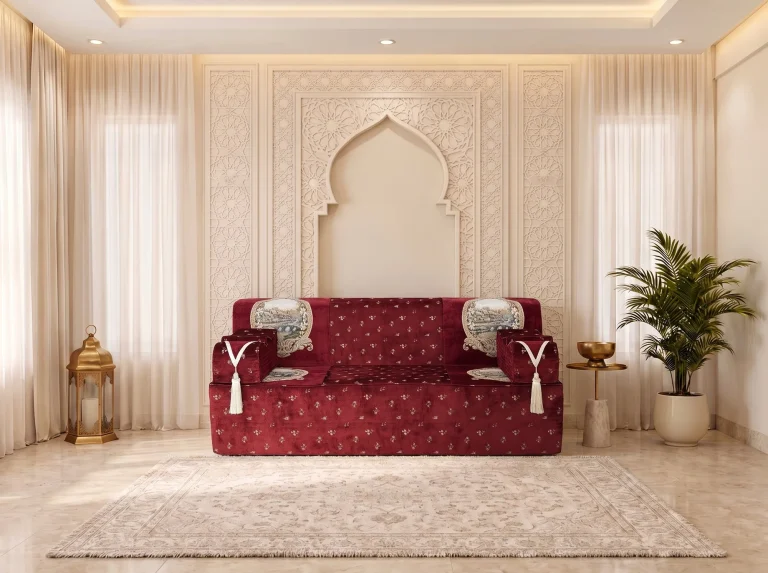
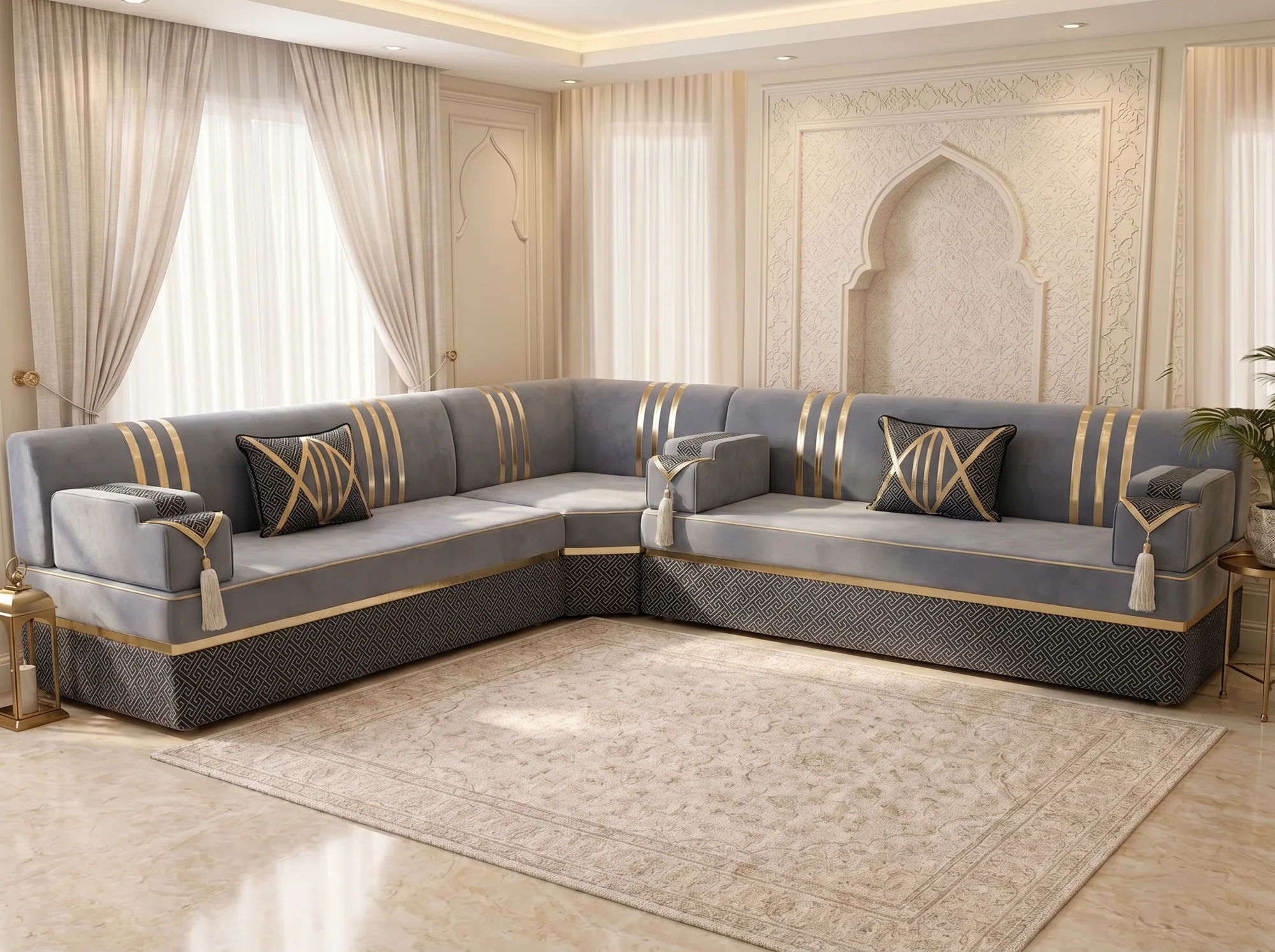
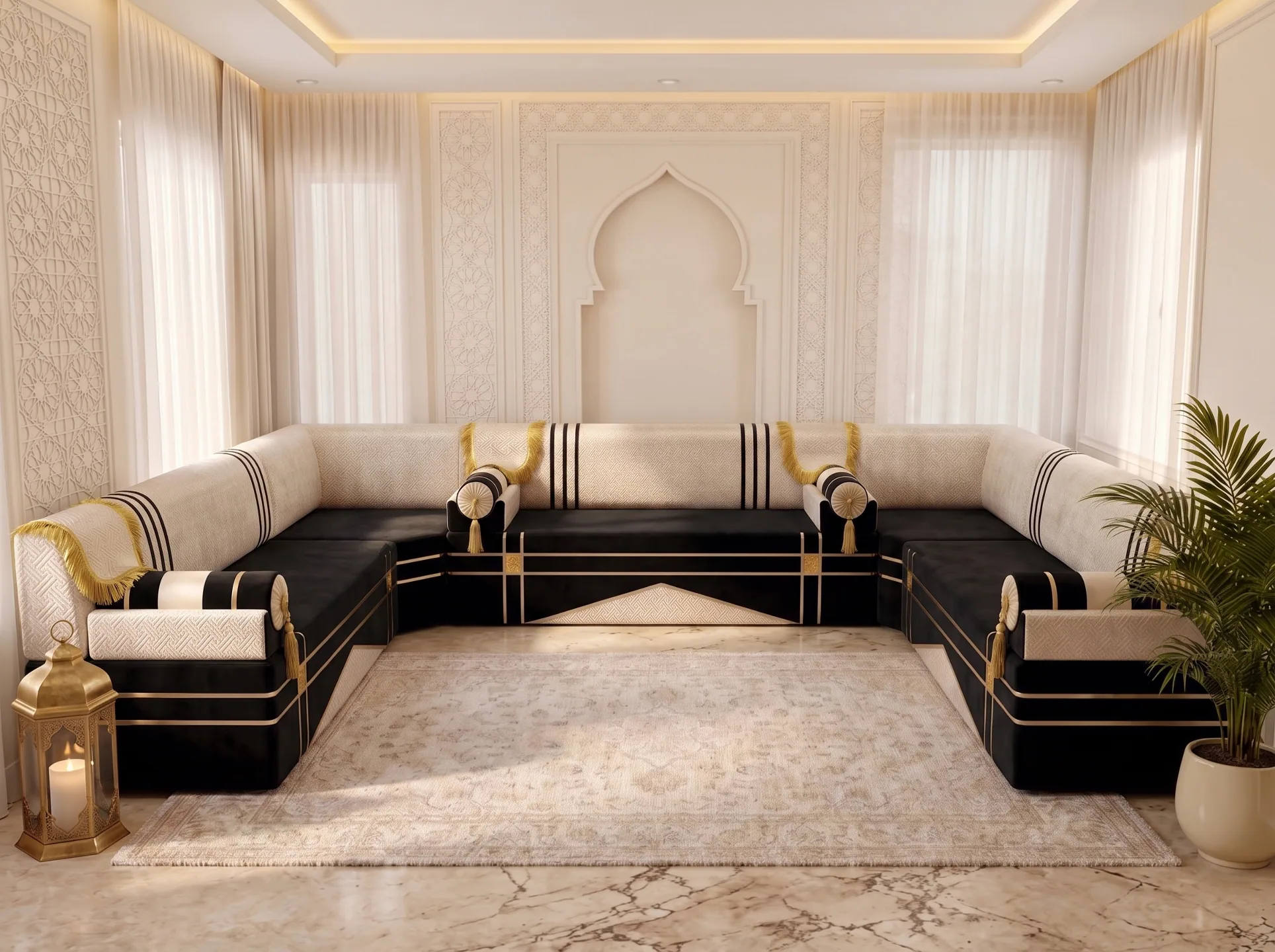
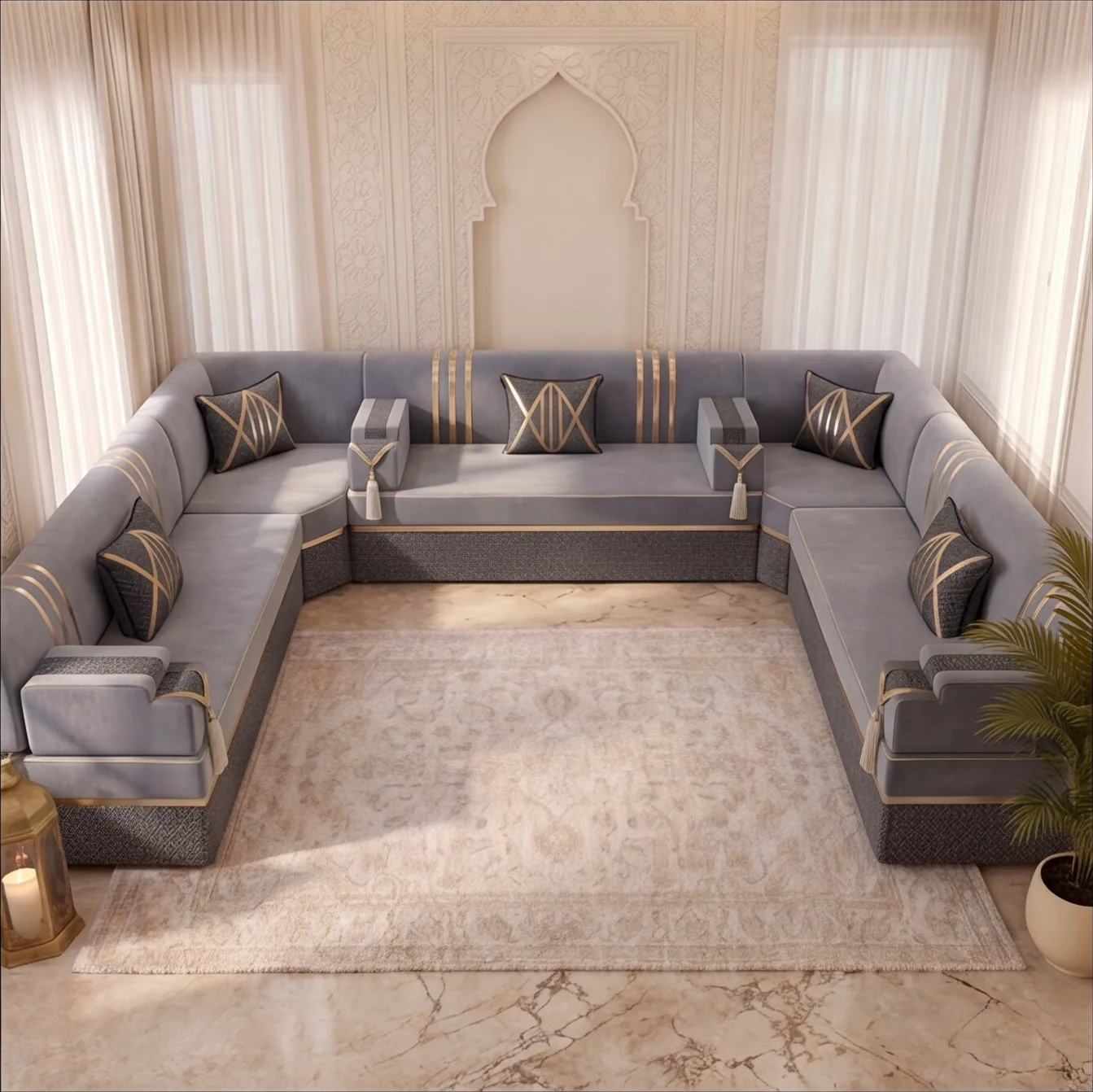
A raised diwan has more presence. The base adds a horizontal band below the seat, which can carry carved wood, a fretwork panel or a contrasting fabric. In a large room with a high ceiling this extra height stops the seating from looking lost. It also lines up with the furniture around it, which matters in a mixed living room. The compact navy velvet majlis below, with its gold lattice base, shows the effect.
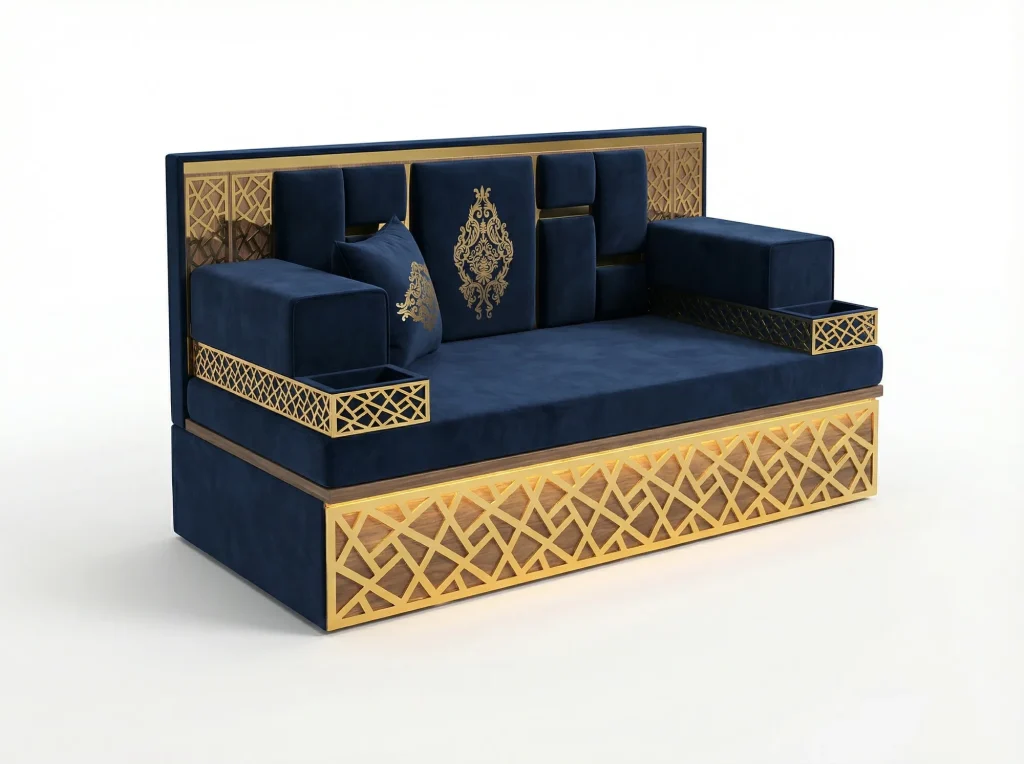
Two rules of proportion help:
- Small room, low set. In a compact room a raised U-shape can feel like a wall of upholstery. Keep it low, or raise only one side.
- Large room, taller set or thicker seat. A very low set in a very large room can look thin unless the backs are tall and the rug is generous.
Raised seating has deep roots of its own. The Turkish sedir was a built-in raised seat under the windows. The Moroccan salon sits on a wooden frame called a sedari. The reception room of an old Damascus house had a raised platform lined with a low sofa. An Arabic sofa with a wooden base belongs to that family, and Sofhu’s wooden bench sets are described on the cedar Arabic majlis page. For the history, see the Turkish sedir and Moroccan sedari pages.
Converting later: adding or removing a base
You are not locked in for life, because the cushions are the constant part. Going from raised to floor-level is the simple direction. This applies to floor sofa cushions on a base or bench; a majlis is built as one upholstered unit, so its height is fixed. Lift the seats off, set them on the floor against the wall, and you have a floor sofa. Sofhu says of its floor cushions that they can be used on a wooden bench as well as on the ground.
Going the other way needs more care. A base must match your seats in length and depth, follow the corners of an L or U layout, and suit the weight of the people using it. Before counting on it, send the measurements and a photograph of your set and ask whether a matching base can be made. We would sooner say no than send a base that fits badly.
Three ways to keep your options open when you first order:
- Order floor-level with a thicker seat, and see whether the family asks for more height.
- Order one raised section for the elders’ wall and keep the other walls low.
- Tell Sofhu at the start that you may want bases later, so the seat sizes are planned with that in mind.
Layout affects this too. A single row is the easiest to raise or lower. Corners need a base made for the corner, which is covered in the guide to L-shape and U-shape majlis layouts.
What to send for a quote
Height is one line in the order, and it is easier to settle with the room in front of us. Send the length of each wall you want to seat, the position of doors and windows, the sill height if the windows are low, and a note on who uses the room. Say whether you are comparing a diwan vs floor sofa or have already decided. Ask for the seat height and cushion thickness to be stated in the quote for your set, since every order is made to measure.
Start with the Arabic floor sofa overview if you lean low and the Arabic majlis page if you lean raised, read the majlis seat height guide if you are undecided, and see what else can be changed on the custom majlis page. Then use the quote by measurement form. Shipping is free worldwide whichever height you choose.