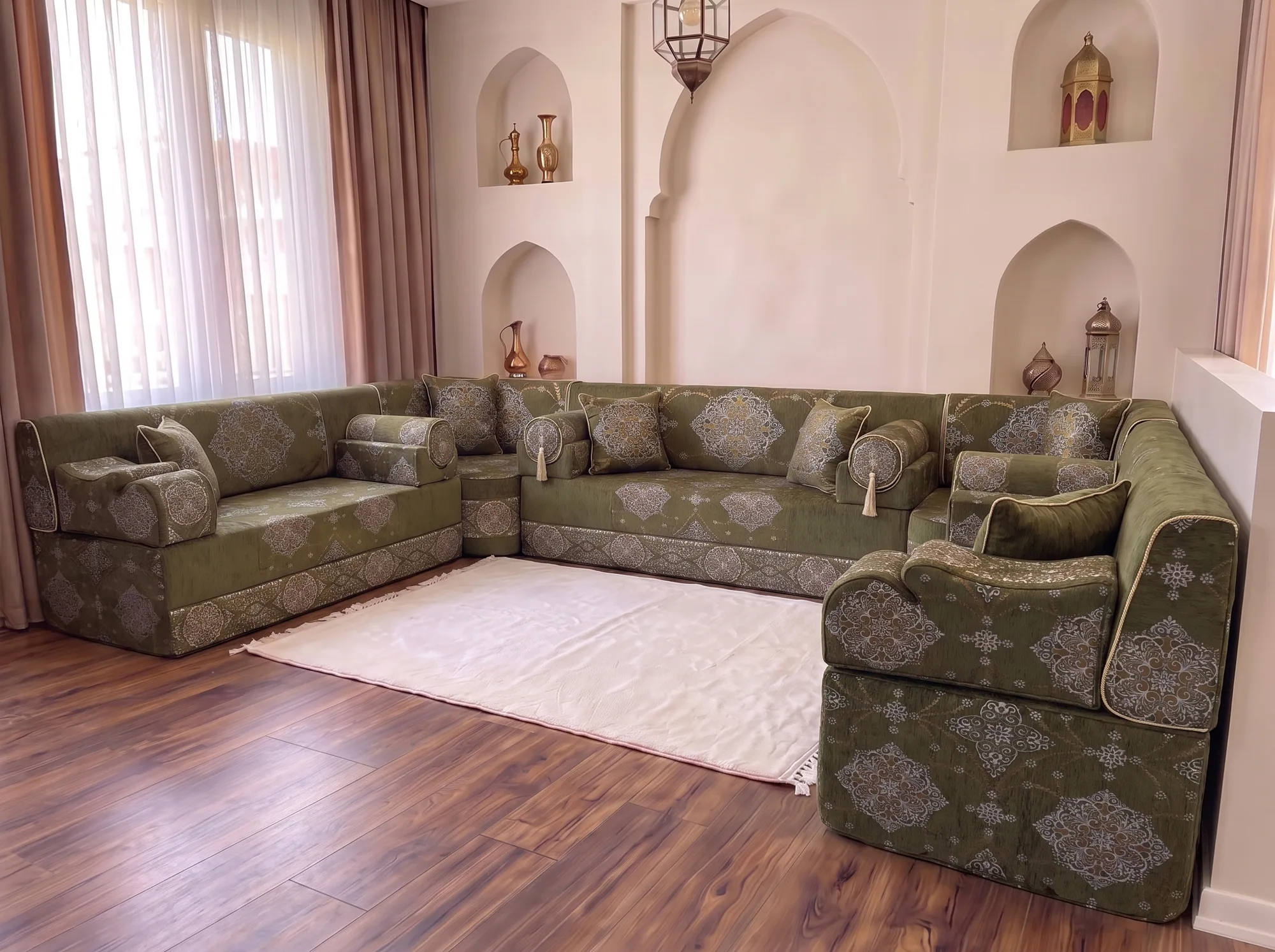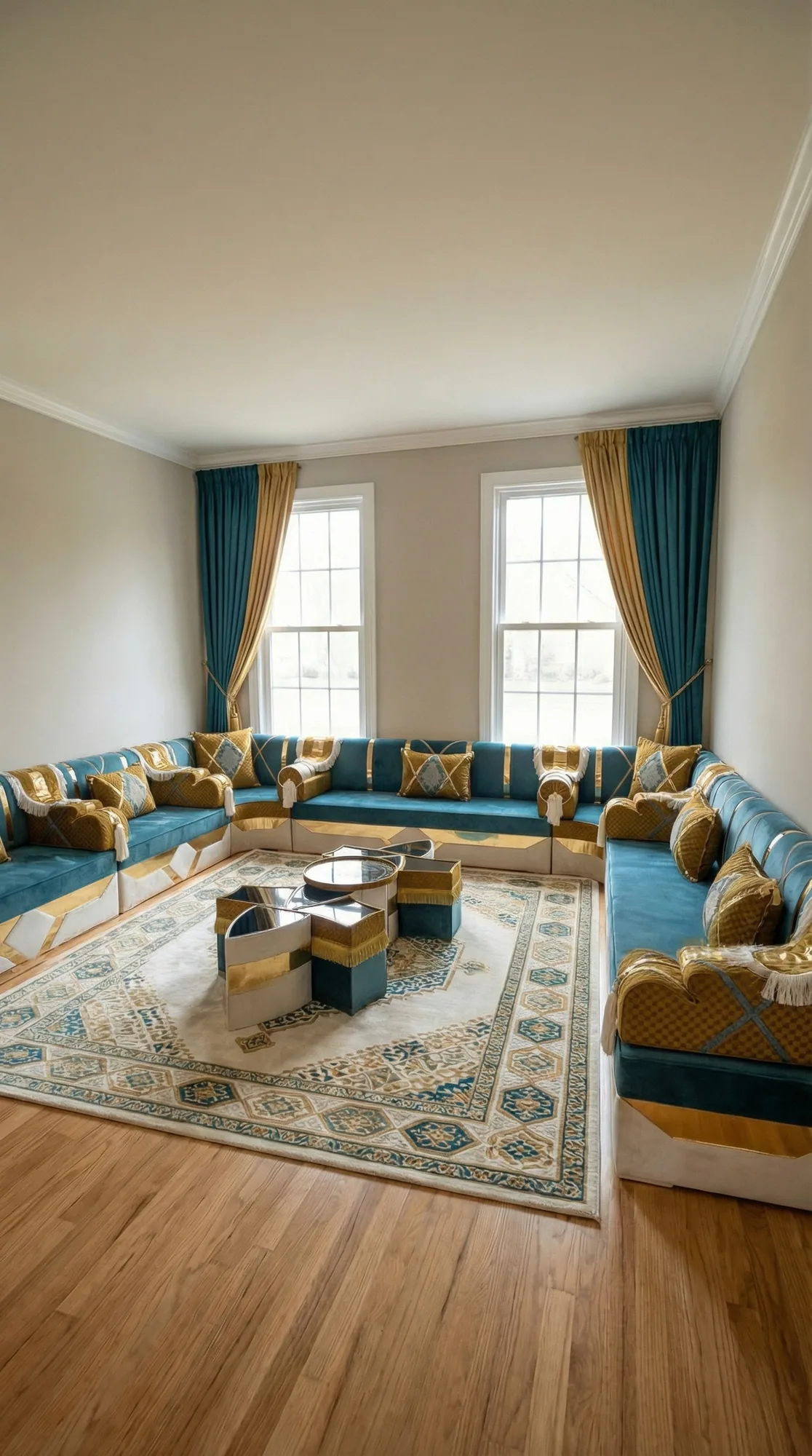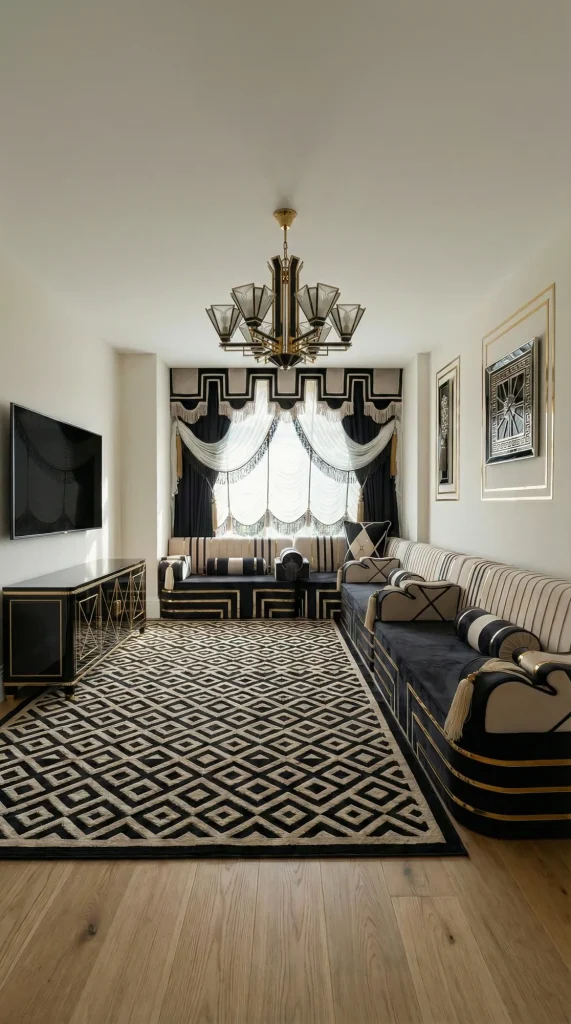
To create an Arabic style living room that also holds a sofa, dining table or TV unit, give the majlis its own zone against solid walls, bridge the height difference with low tables and mid-height pieces, share one palette across both zones, and anchor each with its own rug. Sofhu cuts each set to the wall lengths you send, so it fits the corner you choose.
- Floor sofa needs
- A wall or solid surface behind it; it is not freestanding
- Best position
- A corner away from the main walkway
- Zones
- One rug per zone, with clear floor between them
- Height bridge
- Low tables, ottomans, floor cushions, low media unit
- Palette
- Two or three colours shared by both zones
- Layouts
- Single row, L-shape or U-shape, cut to your walls
On this page
Many families do not have a spare room to give over to a majlis. The living room has to hold the sofa the children watch films on, the dining table, the TV unit and the floor seating where guests are received and tea is poured. Done carelessly, that produces a room with two halves that ignore each other. Done with a plan, it produces an Arabic style living room that feels like one place with two ways of sitting. The plan has four parts: zones, heights, colour and rugs.
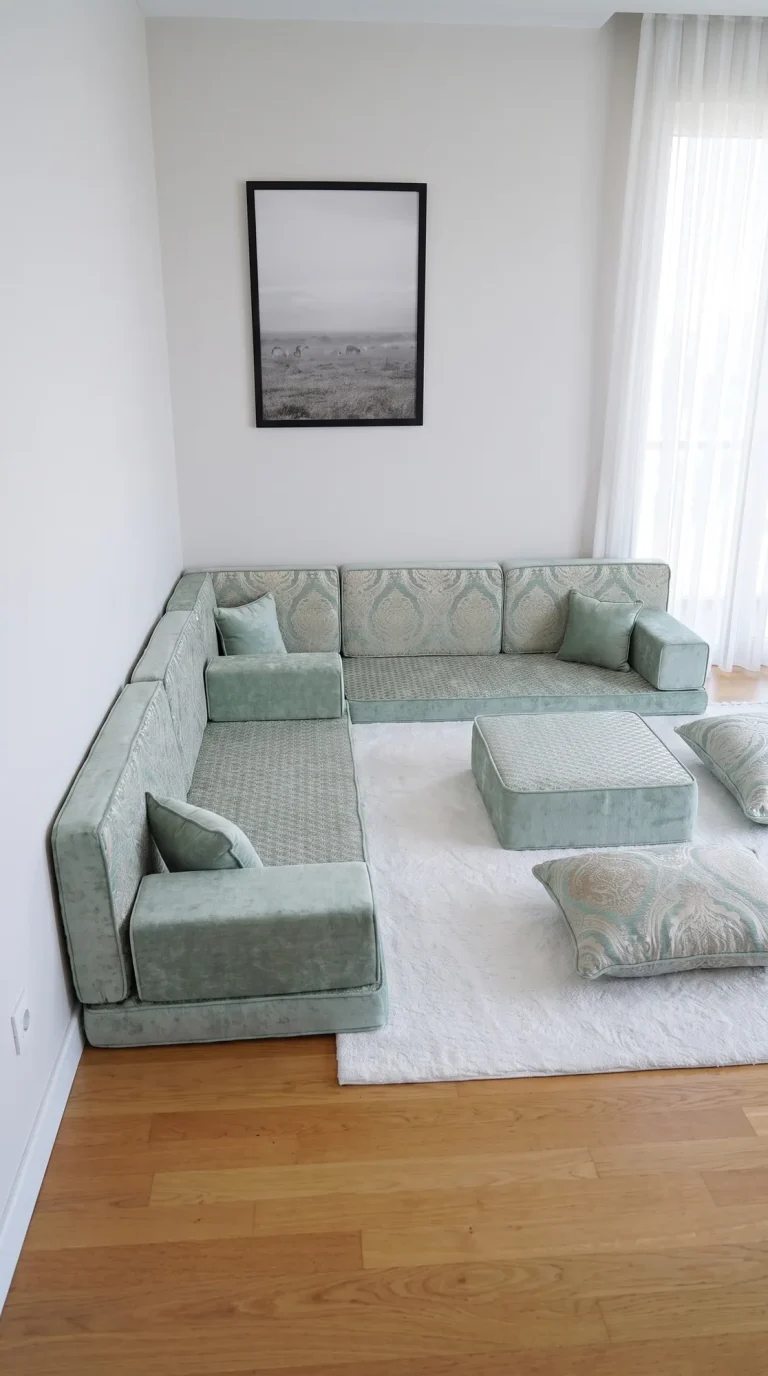
In this guide, majlis means the Arabic seating zone of the room. The furniture in it can be either of two Sofhu products. The Arabic floor sofa is low: a seat mattress near the floor with loose back cushions, an ottoman and floor pillows. The Arabic majlis as a product is raised: sofa-height upholstered units with a solid base, fixed backs and arm bolsters. Most of the rooms photographed here use the floor sofa.
Zone the room
Give the majlis its own territory first, because it has the stricter needs. Arabic floor sofas are not freestanding. The backrests need a wall, or something equally solid, behind them. That one fact decides most layouts.
The natural home for the majlis is a corner, where two walls carry an L-shape, or a short end wall, which can take a single row. Choose the corner farthest from the main walkway. A majlis is for sitting a long time, and people passing through to the kitchen break that up.
The Western pieces then take what is left. The sofa can stand free in the room, so use it as a divider: its back marks the edge of the majlis zone. The dining table goes nearest the kitchen. The TV goes where both zones can see it, or only one, depending on how you want the majlis used.
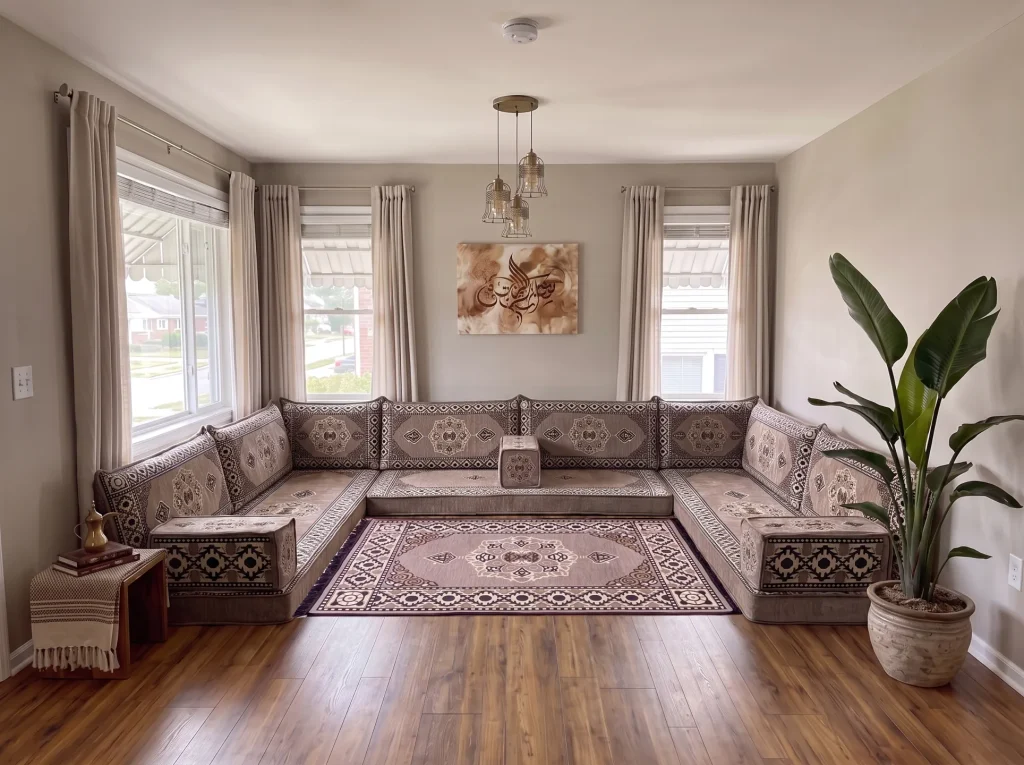
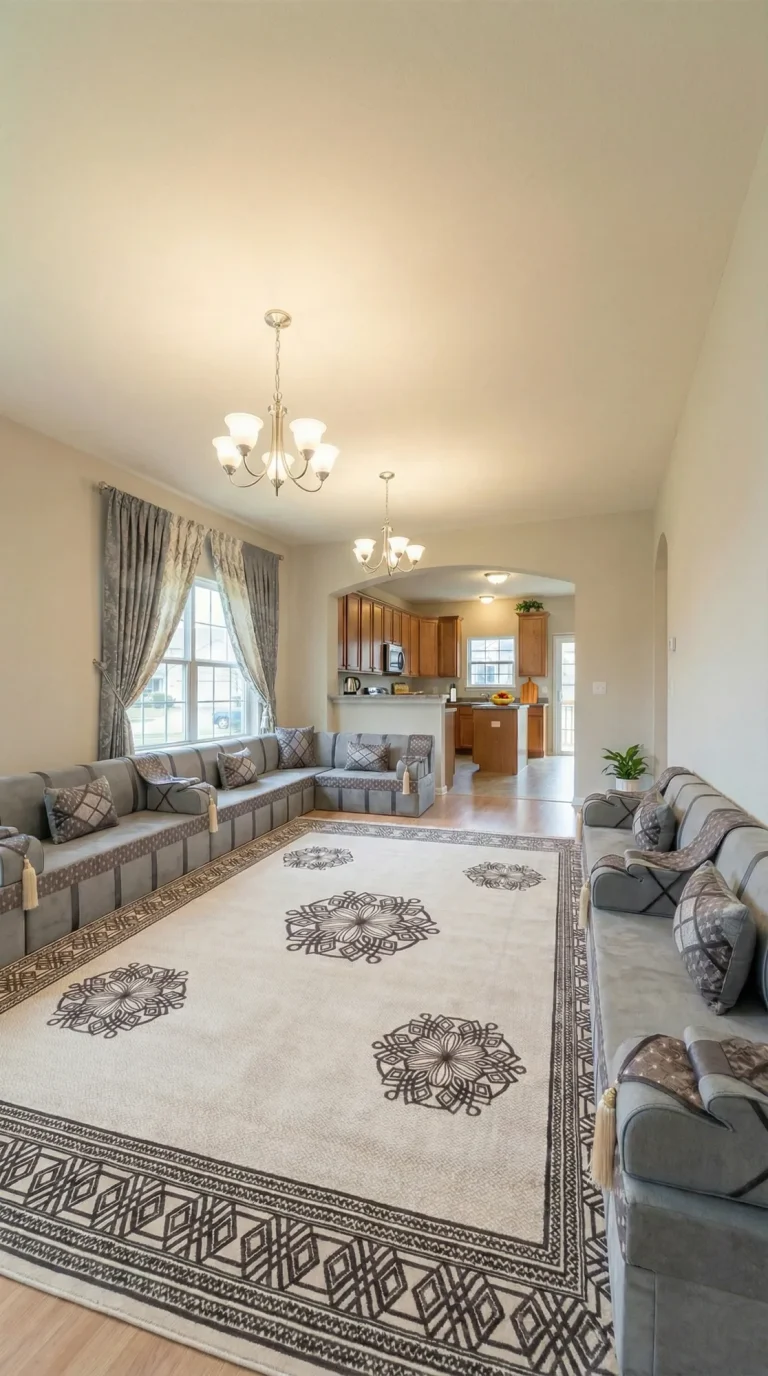
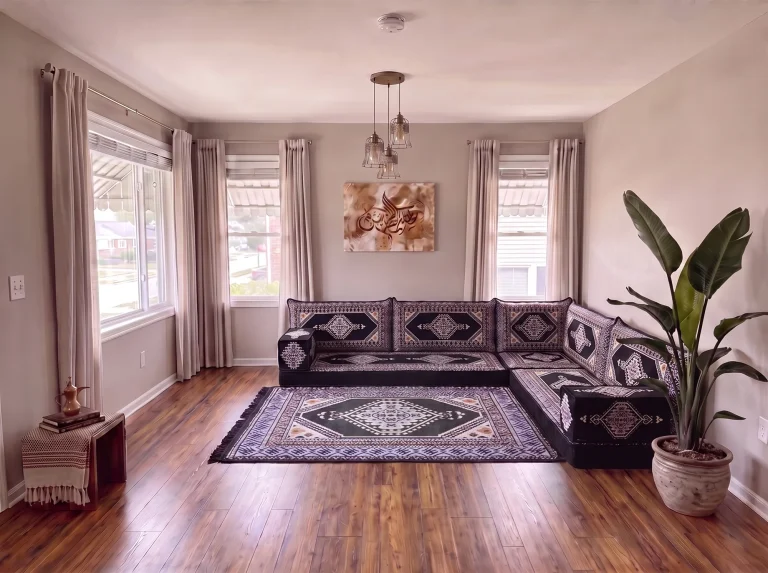
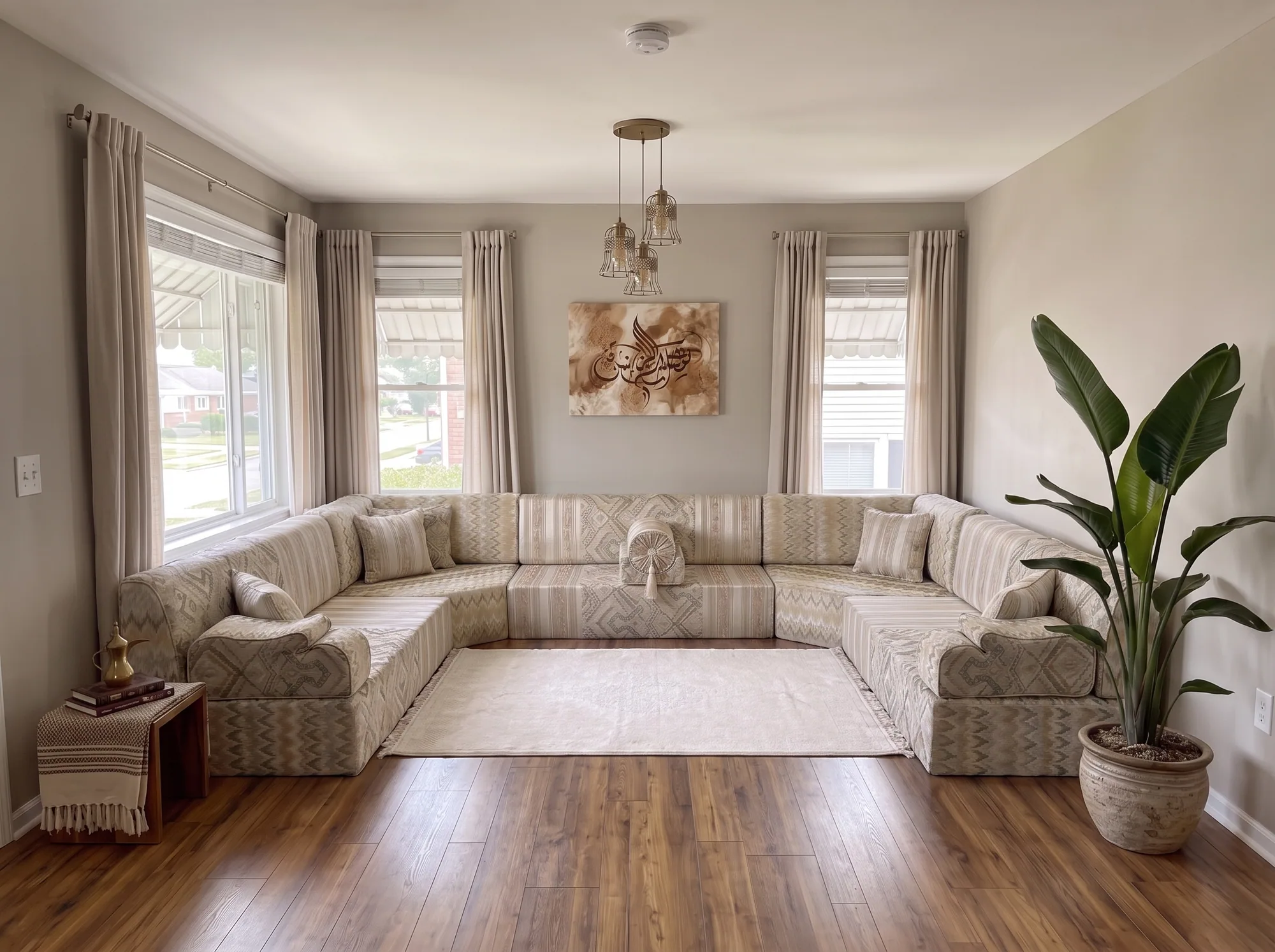
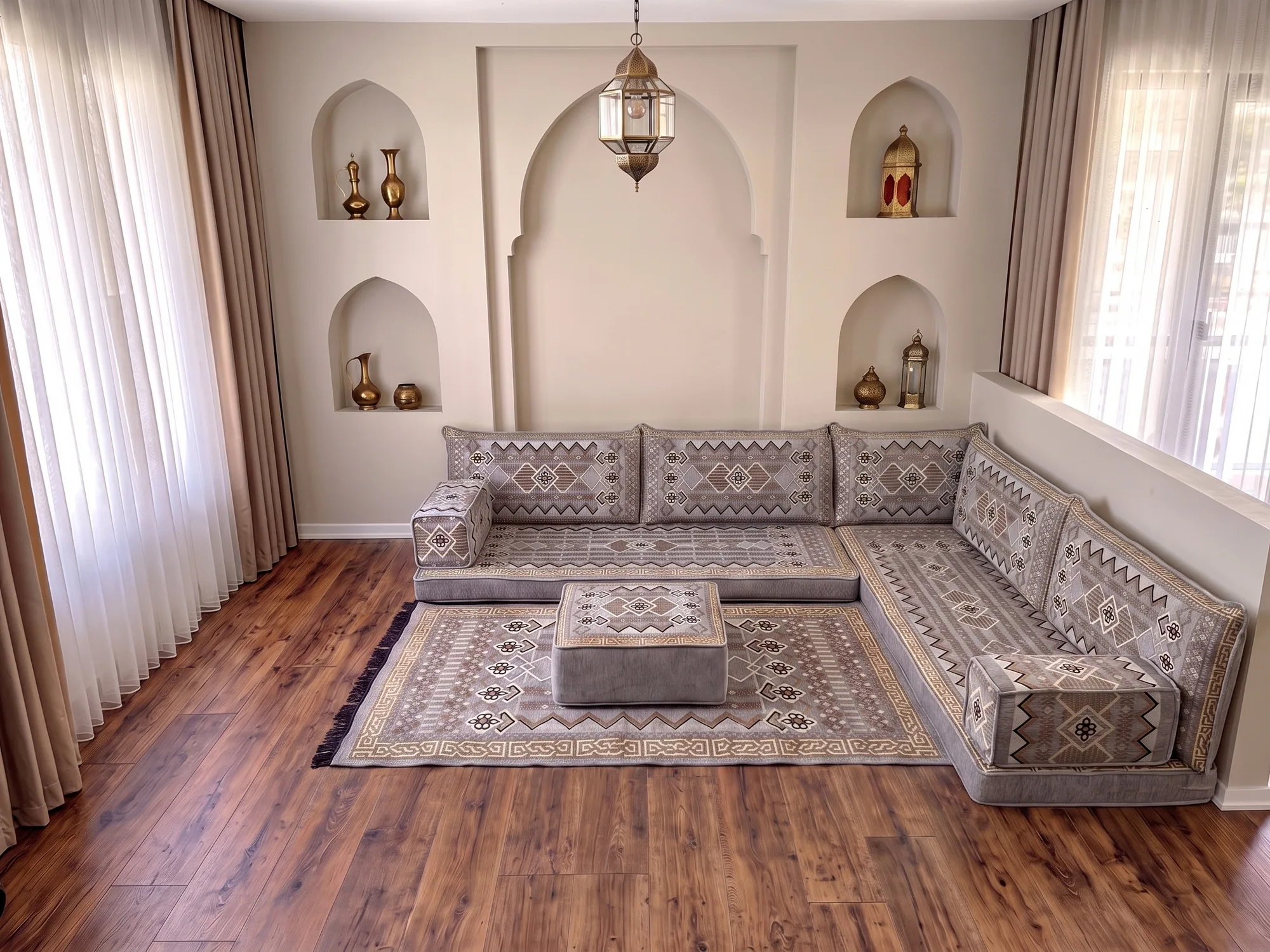
This taupe medallion floor sofa shows a room given mostly to Arabic seating: a U-shape along three walls of an ordinary living room with sash windows, a plant and a single piece of wall art. If you shortened one arm of that U to make an L, the freed wall would take a sofa or a media unit, and the rug would stay where it is.
Bridge the height difference
The awkward thing about a mix of floor sofa and Western sofa is the drop in height from one to the other. Soften it with pieces that sit in between.
- Low tables. A coffee table sized for floor seating, or an ottoman used as one, belongs to the majlis zone. See our guide to tables for floor seating.
- Floor cushions. Scatter two or three between the zones. They read as part of the majlis and are used by people on the sofa side too.
- A low media unit. Long and low suits both a sofa and a majlis better than a tall cabinet.
- Low-backed Western pieces. A sofa with a low back, a bench or a rattan chair sits closer to the majlis line than a high-backed recliner.
- Art and lamps hung a little lower in the majlis zone, so the wall above the seats does not look empty.
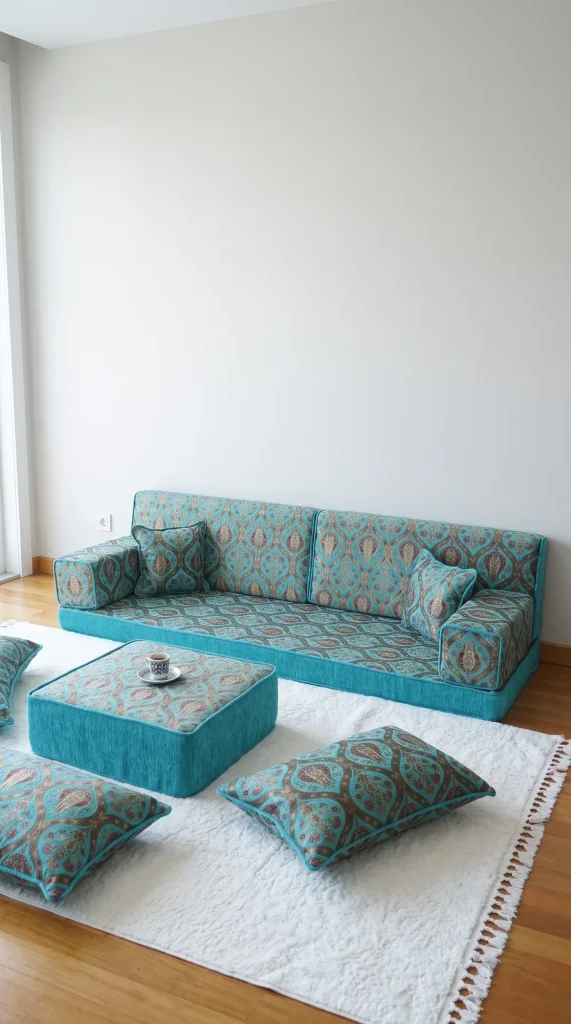
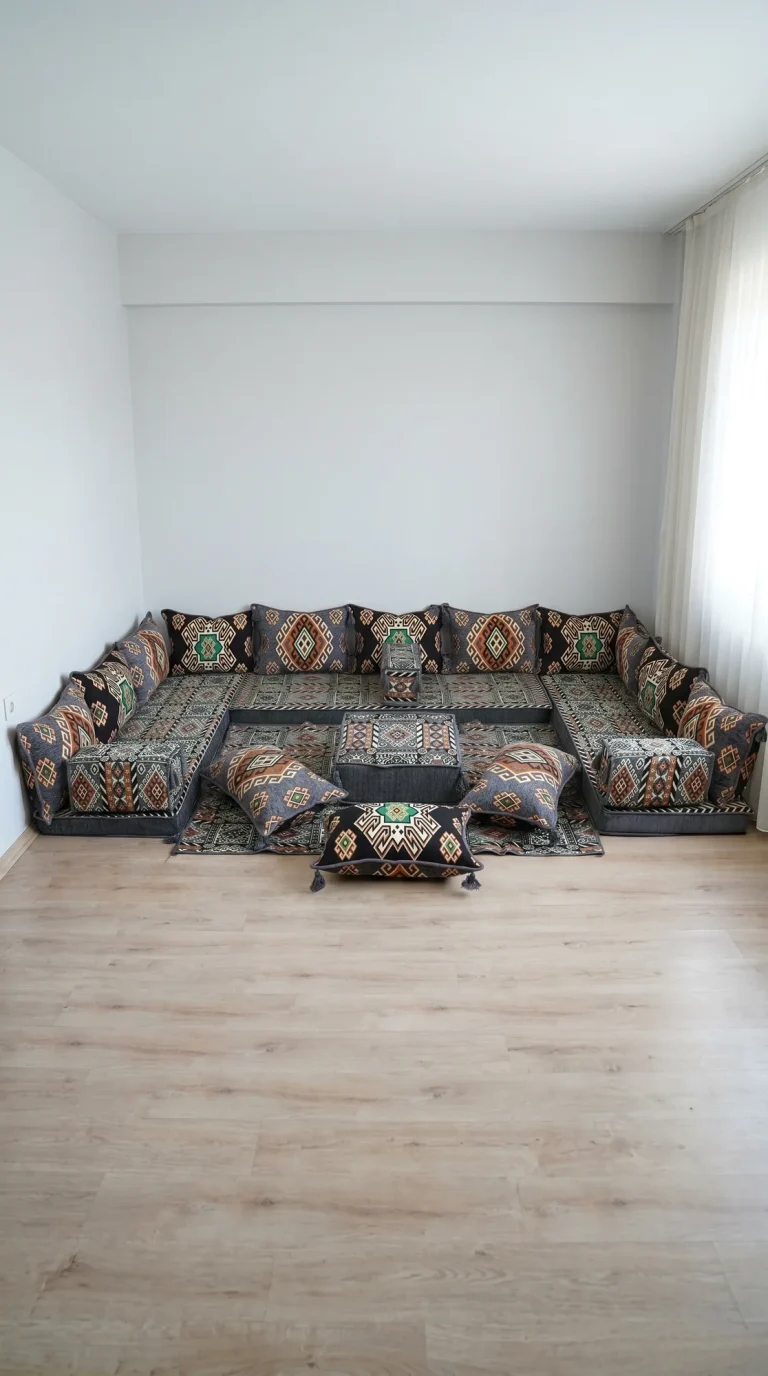
Here a turquoise floor sofa sits as a single row against a plain white wall with its ottoman and two floor cushions on a white fringed rug. The ottoman works as a table, the cushions step the height down to the floor, and the open space beside it could take an armchair or a low bench without any clash.
You can also choose the raised product. An Arabic majlis on its upholstered base, or a set on a wooden frame, brings the seat to sofa height, which helps older guests and narrows the gap to the rest of the furniture. Our comparison of floor seating and a raised diwan weighs the two, and majlis vs sectional sofa is useful if you are still deciding whether to keep the sofa at all.
One palette across both zones
Colour is what makes two kinds of furniture read as one room. Pick two or three colours and use them on both sides.
The simplest method is to let the majlis fabric set the palette and echo it across the room. If the majlis is burgundy and cream, put cream on the sofa and a burgundy cushion or throw on it. If the majlis is grey with gold medallions, a plain grey sofa and one brass lamp are enough.
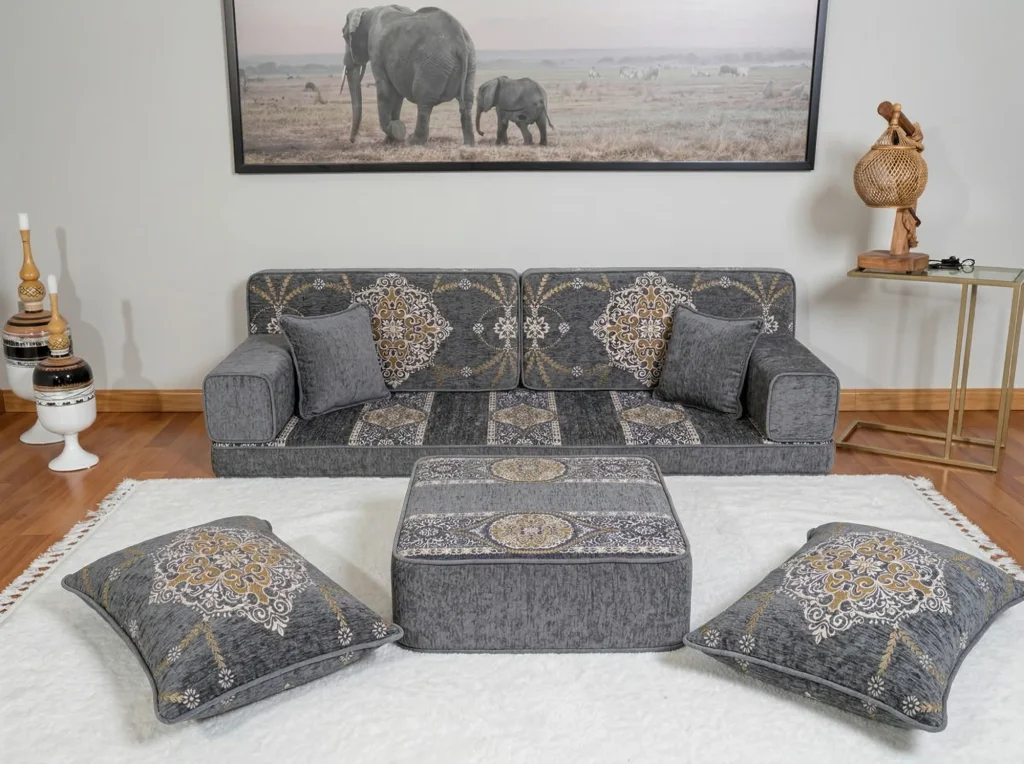
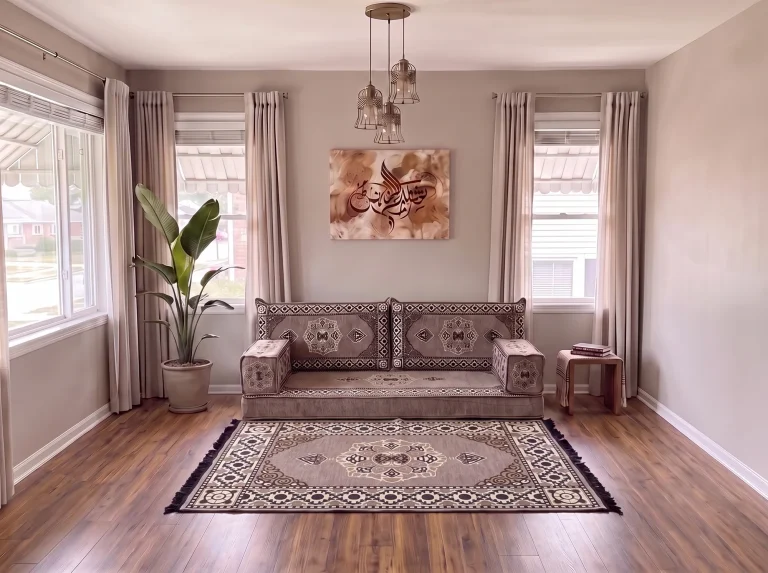
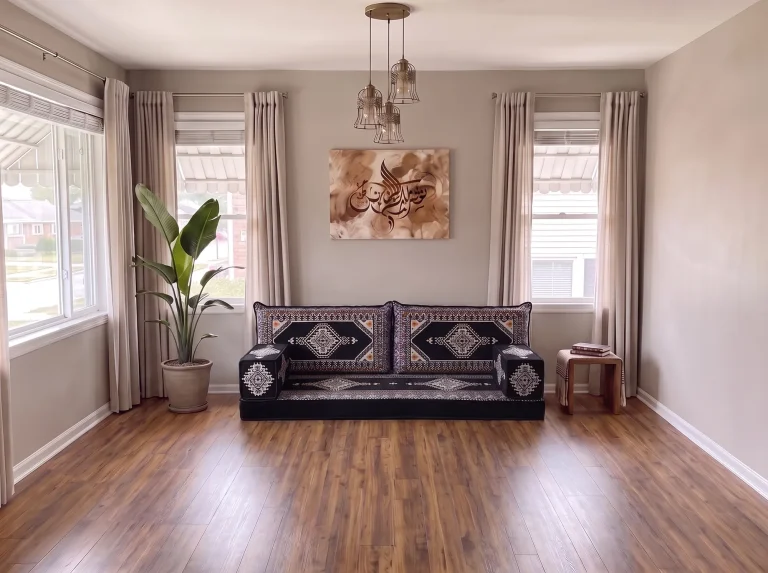
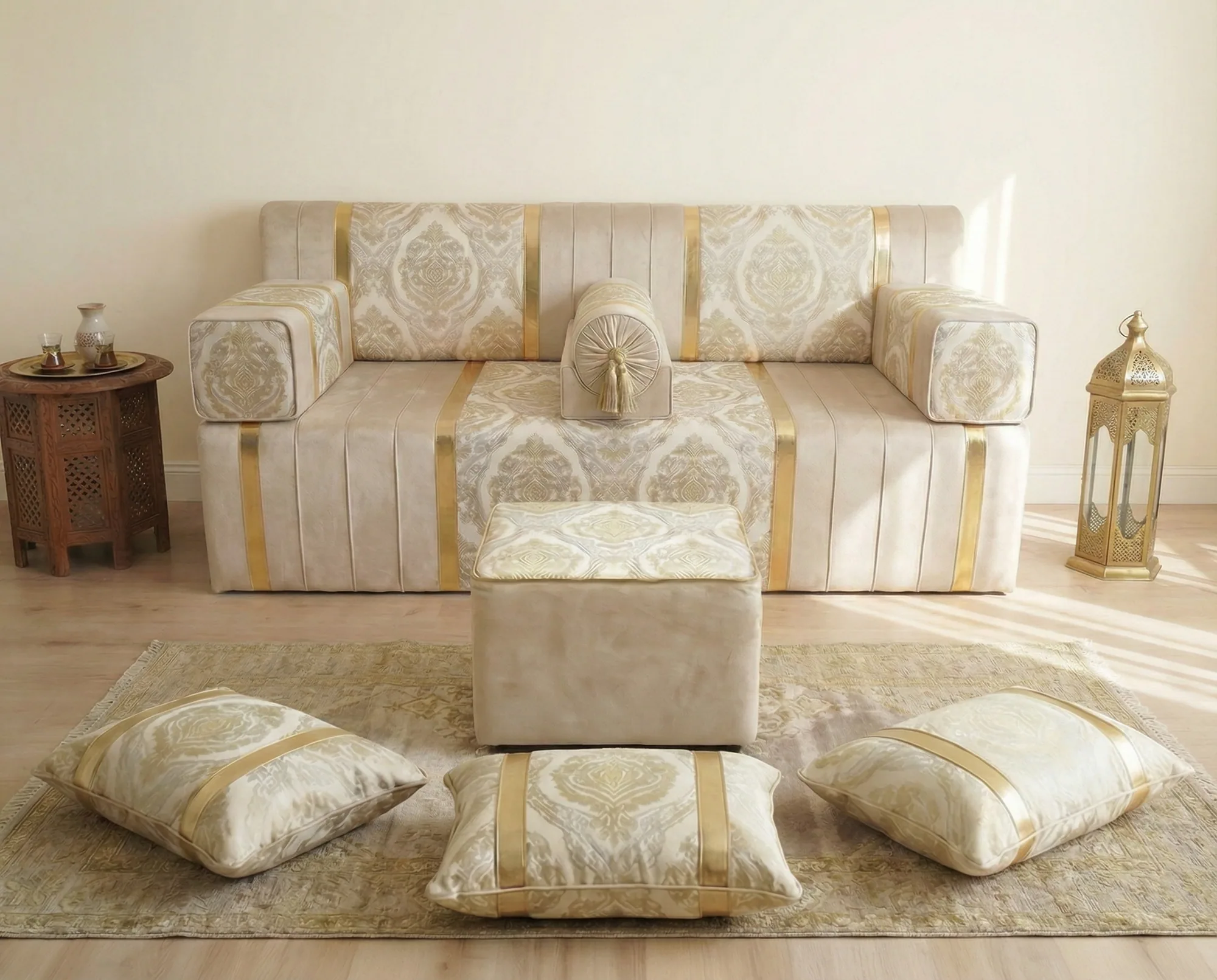
This grey chenille floor sofa with gold medallions sits under a large framed photograph beside a slim side table. Everything around it is plain and pale, which is why a patterned Arabic set looks at ease in a room that is otherwise entirely Western. The modern Arabic sofa designs are made with this kind of room in mind.
Two cautions. Do not try to match the sofa fabric to the majlis fabric exactly unless both are made together, because near-misses look worse than clear contrast. And keep pattern to one zone. A patterned majlis wants a plain sofa, and the reverse. The full method is in how to choose majlis colours.
Rugs to anchor each zone
Each zone needs its own rug, and the gap of bare floor between them is what tells the eye there are two. One enormous rug under everything blurs the plan.
The majlis rug sits inside the L or U, close to the seats, so that feet land on it. Many of our sets are made with a matching rug for exactly this purpose. The rug for the Western zone can be plainer, in a colour taken from the majlis fabric.
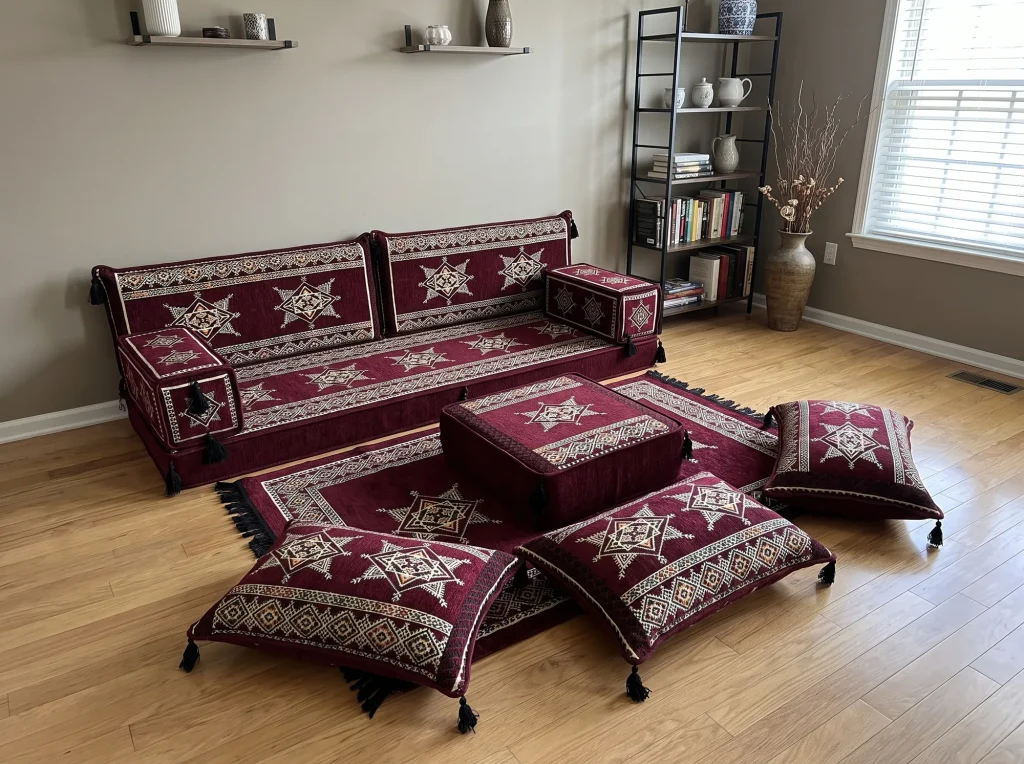
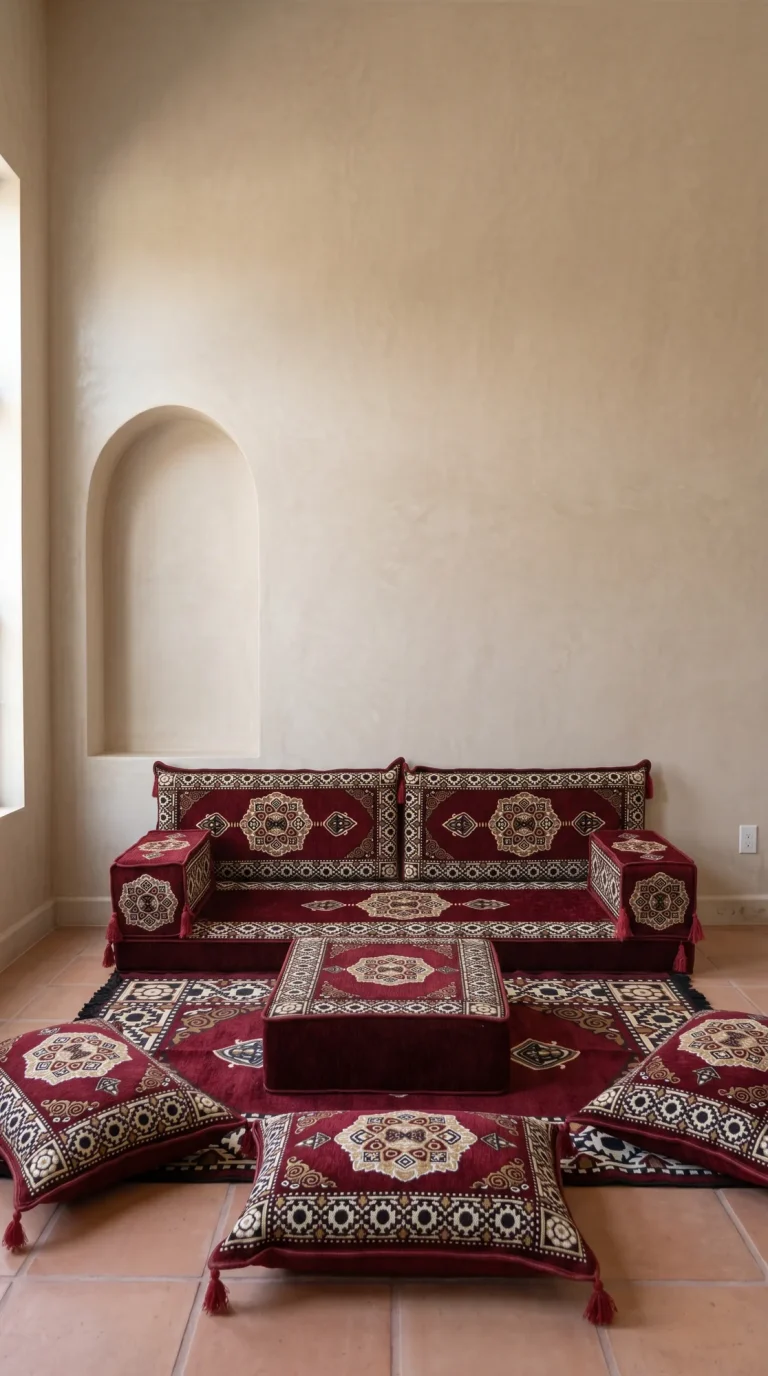
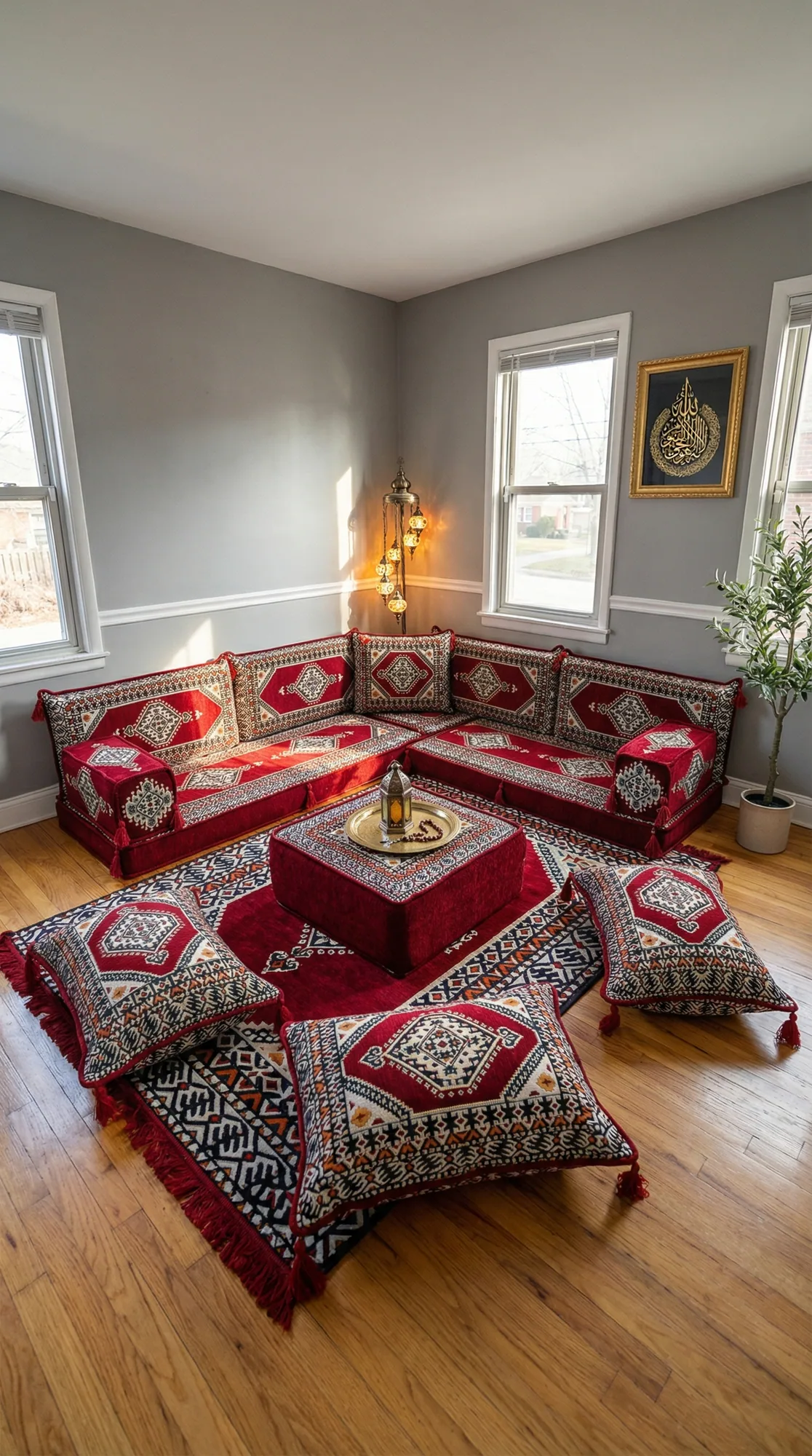
In this everyday living room, a burgundy star-pattern floor sofa sits on a light oak floor with its matching rug, ottoman and floor cushions, against a grey wall with open shelving. The rug defines the area so clearly that the rest of the room could hold anything.
Sizes depend on the layout, and the guide to what size rug goes with a majlis works through single rows, L-shapes and U-shapes.
Open-plan examples
Three common floor plans, and how the zones usually fall.
| Room type | Majlis position | Western pieces |
|---|---|---|
| Long living and dining room | L-shape in the corner at the window end | Dining table at the kitchen end, sofa between as divider |
| Square living room | Single row or L on the wall facing the TV | One compact sofa or two armchairs at a right angle |
| Open-plan kitchen and living | L-shape in the corner farthest from the kitchen | Sofa with its back to the kitchen, table beside the counter |
A few notes apply to all three.
- Measure the walls, not the room. The majlis is cut to wall lengths, so note doors, radiators, sockets and windows that reach the floor.
- Leave the walkway clear. People should reach the kitchen and the door without stepping over seats.
- Think about meals. If the family sometimes eats on the floor, leave the centre of the majlis rug open and keep the ottoman movable.
- Say what may come later. If you think you may extend a single row into an L one day, mention it when you order so the layout can be planned with that in mind.
Small homes are covered in more detail in a majlis in a small apartment.
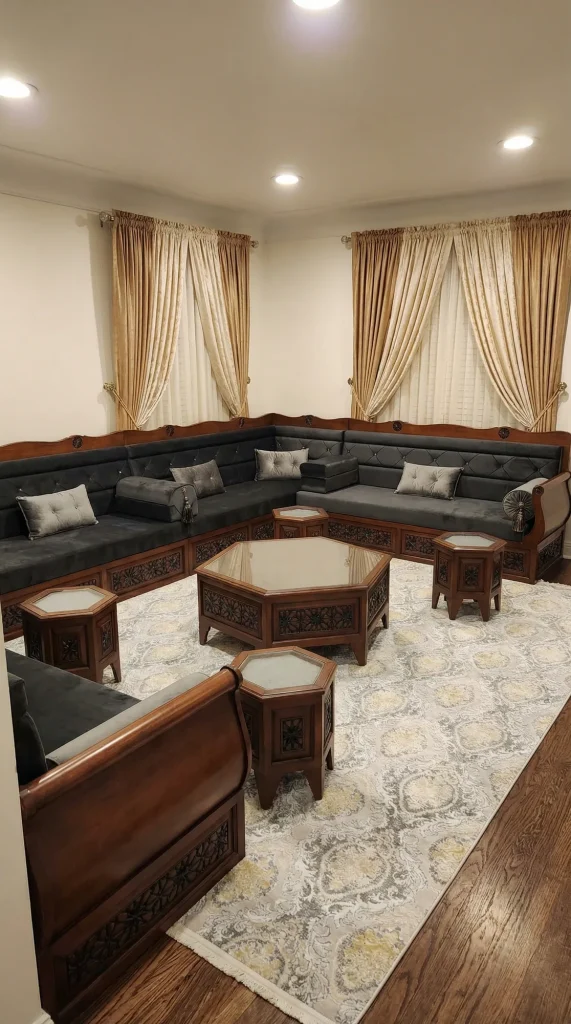
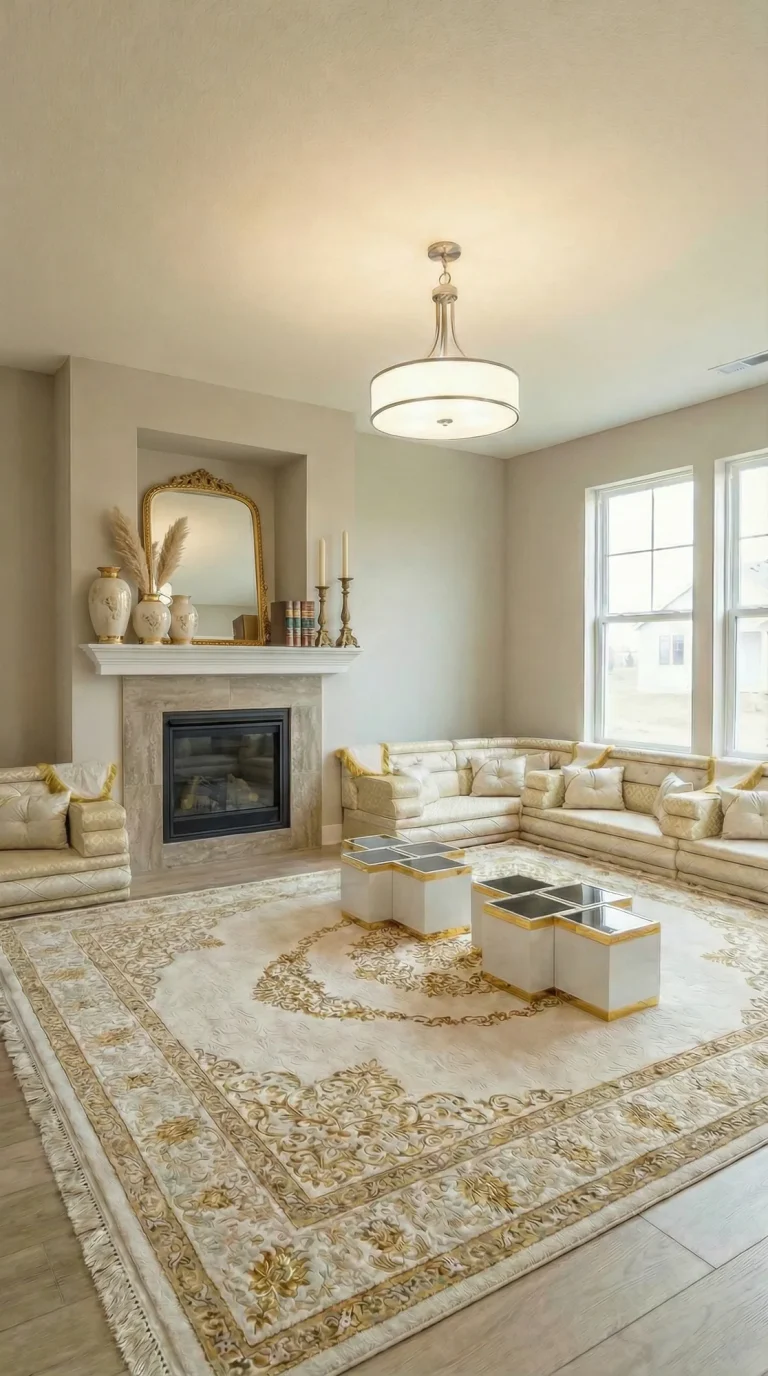
At the other end of the scale, a carved dark-wood set with tufted charcoal cushions and hexagonal wooden tables shows the two traditions meeting in one piece: the raised wooden frame of a sofa with the wall-to-wall layout of a majlis.
From plan to order
Draw the room as a simple rectangle, mark the doors, windows and anything fixed to the walls, and shade the corner you want for the majlis. Send that sketch with the wall lengths and a couple of daylight photos, and tell us what Western furniture is staying. The set is then made for that corner as a single row, an L or a U.
Every Sofhu set is filled with 32 kg/m³ high-density foam, finished with zippered removable covers and shipped free worldwide. For broader context, see our pages on Middle Eastern sofas and oriental sofa sets, or our general decoration tips. To begin, get a quote by measurement or message us on WhatsApp.