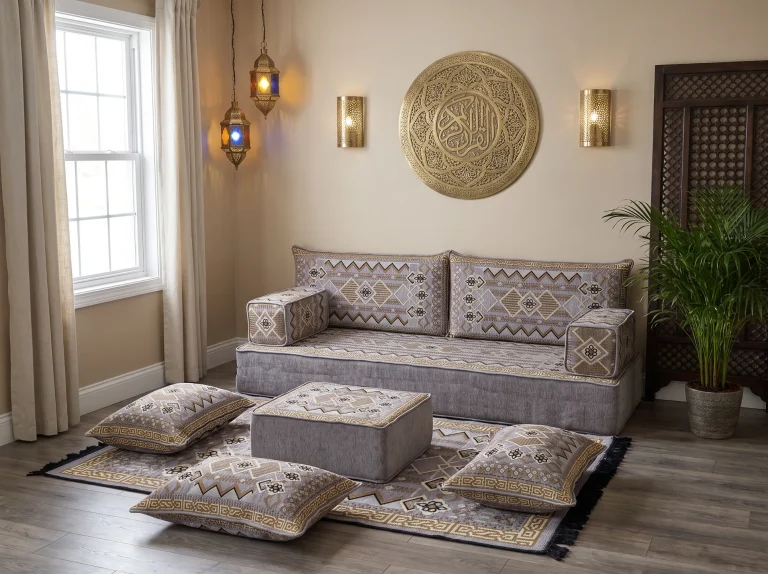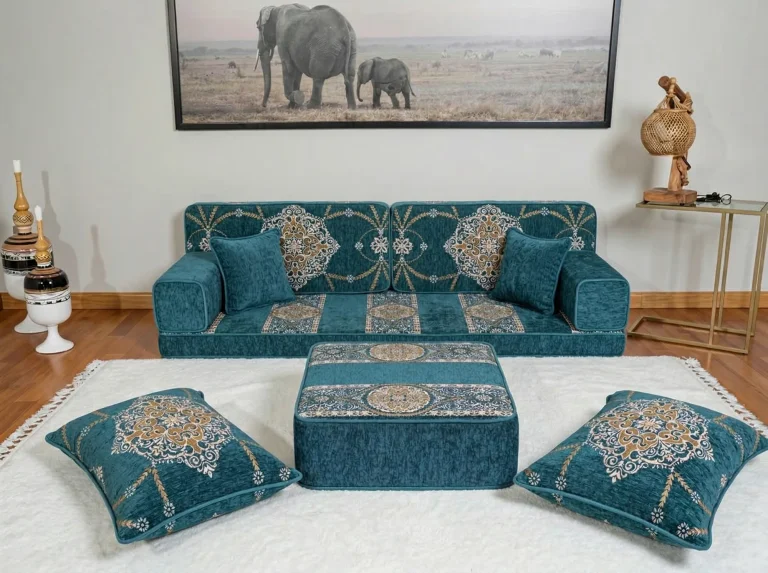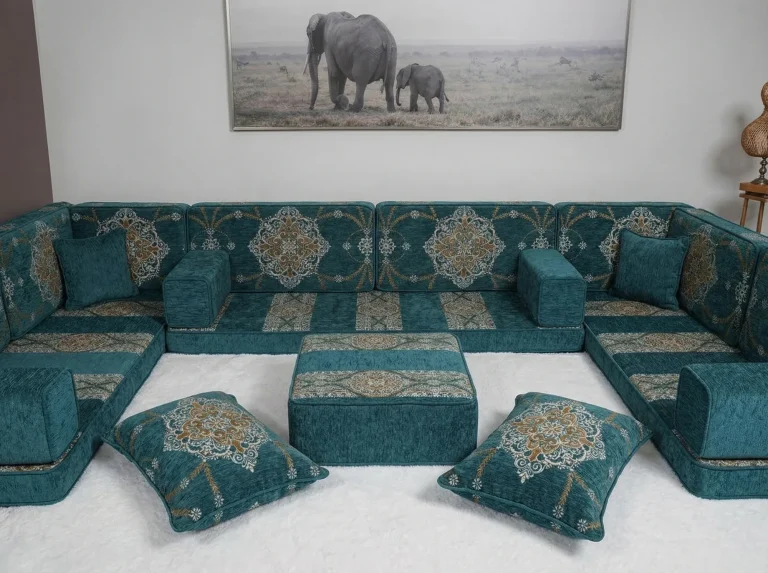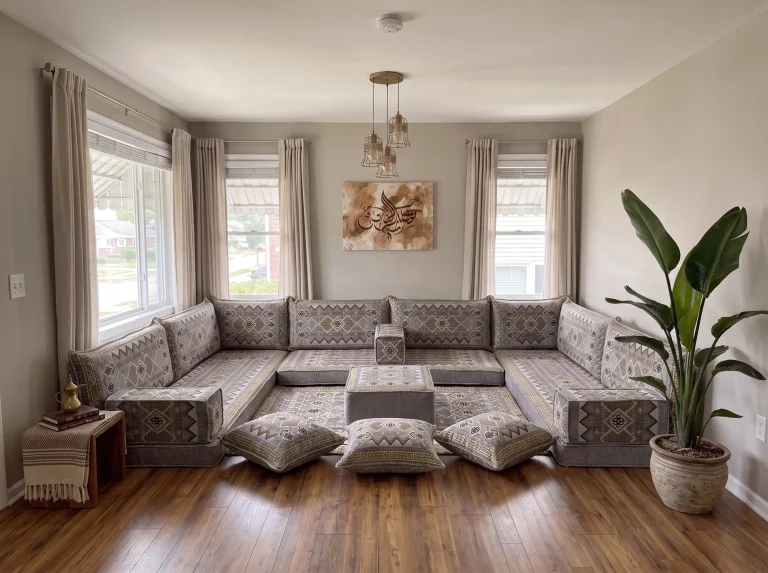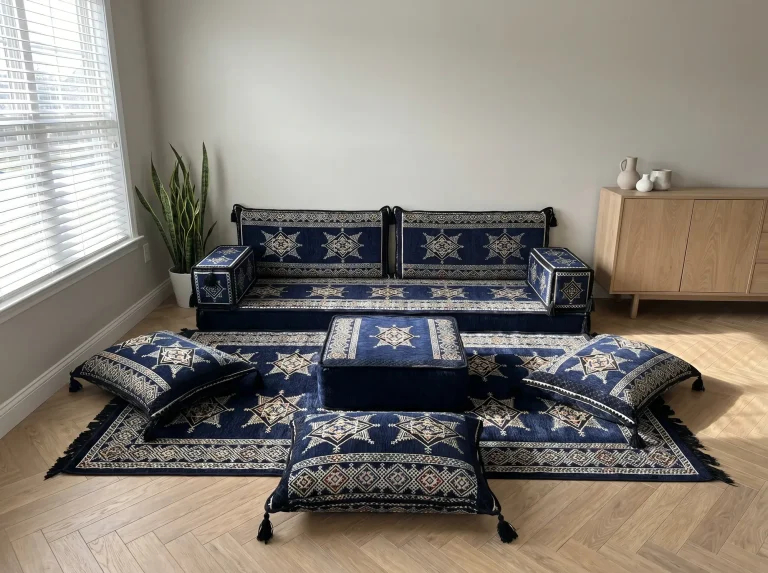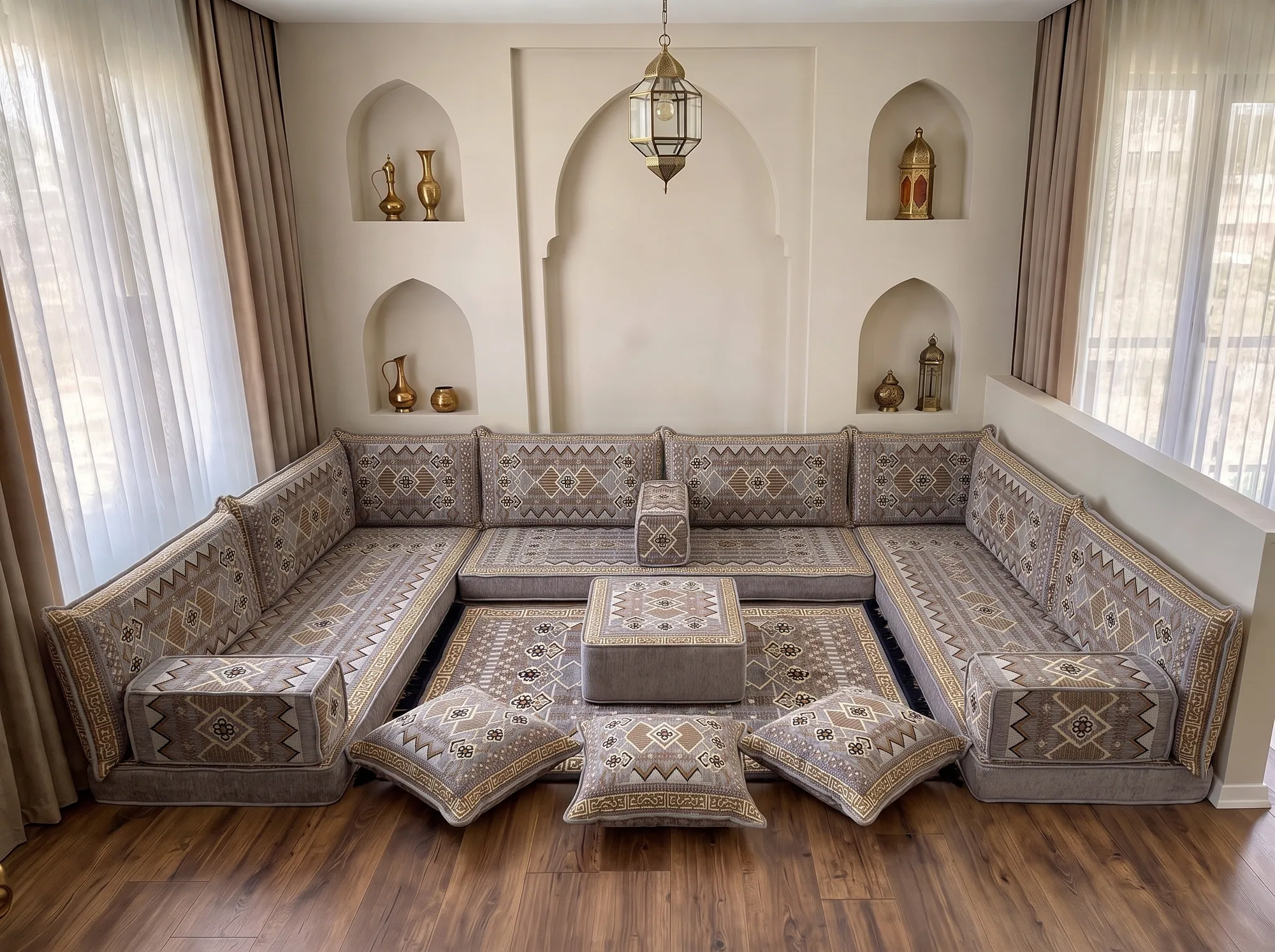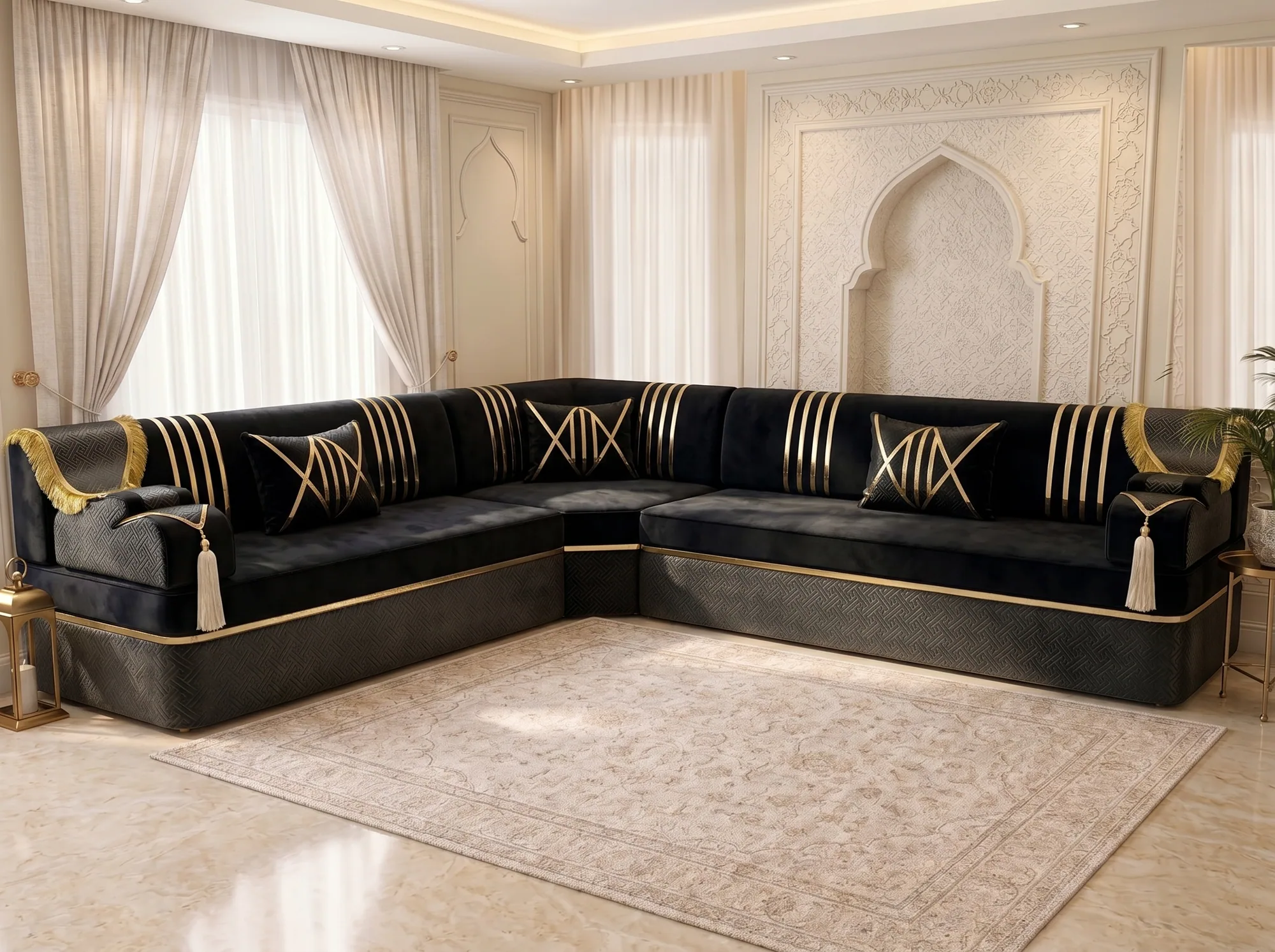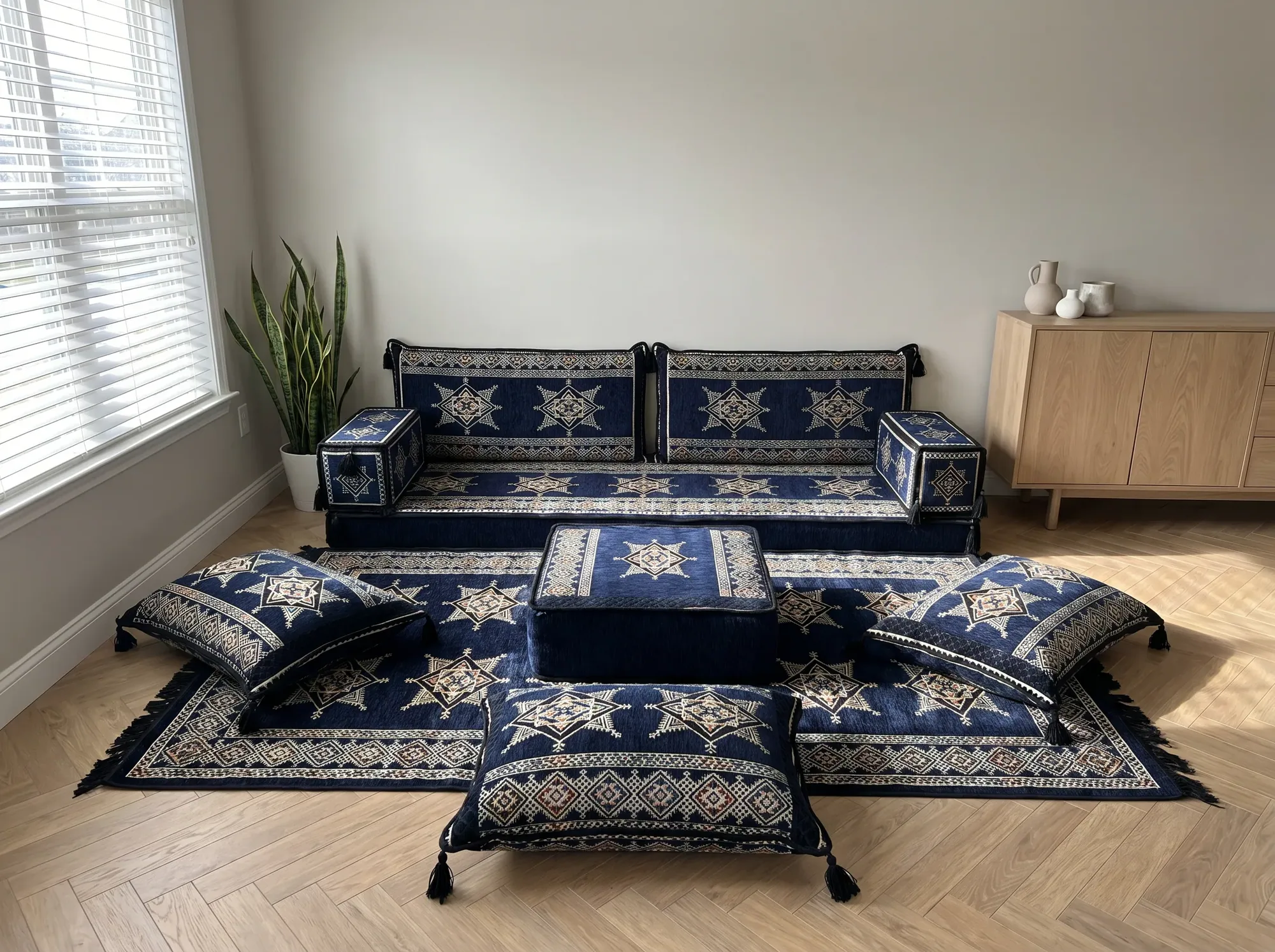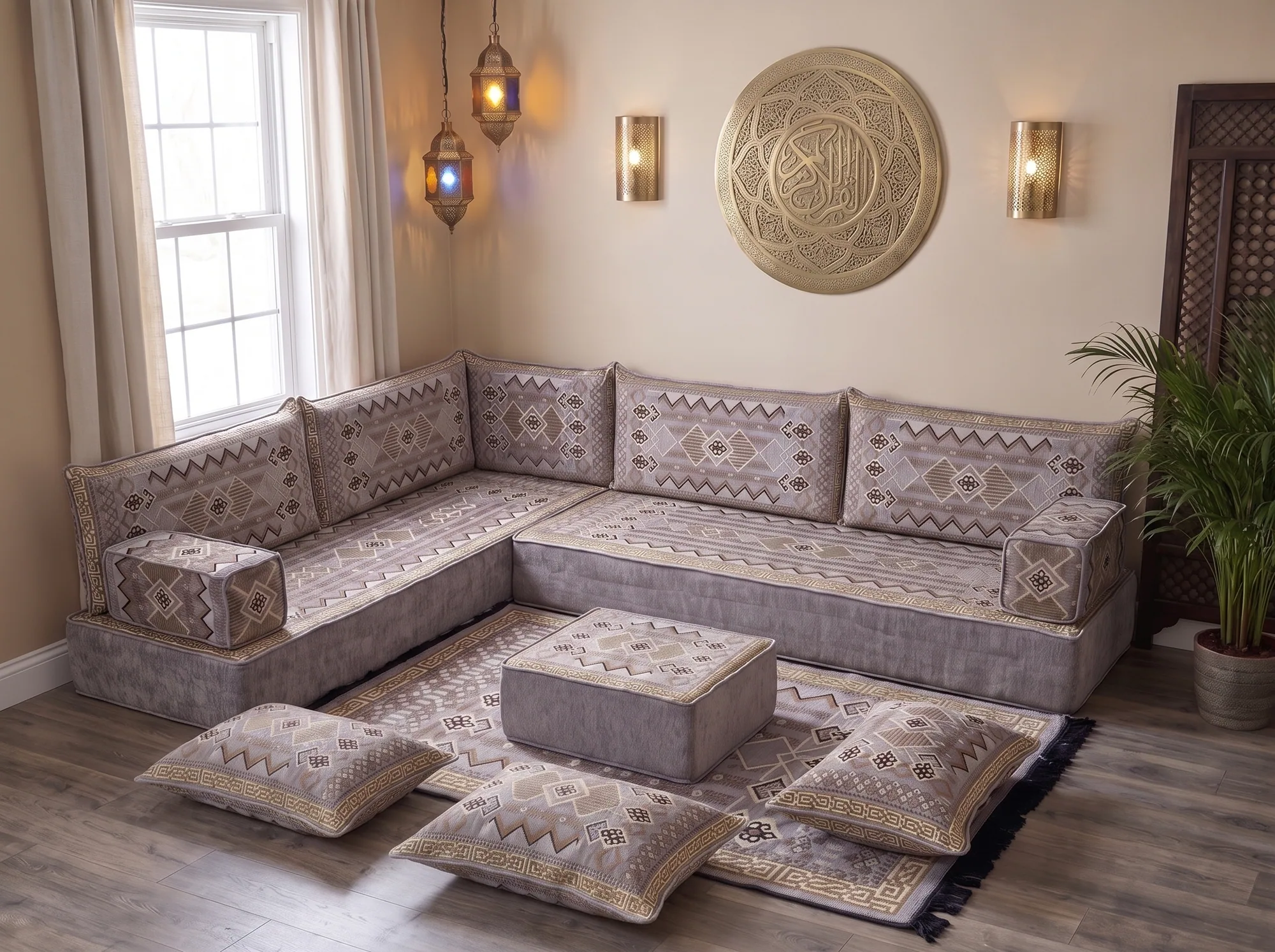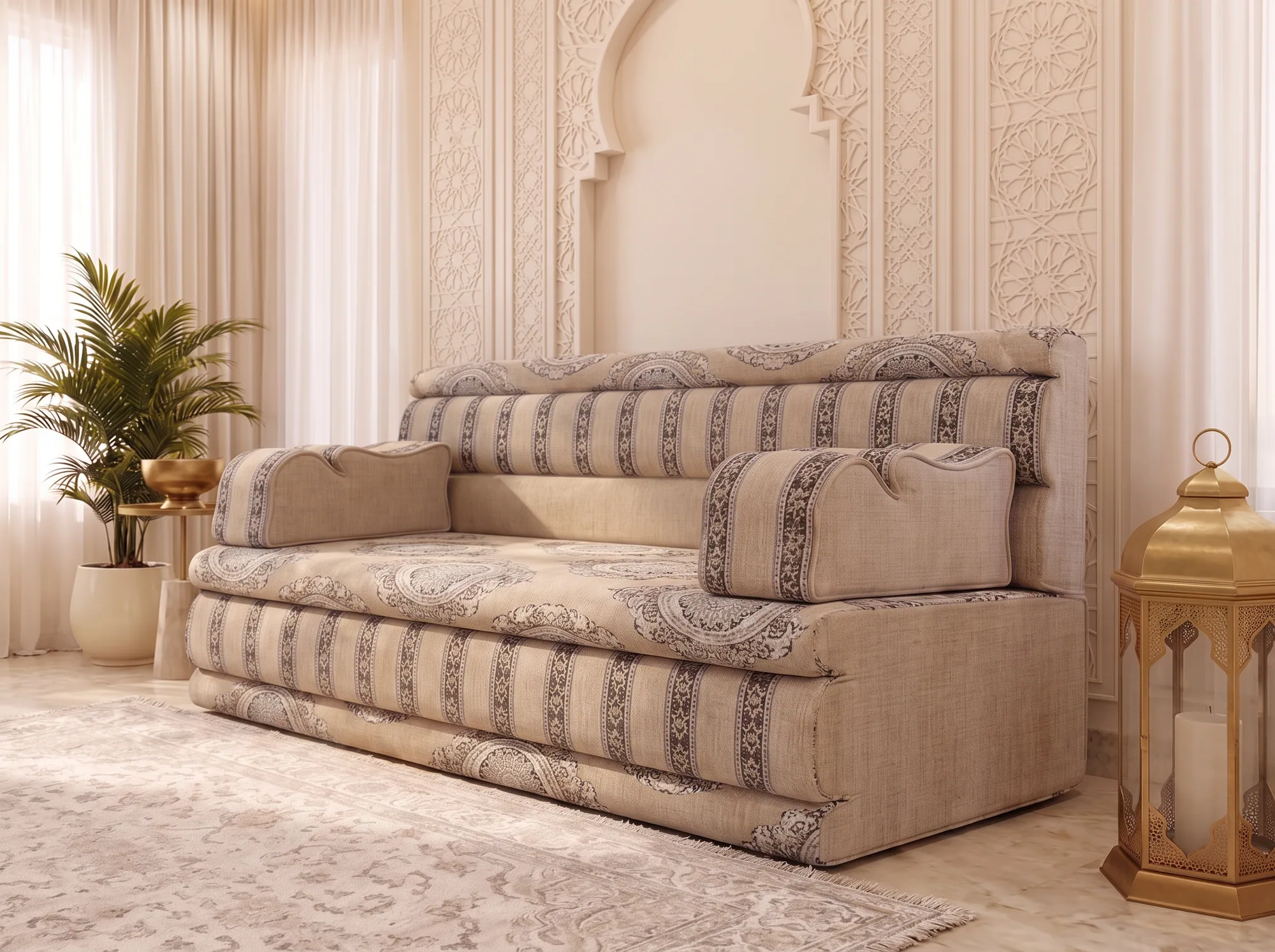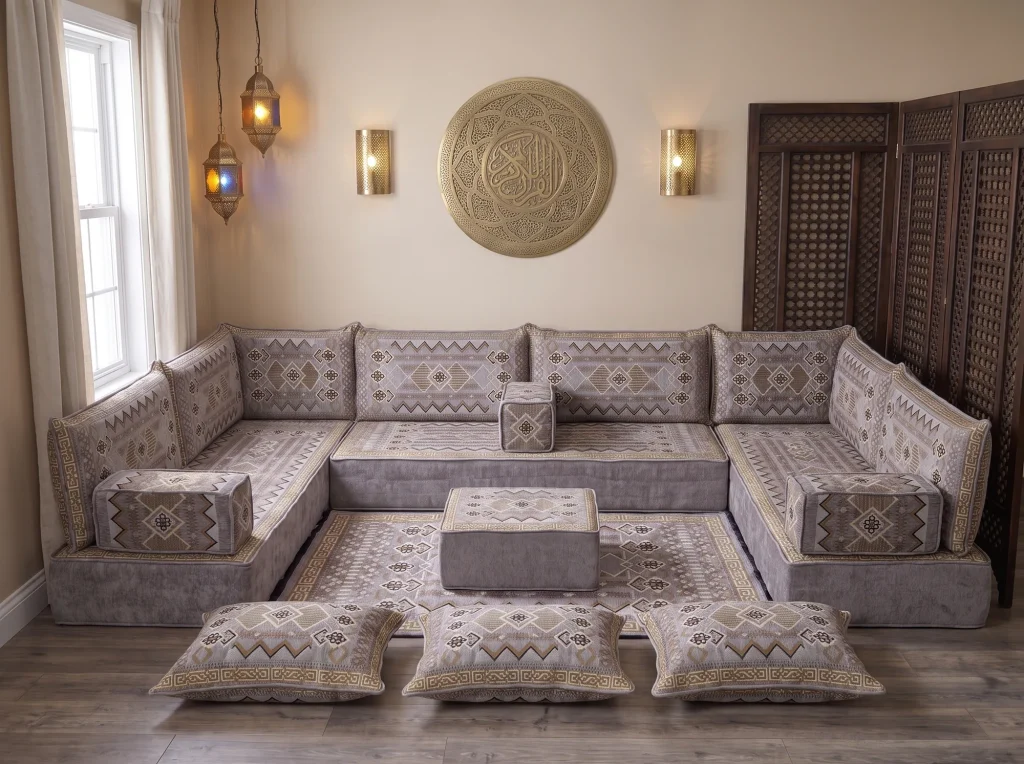
For floor seating that is sat on daily, choose foam of about 30 kg/m³ or more. Sofhu uses 32 kg/m³ (32 DNS) high-density polyurethane foam, roughly 2.0 lb/ft³. Density measures how much material is in the cushion, not how hard it feels, and denser foam generally keeps its height and support longer than budget foam of 18 to 25 kg/m³.
- Sofhu seat foam
- 32 kg/m³ (32 DNS) polyurethane foam
- In US units
- About 2.0 lb/ft³
- Conversion
- 1 lb/ft³ = 16.02 kg/m³
- Density test
- ISO 845
- Hardness test
- ISO 2439 (newtons at 40 % indentation)
- Springs
- None
- Feel
- Softer or firmer foam can be requested on custom orders
On this page
The right foam density for floor seating is higher than most people expect, because a floor seat has nothing underneath to help it. A Western sofa has springs or webbing below the cushion. A floor sofa seat is a block of foam on a hard floor, and the foam is the whole suspension. For seats that are used every day, look for about 30 kg/m³ or more. Sofhu fills its seats with 32 kg/m³ foam, which the Turkish trade writes as 32 DNS.
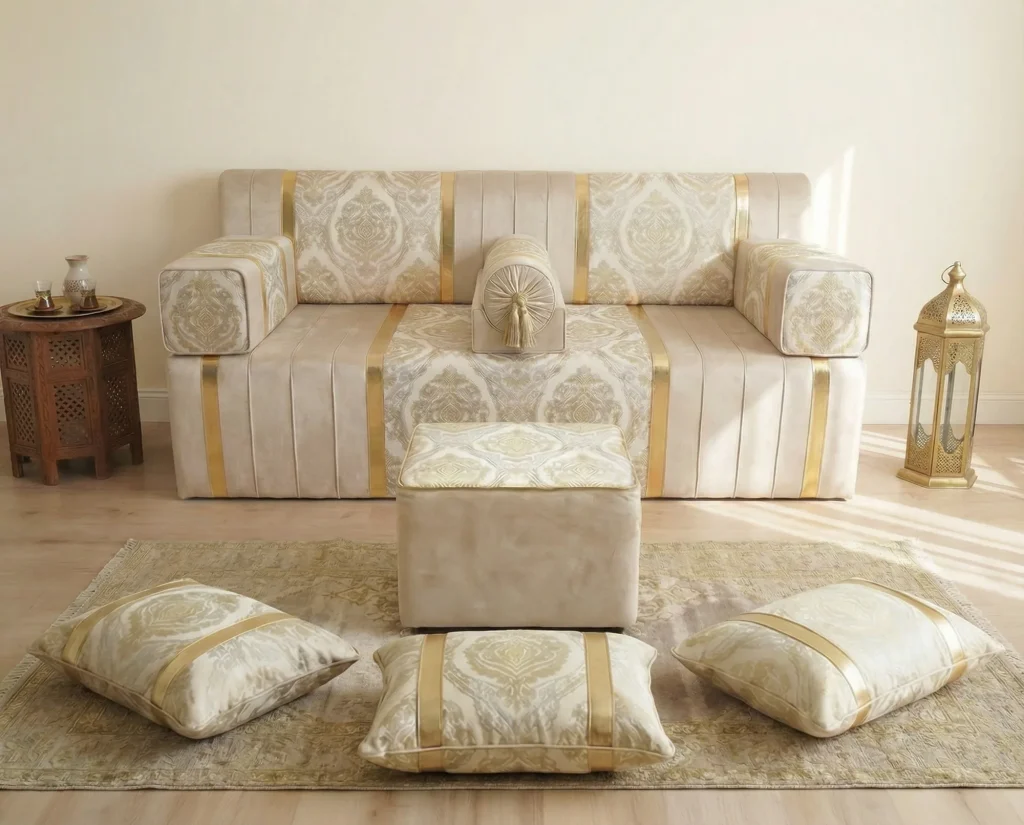
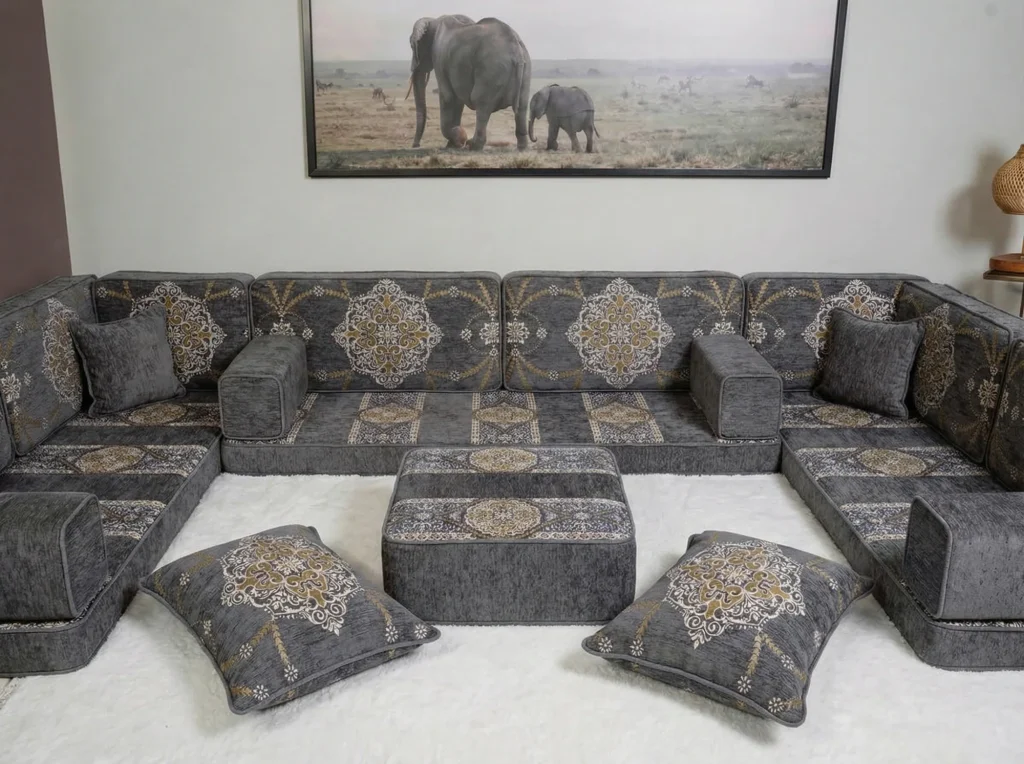
This page is about the Arabic floor sofa, the low set of loose cushions whose seat rests straight on the floor. Sofhu’s other product, the Arabic majlis, is raised to sofa height on an upholstered base; its seat is foam too, so the same questions are worth asking of it.
The rest of this page explains what that number measures, what it does not measure, and how to check it when you cannot squeeze the cushion yourself.
What 32 kg/m³ foam actually means
Density is weight per volume. A cubic metre of 32 density foam weighs about 32 kilograms. A cubic metre of budget foam might weigh 18. Both blocks are the same size; one simply has much more polyurethane in it and much less air.
“DNS” is Turkish shorthand for density, so 32 DNS and 32 kg/m³ are the same thing. The international test for the figure is ISO 845, and producers normally state it with a small tolerance of a couple of kilograms either way.
The Polyurethane Foam Association, the industry body in the United States, puts the practical meaning this way: density “affects foam durability and support”, and the higher the polymer density, the better the foam tends to keep its original properties. More material in the cell walls means more material to share the load each time someone sits down.
Foam density vs firmness: weight is not feel
Density tells you how long a cushion keeps its shape. Firmness tells you how it feels when you sit. They are measured separately and they do not move together.
The Polyurethane Foam Association is direct about it: “Firmness is independent of foam density, although it is often thought that higher density foams are firmer.” Soft high-density foam exists, and so does hard low-density foam.
Firmness is tested by pressing a plate into a foam sample and recording the force needed to squash it by a set amount. Under ISO 2439 the result is given in newtons at 40 % indentation. Published datasheets from one large Turkish foam producer list grades from about 100 N to 300 N, all at the same 32 kg/m³. That is the difference between a soft comfort layer and a hard seat, with identical density.
Two consequences follow for a buyer:
- A seller who says “our foam is hard, so it is good quality” has told you about feel, not about lifespan. A foam of 18 or 19 kg/m³ can be made hard too.
- A seller who quotes density has told you about durability, and you can then ask for the feel you like.
Sofhu describes its standard cushions as firm, and on custom orders you can ask for a softer or firmer foam. The grade and hardness figure are not published, so if feel matters to you, describe how you sit and ask.
Foam density chart: kg/m³ to lb/ft³
North American sellers quote density in pounds per cubic foot. To convert, divide kg/m³ by 16.02.
| kg/m³ | lb/ft³ | Typical description |
|---|---|---|
| 18 | 1.12 | Budget |
| 20 | 1.25 | Budget |
| 24 | 1.50 | Light furniture foam |
| 25 | 1.56 | Light furniture foam |
| 30 | 1.87 | Furniture seat foam |
| 32 | 2.00 | Furniture seat foam (Sofhu) |
| 35 | 2.18 | Furniture seat foam |
| 40 | 2.50 | Heavy conventional foam |
| 45 | 2.81 | Heavy conventional foam |
| 50 | 3.12 | Heavy conventional or speciality foam |
One caution on units. The US firmness rating, called ILD or IFD, is the force in pounds needed to indent a sample by 25 %. It is a different test from the newton figure above, so the two numbers cannot be converted into each other. Compare density with density and leave firmness numbers within their own system.
Density by use: seats, backrests and mattresses
Different parts of a set carry different loads, and the seat carries the most.
- Seats. Full body weight, concentrated under the hips, against a hard floor. This is where density pays for itself. Around 30 kg/m³ and up is the sensible range for daily use.
- Backrests and armrests. They take a share of your weight at an angle, not all of it straight down. They are under less stress than the seat, so their shape is easier to keep.
- Sleeping on the seat. A floor sofa seat often doubles as a guest bed. Lying down spreads weight over a larger area than sitting, so a foam that holds up to sitting will hold up to sleeping.
- Floor cushions. Used occasionally and moved around. They matter less, but a child jumping on one is a harder test than an adult sitting on it.
How does 32 compare with its neighbours? In published datasheet values from the same producer, budget foams of 18 to 25 kg/m³ have looser limits for compression set, the permanent height a sample loses after being held squashed under ISO 1856, and lower resilience, the height a dropped steel ball rebounds under ASTM D 3574. The 32 grades are tighter on both. Conventional foams of 34 to 45 kg/m³ are heavier and can be harder, but their published compression-set limits are not better. The tier that does measure better is high-resilience foam, a different product family. So 32 kg/m³ is a solid mid-to-upper furniture density. It is not the highest that exists, and we would not claim it is. The comparison of high-density foam and memory foam covers the other families, and foam versus cotton and wool filling covers the traditional alternatives.
How low-density foam fails on a hard floor
Low-density foam fails by bottoming out. When new, the cushion feels fine. After enough evenings of the same people sitting in the same places, the cell walls in those spots have been flexed so often that they no longer push back. You sit down, the foam gives way, and you feel the floor through it.
The signs are easy to read:
- hollows where people usually sit that do not rise back overnight;
- a seat front that has rounded over and lost its edge;
- covers that have gone slack and wrinkled because the foam inside has shrunk in height;
- one end of the row sitting visibly lower than the other.
On a sprung sofa a tired cushion is hidden for a while by the springs beneath it. On a floor seat there is nothing to hide it. This is why density is the number to ask about for an Arabic floor sofa, ahead of fabric or trim. More on wear and when a seat is past its best is in how long a majlis lasts.
How to check foam when buying online
You cannot press a cushion through a screen, so ask questions that have checkable answers.
- Ask for the density as a number with units. “High density” alone means nothing. You want kg/m³ or lb/ft³.
- Ask whether the number applies to the seats. Some sellers quote the best foam in the set and use lighter foam elsewhere.
- Ask about feel separately. Soft, medium or firm is a different question from density.
- Ask what is inside besides foam. Sofhu cushions contain no springs and no metal. A layered or bonded core is not a problem, but you should know what it is.
- Weigh a cushion when it arrives. Density is weight divided by volume. Measure length, width and thickness in metres, multiply them, and divide the bare foam’s weight in kilograms by that volume. A seat foam of 1.6 × 0.6 × 0.15 m has a volume of 0.144 m³; at 32 kg/m³ it would weigh about 4.6 kg without its cover. Those dimensions are an arithmetic example, not a Sofhu size.
- Give compressed foam time. Sofhu sets are vacuum packed for shipping. Open the bags carefully, without sharp tools, and let the foam recover its full height before you judge it.
Sofhu is the manufacturer, so the answer to the density question comes from the people who cut the foam. The older page on our foam describes the brand’s approach to cushion filling. If you are comparing majlis sofa sets or planning a custom majlis, send your wall measurements, say how firm you like to sit, and get a quote by measurement.