A majlis table should have its top level with the seat or slightly below it, so the lower the seat, the lower the table. For floor-level seating that means a tray, an ottoman with a tray, or a very low table. Sofhu builds seating to your measurements, so settle the seat height first and choose tables to match.
- Height rule
- Table top level with the seat, or slightly below
- Floor sofas
- Tray, ottoman with tray, or very low table
- Majlis and other raised seats
- Ordinary coffee table height
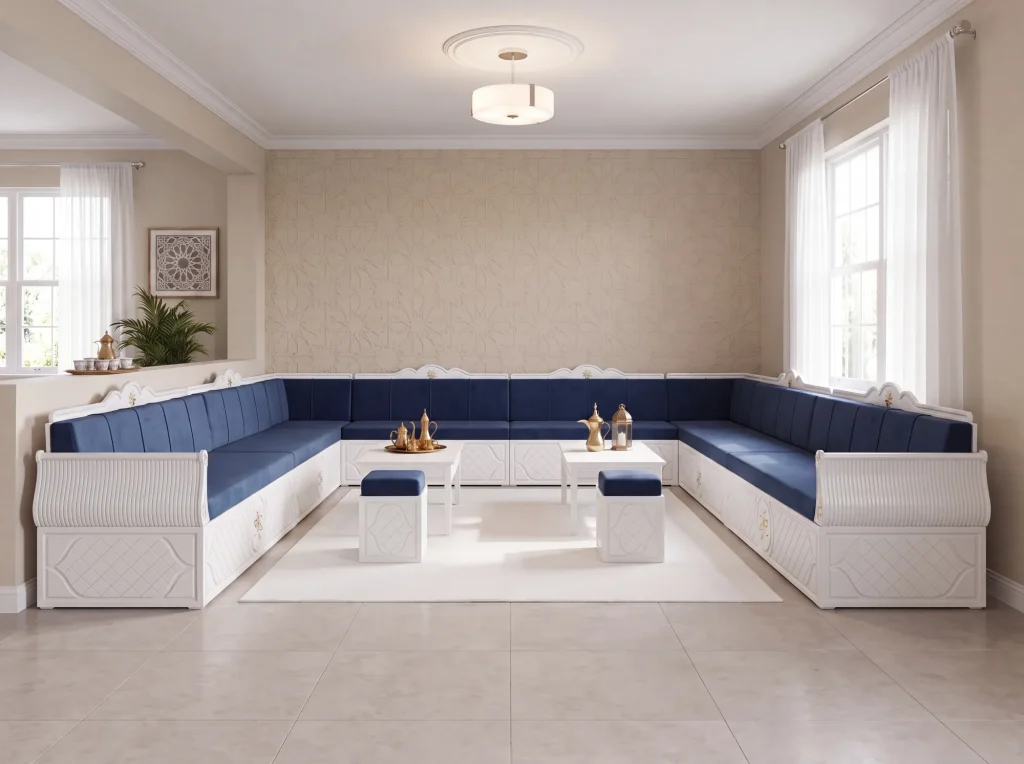
- Large U-shape
- Two tables or one long table, plus side surfaces
- Sofhu seating
- Made to measure; ask for the seat height with your quote
On this page
The dallah comes round, a small cup is filled a third of the way, and the guest needs somewhere to put it down that is not the rug. That moment decides whether a majlis table is the right one. On low seating an ordinary coffee table stands too high and too far away, and the cup ends up on the floor anyway. The fix is simple: choose the table from the seat, not from a catalogue. That matters because Sofhu makes two kinds of seat: the Arabic majlis, raised to sofa height and fully upholstered, and the low Arabic floor sofa of seat mattresses and loose cushions. Each wants a different table.
Majlis table height follows the seat
The top of the table should be level with the top of the seat, or a little below. This is the guideline furniture writers give for ordinary sofas, and it holds for floor seating too. What changes is the number, because the seat is so much lower.
Measure your own seat with a person on it, since foam settles slightly under weight. Then match the table to it.
| Seat family | Table top should sit | What works |
|---|---|---|
| Floor sofa with a floor-level mattress | At seat height or just under | Tray on the rug, tray on an ottoman, very low table |
| Floor sofa on a thicker base | At seat height or just under | Low table, taller ottoman with tray |
| Arabic majlis or wooden-frame set | Around ordinary coffee table height | Standard coffee table, side tables |
For a sense of scale, classifieds listings for floor seating sets in Jordan commonly show seat mattresses of about 14 cm. That is one market’s listing data, not a standard and not a Sofhu specification. Sofhu offers different cushion thicknesses and publishes no standard height, so ask for yours with the quote. That is why the seat comes first. The three families are compared in the majlis seat height guide.
Reach matters as much as low coffee table height
A table at the right height is still wrong if you have to rock forward to reach it. Guides for ordinary sofas usually suggest a gap of roughly 30 to 45 cm between the seat edge and the table. On the floor the useful test is your own arm.
- Sit back against the backrest the way you normally sit.
- Reach forward without lifting your back off the cushion.
- Where your fingertips land is the far edge of comfortable reach. A cup should sit inside that line.
Cross-legged sitters take up more floor in front of the seat than people on a sofa, because knees spread sideways and forward. Leave room for them. If the table has to stand further out, give each guest a side surface and let the centre table hold the shared things: the dallah, dates, sweets.
Centre table, side tables or both
Use a centre table for sharing and side tables for keeping. Each does a different job.
- Centre table. Holds the tray, the pots and the plates everyone takes from. It suits everyday family rooms. It gets in the way when the meal is served on a cloth on the floor, when the room is used for prayer, or when guests sleep over.
- Side tables. Hold each person’s own cup and phone. They keep the middle of the room open and the rug visible, which is why formal guest rooms lean on them.
- Both. The usual answer in a large room: one or two centre tables that can be lifted away, and fixed side surfaces that stay.
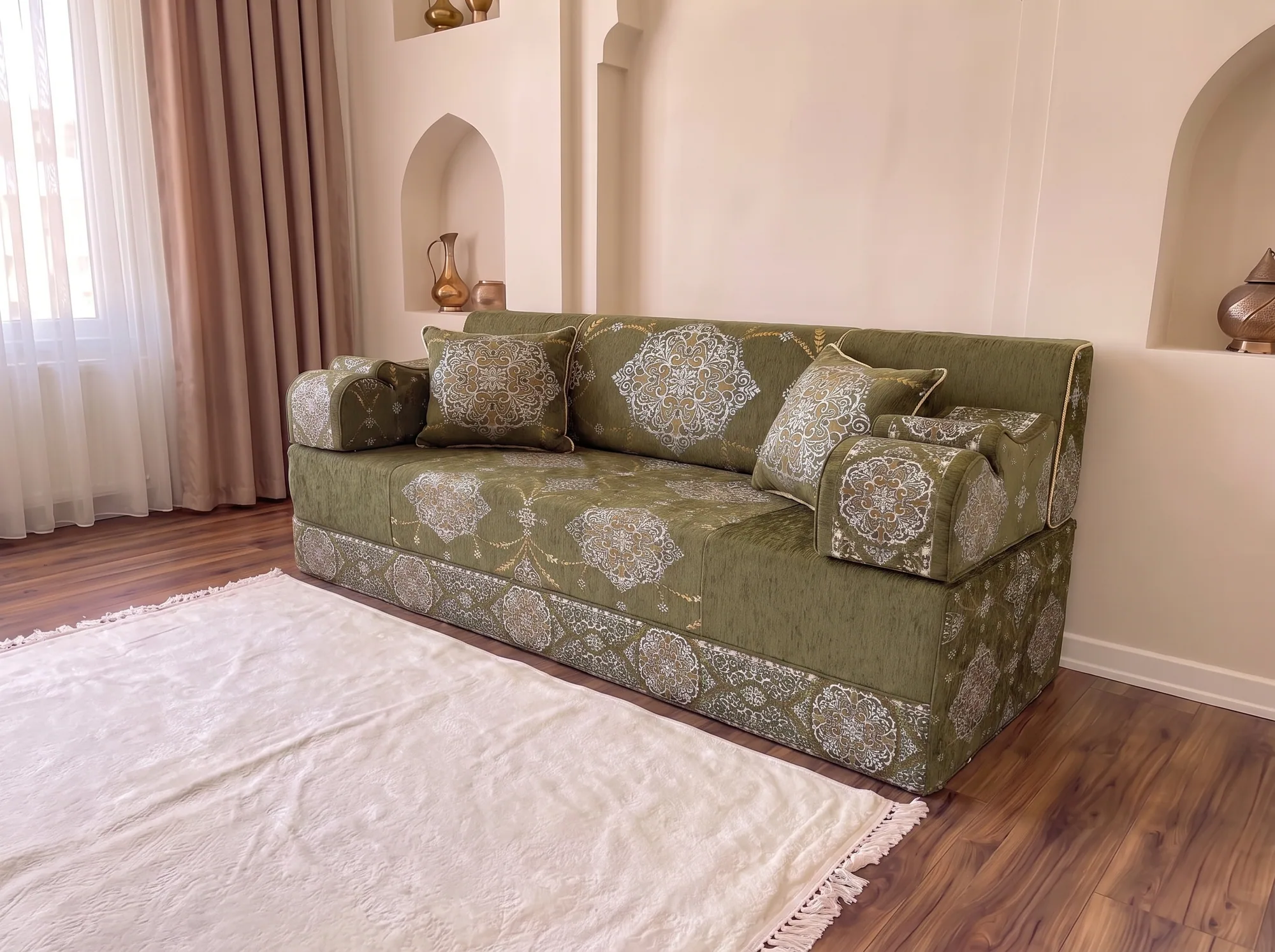
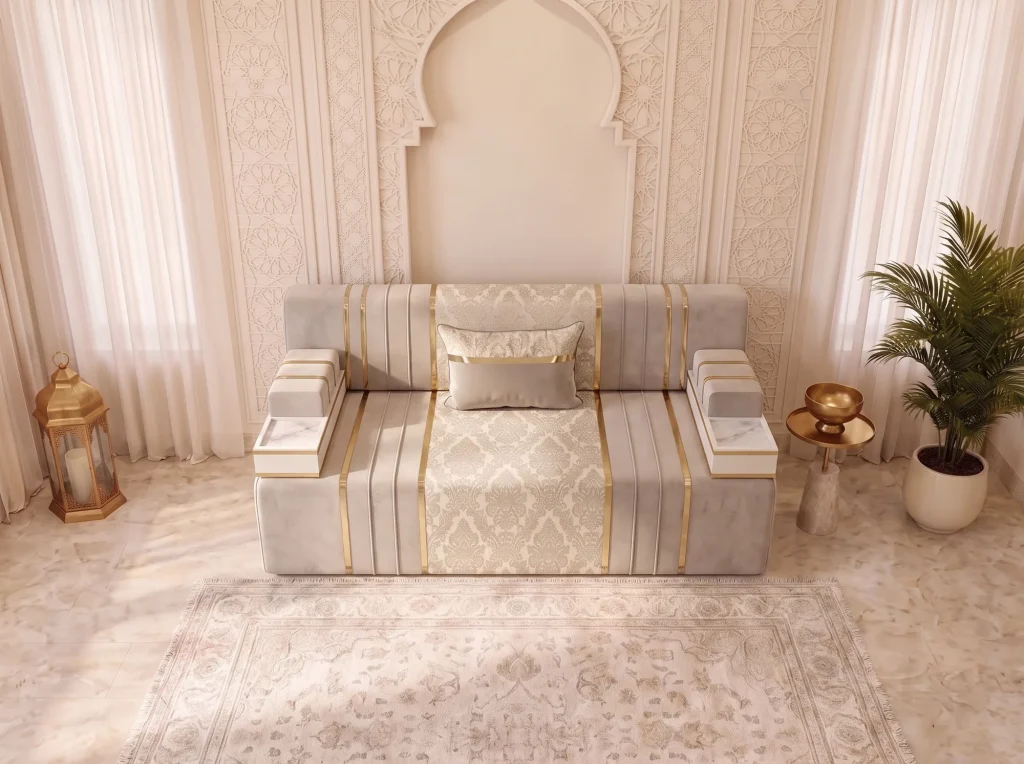
Some sets build the side table into the seating. Several Sofhu majlis designs have flat tray tops on the armrests, so a cup sits beside the guest without any extra furniture.
Tray tables, ottomans and serving stands for Arabic coffee
For floor-level seats, a tray is often the best table. Coffee service in a majlis moves: the host or the youngest pours and carries, and the cups go back on the tray. A fixed table is not required for that.
Three low-profile options cover most rooms:
- A tray on the rug. The lowest and most traditional. It needs a flat, firm rug and a tray with a raised rim.
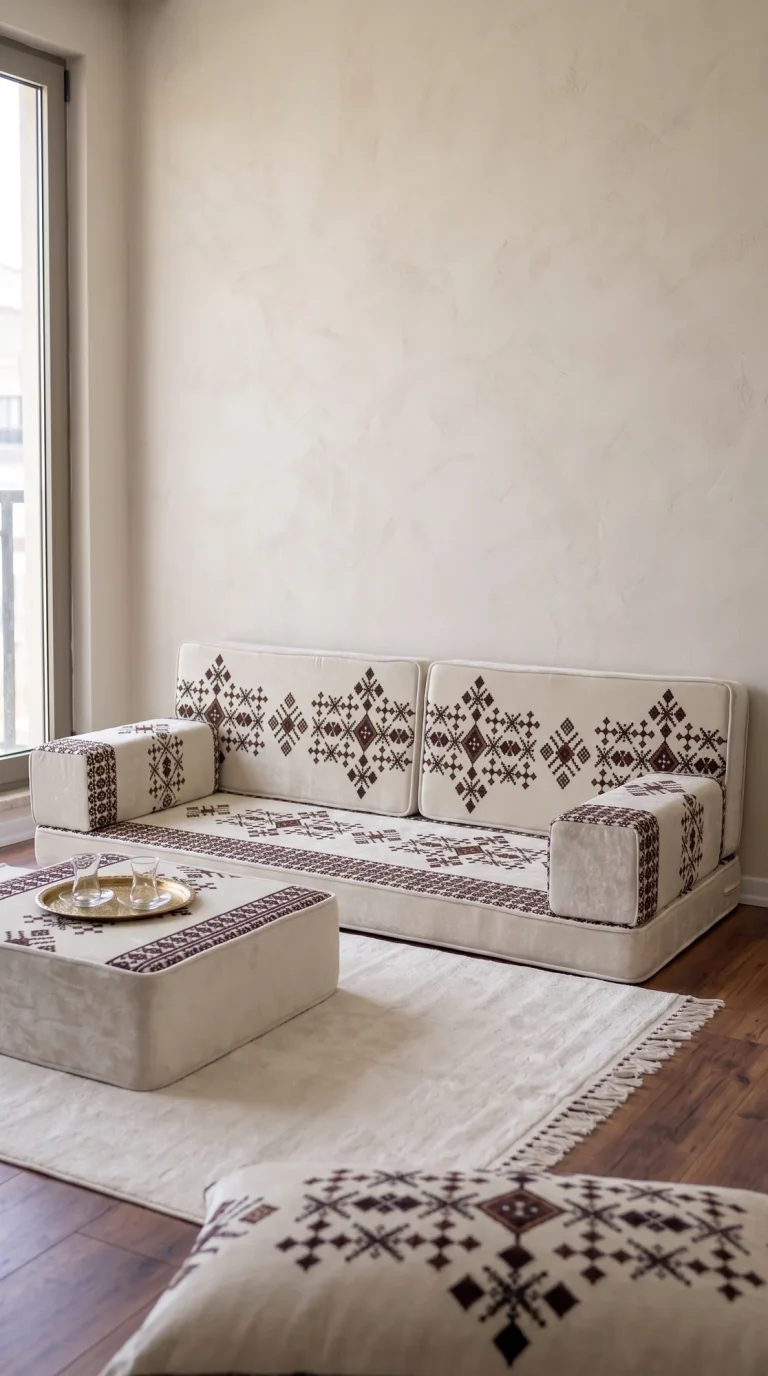
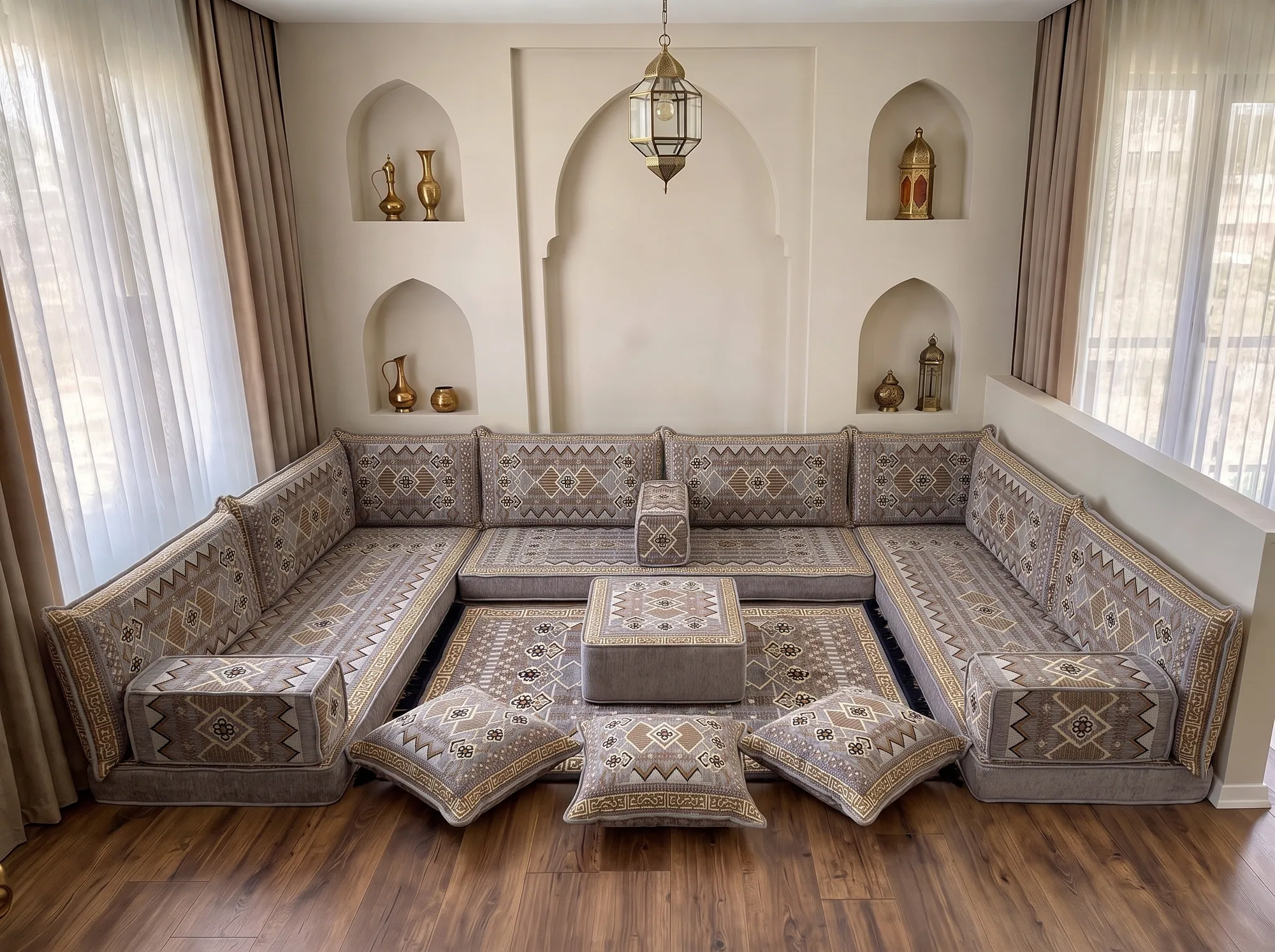
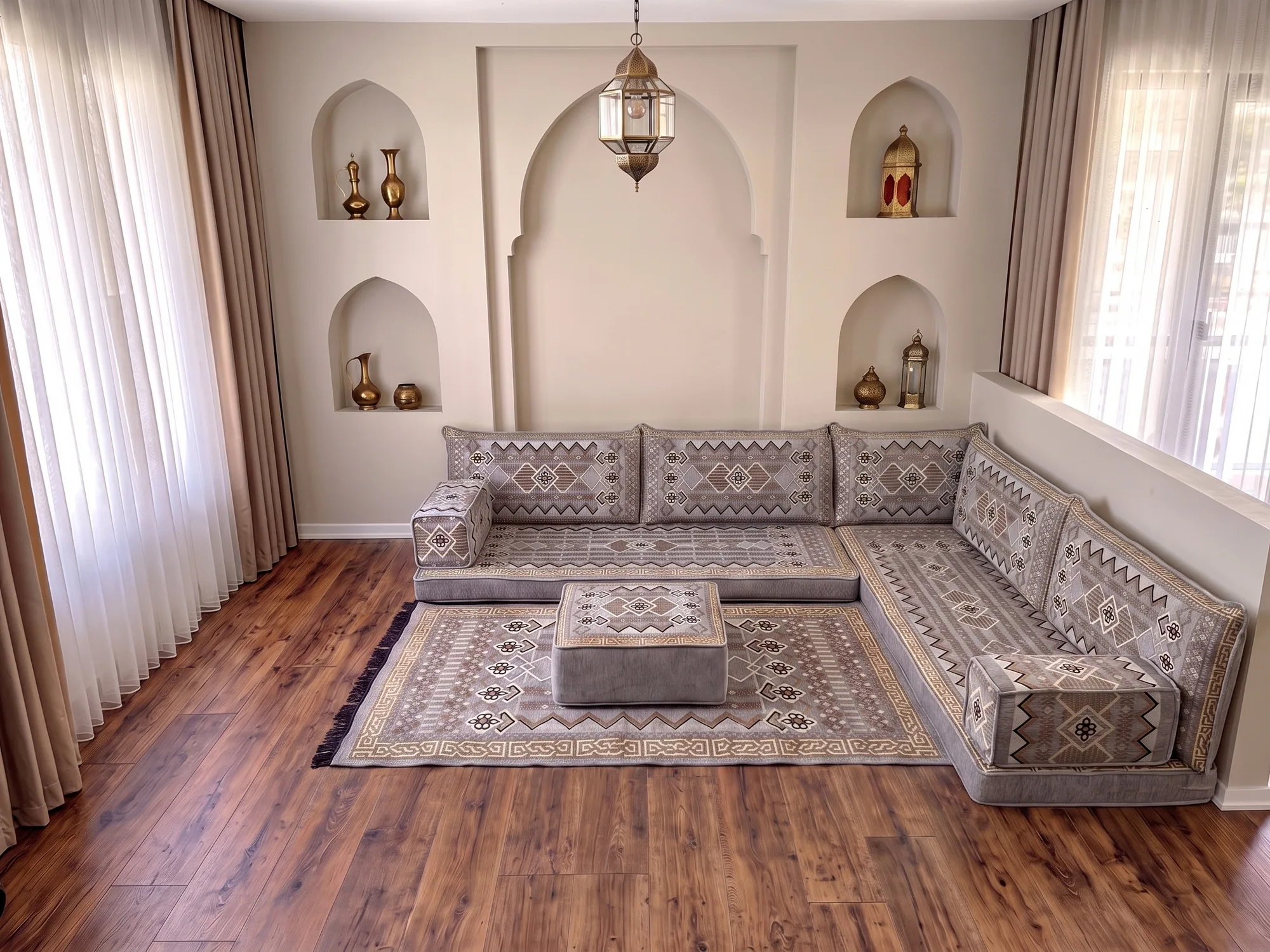
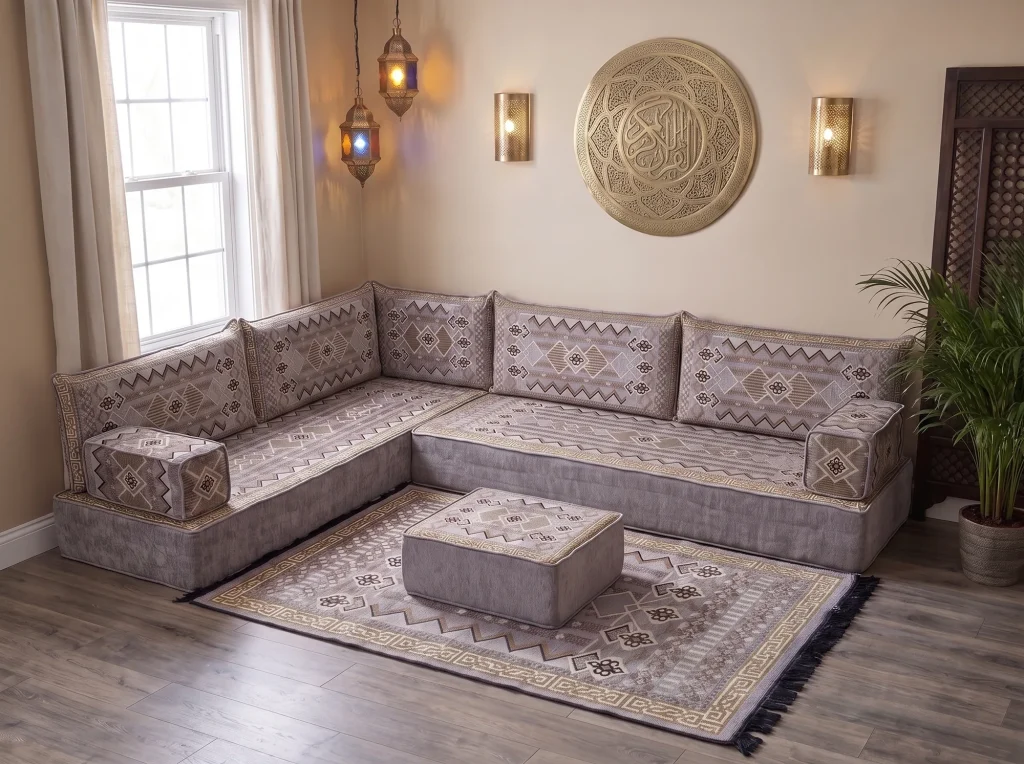
- An ottoman with a tray. Sofhu lists ottomans among the pieces that complete its sets. In the photo of a floor sofa below, the square ottoman is doing the work of an Arabic coffee table. Add a rigid tray and it is steady enough for cups.
- A folding stand with a lift-off tray. Useful when the room changes use during the day, because it packs flat.
Keep a separate spot for the pots. A hot dallah or teapot belongs on a surface that will not be knocked by a passing knee, such as a corner table or a ledge away from the seating.
How many tables a U-shape needs
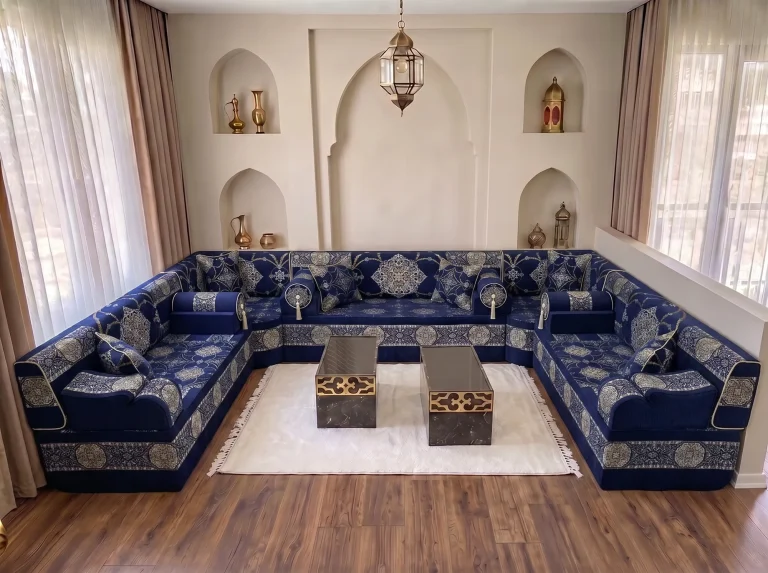
One small table cannot serve three walls. In a U-shaped majlis the people on the side runs are too far from a single table at the centre of the back wall.
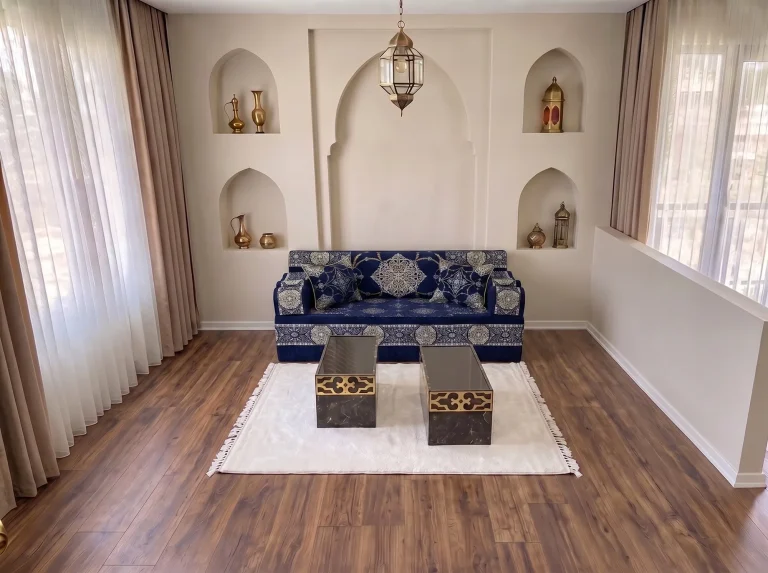
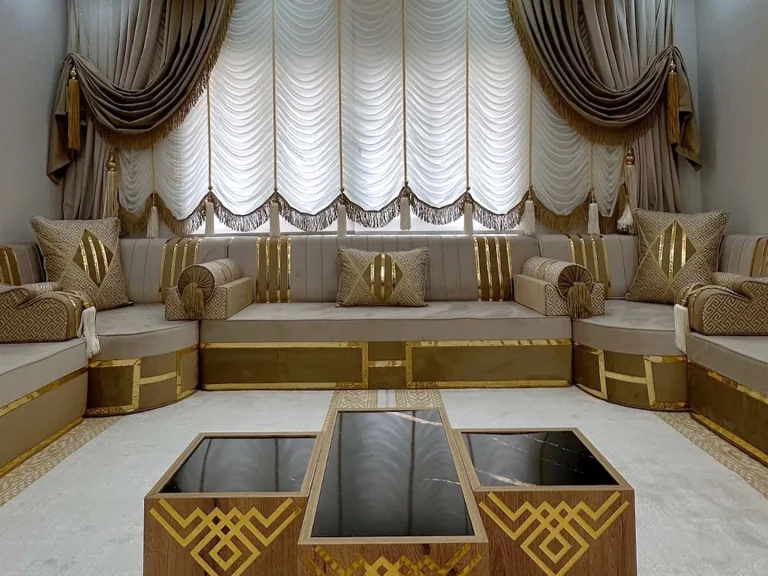
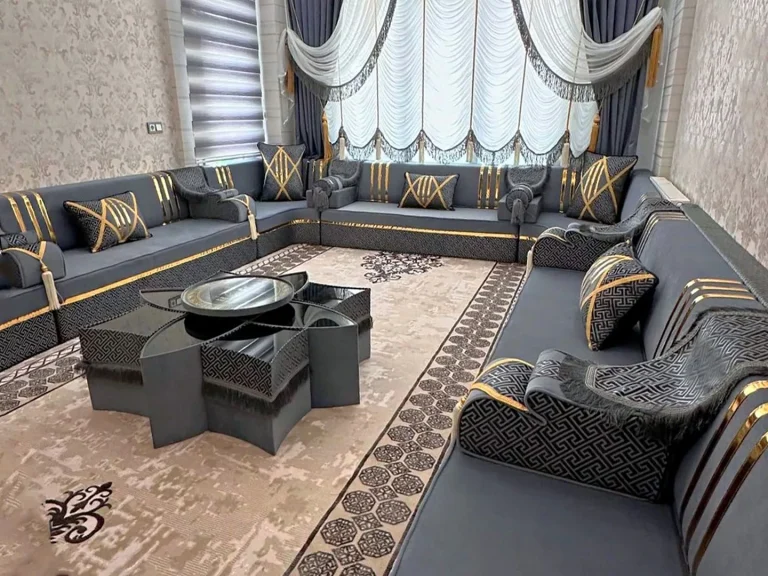
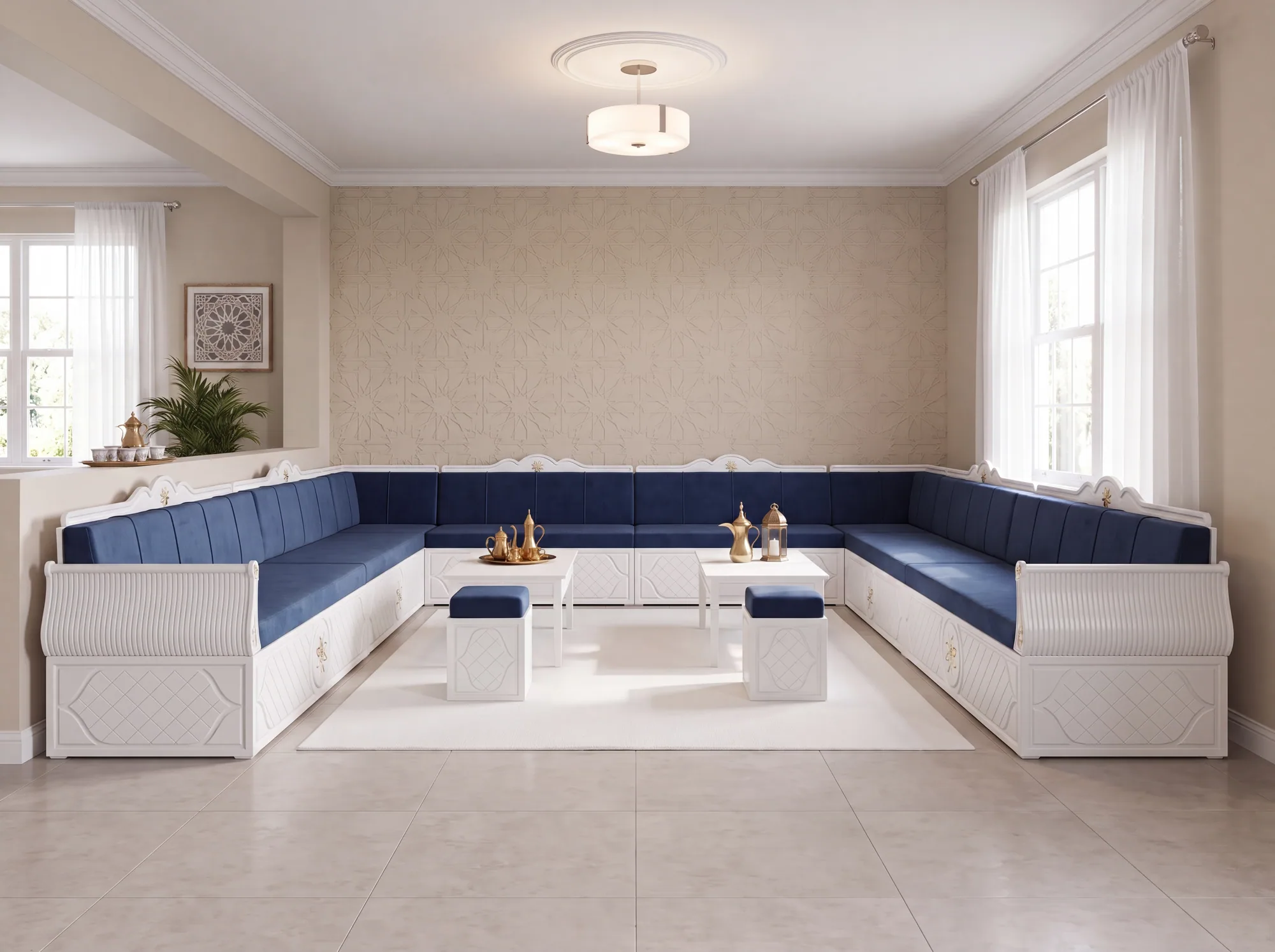
The fixes are easy to see in photos. The wooden-frame majlis in the hero image on this page uses two matching tables side by side in place of one, so both halves of the room have a surface. A single long table running down the middle does the same job with one piece. A cluster of small cubes can be pulled apart and handed round the room.
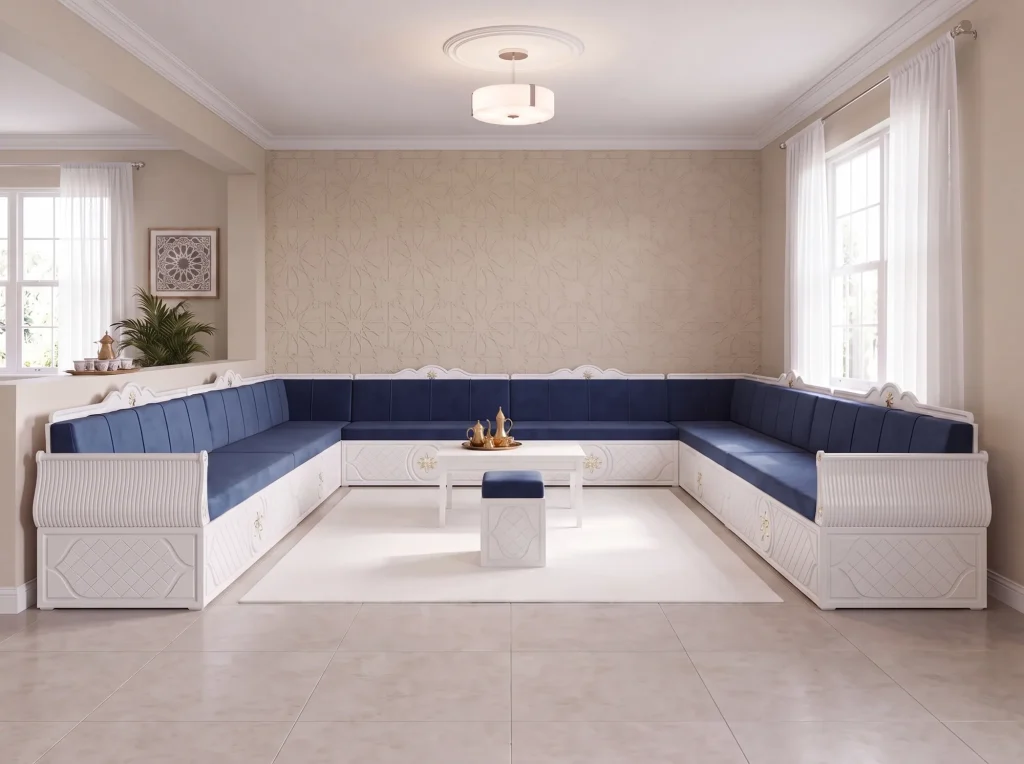
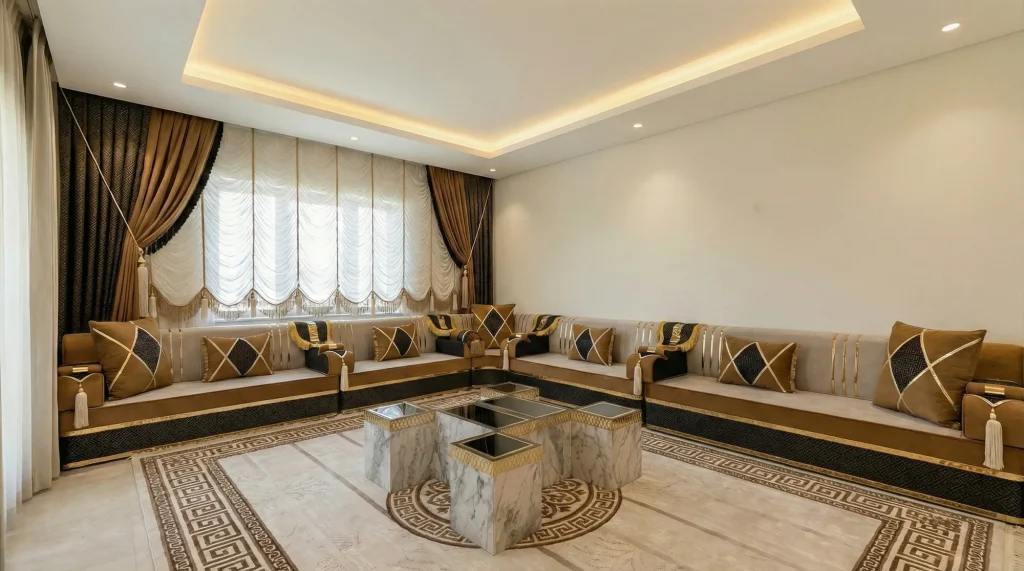
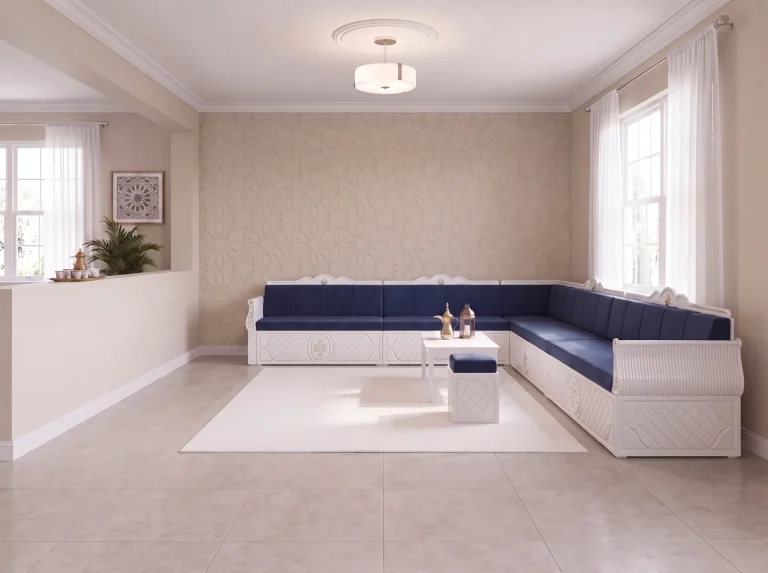
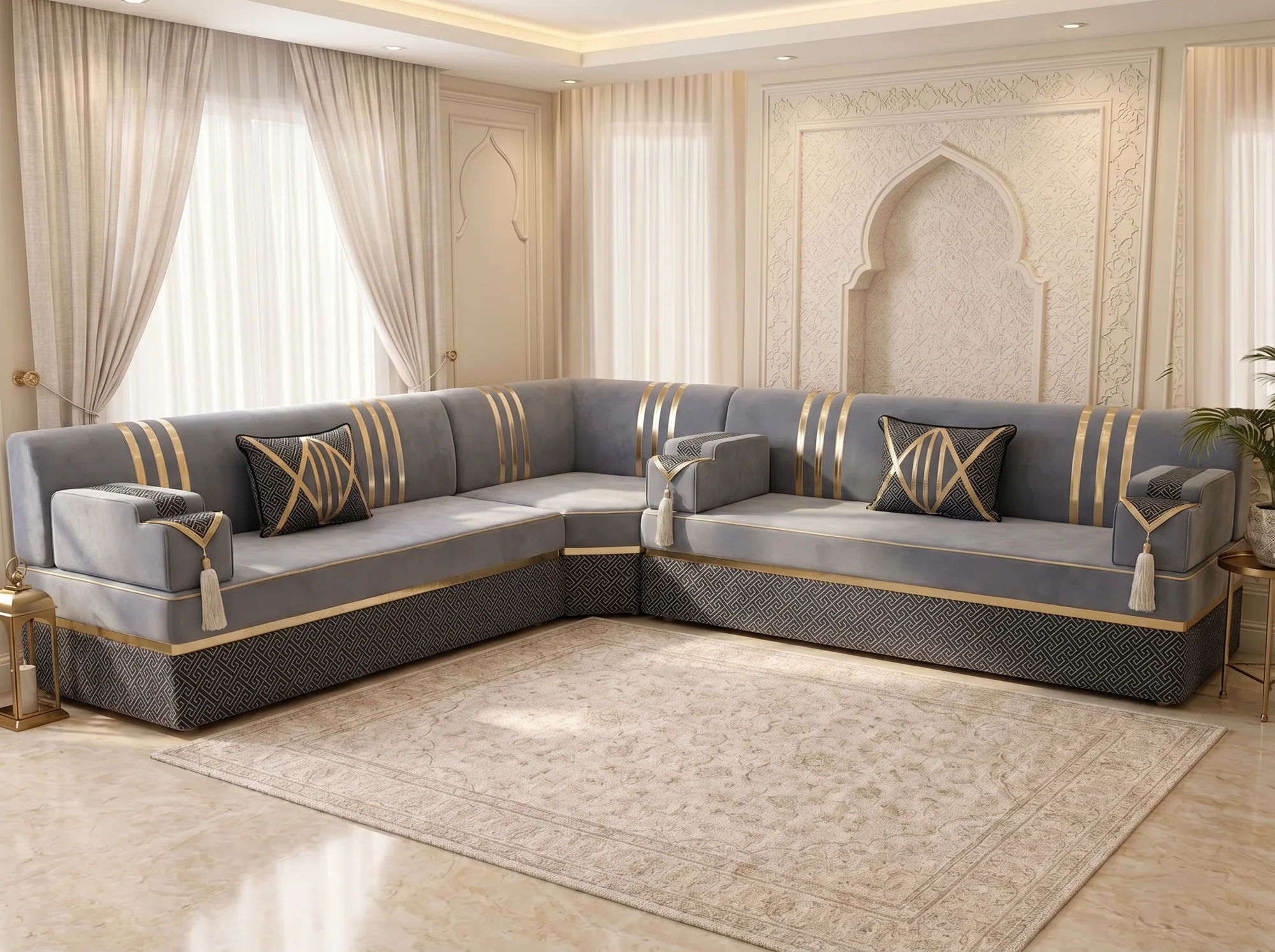
Then add side surfaces at the two corners, where nobody sits comfortably anyway. An L-shape usually needs one centre table and one corner surface. A single row needs one table in front, or one at each end. Layout options are shown on the L-shape and U-shape majlis page, and table and rug should be sized together, as explained in what size rug goes with a majlis.
Materials and shapes that are safe at floor level
At floor level, every table edge is at the height of a shin, a knee or a small child’s face. Choose with that in mind.
- Rounded corners and edges. Round and oval tops are the safest. Sharp stone or glass corners are the ones people remember for the wrong reasons.
- A low, wide stance. A table for floor seating should be hard to tip when someone leans on it to stand up.
- A wipeable top. Coffee with cardamom, tea and saffron all mark porous surfaces. Sealed wood, metal trays and stone clean easily.
- Weight you can lift. If the centre has to be cleared for a meal or for prayer, one person should be able to carry the table.
- Glass with care. A glass top keeps the rug pattern visible but shows every fingerprint. In a house with young children a solid top is the calmer choice. See a family majlis with young children for the rest of that checklist.
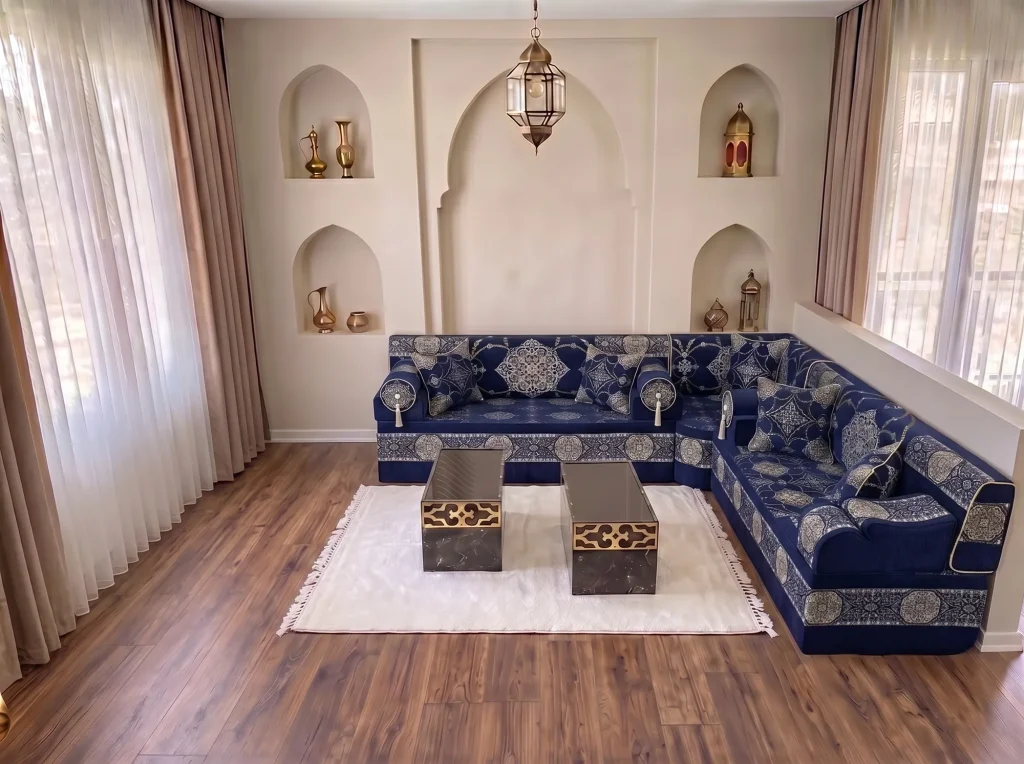
Wood suits most sets. Sofhu’s carved-frame Turkish majlis line is shown with its own carved coffee table, made to go with that raised seat.
Plan the table with the set
Decide the table while you plan the seating. Sofhu is the manufacturer and builds each set to the room, so seat height, ottoman height and the open floor in the middle can be planned as one drawing. Browse majlis sofa sets or the Arabic floor sofa range, then get a quote by measurement or ask on WhatsApp what seat height your design will have before you buy a table for it.