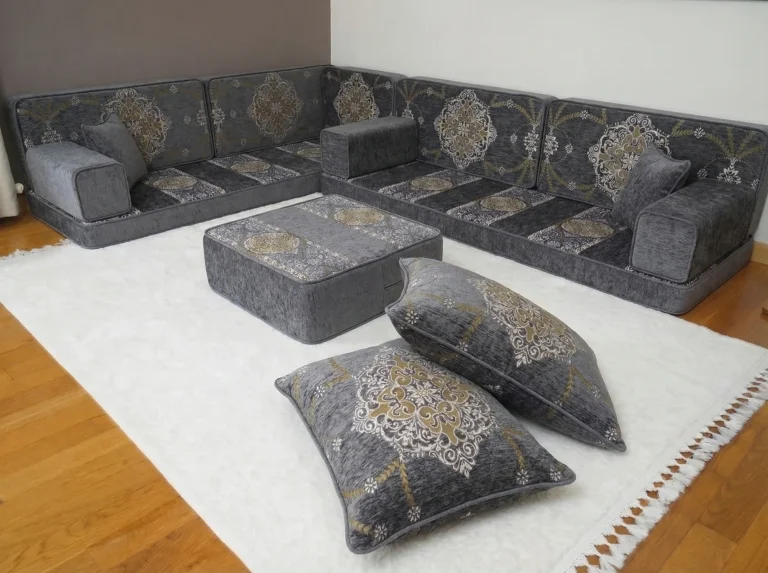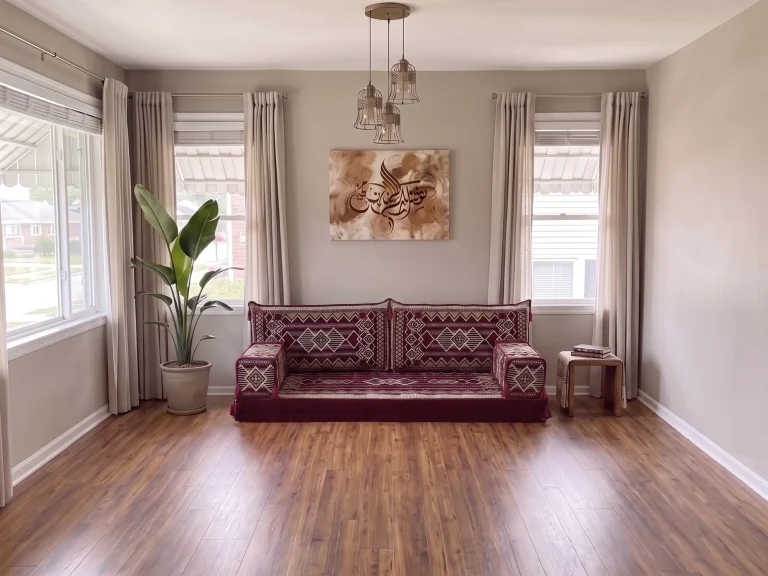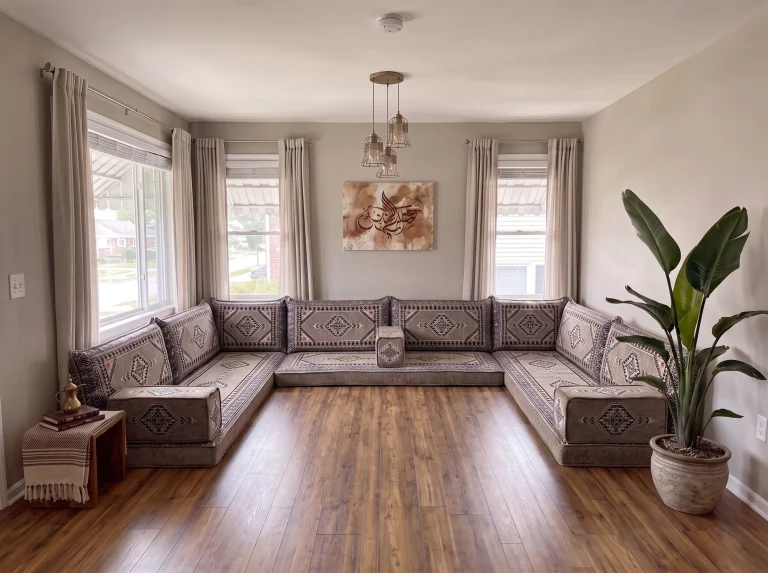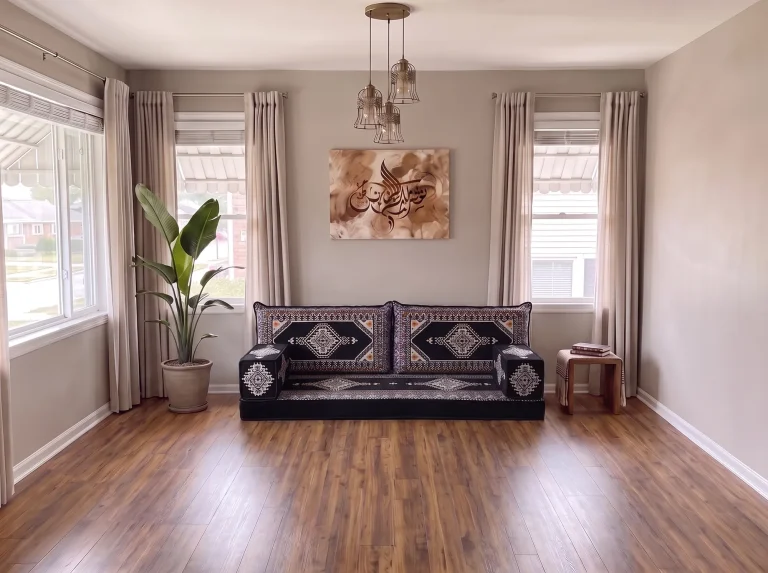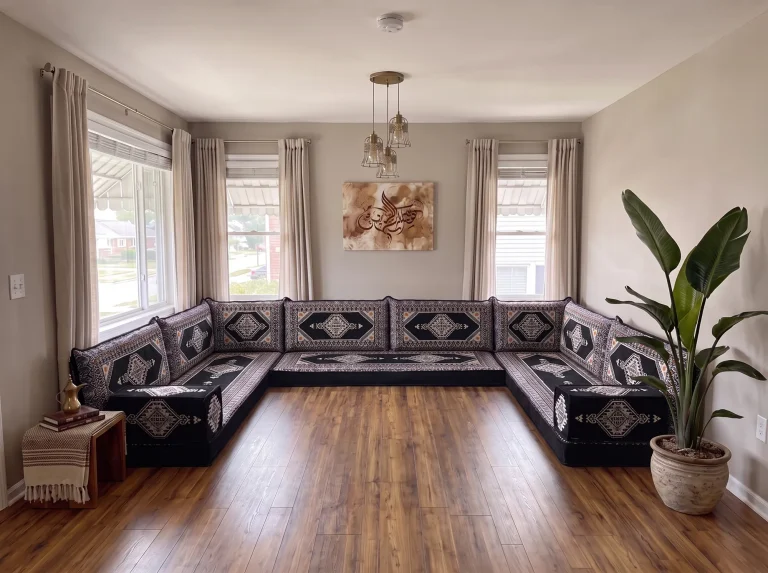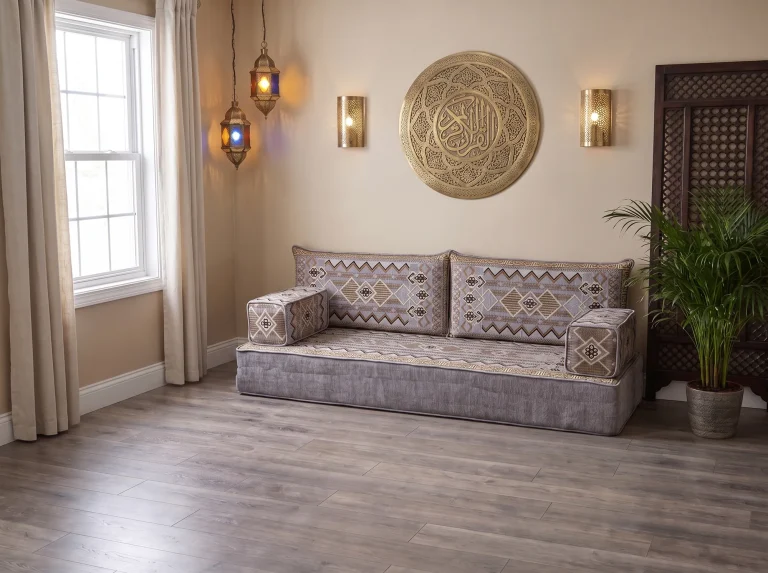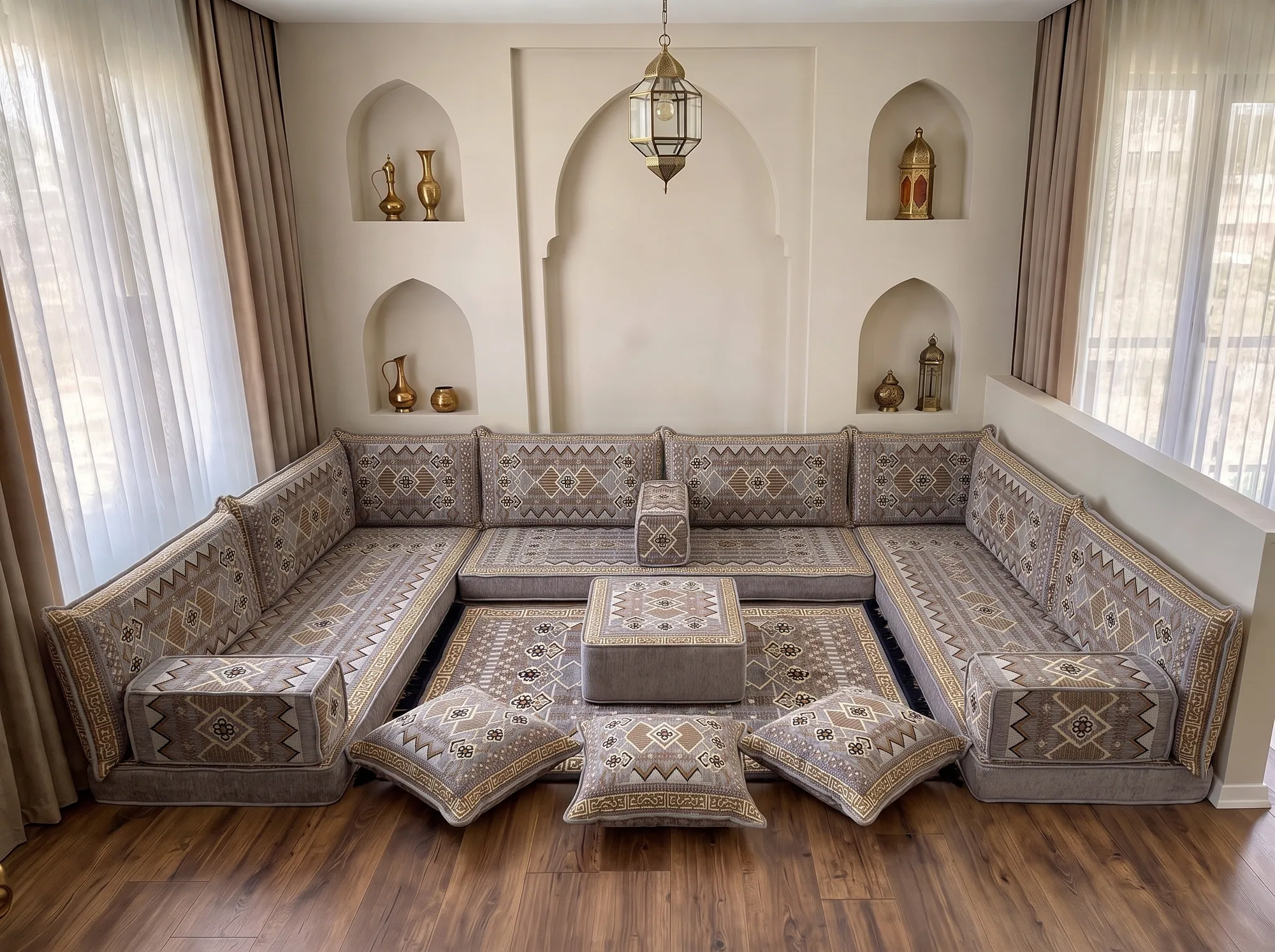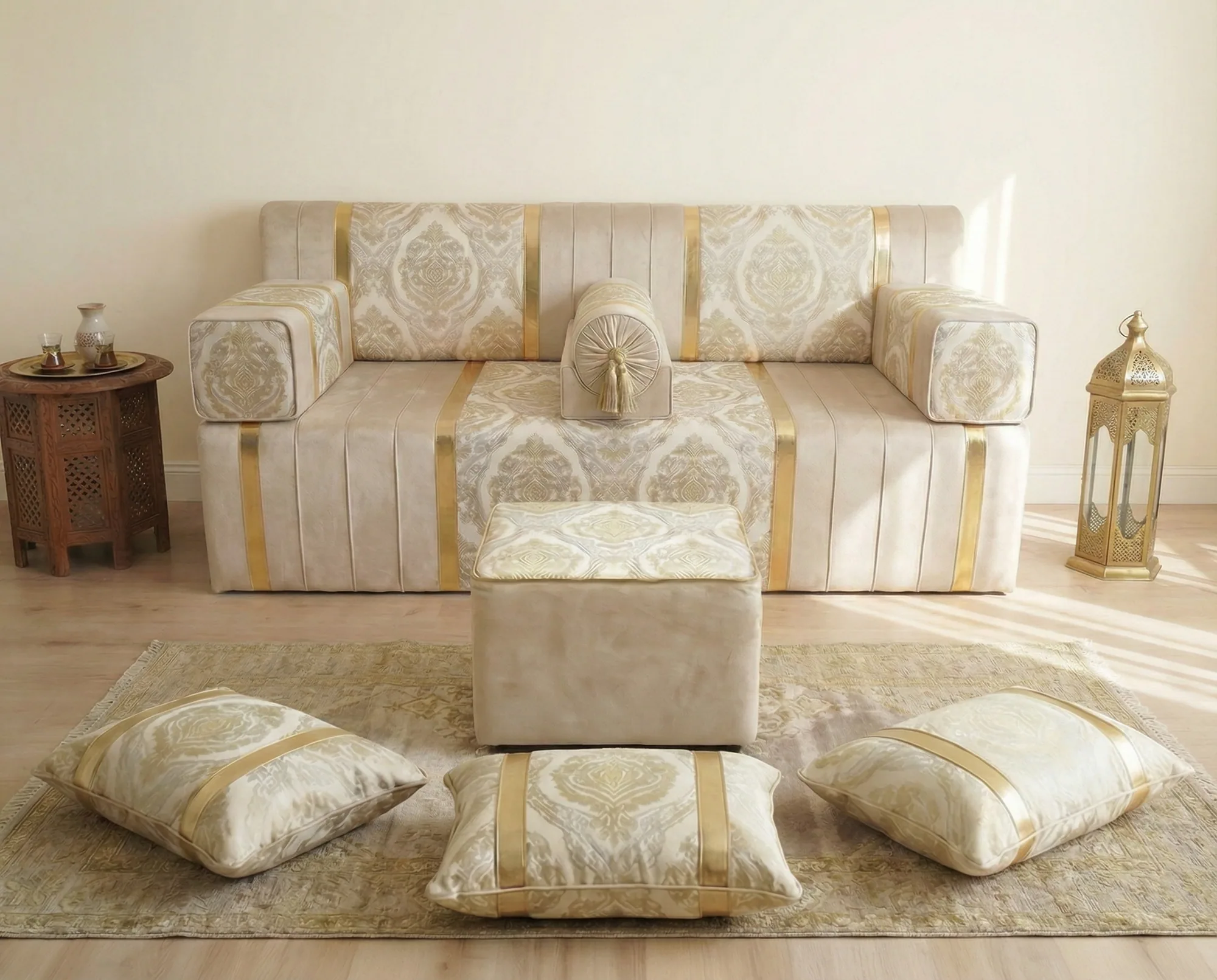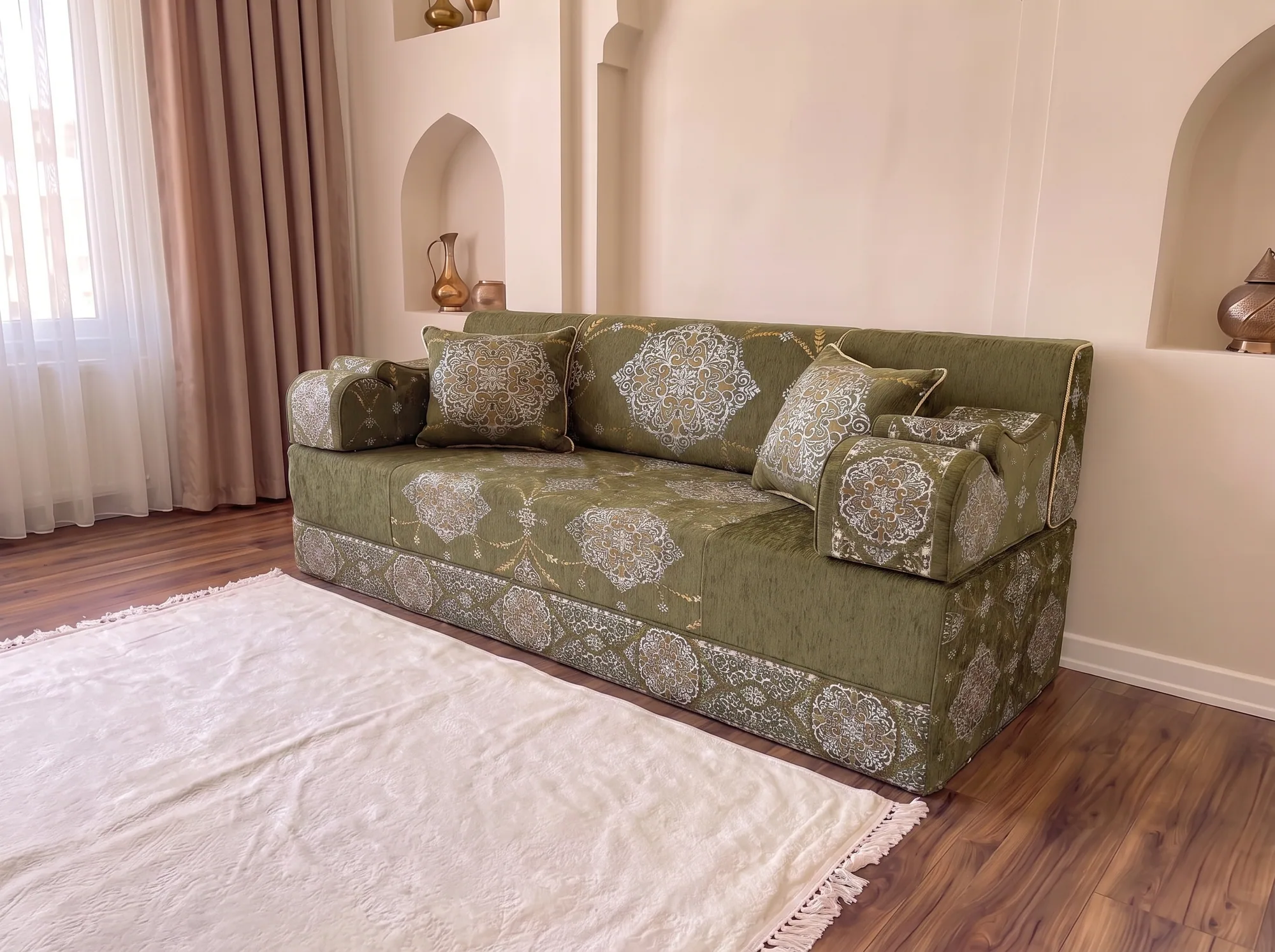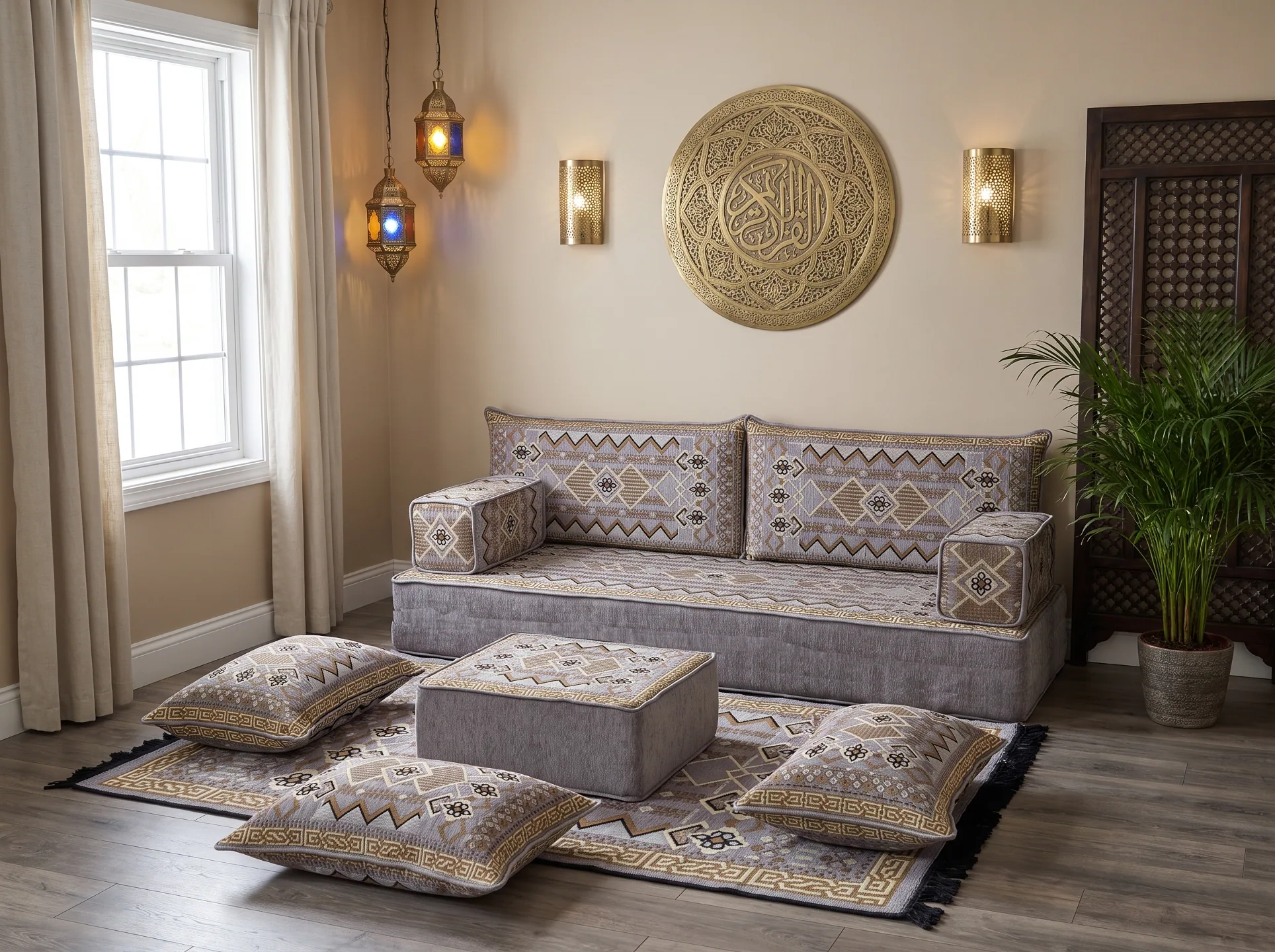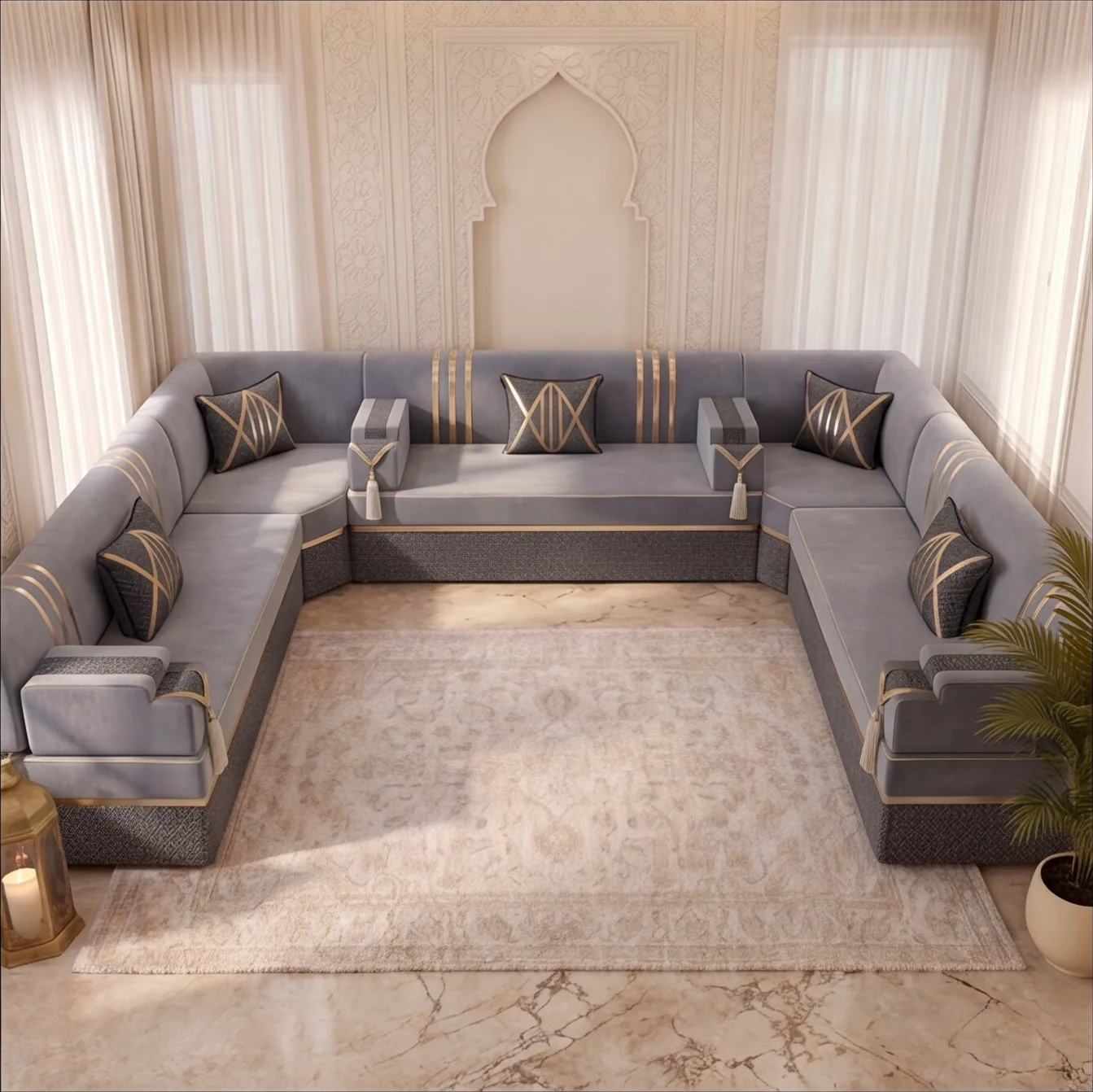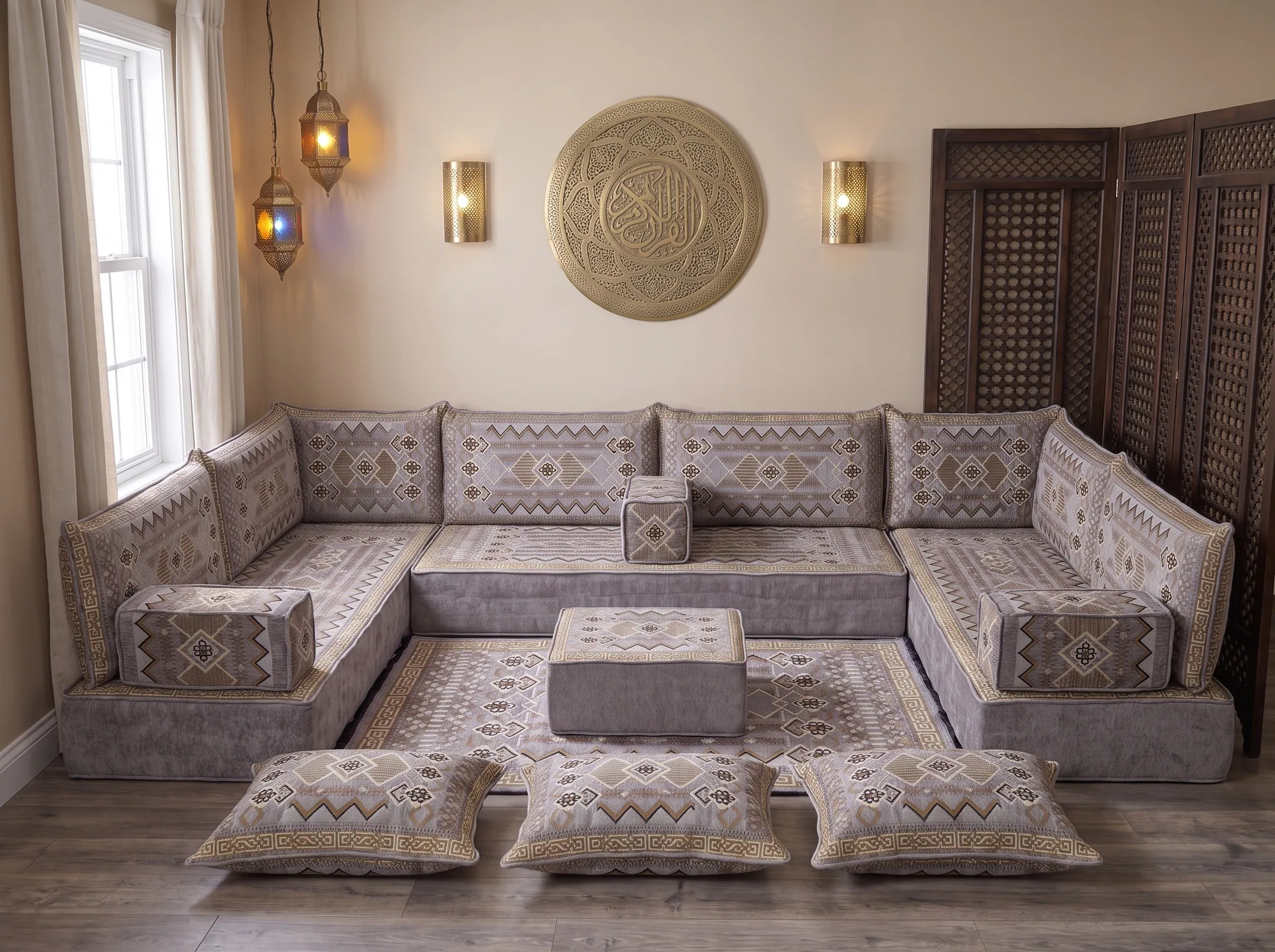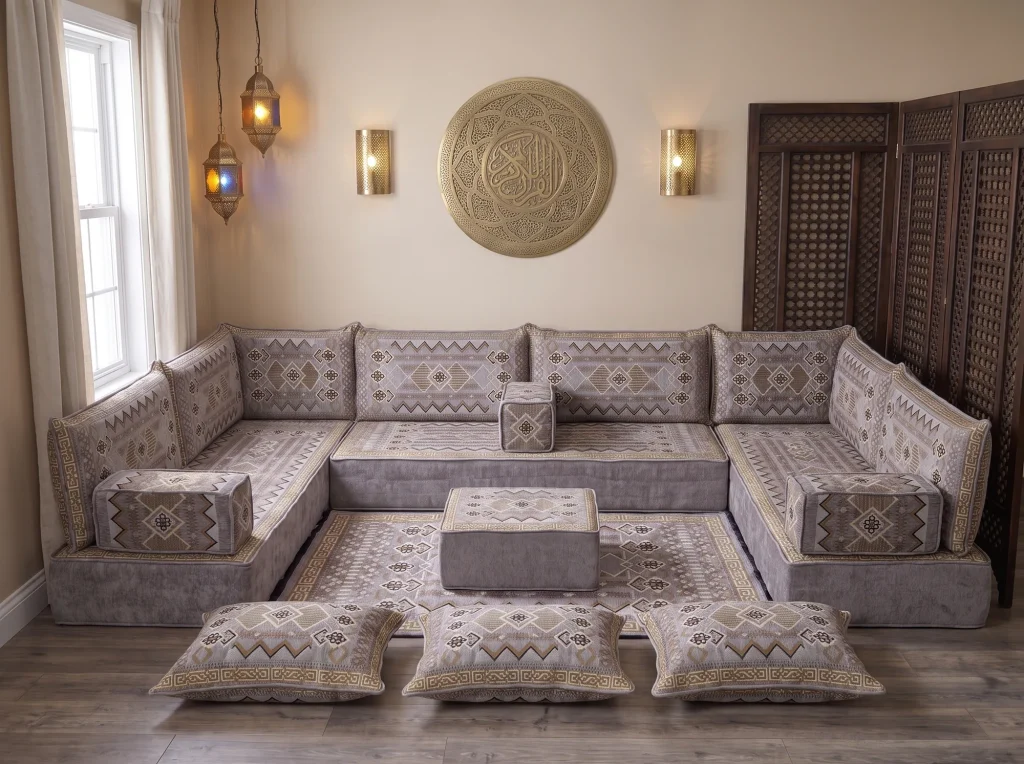
Floor seating is comfortable for most people when three things are in place: a firm seat that does not let you feel the floor, an upright backrest against a wall, and an armrest to lean on. People with stiff knees or hips usually prefer a raised seat. Sofhu makes low floor sofas and the raised, sofa-height Arabic majlis, both to measure.
- Seat
- Firm 32 kg/m³ (32 DNS) foam, no springs
- Back support
- Backrest cushions that lean on the wall
- Side support
- Armrest bolsters between sitters
- Foam feel
- Softer or firmer on custom orders
- Alternative
- The raised Arabic majlis, or a set on a wooden base
On this page
Yes, for most people, and for a plain reason: the body is held in three places. Asking is floor seating comfortable is really asking about the seat under you, the backrest behind you and the bolster beside you. Get those right and people sit for a whole evening without thinking about it. Get one wrong and the floor feels like a floor. This guide looks at each, at the ways people sit, and at who is better served by a higher seat.
What holds you up: seat, backrest and armrest
Comfort on a low sofa comes from support, not softness.
A firm seat. The seat mattress is the only thing between you and the ground. If it is too soft your hips sink through it and you end up slumped. A firm seat keeps the hips level and gives you something to push off when you stand. Sofhu describes its cushions as firm and fills the seats with 32 kg/m³ high-density foam, with no springs inside. Density is about how long that support lasts, not how hard it feels. On custom orders you can ask for a softer or firmer foam.
Floor sofa back support. The backrest cushions stand on the seat and lean on the wall. The wall does the holding, which is why floor sets are not freestanding and need something solid behind them. Sit with your hips close to the backrest so it meets your back from the base upward. A gap at the bottom is what makes people slump.
An armrest bolster. The armrest gives a third point of contact. Leaning on one elbow lets you shift your weight and rest one side. It also marks out a place for each guest, which matters in a full room.
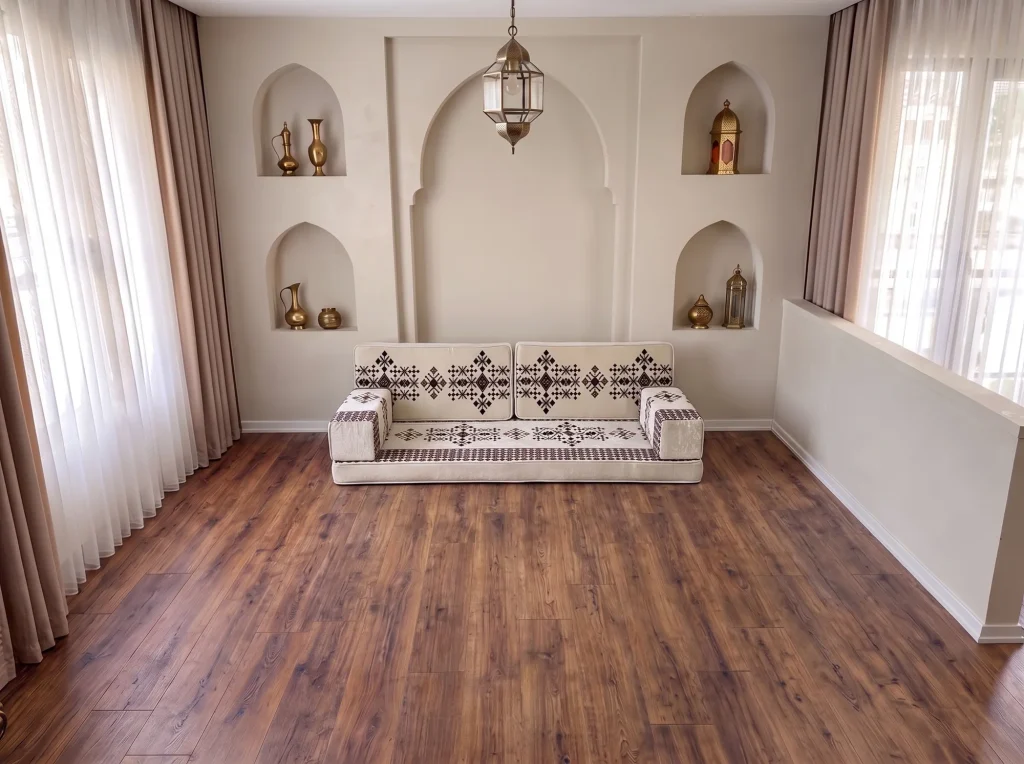
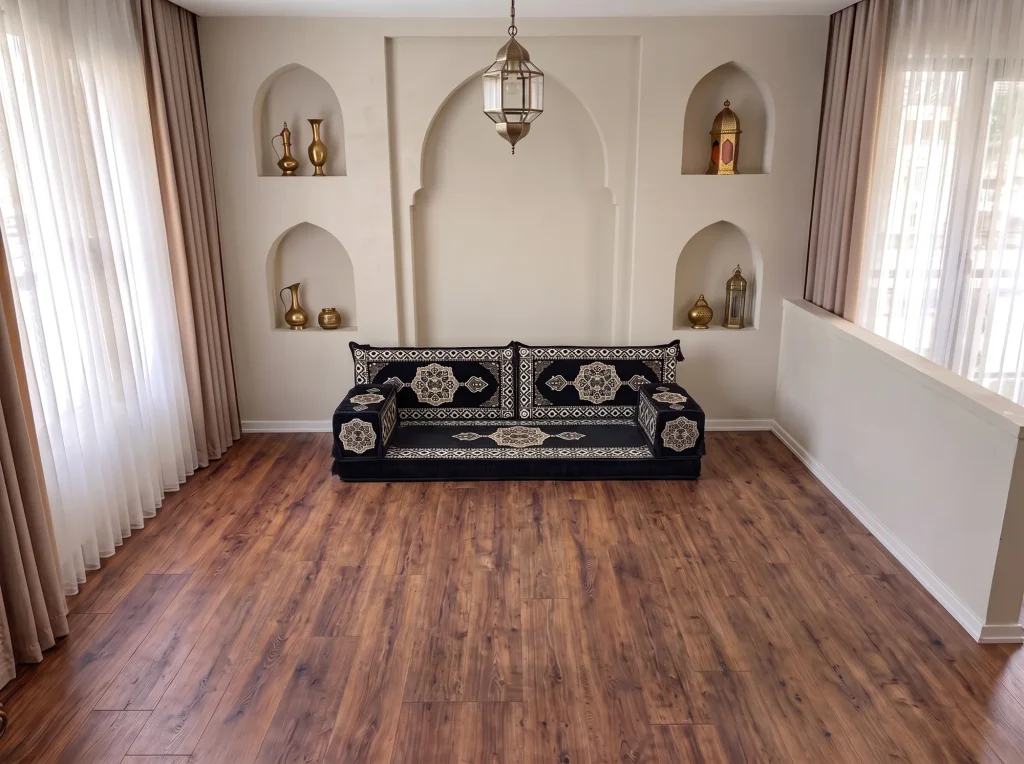
The names and jobs of every piece are laid out in parts of a majlis set.
How to sit on a floor sofa: the positions people use
There is no single correct floor seating posture. People who are at ease on a floor sofa move between several, and the moving is the point.
- Cross-legged. The default for many. You sit upright and both hands are free for a cup.
- Legs folded to one side. Common in formal company and in long dress. Change sides now and then so one hip does not carry everything.
- One knee up. One leg folded flat, the other foot planted with the knee raised. It is a steady position for eating and for leaning forward to talk.
- Legs out. Back against the cushion, legs straight or crossed at the ankle. It is the resting position among family. In formal company, keep the soles of your feet from pointing at anyone.
- Leaning on the armrest. Half reclined on one elbow. This is how long afternoons are spent.
- Feet on the floor. Sitting on the edge with knees up, as on a very low sofa. Fine for a few minutes. Over an hour it is the least comfortable of all, because the knees stay above the hips.
Newcomers often pick the last one and conclude that floor seating is uncomfortable. Sit back, fold your legs, and the seat makes sense. Manners for guests are covered in majlis etiquette.
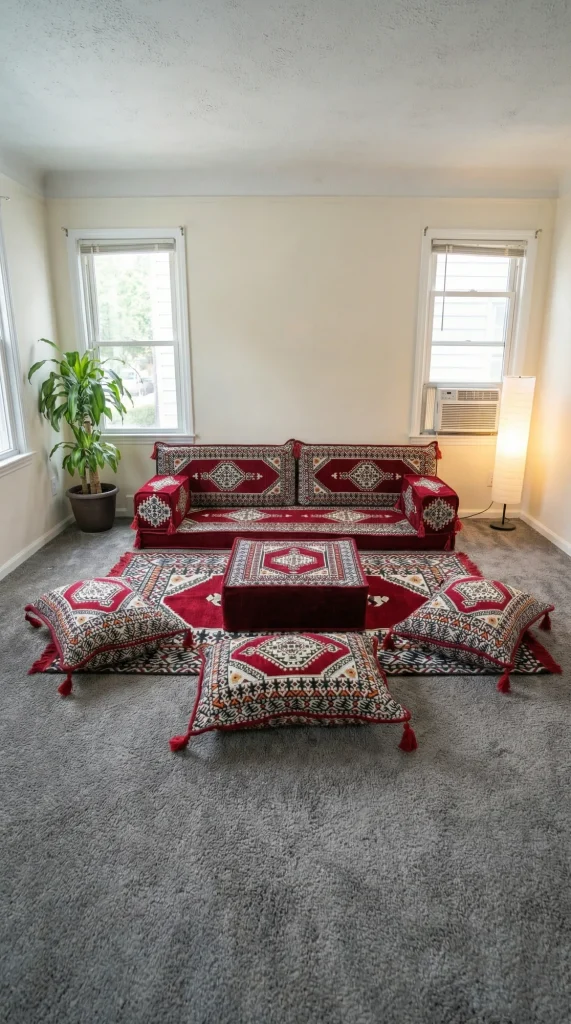
Is floor seating bad for knees? Who may prefer a raised seat
Low seating asks two things of the body: knees and hips that bend deeply, and the strength to rise from near the ground. For many people neither is a problem. For some it is, and it is better to say so plainly than to sell the wrong height.
A raised or mid-height seat usually suits:
- anyone with knee, hip or lower back pain, or recovering from surgery
- older relatives who did not grow up sitting on the floor
- women in late pregnancy
- guests in formal or tight clothing
- anyone who needs to stand up quickly and often
Habit counts for more than age. A grandmother who has sat cross-legged all her life may be more comfortable on the floor than on a chair. Ask her before you decide for her.
You do not have to choose one height for the whole room. A floor-level set around most of the walls with a raised section near the door is one arrangement to consider. Sofhu makes the raised Arabic majlis, sofa-height upholstered units with fixed backs and arm bolsters, and sets on wooden bases, as well as floor sofas, and offers different cushion thicknesses.
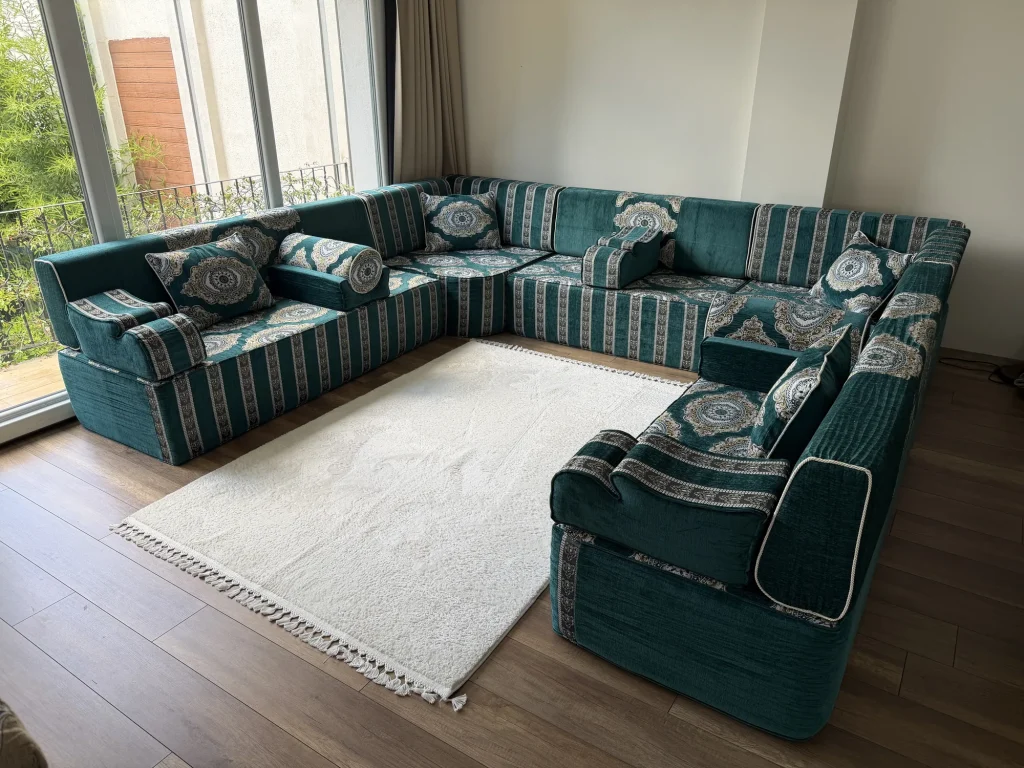
The three height families are compared in the majlis seat height guide, the wider trade-offs in floor seating versus a raised diwan, and the details that help elders in hosting elderly guests in a majlis.
Is floor seating comfortable if you grew up on chairs?
If you grew up on chairs, give it time. The hips and ankles of someone used to chair height are less used to folding, and the first evenings can feel stiff. That is the body meeting a new position, not a fault in the seat.
A few things shorten the adjustment:
- Start with short sittings and change position before you ache, not after.
- Put a small firm cushion under your sitting bones when cross-legged. Raising the hips a little lets the knees drop.
- Keep a throw cushion behind the lower back.
- Stretch your legs out whenever you like. Nobody in a family majlis minds.
Children take to it at once. Adults generally settle with regular use, though people differ. If discomfort is sharp or does not ease, stop and ask a professional.
Tips for long gatherings
Hosts can do a lot for their guests’ comfort. An iftar, an Eid visit or a long evening of talk goes better with a little planning.
- Give every guest a backrest and an armrest within reach. Corners without a bolster empty first.
- Leave space. Sitters need room to unfold their legs. A row that holds a crowd shoulder to shoulder for a short visit holds fewer people in comfort for a whole evening.
- Keep loose cushions around. They become lumbar pillows, knee supports and children’s seats.
- Put surfaces close. A cup that can be reached without leaning forward keeps people sitting back against the cushion.
- Offer a higher seat without fuss. A raised section or a chair by the door, set out in advance, spares an elder from having to ask.
- Build in movement. Serving coffee, prayer and the meal all get people on their feet.
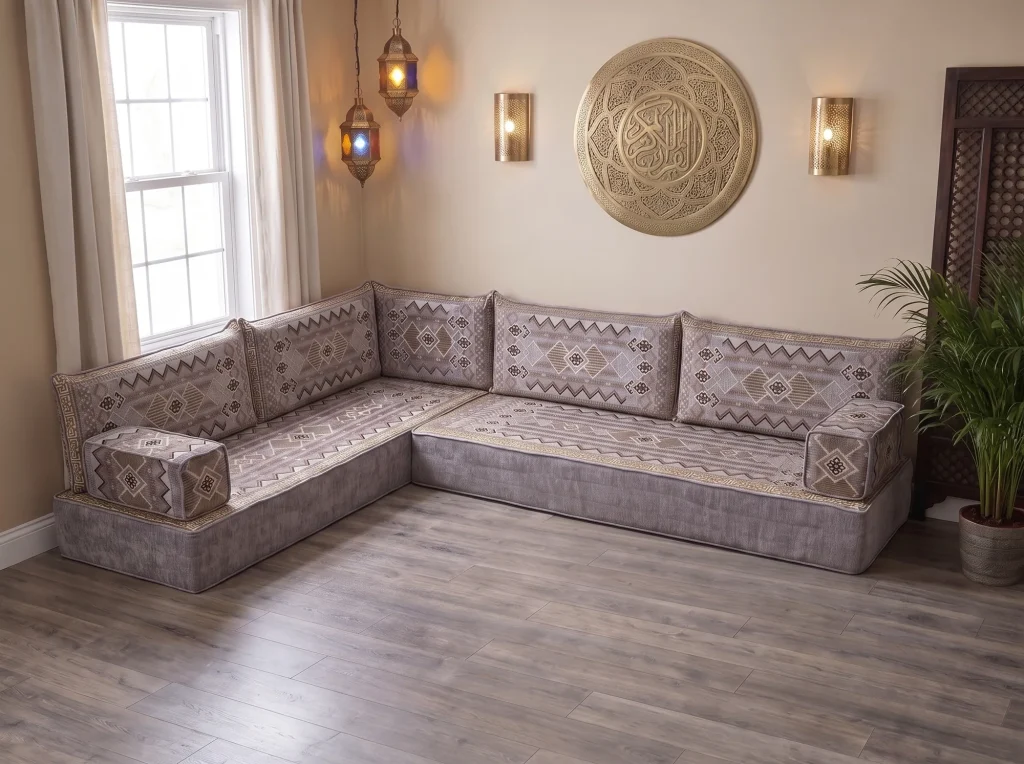
Sitting on the floor benefits, stated honestly
You will find confident health claims about floor sitting online. This guide does not make them. What can be said about the furniture is modest and true: a low set invites you to change position often, it keeps a room open and sociable, it keeps small children close to the ground, and with the backrests lifted off, a seat becomes a guest bed. The UNESCO description of the majlis as a social space mentions carpets on the floor and cushions against the wall, and generations have found that arrangement comfortable enough to keep.
This is furniture guidance, not medical advice. Whether a low seat is right for your back, knees or hips is a question for a doctor or physiotherapist who knows you.
Choosing your set
Tell the maker who will sit on it. Sofhu is the manufacturer and builds each set in Türkiye to the customer’s wall measurements, so seat thickness, foam feel and any raised section are decided for your household. Browse Arabic floor sofas and the wider Middle Eastern sofa range, then get a quote by measurement or describe your family on WhatsApp and ask which height the workshop would suggest.