Yes. UNESCO inscribed Majlis, a cultural and social space on its Representative List of the Intangible Cultural Heritage of Humanity in 2015, on a joint file from the United Arab Emirates, Saudi Arabia, Oman and Qatar. The listing recognises the social practice of gathering, not a furniture style. Sofhu makes seating for such rooms but the listing covers no product.
- Element
- Majlis, a cultural and social space
- Inscribed
- 2015, tenth session of the Committee
- List
- Representative List of the Intangible Cultural Heritage of Humanity
- States
- UAE, Saudi Arabia, Oman, Qatar
- What is listed
- A social practice, not an object
- Bearers
- Community elders, judges, religious sheikhs
On this page
In 2015 the majlis joined UNESCO’s Representative List of the Intangible Cultural Heritage of Humanity, under the title “Majlis, a cultural and social space”. The file was submitted jointly by the United Arab Emirates, Saudi Arabia, Oman and Qatar. This article sets out what the majlis UNESCO listing actually says, who is named as keeping the tradition, and what it does and does not mean for the room in your own house.
The inscription in brief
The facts are short and worth stating exactly, because they are often blurred.
- Title: Majlis, a cultural and social space.
- Year: 2015, at the tenth session of the Intergovernmental Committee.
- List: the Representative List of the Intangible Cultural Heritage of Humanity.
- Submitting states: the United Arab Emirates, Saudi Arabia, Oman and Qatar.
Two clarifications follow. First, this is intangible heritage. UNESCO keeps a separate and better-known World Heritage List for places such as old cities and monuments. The intangible list records living practices: skills, rituals, ways of gathering. The majlis is on it as something people do.
Second, the listing belongs to four states. Kuwait’s diwaniya, the Bahraini family majlis and the Yemeni mafraj are close relatives with long histories, and none of them is part of this file. Writing “UNESCO-listed diwaniya” would be wrong.
How UNESCO describes the majlis as a cultural and social space
The description begins with the word. Majlis are “sitting places”, and UNESCO lists what happens in them: community members gather to discuss local events and issues, exchange news, receive guests, socialise and be entertained. It is also where problems are resolved, condolences are paid and wedding receptions are held.
On the physical room the text is brief. A majlis is typically a large space with carpets on the floor and cushions against the wall, and there is usually a stove or fire for preparing coffee and other hot drinks. It is open to people of the same family, tribe or neighbourhood, and to visitors from further away.
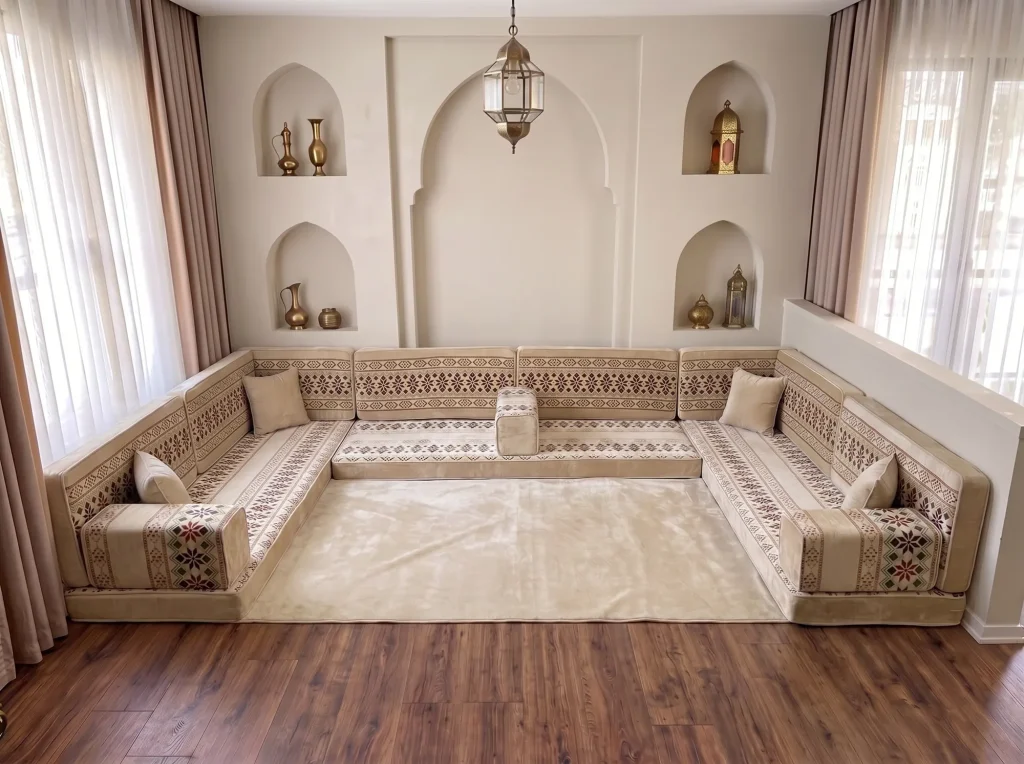
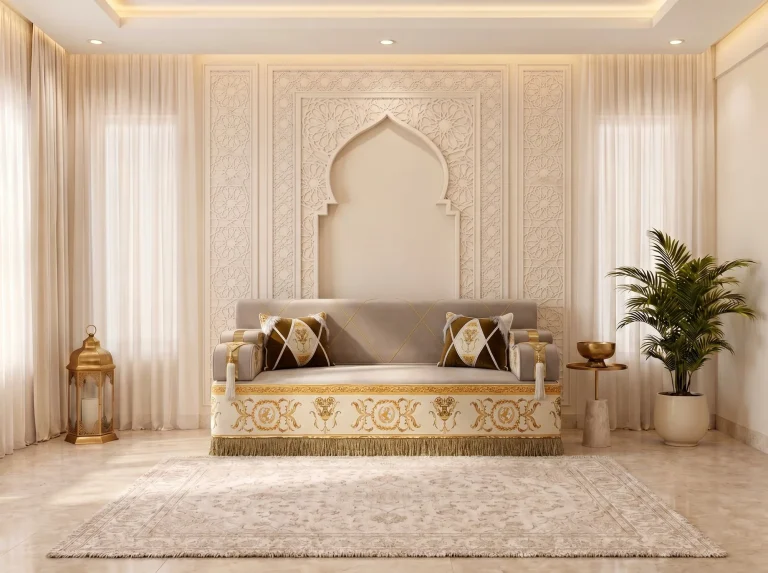
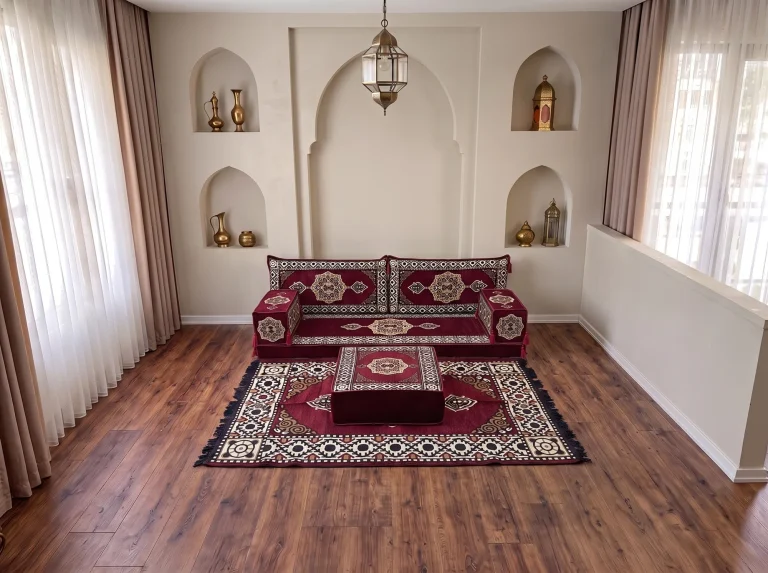
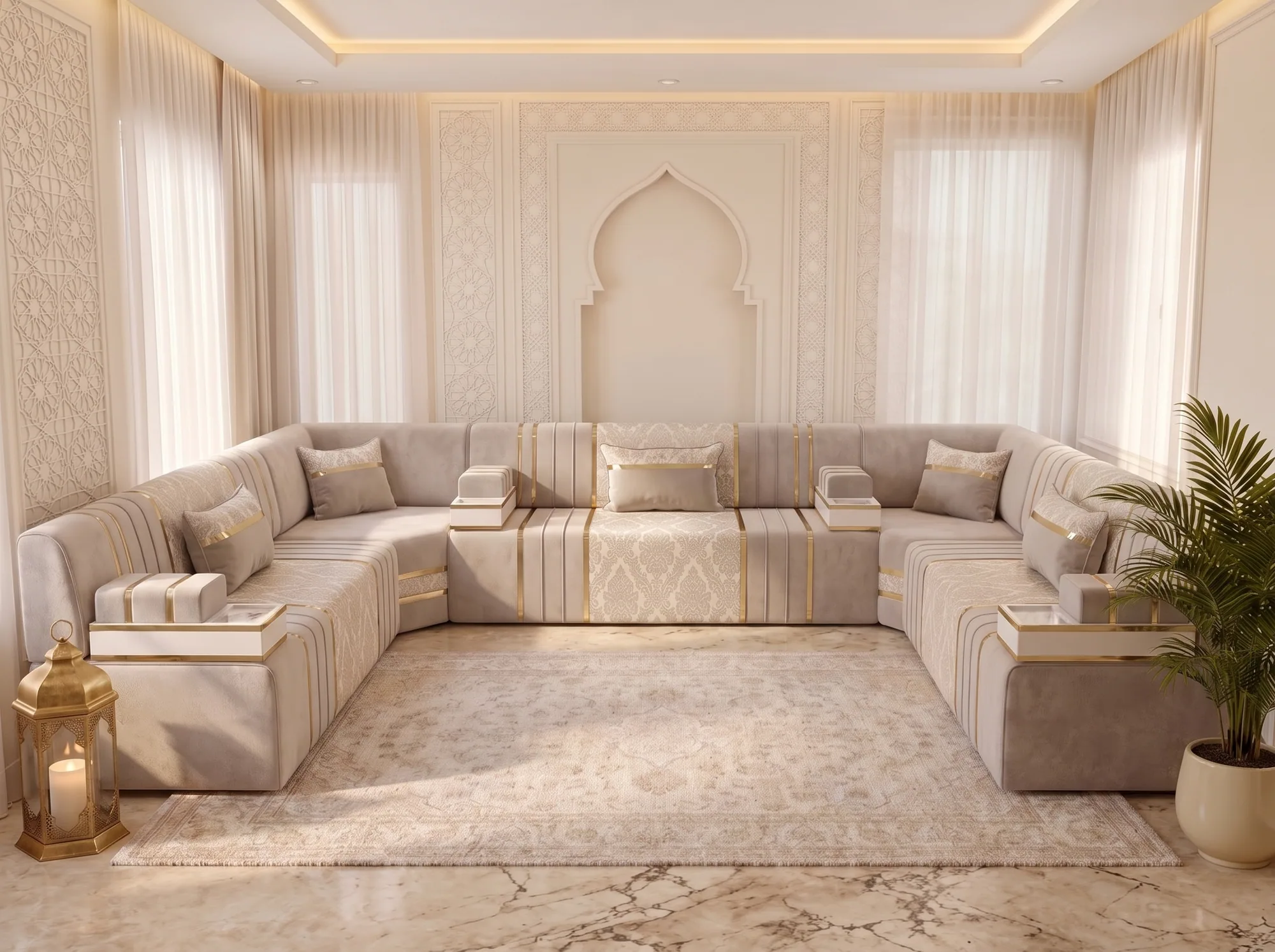
That is the whole physical specification: carpet, cushions at the wall, a place to make coffee, and an open door. The cream and burgundy floor sofa above, set around a plain rug, is about as close as a modern product comes to it. Nothing is said about colour, pattern, height or style. The definition is social. A room becomes a majlis because of who is welcome in it and what they do there.
The coffee has its own entry. “Arabic coffee, a symbol of generosity” was inscribed in the same year, and the file was later extended to include Jordan. It records the manners of serving, beginning with the oldest or most important guest, and our guide to majlis etiquette for guests explains them in full.
Who keeps the majlis tradition
UNESCO names the people who carry a practice, and for the majlis it is specific.
Elders. Community elders are considered its true bearers, particularly those with knowledge of nature, genealogy and tribal history.
Judges and religious sheikhs. They have a special place because they settle disputes in the majlis and explain political, social and religious rights and duties.
Women. Women have their own majlis. Some prominent women also attend other majlis, especially those of an academic or literary kind.
Children. They are how the practice continues. Because a majlis is open to all ages, knowledge is passed on informally as children go with adults on their visits. By watching their elders, the young learn their community’s manners and ethics, how to hold a conversation, how to listen, and how to respect another person’s opinion.
The majlis is also a place where oral heritage lives. Folk stories, folk songs and Nabati poetry are passed on there. In Oman the same role is played by the sablah, a communal hall where the old and the young come to learn and where the youngest present serves the coffee. The Omani sablah and majlis page describes it.
The majlis today: homes, tents and public rooms
The tradition has not stayed still, and the listing does not ask it to.
In homes. The majlis is the guest room, set apart so that visitors can be received without disturbing family life. In Qatar it traditionally stands by the entrance and was the one room with windows onto the street. In Saudi houses its design reflects the owner’s region, and in the north the coffee is made at a stone hearth in front of the guests. Read more on the Saudi majlis and Qatari majlis pages.
In tents. The Qatari majlis is traced to the goat-hair tent where men gathered to discuss matters of religion, politics and trade. The tent is still used in Saudi Arabia as a winter gathering place for family and friends. The Bedouin majlis and sadu page covers the tent and its weaving.
In public life. In the Emirates the majlis is a forum where the community raises matters with elders and sheikhs. The Emirati and Dubai jalsa page looks at the Emirati room and its seating.
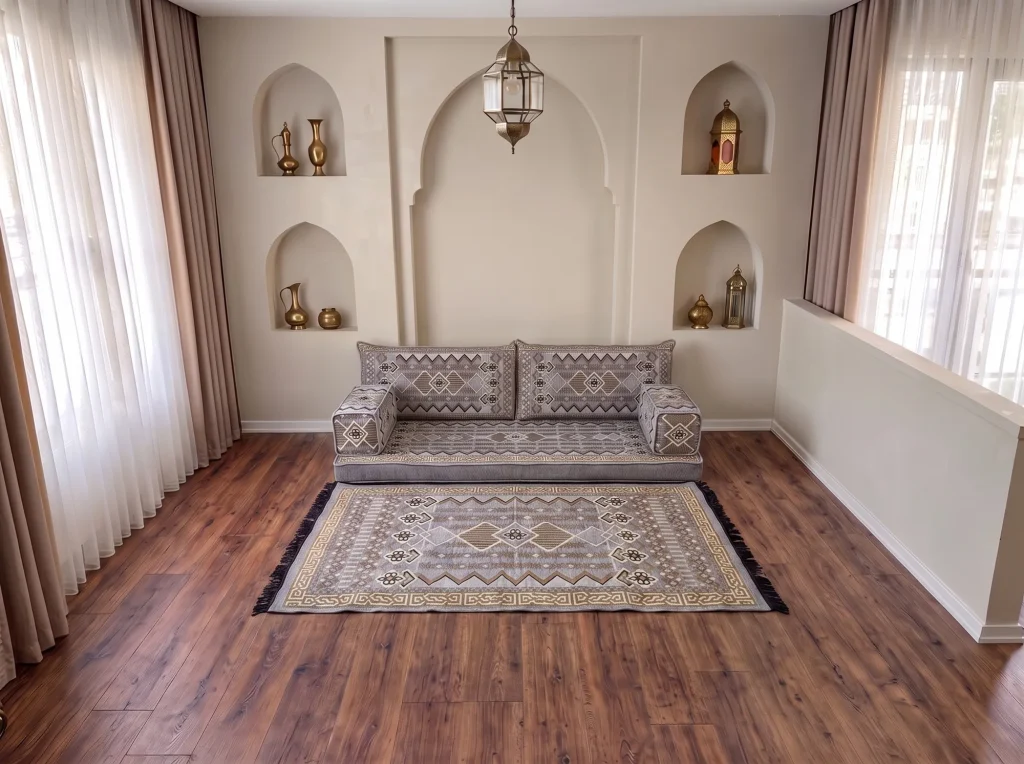
Abroad. Families who have moved to Europe, North America or Australia often keep one room, or one corner of the living room, as a majlis. It may be smaller, and the guests may come from several countries, but the purpose UNESCO describes is unchanged: a place kept ready for company. The busiest season is the same everywhere. In Bahrain, family majalis fill after the evening prayers in Ramadan and guests move from house to house through the night. Sofhu’s post on Arabic sofas for Ramadan gatherings picks up that theme.
History of the majlis in a few lines
There is no first majlis to point to. The word comes from the Arabic verb jalasa, to sit, and means a place of sitting. It was already used for tribal councils before Islam, and for the consultative council of the early caliphate. The domestic guest room, the ruler’s open audience and the modern parliament that carries the name are all branches of the same idea. Our article on majlis meaning in English follows the word, and Sofhu’s post on the history of the Arabic sofa follows the furniture.
Other parts of the same world have been recognised separately. Al-Qatt al-Asiri, the wall painting done by women in the guest rooms of Asir in south-west Saudi Arabia, was inscribed in 2017. The setting of a majlis, in other words, has heritage of its own beyond the seating.
What it means for the furniture: why the seating runs along the walls
The UNESCO text mentions furniture in six words, cushions against the wall, and those six words explain the shape of every majlis set.
- Everyone faces everyone. Seating on the perimeter puts all the guests in one circle of conversation. Nobody has their back to anyone.
- The centre stays open. That space is for the coffee, the incense, a tray of dates, and for people coming in to greet the room.
- The room scales. A wall of seating holds two people comfortably and can hold many more when the house fills.
- The wall does the work. Backrests lean on the wall behind them. Sofhu’s floor sofas are built this way and are not freestanding.
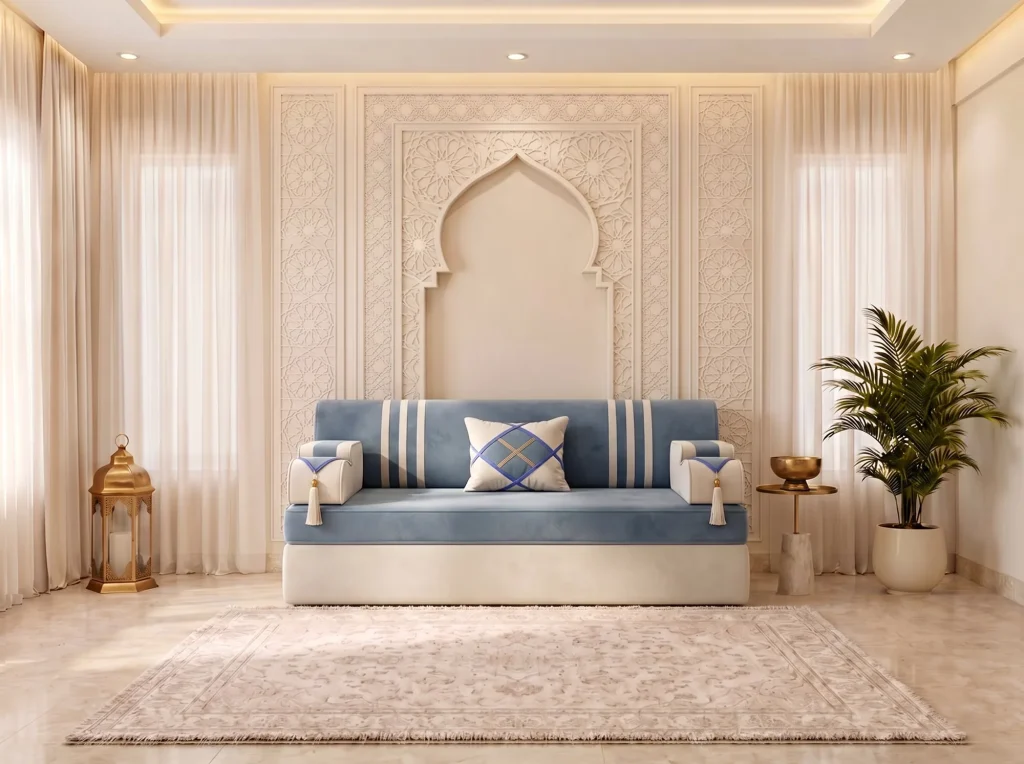
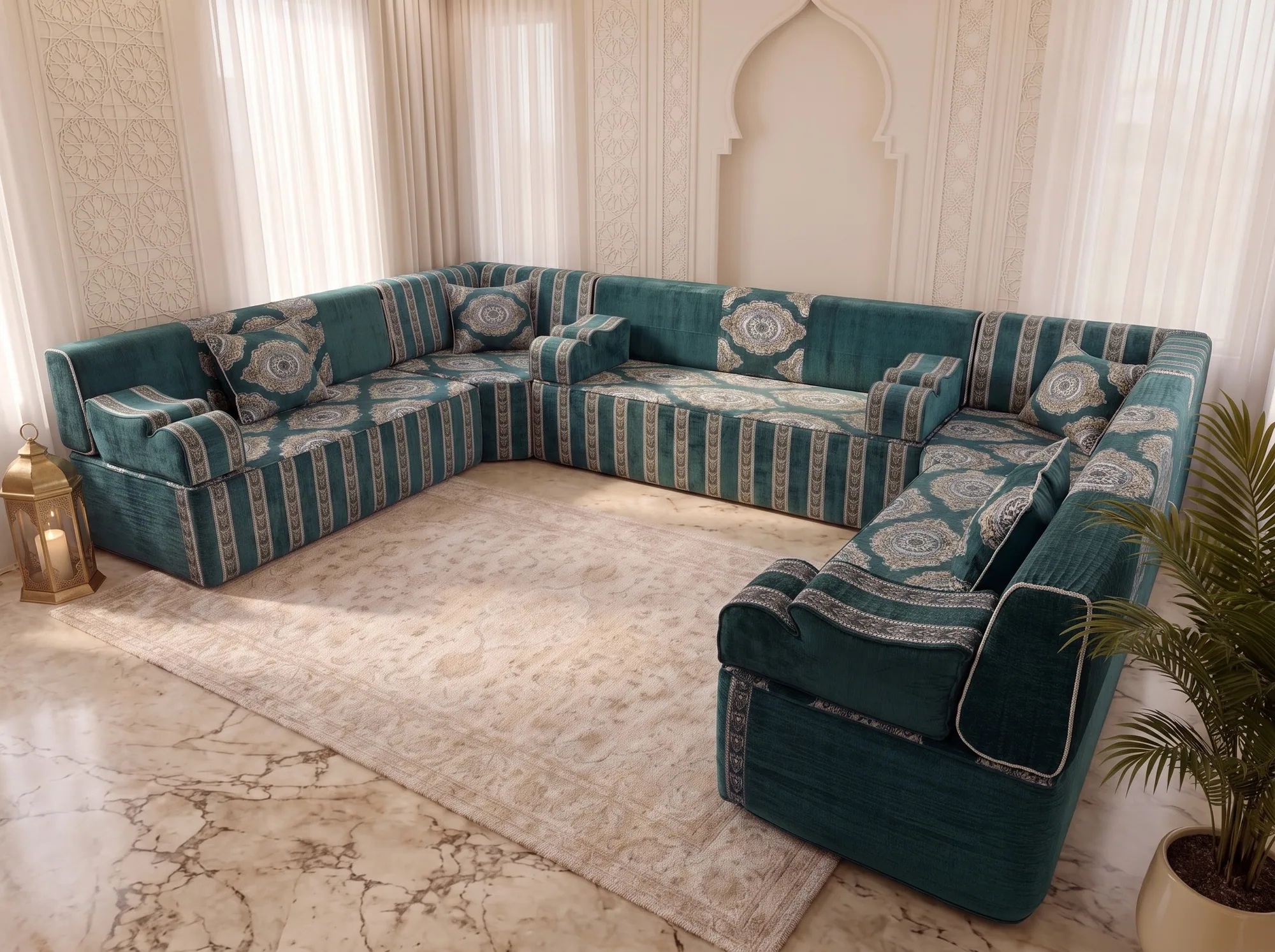
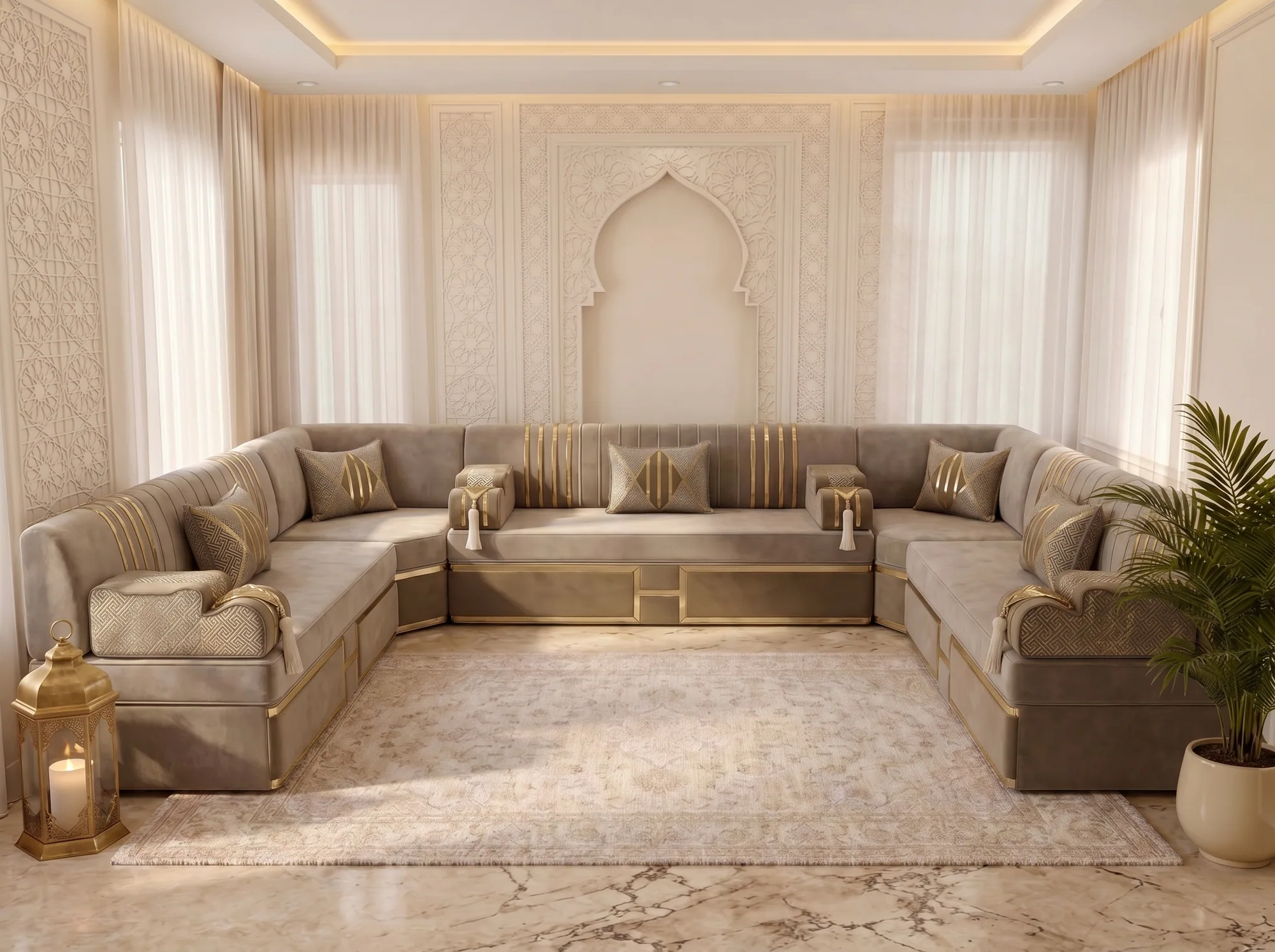
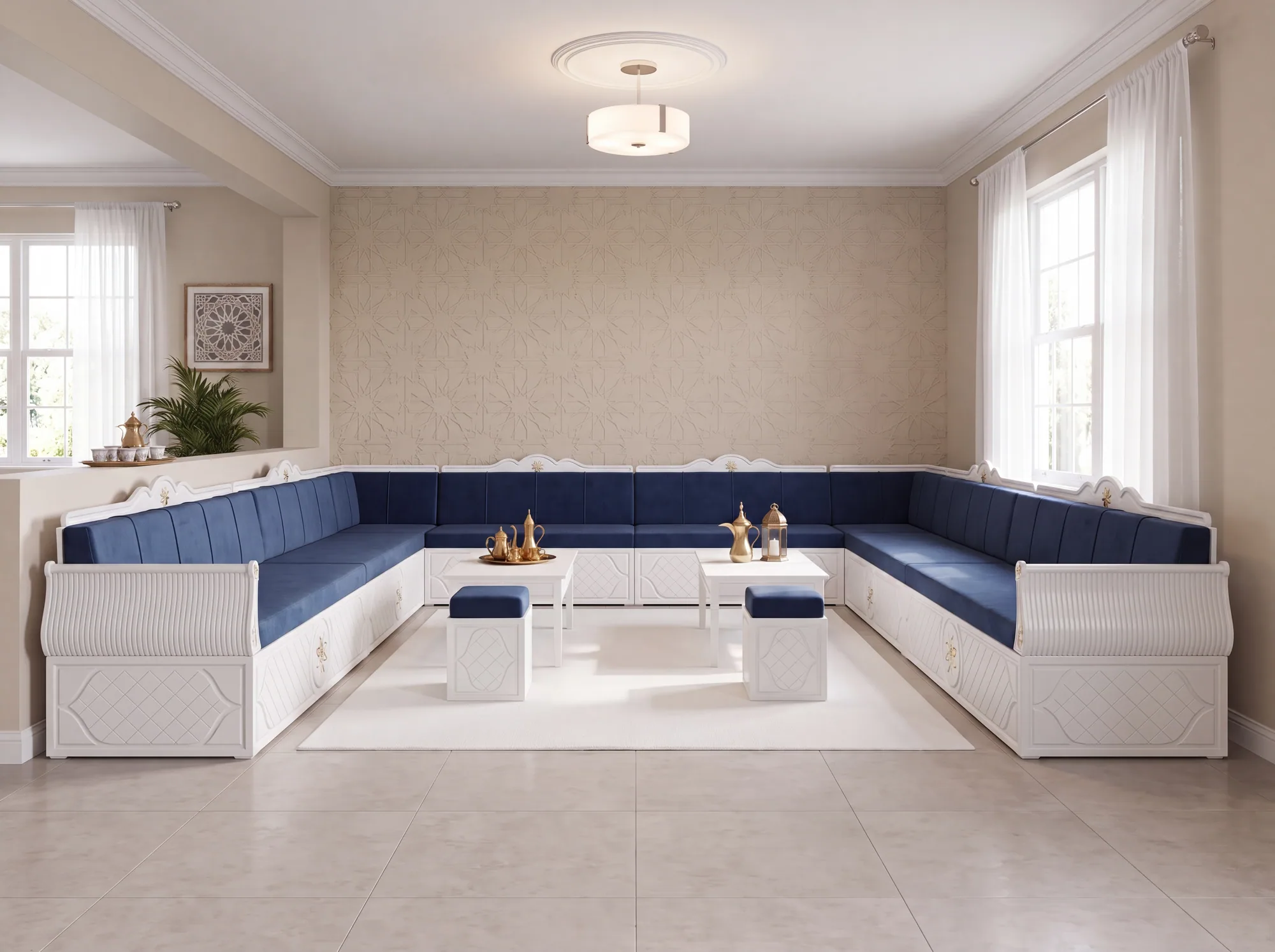
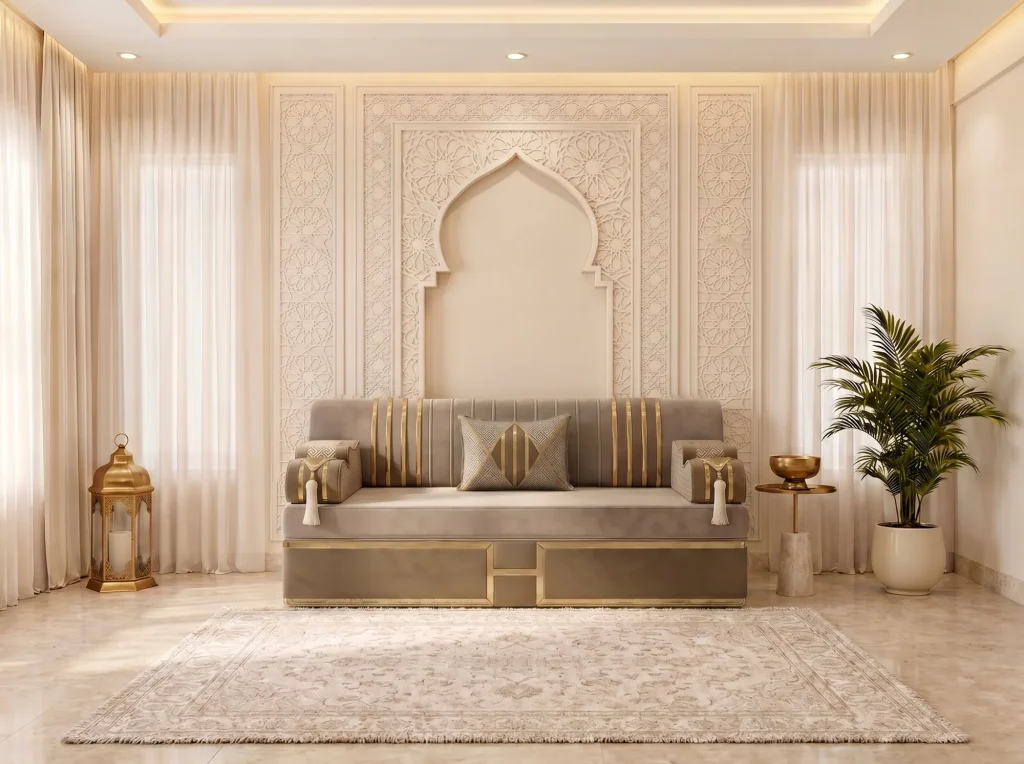
This is why seating for a majlis is ordered by wall length and not by the piece. Sofhu is a manufacturer and makes two products for such a room. The Arabic majlis, like the sky blue piece above, is a raised, fully upholstered set at sofa height with a solid base, fixed backs and arm bolsters. The Arabic floor sofa is a seat mattress at floor level with loose back cushions, the closer of the two to UNESCO’s cushions against the wall. Each set is made in Türkiye to the customer’s measurements, as a single row, an L-shape or a U-shape. Seats are filled with 32 kg/m³ (32 DNS) high-density foam, covers are zippered and removable, and shipping is free worldwide.
One honest note to finish. The listing recognises a practice. It does not certify, protect or endorse any sofa, including ours. What a well-made set can do is serve the practice: give every guest a comfortable place and keep the middle of the room free for the coffee. The Arabic majlis page linked above shows the layouts, and you can send your wall measurements through the quote page or on WhatsApp.