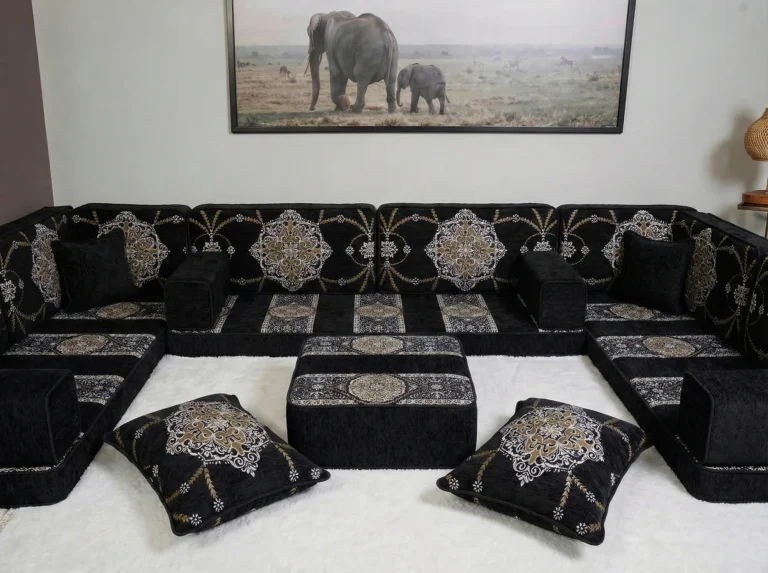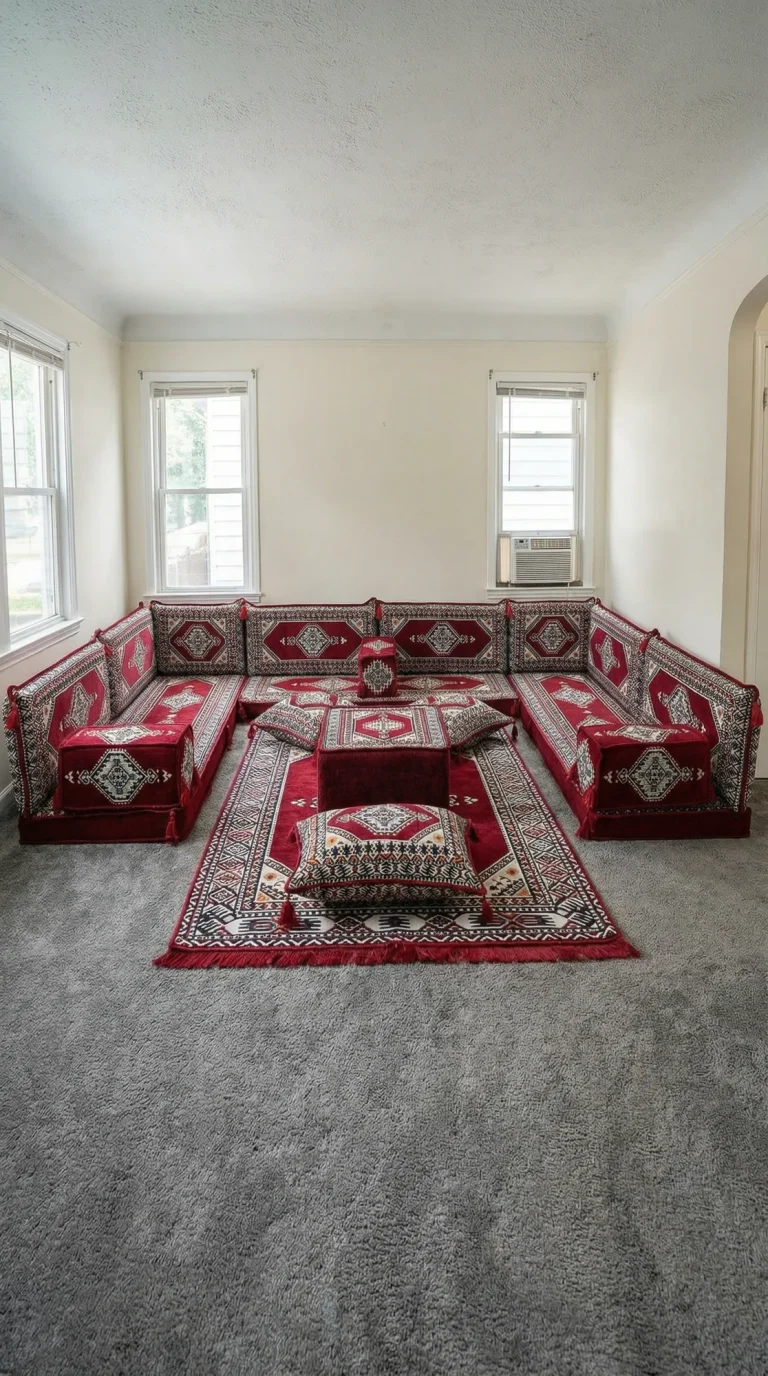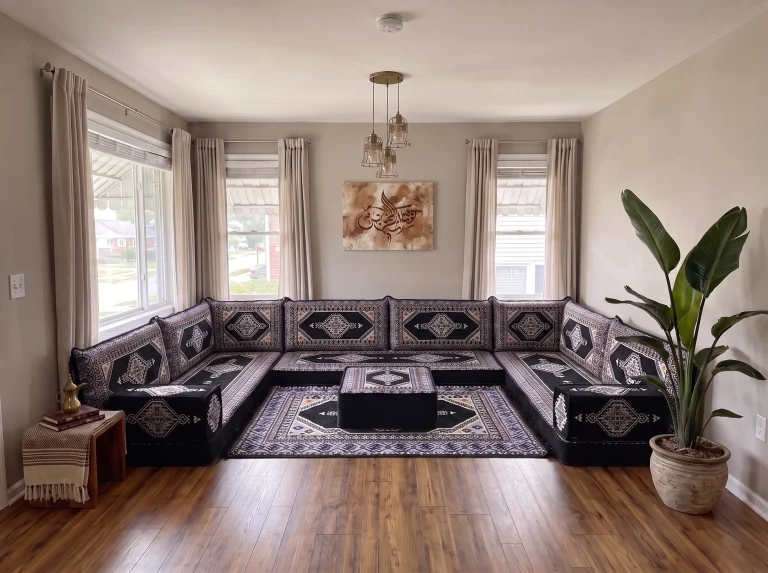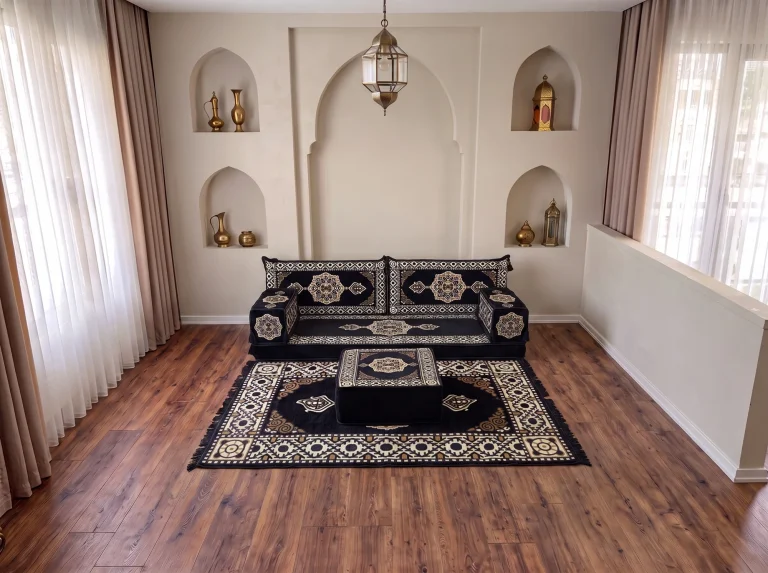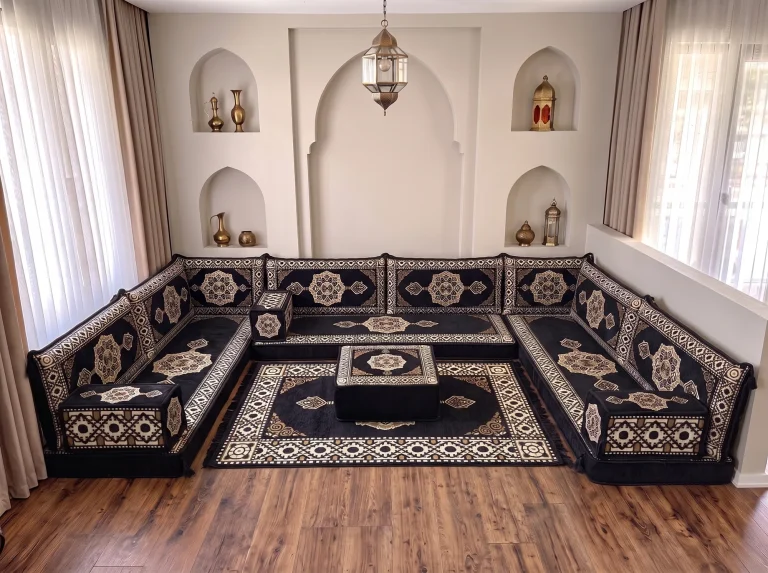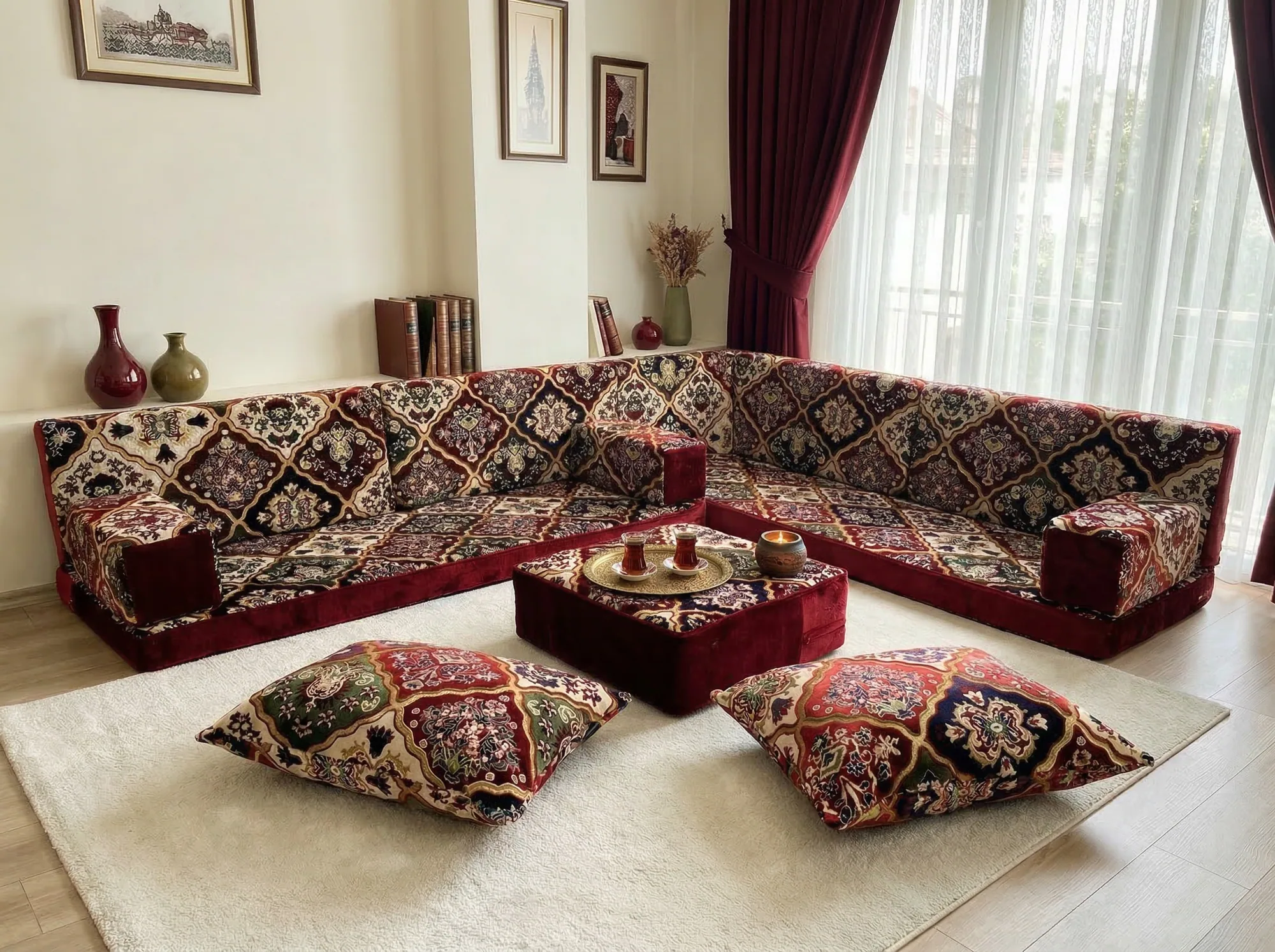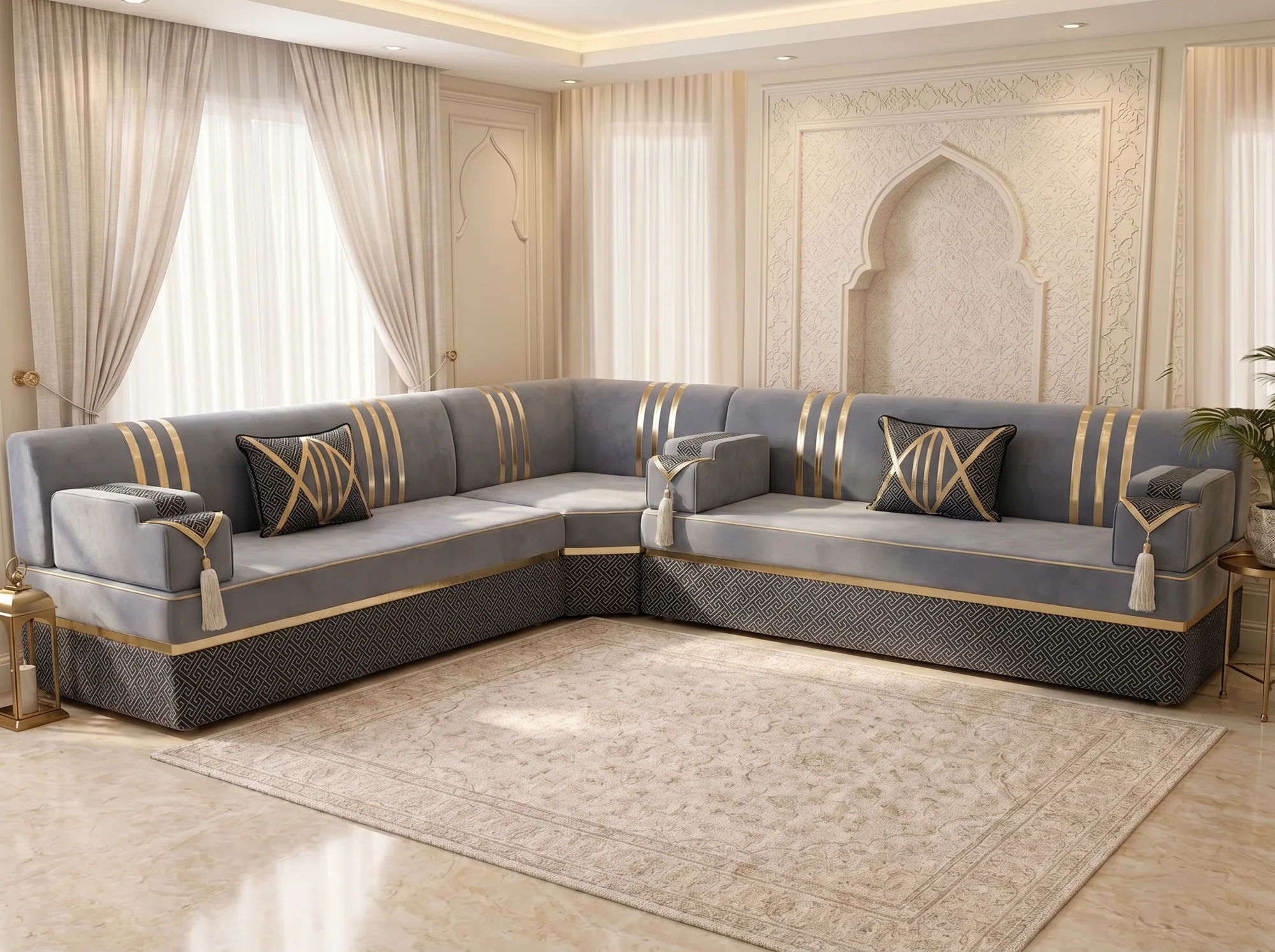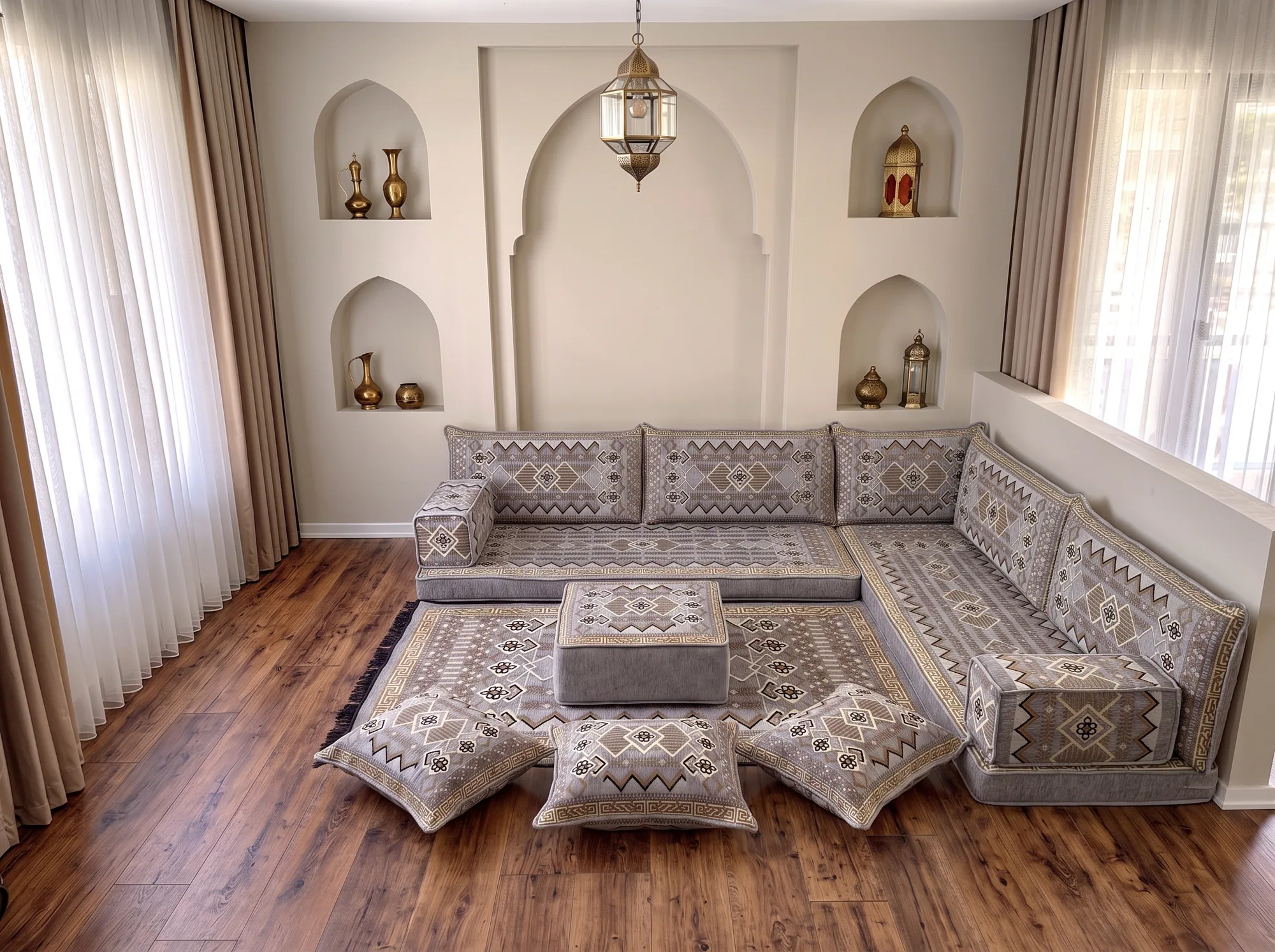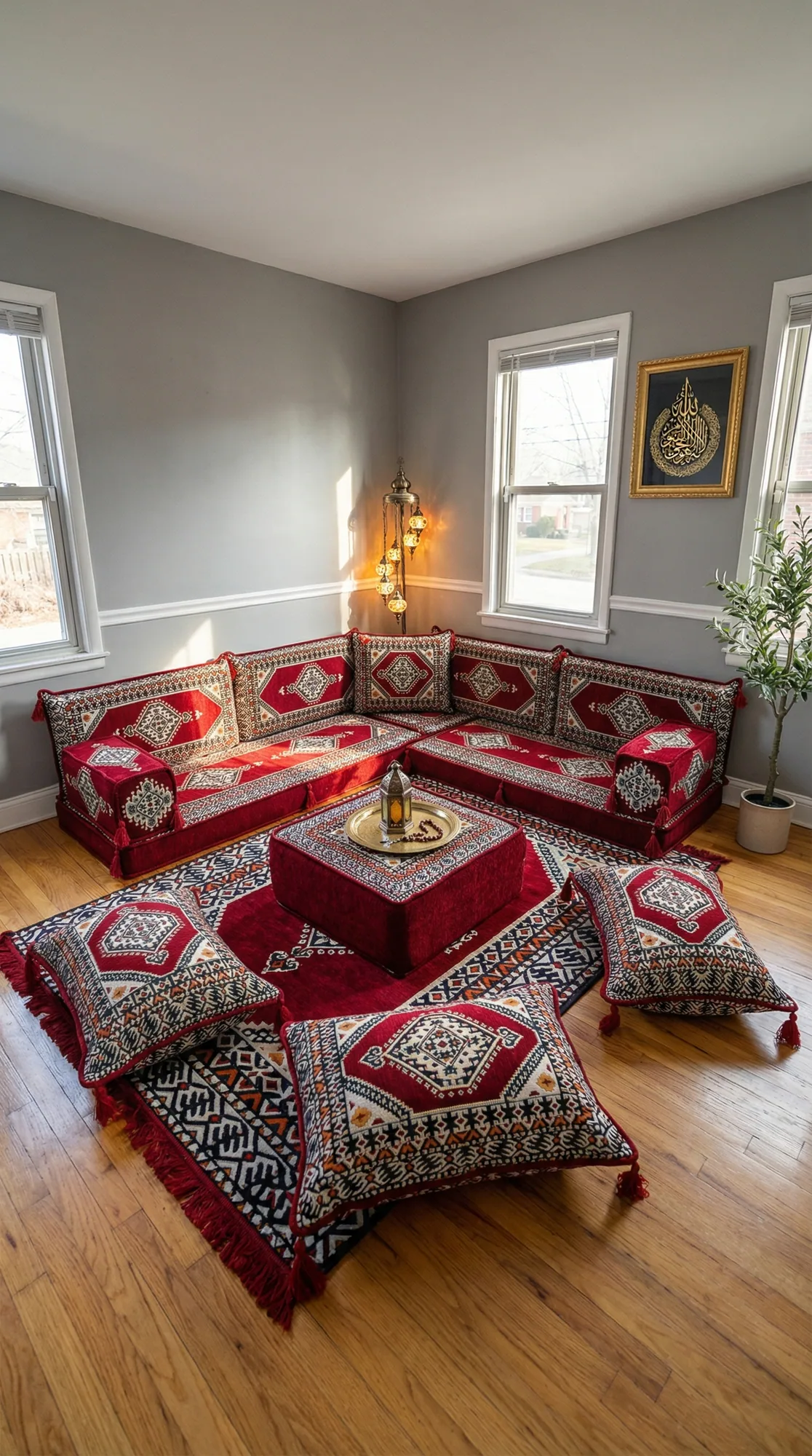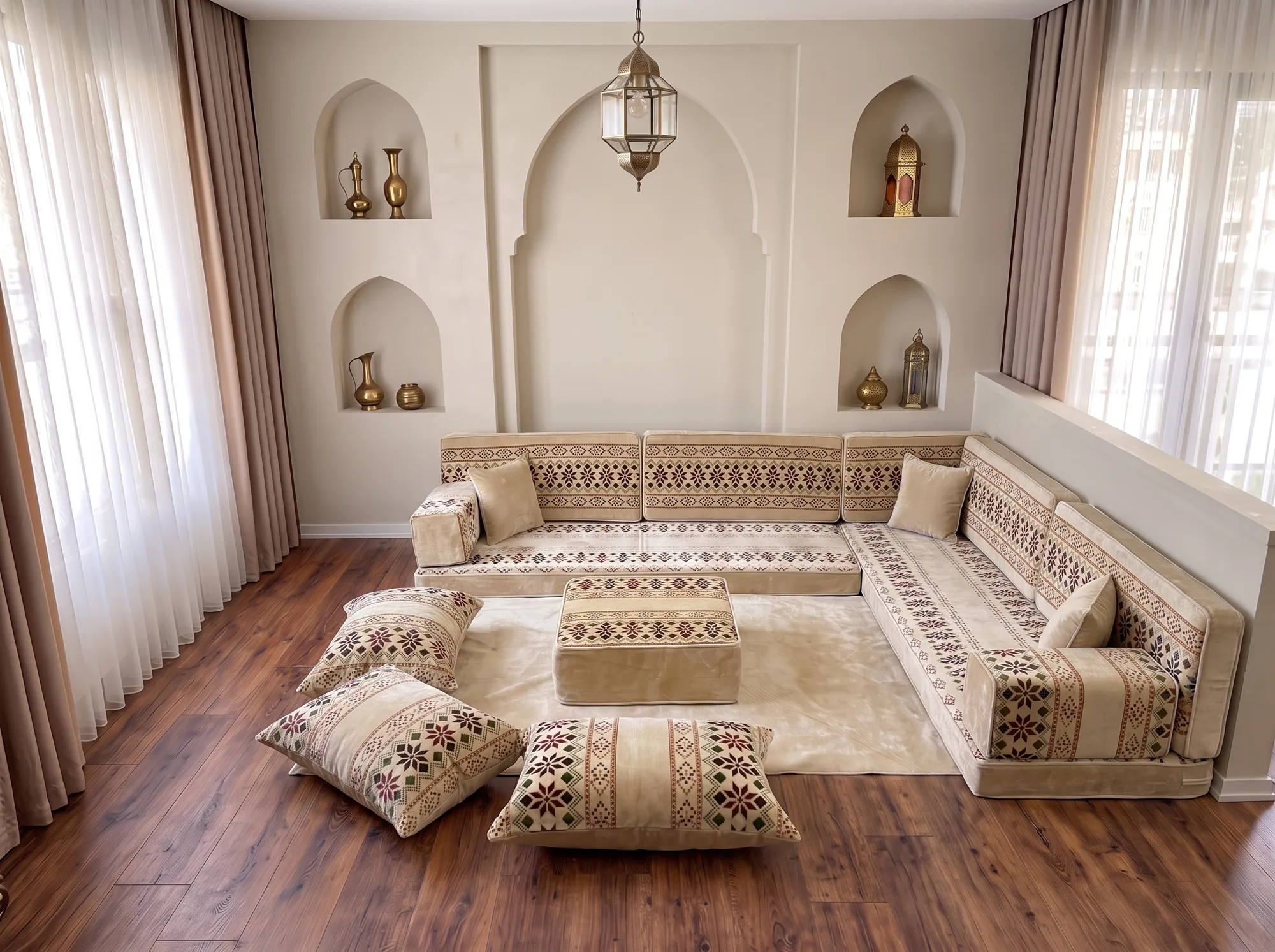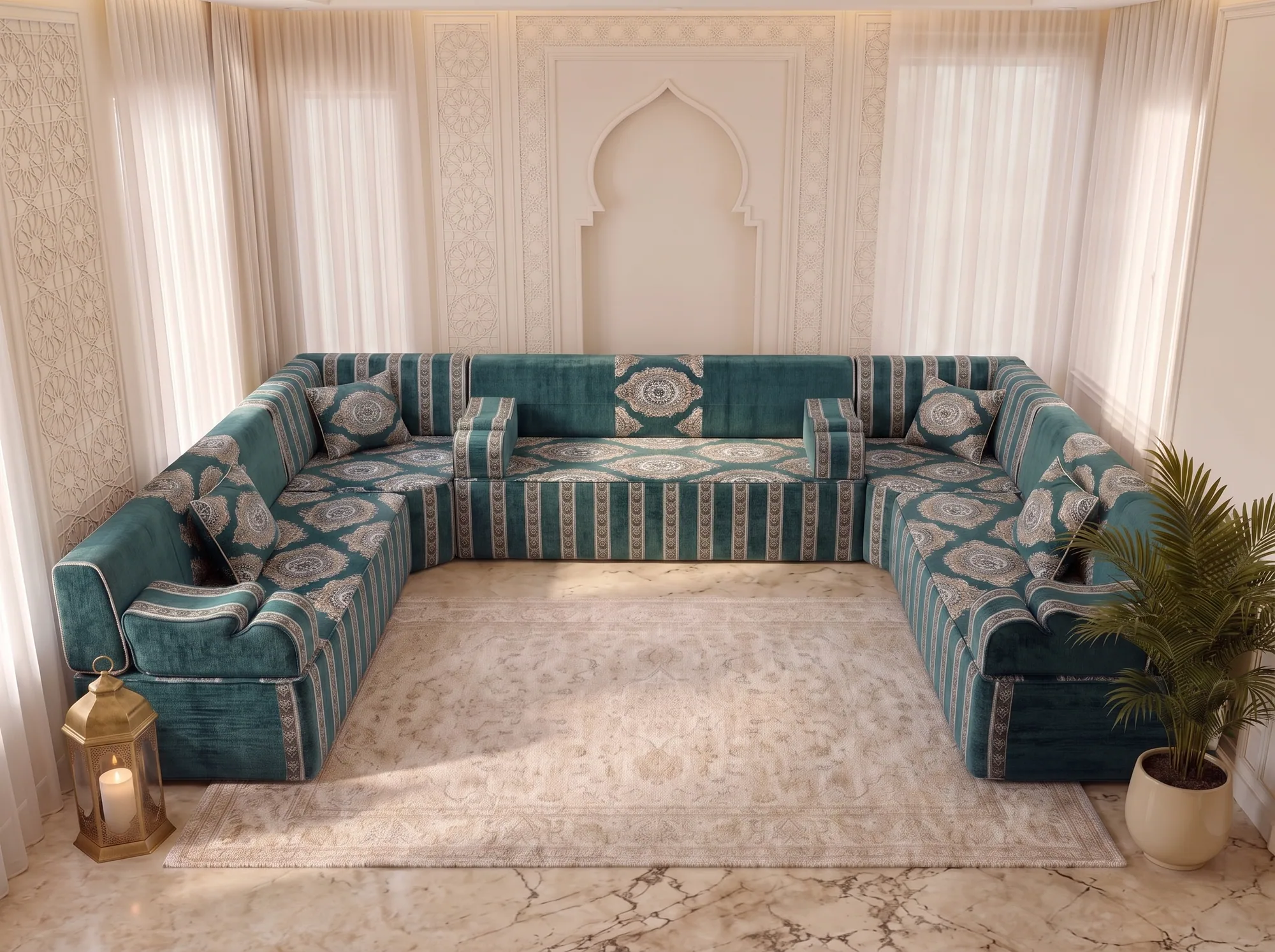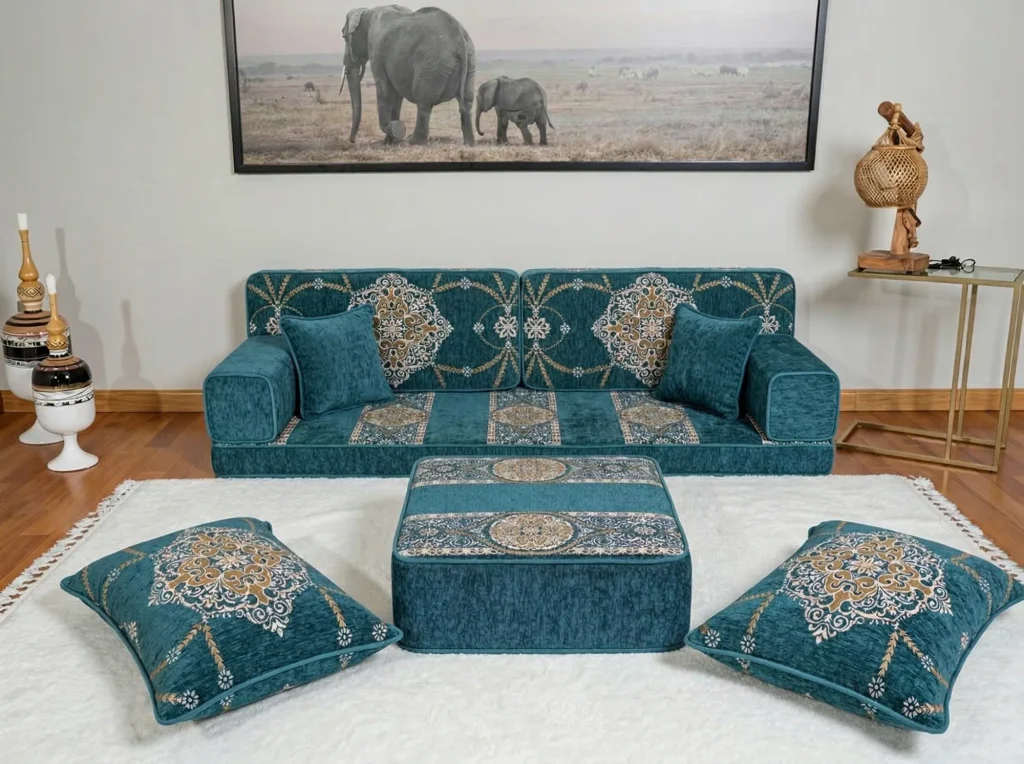
Sofa comes from Arabic suffa, a bench, by way of Turkish. Divan is Persian for a register and then a council chamber, whose wall seats took the name. Ottoman is named after the Ottoman Empire. Mattress is Arabic matrah, a place where something is thrown down. Sofhu still makes the low wall seating these words first described.
- Sofa
- Arabic suffa, a bench or ledge, via Turkish
- Divan
- Persian diwan, a register, then a council
- Ottoman
- French ottomane, recorded 1729
- Mattress
- Arabic matrah, from taraha, to throw
- Divan as a seat in English
- From 1702
- Ottoman in English
- First recorded 1789
On this page
Four of the most ordinary words in an English furniture shop are not English at all. Sofa and mattress come from Arabic, divan from Persian, and ottoman is the name Europeans gave to a Turkish way of sitting. The sofa etymology is the best known of the four, but the others followed the same route west, and each one first described low, cushioned seating set against a wall.
Four everyday words with Eastern roots
| Word | Source | Original meaning | In English |
|---|---|---|---|
| Mattress | Arabic matrah | A place where something is thrown down | Middle Ages |
| Sofa | Arabic suffa, via Turkish | A bench or ledge for sitting | Early 1700s as a seat |
| Divan | Persian diwan, via Turkish | A register, then a council | 1702 as a seat |
| Ottoman | French ottomane | “The Ottoman one” | 1789 |
Read down the last column and a pattern appears. Mattress arrived first, in the medieval period, along with much else that Europe learned from the Arabic-speaking world. The other three arrived close together, in the century when European travellers, merchants and diplomats were spending time in Ottoman cities and coming home with a taste for what they had sat on.
Sofa: from an Arabic bench to a European seat
Sofa goes back to Arabic suffa (صفّة), a long seat or ledge built of stone or brick. Turkish adopted the word for a raised part of a room, spread with carpets and cushions, where people sat. That is the sense in which Europeans first met it. An English dictionary published in 1730 still described a sofa as a sort of alcove furnished with rich carpets and cushions, not as a piece of furniture you could carry.
Within a few decades the word had moved from the platform to the thing on it, and then to any long upholstered seat with a back and arms. The object changed more than the word did. A European sofa stood on legs in the middle of a room. The original was part of the room itself.
This article does not retell that whole story. Sofhu’s post on the history of the Arabic sofa covers it, and if you came here for the translation rather than the history, see how to say sofa in Arabic.
Divan: a register, a council, then the seat along the wall
The divan etymology is the longest journey of the four, because the word passed through four meanings before it reached the furniture.
- A bundle of written sheets. Persian diwan first named a collection of documents. The same sense survives in poetry, where a divan is the collected poems of one author.
- An office of accounts. The place where the registers were kept took the name. French douane, customs, is the same word.
- A council of state. In the Ottoman Empire the divan was the council of viziers that advised the sultan, and the chamber in which it met.
- The seat. Council chambers were lined with long, low, cushioned seats along the walls. Visitors began to call the seats by the name of the room.
The seating sense is recorded in English from 1702 and became common in Europe around the middle of the eighteenth century. In West Asia a divan was a long seat made of a mattress laid against the wall, on the floor or on a low frame, with cushions to lean on. Between roughly 1820 and 1850 it was a fashionable piece in European boudoirs, and coffee houses that offered cigars and newspapers were themselves called divans.
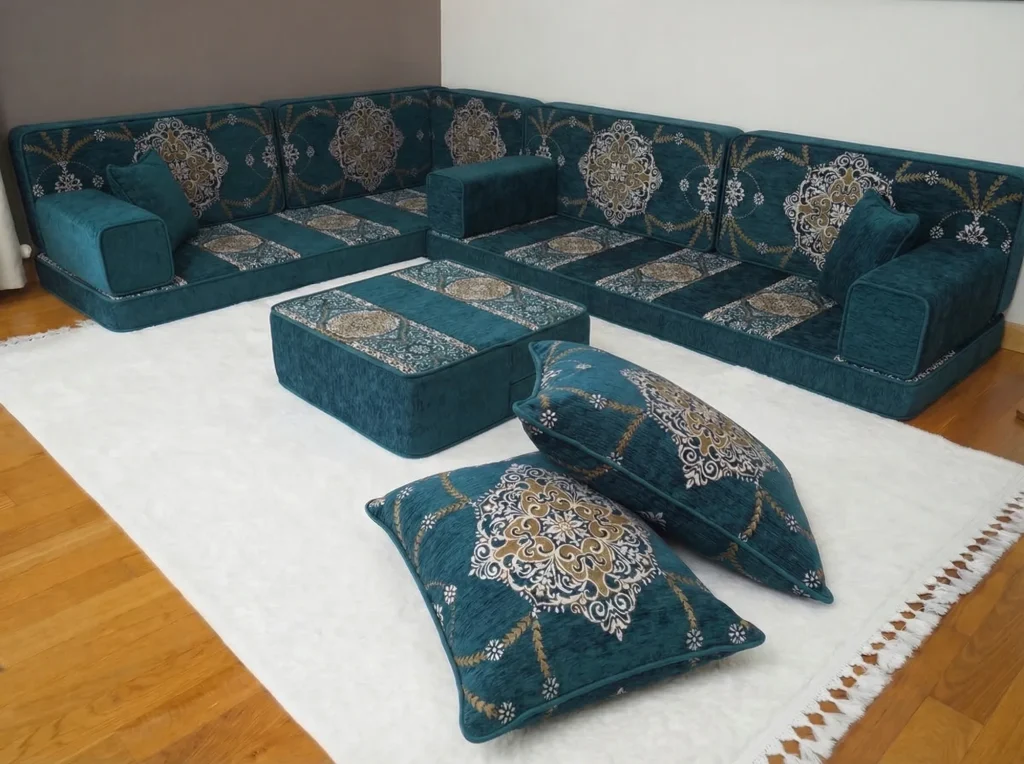
The word never left the East. In Yemen a diwan is a large reception room. In Kuwait the related word diwaniya names the men’s reception hall and the evening held in it. In Kurdish and Persian a diwan-khane is a guest house. In Türkiye a divan is a backless, legless sofa. The glossary of floor seating names by country maps each usage, and Sofhu’s own diwan floor sofas carry the name today.
Sofa vs divan
In present-day English the difference is about shape. A sofa has a back and arms. A divan is a long seat without them, pushed against a wall, and in British usage also a bed base. Three centuries ago an English traveller in Istanbul could have used either word for the same cushioned bench.
Ottoman: named for an empire
The ottoman furniture origin is simpler: it is a place name. In the Ottoman Empire the main seating in a home was a low wooden platform heaped with cushions. It was first built along three walls of a room, then made in smaller versions that fitted a corner. Europeans who adopted it called it by where it came from.
The earliest known use of the name is French ottomane, in 1729. The first recorded English use is in Thomas Jefferson’s memorandum book for 1789, where he notes paying for an “Ottomane” in Utrecht velvet. At that point an ottoman was still a seat for several people.
Then it shrank. European makers produced smaller versions, often circular or octagonal in the nineteenth century, sometimes with a padded column in the middle and later with a hinged lid for storage. A closely related piece, the upholstered footstool, came to share the name, and by the twentieth century “ottoman” covered both. A word that began as wall seating around three sides of a room ended as the small padded block in front of an armchair.
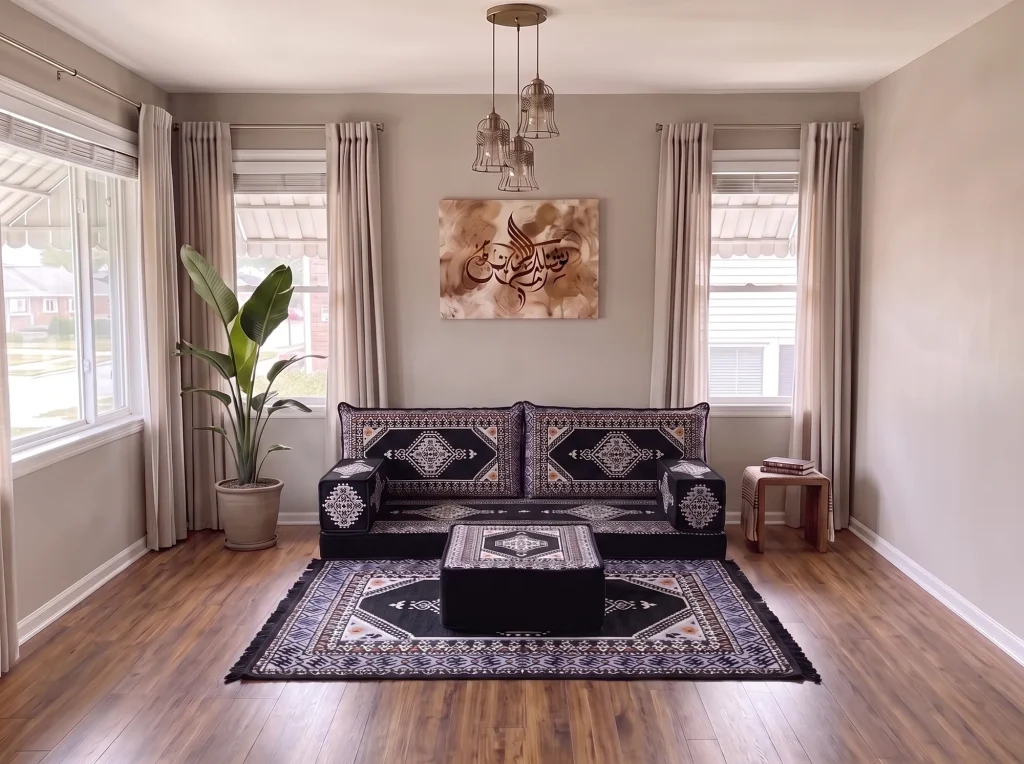
In a floor sofa set the ottoman has kept some of its older dignity. It is a low upholstered block in the same fabric as the seats, used as an extra place to sit, a footrest or a surface for a tray.
The built-in platform itself is still part of Turkish life under another name. The Turkish sedir is the fixed raised seat along the windowed wall of a traditional house, and it is close kin to what Europe called an ottoman.
Mattress: something thrown down
The mattress word origin is the most literal. Arabic matrah (مطرح) means a place where something is thrown, from the verb taraha, to throw. It named the cushions and padding thrown down on the floor to sit or lie on. Medieval Europeans, who met the idea through contact with the Arabic-speaking world, took both the habit and the word. It passed through the Romance languages, Old French materas among them, and into Middle English.
That first meaning is worth holding on to, because it describes floor seating better than any modern term. A mattress was not part of a bed. It was the bed, and the seat, and it was put down where it was needed.
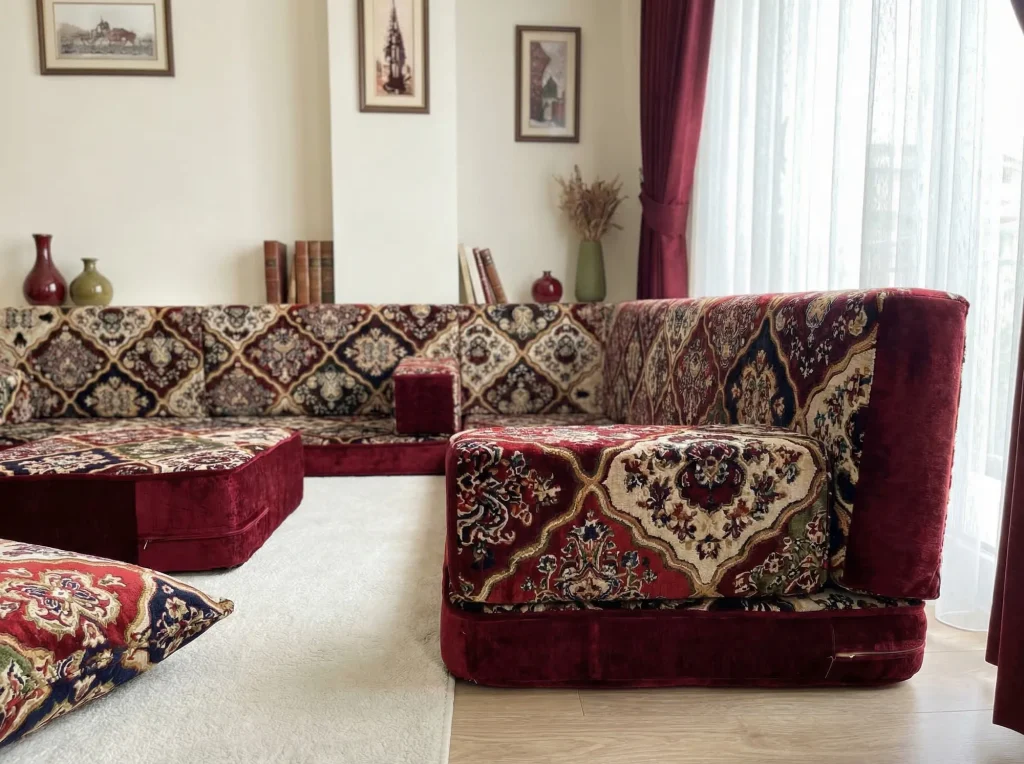
The seat of an Arabic floor sofa is still a mattress in this sense. In Arabic retail it is called a farsha, in Afghanistan a toshak, and in the Persian tradition a thin seat pad sits in front of each carpet-faced backrest, as the Persian poshti page describes. What has changed is the filling. Sofhu fills its seats with 32 kg/m³ (32 DNS) high-density foam, with no springs inside. Density is the measure of how much material is in the cushion, and denser foam generally keeps its height and support longer than light foam.
What the words tell us
Europe borrowed the furniture and the vocabulary together. None of the four words was needed until there was a new thing to name, and in each case the new thing was a way of sitting low, on padding, along a wall, in company.
Three points follow from that.
- These words describe rooms as much as objects. A sofa was a platform, a divan was a chamber, an ottoman ran around three walls. The furniture was a way of arranging a room for conversation, with the centre left open.
- The European versions stood alone. Once the pieces were given legs and backs and moved away from the wall, they became separate items. The original arrangement stayed joined up.
- The original form is still made. A floor sofa or a majlis set laid out in an L or a U is the same idea that seventeenth-century travellers tried to describe. Our guide to L-shape and U-shape majlis layouts shows how it fits a modern room, and floor seating vs raised diwan compares the two heights.
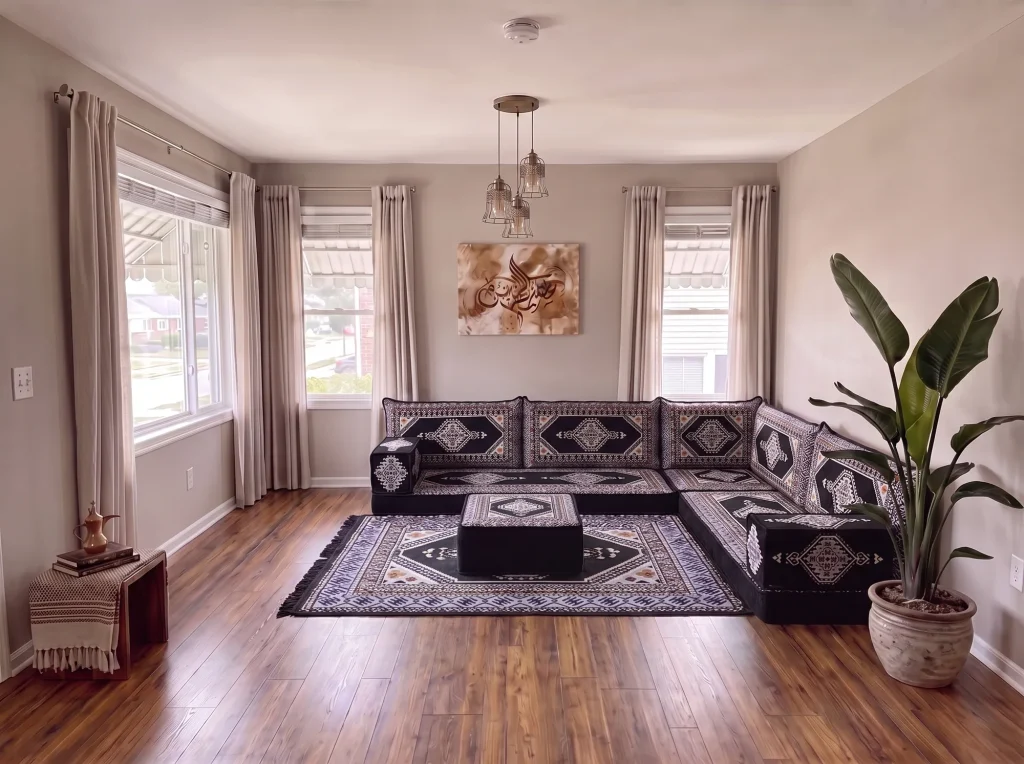
Sofhu is a manufacturer of this kind of seating, made in Türkiye and cut to each customer’s wall measurements, with free shipping worldwide. It makes two products: the low Arabic floor sofa shown throughout this article, a seat mattress at floor level with loose back cushions and an ottoman, and the Arabic majlis, a raised, fully upholstered set at sofa height with fixed backs and arm bolsters. If the history has made you curious about the real thing, the Arabic sofa page is the place to start, and the quote page is where to send your room measurements. For the Arabic side of the vocabulary, see what majlis means in English.