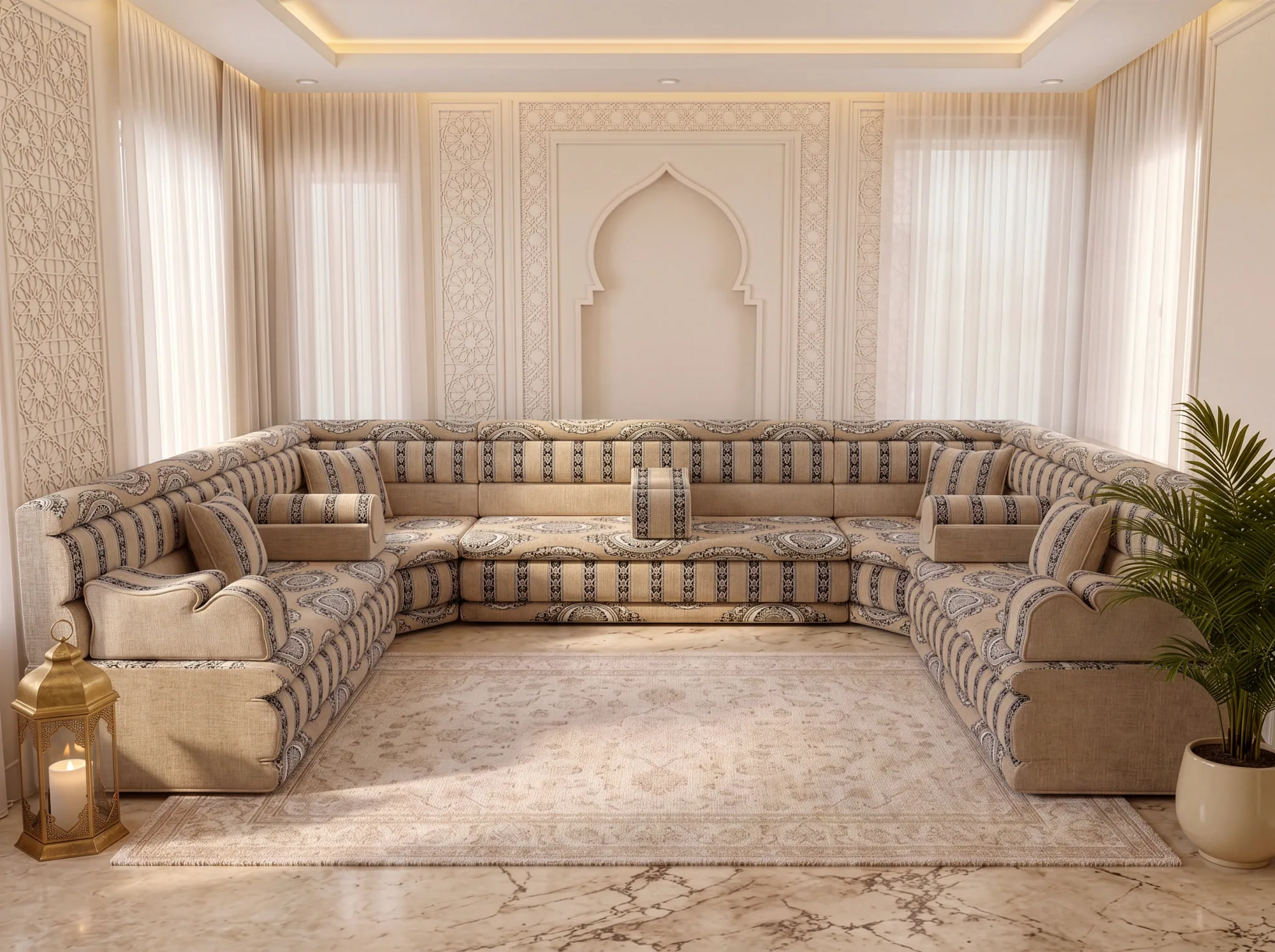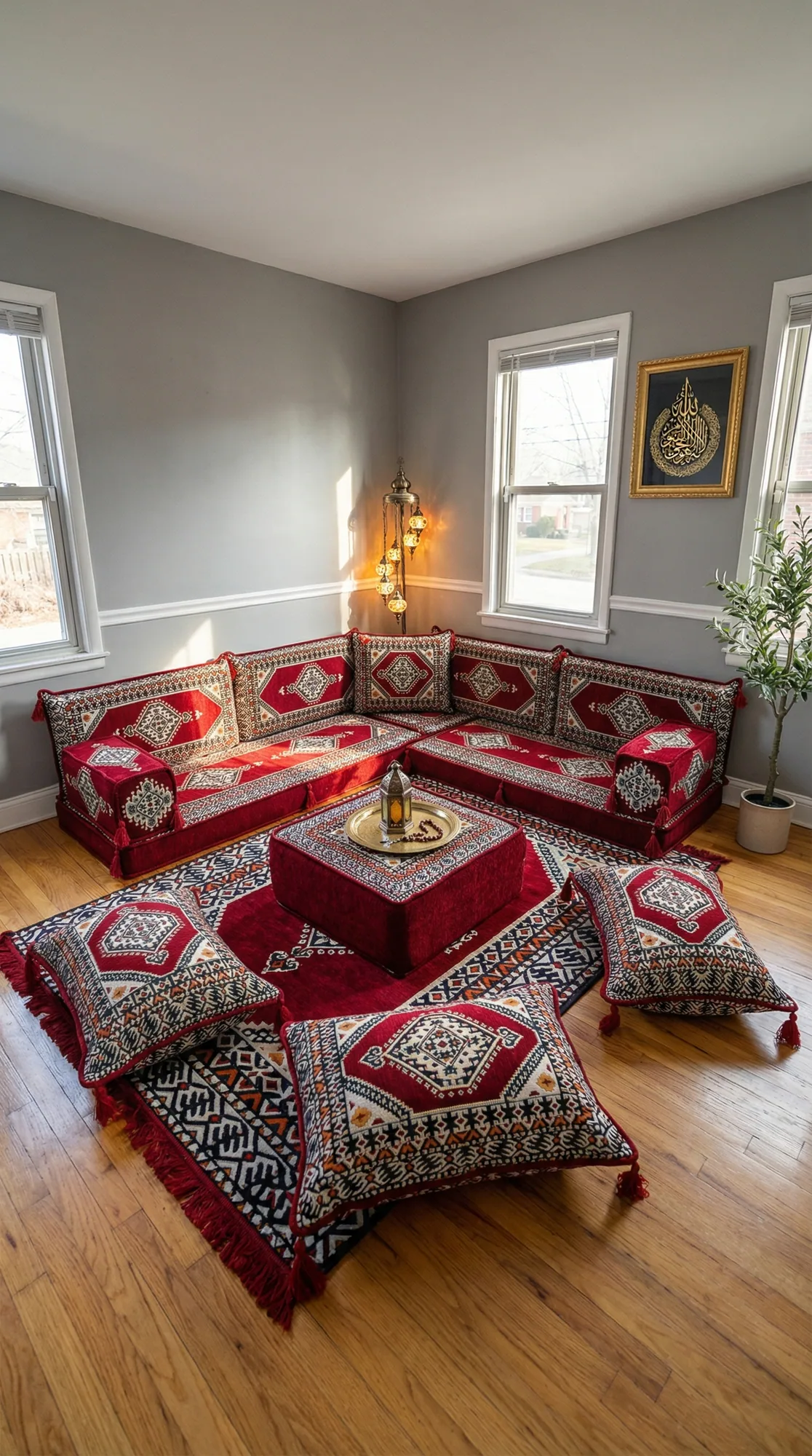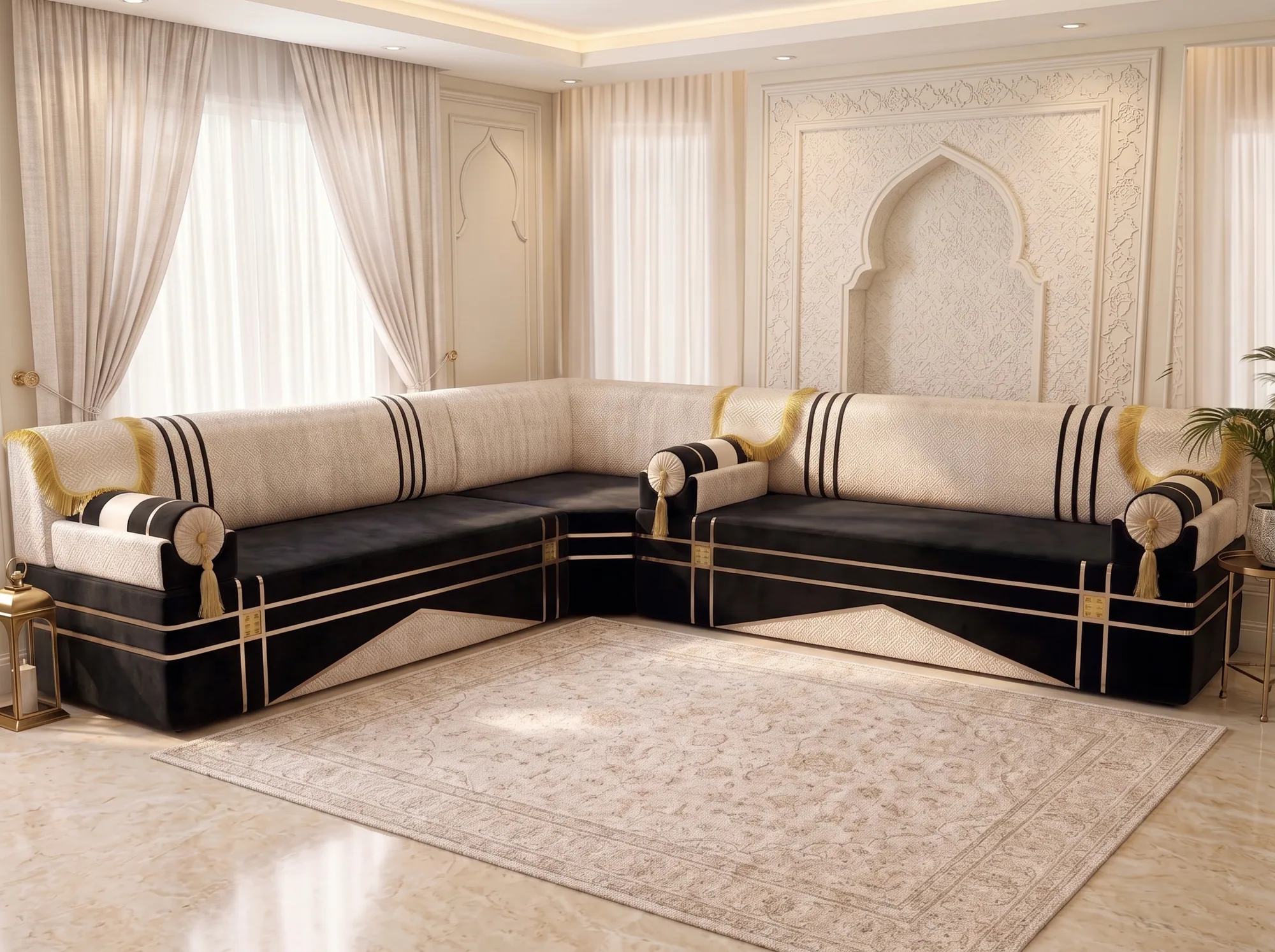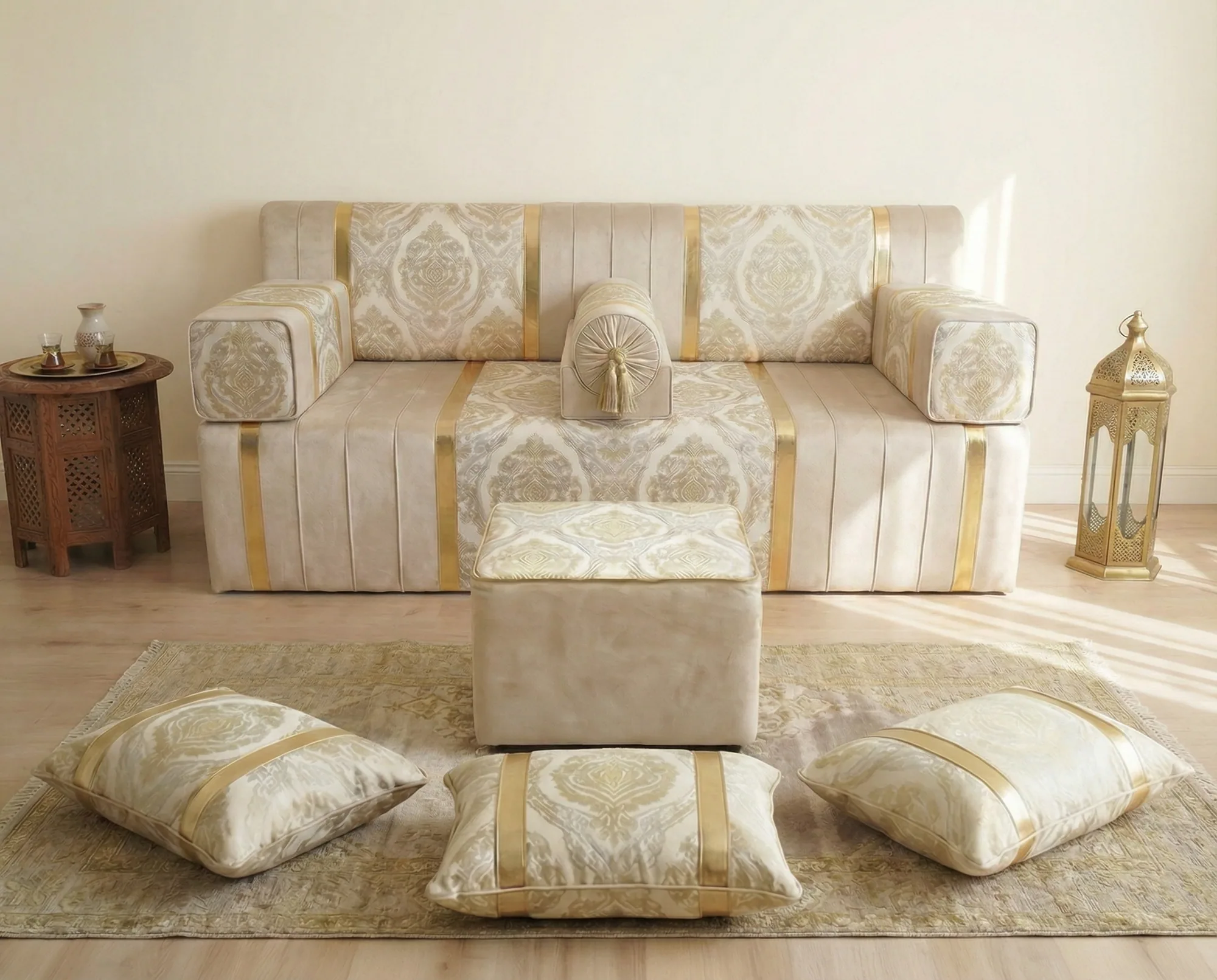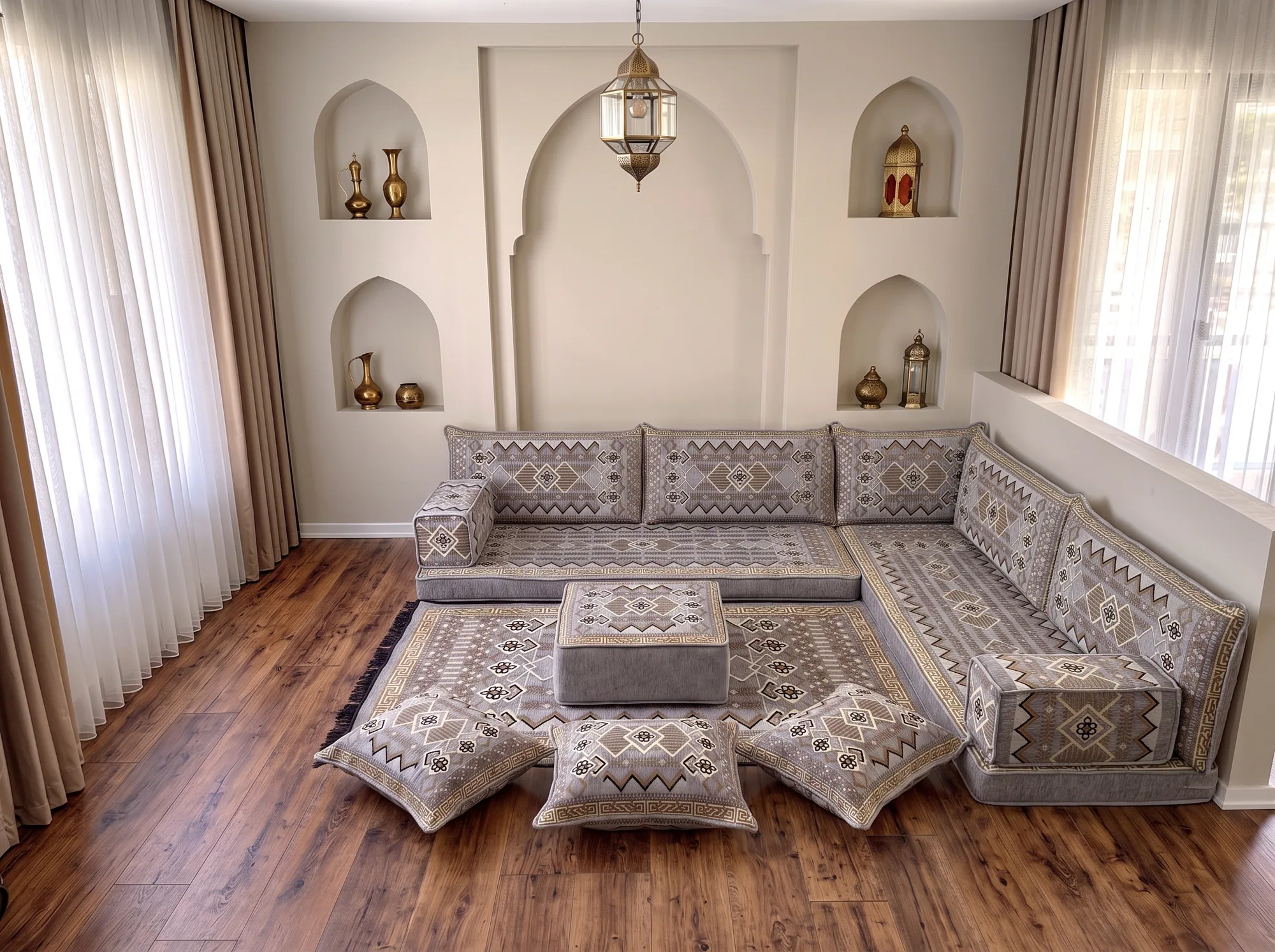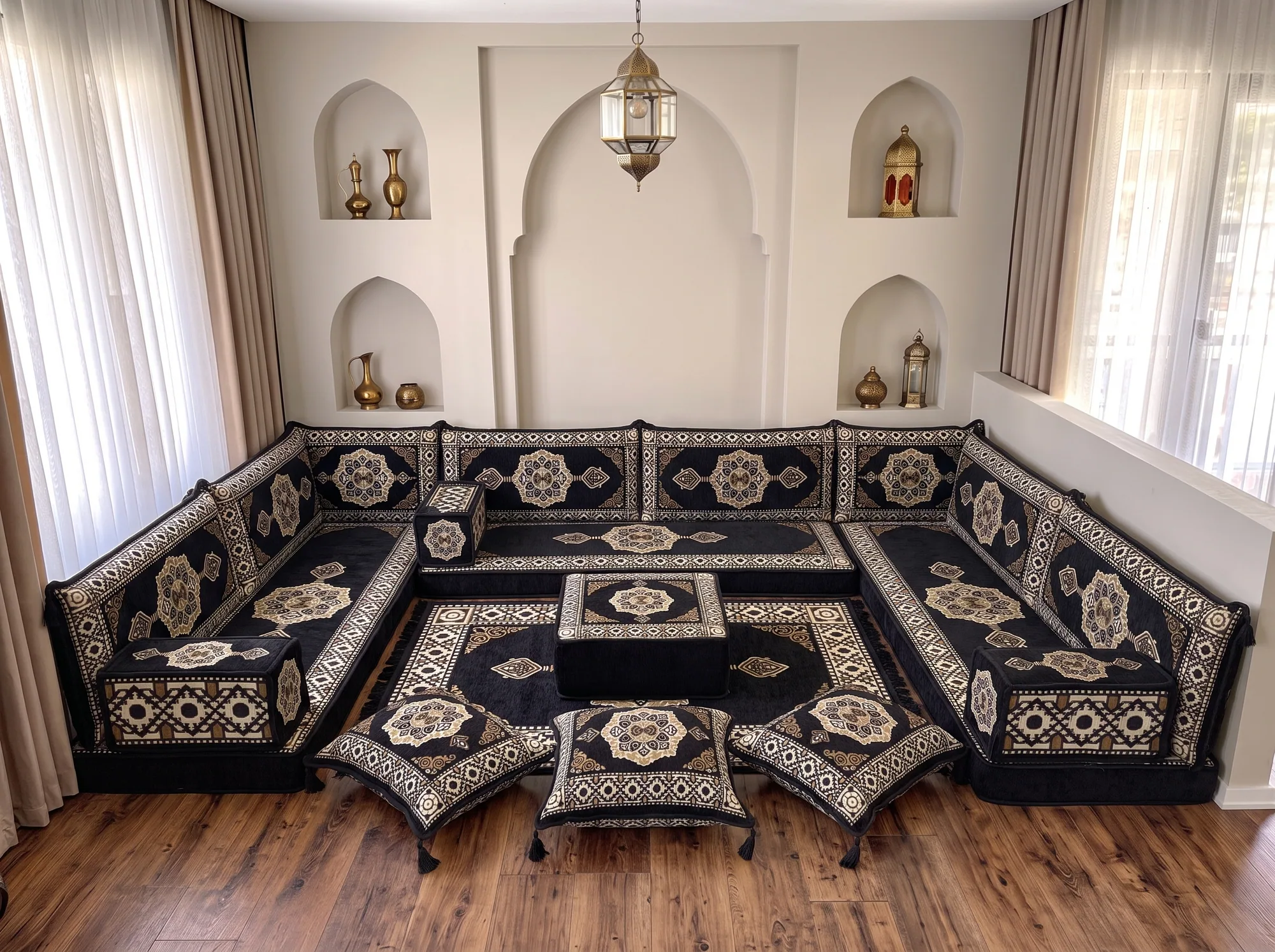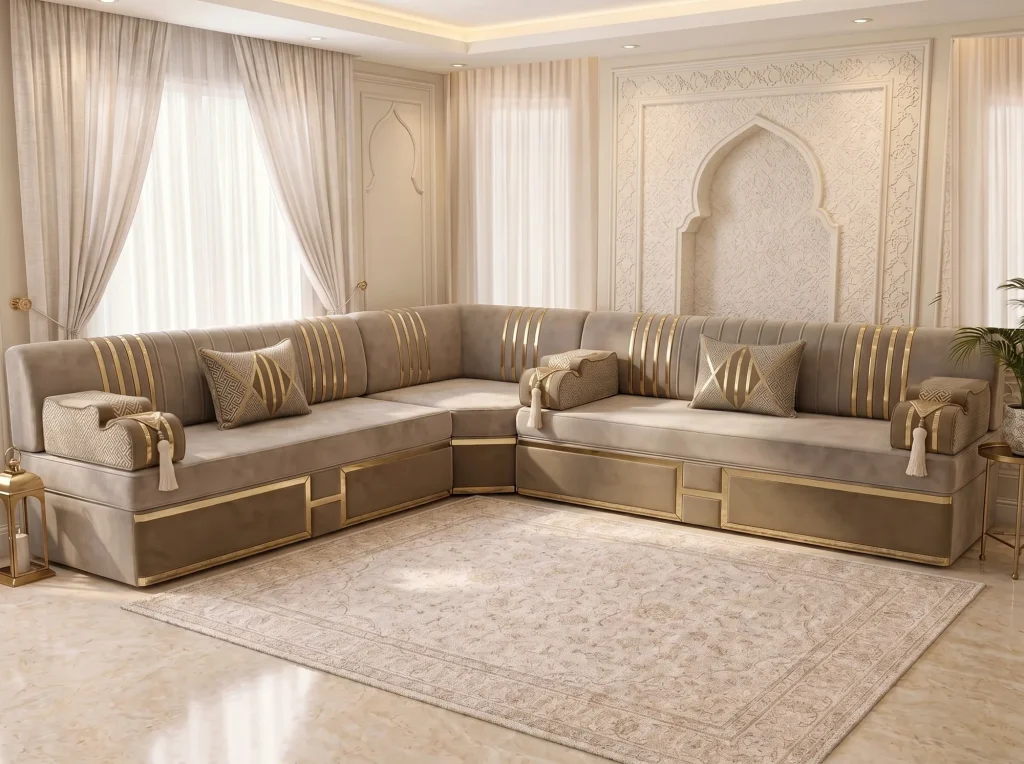
Türkiye and the EU share a customs union for industrial goods, so furniture in free circulation in Türkiye can enter the EU without customs duty when it travels with an A.TR movement certificate. Import VAT is still charged in the destination country. Sofhu ships made-to-measure majlis sets free to every EU member state; ask how VAT is handled when you request a quote.
- Legal basis
- EU-Türkiye customs union, Decision No 1/95, applied since 31 December 1995
- Customs duty
- None on qualifying industrial goods with an A.TR certificate
- VAT
- Import VAT of the destination member state applies
- Key document
- A.TR movement certificate, accepted electronically since July 2024
- Shipping
- Free worldwide from Sofhu, all EU countries
- Made in
- Türkiye, to your wall measurements
On this page
A buyer in Cologne, Lyon or Rotterdam who orders seating from Türkiye is in a better position than one in almost any other part of the world. Türkiye is outside the European Union, yet it has been inside a customs union with it since the end of 1995. For anyone looking to import furniture from Turkey to the EU, that one fact removes the charge most people worry about, and leaves a single tax to plan for.
This guide explains how the arrangement works for a made-to-measure majlis from Sofhu, which documents matter, and where each country’s own rules come in. It reflects the rules as they stood in October 2026.
The EU-Türkiye customs union and furniture
The customs union was set up by Decision No 1/95 of the EC-Turkey Association Council and has applied since 31 December 1995. It covers industrial goods and processed agricultural products. Basic farm produce, coal and steel are handled under separate arrangements.
Furniture is an industrial product. The principle is that goods in free circulation in one part of the customs union can move to the other without customs duty. “In free circulation” means the goods were either made there from materials on which any duties have been settled, or imported there with duties paid.
Two points are often misunderstood:
- It is not about origin. A trade agreement usually asks where a product was made. The customs union asks whether it is in free circulation. A majlis sewn and filled in Türkiye meets the test either way, but the paperwork is a different form from the one used under ordinary trade agreements.
- It does not remove VAT. Türkiye is not part of the EU’s VAT area. Tax is still due on import.
The A.TR movement certificate
The document that proves free-circulation status is the A.TR movement certificate. It is issued in Türkiye for the export shipment and presented to customs in the EU country of arrival. With it, qualifying goods are released without customs duty. Without it, customs can treat the shipment as an ordinary import from a non-EU country and apply the standard tariff.
Since 8 July 2024, EU member states have accepted A.TR certificates issued electronically by the Turkish authorities, which carry a code that customs can verify online. A decision of the EU-Türkiye Customs Cooperation Committee in April 2025 put that practice on a formal footing. For a buyer, this means the certificate may never exist as a stamped paper form. That is normal.
What to do: ask Sofhu to confirm that an A.TR is issued for your order, and ask for a copy along with the commercial invoice and packing list. This is routine for Turkish exporters and should not be a difficult request.
Import VAT: the one charge to plan for
When goods arrive in the EU from outside it, import VAT is due in the member state where they are released. The rate is that country’s own VAT rate, and it is generally charged on the customs value of the goods plus transport and insurance costs. The European Commission’s guidance for consumers is clear that VAT applies to all commercial goods imported into the EU regardless of value.
How the VAT reaches the tax office depends on the shipping terms:
- The seller can ship on a duties-and-taxes-paid basis, so nothing is collected from the buyer on arrival.
- The carrier can pay the VAT to customs and collect it from the buyer before delivery, often with a handling fee of its own.
Sofhu confirms free worldwide shipping. Its website does not say which of these two methods it uses for EU orders, or whether it varies by country. So ask one direct question when you request a quote: is import VAT included in this figure, or will the carrier collect it from me. Keep the written answer.
This page quotes no VAT rates. Each member state sets its own, and your national tax authority publishes the current one.
Furniture from Turkey to Germany, France and the rest: country table
The customs union is the same everywhere in the EU. What differs is the national customs office that clears the shipment and the VAT rate it applies. The table lists the authority to consult in each country where Sofhu has a dedicated page.
| Country | National customs authority | Sofhu page |
|---|---|---|
| Germany | Zoll | Arabic sofa in Germany |
| France | Douane | Arabic sofa in France |
| Netherlands | Douane (Belastingdienst) | Arabic sofa in Holland |
| Belgium | FPS Finance, Customs and Excise | Arabic sofas in Belgium |
| Spain | Agencia Tributaria | Arabic sofas in Spain |
| Italy | Agenzia delle Dogane e dei Monopoli | Arabic sofas in Italy |
| Austria | Zollamt Österreich | Arabic sofa in Austria |
| Portugal | Autoridade Tributária e Aduaneira | Arabic sofa in Portugal |
| Hungary | NAV | Arabic sofa in Hungary |
Sweden, Denmark, Ireland, Greece and every other member state are served in the same way. The national authority there is the one to consult, for example Tullverket in Sweden or Revenue in Ireland.
A note on questions like “furniture from Turkey to Germany customs” or “import a sofa from Turkey to France”: the answer does not change with the country. Duty-free entry rests on the A.TR, and VAT is charged at the national rate. Once released in one member state, goods can move on within the EU without a second customs step.
Delivery across Europe
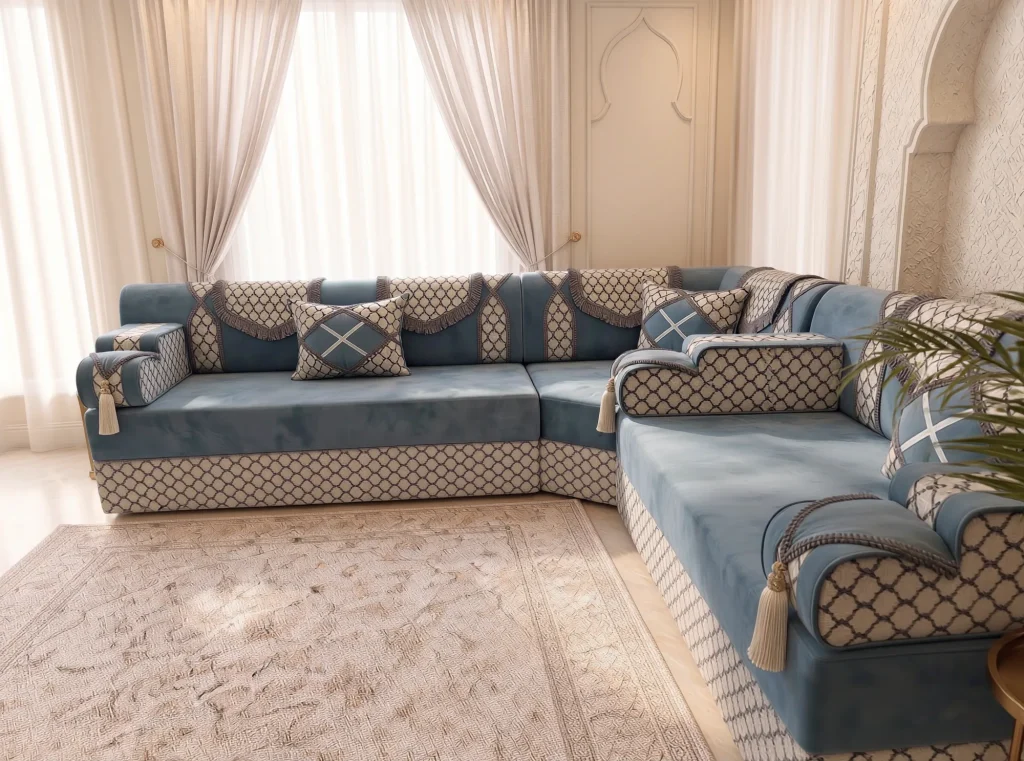
Majlis delivery in Europe follows the same physical steps wherever you live. Sofhu vacuum-packs each set in sealed bags, which shrinks the foam for transport. A floor sofa arrives as separate seat mattresses, back cushions and armrests, and a raised majlis as separate upholstered units. A floor sofa does not have to be hoisted through a window, a real advantage in an Altbau flat on the fourth floor without a lift, or in a Dutch house with a steep, narrow stair.
A few things worth settling in advance:
- Access. Tell Sofhu about pedestrian zones, timed delivery windows and buildings without lifts.
- The wall. A floor sofa leans against the wall behind it and is not freestanding, and a majlis is planned to line the walls too. Radiators under windows, common across northern Europe, need to be marked on your sketch.
- Being reachable. Give a mobile number the carrier can use. Delays often start with an unanswered call about VAT or a delivery slot.
Unpacking is covered step by step in how a majlis is packed and delivered.
Which style, for which household
European buyers come to this seating from several traditions, and they do not all sit at the same height. Families with roots in the Gulf, Yemen, Syria, Iraq or Afghanistan usually want cushions at floor level. Moroccan, Algerian and Tunisian households more often grew up with the raised bench of the salon. The page on the Moroccan sedari explains that difference honestly, and Turkish families will recognise their own version in the Turkish sedir.
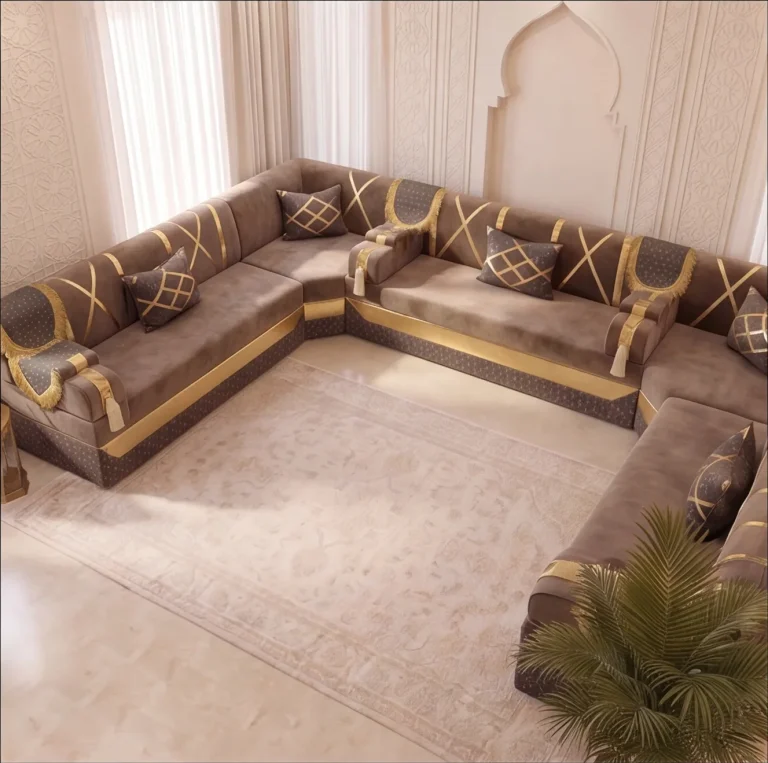
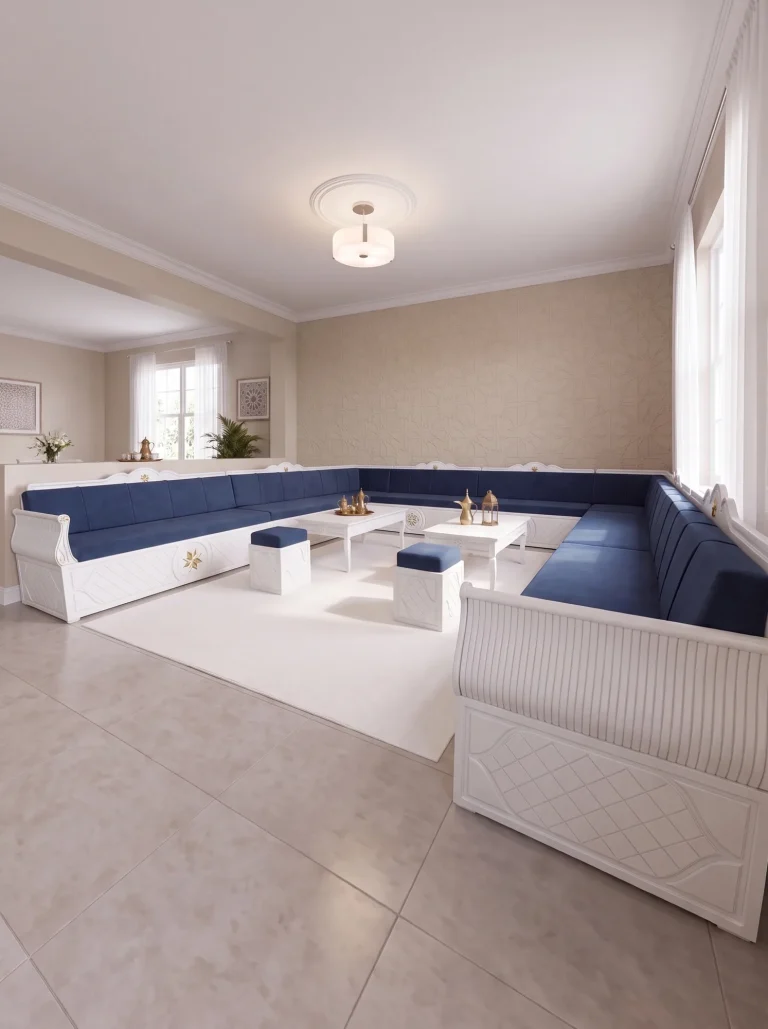
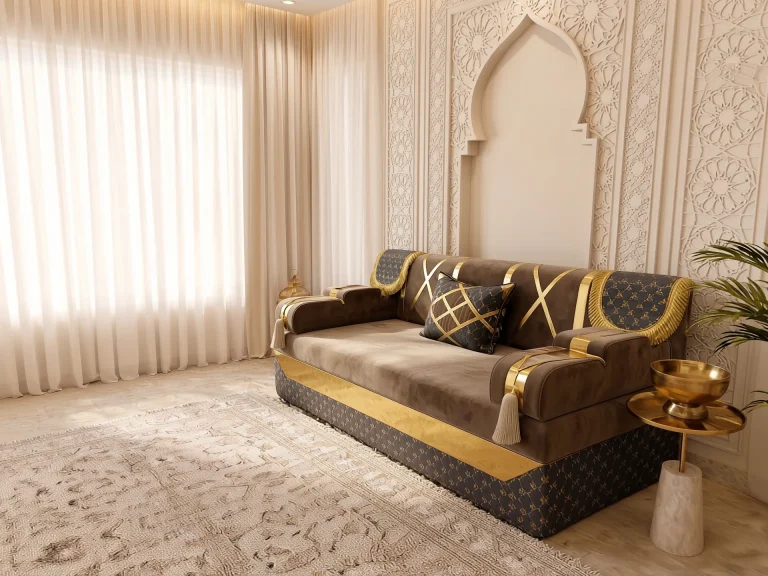
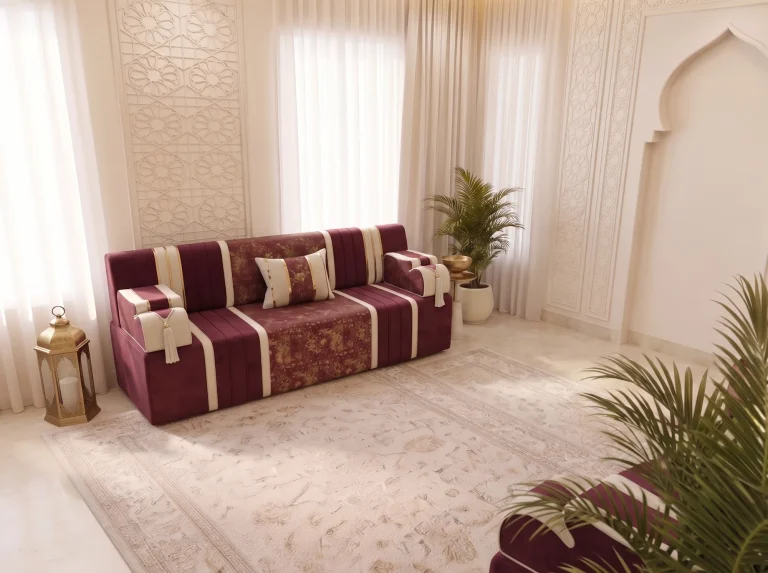
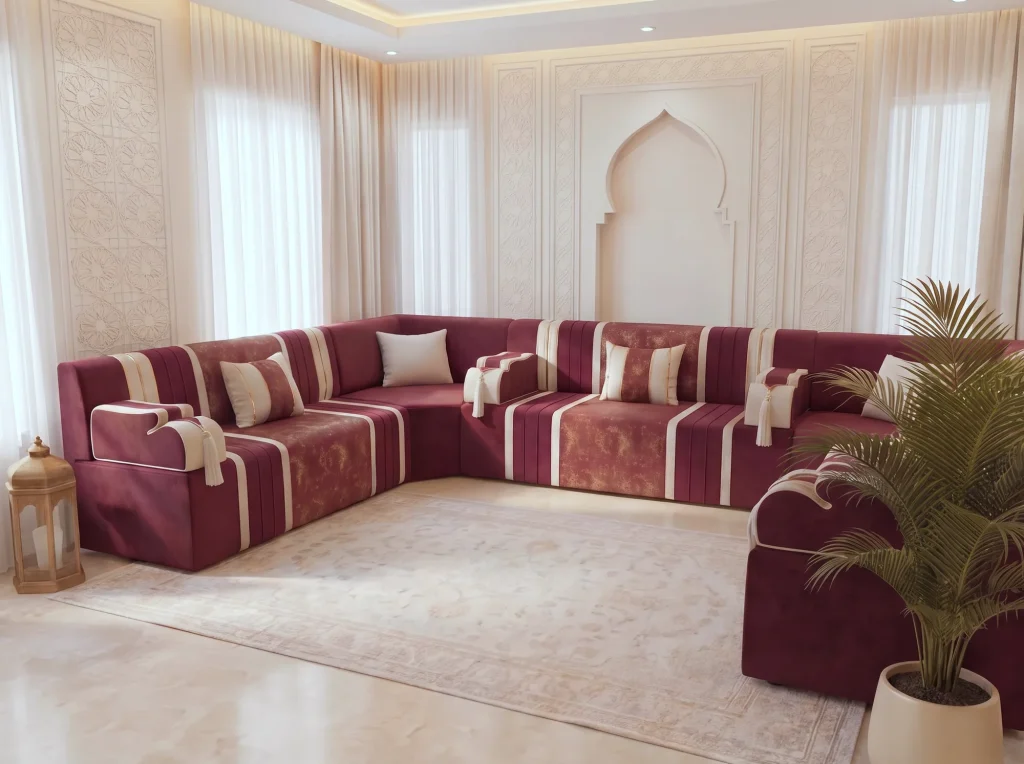
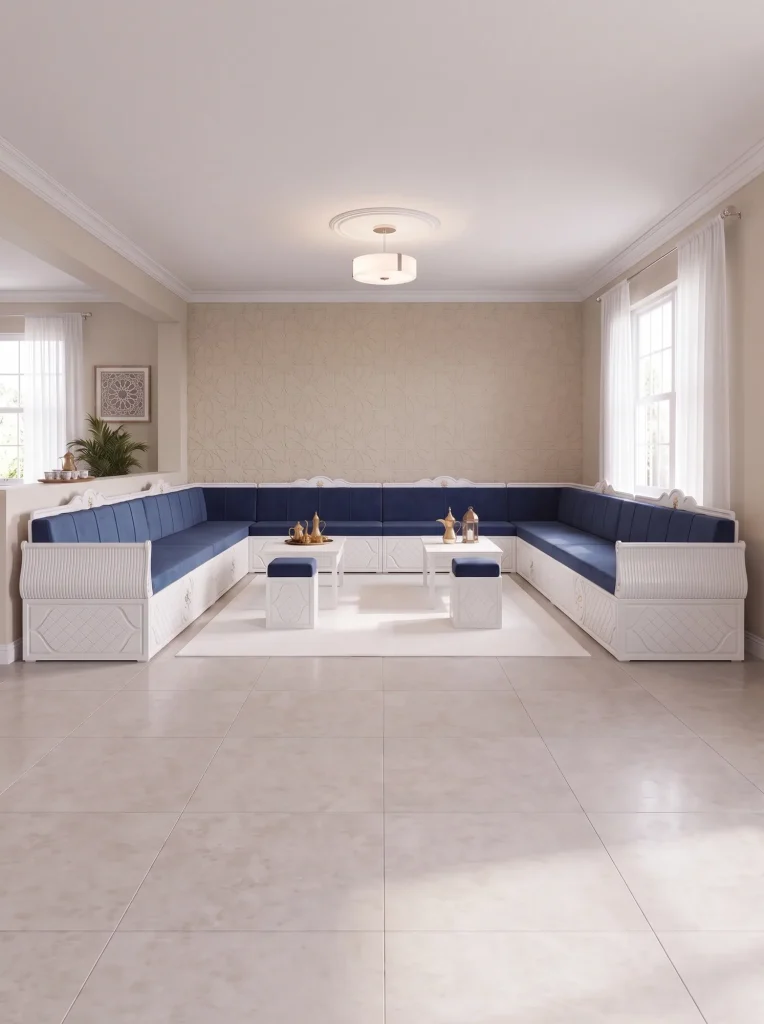
Sofhu makes both as separate products. The Arabic floor sofa is a low set of seat mattresses and loose cushions at floor level. The Arabic majlis is raised to sofa height and fully upholstered, with a solid base and fixed backs, and there are wooden-framed sets such as the one below. The oriental sofa page compares the two.
How to order from an EU address
- Measure the walls the seating will run along and photograph them.
- Choose a layout and fabric. The guide to ordering a custom majlis online walks through each decision.
- Send everything through the quote form or on WhatsApp, with your full address.
- Ask the two customs questions: will an A.TR be issued, and how is import VAT handled.
For the wider picture, see how to buy a majlis online and how the Arabic furniture store operates as a manufacturer selling direct. Readers in Britain need the separate guide to importing a majlis to the UK, since the UK left the customs union arrangement when it left the EU.