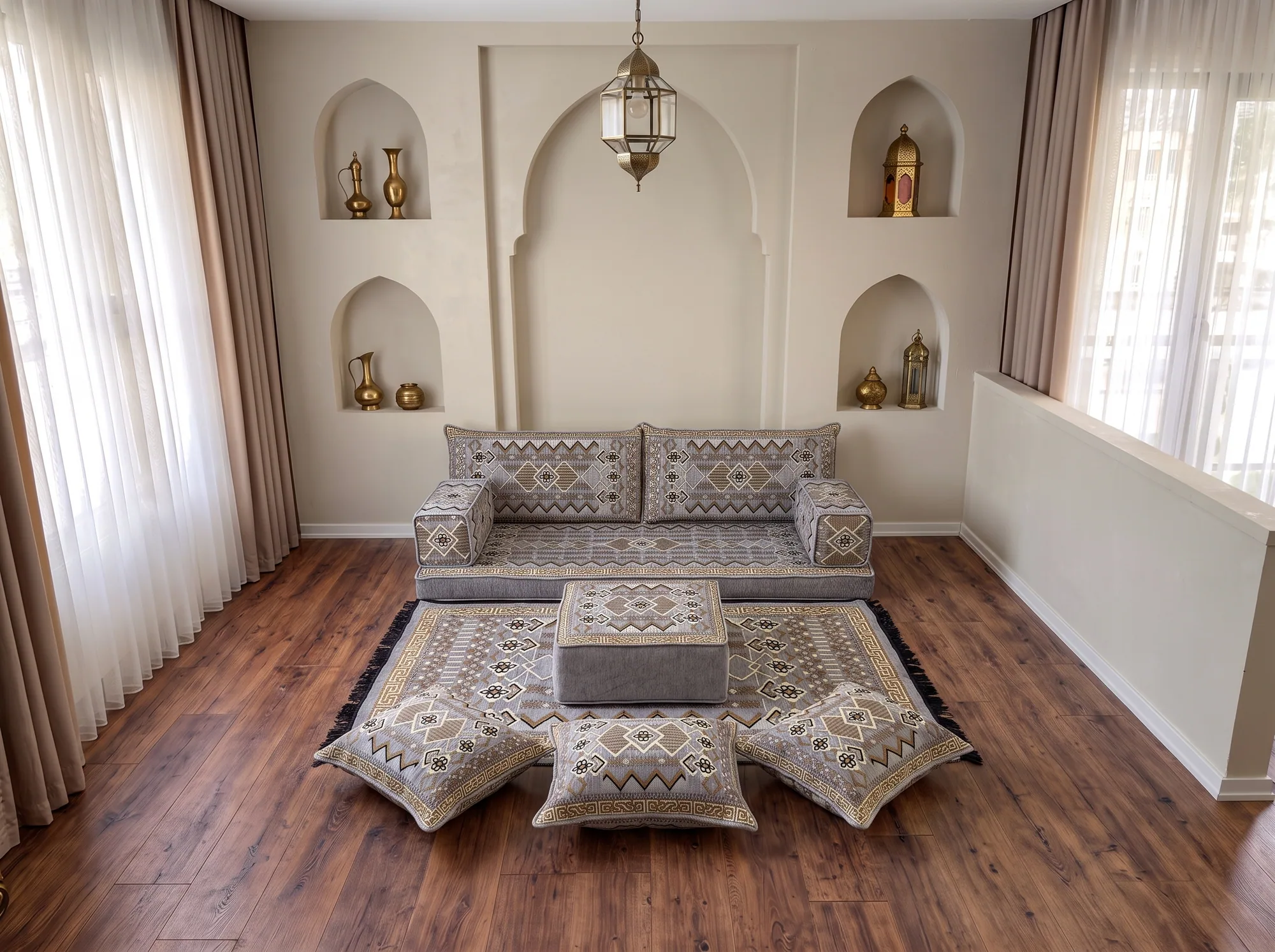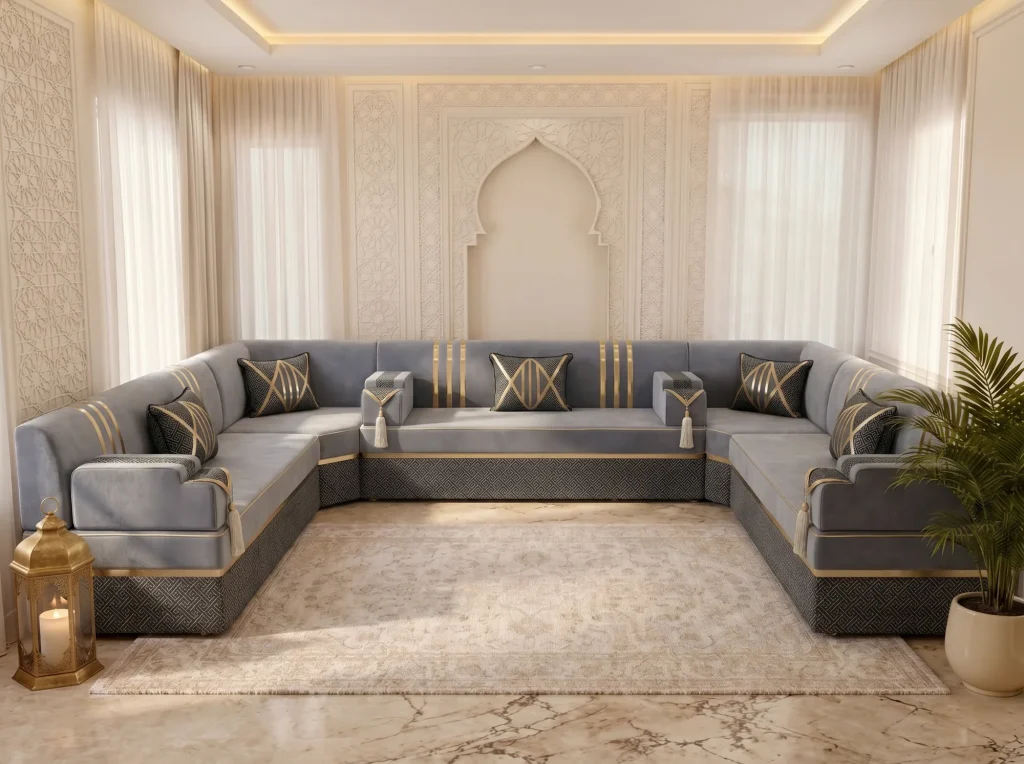
A majlis for events is Arabic seating a venue can set out and use again: a raised, upholstered majlis for a lounge that stays in place, or a floor sofa set of loose cushions for tents and halls. Sofhu sells both to venues, planners and rental companies; it does not hire them out. Floor sofa sets have 32 kg/m³ foam, washable zippered covers and separate pieces that rearrange into rows, L-shapes or U-shapes.
- What Sofhu offers
- Sets for sale to venues, planners and rental businesses
- Hire service
- Not offered; buy a set or use a local rental company
- Foam
- 32 kg/m³ (32 DNS) high-density foam, no springs
- Covers
- Zippered, removable, machine washable at 30°C
- Layouts
- Single rows, facing rows, L-shape, U-shape
- Planning width
- About 60 cm per seated adult (general guide)
- Shipping
- Free worldwide, vacuum packed
On this page
In the weeks before Ramadan, hotel banquet managers, mosque committees and families with a big garden all face the same question: the tent is booked, so where does the seating come from. Some want to rent a majlis for one night. Others have rented for years and now want their own.
Here is the plain position. Sofhu manufactures and sells majlis and floor sofa sets. We do not hire them out. This page is for people buying a majlis for events: venues, planners, community organisations and rental companies who will use the same seating again and again. If you only need it once, a local hire company is the better answer, and the planning advice below still applies.
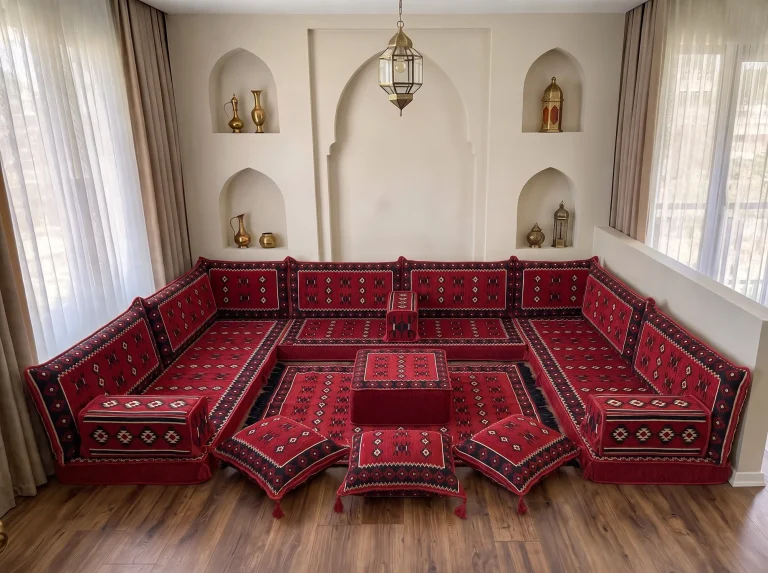
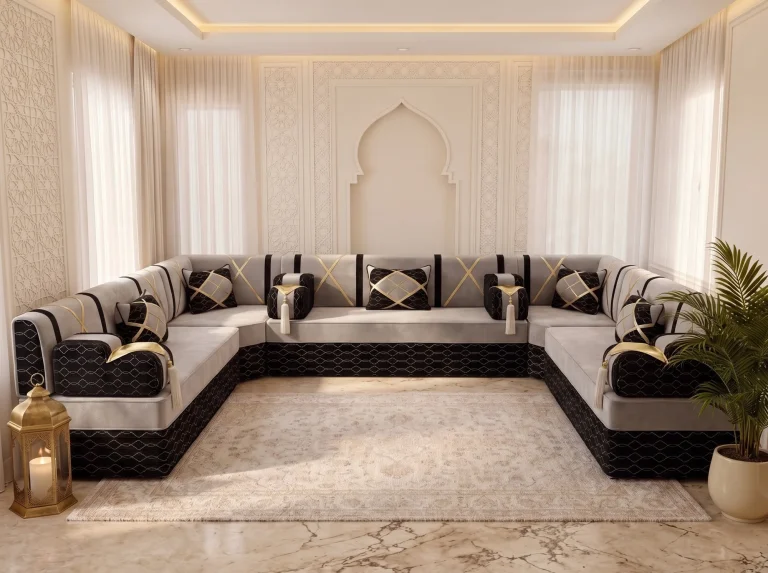
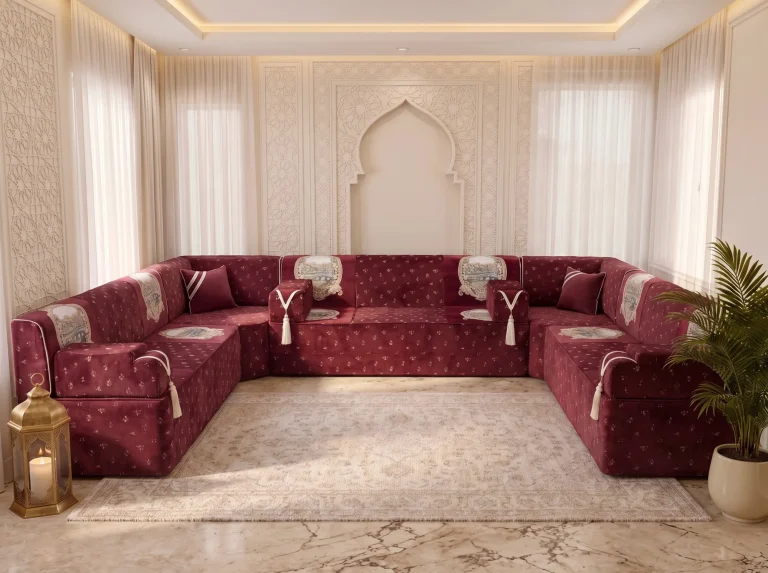
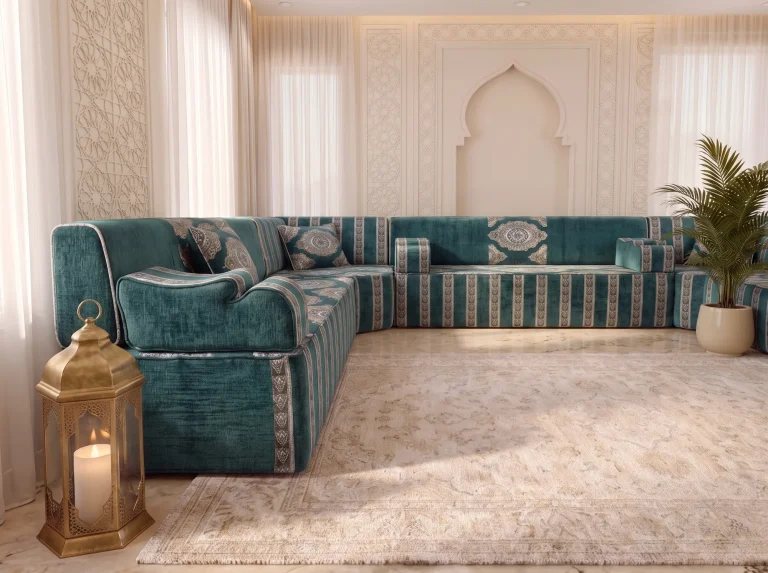
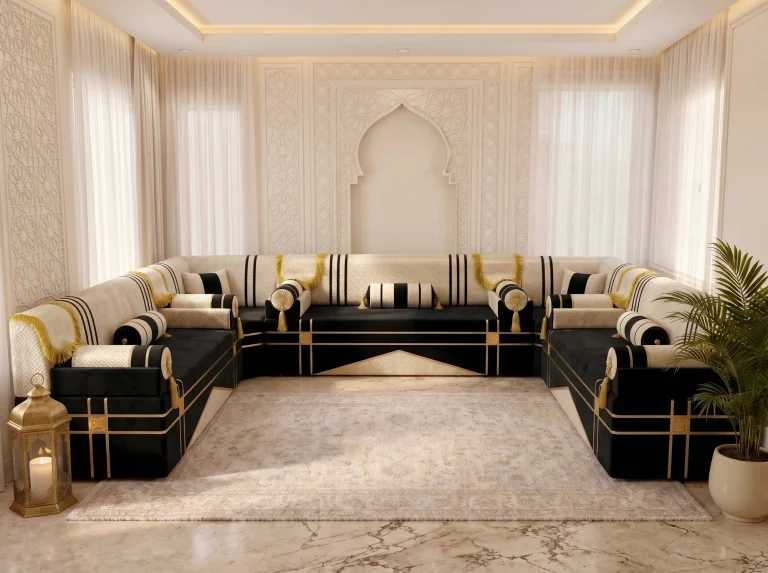
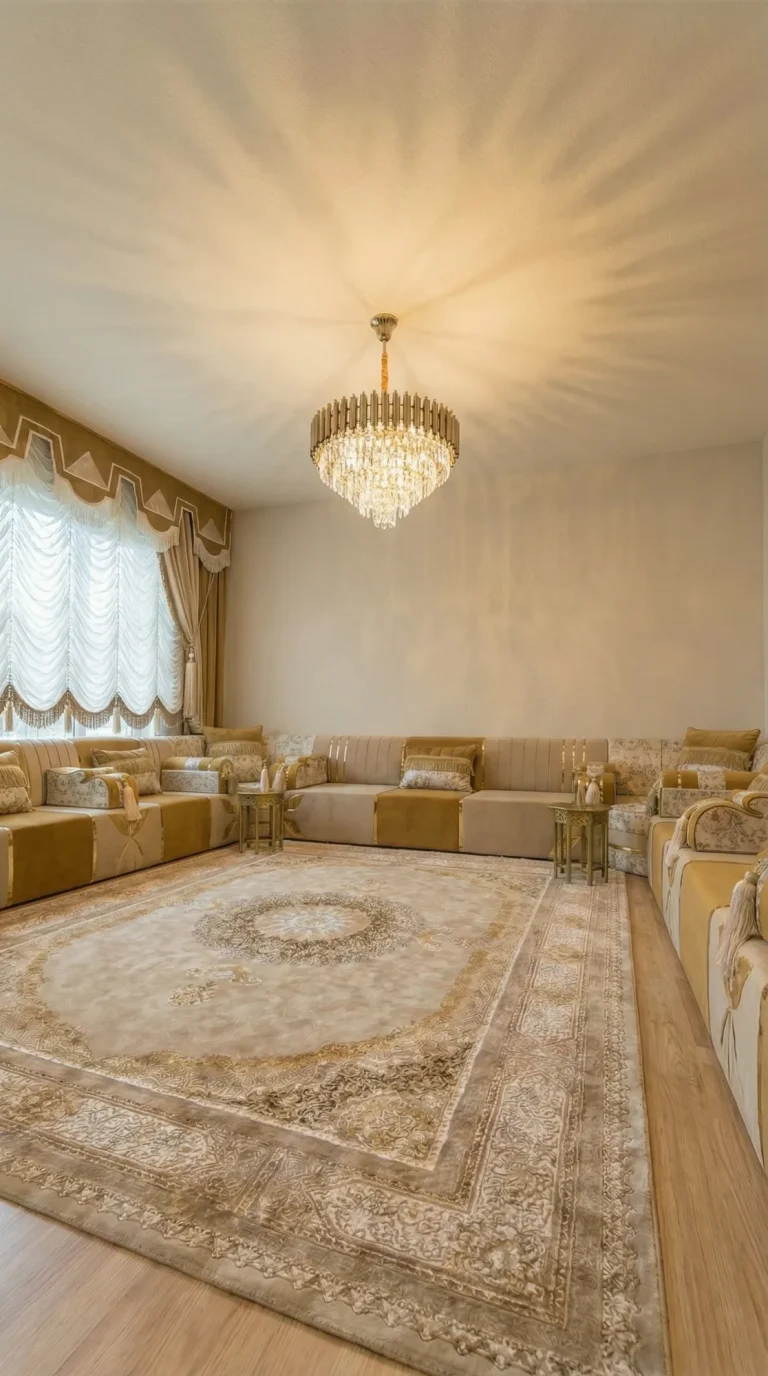
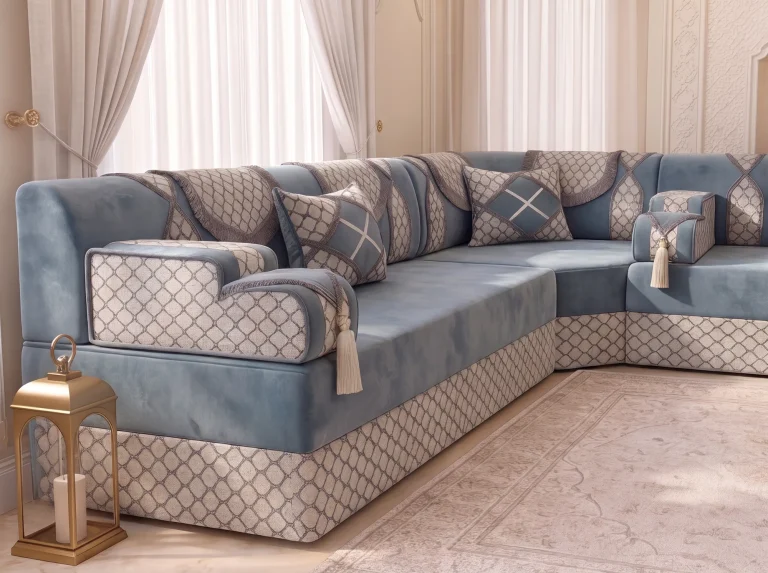
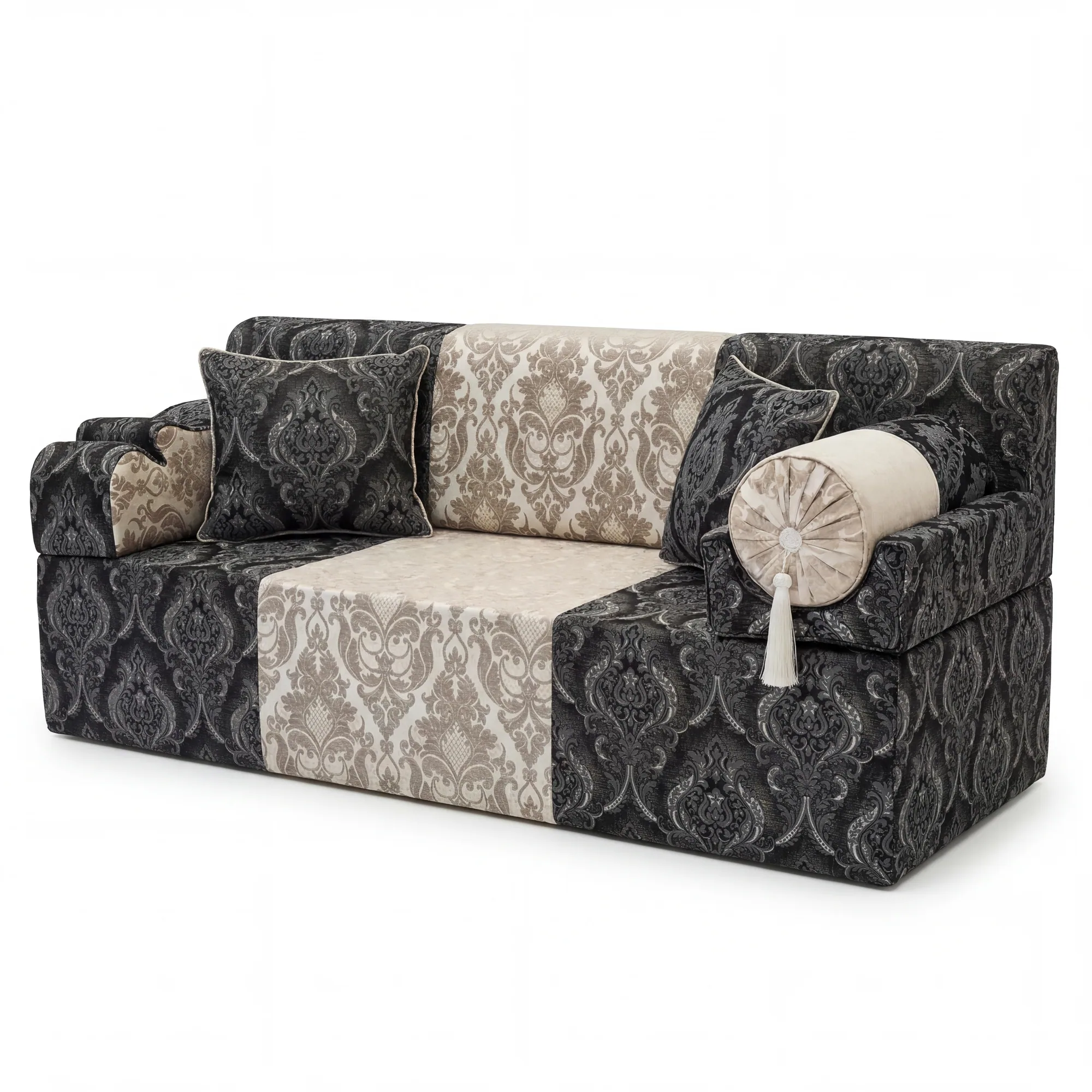
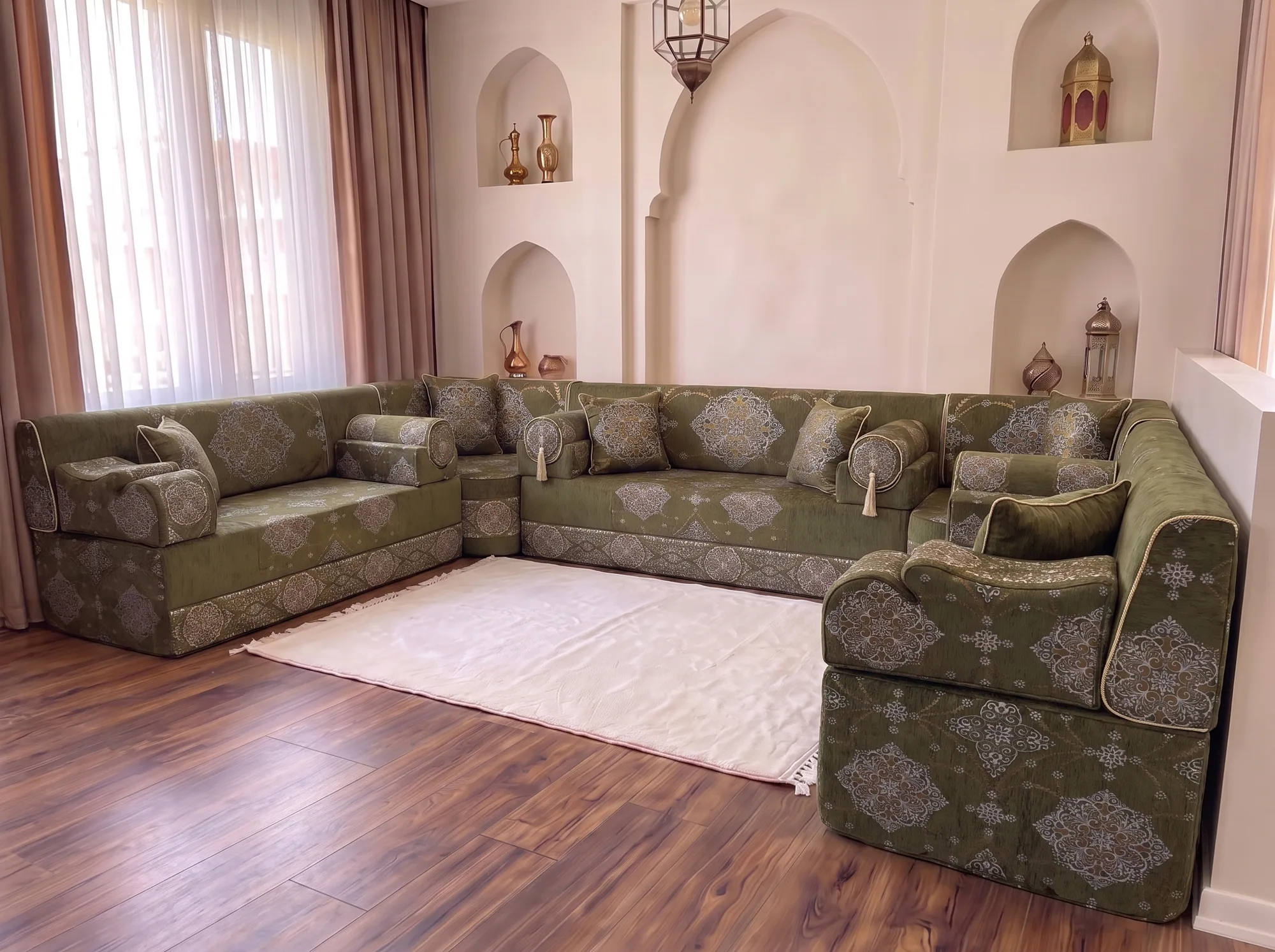
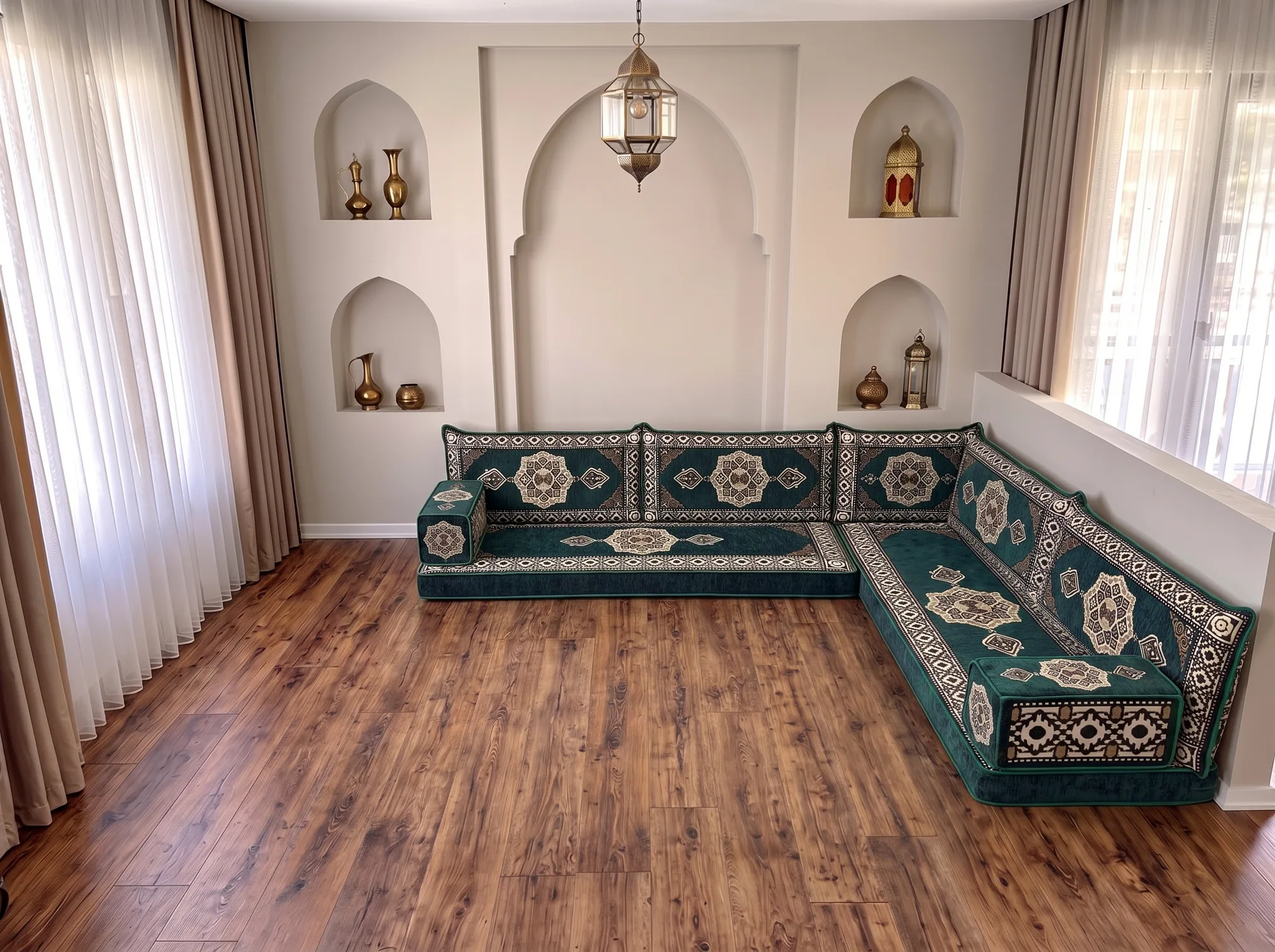
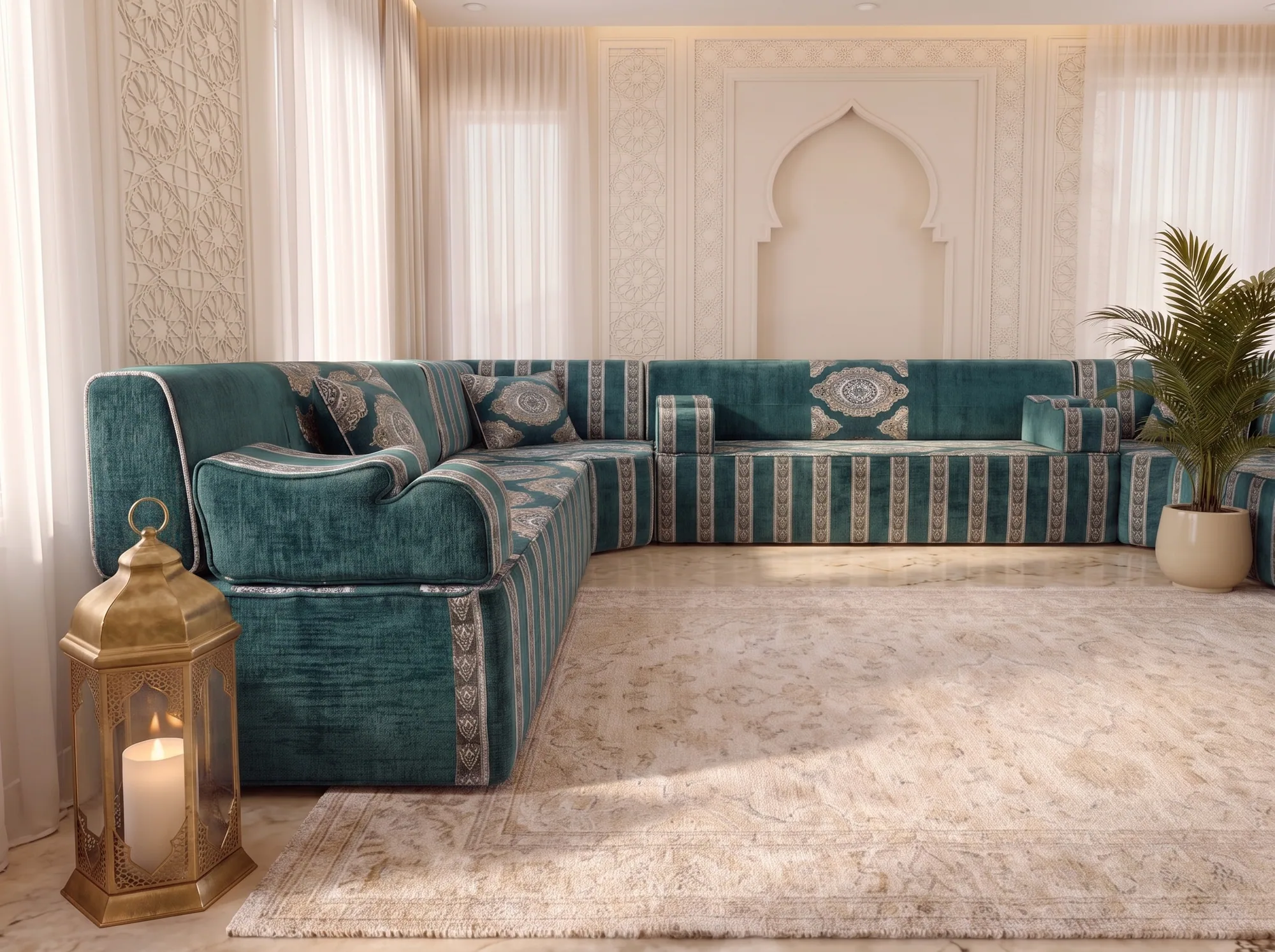
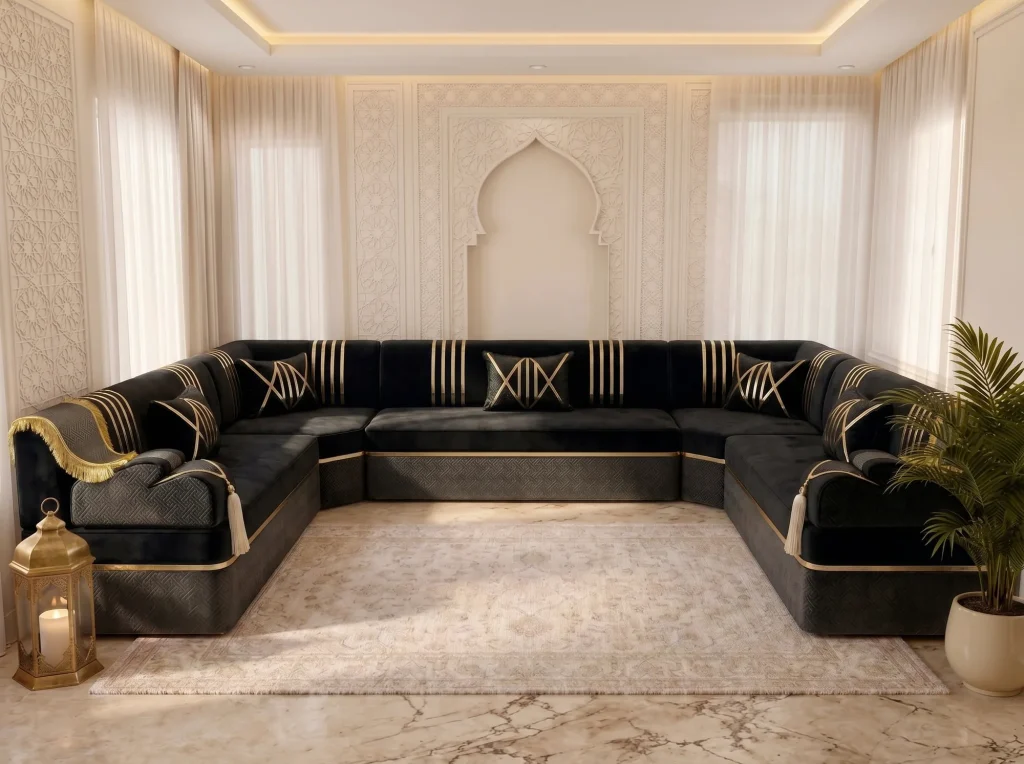
The two products do different jobs at an event. An Arabic majlis is raised to sofa height, fully upholstered, with a fixed back; it suits a lounge or reception room that stays set up, like most of the rooms pictured here. An Arabic floor sofa is a low set of loose cushions that stacks, travels and rearranges between bookings, which is why tents and rental stock are usually built from it.
Renting or buying a majlis for an event
People search for “majlis for rent” and “majlis rental” because an event feels temporary. The seating does not have to be. A set bought for a Ramadan tent comes out again for Eid, for a wedding in the family, for a condolence gathering, for the school’s culture day.
Buying makes sense when any of these is true:
- you host on a calendar that repeats every year;
- you run a venue, restaurant or hotel and want an Arabic lounge on request;
- you are a hire company and customers keep asking for Arabic seating you cannot supply;
- no rental company near you stocks it.
Renting makes sense for a single date with no storage space afterwards. We would rather say that than sell a set that sits in a garage.
Which events use Arabic seating
Ramadan tents and iftar gatherings. This is the peak of the year. In Bahrain, for example, majalis fill after iftar and evening prayers and guests move from one to another through the night. Ramadan tent seating has to cope with a meal, tea and hours of sitting, so firm seats and washable covers matter more than decoration. Our earlier post on Arabic sofas for Ramadan meetings and the iftar and Eid seating plan cover the hosting side.
Weddings and henna nights. Wedding majlis seating is usually a lounge within a larger event: the henna corner, a bridal seat for photographs, a quiet area for elders. See henna night and wedding lounge seating for layouts.
Corporate hospitality and national days. Companies and embassies set up a majlis to receive guests in the Gulf manner, with coffee poured from a dallah. Sets can be made in brand colours.
Cultural festivals, exhibitions and schools. A majlis corner lets visitors sit down and stay. The UNESCO description of the majlis, a large space with carpets on the floor and cushions against the wall, is a fair brief for an exhibition stand.
Film, photo and stage work. Covered in Arabic sofas for film sets and productions and the set decorator’s guide.
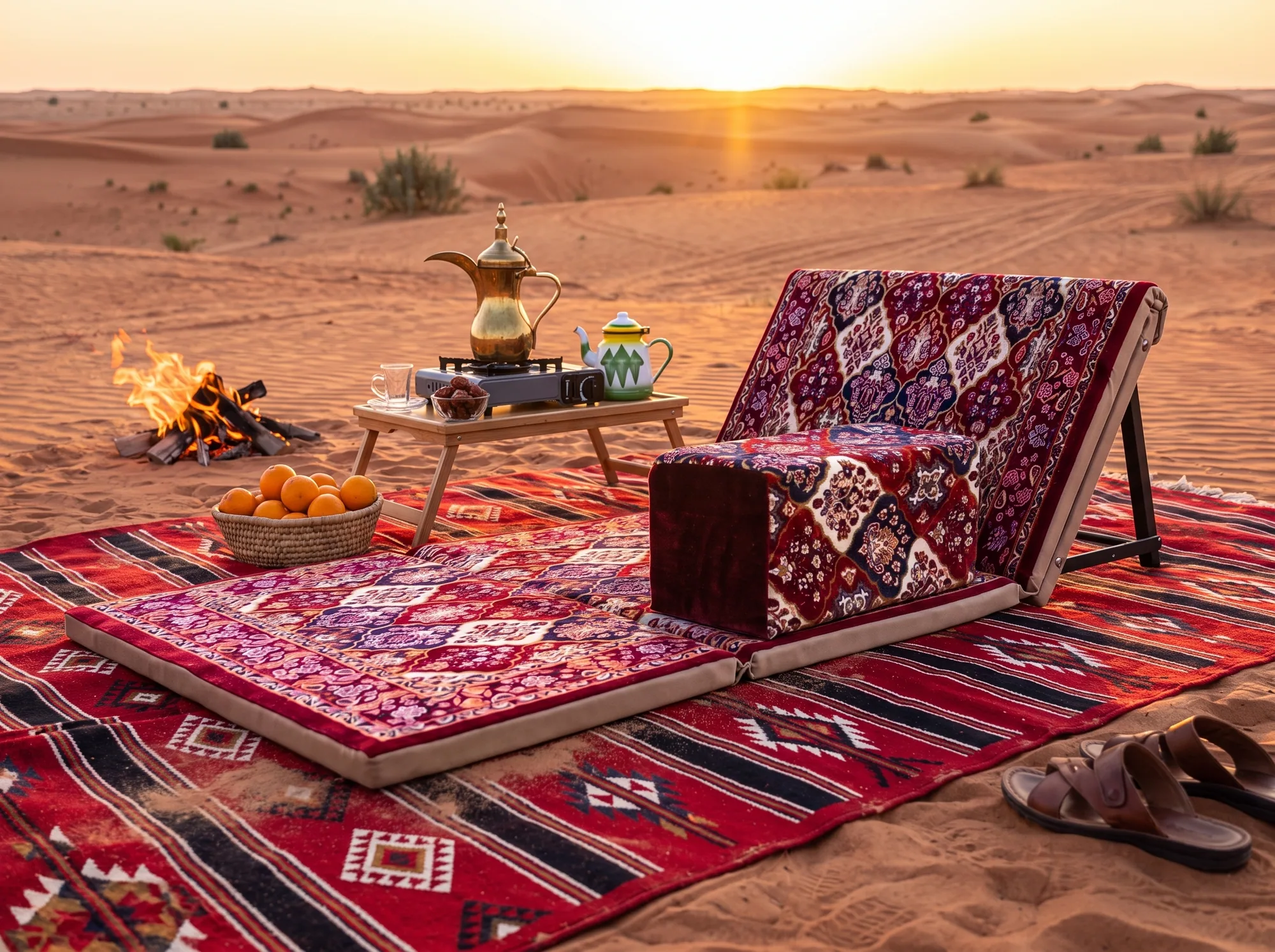
Camps and outdoor stays. See majlis for glamping and desert camps.
Our page on Arabic majlis for organisations and events has more examples, and hotels will find their own notes under Arabic majlis for hotels.
Sets built to be used again and again
Event seating is carried, stacked, sat on by strangers and cleaned more often than anything in a home. Four things decide whether a set survives that.
Foam density. Sofhu cushions are filled with 32 DNS foam, meaning 32 kg per cubic metre. Denser foam generally keeps its height and support longer than light foam, which matters when a seat takes a full house every weekend. The cushions contain no springs, so there is nothing to bend or poke through when they are stacked.
Covers that come off. Every cover is zippered and removable, and the site states they can be machine washed at 30°C. After an iftar with soup, dates and tea, that is the difference between a set you can send out again on Friday and one you cannot. For stains that need treating first, see removing coffee, tea and henna stains.
Separate pieces. A floor sofa set is a kit of seat cushions, backrests, armrests and pillows. Nothing is fixed to anything else. The same pieces make a U for one booking and two facing rows for the next.
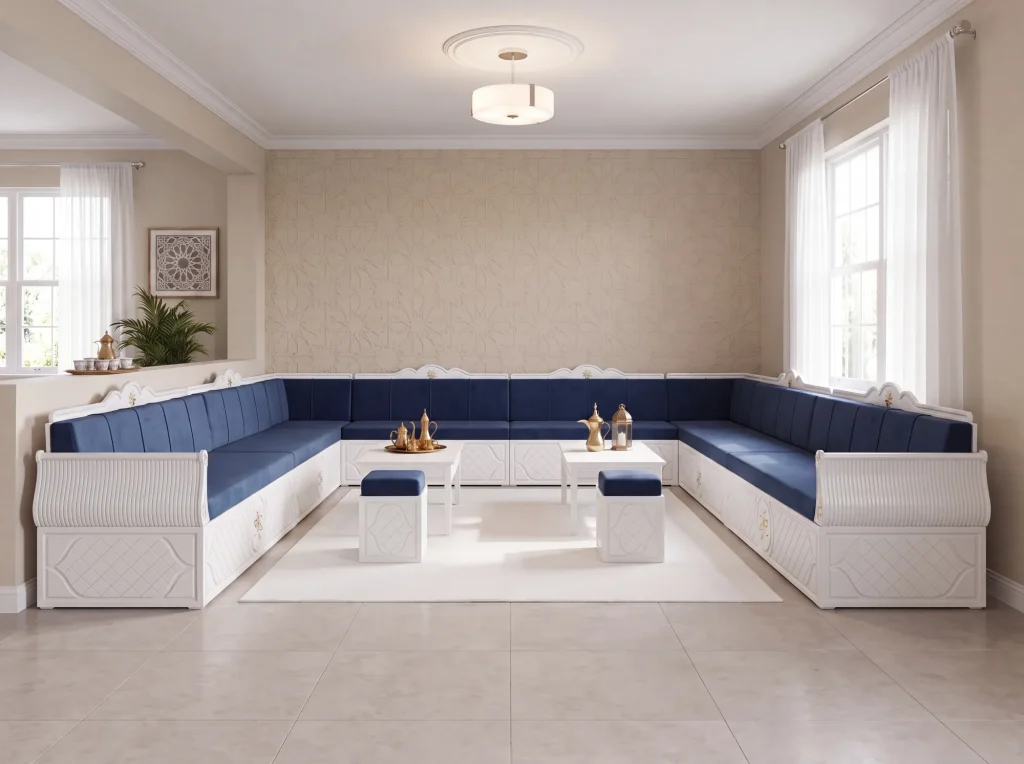
Something to lean on. Floor sofa sets are not freestanding. The backrests need a wall or another hard surface behind them. Indoors that is simple. In a tent or an open hall it needs planning: rigid side panels, a low partition, or a majlis on a wooden frame with its own back, like the white-framed one with navy cushions pictured above.
How much seating to plan for your guest count
Seating is planned by length. As a general guide from bench and banquette design, allow about 60 cm for each adult sitting comfortably, and about 50 cm when people sit close for a short time. These are planning widths, not Sofhu specifications.
| Seated guests | Seating length, comfortable | Seating length, close |
|---|---|---|
| 20 | about 12 m | about 10 m |
| 30 | about 18 m | about 15 m |
| 50 | about 30 m | about 25 m |
| 80 | about 48 m | about 40 m |
| 100 | about 60 m | about 50 m |
Three adjustments make the table honest.
- Corners lose a place. Where two rows meet, only one person can use the corner. Straight rows waste nothing, which is why large tents favour them.
- Not everyone sits at once. At a wedding reception or open house, guests come and go. At an iftar, everyone sits at the same minute. Plan for the fullest moment.
- Floor cushions stretch the count. Loose cushions on the rug add places for children and the young without adding length.
The method is worked through room by room in how many people a majlis seats.
Layouts that work in tents and halls
Two facing rows. The simplest plan for a long tent, and the easiest to serve. Leave the middle open so trays can pass.
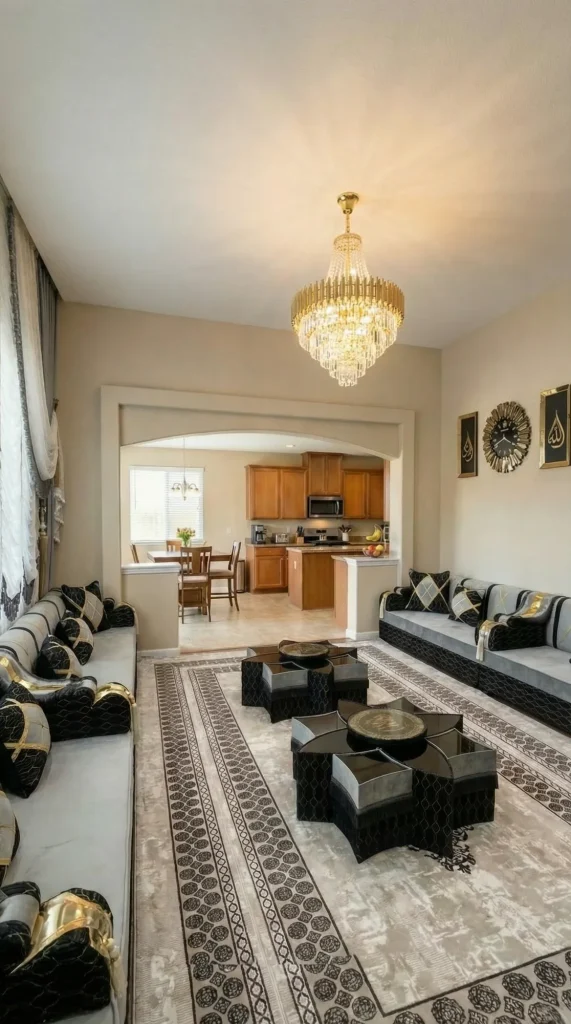
A run of U-shapes. Each family or group gets its own three-sided bay. More sociable, but every bay costs two corner places. The L-shape and U-shape majlis page explains the arithmetic.
A head of the room. For a formal reception, one U at the far end for the hosts and principal guests, with rows down the sides.
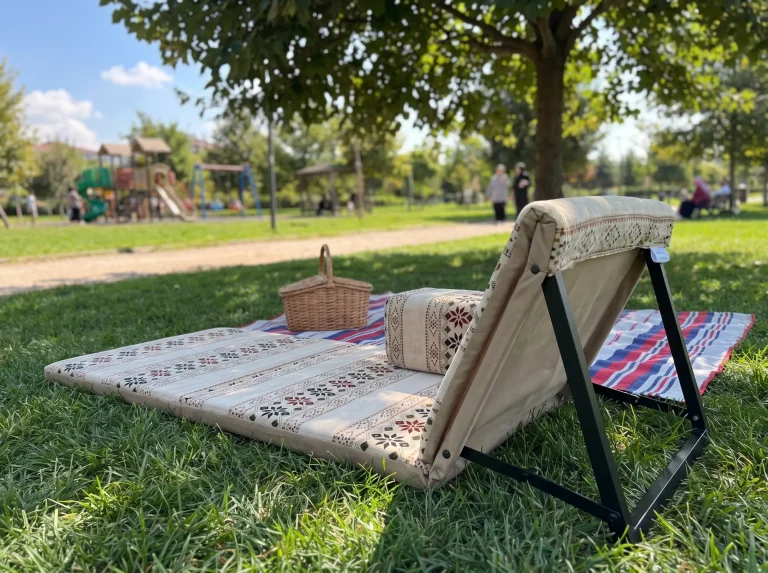
Outdoor corners. For a garden party or beach day, the folding Arabic sunbed is the truly portable seat: it folds up to carry and opens on grass or sand. Outdoor cushions are water-resistant and handle light rain; ask us before planning to leave any set outside for a whole season. The outdoor majlis hub and our outdoor sofas and mats page show the range.
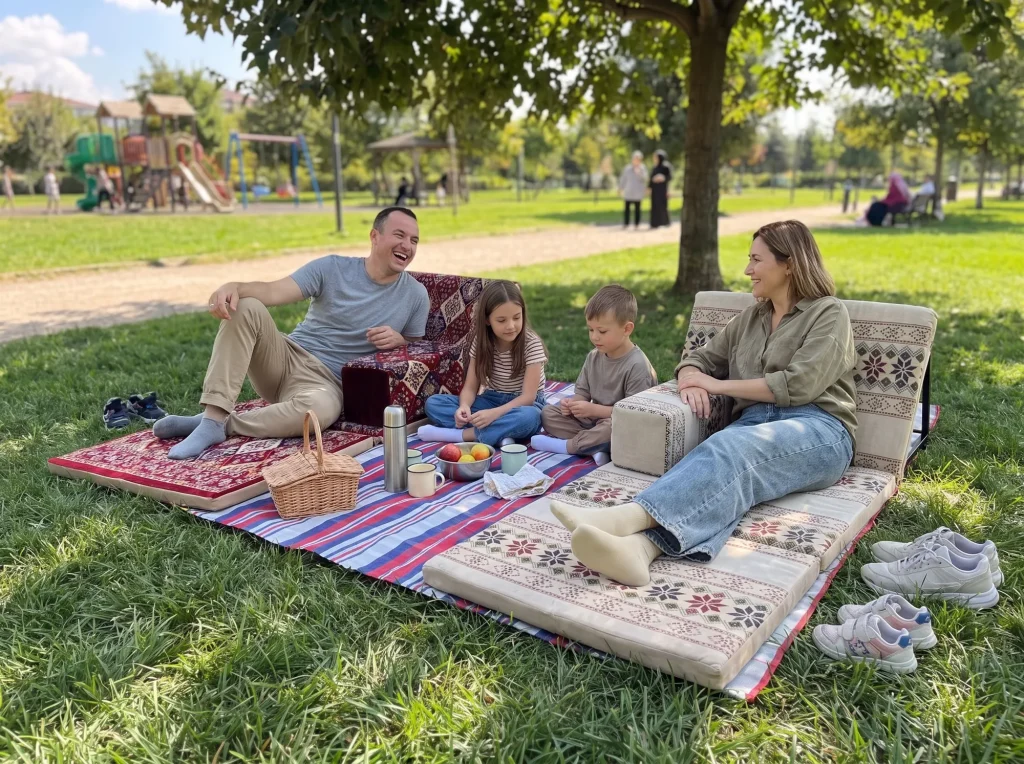
Whatever the layout, keep the route from the entrance to the far seats clear, give the eldest guests seats they can reach without a long walk, and place a raised seat or two among the floor seating for anyone who finds it hard to get up. Our five tips for hosting guests and meetings covers the etiquette.
Transport and storage between events
New sets arrive vacuum packed, which keeps the parcels small. Once opened the foam expands to full size, and from then on you are moving full-size cushions. Plan for that.
- Label the pieces. Mark each cushion on its hidden side by set and position. Crews then rebuild a layout without guessing.
- Move covers on, store covers clean. Leave covers on for transport to protect the foam. After the event, strip, wash and dry them fully before they go back on.
- Stack flat. Seats at the bottom, backrests above, bolsters and pillows in bags on top.
- Keep it dry. Foam and fabric dislike damp. A raised pallet and a breathable dust sheet do more than plastic wrap, which traps moisture.
- Count in and out. Armrests and pillows are the pieces that go missing.
Building a rental stock
For hire companies, Arabic seating for events is a category customers already ask for by name. A few points from the manufacturing side:
- Standardise the modules. Order one seat length across the whole stock so any piece fits any job.
- Choose two or three fabrics, not ten. A red sadu pattern, a neutral beige or grey and one dark formal option cover most bookings and let you combine sets for a large event.
- Ask about spare covers so laundering never holds up a booking.
- Pick patterns that hide marks. Busy weaves forgive more than plain pale velvet.
Trade terms and volume pricing are handled as wholesale orders; see wholesale majlis and Arabic sofas.
What to send for a quote
Tell us the kind of event or business, the number of guests you want seated, the size of the tent or room, whether there are solid walls, and the colours you have in mind. A sketch or a photo of the venue helps. Then get a quote by measurement, write through the contact page or message us on WhatsApp. Shipping is free worldwide; duties or taxes may apply depending on the destination, so ask before you order.