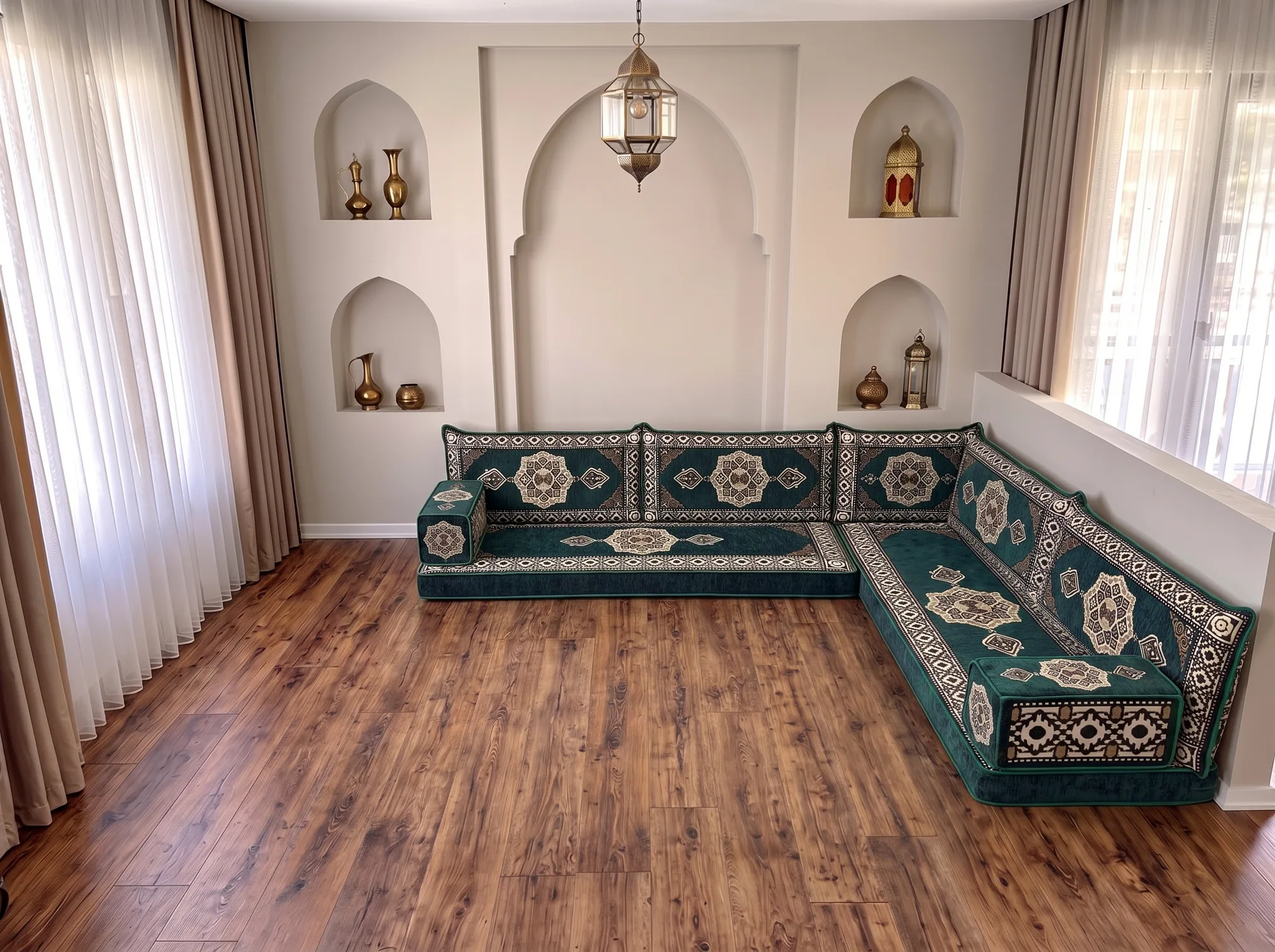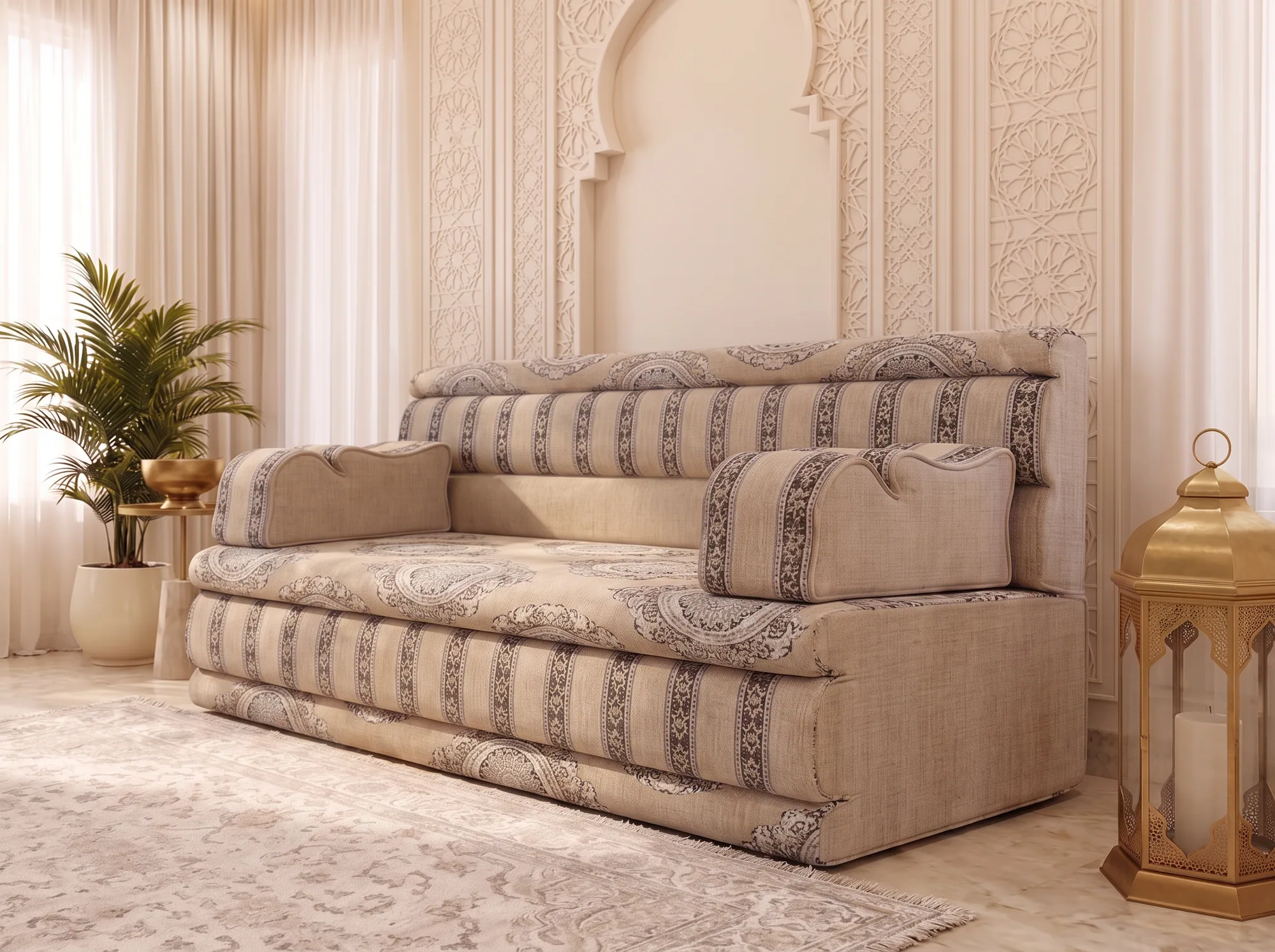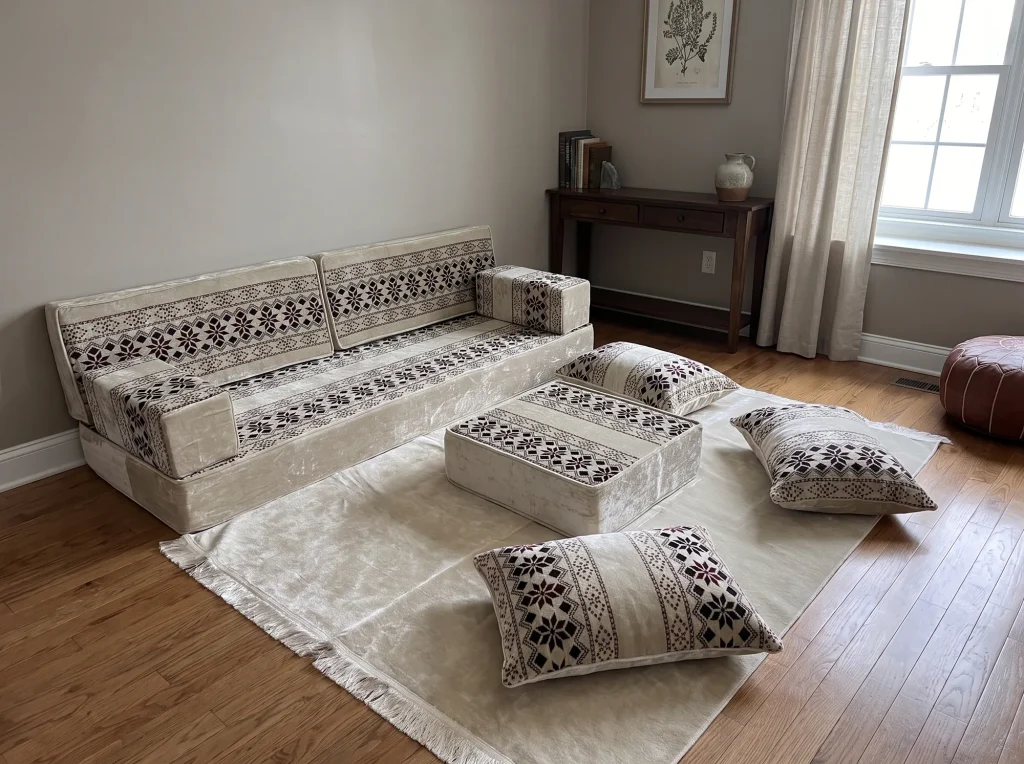
Blot the spill with a white cloth, dab with cold water, and test any cleaner on a hidden seam before using it. Coffee and tea lift with diluted dish soap and white vinegar; turmeric and saffron need soap first and daylight after; henna often leaves a tint. Sofhu covers are zippered, so a marked cover can come off for a cool wash.
- First move
- Blot, never rub
- Water
- Cold; heat sets tannin, turmeric and henna
- Always
- Patch test on a hidden seam
- Covers
- Zippered and removable
- Machine wash
- 30 degrees; no tumble dryer for velvet
- Foam
- Keep it dry; clean the cover, not the insert
On this page
A majlis is where the coffee is poured, the rice is carried in and the henna cone is passed round, so sooner or later something lands on the seat. To remove stains from majlis fabric you need three habits and a short list of kitchen-cupboard cleaners. This guide goes stain by stain through the ones that really happen in a sitting room like ours: qahwa, tea, saffron rice, turmeric, henna, ghee and date syrup.
For routine care, vacuuming and seasonal washing, read the Arabic sofa care guide. This page is only about accidents.
Three rules before you touch any stain
Blot, do not rub. Press a clean white cloth or plain kitchen paper onto the spill and lift. Change to a dry part of the cloth and press again. Rubbing pushes the liquid sideways and down, and on velvet it crushes the pile. Use white cloth because a coloured one can leave its own dye behind.
Cold water first. Coffee, tea, turmeric and henna all set harder with heat. No hot water, no steam, no hair dryer on the spot, and no iron until the mark has gone.
Patch test. Before any cleaner goes on the visible fabric, dab a little on a hidden place: the back of a backrest, or the inside of the zip flap. Let it dry fully and check for a colour change, a ring or a flat patch. Five minutes of patience here saves a cover.
One more point that matters on foam seating. Use a damp cloth, not a wet one. A soaked cushion dries slowly, and damp foam is where smells begin.
Arabic coffee and tea
Light Gulf qahwa, darker Turkish-style coffee and black tea all stain through tannin, the same brown that marks the inside of a teapot. Fresh, they are among the easier stains.
- Blot until the cloth comes away nearly dry.
- Dab with cold water, working from the outside of the mark towards the middle.
- If a shadow stays, mix about one tablespoon of washing-up liquid and one tablespoon of white vinegar into two cups of water. Dab it on with a white cloth and leave it for ten minutes.
- Rinse by dabbing with a second cloth dipped in clean cold water, then press dry with a towel.
Cardamom and saffron in qahwa add a yellow note to the stain. Treat the brown first, then follow the saffron advice below if a yellow tint remains.
Tea with milk, and karak in particular, carries fat and sugar as well. Use the same method, but give the dish soap a little longer, because the soap is what loosens the milk fat. A sticky patch that is left behind will attract dust and turn grey, so rinse well.
Saffron, turmeric and curry
Yellow food stains are the ones that frighten people, and they behave differently from coffee. The colour in turmeric dissolves in fat, so a splash of curry or a dropped spoonful of yellow rice puts the pigment into the fabric together with the cooking oil.
- Lift solids with a spoon. Do not wipe them across the seat.
- Blot the oil with paper.
- Dab with dish soap in cold water. The soap carries away the oil, and much of the colour goes with it.
- Rinse by dabbing with clean water.
Now the useful part. Turmeric yellow fades in sunlight. If the cover comes off, wash it cool and dry it by a bright window or in the shade outdoors, and look again the next day. A pale turmeric stain on upholstery that soap could not shift often disappears this way. On dark or strongly coloured fabric, keep the daylight gentle, because strong sun can fade the dye of the cover too.
Two warnings. Turmeric turns red when it meets anything alkaline, so a baking soda paste will make the mark look worse before it looks better; the red is a colour change, not a new stain. And keep chlorine bleach away from it altogether.
Saffron is water-based and gentler than turmeric. Cold water and a little soap usually deal with it if you are quick.
Henna
A henna stain on a sofa needs honesty. Henna is a dye, made to hold on to skin and hair for weeks, and it treats fabric the same way. What you can control is time.
While the paste is still wet, lift it straight up with the back of a knife or a spoon. Do not smear it. Blot the mark, then dab with cold water and a drop of dish soap, changing the cloth often, until no more orange comes off. If a tint remains, patch test white vinegar or a little rubbing alcohol on a hidden seam, and if the fabric takes it, dab that on the mark with a cotton pad.
Then stop. Two careful attempts are enough. More scrubbing damages the weave before it moves the dye, and a faint shadow on a pale cover is better than a worn patch.
For a henna night, prevention is the real answer: a washable throw over the seats where the artist works, and a tray under the cones. Our guide to henna night and wedding lounge seating covers the room setup.
Oil, ghee and date syrup
Fat and sugar need opposite treatment, and it helps to know which one you have.
Ghee, samneh, olive oil, the butter from a tray of mandi. Do not add water first. Cover the mark with something dry and absorbent, such as cornflour or dry baking soda, leave it for half an hour and vacuum it off. Repeat if the powder comes away yellow. Then dab what is left with dish soap in cool water.
Date syrup, dibs, honey, spilled juice. Sugar dissolves in water, so here water is your friend. Lift the excess with a spoon, then dab patiently with a cloth wrung out in lukewarm water until the stickiness has gone. Finish with a little soap and a rinse.
A dropped date with tahini on it is both at once. Treat the fat first, then the sugar.
Velvet, linen and jacquard behave differently
The same spill needs a different hand on each fabric. If you are still choosing, the comparison of velvet, linen and jacquard majlis fabric explains the trade-offs, and the fabrics page lists the series Sofhu works with.
| Fabric | Main risk | What to do |
|---|---|---|
| Velvet | Crushed pile and watermarks | Blot lightly, clean with the nap, brush when dry |
| Linen | Tide rings where the wet edge dries | Dampen the whole panel evenly, seam to seam |
| Jacquard and woven | Stain sits in the raised pattern | Soft brush along the weave, no hard scrubbing |
| Chenille | Loops can snag | Dab only, no brush with stiff bristles |
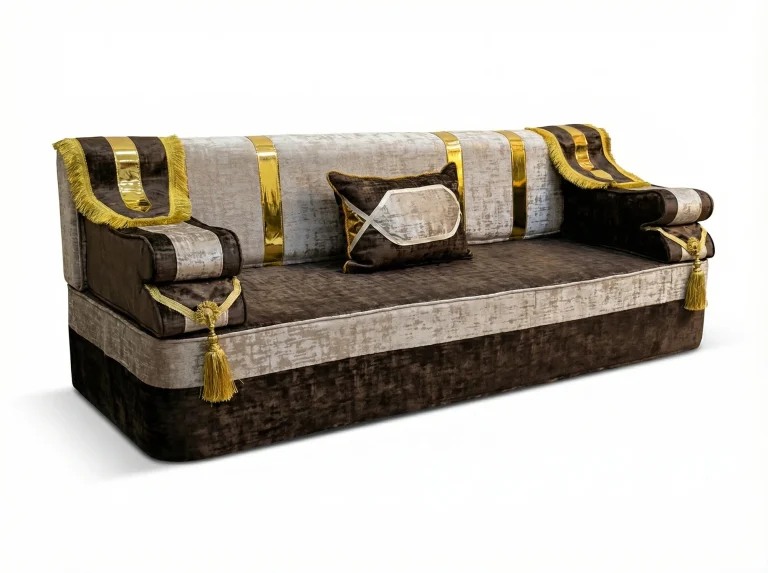
On a velvet floor sofa, a patch that looks stained after cleaning is often just pile lying the wrong way. Let it dry, then stroke it back with a soft clothes brush. On a linen floor sofa, the stain itself may leave while a ring appears around it. The cure is to dampen the panel evenly out to the seams and let it dry as one piece.
When to take the cover off, and when to call a cleaner
Spot cleaning is for small, fresh marks. Take the cover off when the spill was large, when it has reached a seam, or when spot cleaning has left a ring.
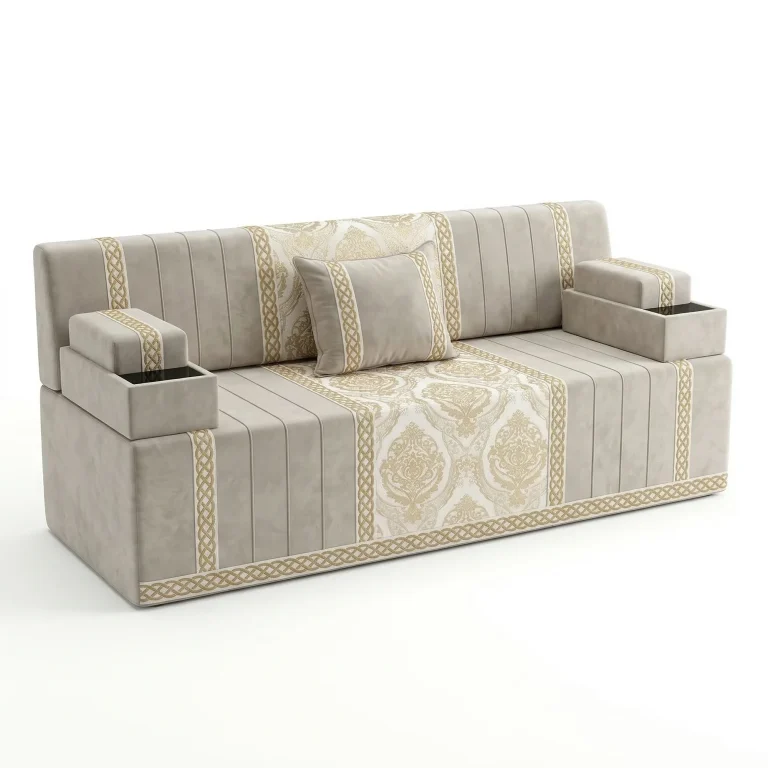
Sofhu covers close with a zip and come off the foam insert. The care advice on our site is a machine wash at 30 degrees; velvet covers can be machine or hand washed cool and should stay out of the tumble dryer. Three small habits make the wash work:
- Treat the stain before the wash. A wash cycle on an untreated turmeric or henna mark can fix it.
- Close the zip and turn the cover inside out.
- Dry it flat or on a line, and put it back on the foam only when it is fully dry.
If liquid reached the foam, press it with dry towels and stand it on edge in moving air until it is dry all the way through.
Call a professional upholstery cleaner for an old stain of unknown origin, for henna that has had a night to set, for anything on metallic gold trim or hand-tied tassels, and for any mark that two careful attempts have not moved.
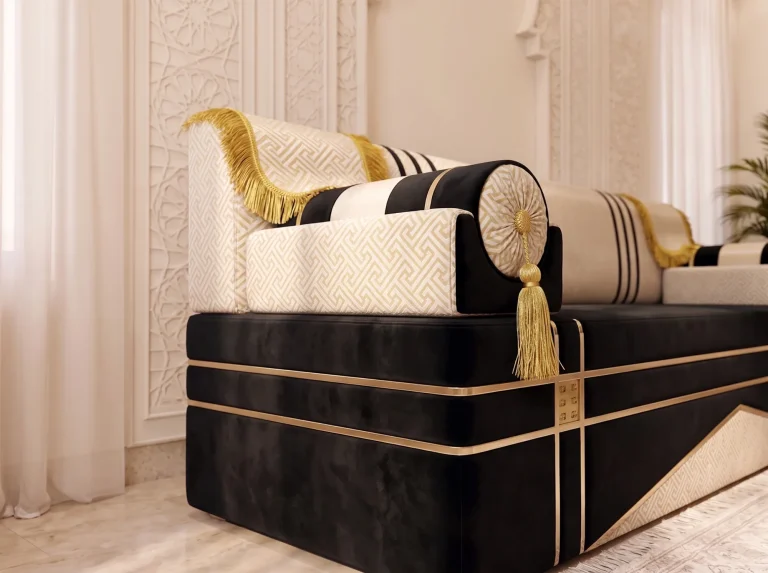
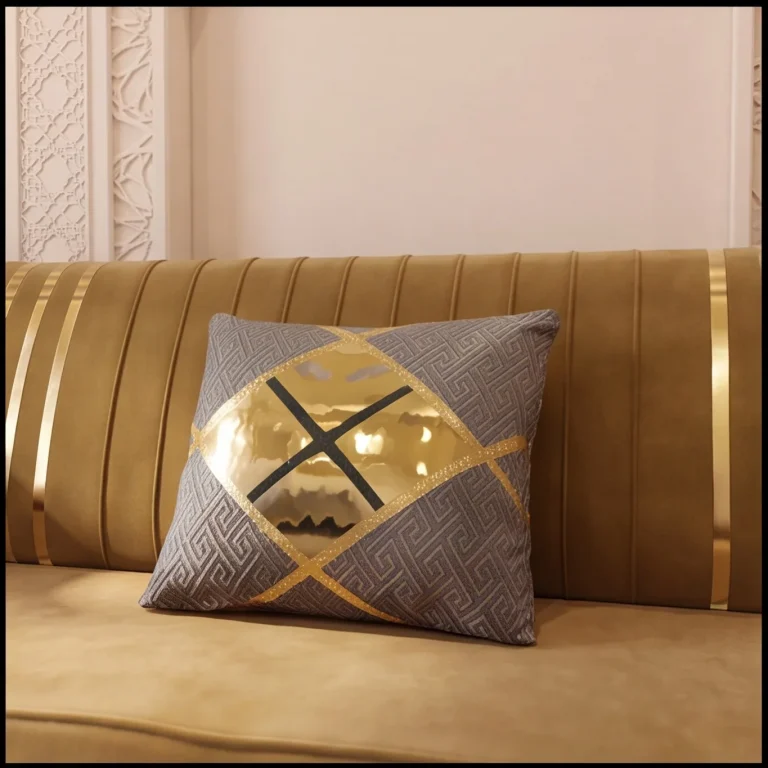
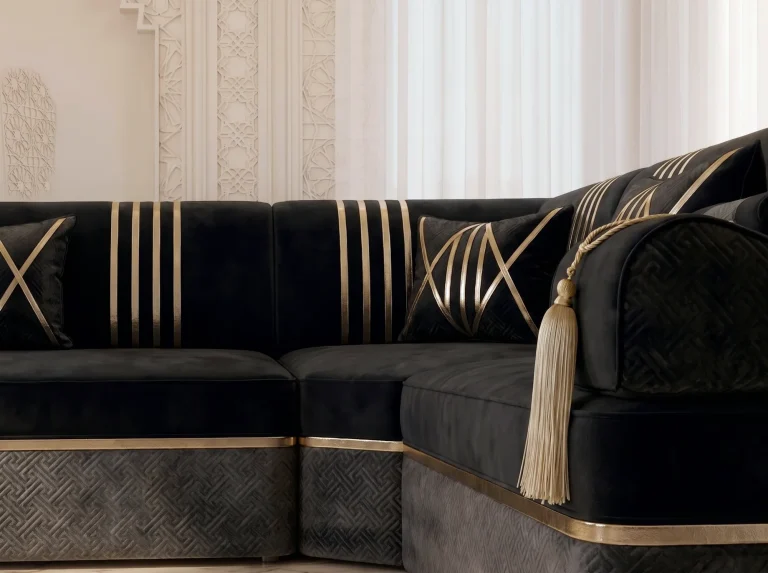
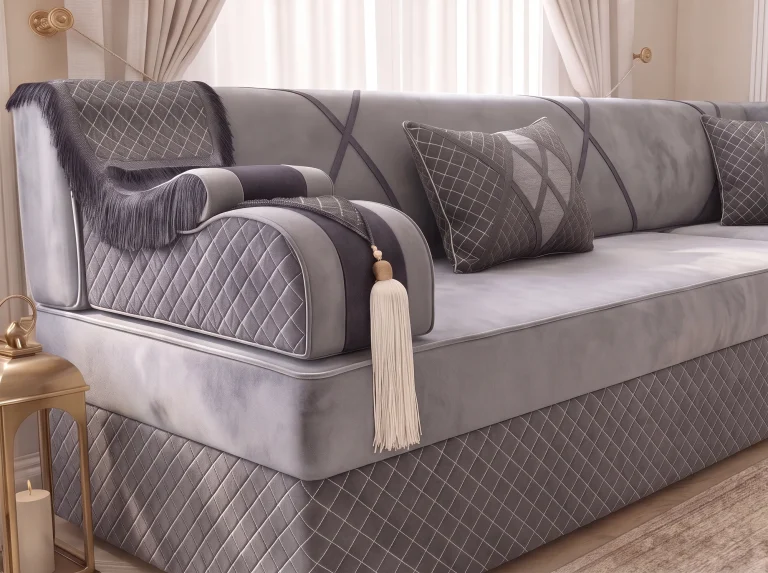
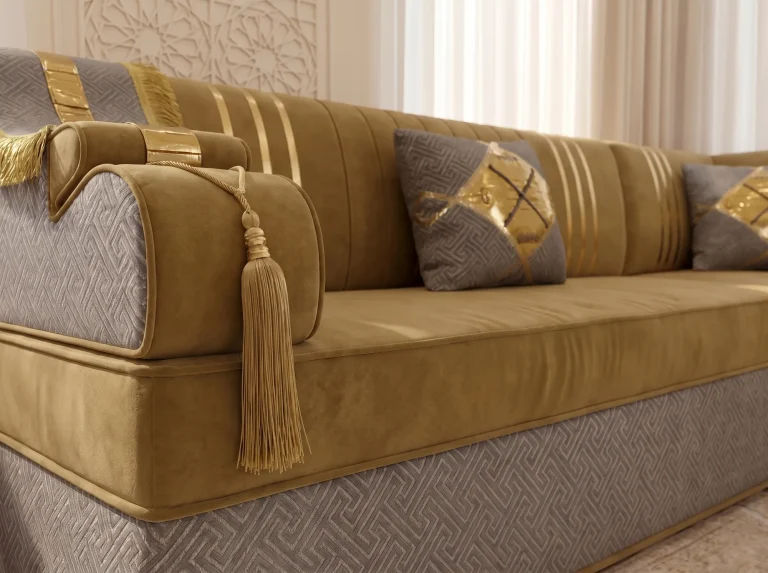
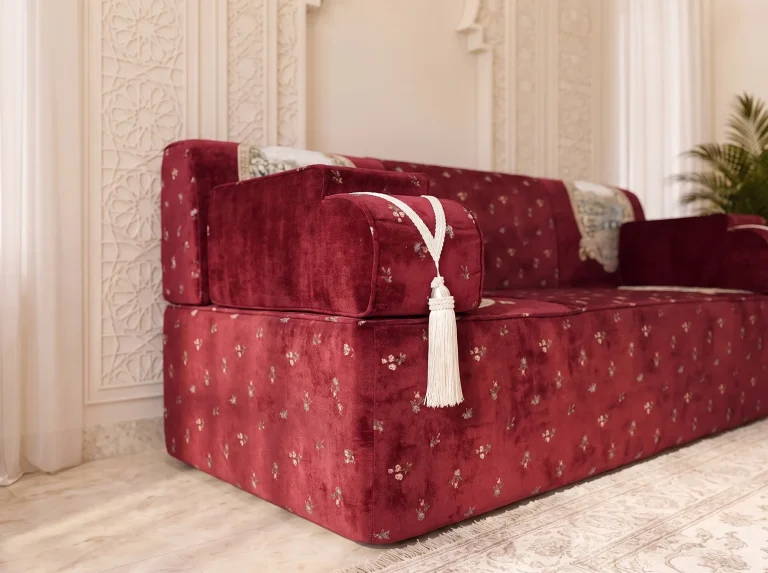
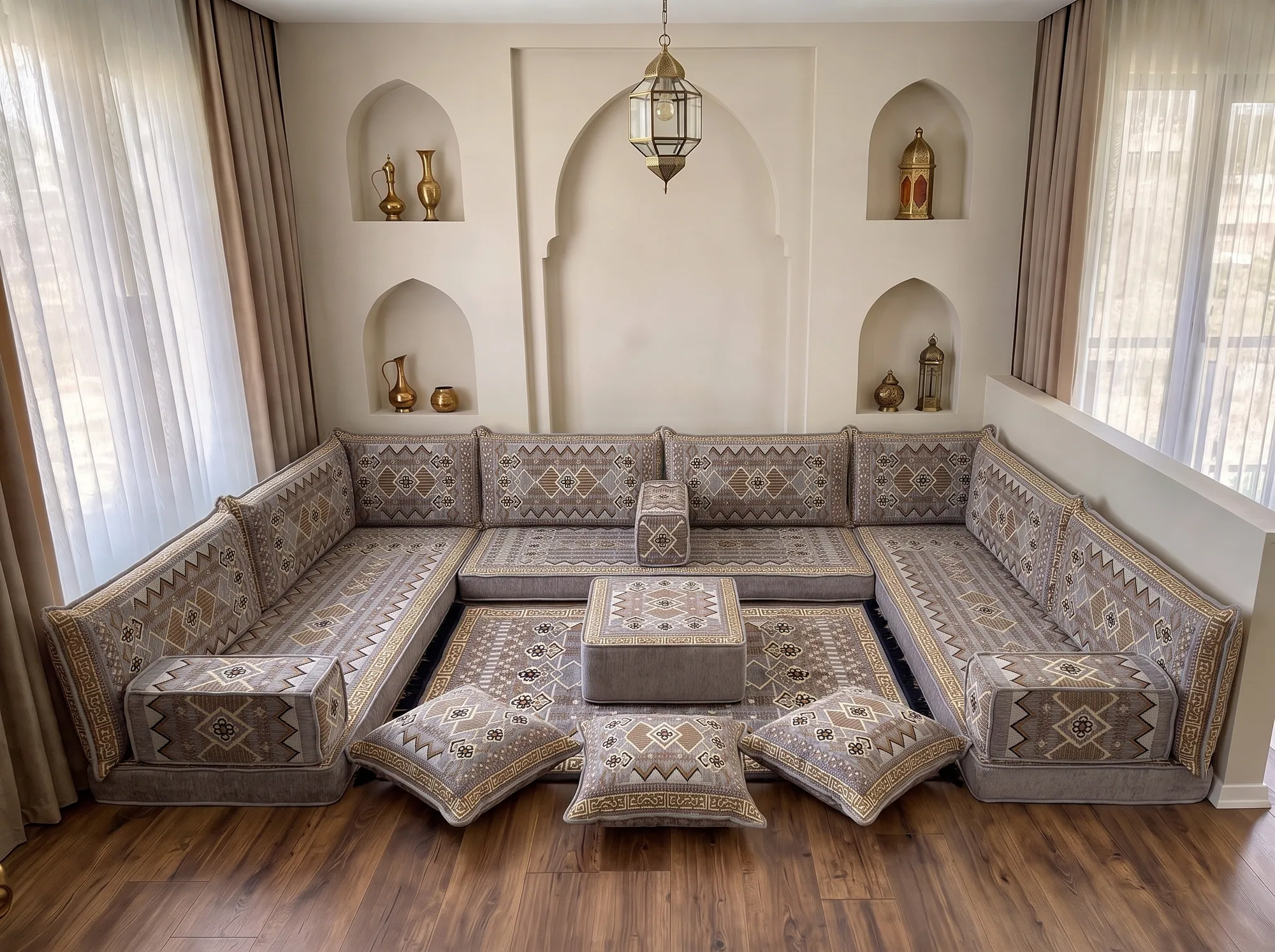
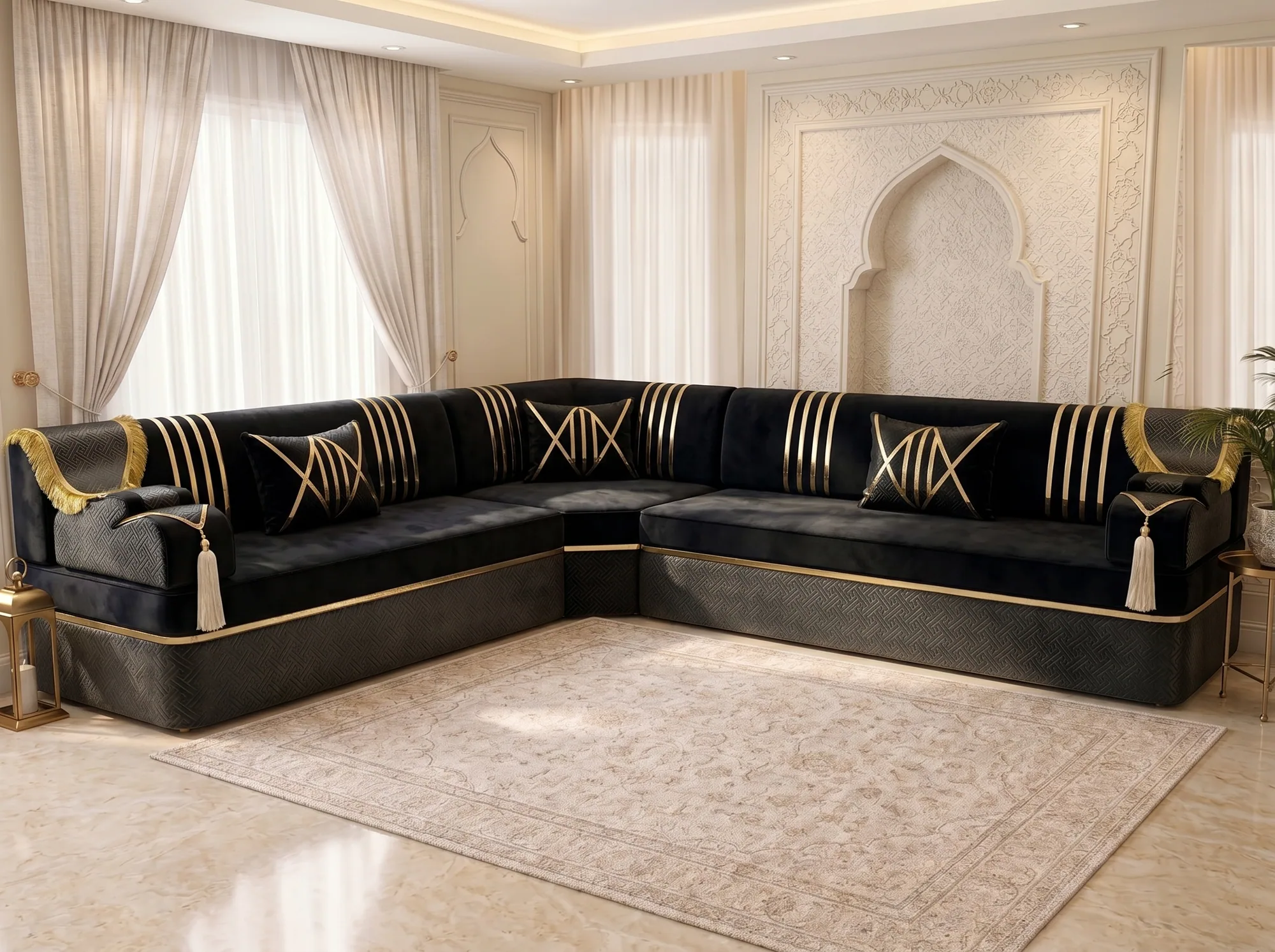
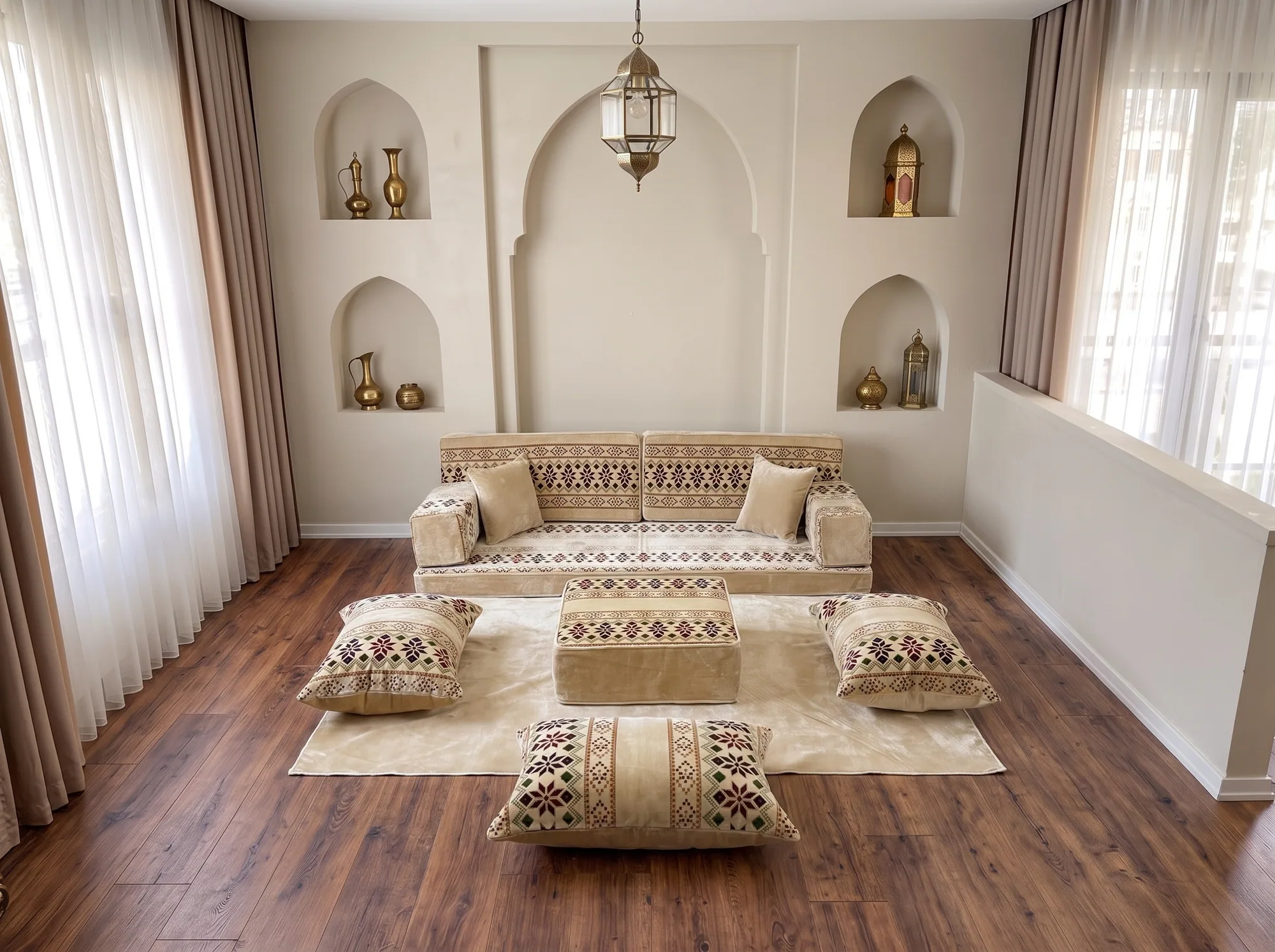
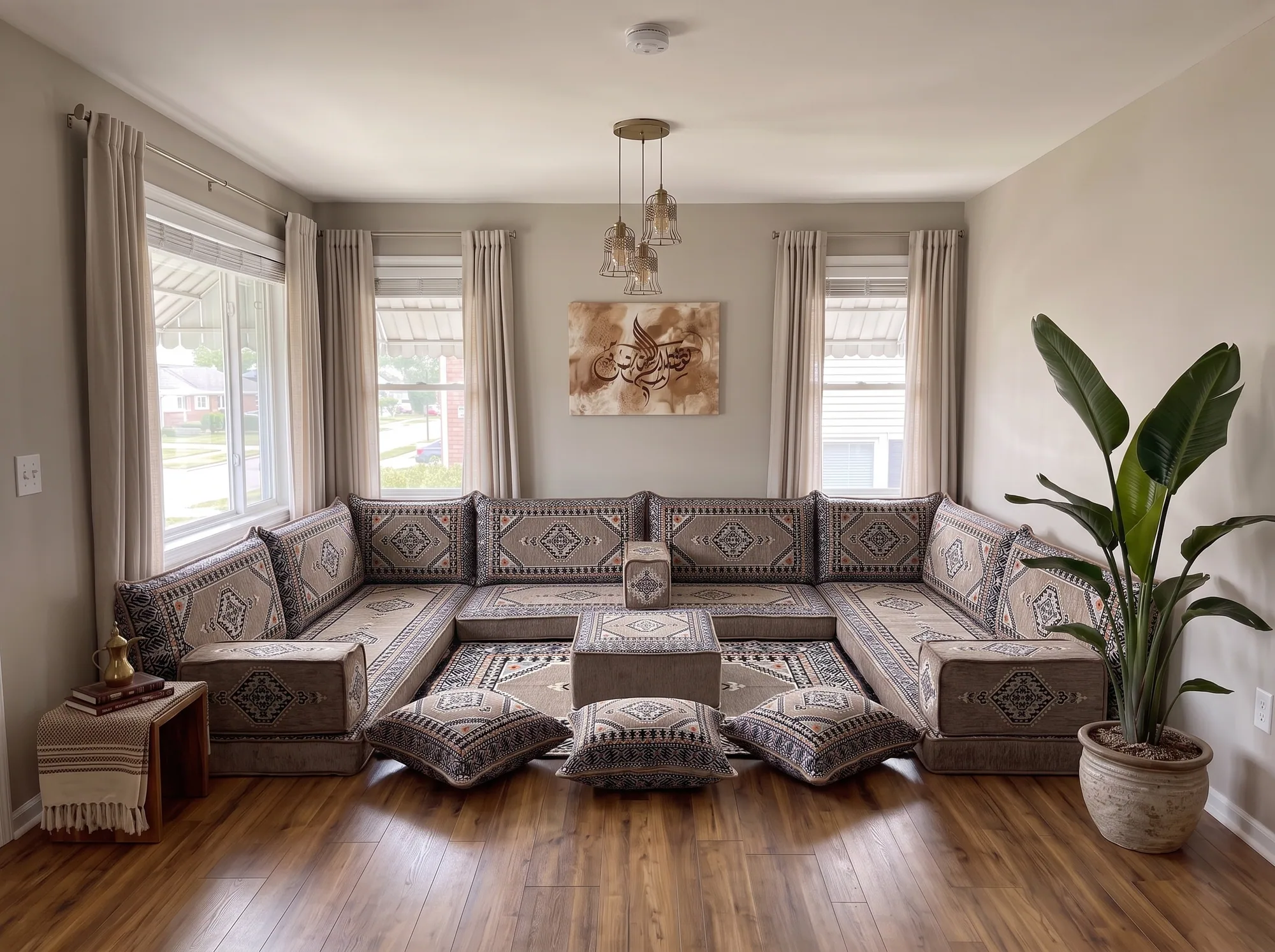
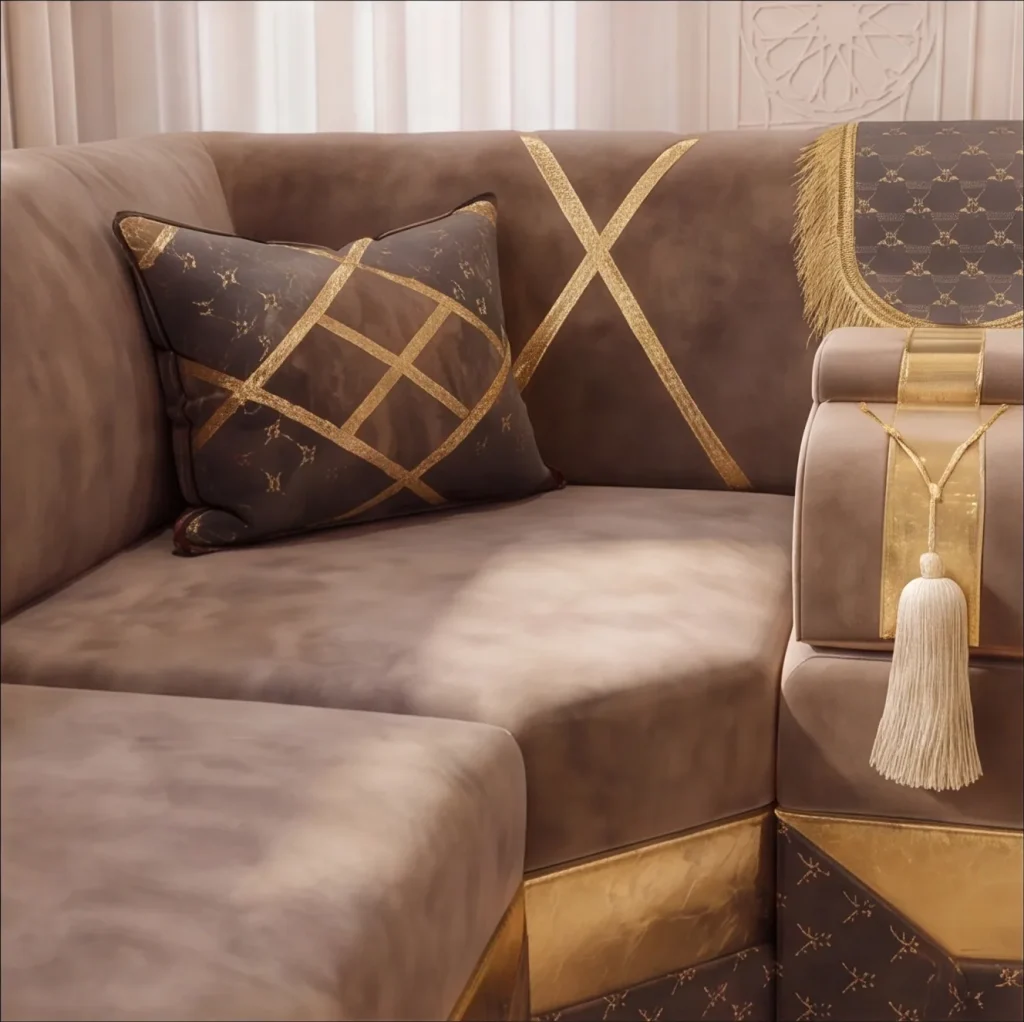
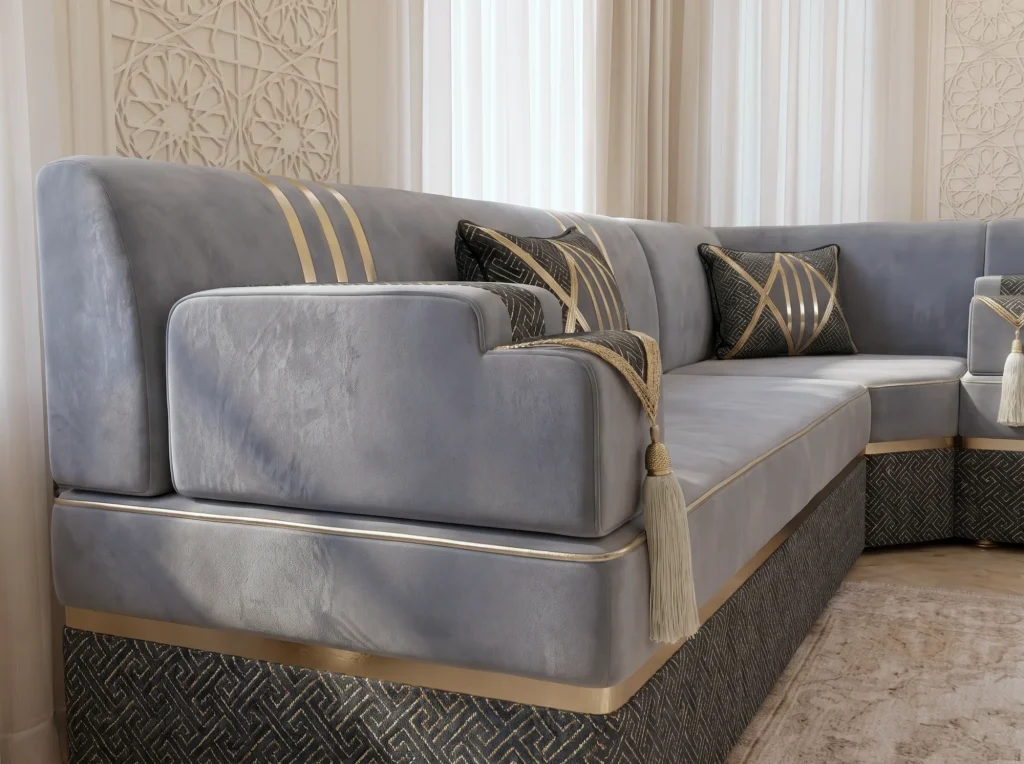
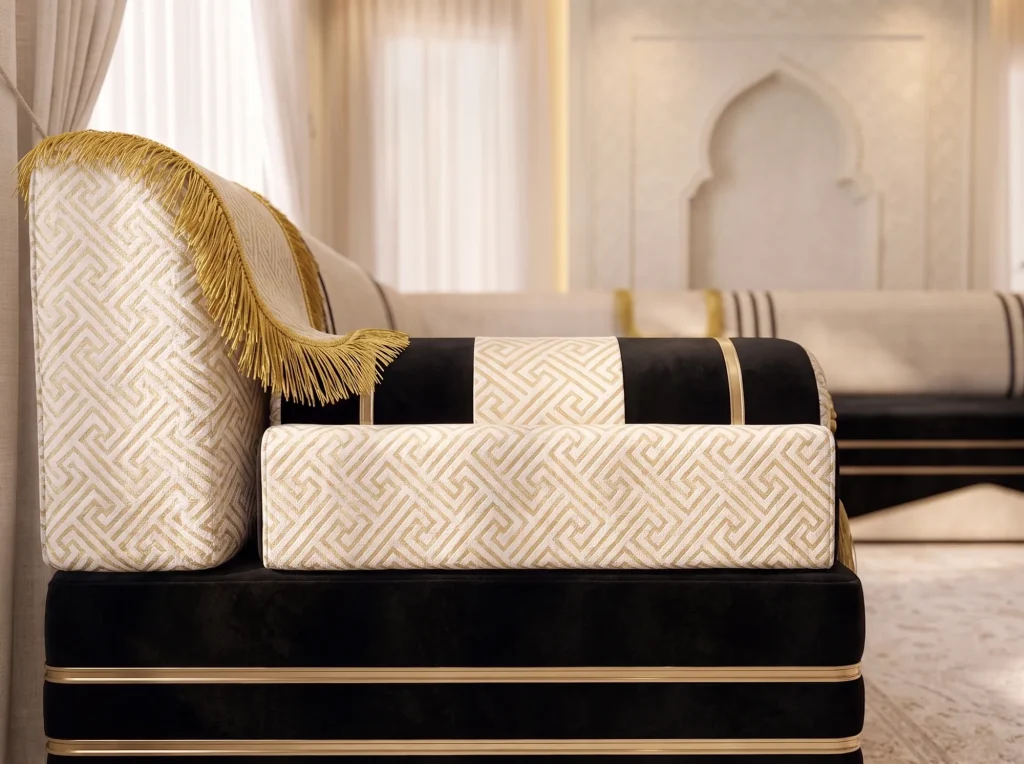
If you host often, have small children, or serve food in the sitting room every day, say so when you ask for a quote. Fabric choice is part of every order, and a darker ground, a busier pattern or one of the fabrics Sofhu describes as stain-resistant will forgive far more than plain cream velvet. The advice here applies to both of Sofhu’s products: the Arabic majlis, the raised and fully upholstered set shown in the close-ups above, and the Arabic floor sofa, the low cushion set that sits on the floor. See the layouts on the majlis sofa sets page, read our notes on a family majlis with young children, then get a quote by measurement or send your wall lengths on WhatsApp.