For Ramadan seating, plan about 60 cm of seat length per adult: roughly 6 m of seating for 10 guests, 12 m for 20 and 18 m for 30, with floor cushions for children. Keep the entrance and a prayer space clear and lay the sufra in the open centre. Sofhu builds each majlis or floor sofa to your wall measurements.
- Planning width per adult
- About 60 cm of seat length
- 10 guests
- About 6 m of seating
- 20 guests
- About 12 m of seating
- 30 guests
- About 18 m, usually across two spaces
- Where the food goes
- On a sufra in the open centre of the room
- Extra places
- Floor cushions, an ottoman, outdoor mats
On this page
The call to prayer is twenty minutes away, the dates are on the tray, and the doorbell has not stopped. Good Ramadan seating is decided long before that moment. It comes down to three numbers: how many adults you expect, how many metres of seat you have, and how much open floor is left for the food and the prayer rows. This plan works through those numbers for 10, 20 and 30 guests, then gives you a checklist for the last week.
Ramadan seating by the numbers: 10, 20 or 30 guests
One adult needs about 60 cm of seat length. That is a common rule of thumb for bench seating, and it works for a majlis too. Guests who lean on an armrest all evening take closer to 75 cm. For a short Eid visit, 50 cm is enough.
Measure the walls your seating runs along, subtract one seat depth for every corner, and divide by 0.6. Our guide to how many people a majlis seats explains the corner rule in detail.
| Guests | Seat length needed | A layout that provides it |
|---|---|---|
| 10 adults | About 6 m | An L on two walls of roughly 3.5 m each |
| 20 adults | About 12 m | A U with a 5 m back wall and two 4.2 m arms |
| 30 adults | About 18 m | A U in the main room plus an L in a second room or outdoors |
Children change the sum in your favour. Three children fit in the space of two adults, and most of them end up on the rug. Count floor cushions and the ottoman as bonus places, not as part of the plan.
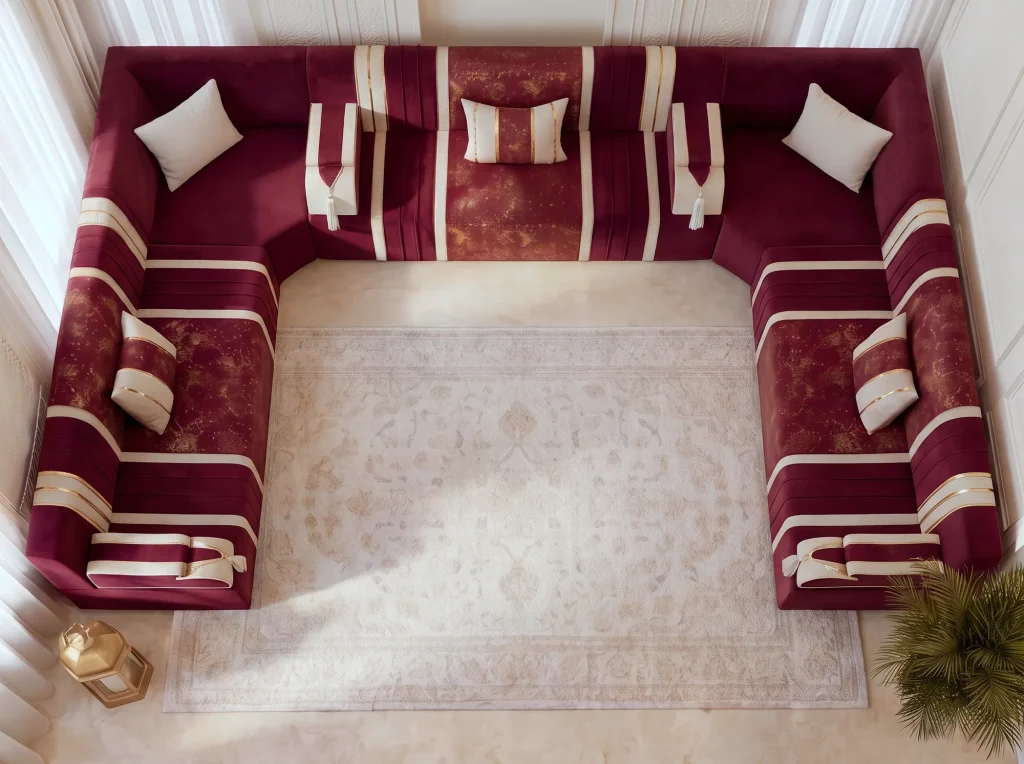
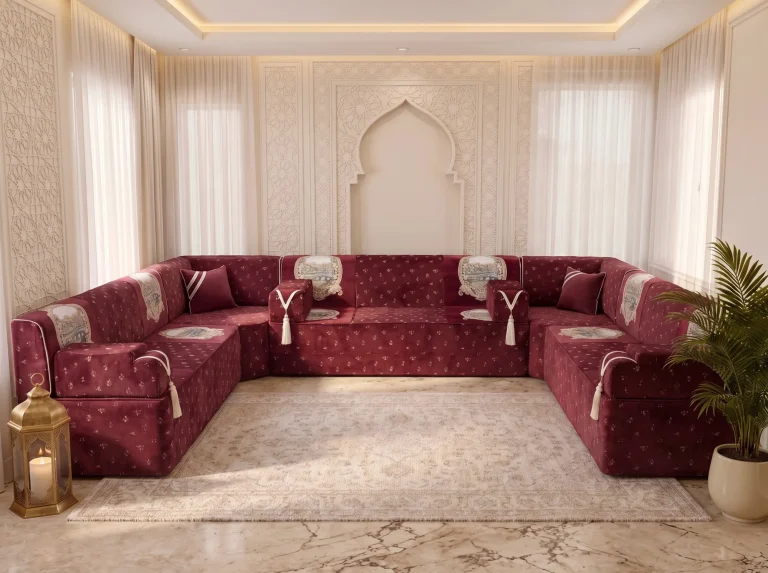
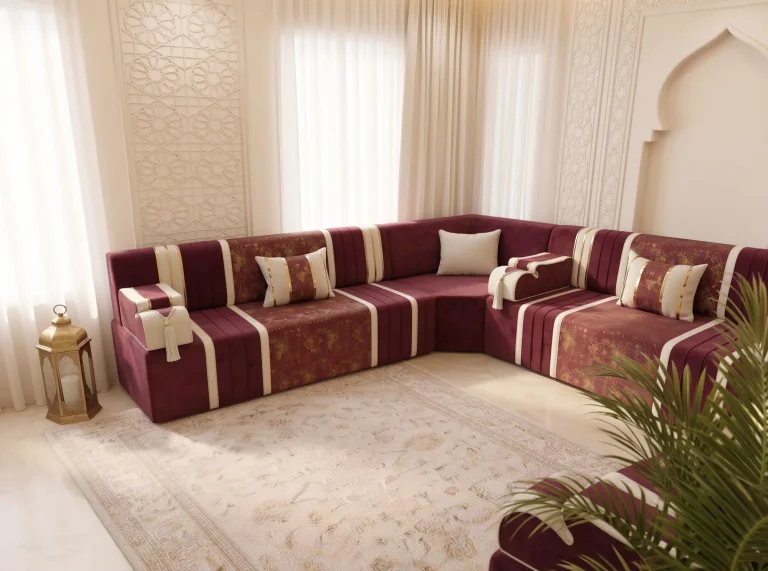
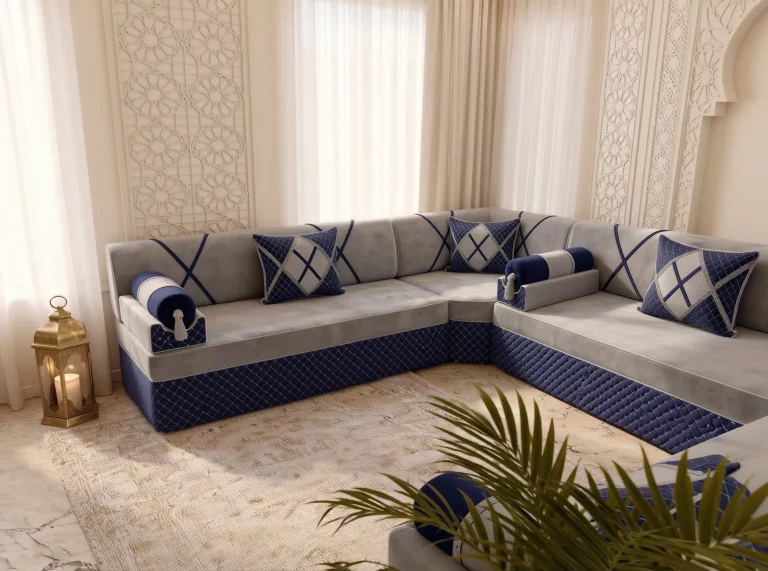
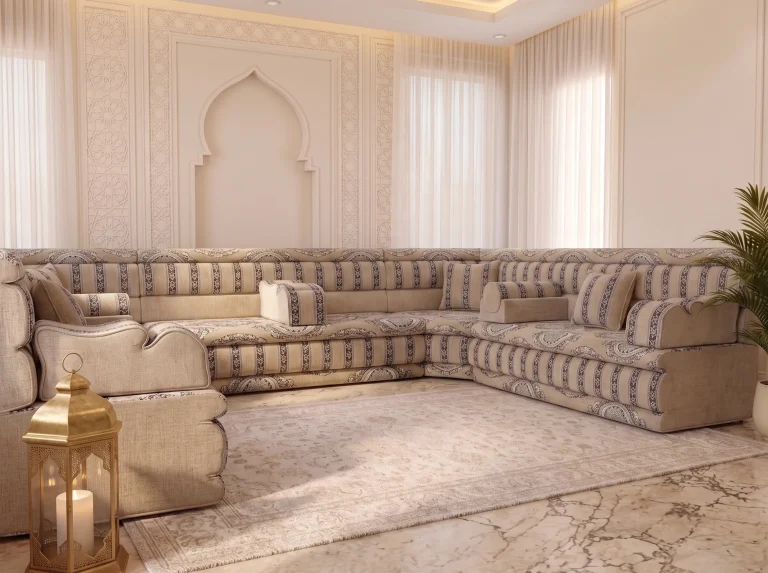
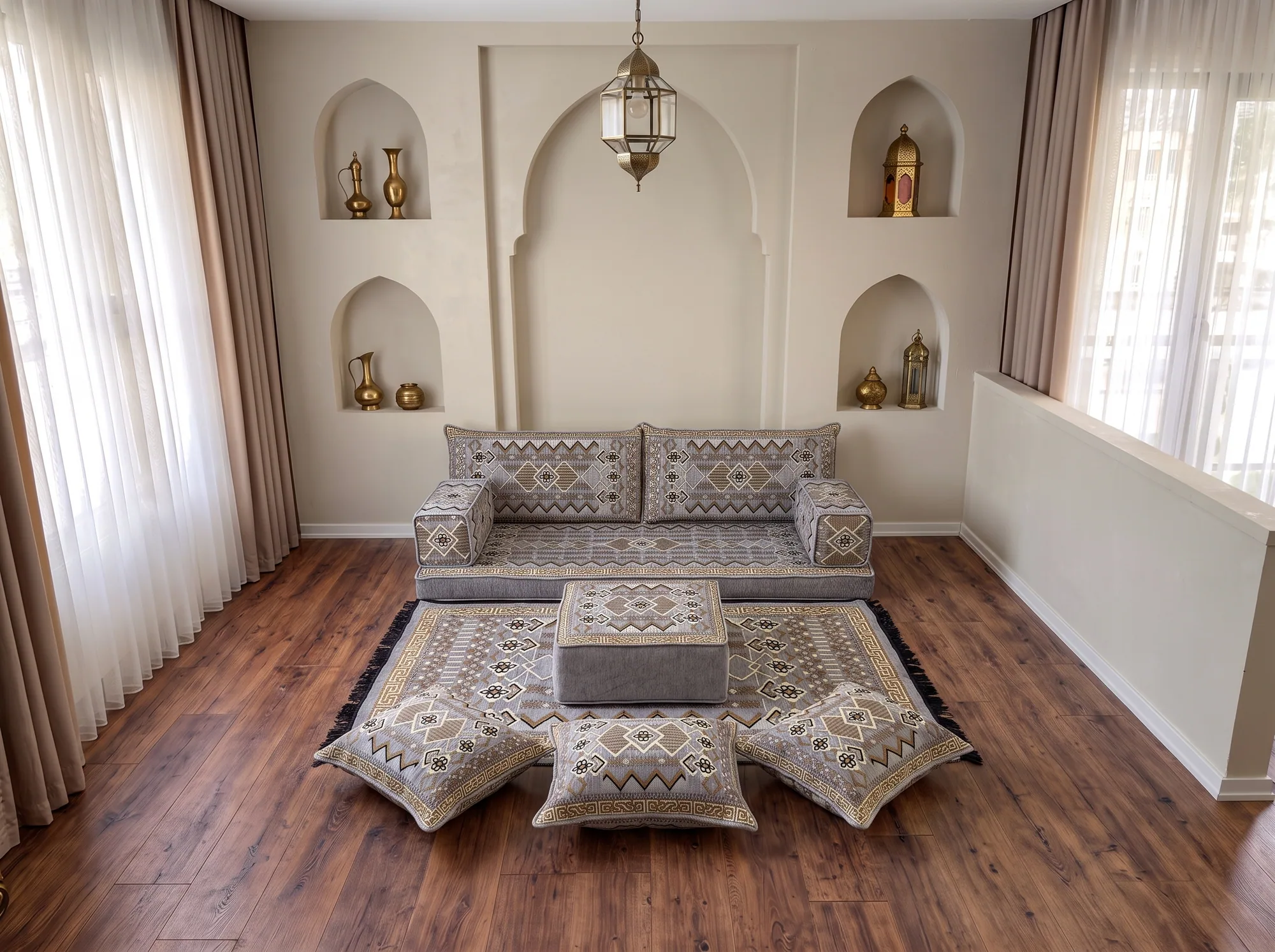
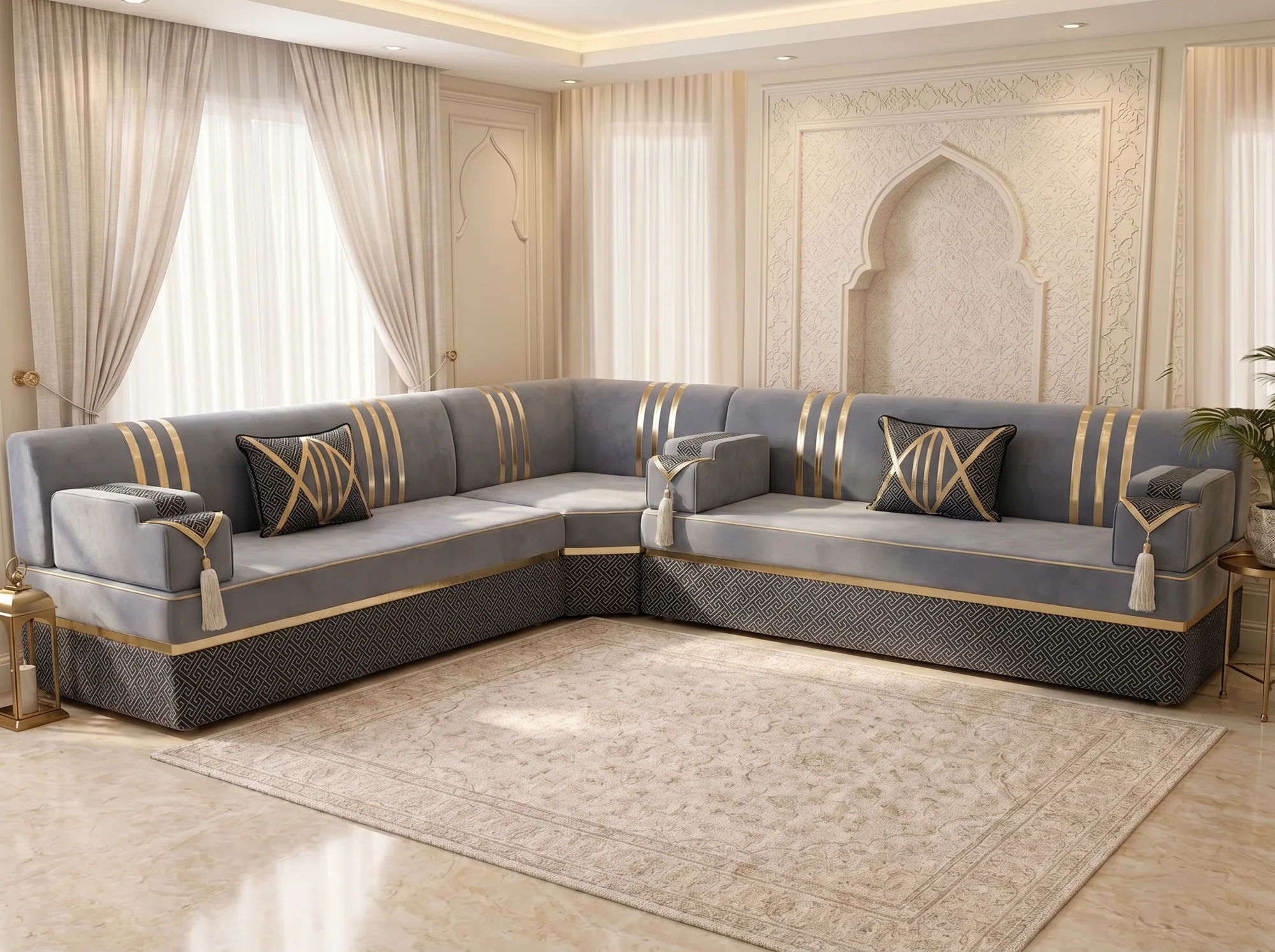
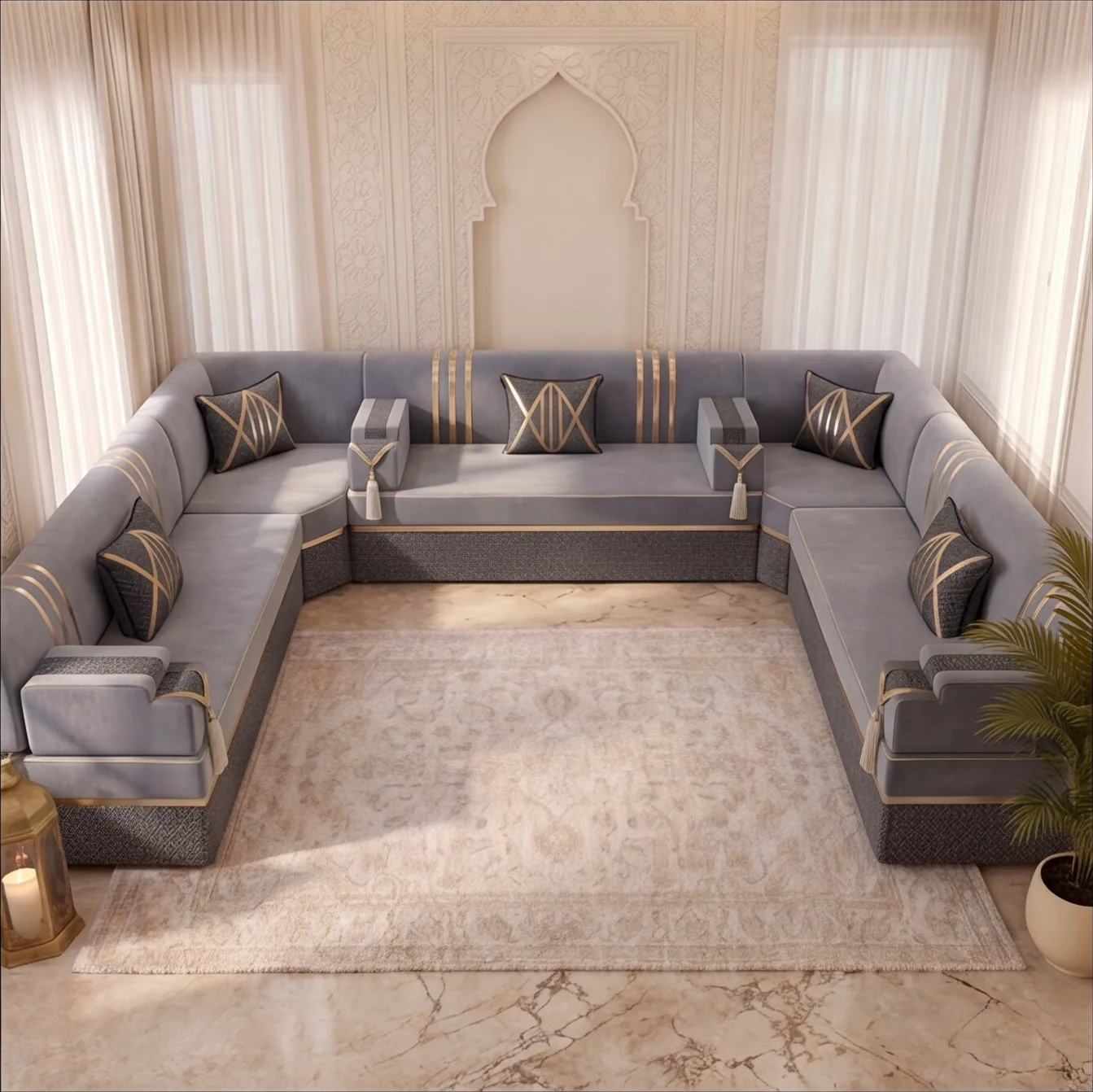
Seen from above, a U-shape shows why it is the standard majlis sofa set for hosting. Every guest faces the centre, and the rug stays free. Sofhu makes that U as two products, and both appear on this page: the Arabic majlis, raised to sofa height with an upholstered base and fixed backs, as in the plan view above, and the Arabic floor sofa, a low cushion set on the floor with an ottoman and floor pillows. If your room only allows two walls, the L-shape and U-shape layout guide shows what each gives up and gains.
Room flow: entrance, sufra and prayer space
Plan the route a guest walks before you plan where they sit. A crowded iftar fails at the door, not at the seats.
The entrance. Leave the first stretch of wall beside the door without an armrest or floor cushion. Guests arrive in groups, greet the eldest first and need somewhere to stand while they do. Put a shoe rack or tray outside the room, not inside it.
The sufra. The meal belongs in the open centre. Lay the cloth so that its long side runs parallel to the longest seating run. People step down from the seats on both sides without anyone climbing over a platter. Allow 60 cm of cloth for each pair of diners facing one another.
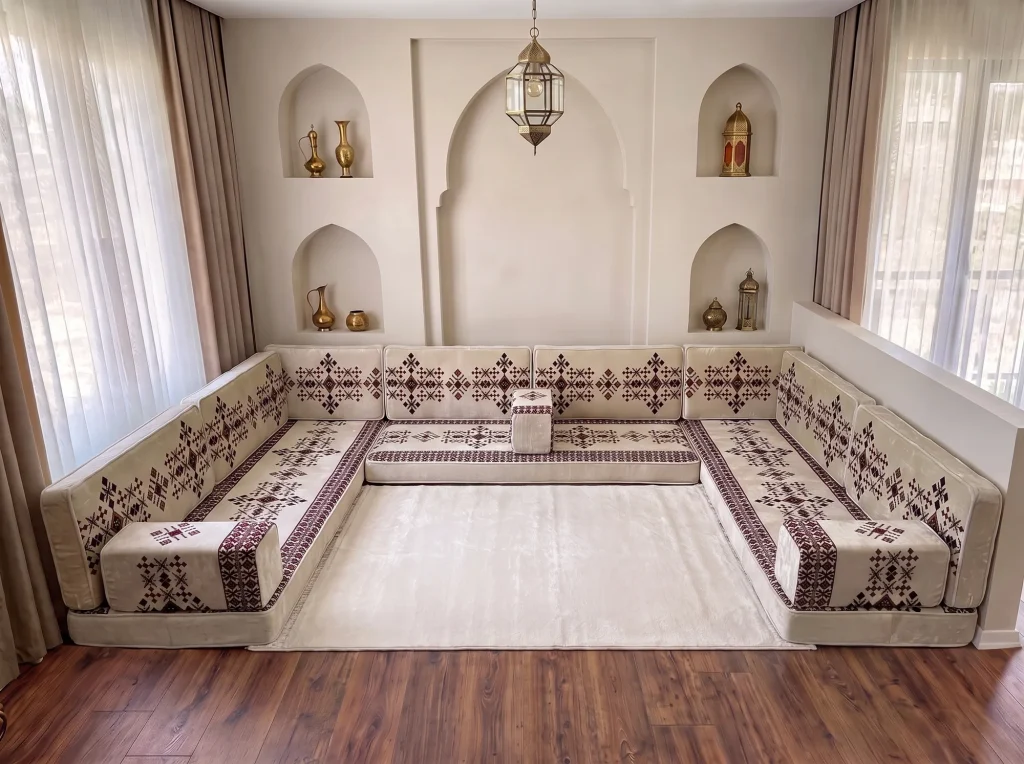
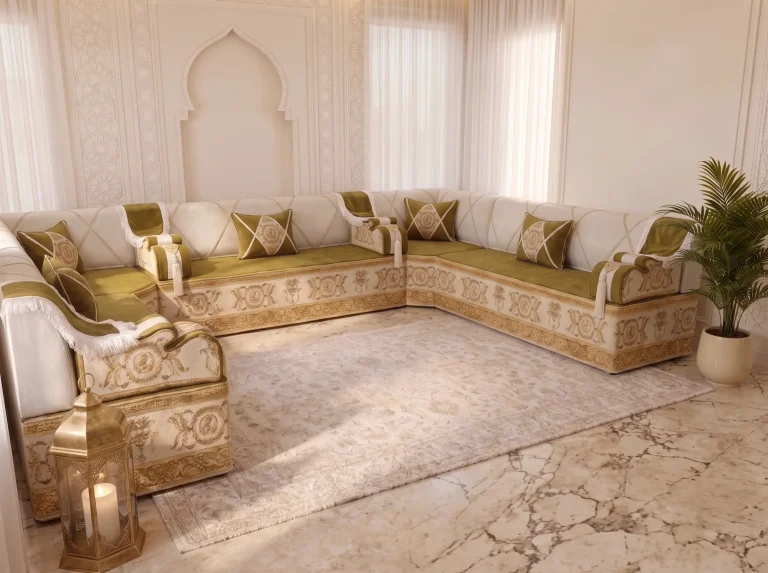
A plain rug inside the U, as in this cream floor sofa set, makes laying the cloth simple. Nothing has to be moved except the ottoman.
The prayer space. Many families break the fast with dates and water, pray maghrib, and then sit down to the meal. If that is your custom, decide where the rows form before the guests arrive. The rug inside the U often works if the sufra is laid after the prayer. Otherwise keep a hallway or a second room clear, with prayer mats stacked where people can see them.
The kitchen route. The person carrying soup should never cross the prayer rows or the doorway crowd. In an open-plan house that usually means serving from the kitchen end of the room.
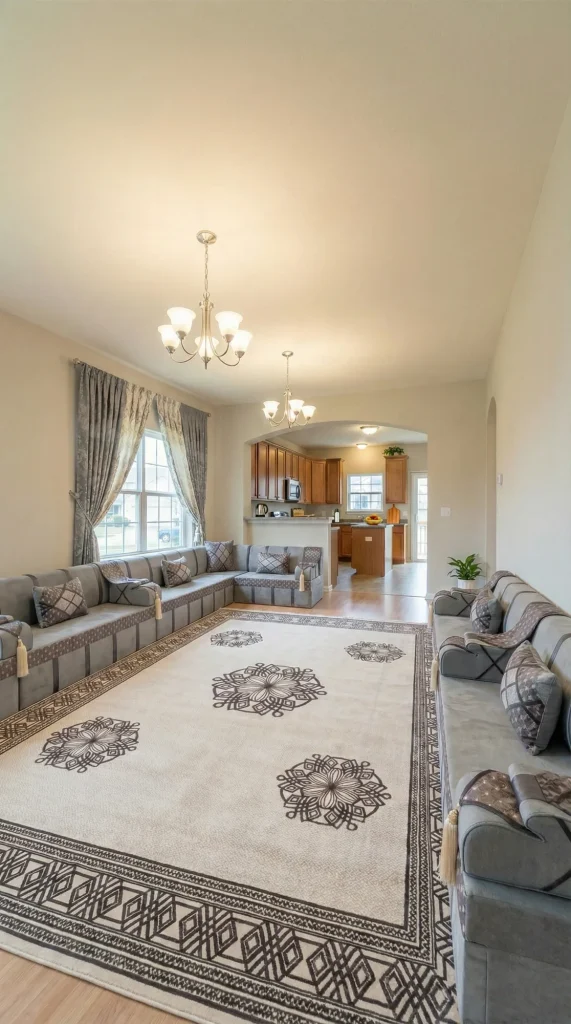
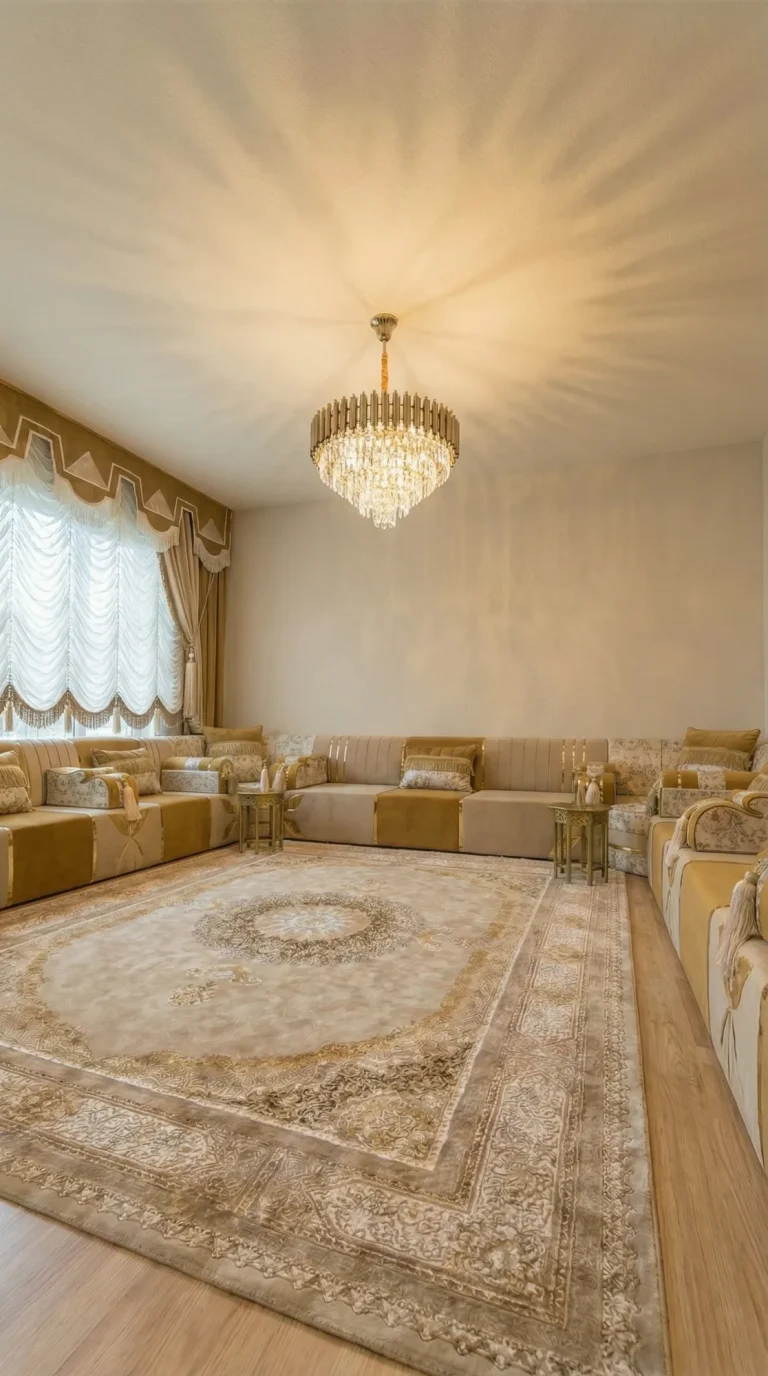
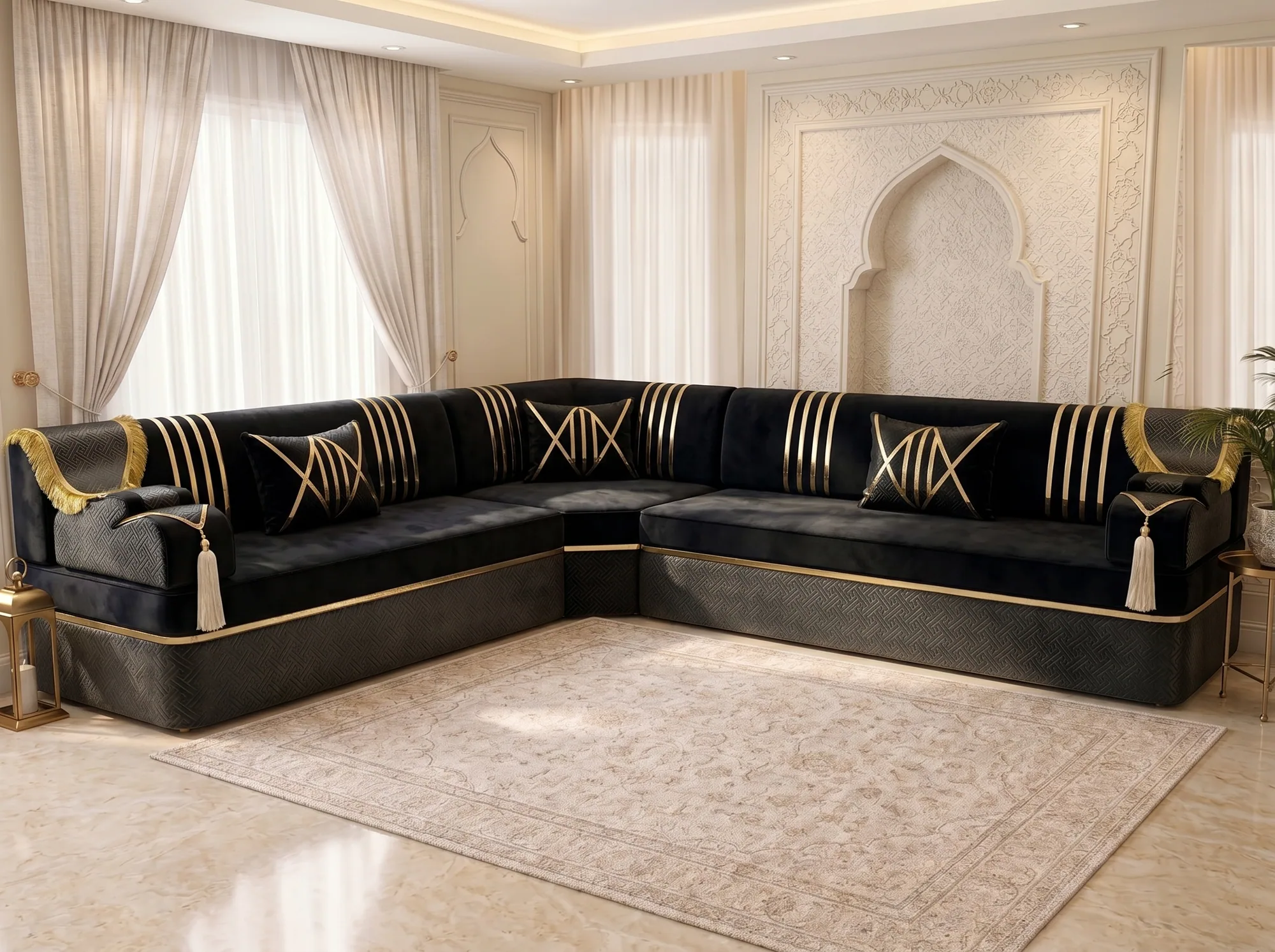
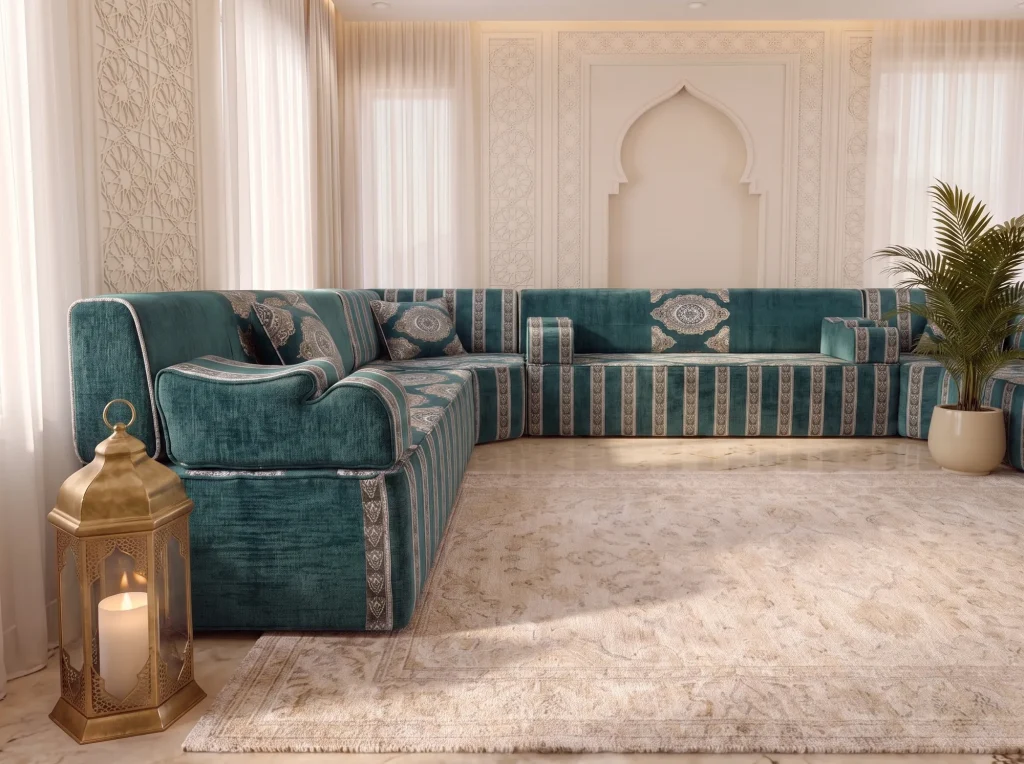
In this open-plan room the seating lines the walls and the kitchen opens off the far end, so trays reach the rug without passing a single seated guest.
Men’s and women’s seating in one home
Two smaller circles host better than one crowded room. Where families sit separately, the split also solves the capacity problem: 20 guests become two groups of 10, and each needs only about 6 m of seating.
There are three common ways to arrange it:
- Two rooms. The main majlis for one group, the family living room for the other. UNESCO’s description of the majlis notes that women have their own majlis, and older houses in Bahrain were built with both.
- One room, two sittings. One group eats first while the other prays or rests, then they change over. This suits small apartments.
- Indoors and outdoors. One group in the house, the other on the patio or in a garden tent once the evening cools.
Sofhu describes its sets as modular, which helps here. A single seat with its backrest can move to the second room for the month and return afterwards. Remember that floor sofas are not freestanding. Each piece needs a wall or something solid behind the backrest, so plan the second room around its walls too.
Borrowed space: garden, garage and hallway
When the walls run out, borrow a space for the night. The Ramadan tent at home is the same idea at a larger scale.
- Garden or patio. Sofhu makes outdoor benches and a foldable, portable outdoor mat. The outdoor fabrics are described as water-resistant and able to handle light rain, so an evening shower is not an emergency. Bring cushions in overnight all the same.
- Garage. Sweep it, lay a large rug or carpet offcut, and line one wall with seating. The wall behind matters more than the floor.
- Hallway. Too narrow for a meal, but useful for the prayer rows or for the children’s own sufra.
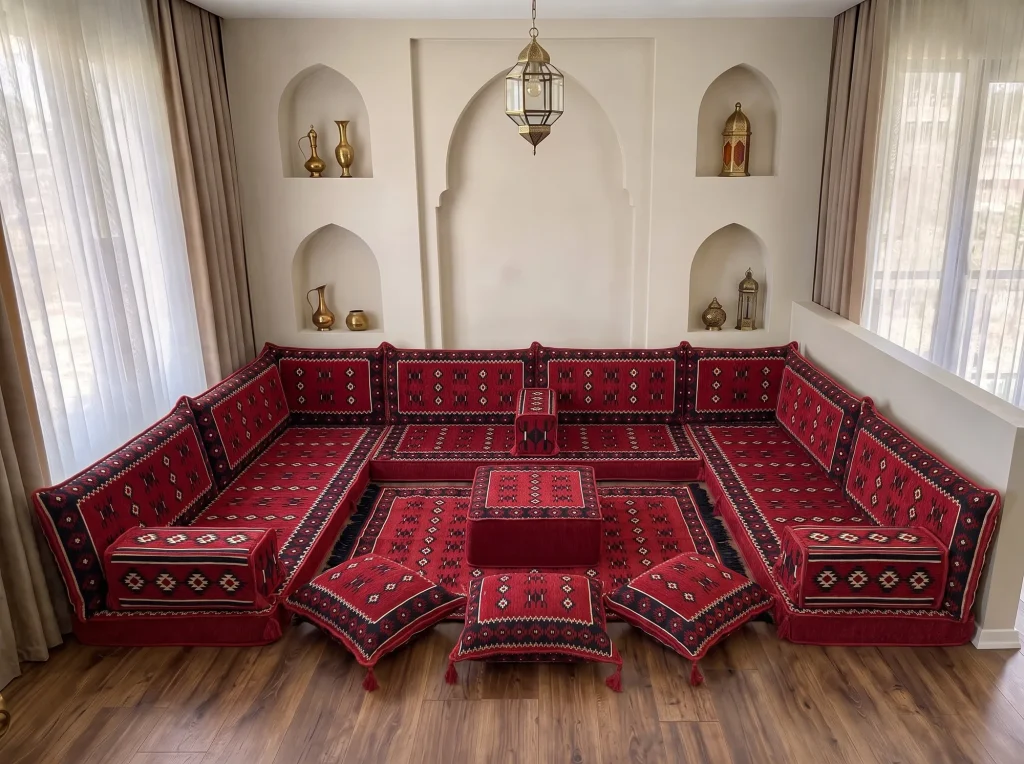
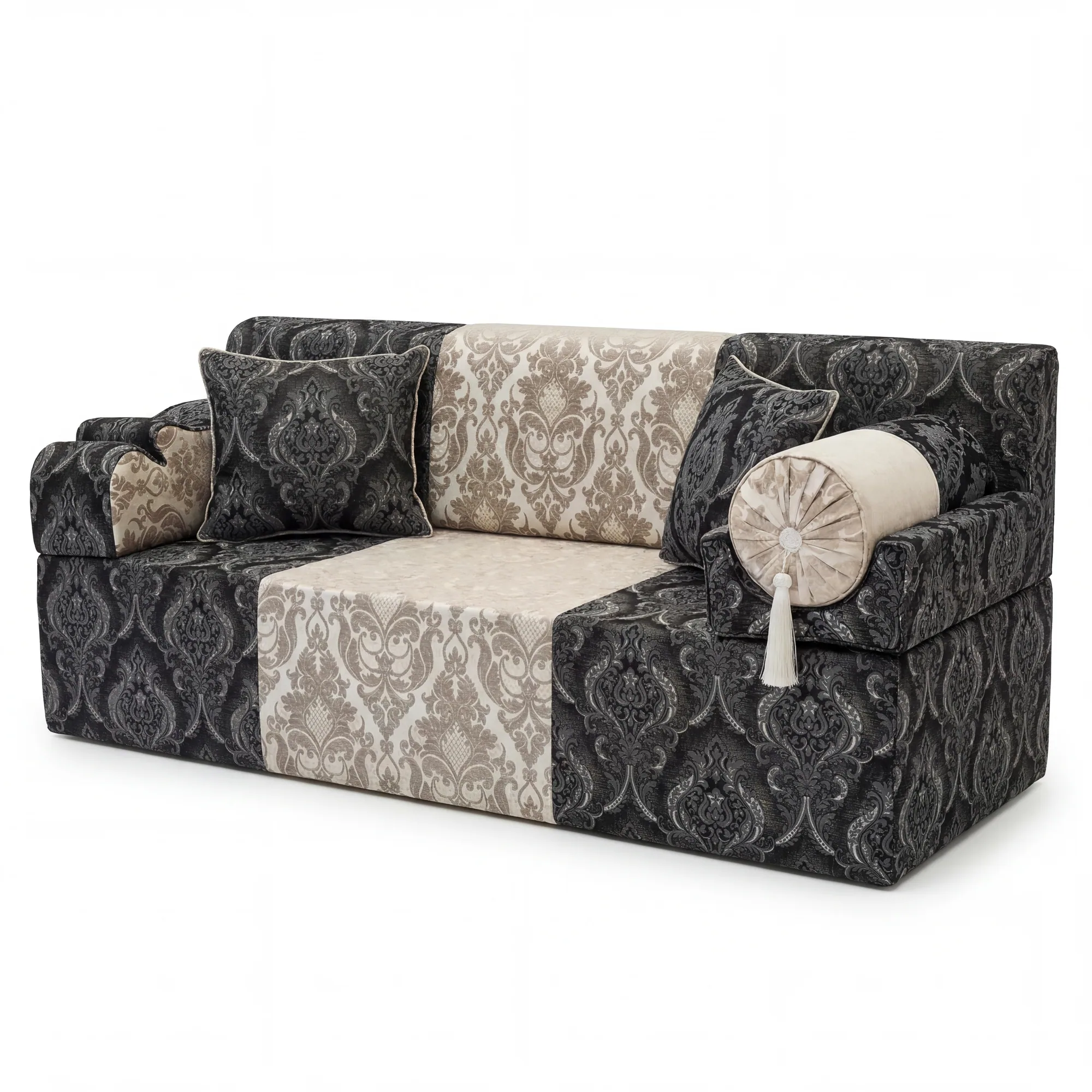
A full floor sofa set with rug, ottoman and three floor cushions shows where the spare places come from. The ottoman seats one, each floor cushion seats one, and the rug takes the children.
The outdoor majlis page covers gardens, terraces and tents, and our balcony and patio ideas deal with smaller outdoor spaces. For a hall hire or a community iftar, see majlis seating for events.
Eid seating ideas for a day of short visits
Eid turns the plan around. Instead of one long meal, you receive a stream of families who stay for coffee and sweets and move on. In Bahrain, guests are described as moving from one majlis to another through the night in Ramadan, and Eid visiting follows the same rhythm in many communities.
- Take out every second armrest to free seat length. Stack them in a corner.
- Move the ottoman to the centre as a serving table for sweets, dates and the coffee pot.
- Keep the seats nearest the door for the newest arrivals and let earlier guests move inward.
- Give older relatives the firmest seat with a wall corner behind it. Our guide to hosting elderly guests explains how to mix seat heights gracefully.
One-week checklist
Work backwards from the first evening you host.
- Seven days before. Count the guests and split them into adults and children. Measure your seating and compare it with the table above.
- Six days before. Decide the second space and what goes in it. Borrow or buy floor cushions now.
- Five days before. Unzip and wash the covers. Sofhu covers are zipped and machine washable at 30 degrees. Do not tumble dry velvet covers.
- Four days before. Vacuum or wash the rug. Check that the cloth for the sufra covers the length you worked out.
- Three days before. Walk the route from the door to the seats and from the kitchen to the rug. Move anything you bump into.
- Two days before. Set out the prayer mats, the shoe rack and a tray for dates and water near the entrance.
- The day before. Put the covers back on, place the armrests, and lay floor cushions against the wall, not in the walkway.
- The day itself. Open the room an hour early, light the lanterns, and sit down yourself for five minutes. If you are comfortable, your guests will be.
If you are buying a majlis for Ramadan
Send the wall lengths, the position of doors and windows, and the number of guests you want to seat. Sofhu is the manufacturer. Each set is made to measure in Türkiye with 32 kg/m³ (32 DNS) high-density foam and shipped free worldwide. Import duties or taxes may apply depending on your country, and you can ask about that before ordering.
Because the set is made to order, tell the team your date at the start. Then get a quote by measurement or message on WhatsApp. For the spirit of the month, the earlier posts on Arabic sofas for Ramadan meetings and five tips for hosting guests are worth a read, as is our guide to majlis etiquette for guests.