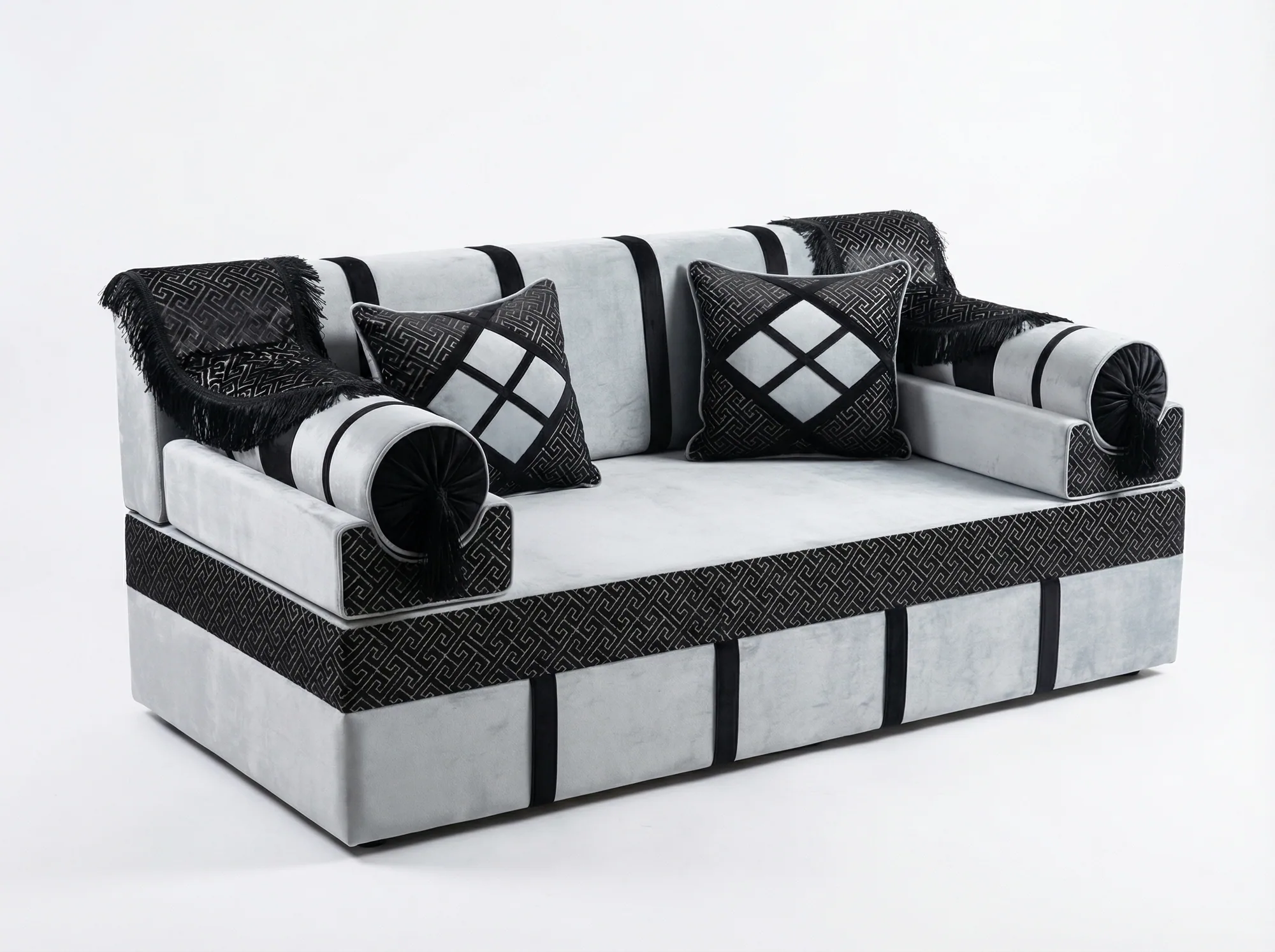
A bedouin majlis is the guest side of the bayt al-sha'ar, the black goat-hair tent, where visitors sit on rugs and cushions around the coffee hearth. Its signature is sadu, the banded geometric weaving made by Bedouin women. Sofhu makes floor seating in sadu-pattern fabric to your measurements, with free worldwide shipping.
- Arabic
- بيت الشعر (bayt al-sha'ar, house of hair); سدو (sadu)
- The space
- A goat-hair tent divided into guest and family sides
- Guest side
- Shigg (شق)
- Divider
- Qat'a (قاطع), the most prized sadu weaving
- Seat level
- On the ground: rugs, cushions, a bolster to lean on
- Sadu colours
- Black, white, brown, beige and red
- Sofhu fabric
- Sadu-pattern upholstery, not hand-woven sadu
- Shipping
- Free worldwide from Türkiye
On this page
Every majlis with walls and a ceiling is a descendant of one without them. The bedouin majlis was the guest side of a tent, furnished with what could be rolled up and loaded on a camel: rugs, cushions and a long woven divider. The pattern on that divider, sadu, is still the first thing people picture when they think of Arabian seating. This page covers the tent, the weaving, and how sadu-pattern seating is made for a house, a garden or a camp today.
The bedouin majlis began in the bayt al shaar
The bayt al-sha’ar (بيت الشعر), the “house of hair”, is the black tent of the nomadic Bedouin. It is built from woven panels sewn together. Goat hair is used for the outer walls because it is coarse enough to block the sun, and its fibres swell when it rains, which tightens the weave against the water.
This tent is where the majlis started. Qatar’s own account of the tradition says the majlis “used to be a goat hair tent where men congregated”. The UNESCO listing of the majlis as a cultural and social space, inscribed in 2015 by the United Arab Emirates, Saudi Arabia, Oman and Qatar, describes the settled form: a large space with carpets on the floor and cushions against the wall. The article on the majlis and UNESCO’s heritage list explains what was recognised.
The tent has not disappeared. In Saudi Arabia it is still put up as a winter gathering place for family and friends.
Two sides and a woven wall
A Bedouin tent is always divided in two. One side, the shigg (شق), is for men and guests. The other, the haram, is the family’s. Between them hangs the qat’a (قاطع), a woven divider.
The qat’a is the most prized piece of sadu a family owns. It is made by senior weavers, can run to roughly twelve to fifteen metres, and its decorated face is turned toward the guest side. Its richness told a visitor about the standing of the household before a word was spoken. In other words, the textile was the architecture, the decoration and the introduction all at once.
Sadu pattern: what the bands are
Sadu (سدو) is warp-faced weaving done by women, using wool, goat hair and camel hair. The designs run in narrow lengthwise bands. Inside the bands are small geometric figures: triangles, diamonds and the brands used to mark camels. The most intricate band is called the shajarah.
The colours are those of the animals and of a few dyes. Black, white, brown and beige come from the fibres themselves, and red is the strong accent, especially in the Emirates. That combination of red, black and white in stripes is what shops mean when they say “Bedouin style”.
Sadu weaving has its own UNESCO recognition, separate from the majlis. The Emirati craft was inscribed in 2011 and the weaving of Saudi Arabia and Kuwait in 2020. For the Gulf traditions that grew from the tent, see the Saudi majlis, the Emirati jalsa and the Kuwaiti diwaniya.
Sitting in the tent: the lowest seat of all
Bedouin tent seating is as low as seating gets. There is no frame and no mattress in the modern sense. Rugs go down on the ground, cushions are set out, and a camel saddle or a bolster gives something to lean on. Everything faces the coffee hearth.
| Bedouin tent | Arabic floor sofa today | |
|---|---|---|
| Under the sitter | Rug on the ground | Foam seat cushion |
| To lean on | Loose cushion, saddle or bolster | Back cushion against the wall |
| Layout | Around the hearth, guest side | Along the walls |
| Identity | The sadu divider | Sadu-pattern fabric |
A floor sofa is therefore not a copy of the tent. It is the comfortable, settled form of the same idea, with the sadu moved from the wall onto the cushions.
Sadu for a majlis room: Sofhu’s fabric, honestly described
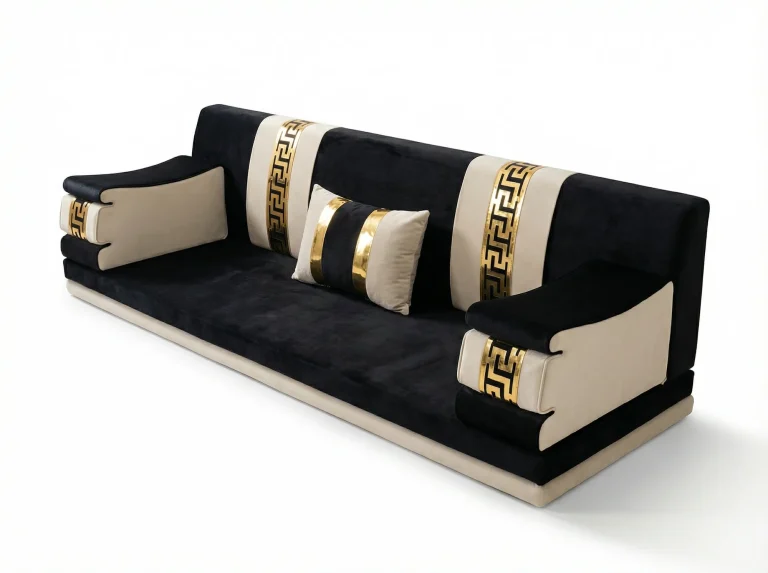
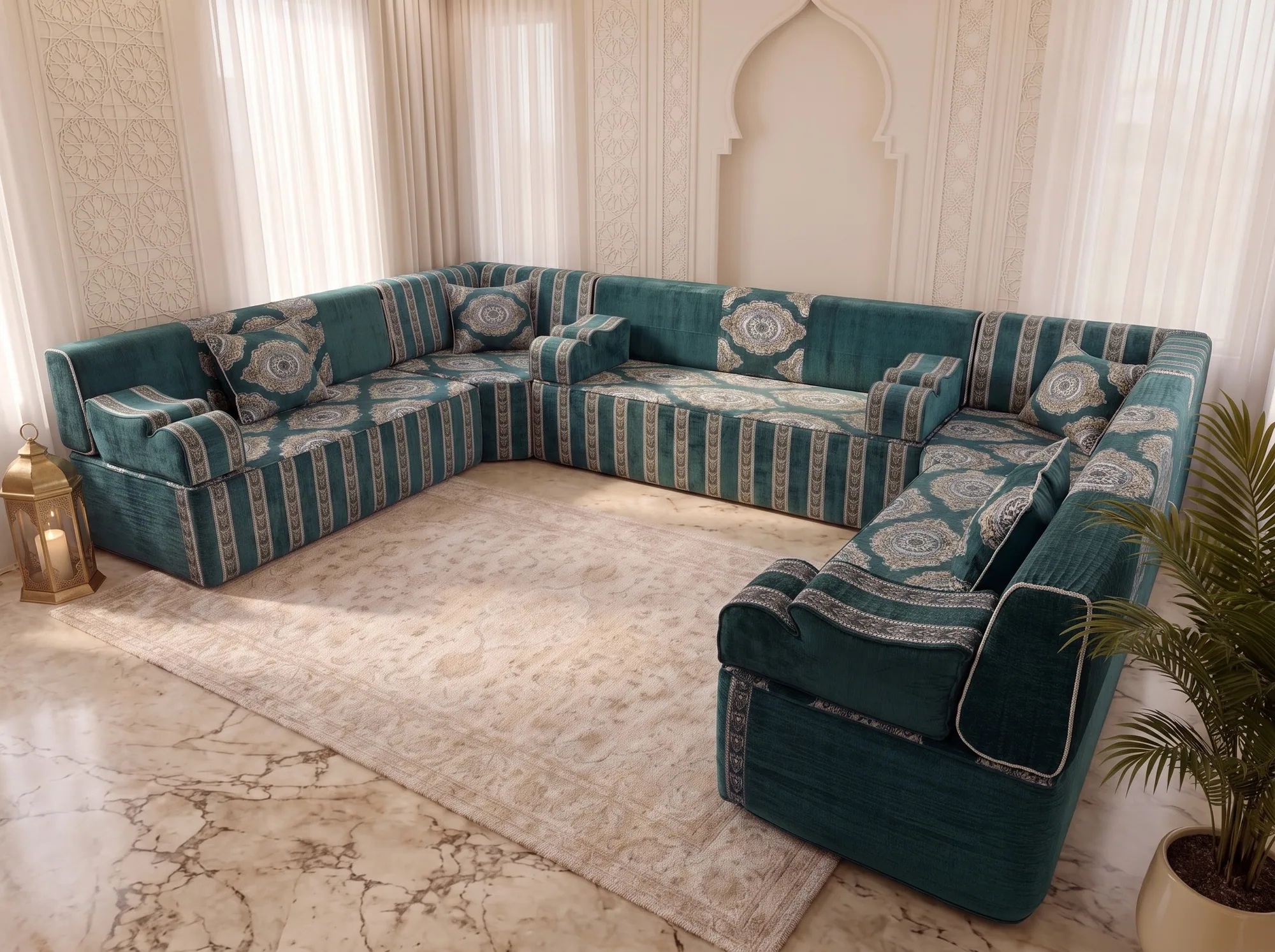
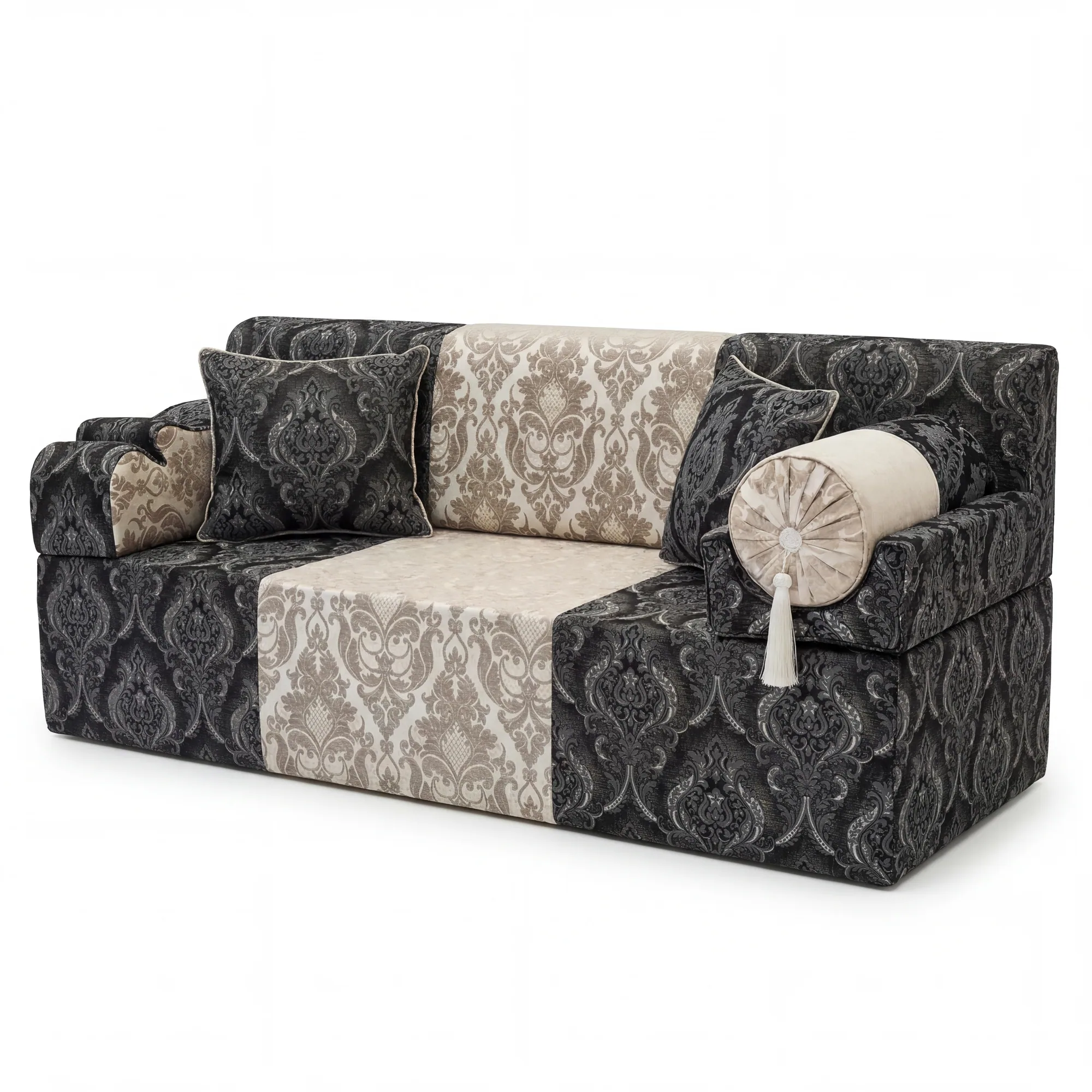
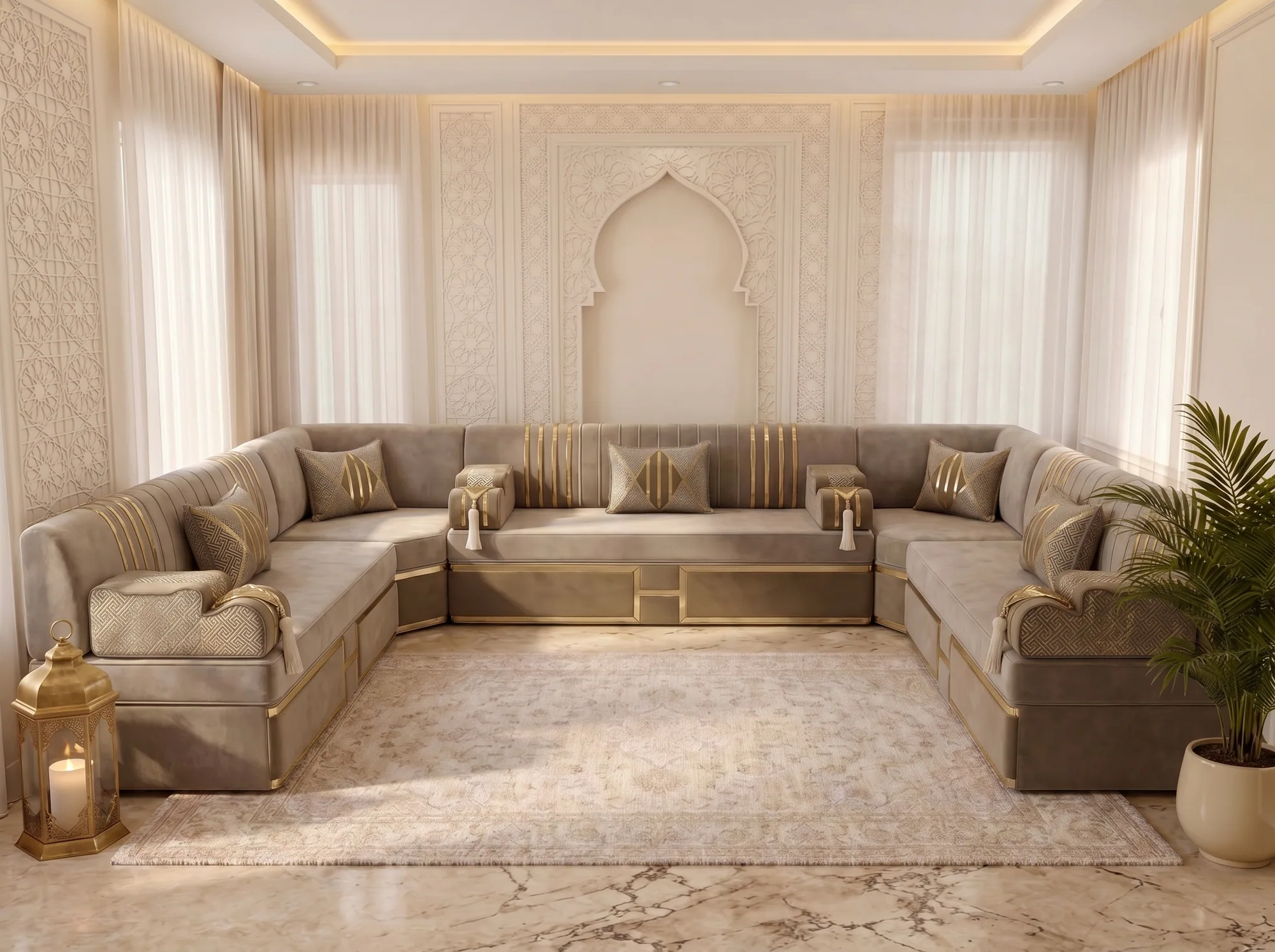
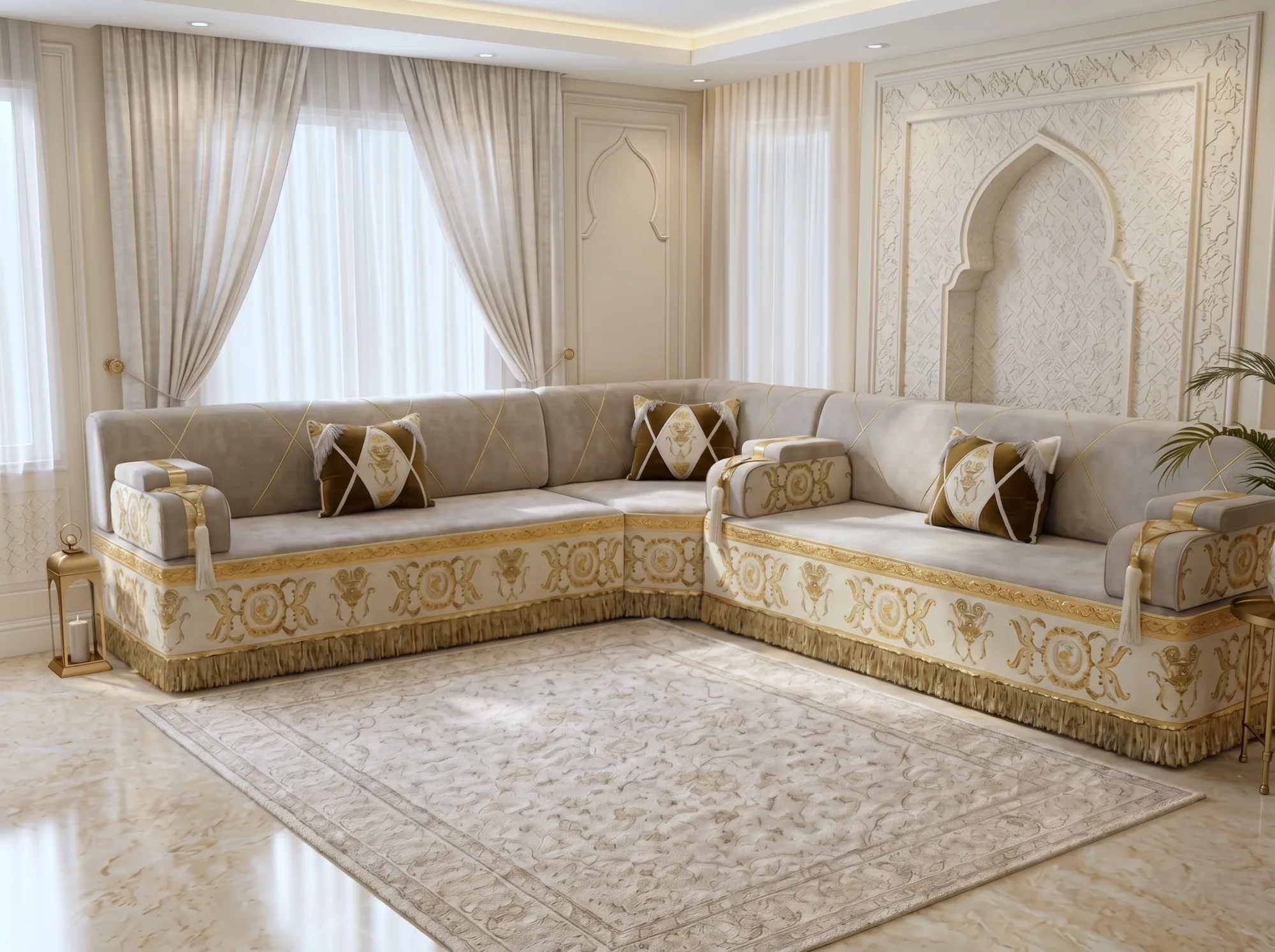
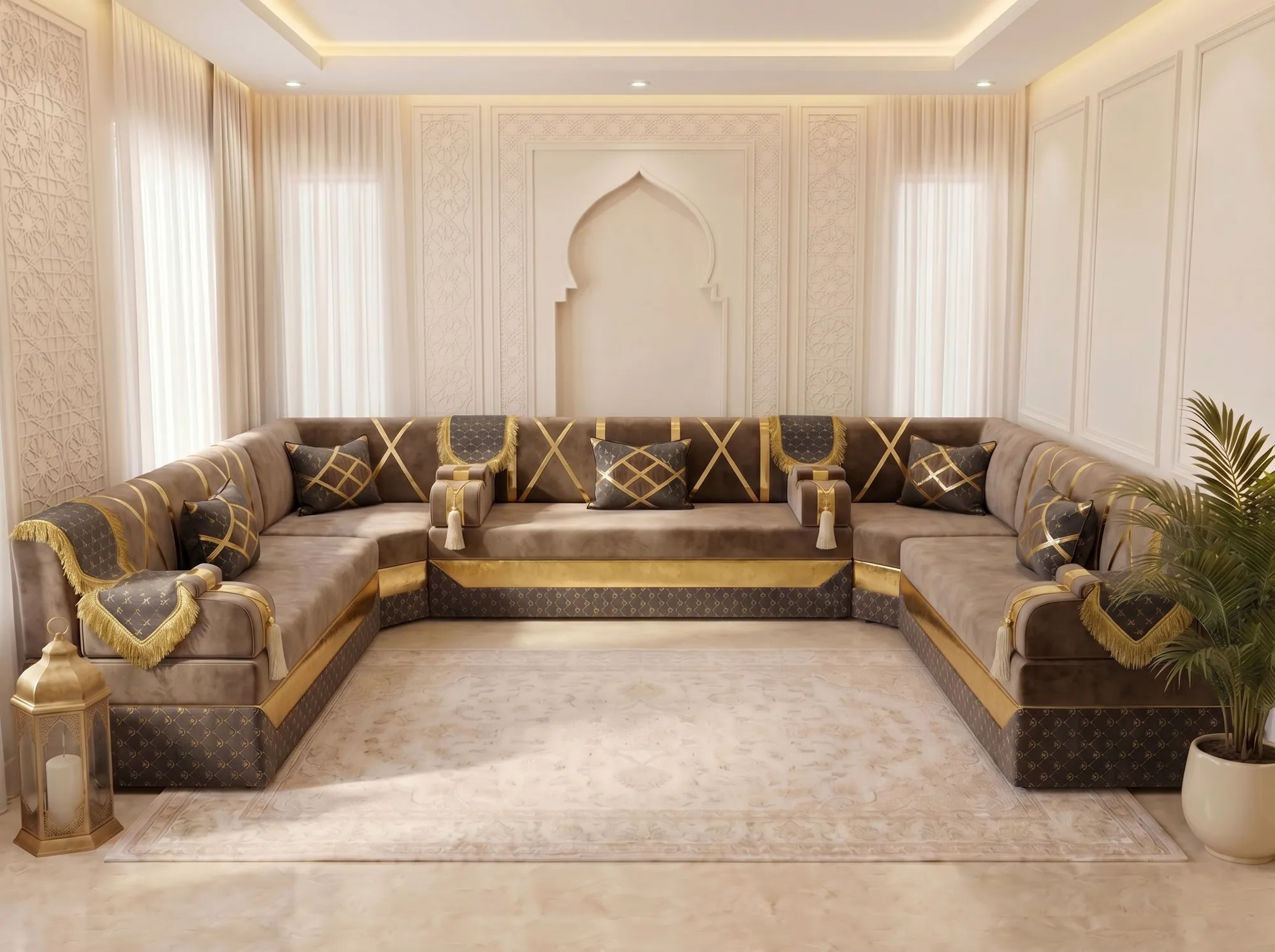
Sofhu makes two products, and it helps to keep them apart. The Arabic floor sofa is the low one, a seat mattress on the floor with loose back cushions and armrest blocks; it is the form closest to the tent, and the one made in sadu-pattern fabric. The Arabic majlis is the raised, fully upholstered seating of the formal Gulf guest room, made mostly in velvet.
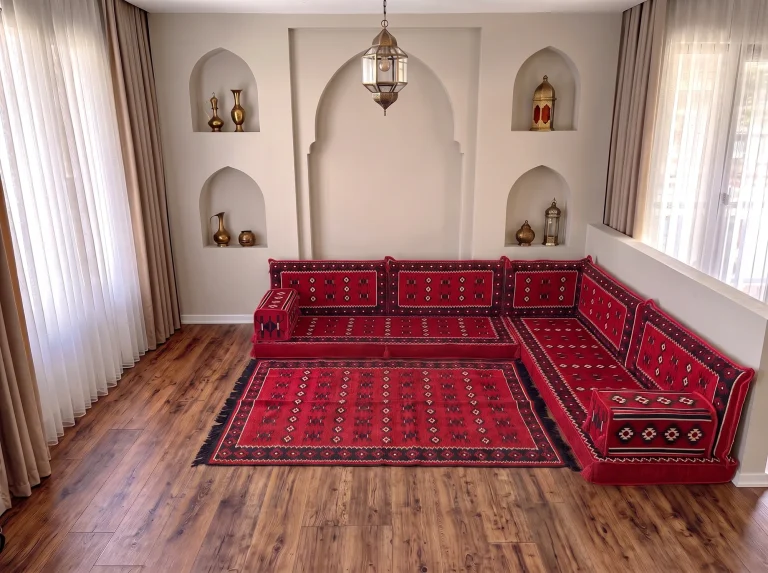
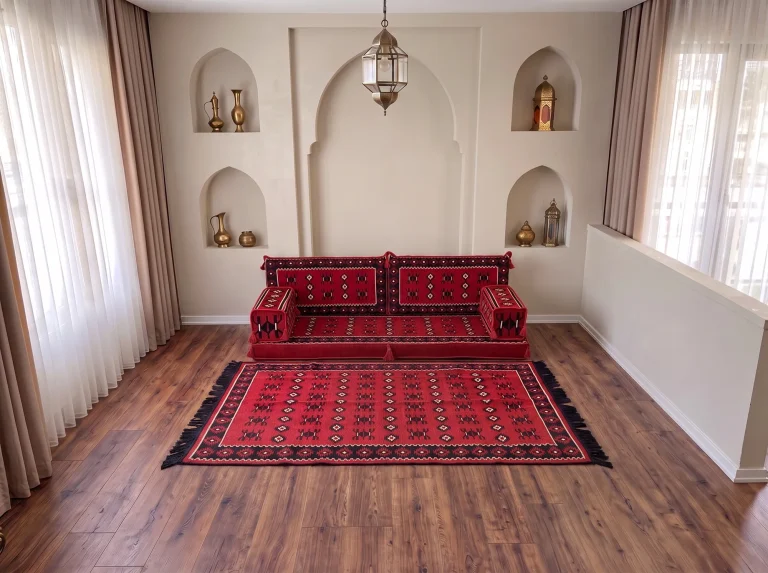
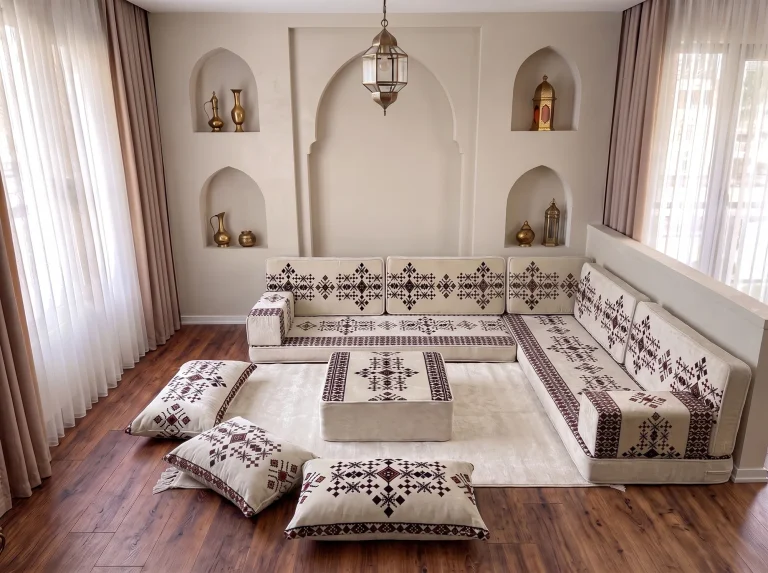
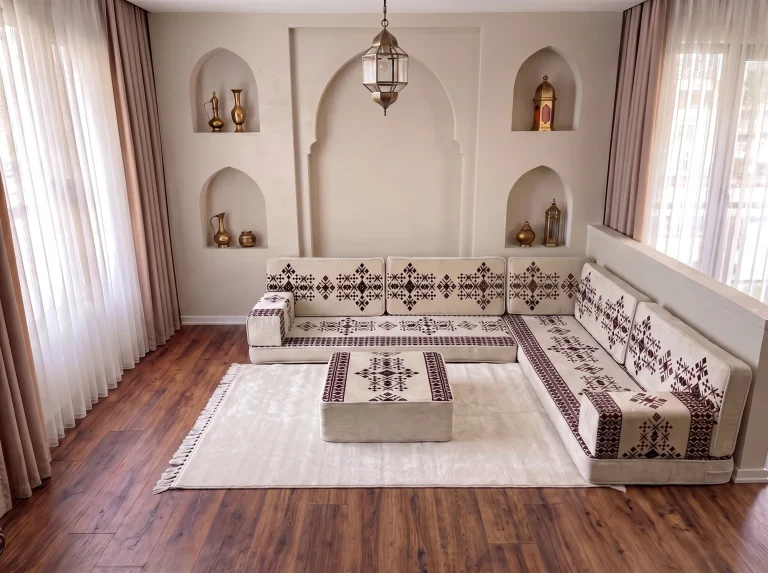
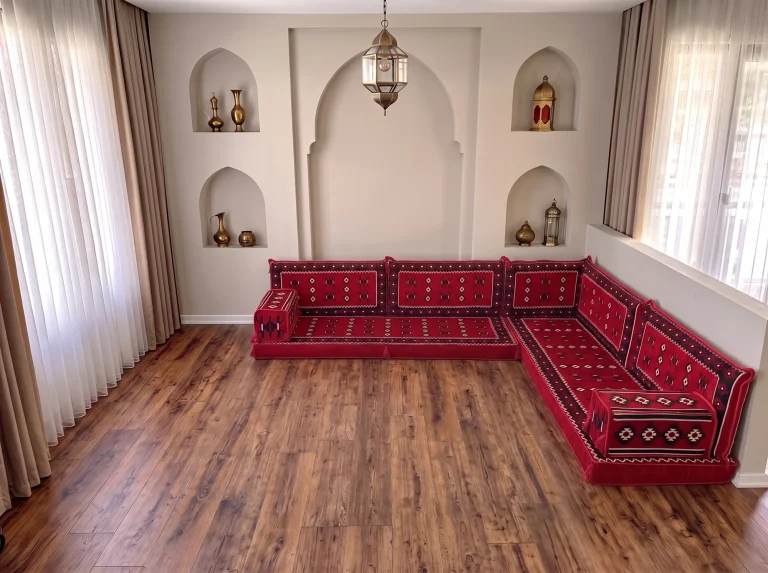
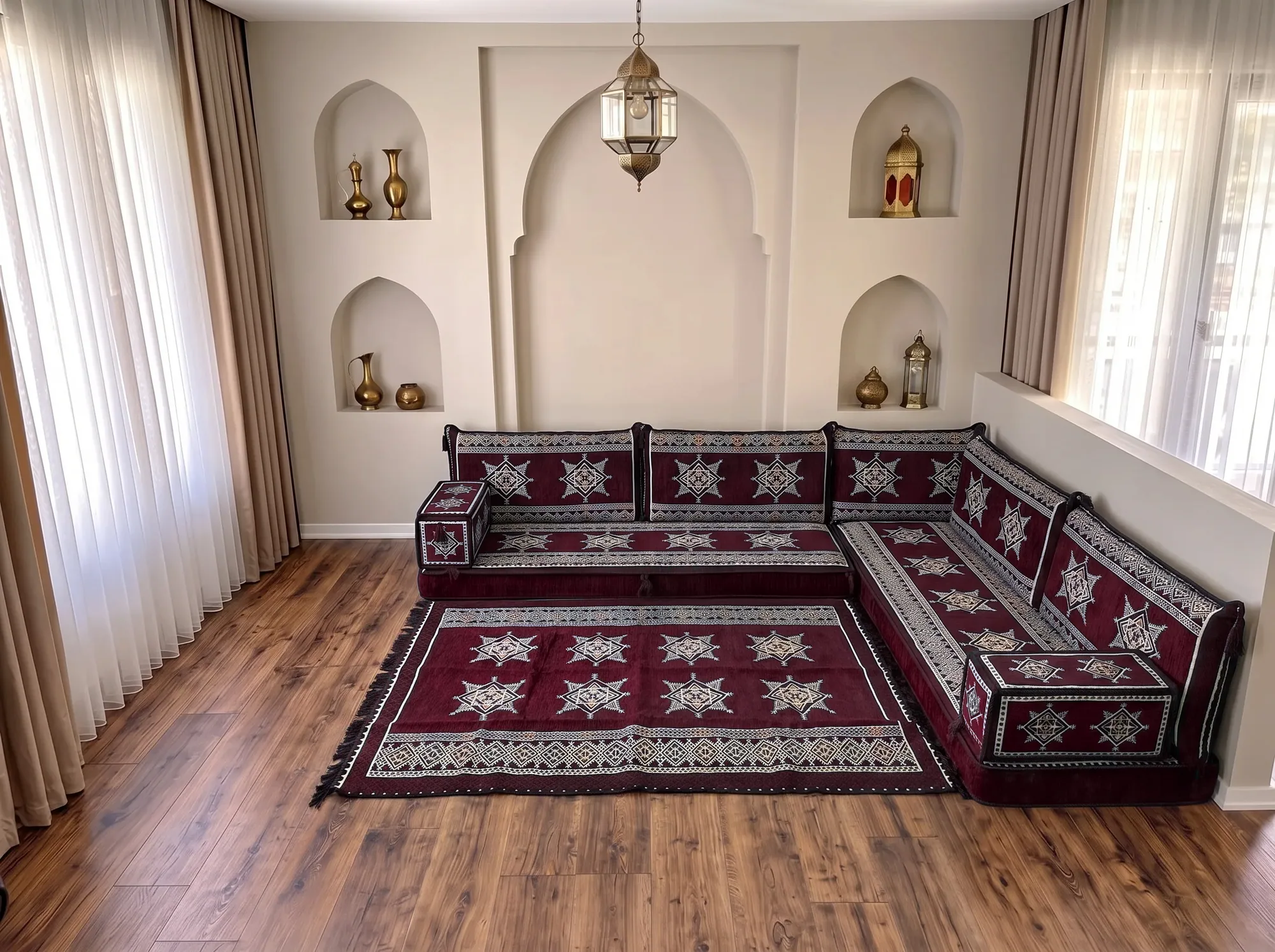
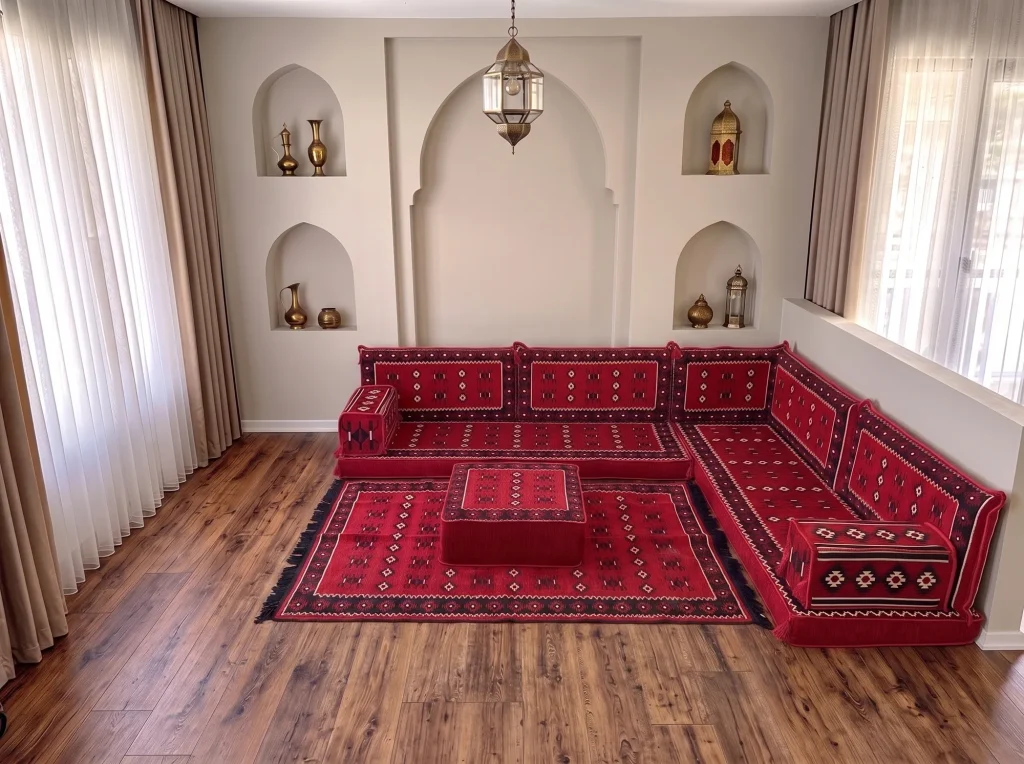
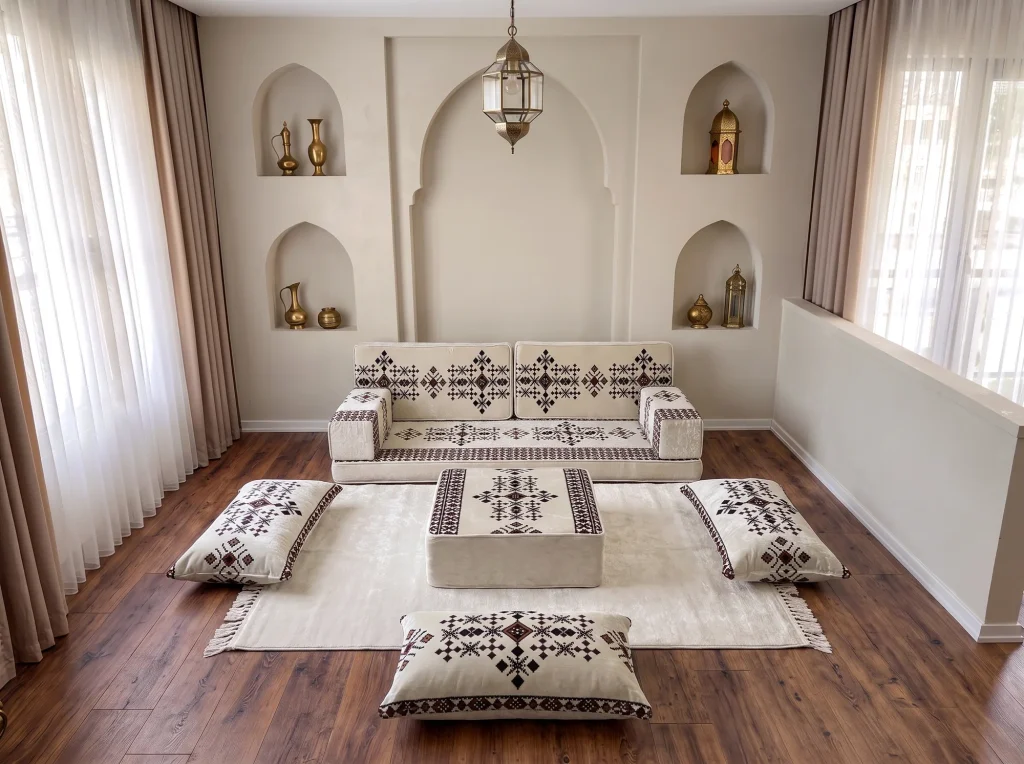
Sofhu’s sadu-pattern floor sofas use an upholstery fabric patterned after sadu bands. It is not hand-woven sadu, and we do not sell it as such. What it keeps is the look: rows of small white and black motifs on a red ground, or burgundy motifs on cream for a quieter room.
The red floor sofa at the top of this page is shown as an L-shape on a bare floor. The same design is made with a matching rug, an ottoman and tasselled floor cushions. The cream version below turns a single seat into a circle by placing three floor cushions around the ottoman.
Under the fabric, the cushions are filled with 32 kg/m³ foam, known in the Turkish trade as 32 DNS. The figure is the weight of one cubic metre. It measures how much material is in the cushion, not how hard it feels. The Polyurethane Foam Association notes that denser foam generally retains its original properties better. The cushions have no springs, and the covers are zippered so they can be removed. More designs are shown in the guide to majlis patterns and motifs.
Bedouin tent seating for gardens, winter camps and venues
The Bedouin look is the natural choice wherever the seating goes back outdoors. That includes a garden tent for the cool months, a rooftop, a desert camp or a themed restaurant.
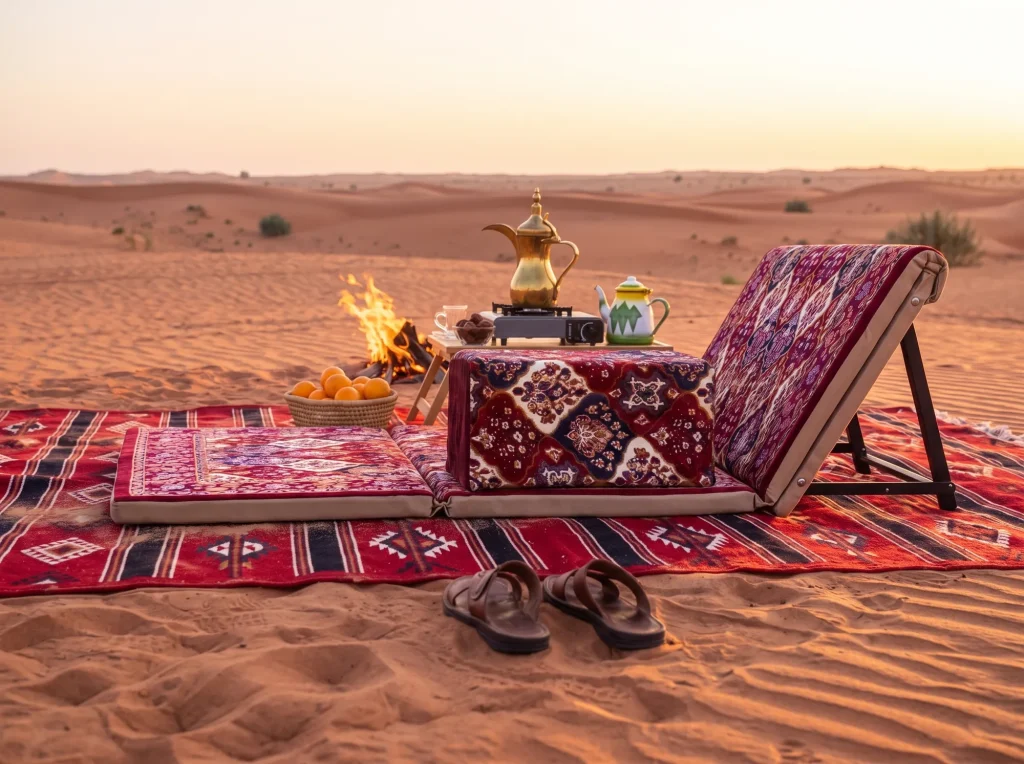
Sofhu’s outdoor range includes sofas, benches, sunbeds like the one above, and a foldable portable mat. The outdoor fabrics are described as water-resistant, with spills that wipe away, and as able to handle light rain and moisture. That is not the same as leaving cushions out in all weather, so plan to keep them under cover.
Two practical points for tents:
- Floor sofas need a firm surface behind the back cushions. A fabric wall will not do on its own, so plan a low partition or frame.
- Measure the usable floor inside the poles and guy lines, not the outline of the tent.
The outdoor majlis hub covers gardens and terraces, and the guide to majlis seating for glamping tents and desert camps covers hospitality projects. Sofhu’s existing outdoor sofas, benches and mats page shows the pieces, and business buyers can use the wholesale enquiry page or read about seating for organisations and events.
Ordering by measurement
Sofhu is the manufacturer and builds each set in Türkiye to the space it will fill. For a room, send the length of each wall that will carry seating, with doors and windows marked. For a tent, send the inside length and width, the pole positions and the side you want as the guest side. Add a photo and say which colourway you want: red, cream or another.
The set is vacuum packed and shipped free worldwide. There are no local shops, and duties or taxes may apply depending on the destination, so ask before ordering. The main guide to the Arabic floor sofa explains layouts and set contents. When you have your measurements, get a quote by measurement or send them on WhatsApp.