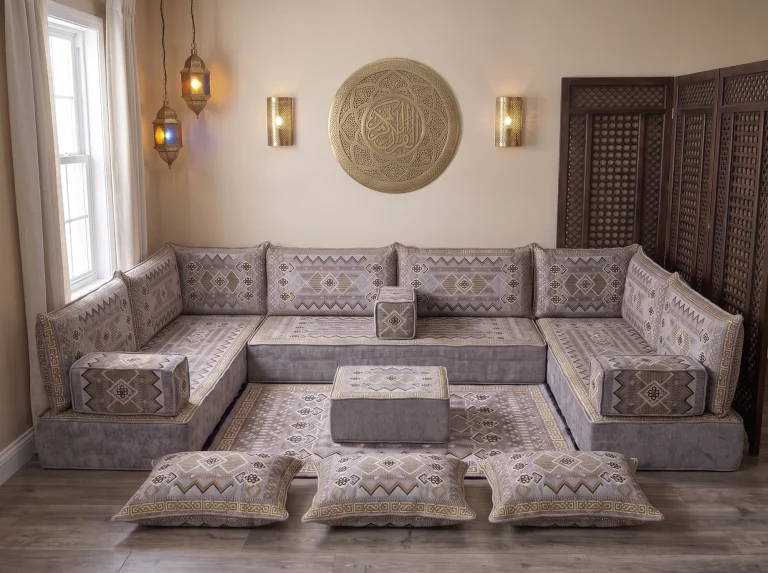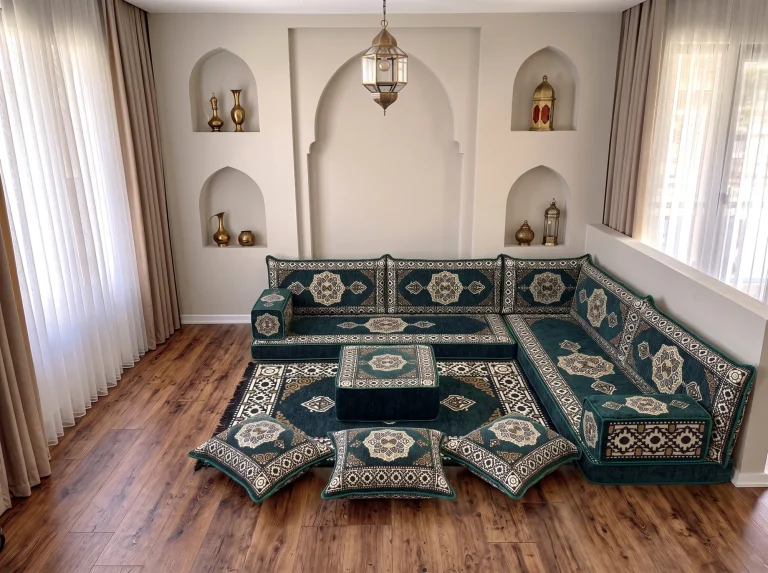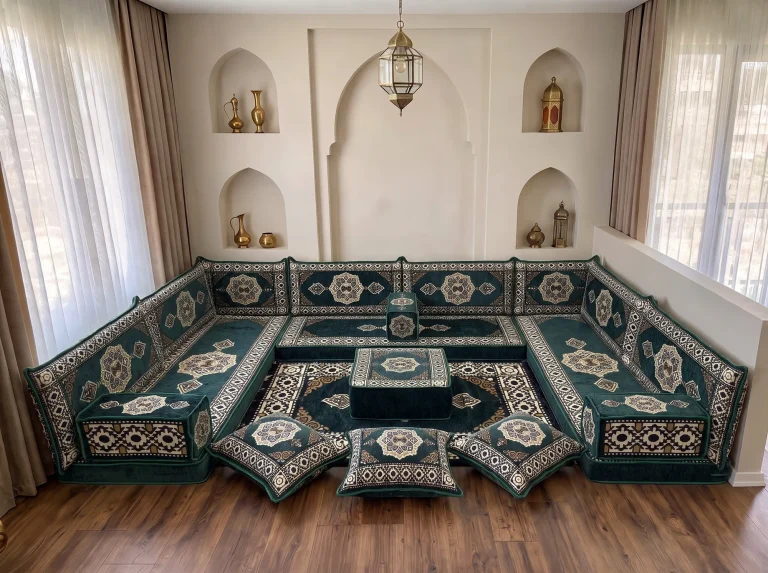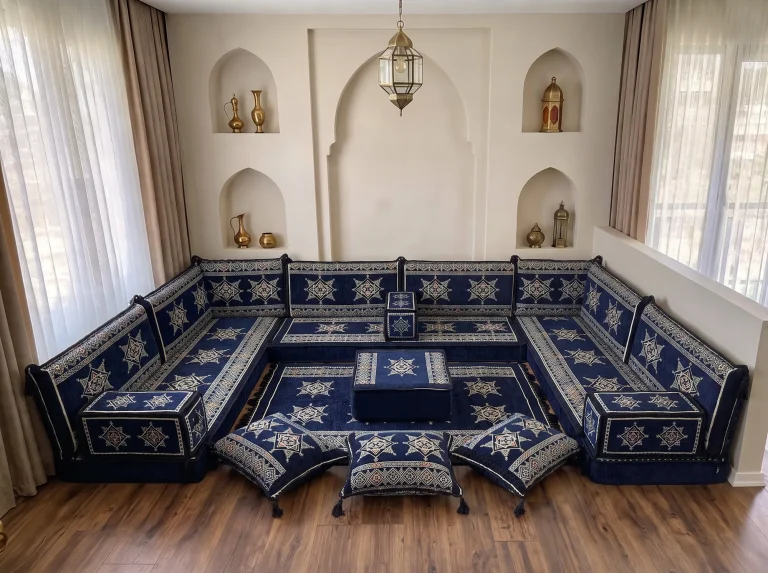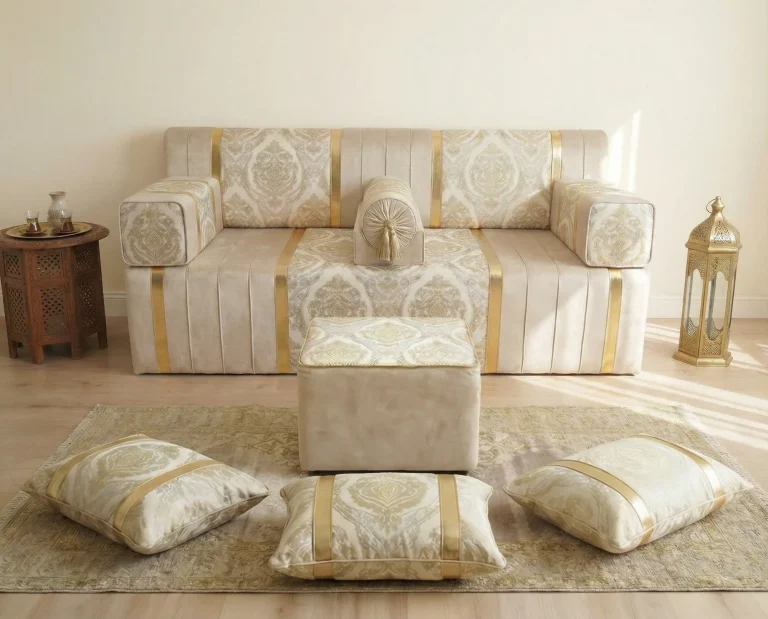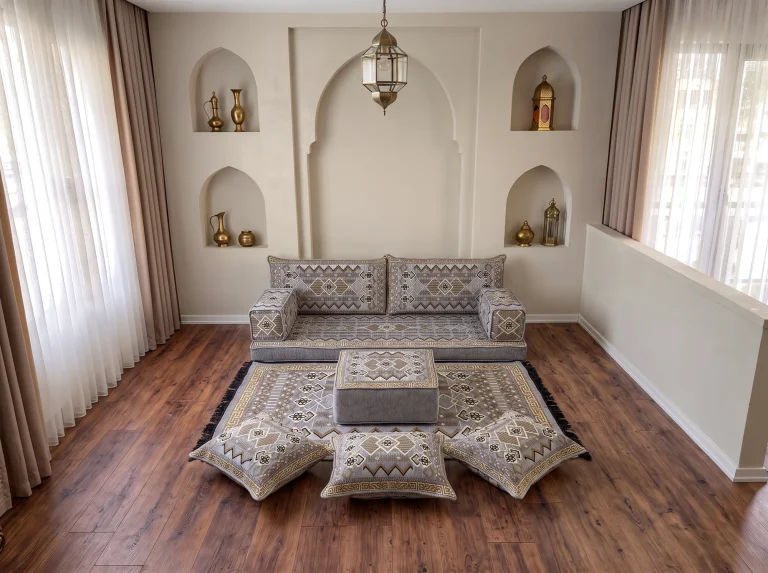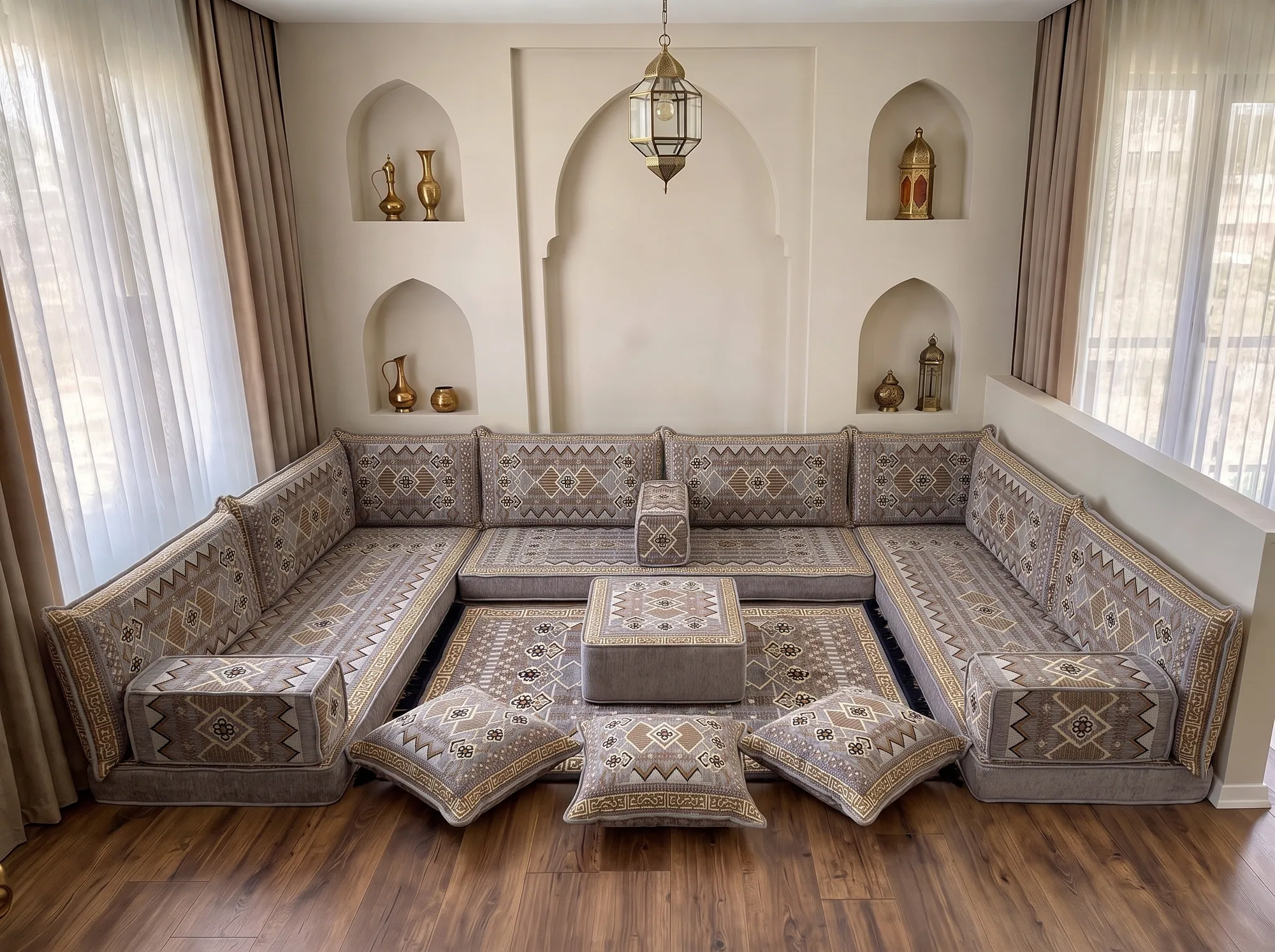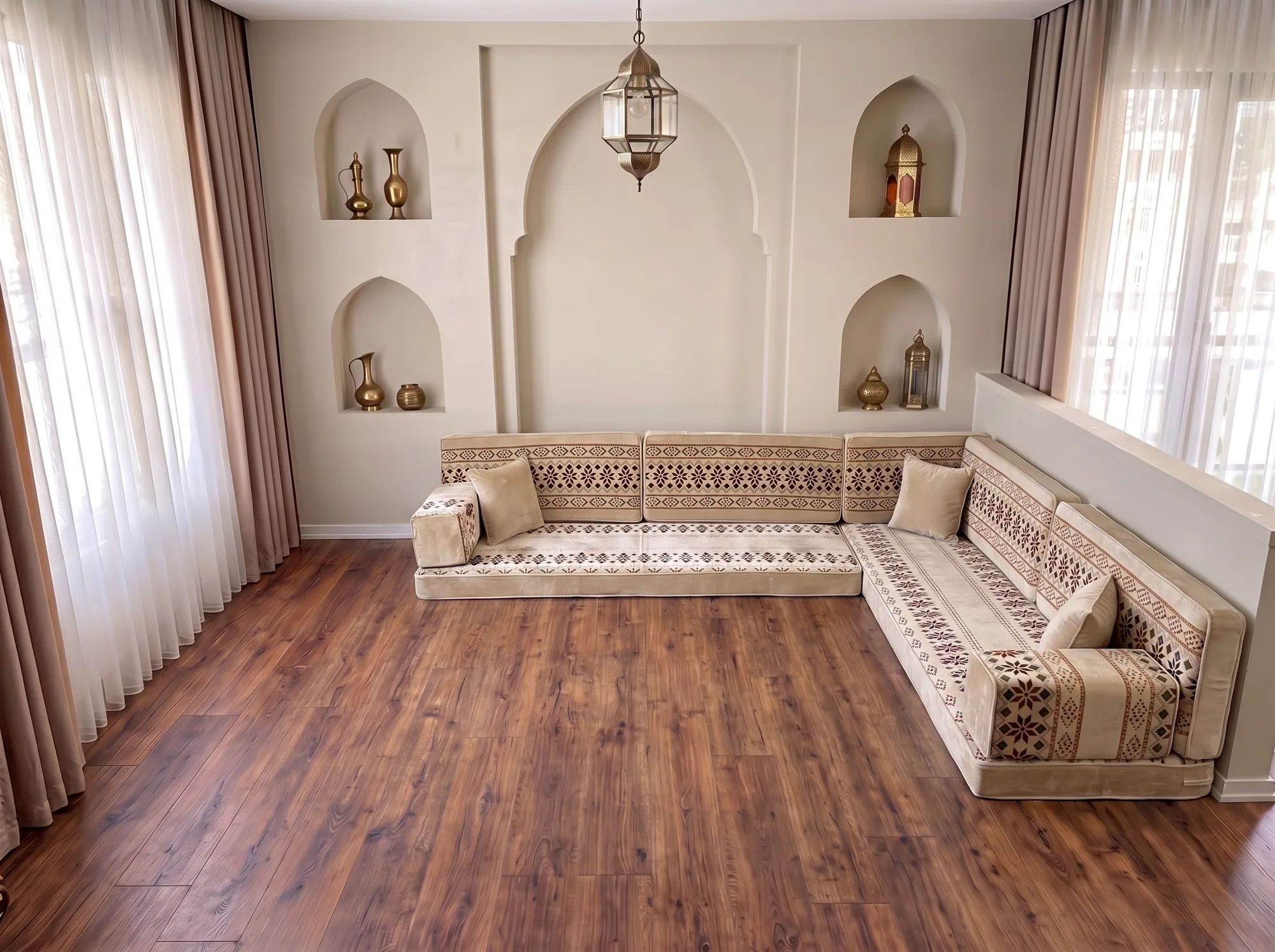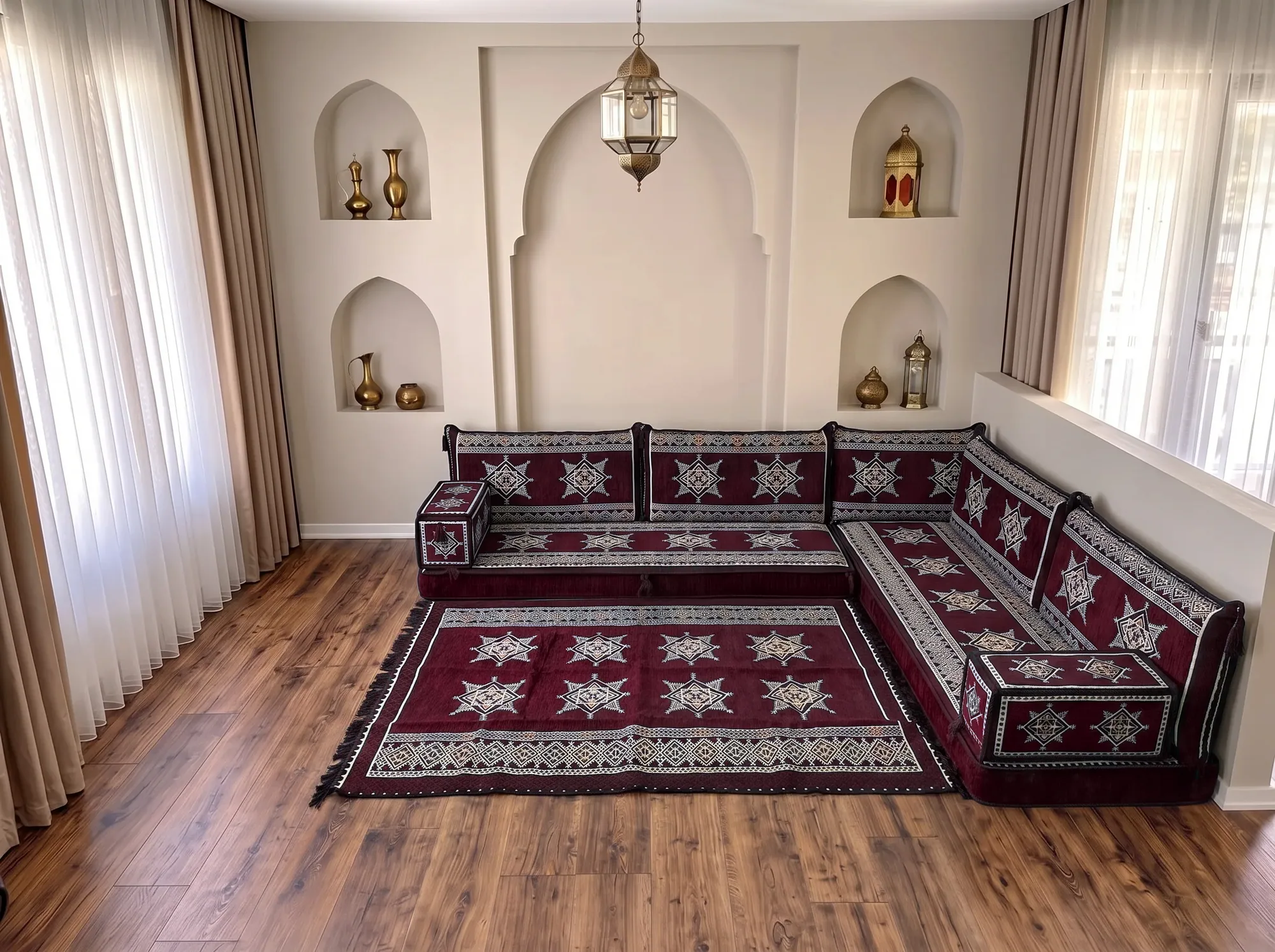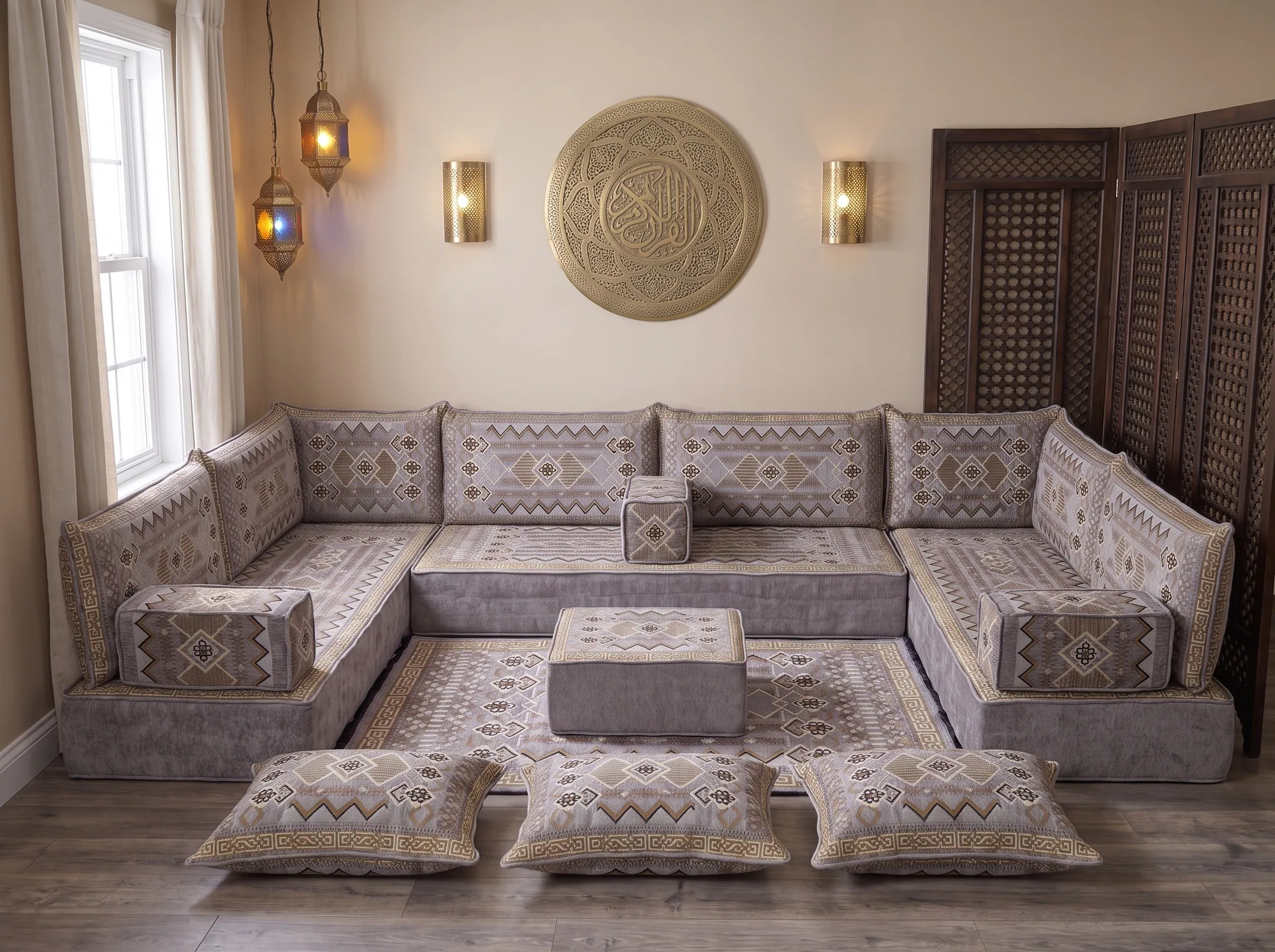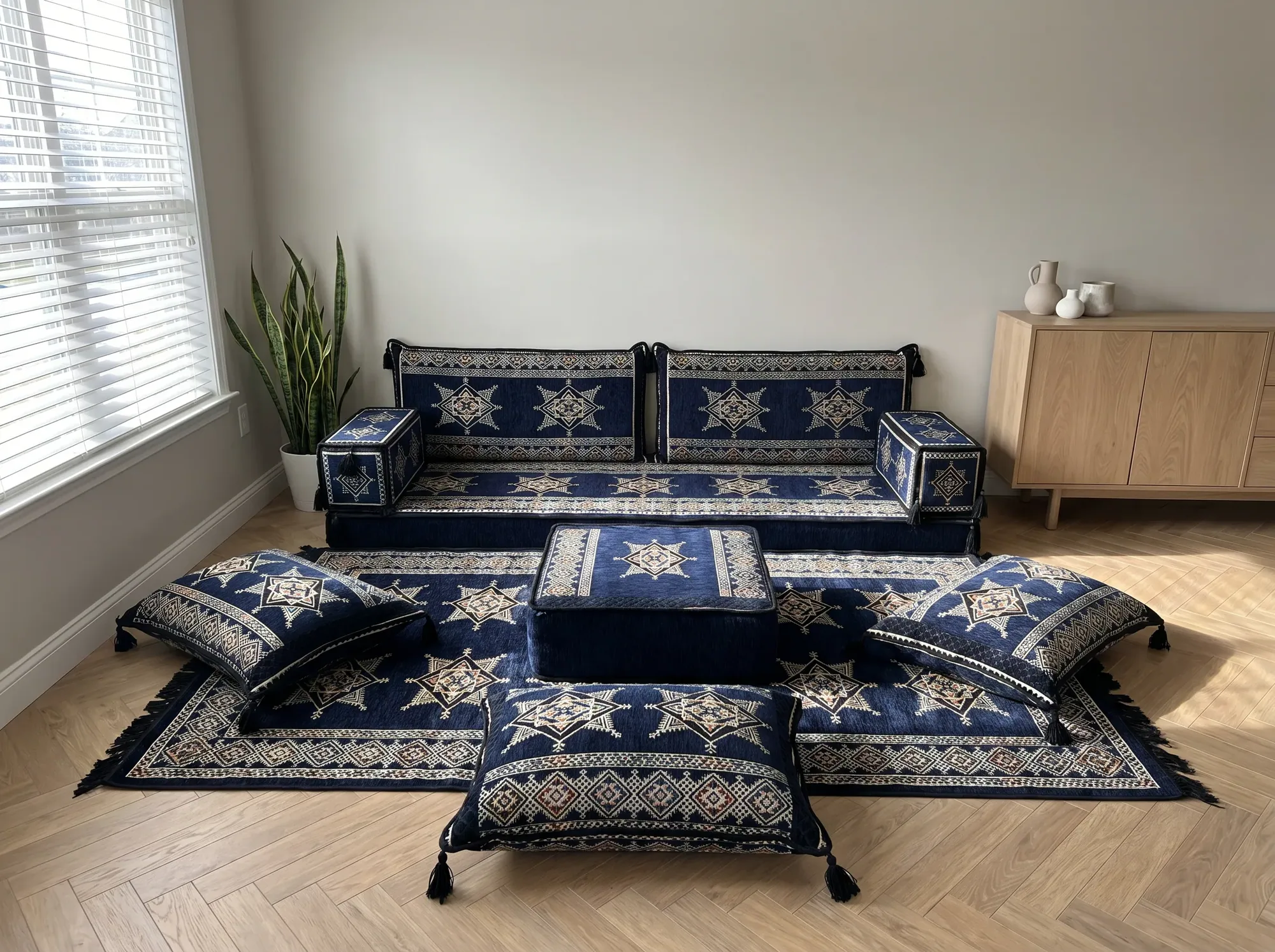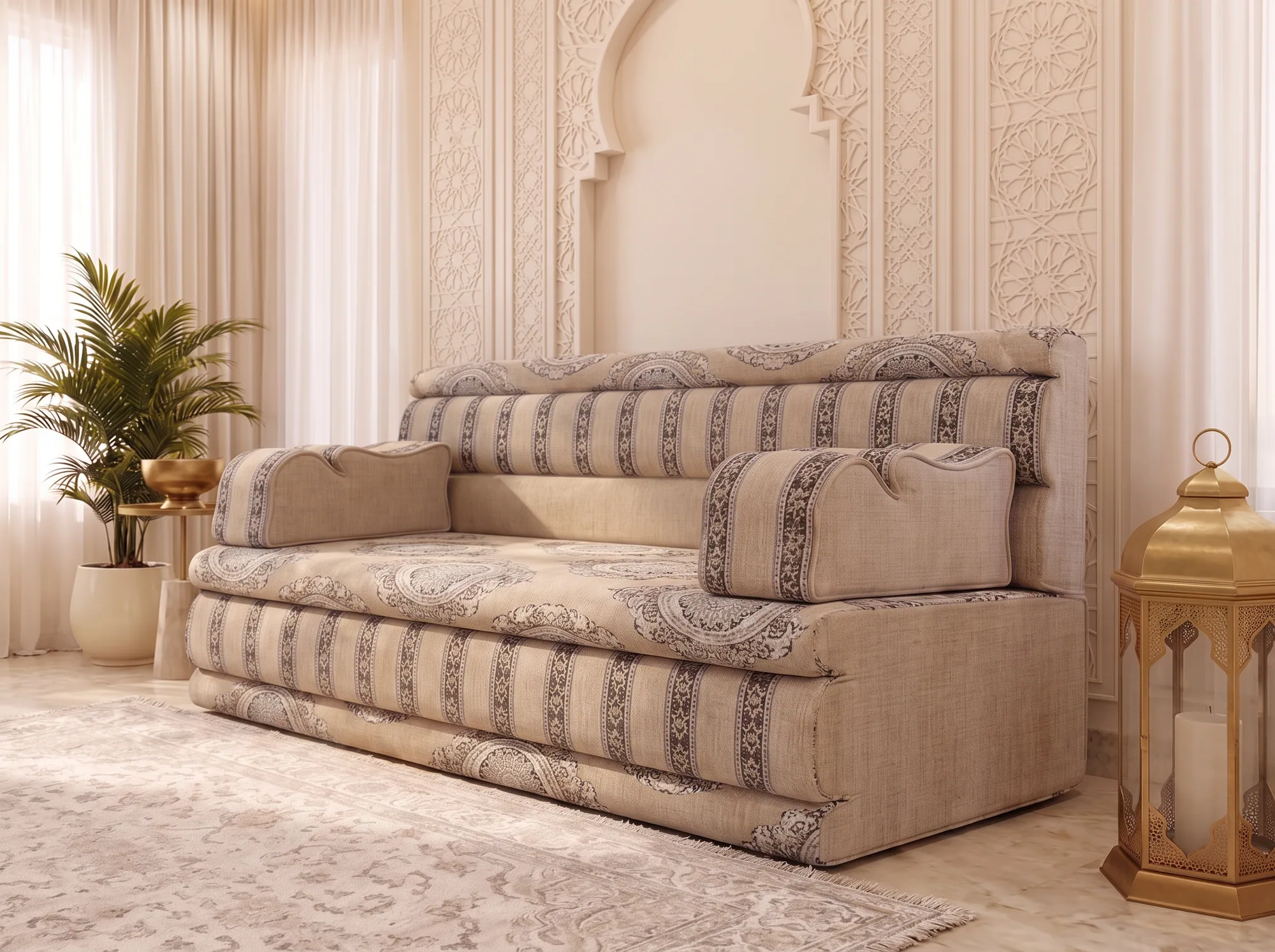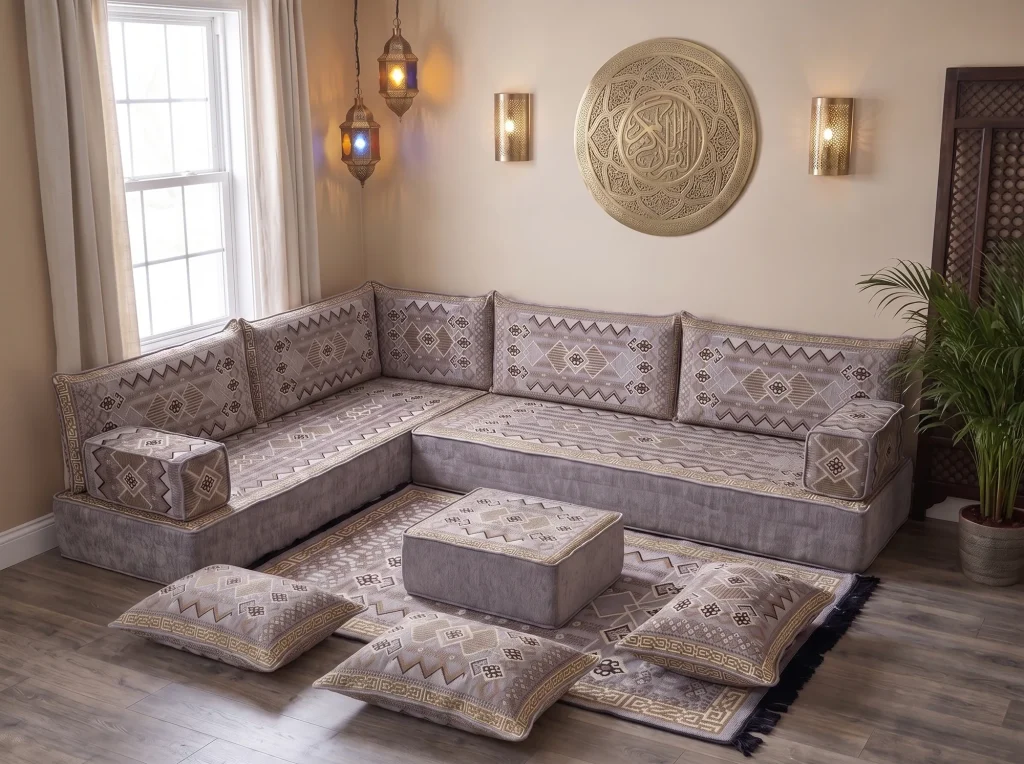
For floor seating used every day, high-density foam is the practical filling: it keeps an even height, weighs little and needs no re-stuffing. Cotton is the traditional choice, firm and breathable but heavy and prone to packing down. Wool is springier and warmer but costly and rare. Sofhu fills its seats with 32 kg/m³ foam inside zippered covers.
- Sofhu filling
- 32 kg/m³ (32 DNS) polyurethane foam
- Springs or metal
- None
- Covers
- Zippered, removable, foam insert included
- Cotton
- Traditional, heavy, packs down with use
- Wool
- Springy and warm, felts if washed hot
- Foam feel
- Softer or firmer on request for custom orders
On this page
A generation ago a floor mattress was stuffed by hand, and every few years someone opened it up and did the job again. Today nearly every workshop cuts its seats from a block of foam. The choice of floor cushion filling decides how the seat feels on the first day, how it feels after five winters of guests, and how much work it asks of you in between. This page compares the three fillings you are likely to meet: cotton, wool and foam.
Floor cushion filling compared at a glance
Each majlis filling has a clear strength. Cotton breathes, wool springs back, foam stays even.
| Cotton | Wool | High-density foam | |
|---|---|---|---|
| Feel when new | Firm, dense | Soft with some spring | Even, firm to medium |
| After years of use | Packs down in the sitting spots | Mats slowly, can be re-carded | Depends on density |
| Weight | Heavy | Medium | Light |
| Upkeep | Turn, beat, re-stuff | Air, re-card, keep dry | Wash the cover |
| If it gets wet | Slow to dry | Slow to dry, may felt | Dries with airing |
| Availability | Specialist makers | Rare, costly | Standard |
The “after years” row is the one to think about. A seat is judged by the place where the same person sits every evening.
Cotton: traditional, heavy and in need of re-fluffing
Cotton is the filling most people mean by traditional. It makes a firm, cool seat with a pleasantly solid feel, and a cotton filled floor mattress has furnished guest rooms from Morocco to Afghanistan. Suppliers of Afghan toshaks still describe regional types by their wool or cotton stuffing, though those descriptions are sales copy and vary.
The weakness of cotton is that the fibre has almost no spring. Under body weight it compresses and stays compressed. A patent on cotton futon mattresses puts the problem plainly: the areas where the hips rest and where the user normally sits become matted down, and turning the mattress does not do much to prevent it, partly because the mattress is so heavy. Tufting, the stitches that pass right through the mattress, exists to stop the batting shifting and going lumpy.
Living with cotton therefore means regular work:
- turn and rotate the mattresses so the wear is shared;
- beat and air them in dry weather;
- keep them away from damp floors, since wet cotton dries slowly and can smell;
- have them opened, loosened and re-stuffed when they turn hard.
That last task used to be a trade. Where a mattress maker is still at hand, cotton remains a reasonable choice. For a family abroad, far from anyone who does the work, it is harder to recommend.
Wool: springy, warm and uncommon
Wool is the better natural fibre for sitting on, and the rarer one. Each wool fibre has a natural crimp that works like a small spring. A wool industry fact sheet notes that the fibre can be stretched by about 30 % when dry and still return to its shape. A mass of wool holds a great deal of air, which is why wool filled cushions feel warmer and livelier than cotton ones. Wool also takes up moisture vapour and gives it off again, so it feels dry in a humid room.
It has limits of its own:
- Cost and supply. Clean, carded wool in mattress quantities is costly, and few upholstery workshops stock it.
- Felting. Heat, moisture and rubbing together make wool fibres lock into felt, and that change is permanent. A wool-filled seat must never be washed hot or soaked.
- Care. Wool still mats under weight over the years, more slowly than cotton, and is restored by carding.
- Sensitivity. Some people react to wool. If anyone in the household does, a wool filling brings it into the room.
Wool makes most sense for small pieces such as back pillows, or in a cold climate where its warmth is welcome.
Foam: consistent support and density grades
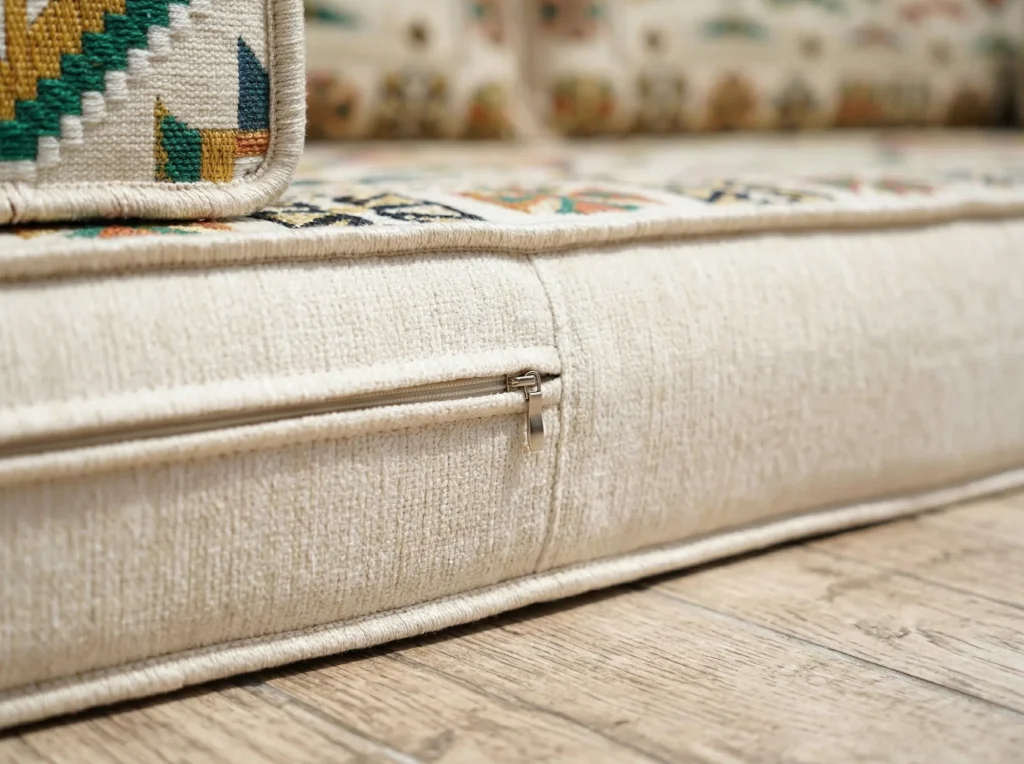
Foam replaced fibre because it solved the packing-down problem. Polyurethane foam is a springy block that compresses under you and recovers when you stand. It can be cut to any length and thickness, so every seat in a room is the same height and a set can be made to a wall measurement. It weighs little. It can be vacuum packed for shipping and regains its shape when opened, which is how a full set travels from Türkiye to another continent.
The catch is that foam is not one material. It is sold in grades, and the figure that matters is density: how many kilograms of material are in a cubic metre. The Polyurethane Foam Association states that density affects durability and support, and that higher density foam generally keeps its original properties better. Budget foam of 18 to 25 kg/m³ can feel firm in the shop, yet in published datasheets it recovers less well from compression than 32-density foam. Density is also not the same as hardness. A dense foam can be made soft and a light foam can be made hard, so ask for the density figure, not for a squeeze test.
Sofhu fills its seats with 32 kg/m³ foam, written 32 DNS in the Turkish trade, a solid mid-to-upper furniture density. The cushions contain no springs or metal. All covers are zippered and come with their foam inserts, and on a custom order you can ask for a softer or firmer foam. That holds for both of our products: the Arabic floor sofa, the low cushion set on the floor shown in the photos here, and the Arabic majlis, which is raised to sofa height on an upholstered base with tall fixed backs. The numbers are explained in foam density for floor seating.
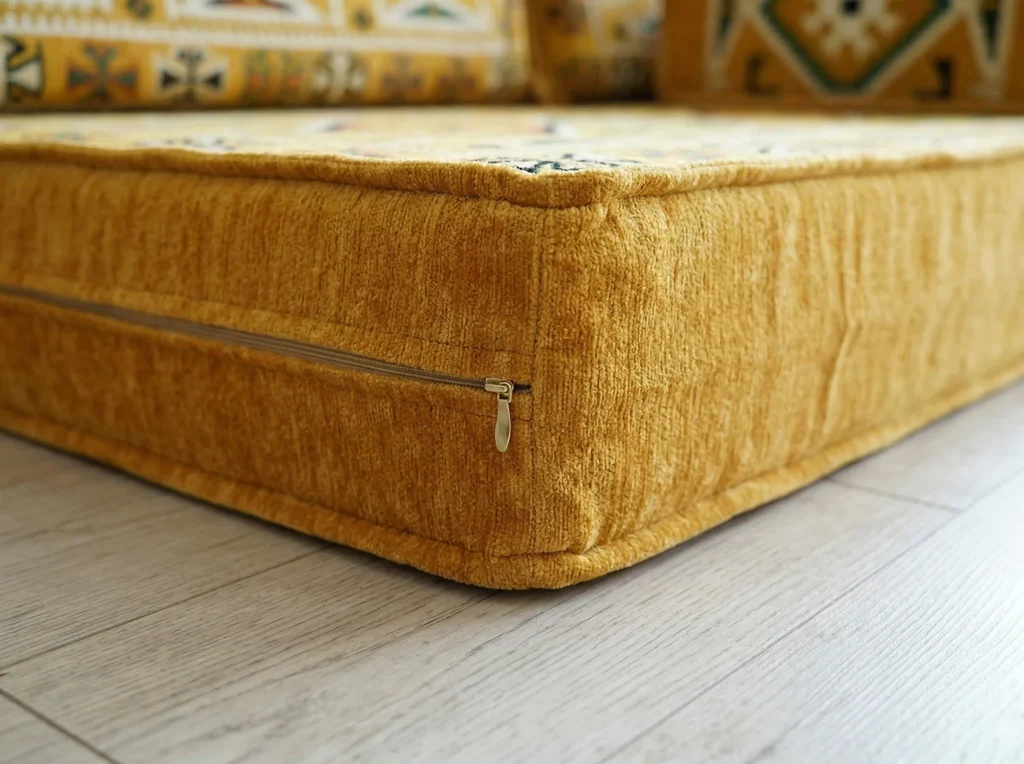
What is lost with foam is mostly a matter of feeling. A foam seat does not have the weight of a cotton one, and it is a manufactured material, not a natural fibre. Foam also breathes less than loose fibre, so the cover fabric matters more in a hot climate. Linen and woven covers feel cooler than velvet, as set out in the fabric comparison and on the existing fabrics page.
Upkeep, allergies and lifespan
Removable covers change the upkeep question more than the filling does. With a zip, the part that touches skin, food and tea can be taken off and washed. Sofhu states that its covers can be machine washed at 30°C. With a stitched-shut cotton or wool mattress, the whole piece has to be aired, spot cleaned and eventually opened.
On allergies, be careful with promises, including ours. No filling can be called allergy-proof. What can be said is practical. Dust settles in any soft furnishing, and a cover that can be washed regularly is the most useful defence. Loose natural fibre is harder to clean than a solid block. People who know they react to wool should avoid it. If a household member has a diagnosed sensitivity, ask their doctor, not a furniture seller.
On lifespan, nobody can honestly give a number of years. It depends on how many people sit, how often and on which seat. The fair comparison is how each filling ages. Cotton hardens and thins where it is used and can be renewed by re-stuffing. Wool mats slowly and can be re-carded. Foam ages according to its density: a good grade stays even for a long time, a poor one sags, and the remedy is a new insert inside the same cover. For care habits that help any set, see how long a majlis lasts.
Which to choose
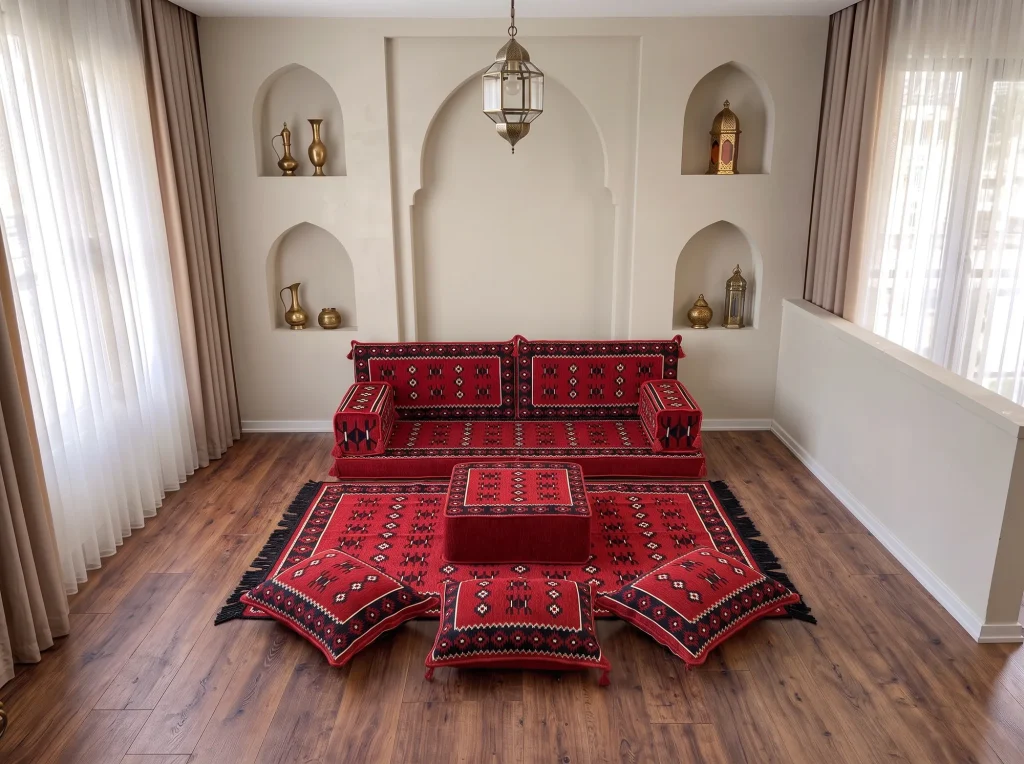
For the best filling for floor seating in a home that uses the room every day, choose high-density foam and ask the seller to state the density in writing. It is the only one of the three that needs no skilled maintenance, and that matters most to families who live far from a mattress maker.
Choose cotton if you value the traditional feel, the room is used occasionally and you know someone who can re-stuff it. Choose wool for back pillows or small pieces in a cool climate, if you can find it and no one at home is sensitive to it. The foam vs cotton cushion argument usually ends in a mix in older homes: foam seats for support and softer fibre pillows for leaning.
The tradition lies in the room and the hospitality more than in the stuffing. An Afghan toshak set or a Yemeni diwan keeps its character with a foam core, and guests notice the comfort, not the material. If memory foam is on your list too, read high-density foam vs memory foam first.
To see how the seats are put together, start with the Arabic floor sofa guide or the existing floor cushion page. Then send your wall measurements for a quote and say how firm you like to sit.