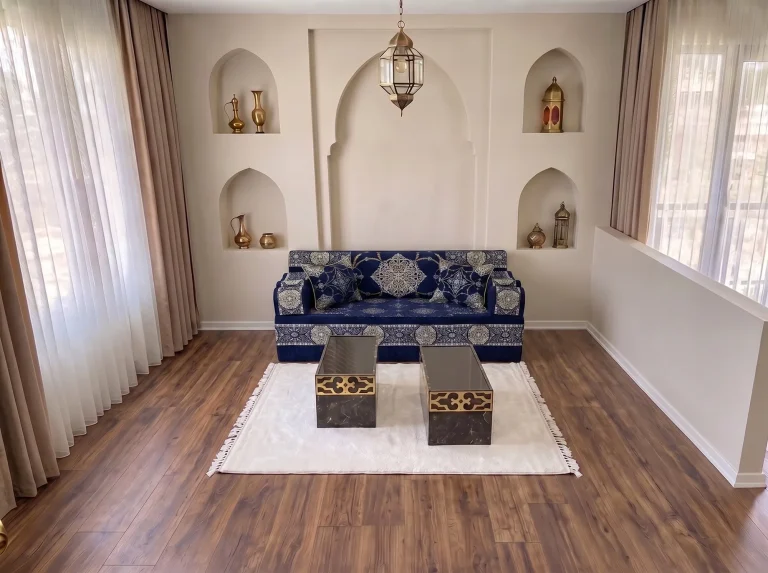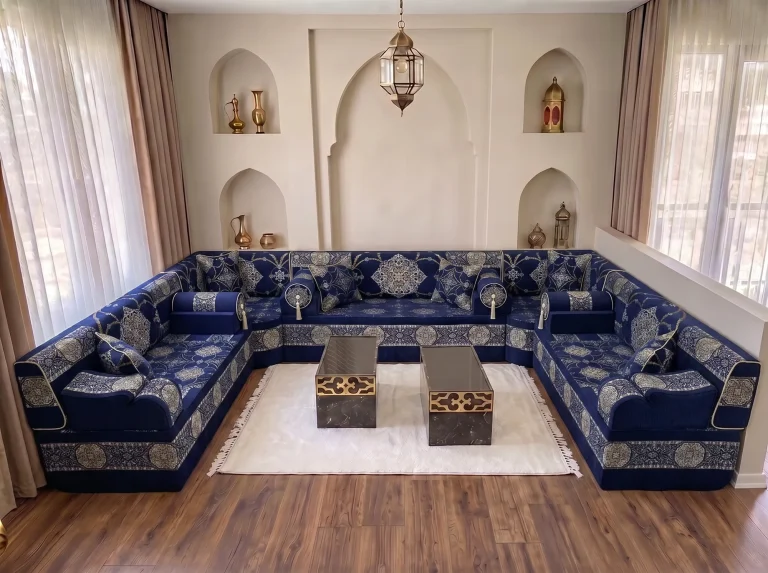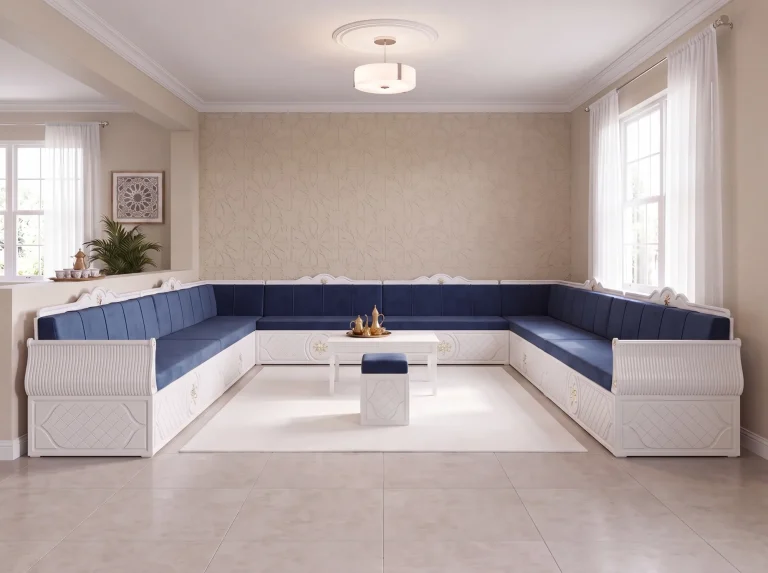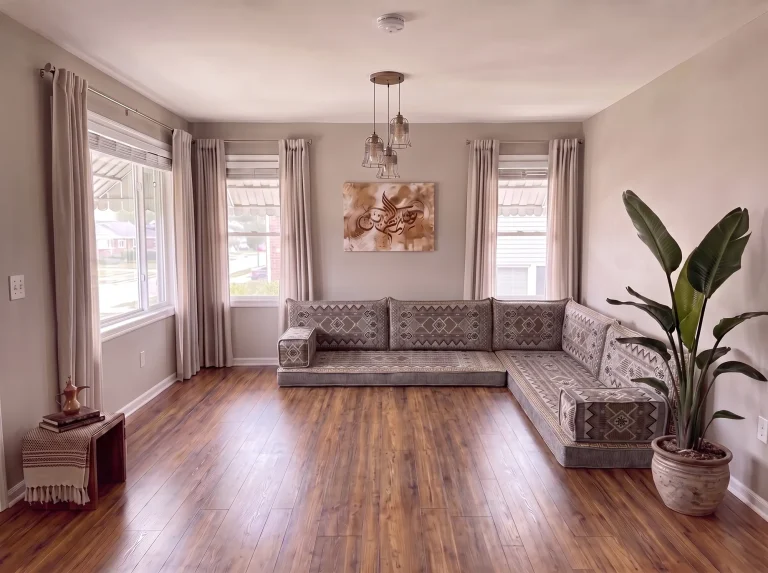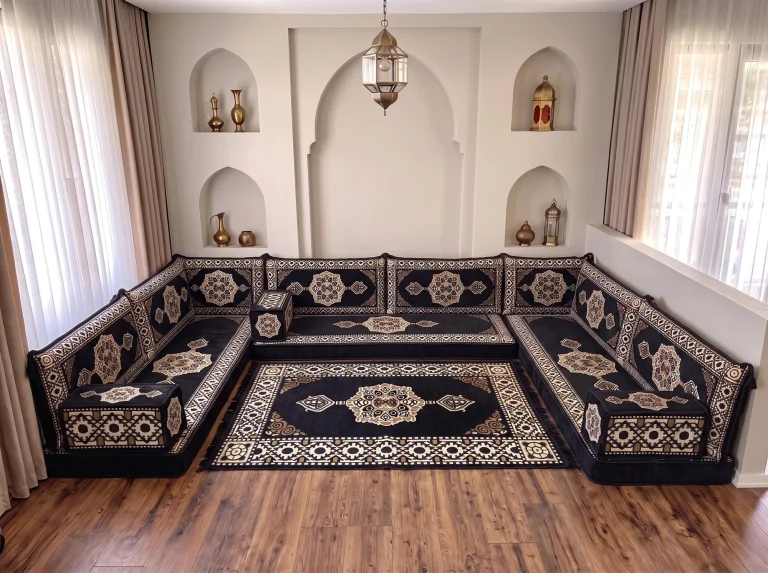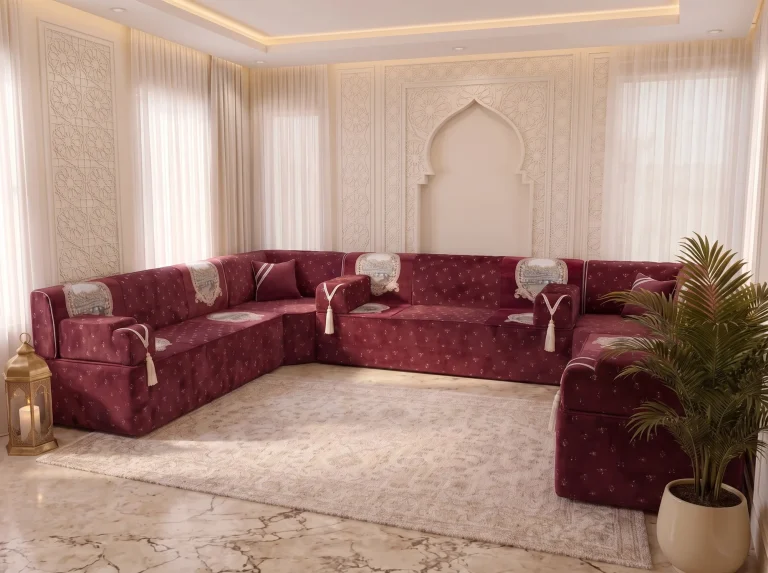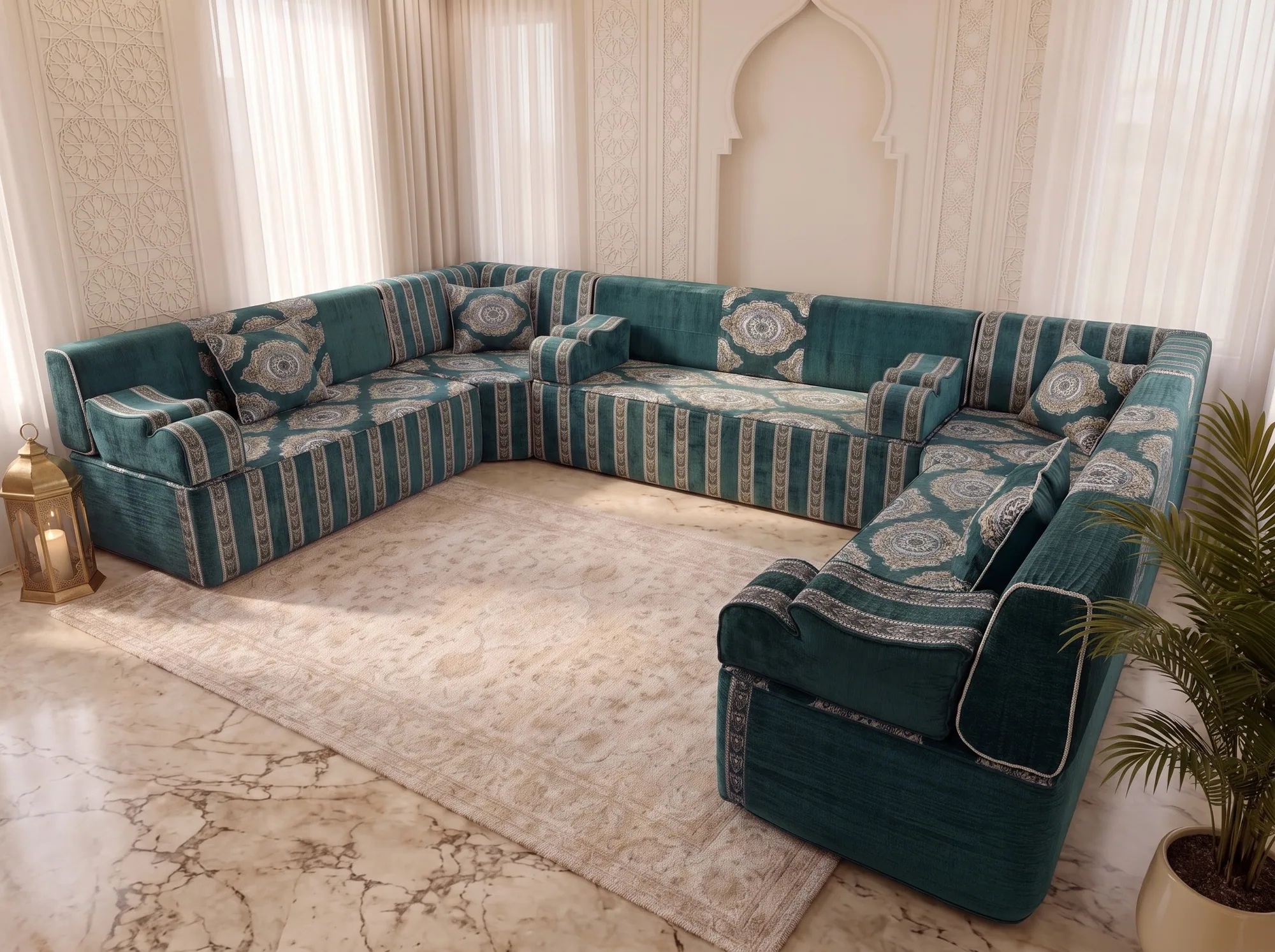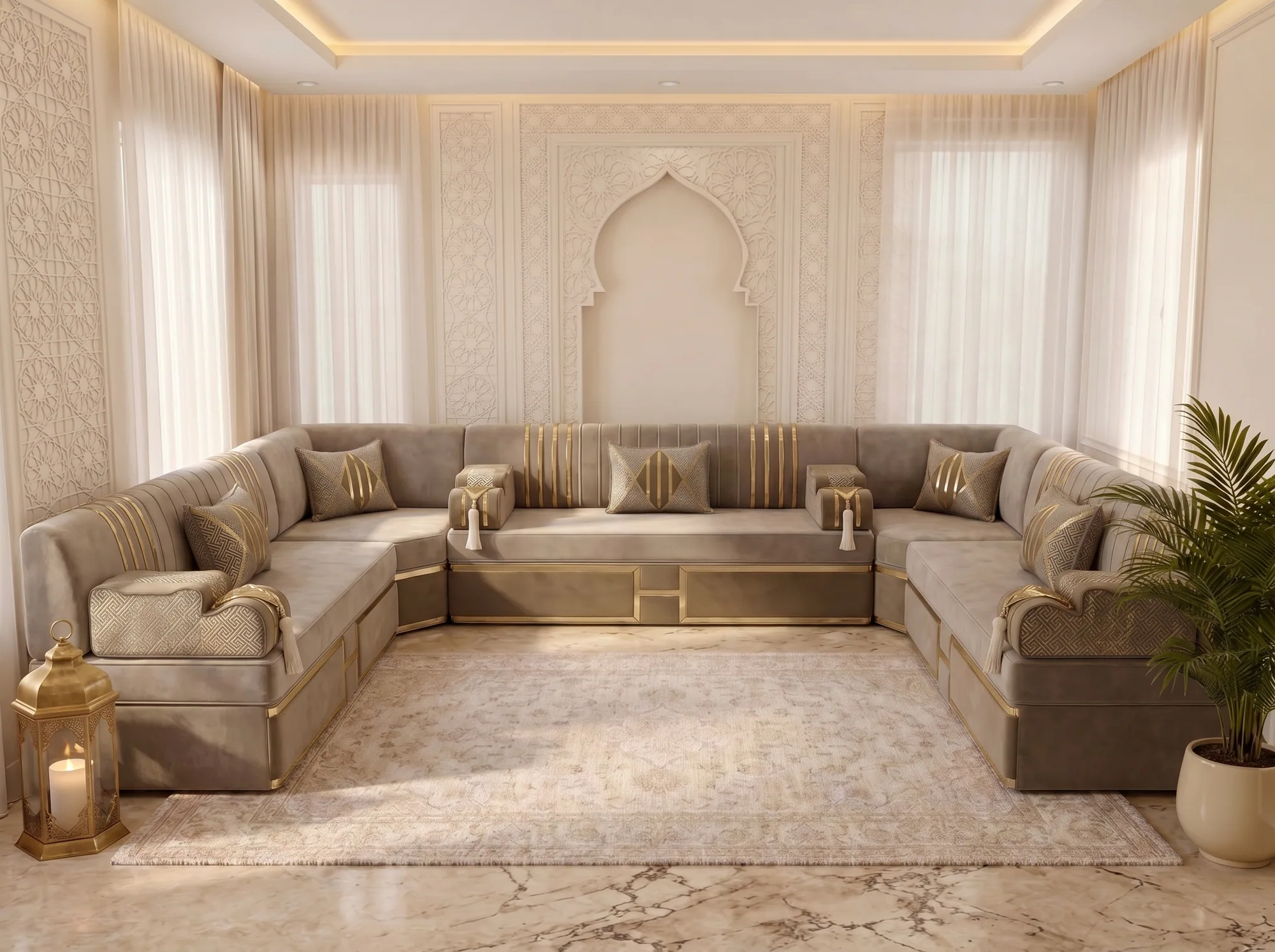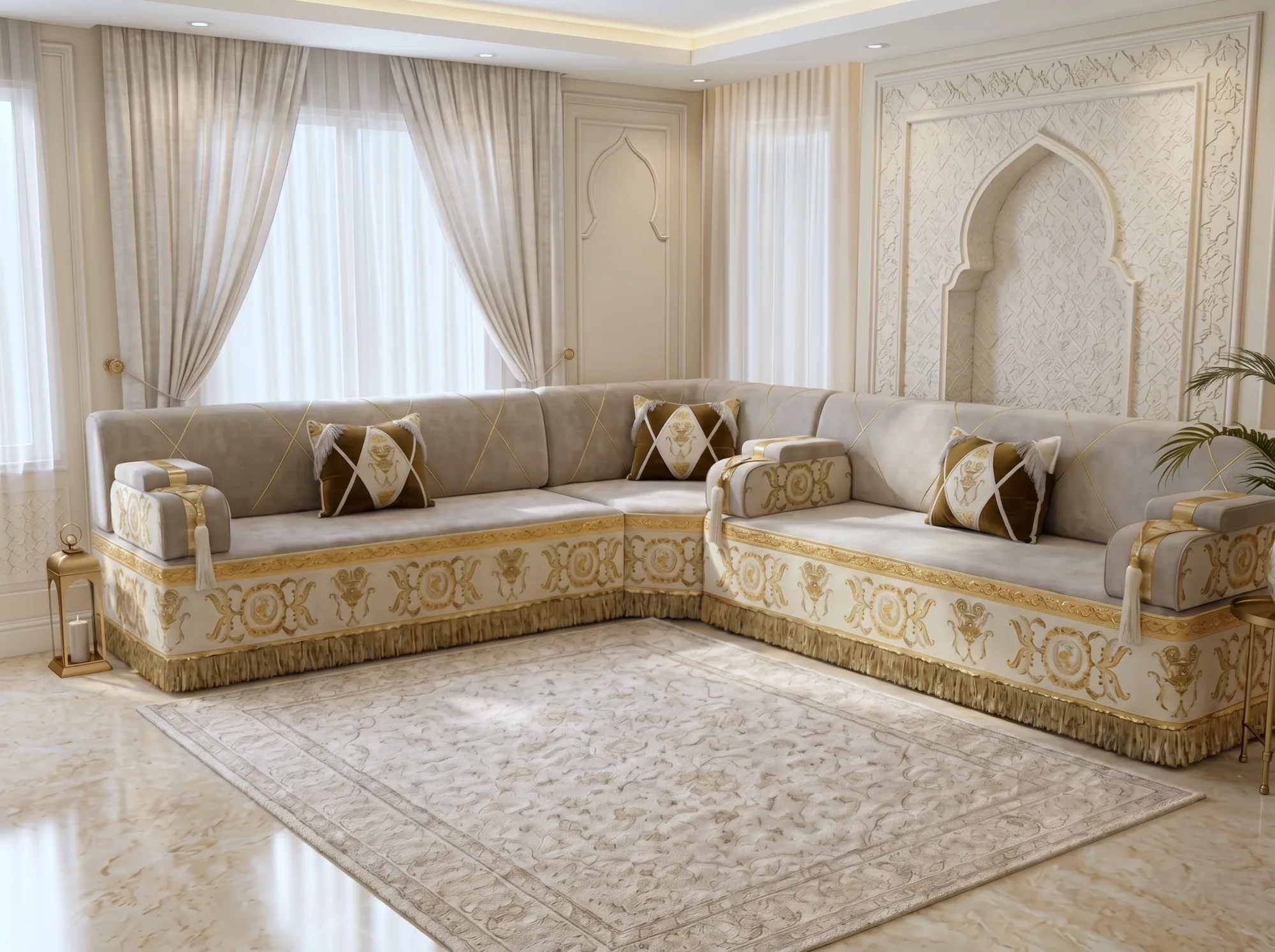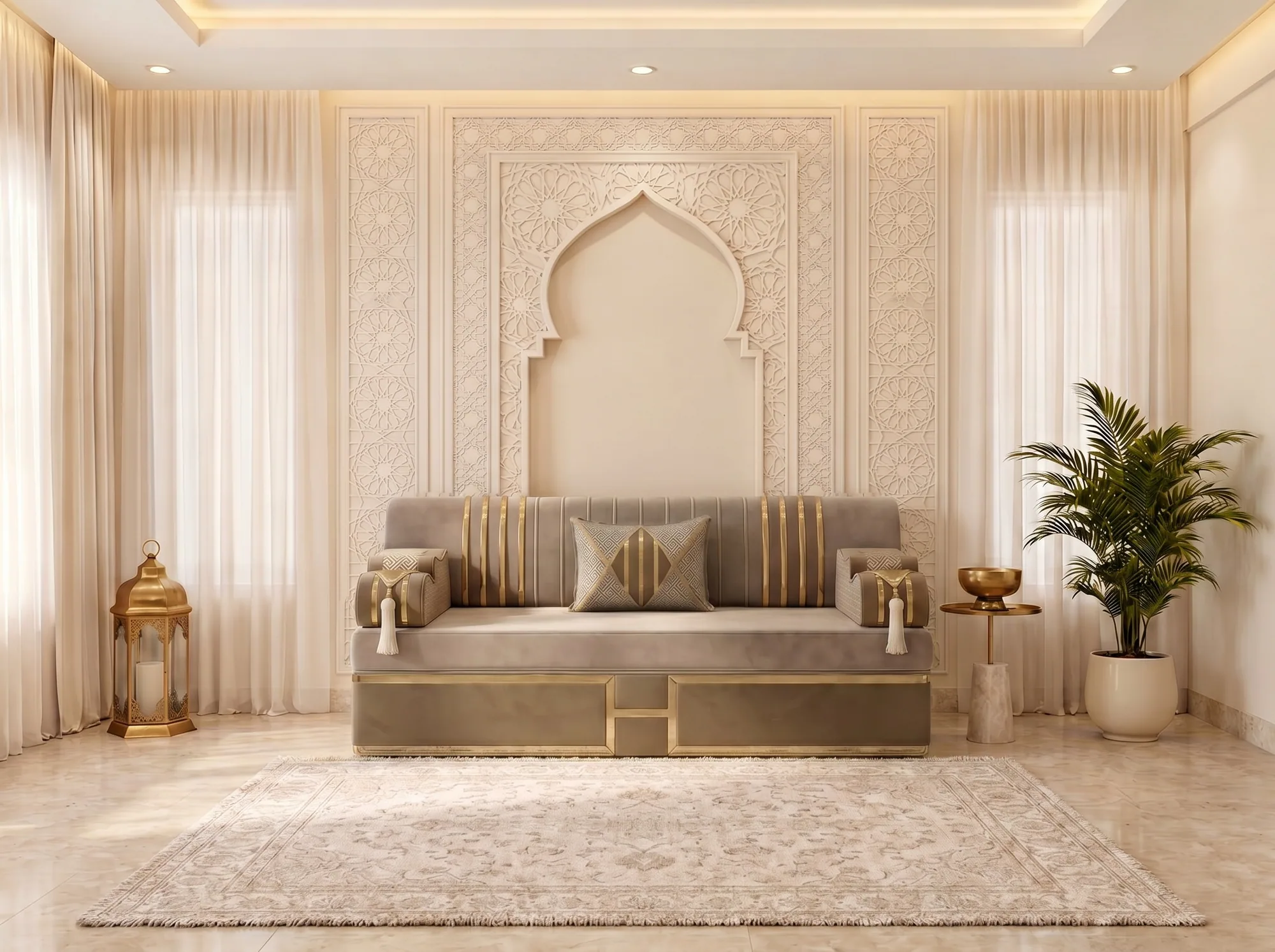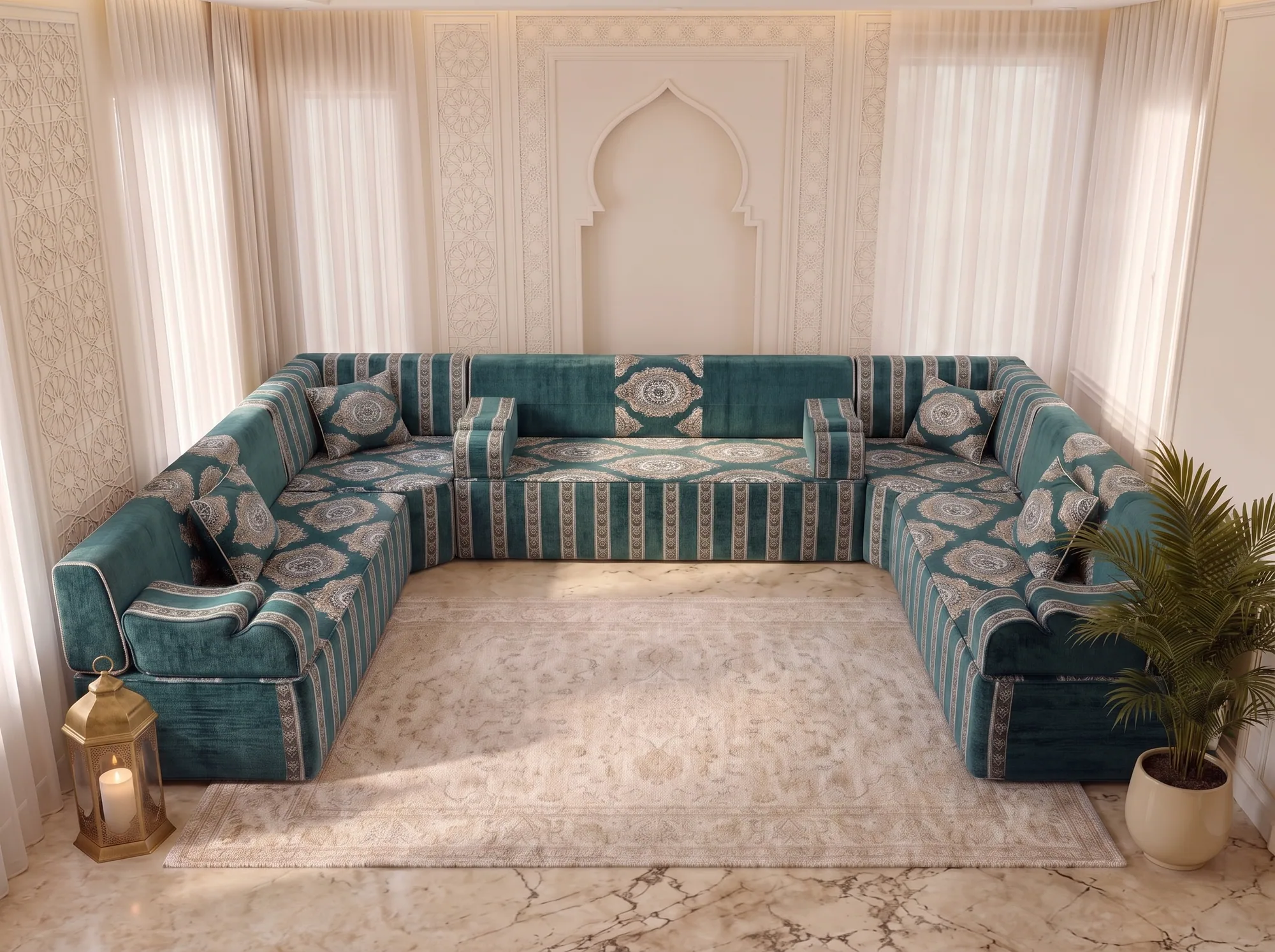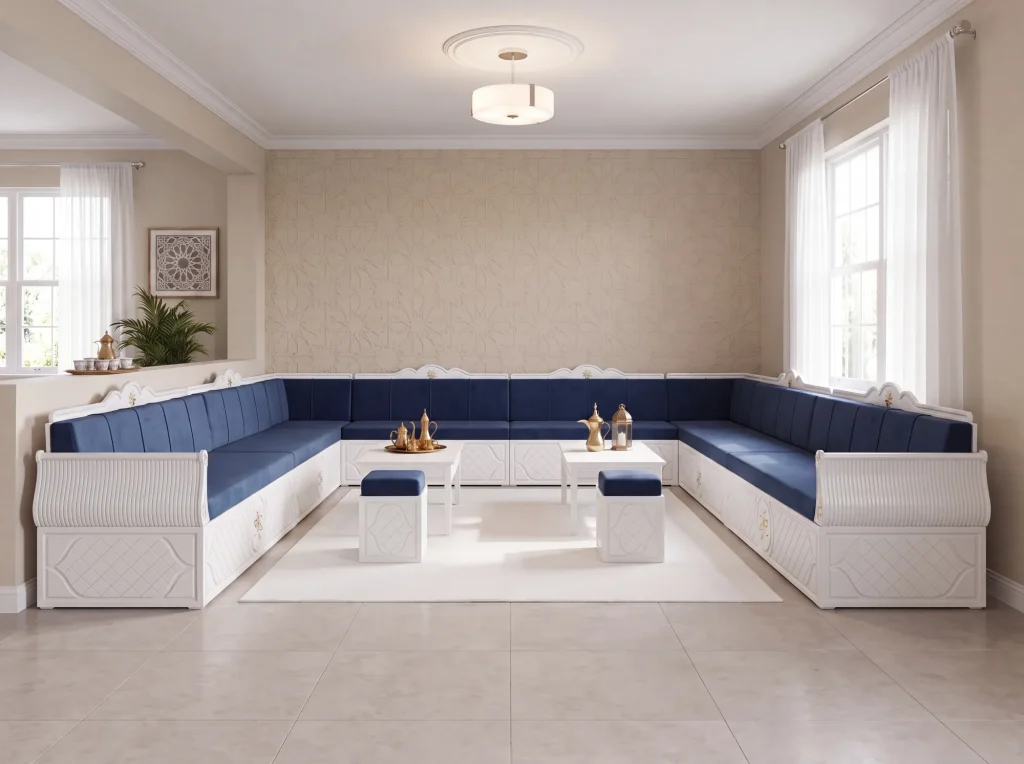
Majlis etiquette comes down to a few habits: take off your shoes if the host does, greet everyone in the room starting from the right and giving elders priority, sit where you are shown, keep the soles of your feet from pointing at anyone, and take the coffee cup with your right hand. Shake the cup gently when you have had enough. Sofhu makes the seating; the manners are the host's.
- Shoes
- Off at the door unless told otherwise
- Greeting
- Right to left, elders and notable guests first
- Seat
- Wait to be shown; the host places guests
- Feet
- Soles and shoes never pointed at a person
- Coffee
- Take and return the cup with the right hand
- Enough coffee
- Shake the cup gently from side to side
- Leaving
- Shake hands with the host and the others
On this page
You have been invited to someone’s majlis, perhaps for the first time, and you would like to get it right. Majlis etiquette is not complicated, and hosts are generous with guests who are plainly trying. What follows is set out in the order a visit unfolds, from the doorway to the goodbye, with the points where customs differ between regions marked as such. Where your host does something differently, your host is right.
Before you enter: shoes and greetings
Take your cue on shoes from the doorway. In most homes where people sit low on carpet, shoes come off before you step in. If there is a row of shoes by the door, leave yours with them. If the room has raised sofas and a hard floor and the host keeps shoes on, do the same. Clean socks save any awkwardness.
Then greet the room. A majlis is entered with a greeting to everyone, not a wave to the person you know. As-salamu alaykum is correct in any Muslim household, and the reply is wa alaykum as-salam.
The Emirati convention, which holds across much of the Gulf, is to shake hands starting from your right and working round to the left. The exception is an elder or a notable guest, who is greeted first wherever he is sitting. People seated on the floor will often rise to greet you. Let them, and do the same when someone enters after you.
Two cautions for visitors from elsewhere:
- Between men and women, wait to see whether a hand is offered. A hand on the chest with a nod is a warm greeting in its own right.
- Use your right hand to shake, to give and to receive. This applies all evening.
A small gift for a family home is appreciated: sweets or dates are typical. Keep it modest. It may be set aside unopened, which is ordinary good manners.
Where to sit: the head of the majlis and seating by seniority
Do not choose your own seat. Pause, and the host will place you. This is the single rule that prevents most mistakes, because a majlis has a geography that is not visible to a newcomer.
Seating follows age and standing. In a Kuwaiti family diwan, usually a U-shaped hall, the elders sit at the head. In the houses of northern Saudi Arabia the main guest seat faces the hearth where the coffee is made. Further afield, on the built-in sedir of a traditional Turkish house, the place of honour is the corner farthest from the door. The details differ. The principle is the same everywhere: the best seat is not by the entrance, and it is not yours to take.
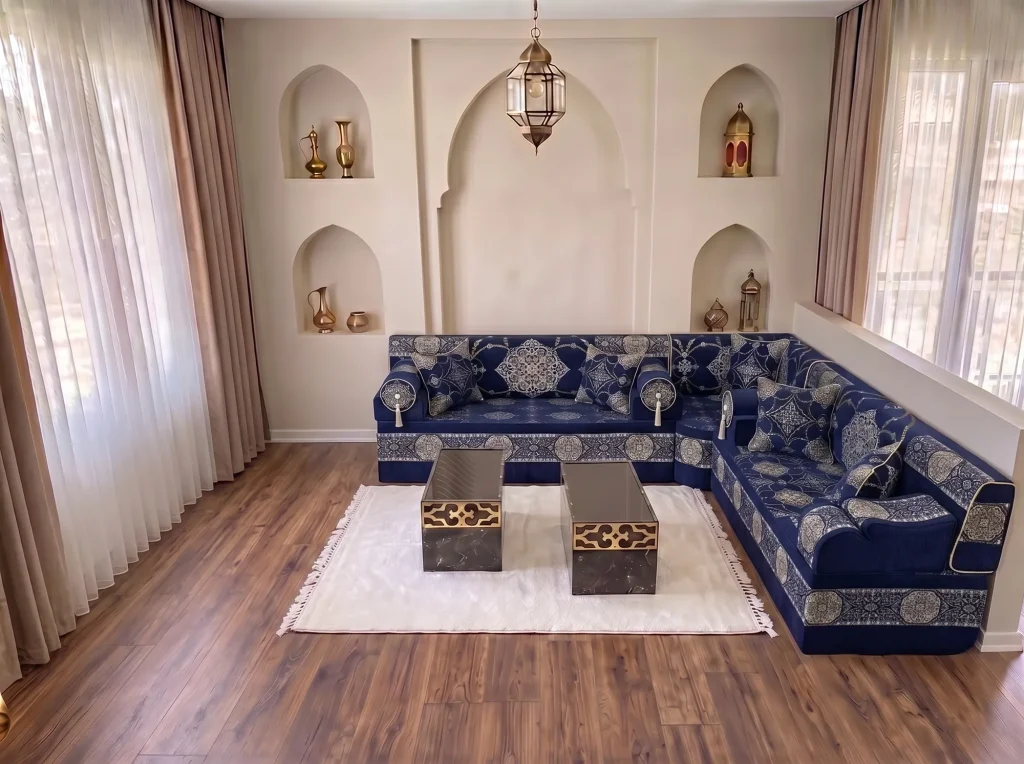
As a guest you will often be given a better seat than you expect. Accept it without fuss. If an older person arrives and seats are short, offer yours. If you were not shown anywhere, sit along the side wall, part-way down.
How the room is arranged makes this easy to read. Seating along the walls leaves the centre open, so everyone can see who is present and who has just come in. The Arabic majlis page linked at the end of this guide shows the common layouts, and the Saudi majlis page describes the hearth-centred rooms of Najd and the north.
How to sit in a majlis on floor seating
Floor seating etiquette is mostly about your feet. Pointing the sole of your foot, or of your shoe, at another person is considered insulting. Everything else follows from that.
- Sit cross-legged, or kneel and fold your legs to one side. Both keep your soles turned down or away.
- Do not stretch your legs out towards the middle of the room or towards anyone seated opposite.
- Avoid crossing one knee over the other when seated upright. In Emirati custom it can read as arrogance.
- Do not squat on the cushions.
- Lean, do not lie. The backrest is there to be leaned on, and the armrest between you and your neighbour is for your elbow. Reclining on one arm is common later in an evening among friends. Wait until others do it.
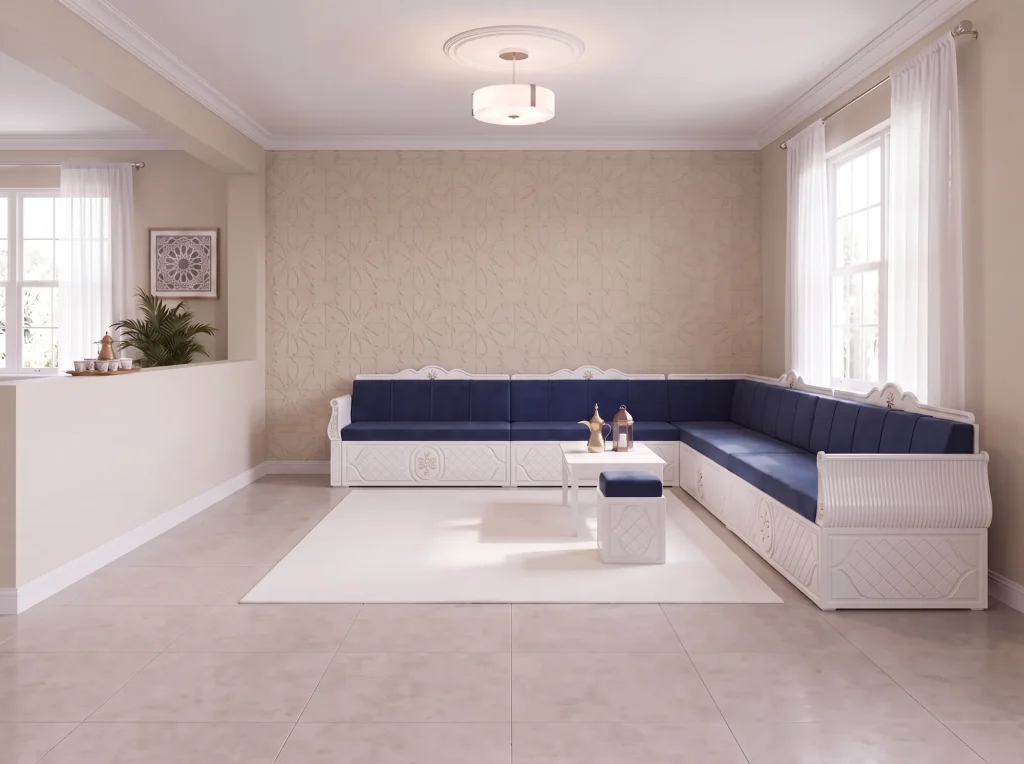
If you are not used to sitting low, change position now and then. Nobody minds. Shifting from cross-legged to legs folded aside is normal, and far better than sitting stiffly for an hour. If you have a bad knee or back, tell your host quietly and you will be given a place with firm support or a chair. Our guides on whether floor seating is comfortable and on hosting elderly guests cover this from the host’s side.
Dress helps. Loose trousers or a long skirt make floor sitting easier than anything tight.
Coffee, dates and incense: the cup shake and what it means
Arabic coffee etiquette is the part guests worry about most, and it has a clear logic. Coffee is how the host says you are welcome, so the polite thing is to accept.
How it is served. Coffee is poured from a dallah, the long-spouted pot, into a small handleless cup called a finjan. Older people and guests are served first. In Emirati custom the server then works from right to left. The cup is filled less than half way. That is not meanness. A small pour stays hot, and it means the host will be back to you soon.
What you do. Take the cup with your right hand. Drink it in a few sips. The coffee is light, unsweetened and usually spiced with cardamom, and it comes with dates for sweetness. Hand the cup back with your right hand.
How to stop. When you return the cup, give it a small shake from side to side. That is the signal that you have had enough. You can also cover the cup with your hand and say bas, enough. If you hand it back without the shake, it will be refilled, and it will go on being refilled.
How many. Customs vary. Taking at least one cup is good manners, and in the Levant accepting three is considered polite. One is never wrong.
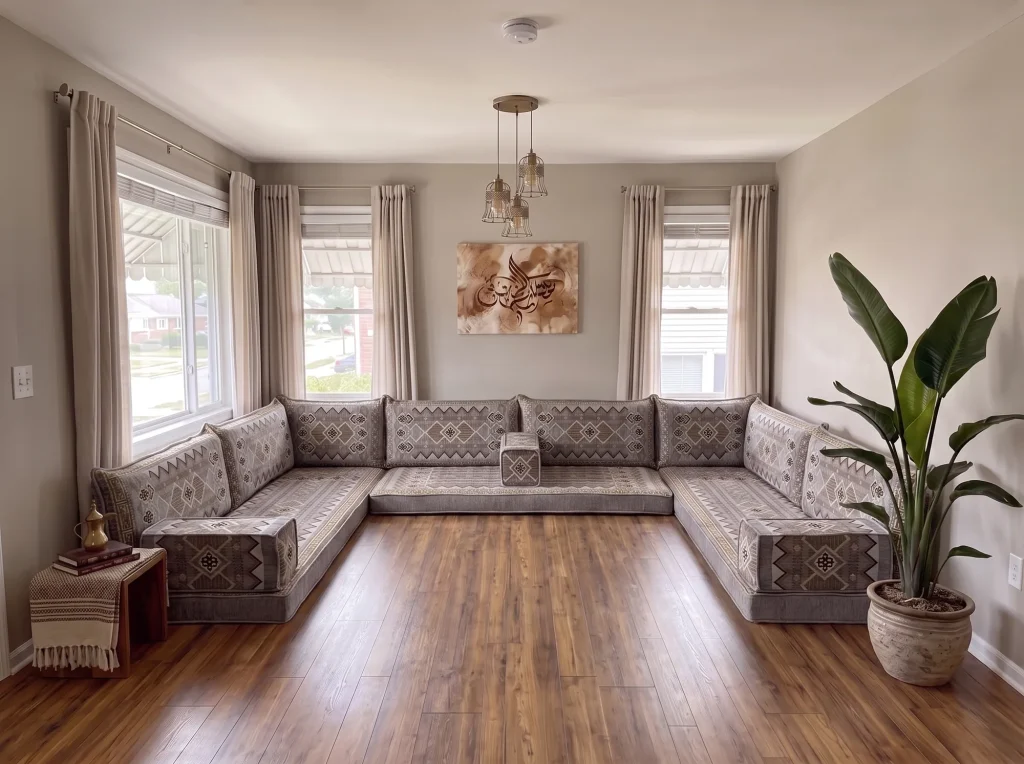
If you do not drink coffee, accept the cup, take a sip and shake it when you hand it back. Tea usually follows and is easier to linger over.
Incense. In Gulf homes the host may light oud or pass round a burner of bukhoor. Draw the smoke gently towards you with your hand, let it scent your clothes for a moment and pass the burner on. It is a courtesy to guests.
Conversation and leaving
Conversation in a majlis is shared. It is a room for news, stories and advice, and UNESCO’s description of the tradition notes that young people learn the manners of dialogue and listening there by watching their elders. A few habits fit in well:
- Begin with people, not business. Ask after health and family in general terms before anything else.
- Listen when an elder speaks, and do not talk across the room over someone.
- Keep your phone away. Take a call outside.
- Stand when someone enters or when an elder rises to leave.
If a meal is served, wait to be invited to start, eat with your right hand if eating by hand, and praise the food. In Saudi custom guests tend to leave quite soon after eating. Lingering is not expected.
When you go, do it properly. Stand, thank the host directly, and shake hands with the host and with the others in the room. Shukran, thank you, and ma’a as-salama, goodbye, are enough. You will be pressed to stay. Decline warmly and go.
Regional differences: Gulf, Yemen and the Levant
Majlis rules are local, and it is better to know that than to assume one script fits every home.
The Gulf. Coffee from the dallah, dates, and incense are at the centre. The cup shake is the standard signal. In Bahrain and its neighbours the busiest season is Ramadan, when family majalis fill after the evening prayers and guests move from one house to another through the night. See the Emirati and Dubai jalsa and Qatari majlis pages for the rooms themselves.
Yemen. The gathering that matters is in the afternoon, in the top-floor mafraj or the larger diwan of the house, and it lasts for hours. Come with time. This is not a visit to cut short.
The Levant. In the reception room of an old Damascus house, guests left their shoes in a lower antechamber and stepped up to a raised, carpeted seating area, so shoes-off has an architectural form there. Coffee is strong and comes in small cups. Accepting up to three is customary, and after the last one a guest may say daymen, “always”, wishing the host the means to go on serving it.
Men and women. In Saudi Arabia men and women are generally seated separately during visits, and many homes have two majlis for that purpose. UNESCO notes that women have their own majlis and that some prominent women attend others, especially academic or literary ones. In many family homes abroad everyone sits together. Ask your host if you are unsure.
If you are the host
Good hosting is the other half of majlis etiquette, and the room does part of the work. Seating around the walls, an armrest for each guest and a clear centre for the coffee tray make it easy to greet, serve and include everyone.
Sofhu manufactures both kinds of seating you will meet in such rooms: the Arabic majlis, raised to sofa height with an upholstered base, tall fixed backs and arm bolsters, and the Arabic floor sofa, a low seat mattress with loose back cushions, an ottoman and floor pillows. Each is made in Türkiye to the customer’s wall measurements and shipped free worldwide. Seats are filled with 32 kg/m³ (32 DNS) high-density foam, and covers are zippered so they can come off after a busy evening. If you are planning a guest room, send your measurements through the quote page. Sofhu’s older posts on hosting guests and meetings and on Arabic sofas for Ramadan gatherings have more ideas, and the majlis and UNESCO explains why the custom is recognised as heritage. For the word itself, see majlis meaning in English.