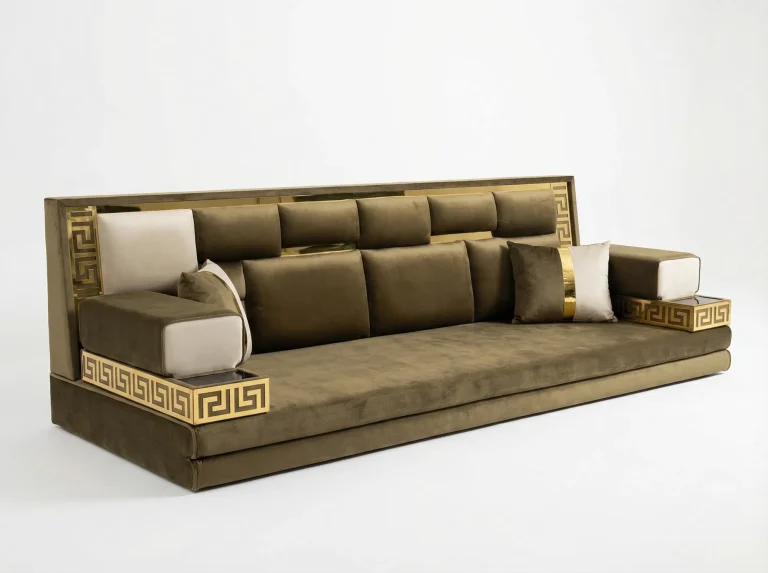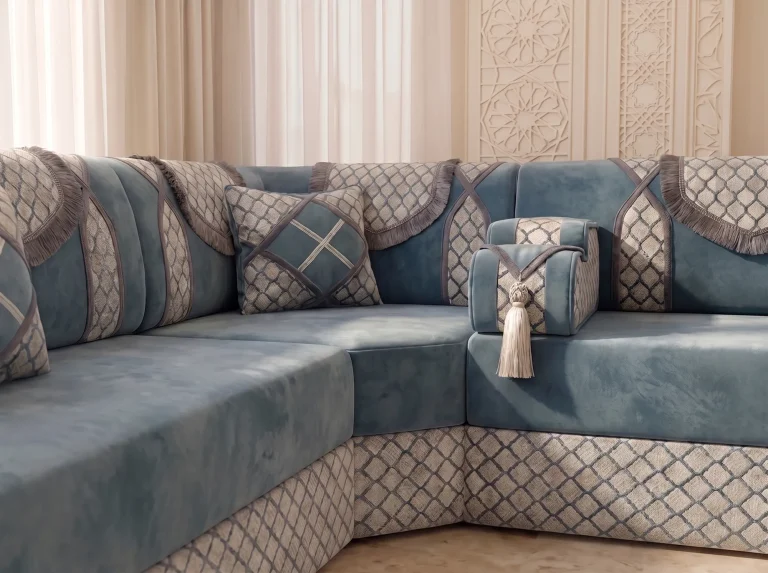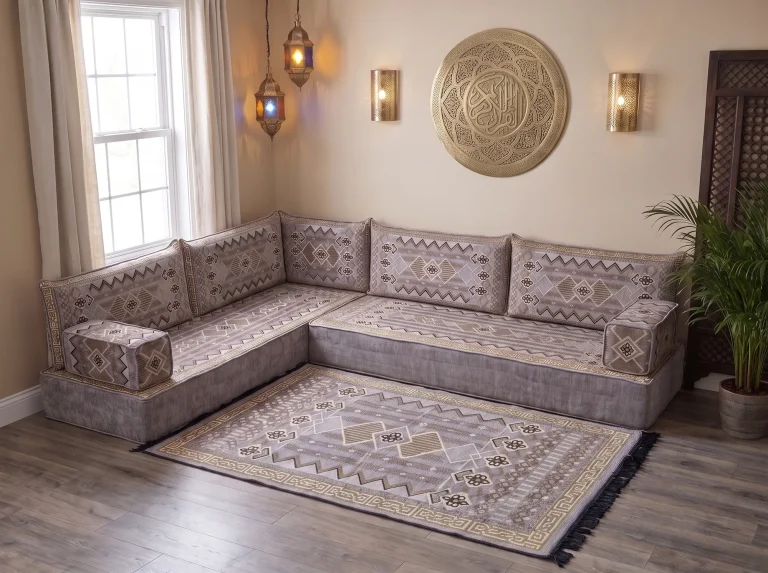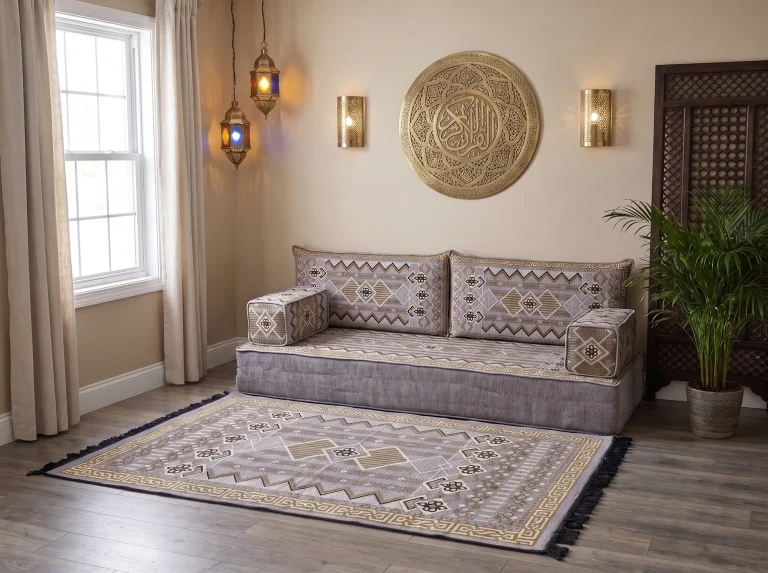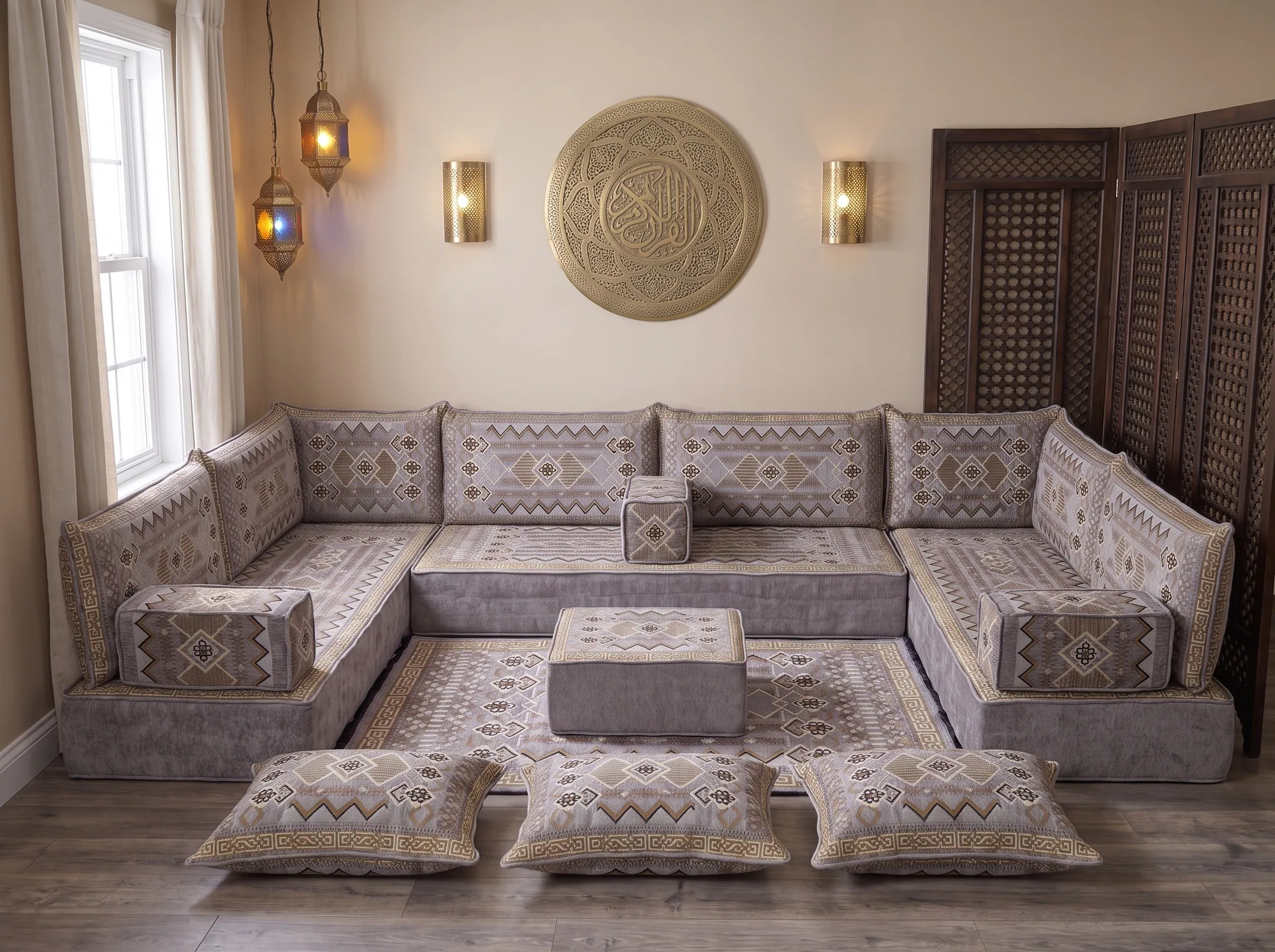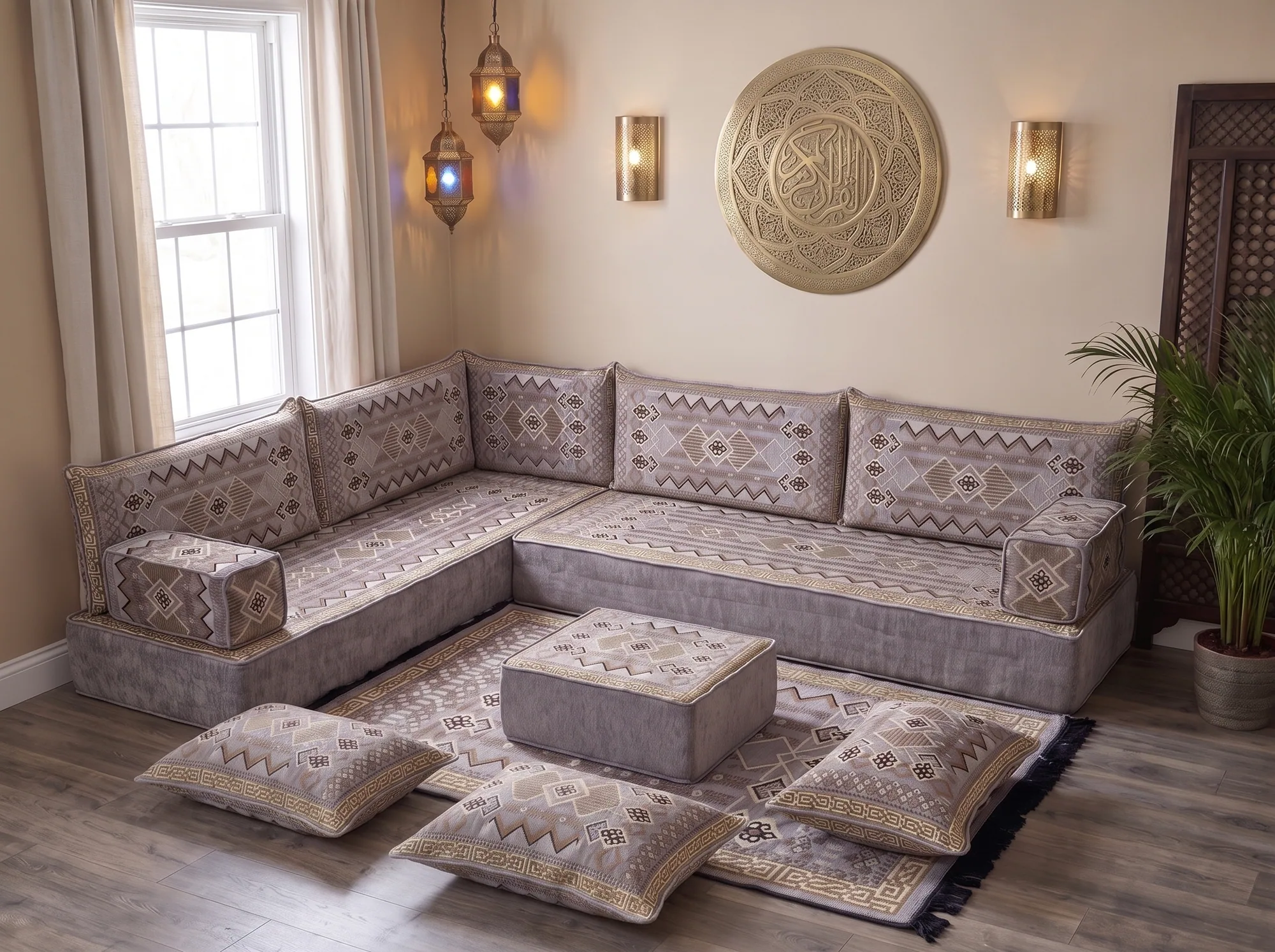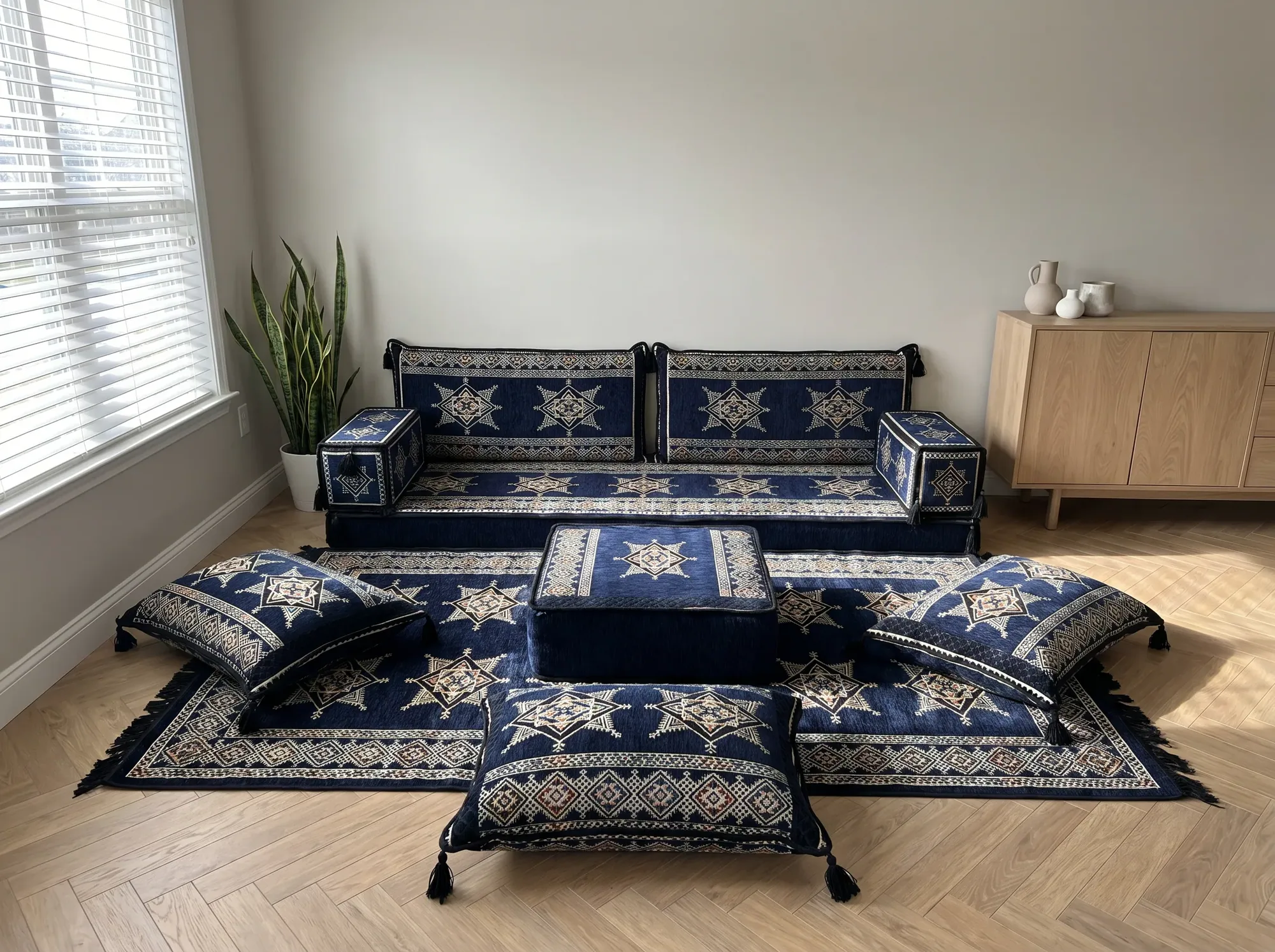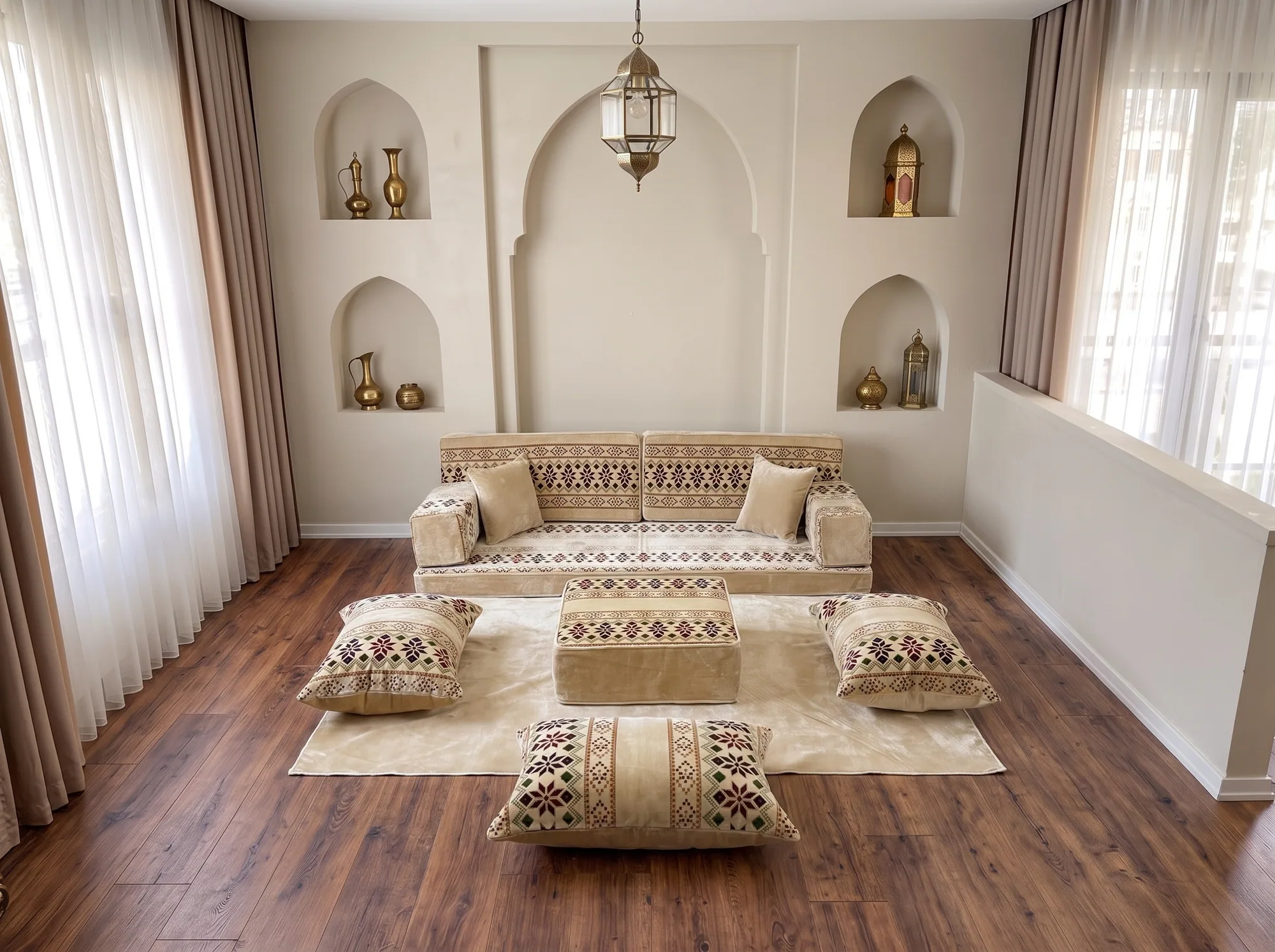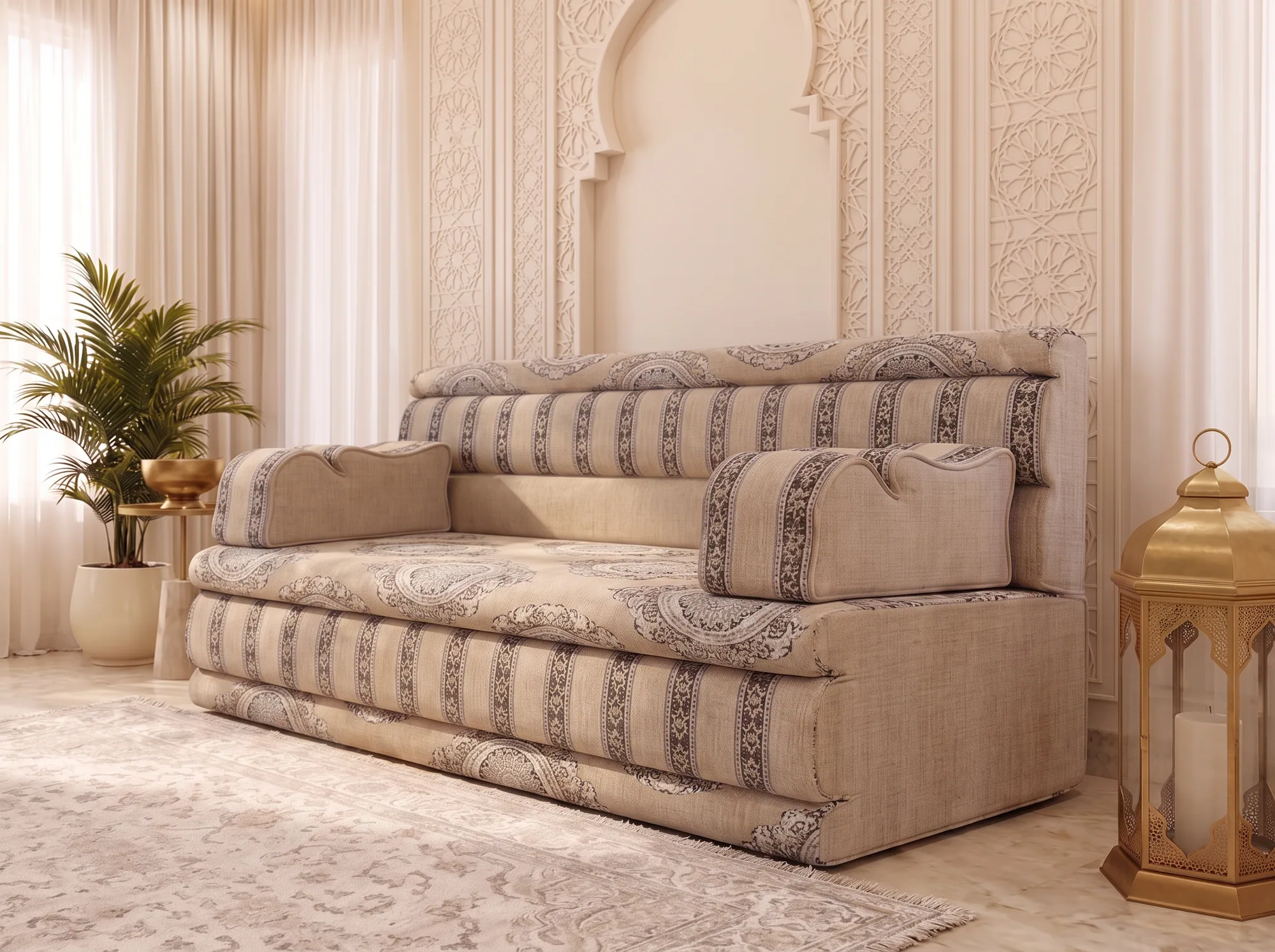
How long a majlis lasts depends on foam density, fabric, and how hard the room is used, so no honest single figure in years exists. Denser foam keeps its height longer, and zipped covers can be washed or changed without touching the foam. Sofhu fills its seats with 32 kg/m³ foam; ask about anything else when you request a quote.
- Seat foam
- 32 kg/m³ (32 DNS) high-density foam
- Springs
- None in the cushions
- Covers
- Zipped and removable, with foam inserts
- Washing
- Machine wash covers at 30°C
- Lifespan in years
- Not published; depends on use and care
On this page
How long does a majlis last? Most people who ask expect a number of years. The truthful answer is a list of causes. A set is foam, fabric, thread and zips, and each wears at its own speed depending on who sits on it and how often. This guide explains which part goes first, how to test a seat with your own hands, and what you can do to slow the wear. It applies to both of the things Sofhu makes: the raised, upholstered Arabic majlis and the low Arabic floor sofa.
How long does a majlis last? Start with what wears out first
On a floor sofa the seat foam does the hardest work, because it carries full body weight with nothing underneath but the floor. Backrests and armrests only take a lean. That is why the seat is usually the first place a set shows its age.
| Part | What ages it | What you notice |
|---|---|---|
| Seat foam | Daily hours of sitting, low density, one favourite spot | A dip that stays, feeling the floor, a lower seat line |
| Fabric | Friction, sunlight, body oils, spills | Shine or flattening on velvet, fading near windows, pilling |
| Seams and piping | Dragging cushions by the cover, kneeling on edges | Open stitches at corners |
| Zips | Forcing them over an overfilled corner, washing them open | A slider that sticks or splits |
There are no springs or metal parts in Sofhu’s cushions, so nothing can snap or poke through. What remains is slow change in the foam and the cloth, and both give warning.
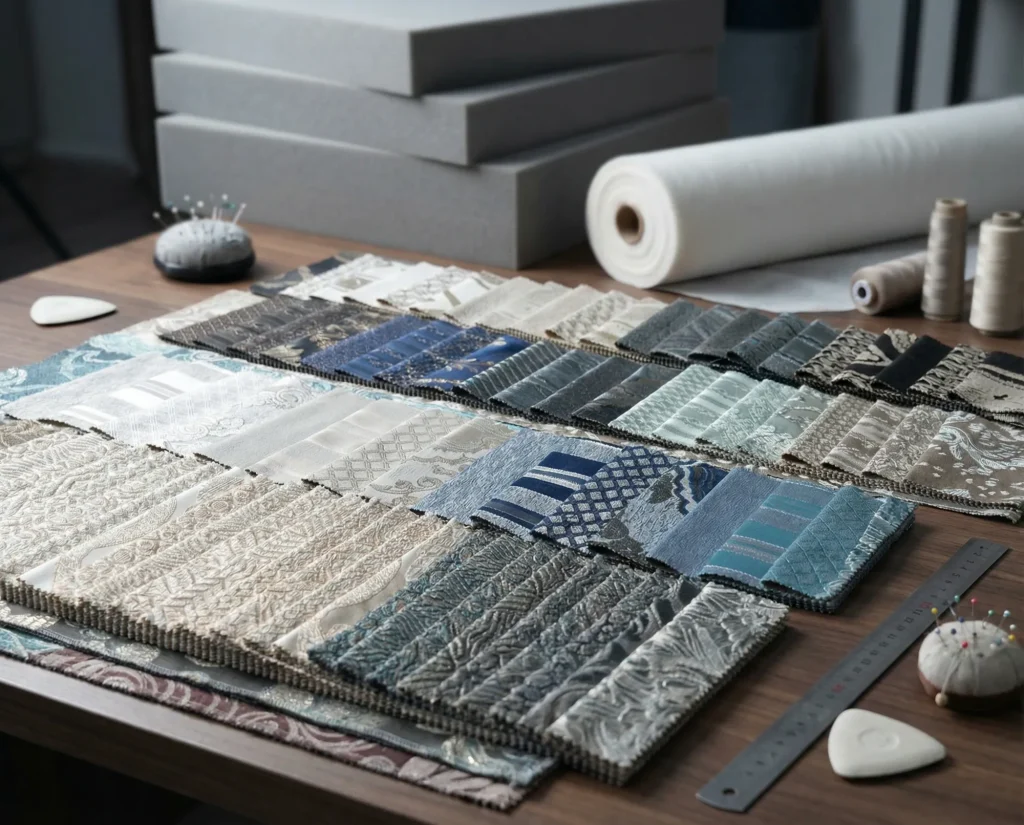
Two tests for sofa foam sagging
You can check a seat in two minutes. On a floor sofa, take the loose backrests off, leave the seat mattress in place, and wait a quarter of an hour after anyone last sat on it.
The hand-press test. Press the flat of your hand firmly into the middle of the seat, hold for five seconds and let go. Good foam pushes back at once and the surface is level again as your hand leaves. Tired foam fills in slowly or keeps a shallow hollow. Repeat on the seat that gets used least and compare the two.
The edge test. Sit on the front edge as you would when getting up. The edge should hold you. If it rolls forward or you feel the floor through it, the foam at the front has broken down.
Two more checks help. Lay a straight broom handle across the seat and look for daylight under it. Then unzip a cover and look at the foam itself: crumbling, a yellowed and brittle skin, or a block that is visibly thinner in the middle all mean the insert is finished.
A dip in the cover is not always foam. Fabric relaxes with use and can sit loose over sound foam. Smooth the cover and test again before blaming the insert.
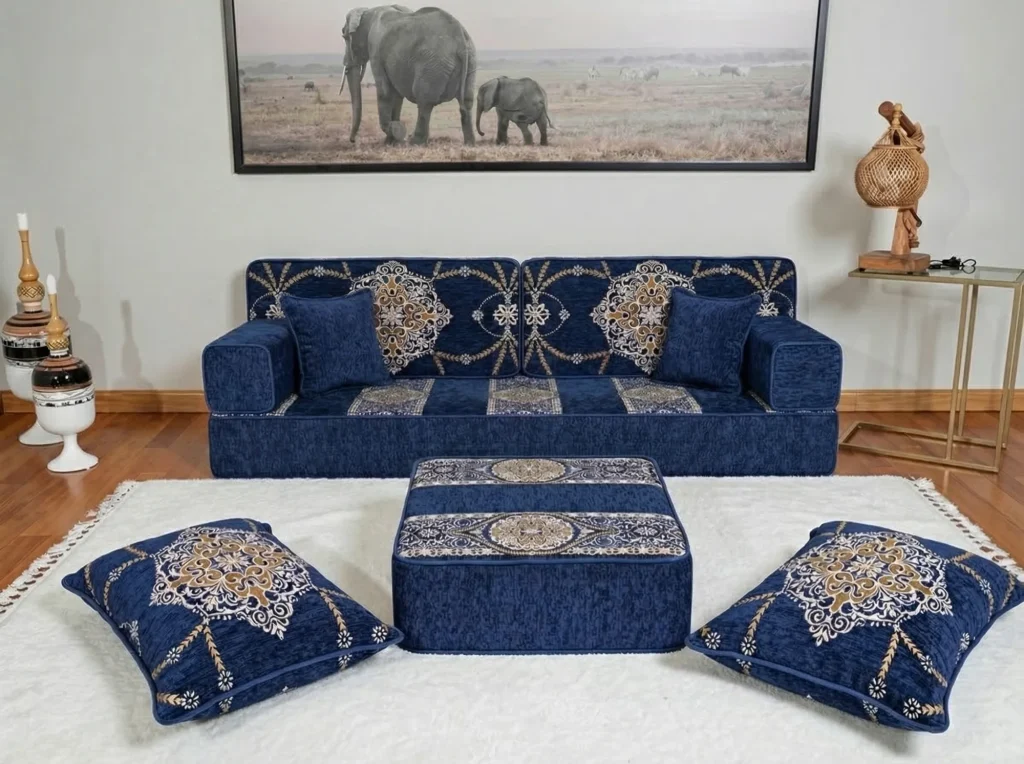
Why density predicts how long sofa foam lasts
Density is the best single clue to how a seat will age. It is the weight of foam in a cubic metre, which tells you how much material is there to carry the load. The Polyurethane Foam Association puts it this way: “the higher the polymer density, the better the foam will retain its original properties.”
Density is not firmness. A light foam can be made to feel hard, so a seat that feels firm when new proves little. In published datasheets, budget foams of around 18 to 25 kg/m³ recover less well from sustained compression than 32 kg/m³ foam, and they bounce back less. This is the usual story behind floor cushion flattening in a low-priced set.
Sofhu fills its seats with 32 kg/m³ foam, which the trade in Türkiye writes as 32 DNS. That is a solid mid-to-upper furniture density. It is not the highest that exists, and no test publishes a lifespan in years for it, so nobody should promise you one. The full comparison is in what foam density is best for floor seating, and other fillings are weighed in foam versus cotton versus wool.
Habits that slow floor cushion flattening
Use changes the answer more than anything you can buy. A few habits cost nothing.
- Rotate. Swap the favourite seat with a quiet one. Because sets are modular, pieces of the same size can trade places. Turn a seat end for end if its shape allows.
- Air. Stand the cushions up against the wall now and then and open the windows. Foam on a cold floor can hold moisture underneath, especially on tiles or in a basement.
- Vacuum. Grit works like sandpaper on the weave. A soft brush head along the seams and piping removes it.
- Wash covers gently. Sofhu’s removable covers are machine washable at 30 degrees. Treat spills early, using the methods in removing coffee, tea and henna stains.
- Shade. Strong sun through a window fades any dyed fabric. Draw a sheer curtain during the brightest hours.
- Lift, do not drag. Carry a cushion by its body, not by a handful of cover.
- No jumping. Children’s play is the hardest test foam gets.
Fabric choice matters here as well. Sofhu’s fabric notes describe its velvets as durable and easy to clean and its chenille as low shedding. The trade-offs are set out in velvet versus linen versus jacquard, and Sofhu’s own care guide covers routine cleaning.
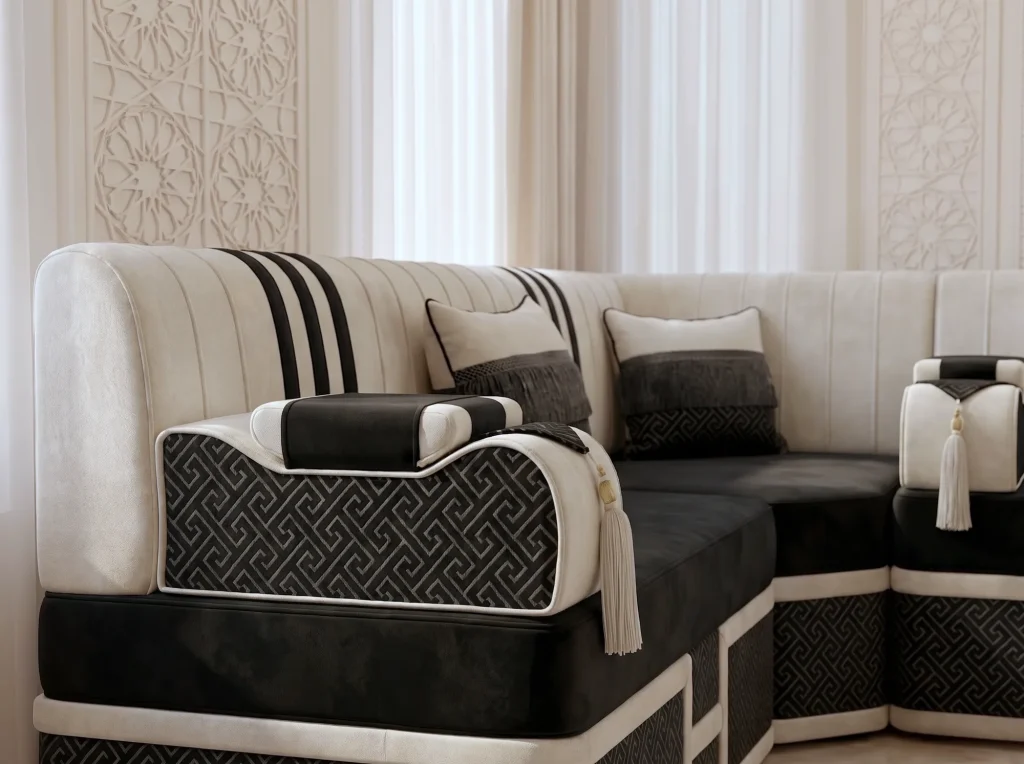
Recover or replace sofa foam
Fix the part that has failed and keep the rest. Sofhu’s covers are zipped and come with their foam inserts, so cover and foam are separate pieces. That makes three repairs possible.
| What you find | Sensible fix |
|---|---|
| Foam passes both tests, fabric is faded or dated | New covers on the existing foam |
| Seat foam fails, covers are sound | Majlis foam replacement for the seats only |
| Seats fail and fabric is worn through | A new set, keeping any backrests still worth using as spares |
Seat foam usually goes before backrest foam, so replacing only the seats often restores a set. Any upholstery workshop can cut a foam block to the size of an existing cover. Give them the inside dimensions of the cover and ask for the density in writing.
Whether Sofhu supplies spare covers or replacement inserts for a set it made earlier is not something this guide can promise. Ask the team before you order, and keep a note of your set’s measurements either way.
Questions to ask before you buy
A buyer who asks about lifespan is really asking about materials. These questions get useful answers from any seller.
- What is the foam density in kg/m³, and is it the same in seats and backrests?
- Are all covers zipped and removable?
- Can the covers be machine washed, and at what temperature?
- Can I choose a softer or firmer foam? On custom orders Sofhu offers both.
- Can I order a spare set of covers with the set?
Sofhu is the manufacturer and makes each set to the customer’s measurements in Türkiye, so these points are settled per order. Look through the Arabic floor sofa range or complete majlis sofa sets, then get a quote by measurement or send your questions on WhatsApp.