For a floor sofa, high-density polyurethane foam is the right core. It pushes back under your weight and recovers at once, which a seat on a hard floor needs. Memory foam sinks slowly, softens with warmth and can bottom out when used alone. Sofhu builds its seats from 32 kg/m³ high-density foam; memory foam belongs, if anywhere, in a thin top layer.
- Sofhu seat foam
- 32 kg/m³ (32 DNS) polyurethane foam
- In US units
- About 2.0 lb/ft³
- Memory foam
- Slow recovery, softens with warmth
- Ball rebound, memory foam
- Under 20 % (Polyurethane Foam Association)
- Ball rebound, other flexible foams
- Roughly 40 to 60 %
- Springs
- None in Sofhu cushions
- Feel
- Softer or firmer foam on request for custom orders
On this page
Short answer first. In the high density foam vs memory foam question, a floor sofa needs high-density foam as its core, and memory foam is at most an optional thin layer on top. Almost everything written about these two foams is about mattresses, where you lie flat and your weight is spread over your whole body. Sitting is different, and sitting on a hard floor is more different still.
High density foam vs memory foam: how each behaves
The two foams answer weight in opposite ways. One pushes back. The other gives way.
Conventional high-density foam is a springy polyurethane block. Press it and it resists. Let go and it returns at once. Density, measured in kilograms per cubic metre, tells you how much material is in the block. The Polyurethane Foam Association says density affects durability and support, and that higher density foam generally keeps its original properties better. Firmness is a separate property: at one density a producer can make soft, medium and hard grades.
Memory foam, properly called viscoelastic foam, is made to recover slowly. The same association describes it by exactly that trait, slow recovery after compression. Many viscoelastic foams also react to body and room temperature, softening with warmth and following the body’s contours more closely. In the ball-rebound test, where a steel ball is dropped on the foam, memory foam returns less than 20 % of the drop height. The association gives 50 to 60 % for other flexible foams, and published datasheets for conventional furniture grades show at least 40 %. The result is often described as a “dead” feel, and for some uses it is exactly what is wanted.
| High-density foam | Memory foam | |
|---|---|---|
| Response to weight | Pushes back | Yields and moulds |
| Recovery | Immediate | Slow |
| Effect of warmth | Little | Softens |
| Changing position | Easy | Sluggish |
| Role in a seat | Core | Thin top layer, if used |
Why floor seating is a special case
A floor seat has nothing beneath it to help, so the foam must do all the supporting. An ordinary sofa has springs or webbing under its cushions. A mattress lies on a slatted or sprung base. A floor sofa seat is a block of foam on tile, timber or carpet. Sofhu’s cushions contain no springs at all.
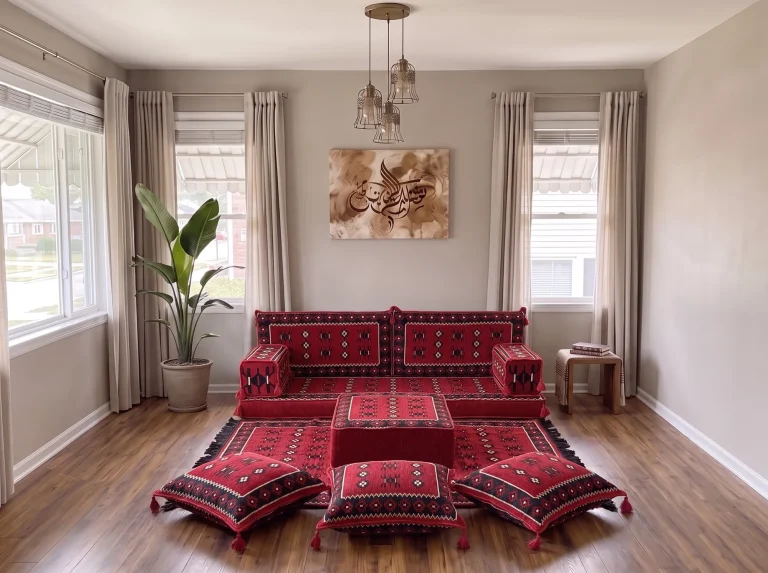
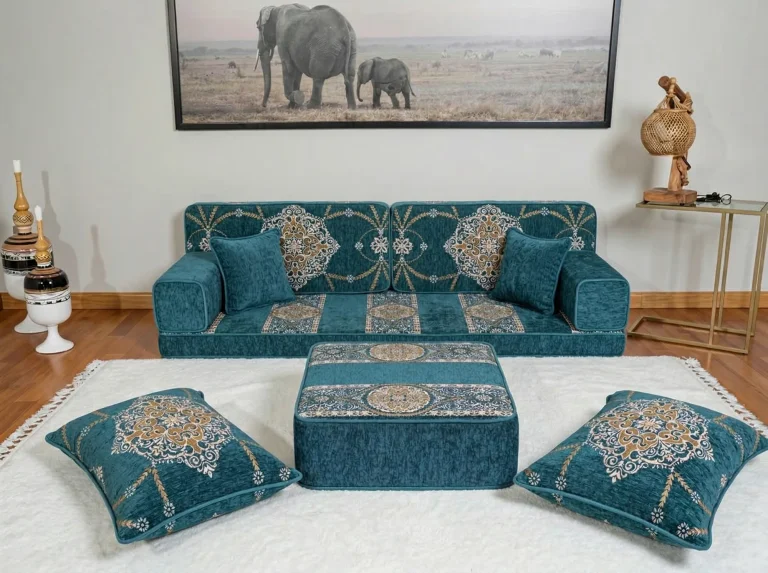
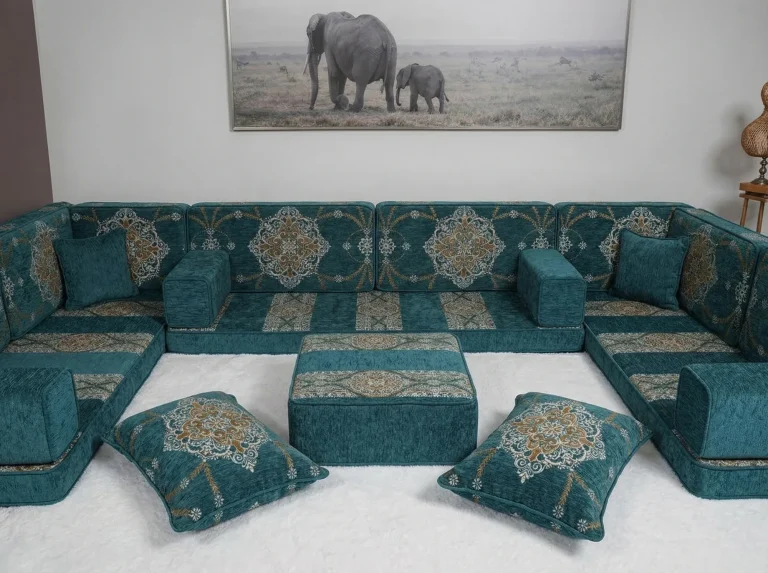
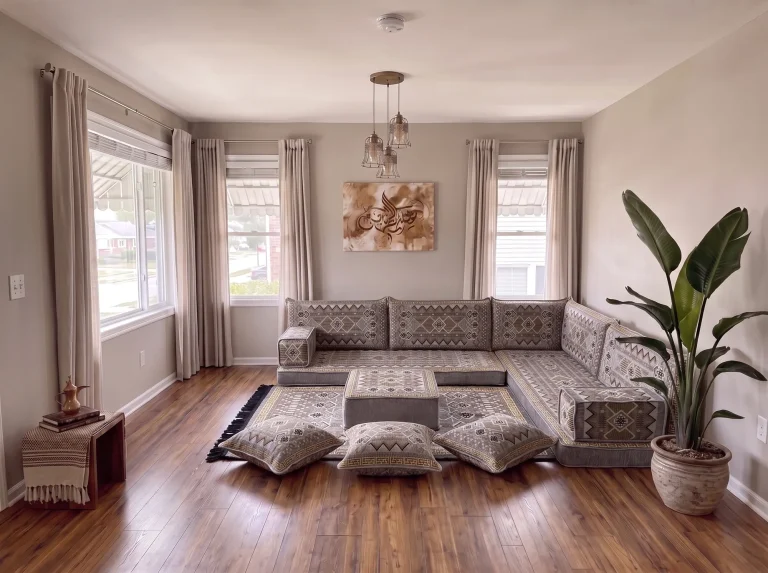
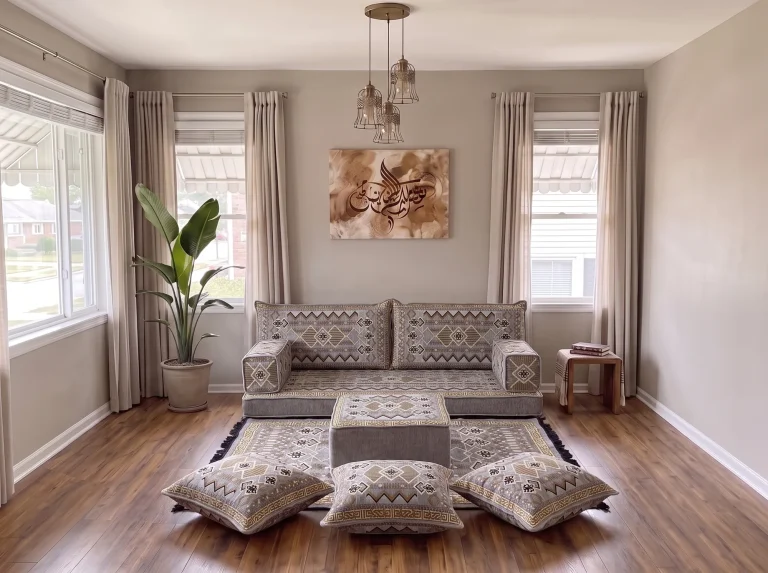
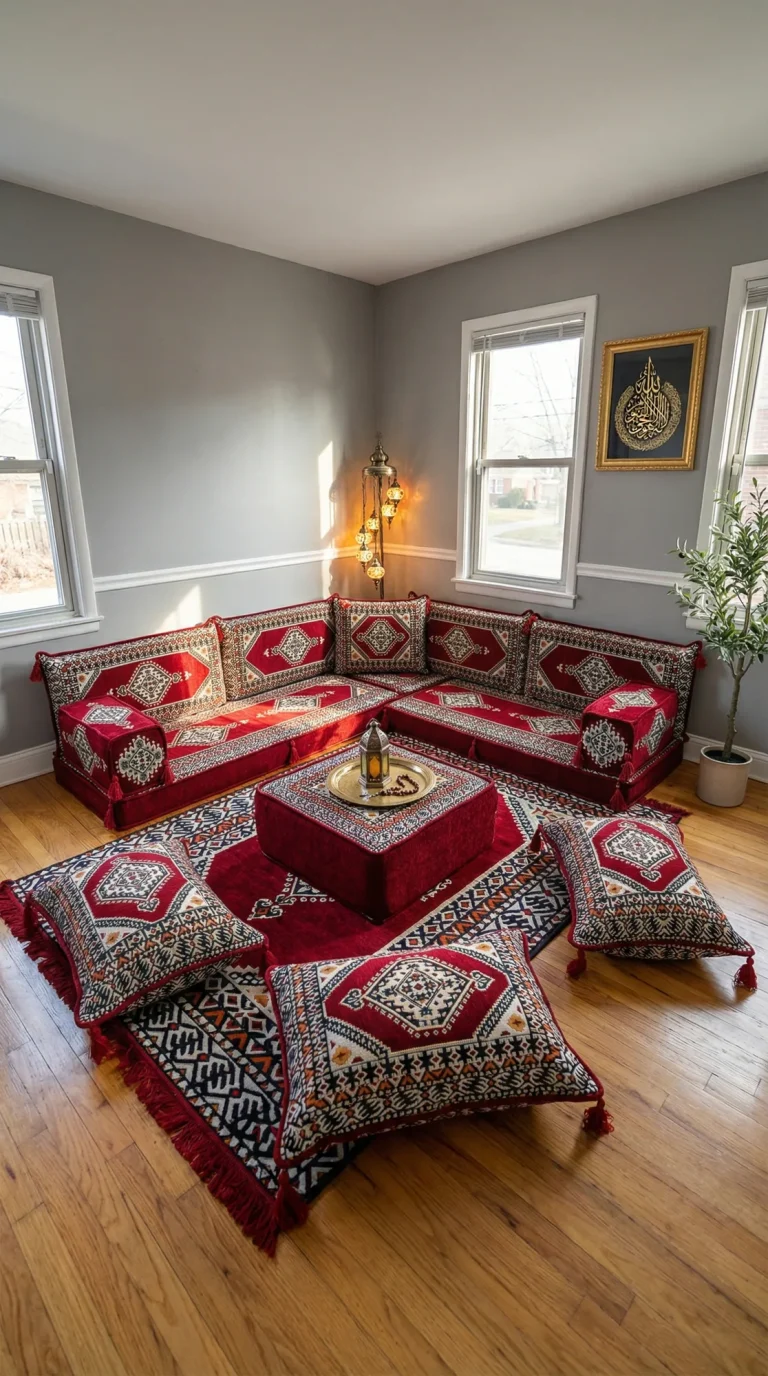
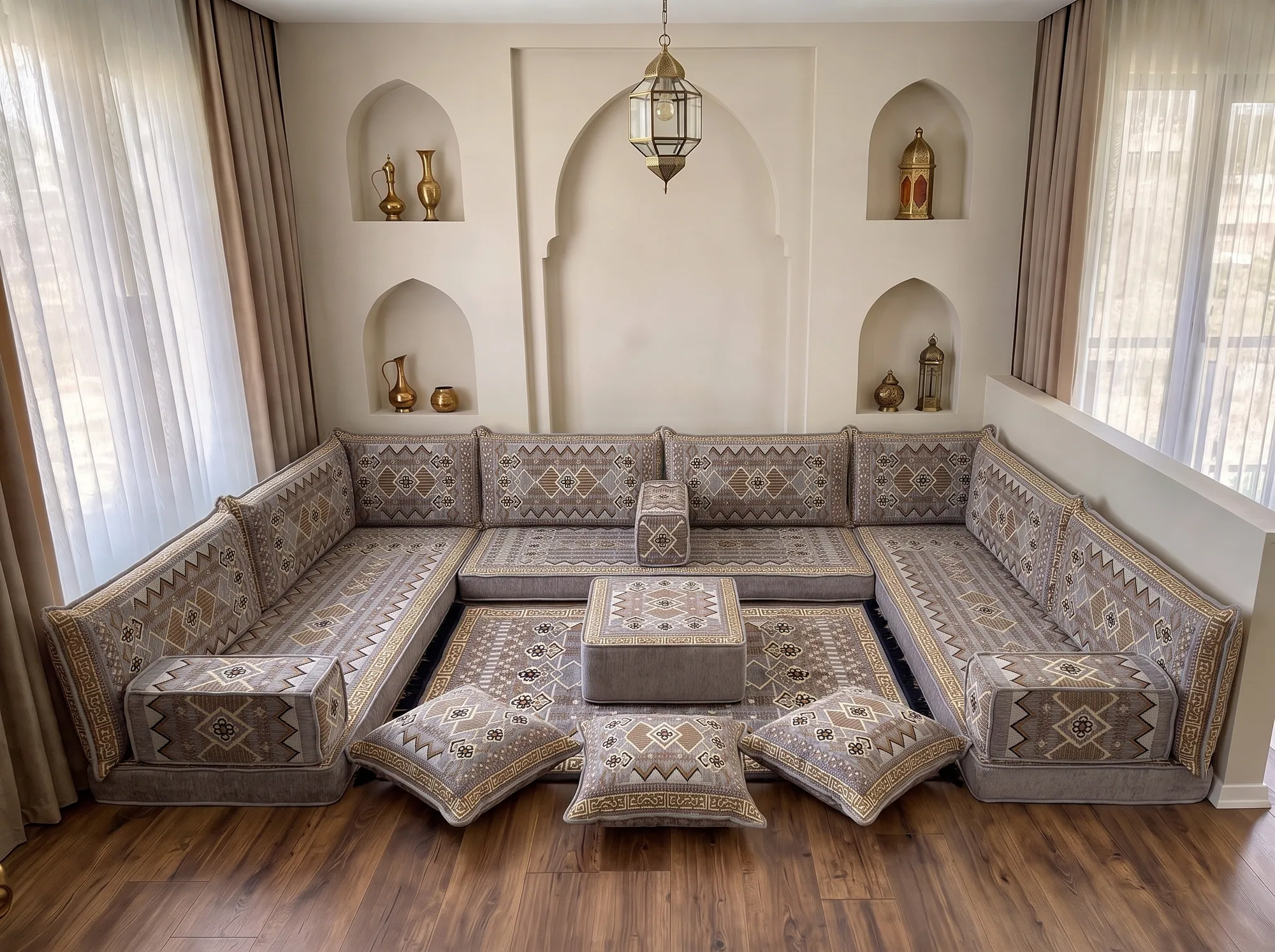
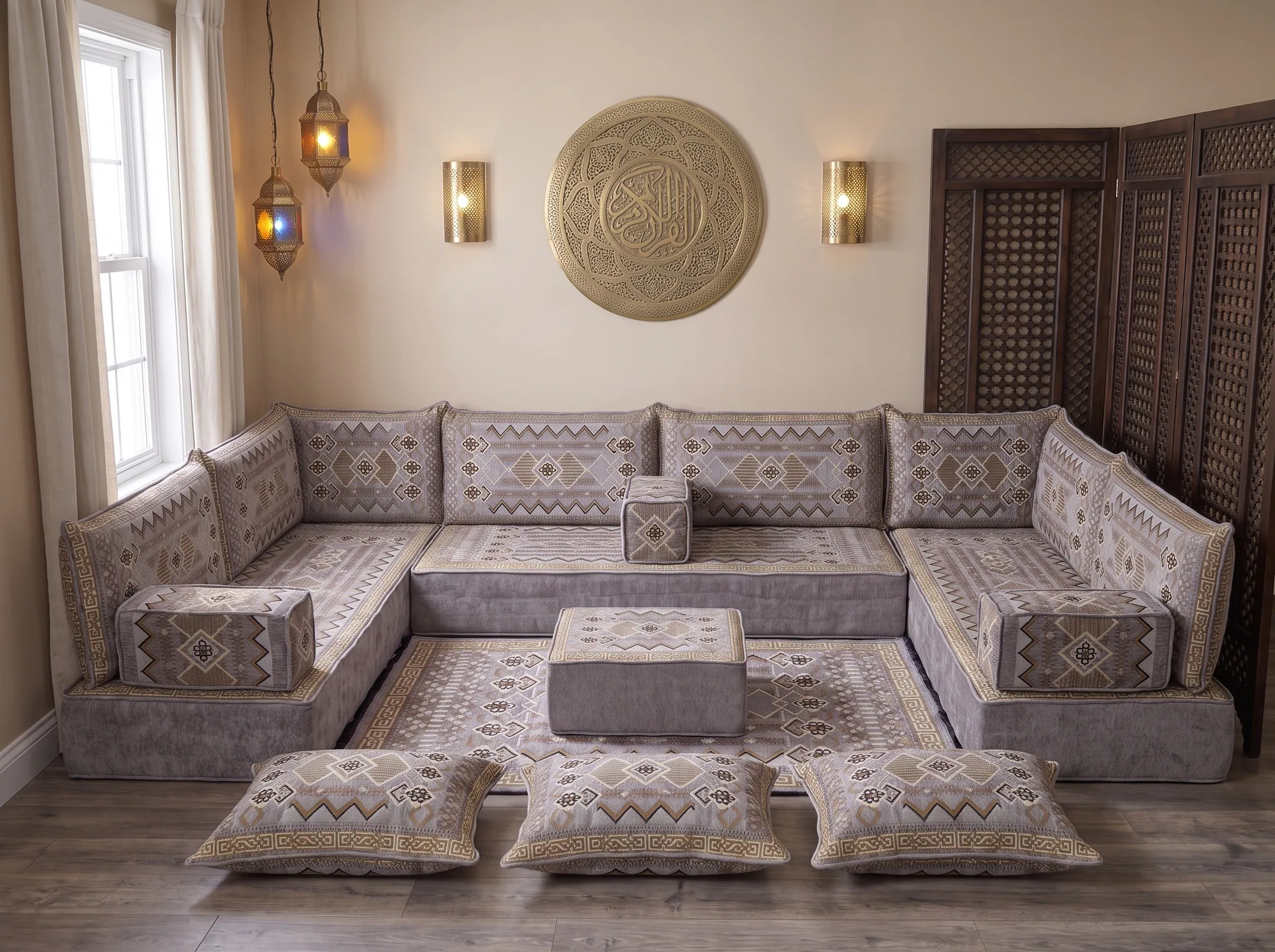
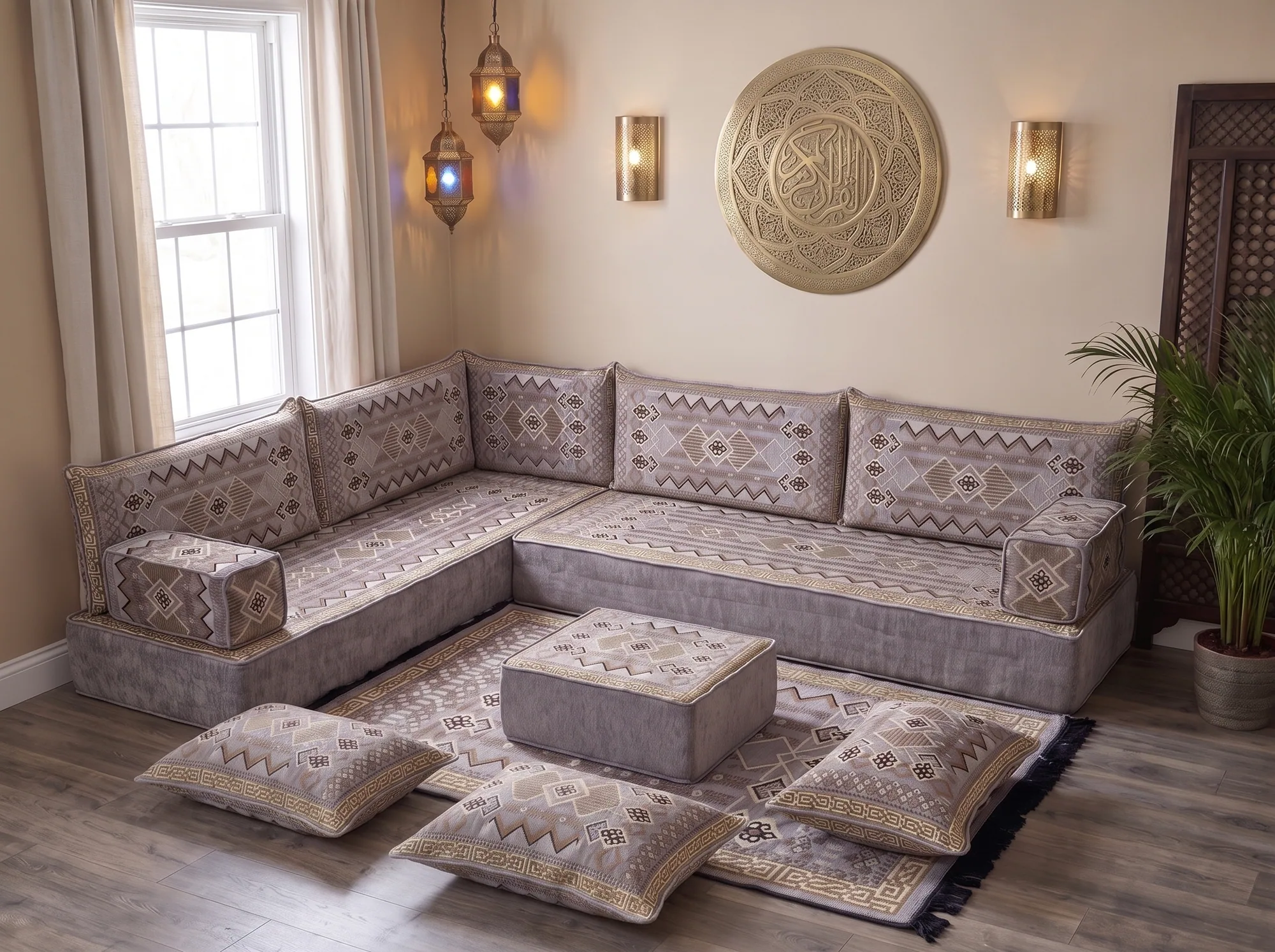
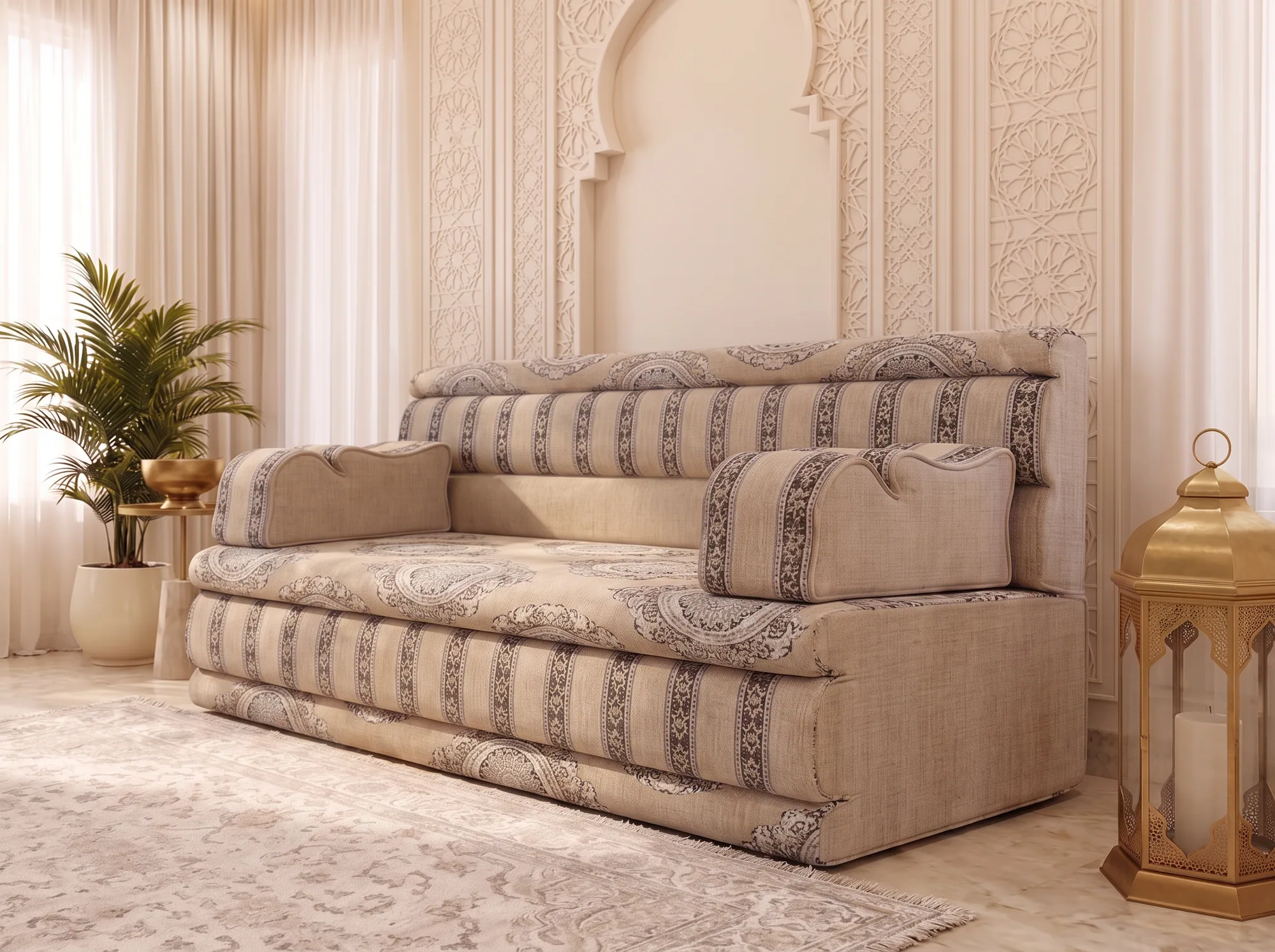
A note on names, because Sofhu makes two products. The Arabic floor sofa, the subject of this article and of every photograph in it, is a seat mattress at floor level with loose back cushions and armrest blocks. The Arabic majlis is a raised, fully upholstered set at sofa height with a solid base and fixed backs. The foam reasoning below applies to both, but it bites hardest at floor level.
Then consider the load. Lying down spreads your weight from head to heel. Sitting concentrates most of it on a small area under the hips. Sitting cross-legged or kneeling, as people do on a floor sofa, concentrates it further. A foam that yields slowly keeps yielding under that concentrated load. If the seat is made only of memory foam, you gradually reach the floor through the foam. That is called bottoming out, and it is the reason a memory foam floor sofa tends to disappoint.
Three more things count against memory foam in this use:
- Movement. Guests in a majlis change position constantly. They fold their legs, lean on an armrest, get up to greet someone. Slow-recovery foam leaves a hollow where you were and resists the next position.
- Standing up. Rising from a low seat already takes effort. A seat that pushes back helps you. A seat that has moulded around you does not.
- Warmth. A seat that softens as it warms changes during a long evening, and a foam that wraps the body closely leaves less room for air. In a room full of guests in summer that is noticeable.
The edge matters as well. On a floor sofa people often perch on the front edge to pour tea or put on shoes. A supportive foam keeps a square edge. A very soft one rolls forward.
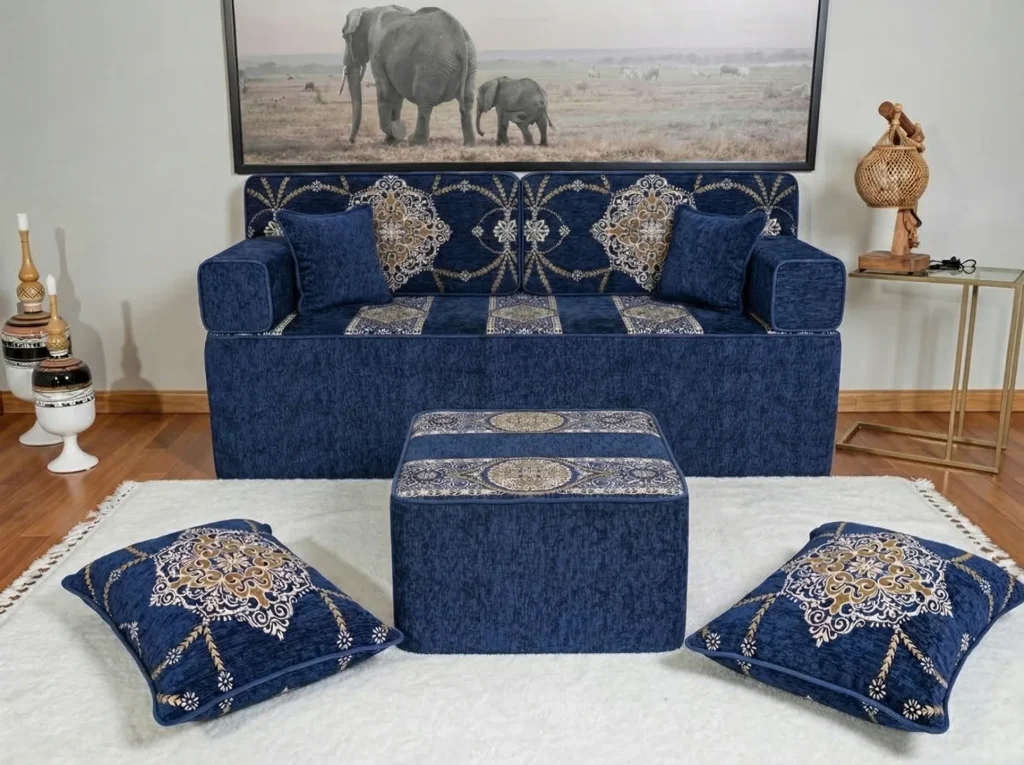
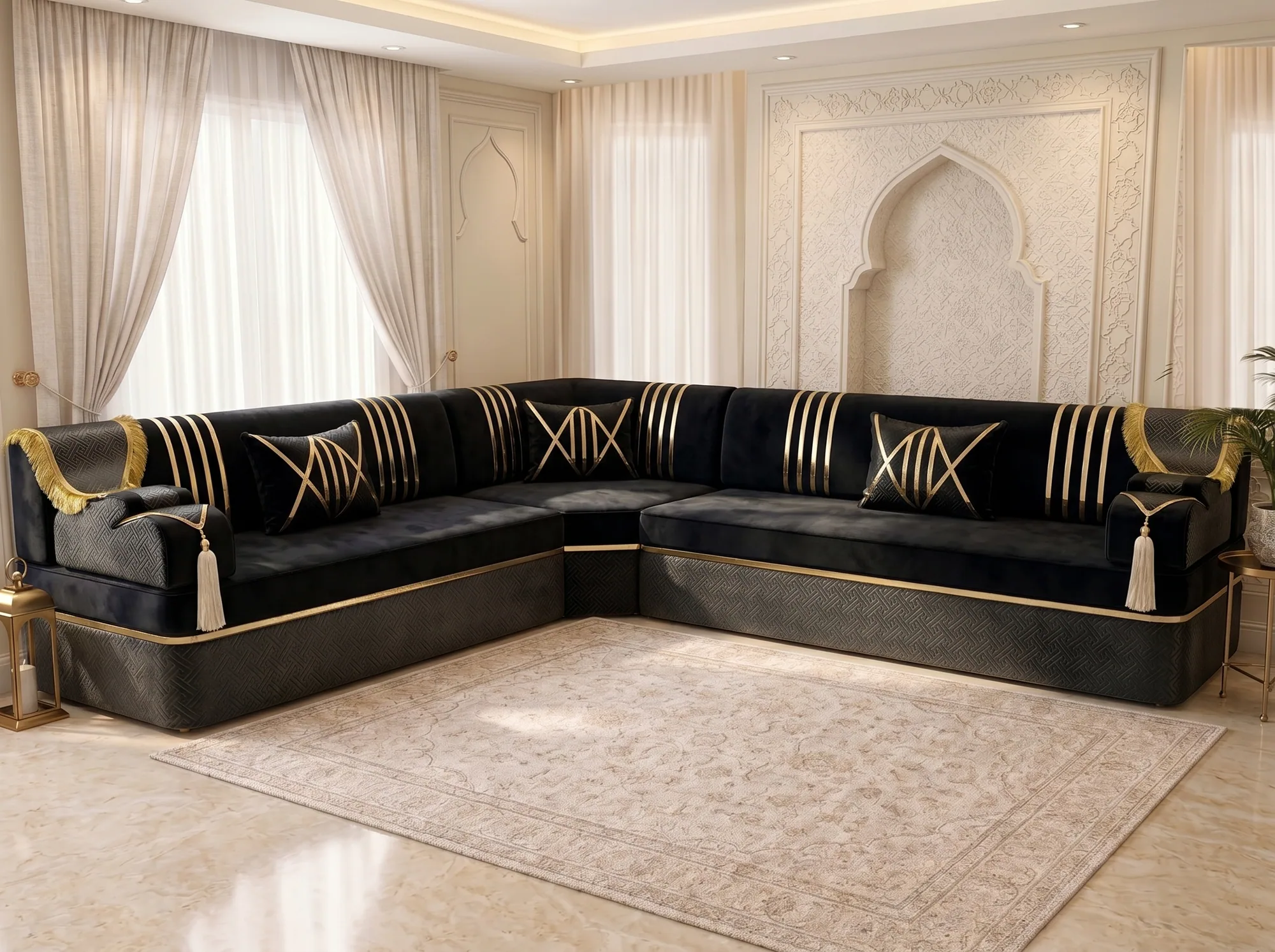
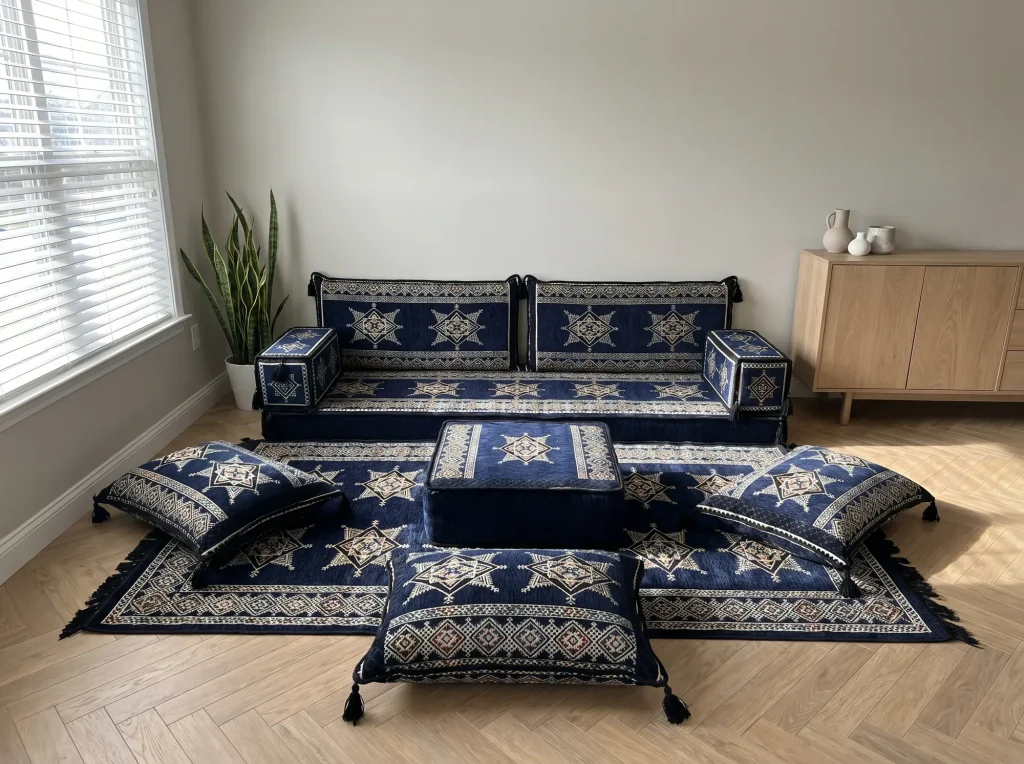
Height does not change the argument. The navy diwan floor sofa above stands on a tall base that brings it to ordinary sofa height, yet the seat is still a foam block on a rigid surface. Raised or on the floor, the core has to carry the load.
Layering options
Layering is how upholsterers get a softer first touch without giving up support. The principle is simple: a firm, dense core carries the weight, and a thinner, softer layer on top changes how the surface feels in the first seconds.
The options, from most to least common in seating:
- A single block of high-density foam. The standard build for floor seating. Simple, even and easy to replace.
- A firm core with a softer conventional foam on top. A gentler surface with the same support below.
- A firm core with a thin memory foam top. A moulding surface feel. The layer must be thin, or the problems described above return.
- A high-resilience (HR) core. A springier, more durable class of foam. In the hr foam vs memory foam comparison, HR is the opposite character: lively where memory foam is slow. In one producer’s published data, HR grades show ball rebound of 50 % or more and lower permanent compression than conventional furniture grades.
A plain statement about our own product: Sofhu’s seats are made with 32 kg/m³ polyurethane foam, written 32 DNS in the Turkish trade. That is a solid mid-to-upper furniture density, not the top of the range. On custom orders you can ask for a softer or firmer foam, and cushion thickness can be chosen. If you want a layered or special build, ask, and we will tell you whether it can be done for your set.
For most households the best foam for a sofa seat on the floor is the first option on that list, in a solid furniture density such as 32 kg/m³. If the seat feels too firm, the usual fix is a softer grade at the same density, or a thicker seat, not a change to memory foam.
What to ask a seller
Foam is hidden inside the cover, so the only protection is to ask. These questions apply to any seller.
- What is the density of the seat foam? Expect a number in kg/m³ or lb/ft³. “High density” without a number is not an answer.
- Is it conventional, HR or memory foam? If memory foam is mentioned, ask how thick the layer is and what lies under it.
- Is the seat one block or layered? Either is fine. You should know which.
- Can I choose a softer or firmer feel? Firmness is separate from density, so a good maker can change one without the other.
- Are there springs or a frame inside? For floor seating the usual answer is no.
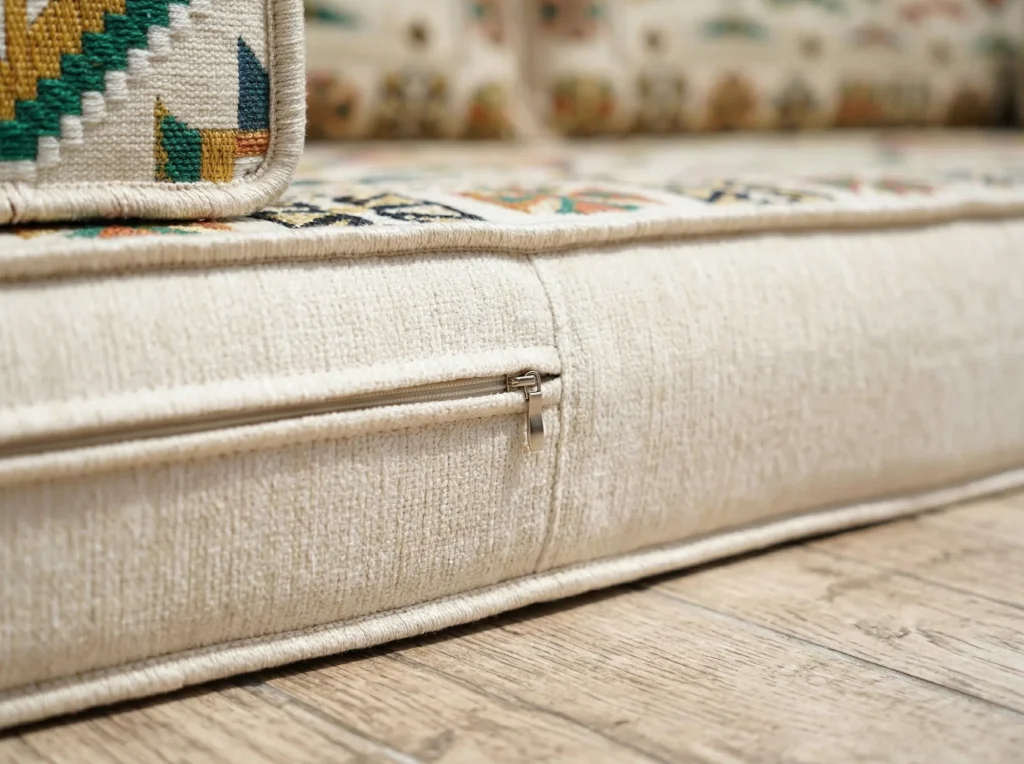
- Does the cover unzip? A removable cover lets you wash the fabric and, years later, replace the foam insert without buying a new set.
- How is it shipped? Foam seats are commonly vacuum packed and regain their shape after opening.
Be wary of two phrases. “Orthopaedic” is a marketing word with no agreed meaning for a sofa. “Memory foam” in a title sometimes describes a very thin quilted layer, and sometimes nothing checkable at all. Ask for thickness and density of each layer.
Sofhu’s answers: 32 kg/m³ conventional polyurethane foam, no springs, softer or firmer on request, zippered covers with foam inserts included, vacuum packed, free shipping worldwide. Ask for the seat thickness to be written into your quote, since every set is made to measure.
Where to go next
For the numbers behind density, read foam density for floor seating. For the other foam types for cushions and the older fibre fillings, see foam vs cotton vs wool filling. If your real question is whether you will be comfortable, is floor seating comfortable deals with posture and habit.
To see how the seats, backrests and armrests go together, start with the Arabic floor sofa guide and the overview of majlis sofa sets. Then send your wall lengths and your preferred firmness through the quote by measurement form.