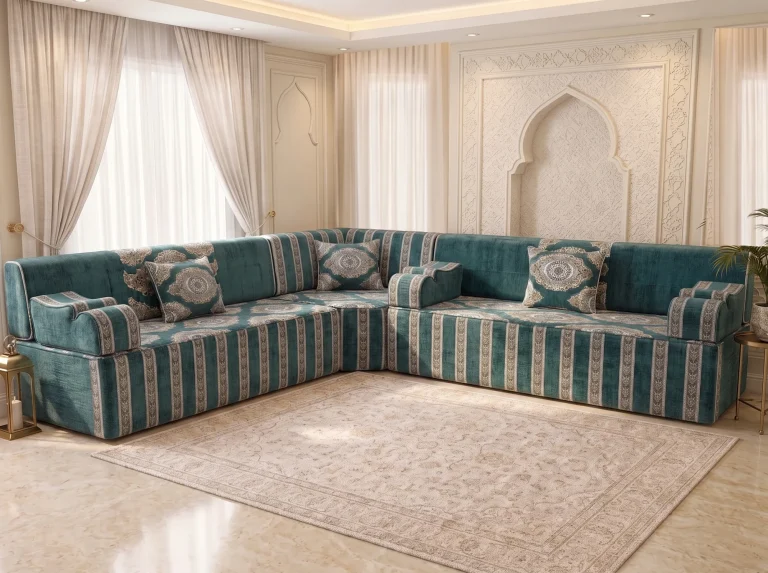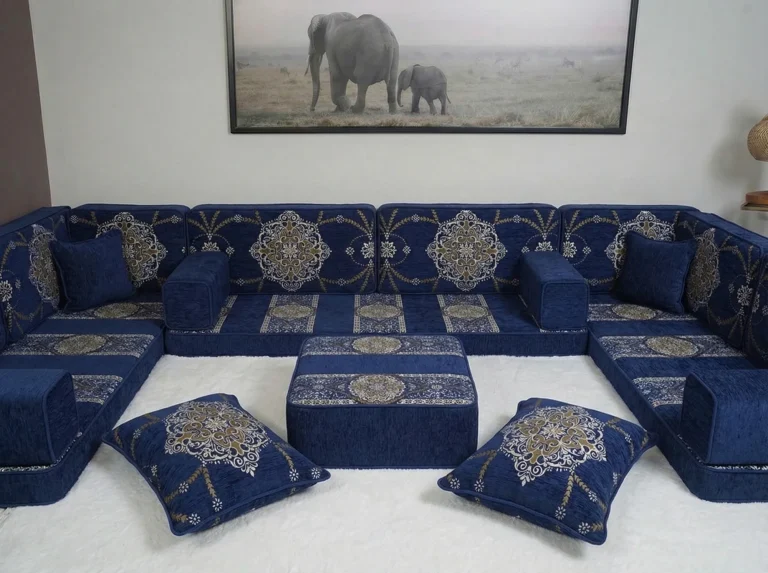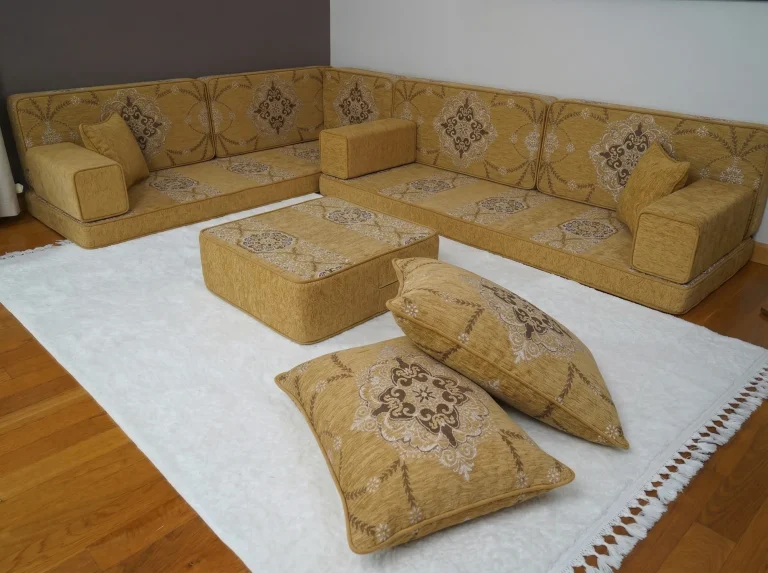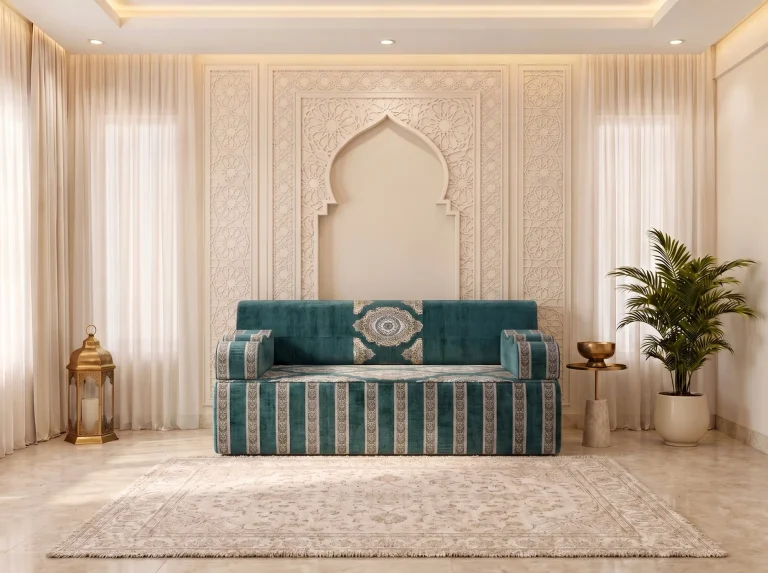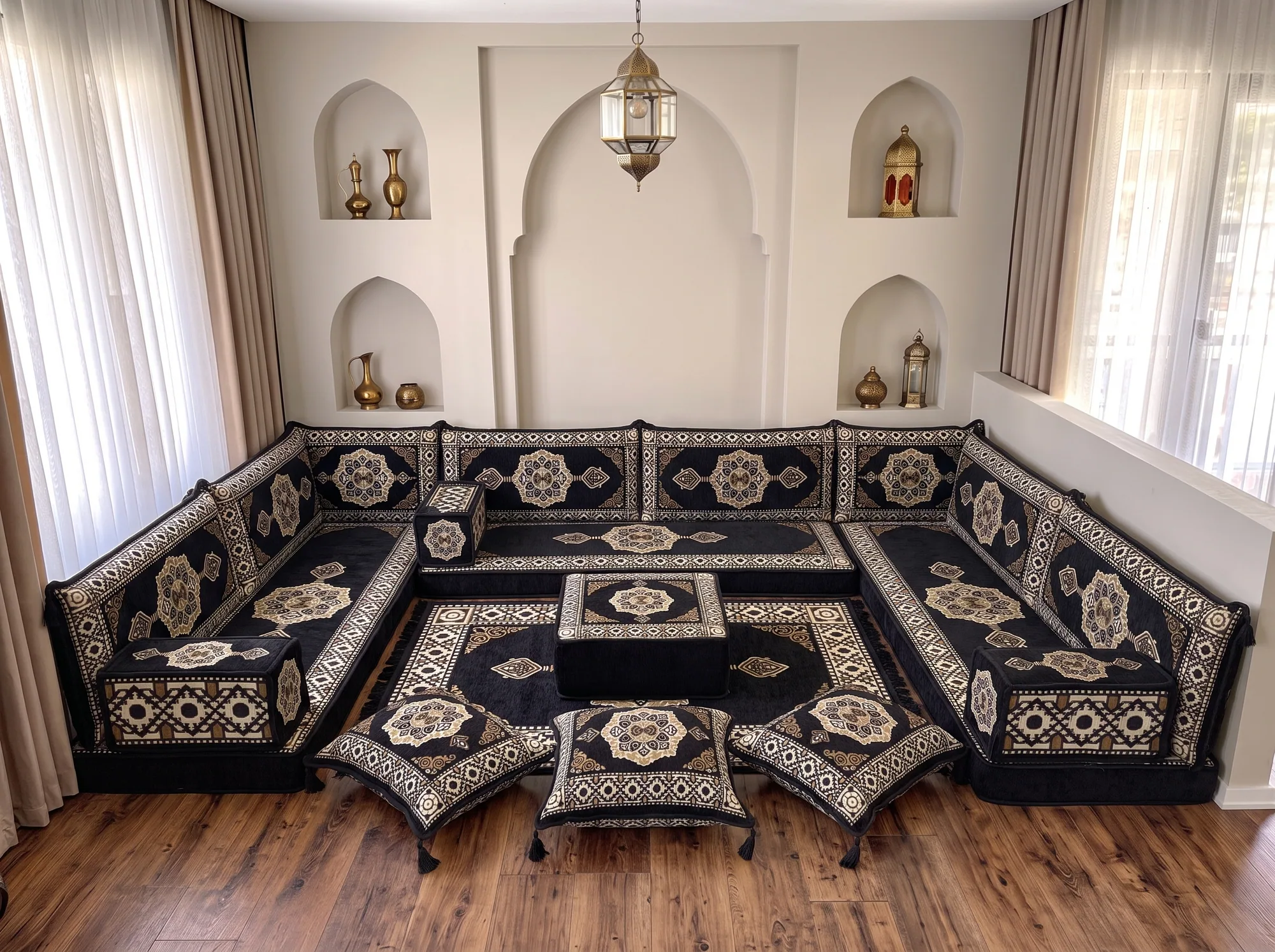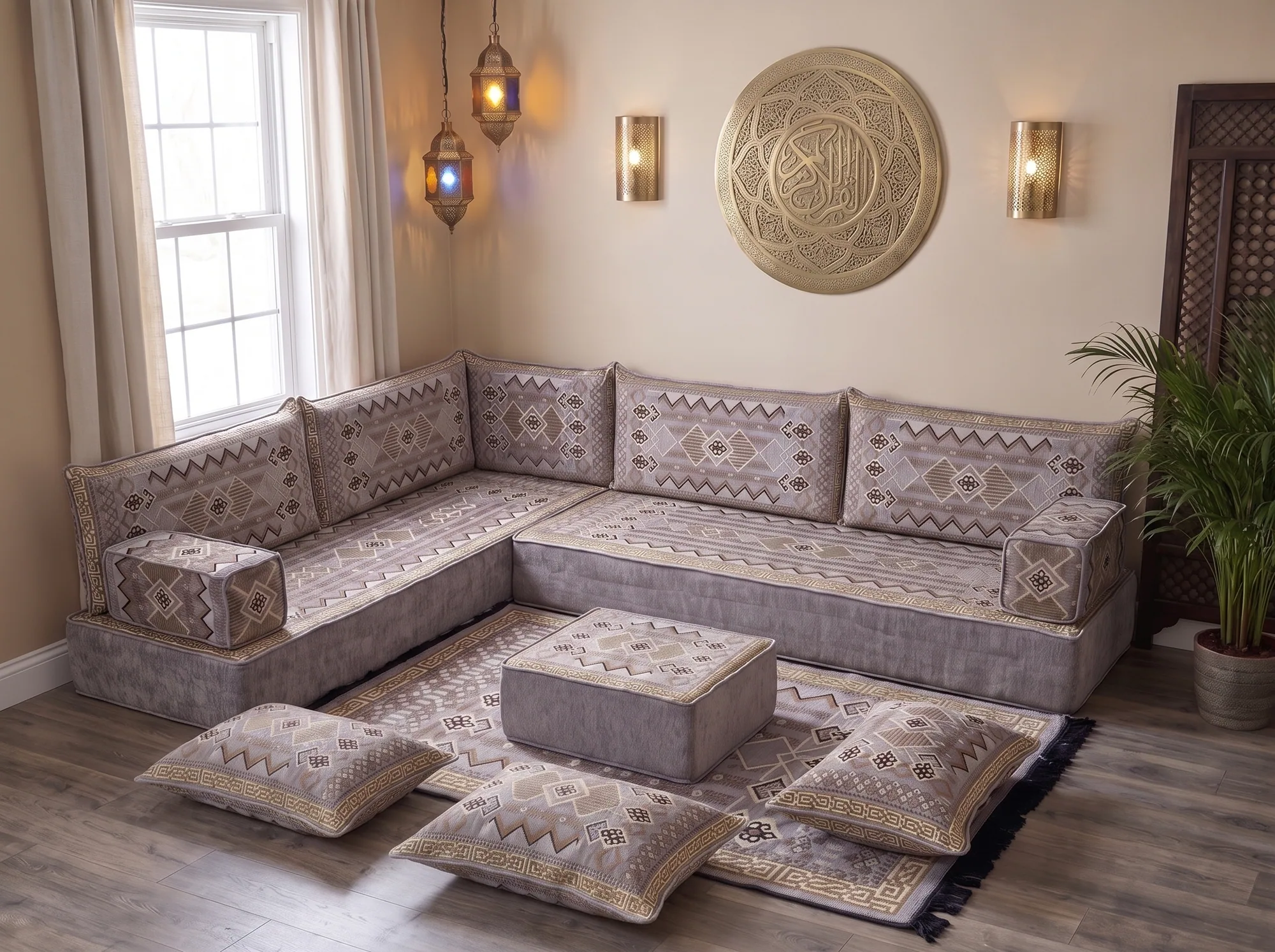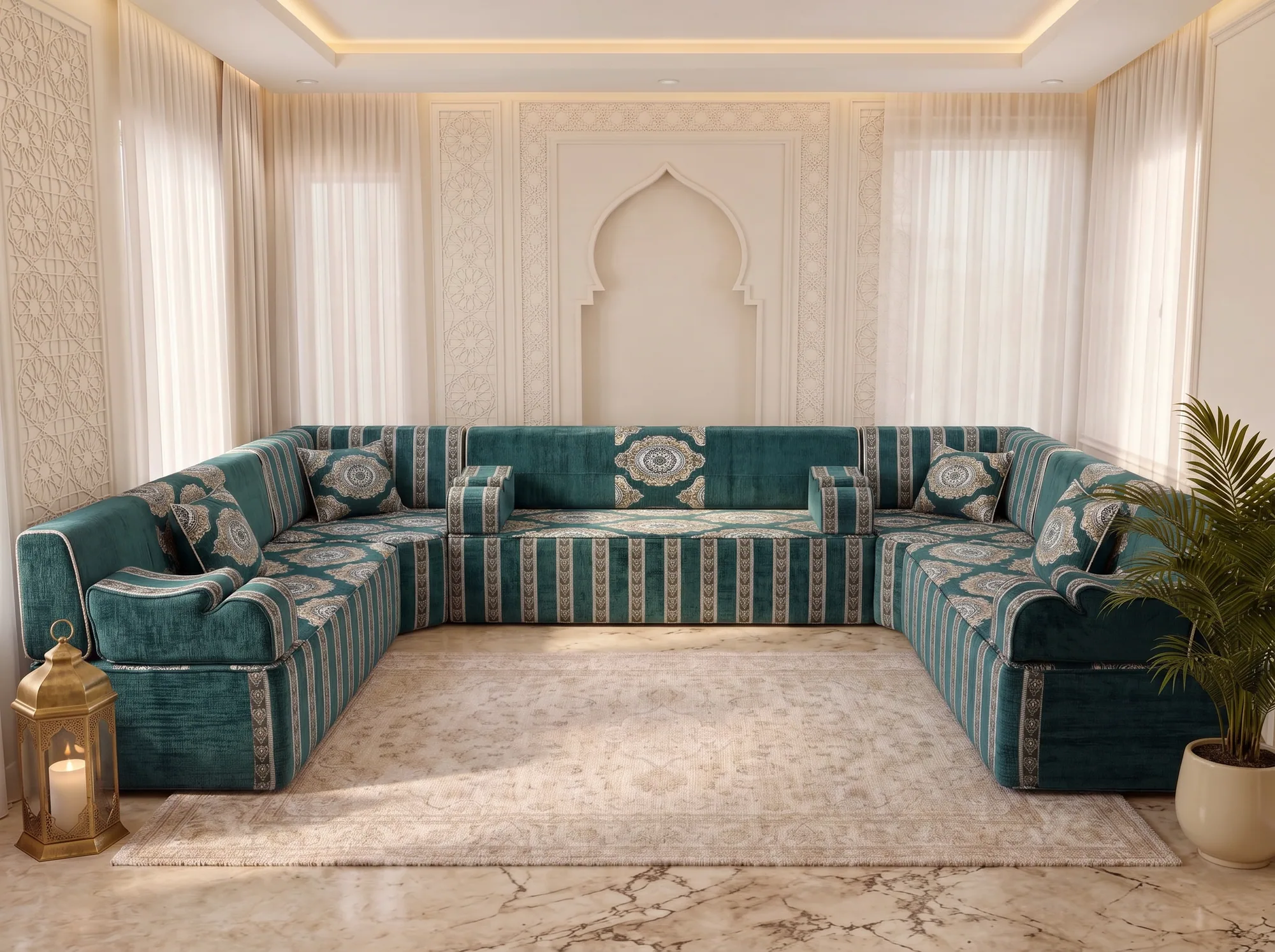
To import furniture to Australia you deal with two agencies: the Australian Border Force for the import declaration, duty and GST, and the Department of Agriculture for biosecurity. New Zealand splits the work the same way between Customs and MPI. Sofhu ships made-to-measure majlis sets and Arabic floor sofas free to both countries; ask how GST is handled and get a full materials list for the declaration.
- Australia, customs
- Australian Border Force (ABF)
- Australia, biosecurity
- Department of Agriculture, Fisheries and Forestry (DAFF)
- New Zealand, customs
- New Zealand Customs Service
- New Zealand, biosecurity
- Ministry for Primary Industries (MPI)
- Cushion filling
- 32 kg/m³ polyurethane foam, no springs
- Shipping
- Free worldwide from Sofhu
- Stink bug season
- 1 September 2026 to 30 April 2027 for certain sea cargo
On this page
Australia and New Zealand inspect what comes across their borders more closely than almost any other countries. The reason is biosecurity: both are islands with farming and native ecosystems to protect, and both treat timber, plant fibre and stowaway insects as serious risks. Anyone who wants to import furniture to Australia or New Zealand therefore answers two sets of questions. One is about tax. The other is about what the furniture is made of.
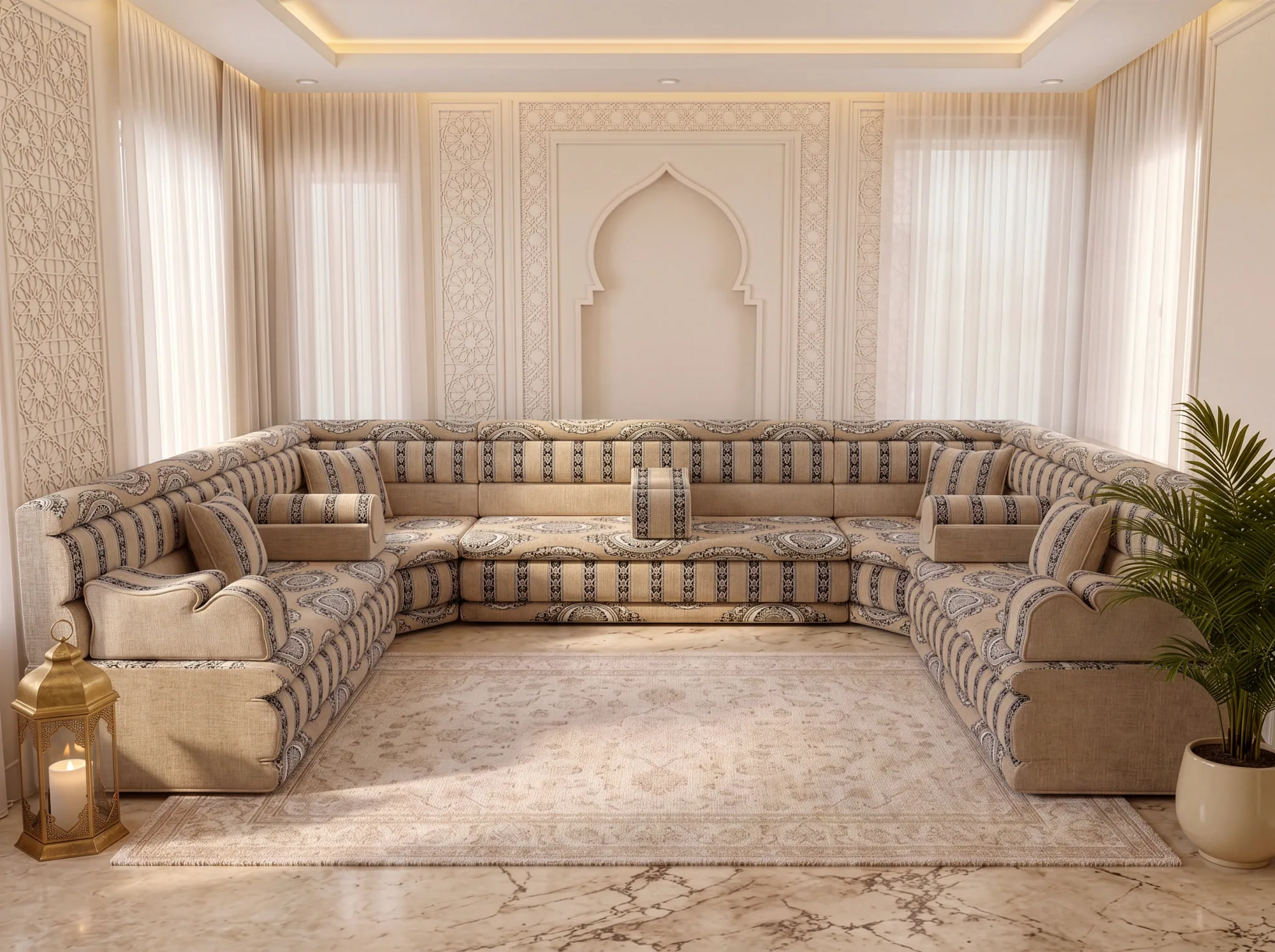
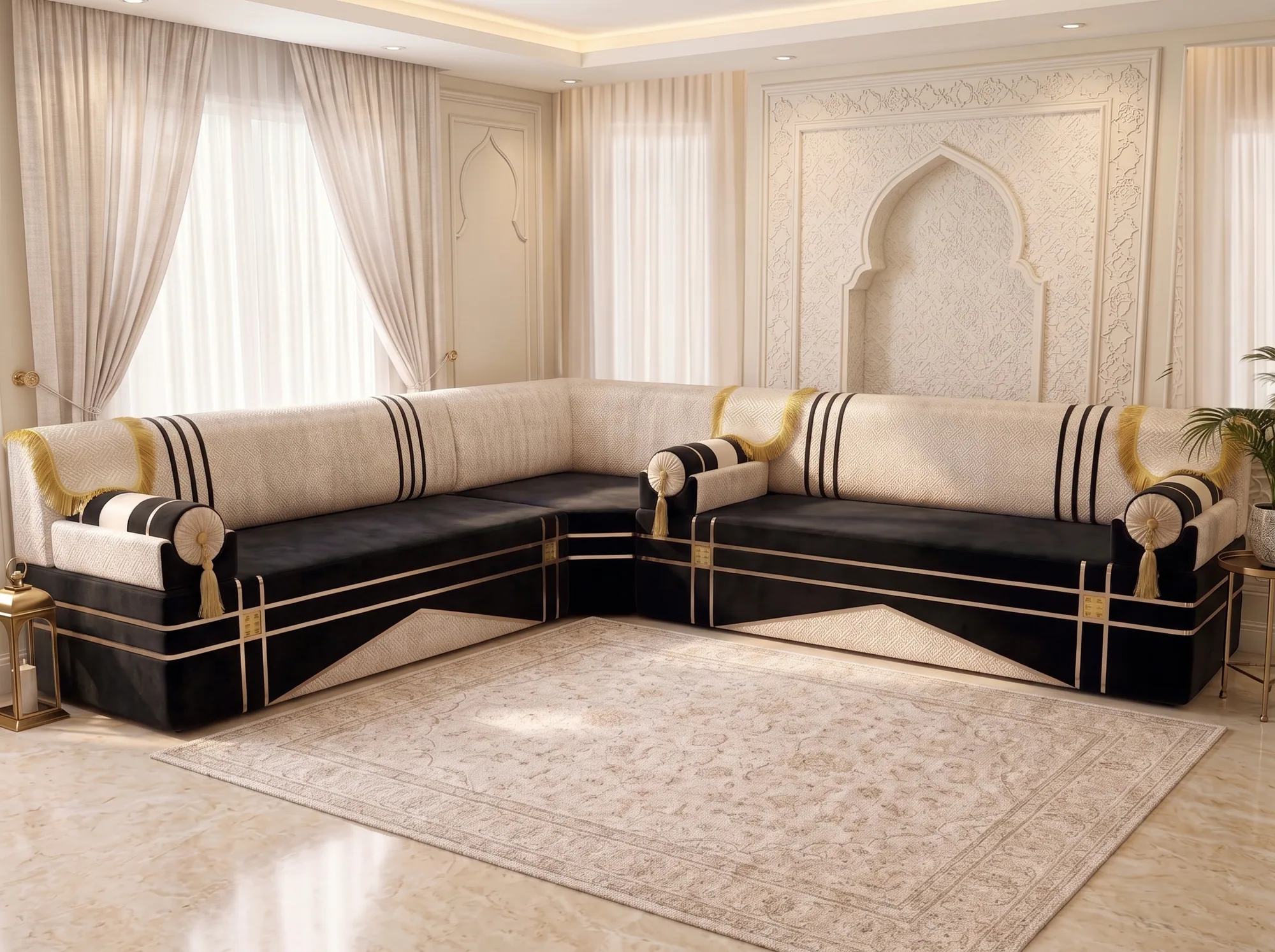
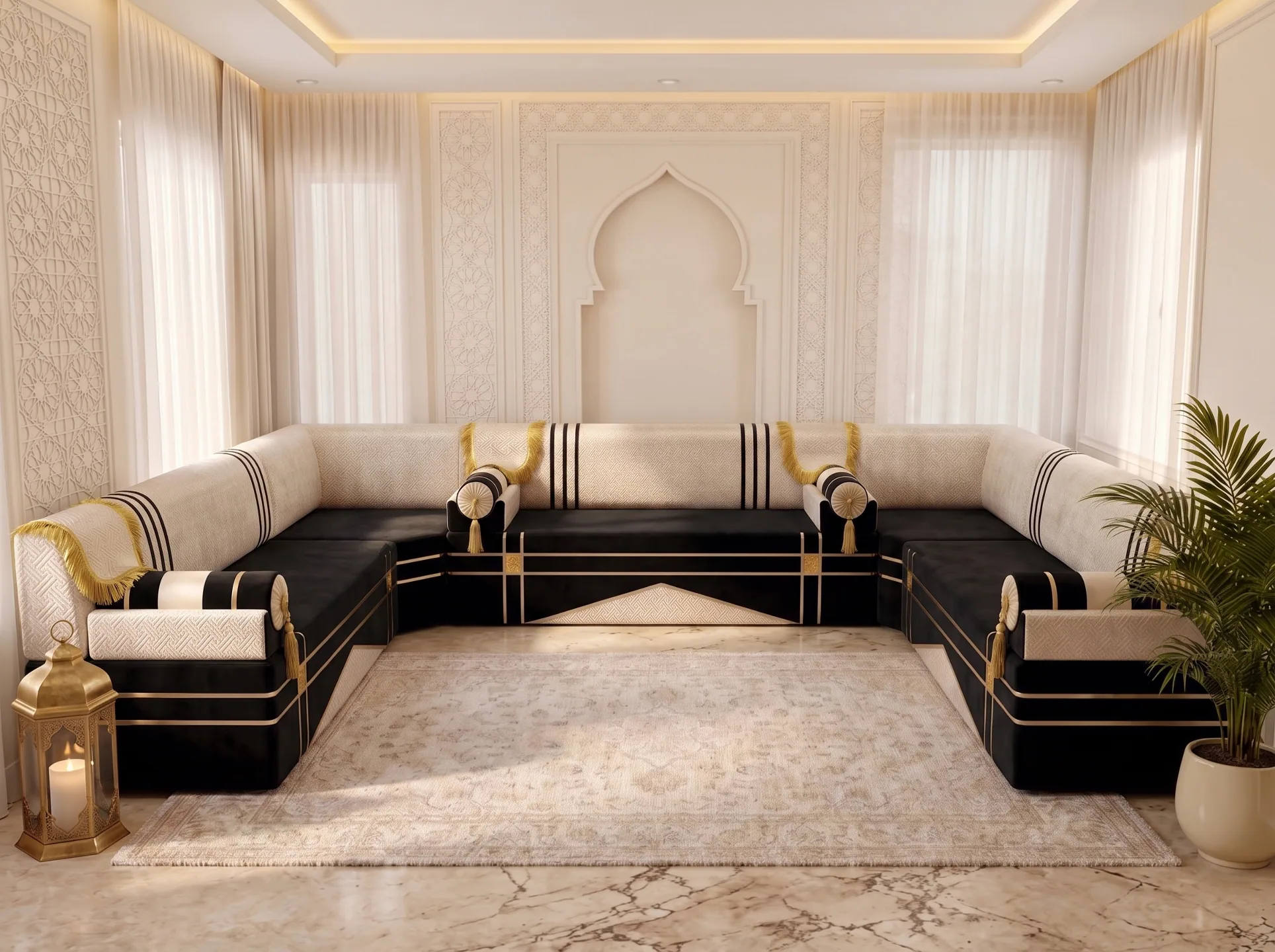
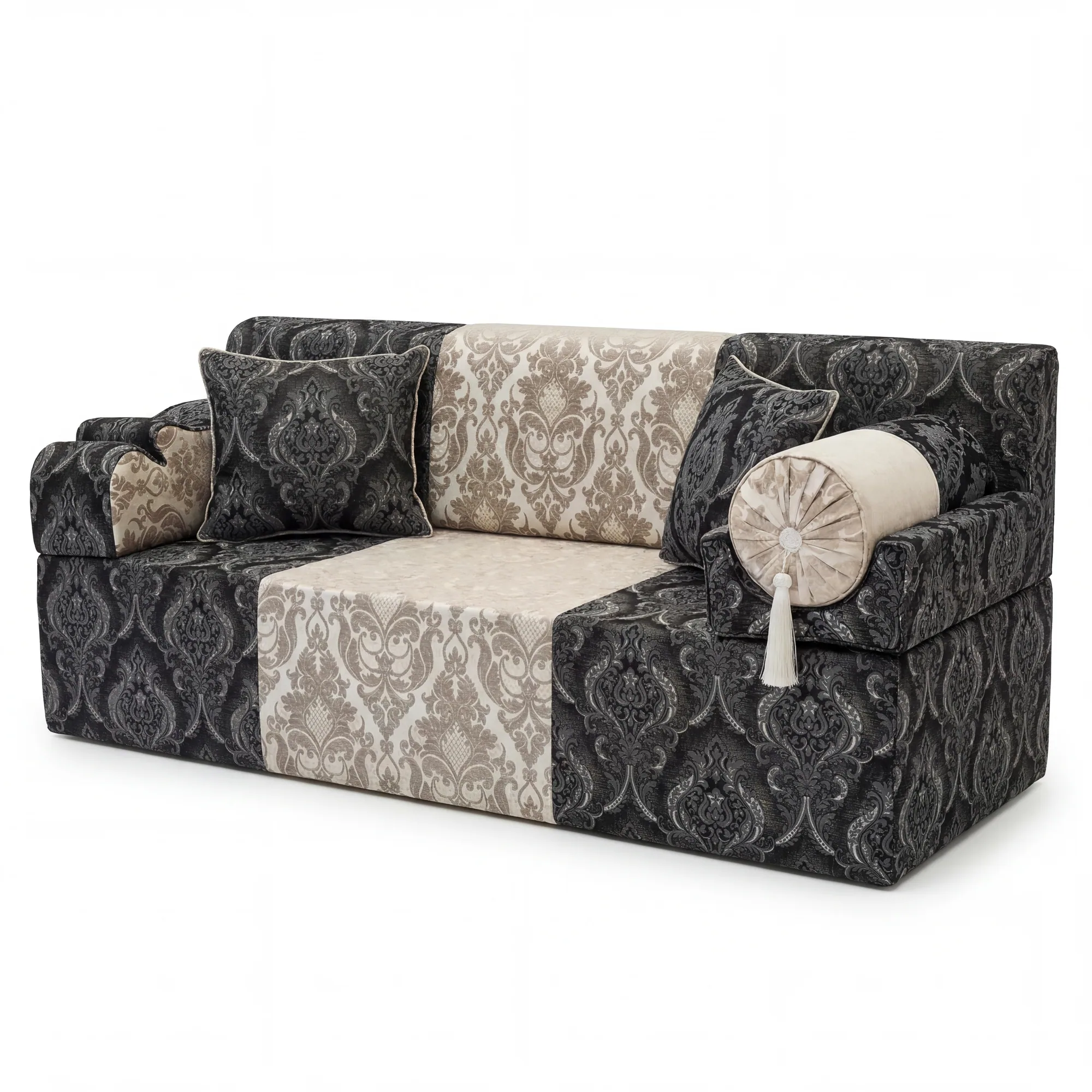
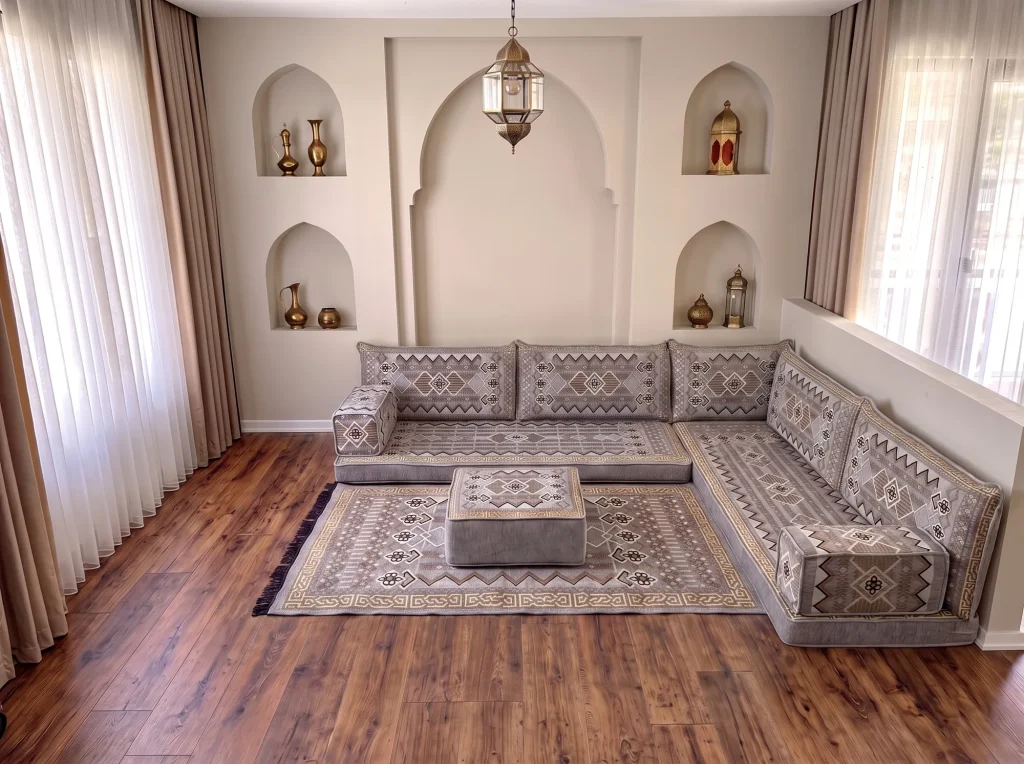
This guide takes the second set first, because it is the one buyers elsewhere never face. It describes official requirements as they stood in October 2026. Sofhu makes two products in Türkiye, to measure, and ships both free worldwide: the raised, fully upholstered Arabic majlis and the low Arabic floor sofa, a seat mattress with loose back cushions.
Biosecurity and furniture imports in Australia: what officers look for
The Department of Agriculture, Fisheries and Forestry assesses imported goods for biosecurity risk. For furniture the concerns are practical ones: timber that may hold borers, bark, straw or other plant material used as filling, feathers and untreated animal fibre, soil, seeds and live insects in the packaging.
The department publishes import conditions for each kind of goods in its online database, BICON. Search it by material. The conditions tell you whether a permit, a treatment certificate or an inspection on arrival is required.
How a Sofhu set breaks down by material:
| Part | Material, as stated by Sofhu | Biosecurity relevance |
|---|---|---|
| Seat and back cushions | Polyurethane foam, 32 kg/m³, no springs | Synthetic; low inherent risk |
| Covers | Velvet, chenille, linen and other woven fabrics | Depends on fibre; declare it |
| Frame, on wooden-base sets | Wood; solid beech on the Turkish majlis line | Timber conditions apply |
| Rug or kilim, if included | Varies by set | Natural fibres attract attention |
Two things follow from that table. A floor sofa made only of foam cushions and fabric covers is the simpler import. A set on a carved or panelled wooden base brings the timber rules with it, so ask Sofhu what treatment and documentation it can provide for the wood before you choose that style. A raised majlis stands on a solid upholstered base, so ask what that base is built from and list it too. The guide to foam, cotton and wool fillings explains why foam is the usual choice for seating that crosses borders.
Sofhu’s site does not publish fibre percentages for its fabrics. Ask for the composition of the exact fabric you pick, in writing, so the declaration is accurate. An accurate declaration is the buyer’s best protection. Goods that are misdescribed can be held, treated at the importer’s cost, re-exported or destroyed.
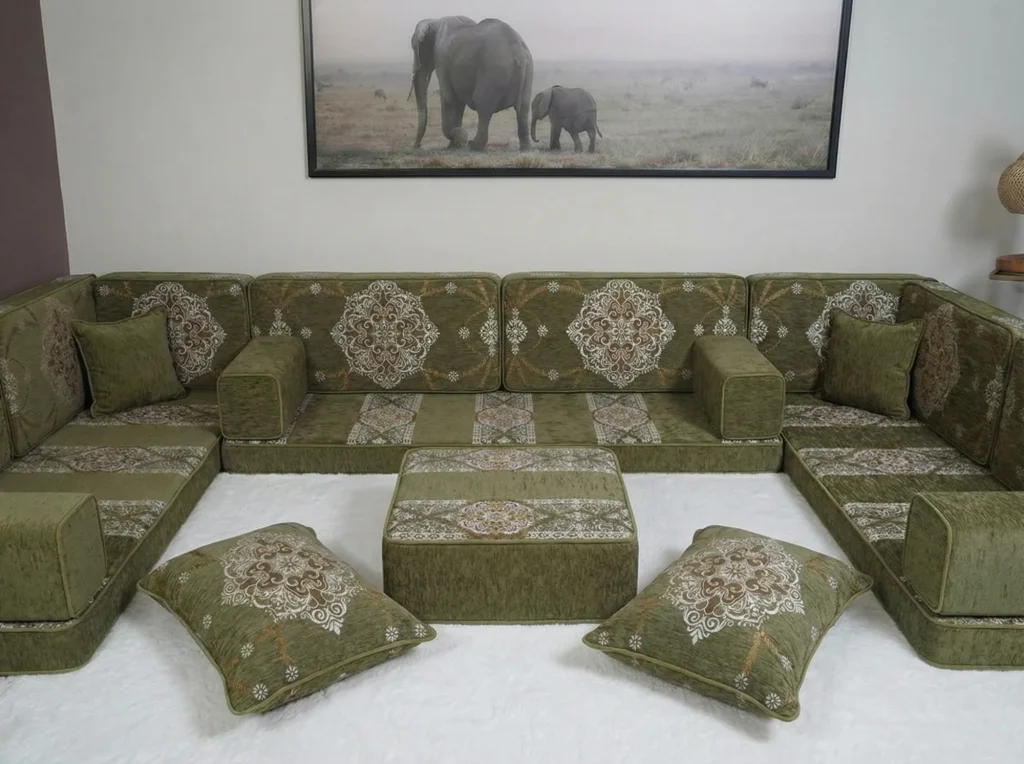
The stink bug season
Each year both countries apply seasonal measures against the brown marmorated stink bug, an insect that shelters in cargo over the northern winter. For the current season, Australia’s measures apply to certain goods shipped as sea cargo between 1 September 2026 and 30 April 2027 from a list of target risk countries. Türkiye has appeared on that list in recent seasons, and the department has said the list is unchanged for 2026 to 2027.
The measures are tied to tariff categories of goods and to the way they are shipped. Whether they touch a given furniture consignment depends on its classification and on whether it travels by sea or by air. Sofhu does not publish which mode it uses for Australasia. Ask, and if the answer is sea freight during the season, ask whether treatment before shipping is needed and who arranges it.
Furniture import duty in Australia, GST and the declaration
The Australian Border Force handles the revenue side. Its guidance for people buying from overseas sets a value threshold of one thousand Australian dollars. Above it, the consignment needs an import declaration, and duty, GST and an import processing charge are assessed before release. A full-room majlis will normally be above that line. Check your invoice value to be sure.
The pieces of the calculation:
- Customs duty is set by the tariff classification of the goods and their origin. Furniture and cushions sit in Chapter 94 of the tariff.
- GST is calculated on a value that includes the goods, the duty and the cost of transport and insurance to Australia.
- Processing charges are payable on the declaration itself.
A licensed customs broker can lodge the declaration for you, and carriers usually offer this through their own brokerage. No rates are given here. They are published by the ABF and can change.
Sofhu confirms free shipping. It does not state on its website whether GST and duty are built into a quote or left for the buyer to settle on arrival. Put that question in your first message.
Importing furniture to New Zealand
The structure across the Tasman is the same, with different names. The New Zealand Customs Service assesses duty and GST. The Ministry for Primary Industries is the biosecurity authority, and it also runs seasonal stink bug measures.
Three points for New Zealand buyers:
- Use the customs service’s What’s My Duty estimator for an early indication of charges. It is a guide, not an assessment.
- Look up MPI’s import health standards for wooden items and for any natural-fibre rug in your set.
- Give your full address, including the island and any rural delivery number, when you ask for a quote.
Sofhu’s page for Arabic sofas in New Zealand covers models and styles.
Delivery, climate and fabric
A floor sofa in Australia arrives the way it does anywhere: vacuum-packed in sealed bags, as separate seat cushions, back cushions and armrests. The pieces are easy to carry into a unit, a townhouse or a house on a large block. Ask how the units of a raised majlis are packed for your order. Both products stand against a wall, and a floor sofa is not freestanding, so have that wall cleared. The full unpacking sequence is in how a majlis is packed and delivered.
Climate matters more here than in most markets. In Queensland, the Top End and the humid north of New Zealand, a breathable cover is the more comfortable choice. Sofhu describes its linen as absorbent and porous, with a cooling effect in hot weather. Velvet and chenille suit cooler rooms in Melbourne, Canberra, Hobart or the South Island. The guide to velvet, linen and jacquard compares them. For verandas and covered decks, see the outdoor majlis page. Sofhu’s outdoor fabrics are described as water-resistant and able to handle light rain, which is not the same as being left out in a tropical downpour.
Arabic sofa delivery in Australia reaches the buyer’s address directly. Sofhu has no shop or depot in either country. The existing page on Arabic sofas in Australia shows the range.
What to send for a quote
Put the following in one message through the quote form or on WhatsApp:
- Wall lengths, with a photo of each wall
- Layout and fabric preferences
- Full delivery address and postcode
- A request for the materials list: foam, fabric fibre, any wood, any rug
- The questions: sea or air, how GST and duty are handled, and what treatment documents come with wooden parts
To prepare, read how to order a custom majlis online, then how to buy a majlis and what a custom majlis can include. The Arabic furniture store page explains how Sofhu sells direct as the manufacturer.