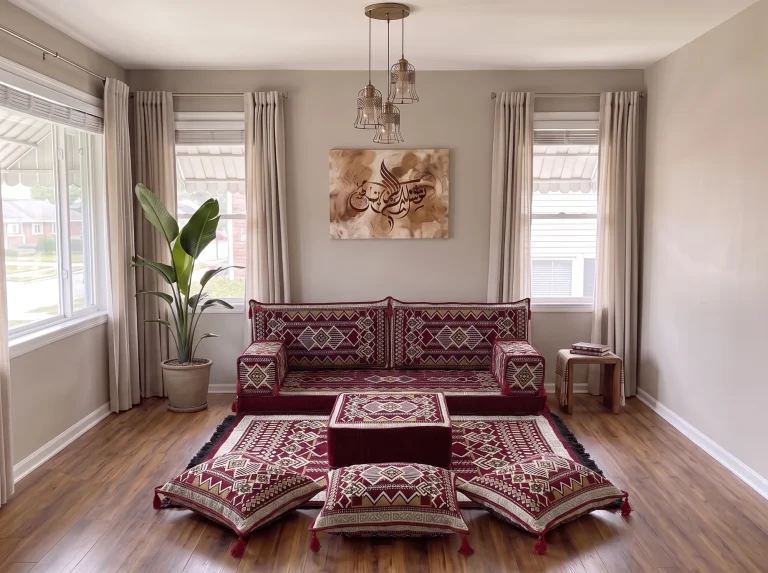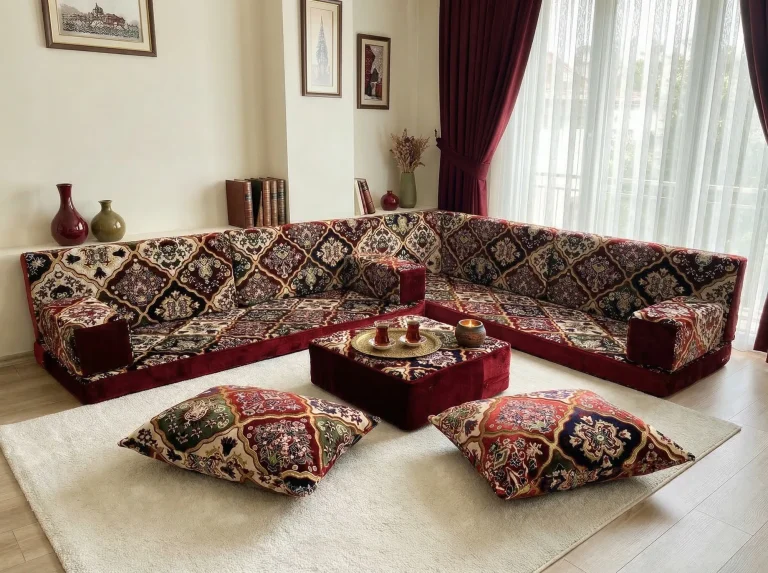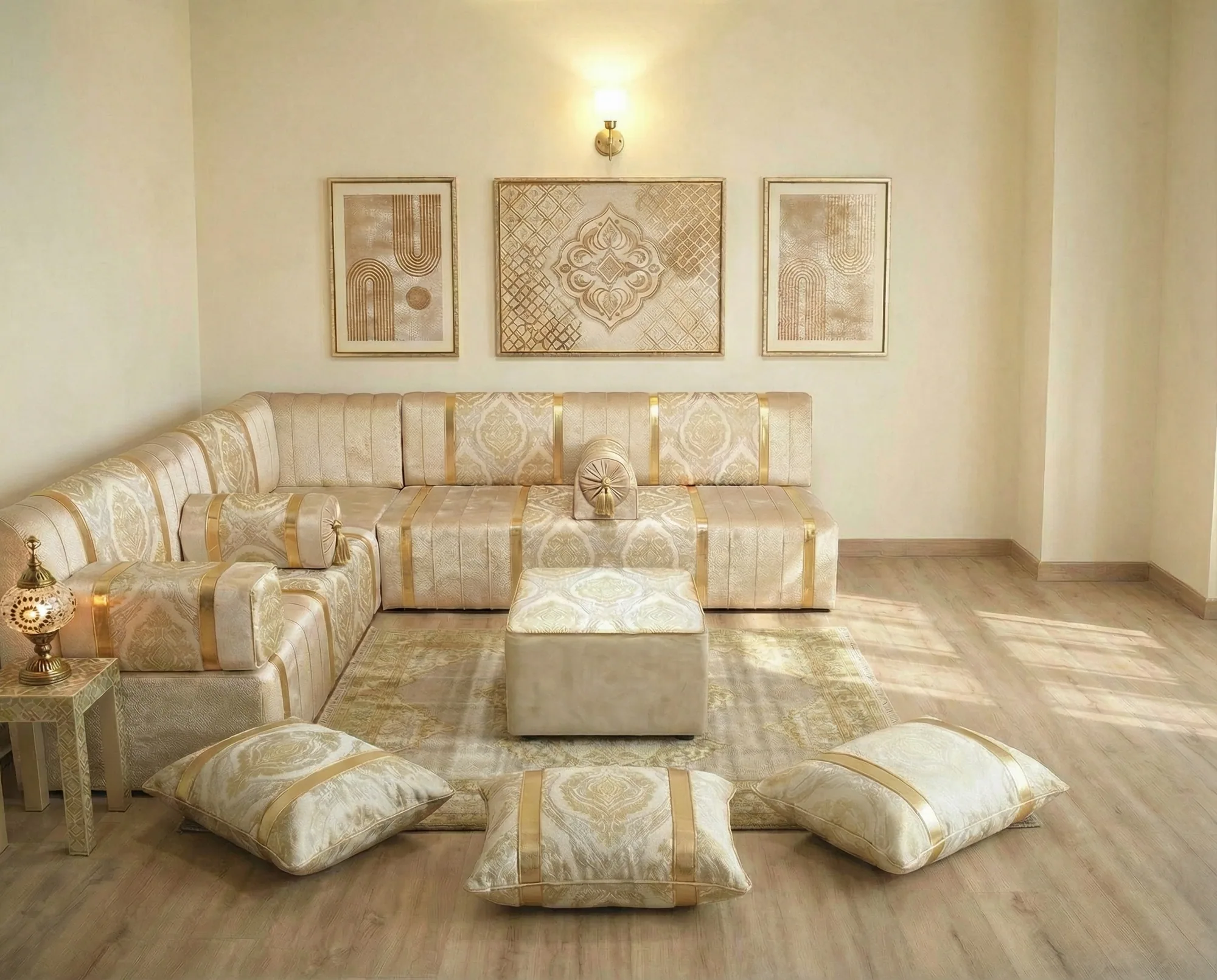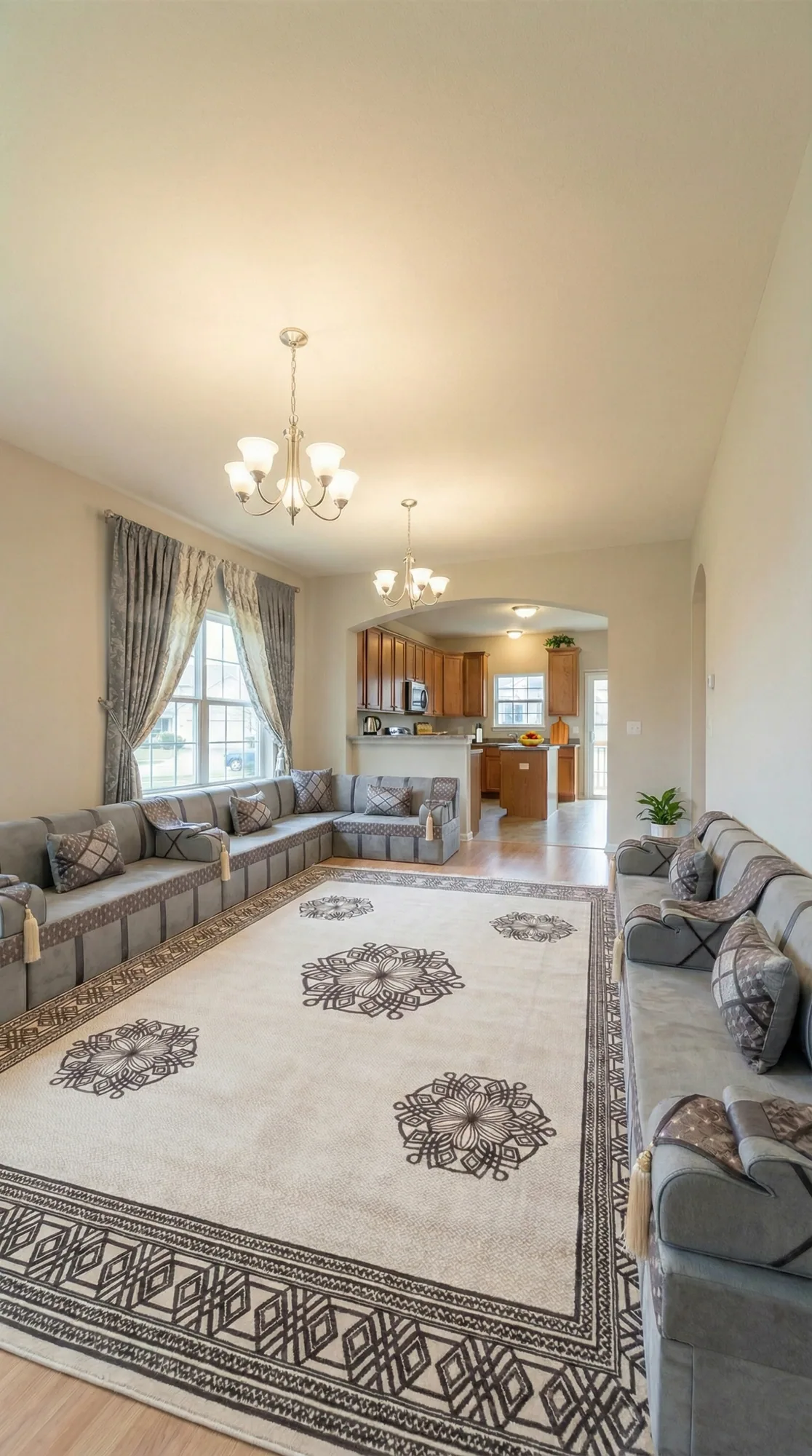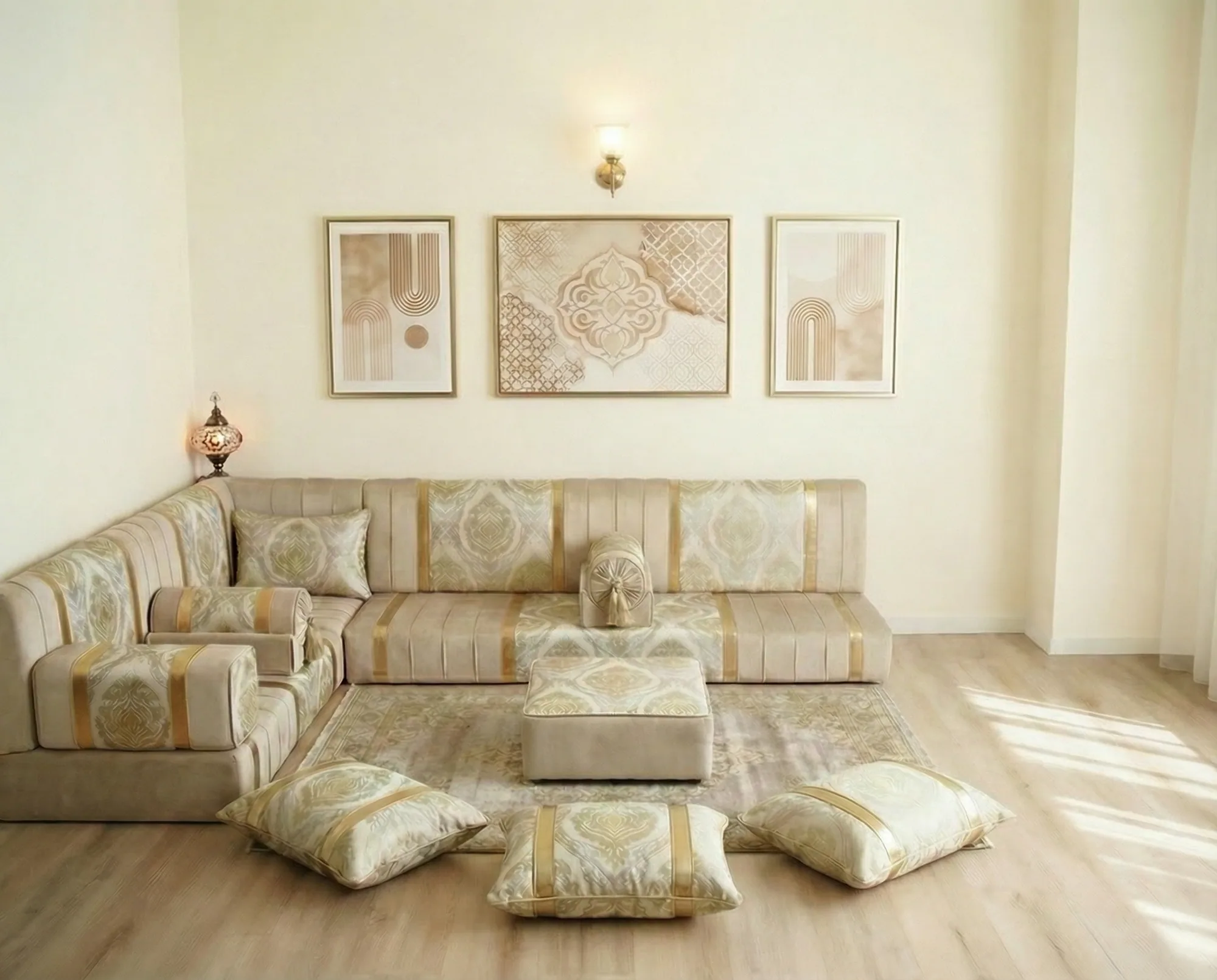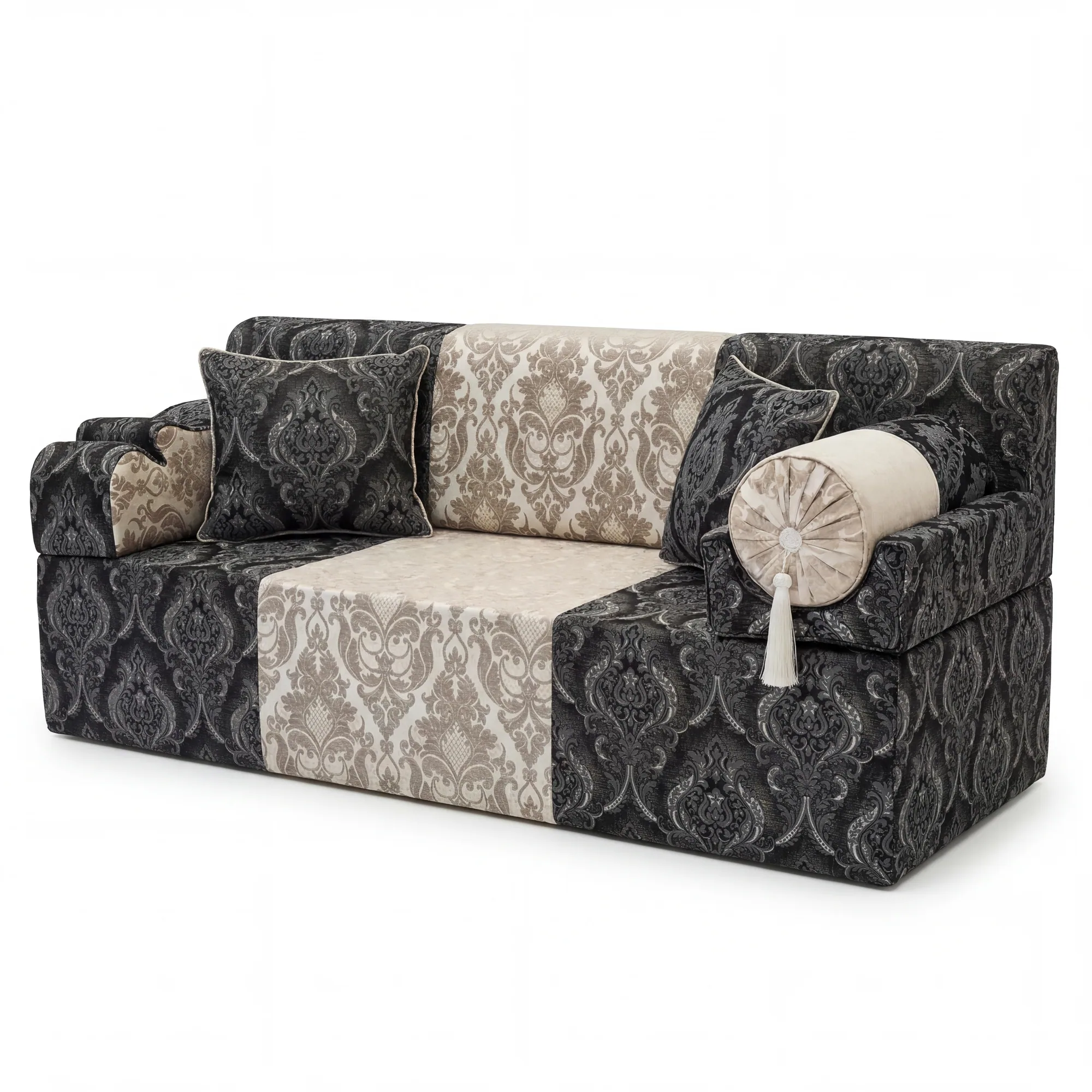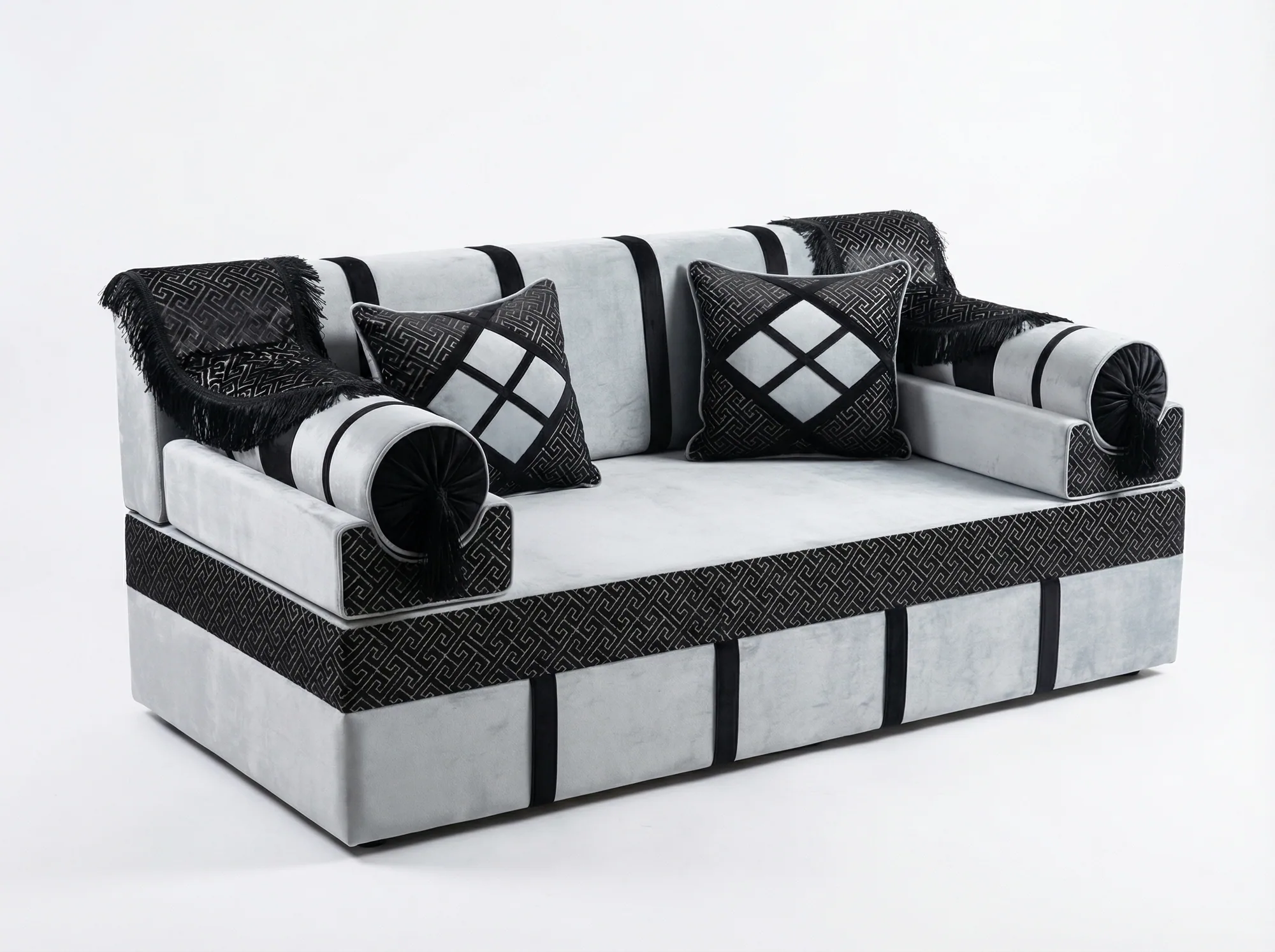
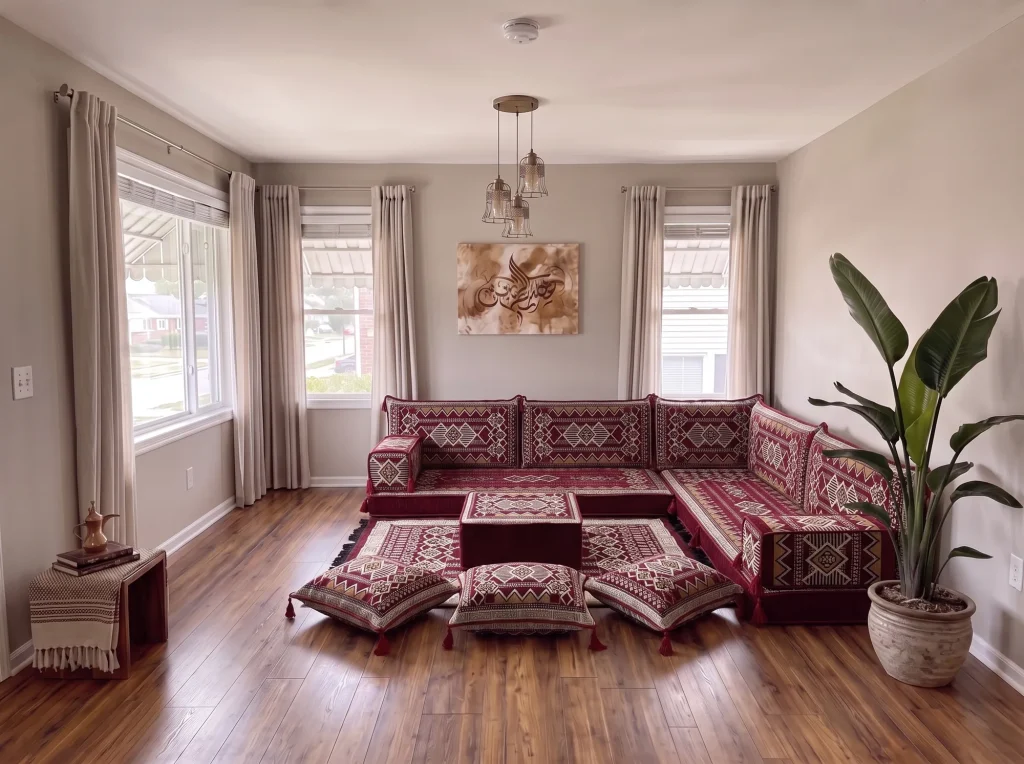
In Egypt, Arabic seating is usually called a qa'da arabi: low floor seating for a corner of the reception, a roof terrace, a coastal chalet or a café. Sofhu makes the floor sofa that suits it, and the raised Arabic majlis for a formal reception, in Türkiye to your measurements, with 32 kg/m³ foam, and ships free. Ask about delivery and customs handling for Egypt before you order.
- Local name
- Qa'da arabi (قعدة عربي)
- Common places
- Reception corner, roof, chalet, café
- Made in
- Türkiye, by Sofhu, the manufacturer
- Foam
- 32 kg/m³ (32 DNS), no springs
- Shipping
- Free; confirm delivery and customs for Egypt
- Covers
- Zippered, washable at 30°C
On this page
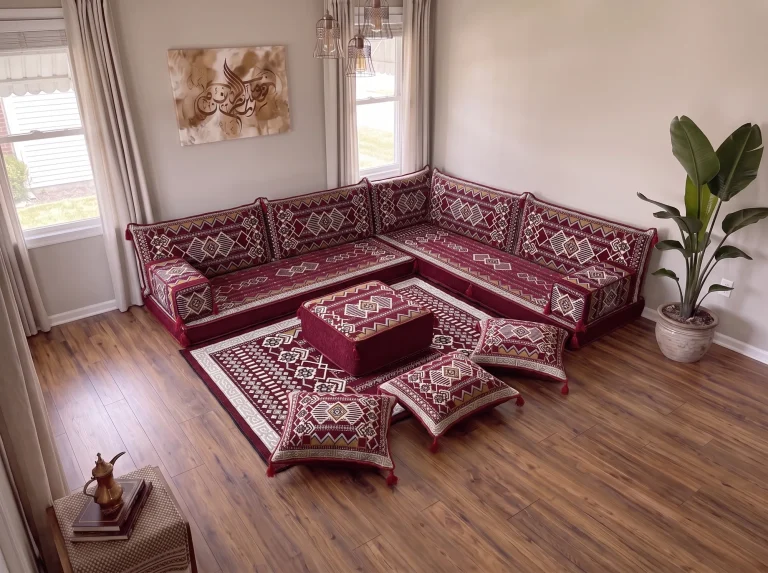
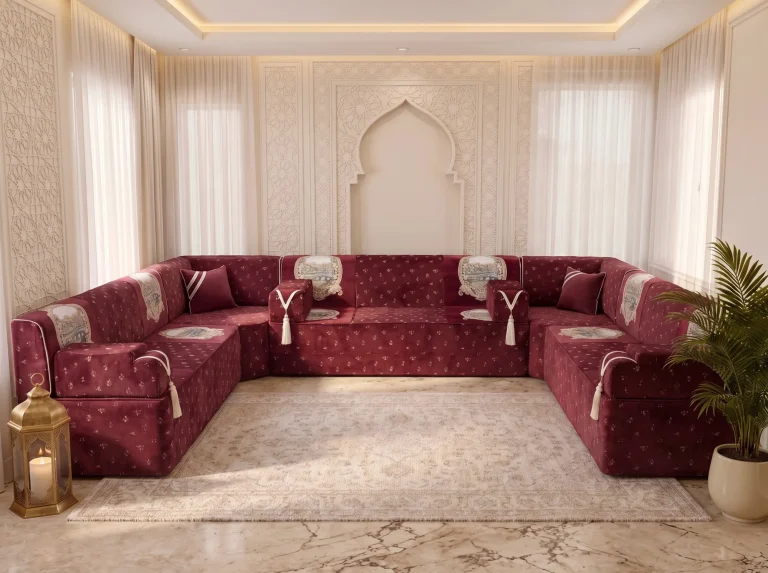
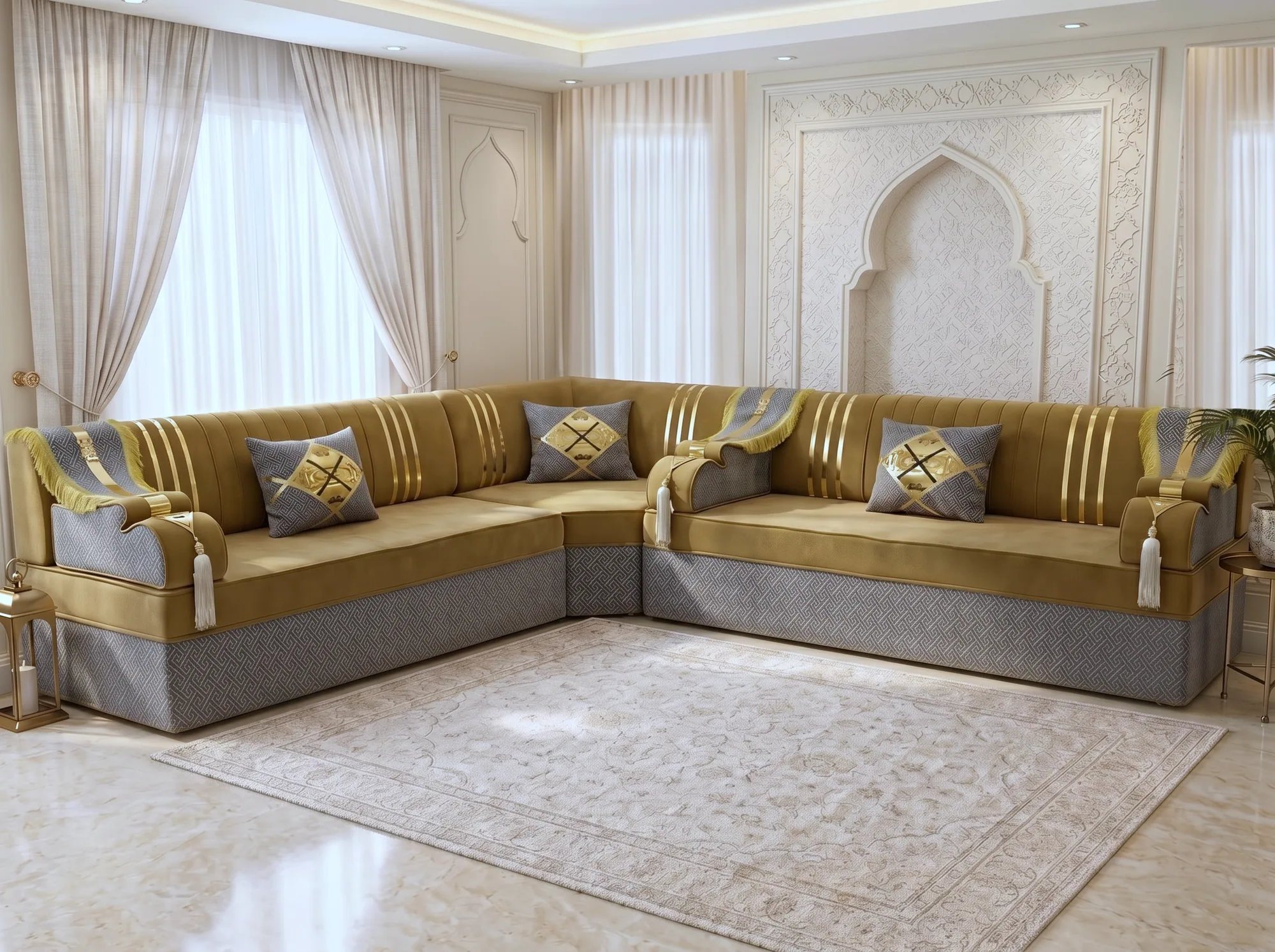
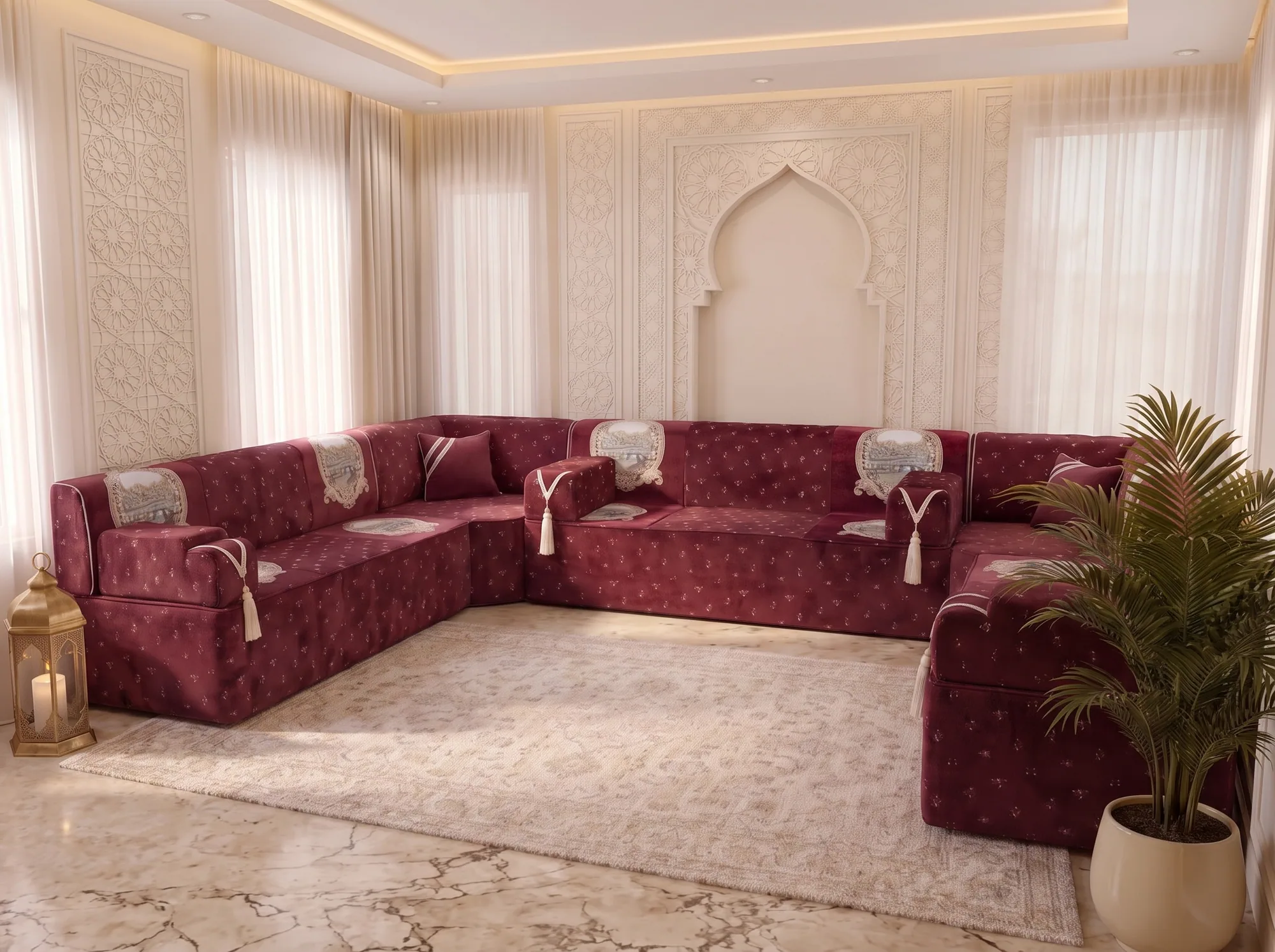
Egyptians rarely say majlis. The word in the furniture shop and on the phone is qa’da arabi (قعدة عربي), the Arabic sitting: low mattresses along the wall, back cushions, armrests, a tray table in the middle. Many people searching for an Arabic majlis in Egypt are looking for that, and in Sofhu’s range it is the Arabic floor sofa. The Arabic majlis itself is a different product: raised, sofa-height upholstered units with fixed backs and arm bolsters, like the burgundy velvet U at the top of this page, and it suits a formal reception. Sofhu makes both to measure in Türkiye, from the wall lengths you send, and ships free. Read the delivery section before you plan a date, because customs handling for Egypt has to be confirmed order by order.
Where a qa’da arabi goes in an Egyptian home
Often not in the main salon. Where the formal reception keeps its European suite, the qa’da arabi usually takes one of four places:
- A corner of the reception, where the family actually sits in the evening.
- The roof terrace, for tea, shisha and summer nights.
- A chalet or holiday flat on the North Coast or the Red Sea.
- A café or restaurant, where the Arabic corner is the table people ask for.
Each of these is a different size and a different exposure to sun and damp, which is why a set built to the space works better than a fixed one.
From the mandara to the modern qa’da
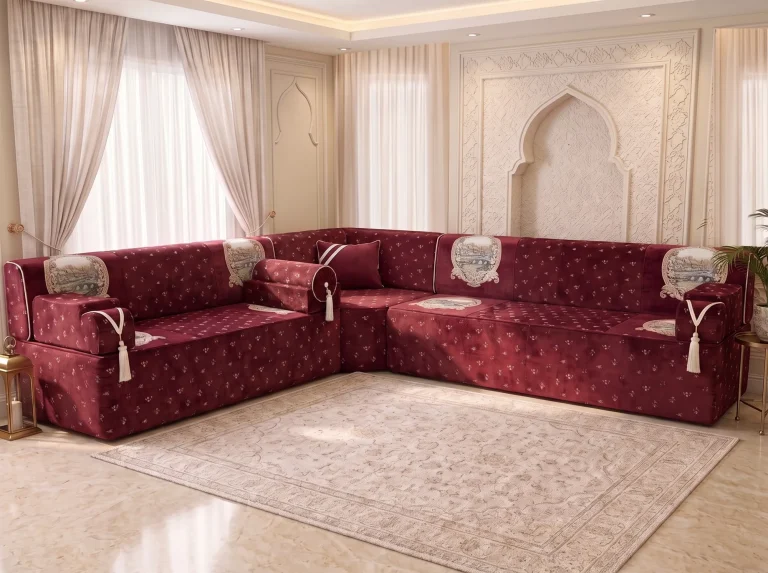
The idea is old in Egypt. In the traditional house the mandara was the ground-floor room where the householder received male visitors, and in the grand houses of Cairo the equivalent hall was the qa’a. A nineteenth-century description has a raised dais running round three walls, covered with rugs or mattresses, on which guests reclined. That is a U-shape, the same plan a full majlis follows today, whether it is built as a floor sofa or as raised units like the burgundy velvet set below.
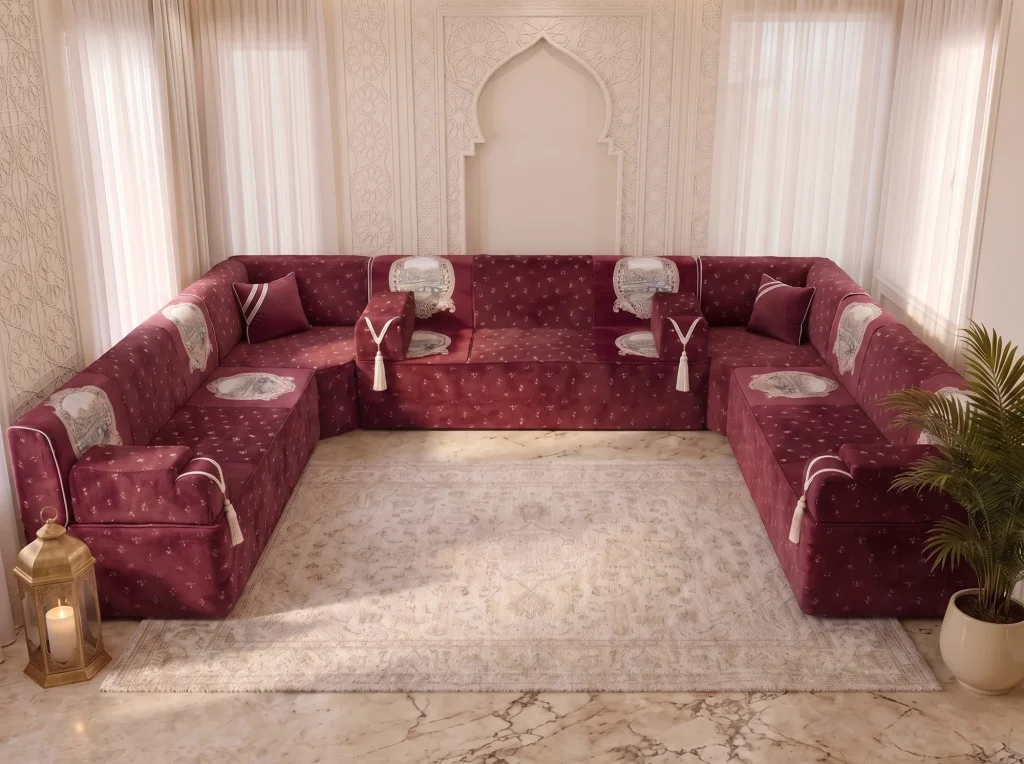
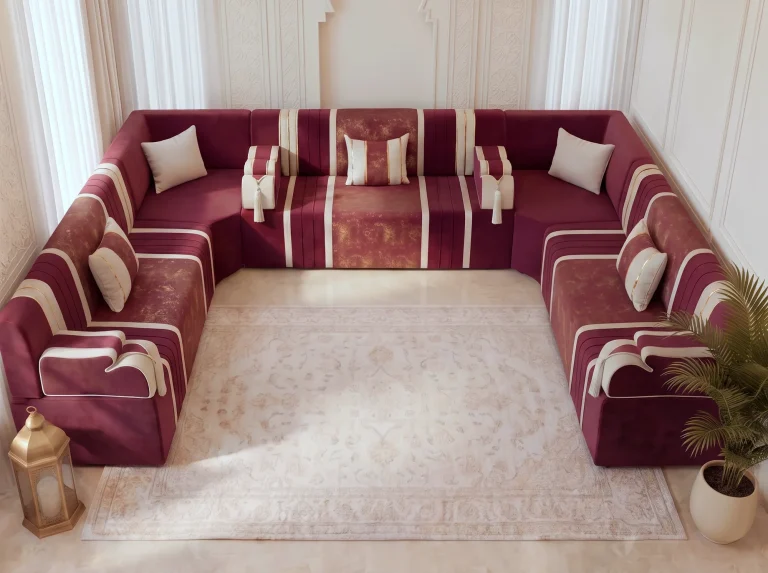
The page on Egyptian Arabic seating follows this history in detail. For practical purposes it means the layouts are familiar: a U for a room given over to guests, an L for a corner, a single row under a window.
Bedouin style in Sinai and Siwa
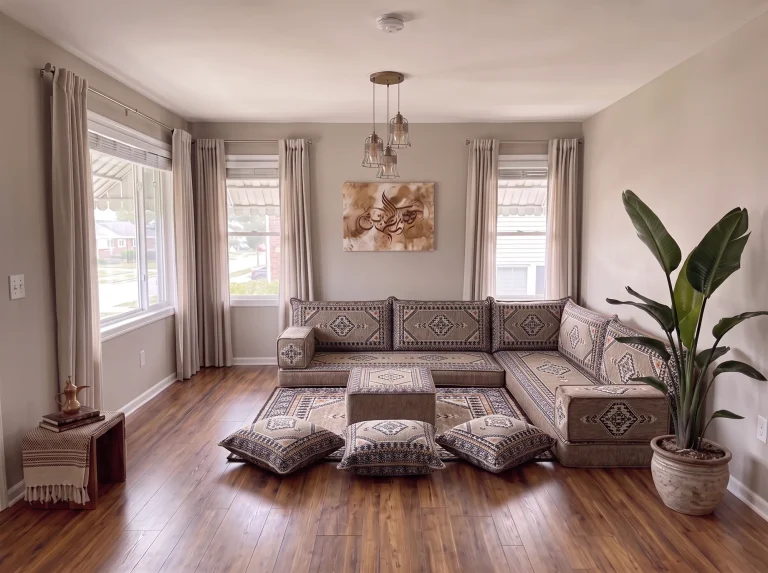
In Sinai and in Siwa, floor seating is a familiar sight in camps, lodges and guest rooms, and in Siwa the men’s guest room is called the marbu’a. In retail terms Bedouin style means sadu-pattern cloth: narrow woven bands of triangles and diamonds on red, black, white or cream.
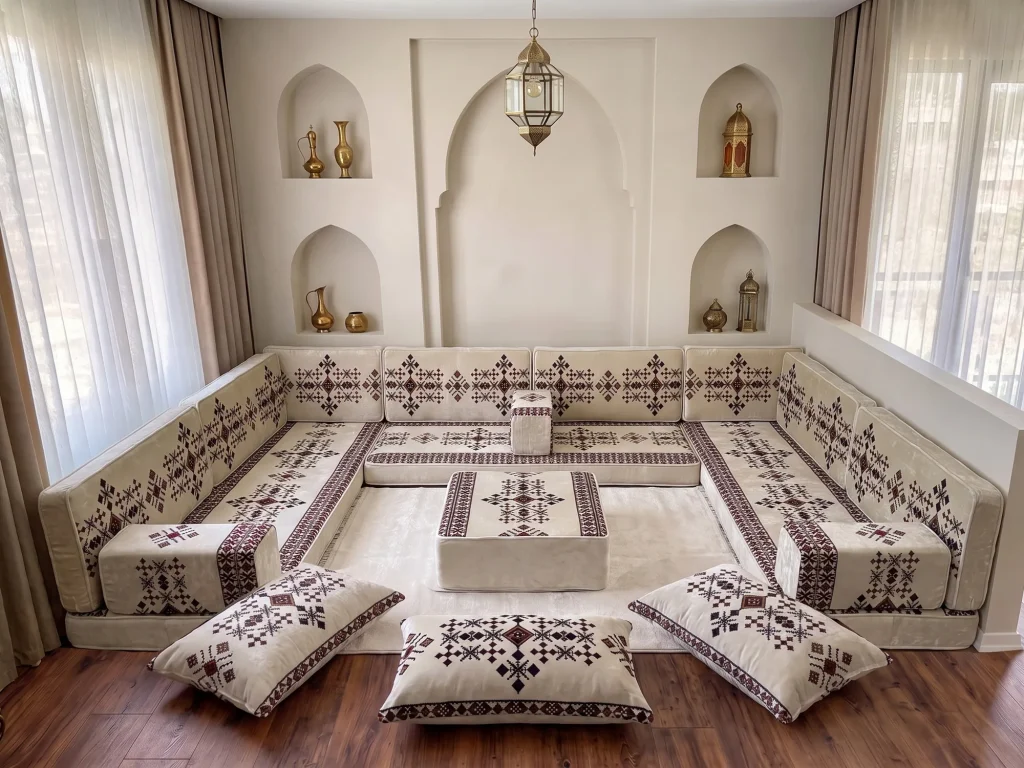
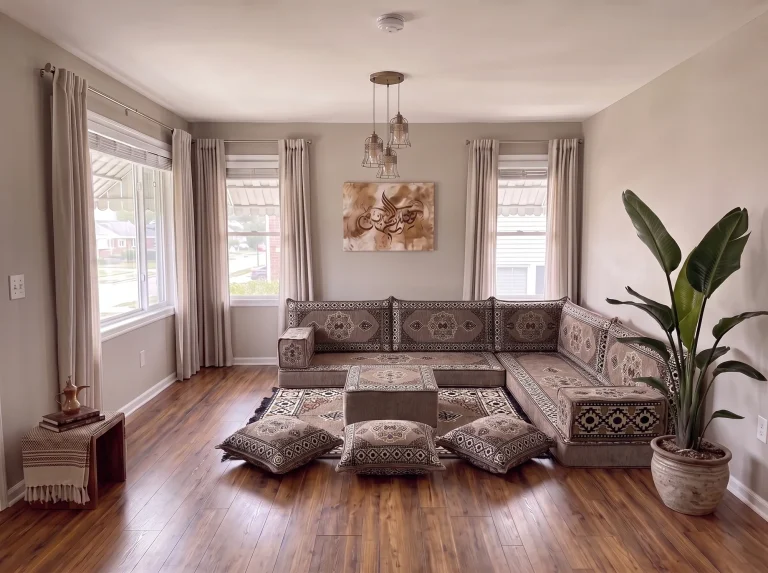
Sofhu makes floor sofas in sadu-pattern fabrics like the cream and burgundy one above. Lodge and camp owners should read Bedouin majlis and sadu weaving and send the dimensions of each tent or room.
Fabric for dry heat inland and humidity on the coast
Egypt is hot and dry inland and more humid along the Mediterranean coast. One fabric does not suit all of it.
| Where | Main problem | Sensible choice |
|---|---|---|
| Cairo, the Delta, Upper Egypt | Dust and dry heat | Tightly woven or chenille cover, mid tone, washed often |
| North Coast and Alexandria | Sea humidity | Breathable linen or woven cover, removed and dried off-season |
| Red Sea and Sinai | Sun, sand, outdoor use | Outdoor-grade fabric under shade |
| Roofs anywhere | Sun and dust | Outdoor-grade fabric; bring cushions in when not in use |
Sofhu describes its linen as moisture-absorbing and fresh in hot weather, and its outdoor fabrics as water-resistant, with spills that wipe away. Those are the company’s descriptions, not test ratings. All covers have zips and, Sofhu states, wash in a machine at 30°C. See the outdoor majlis page and Sofhu’s outdoor sofas and mats for the range, and balcony, patio and rooftop ideas for layouts.
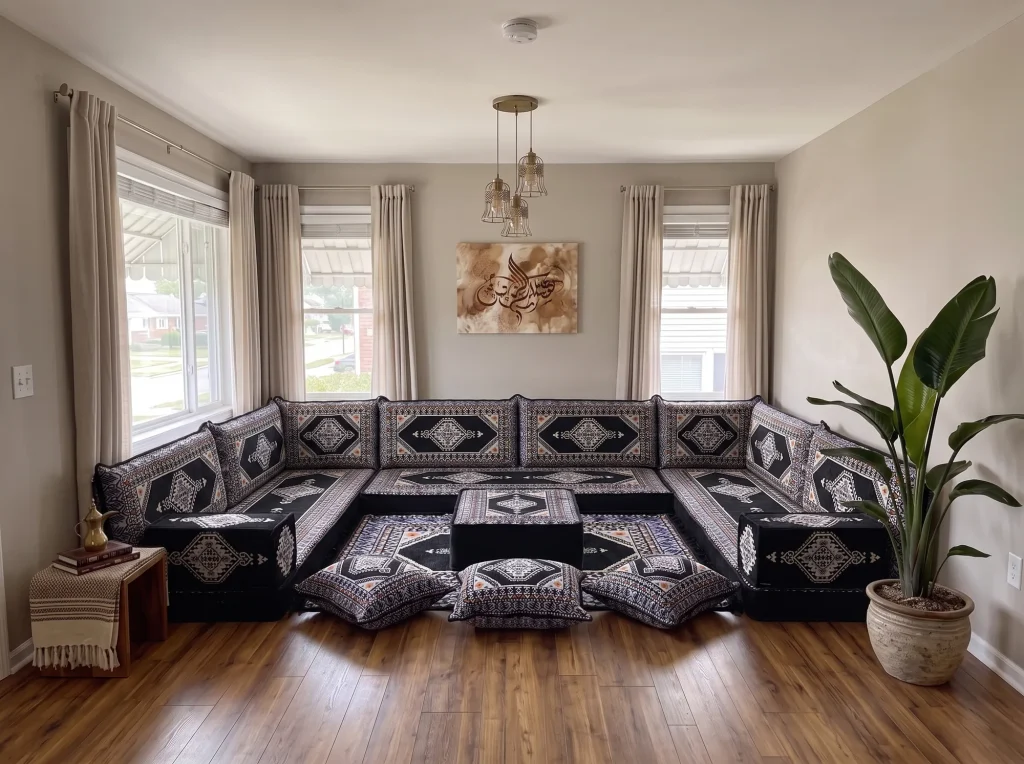
What the cushions are made of
The seats are 32 DNS polyurethane foam: 32 kg per cubic metre, no springs. Density says how much material is in the cushion, not how hard it is, and denser foam generally holds its height and support longer than light foam. On a custom order you can ask for a softer or firmer seat, and for a thicker one if you prefer to sit higher.
Arabic sofa set delivery to Egypt
Sofhu ships free worldwide and packs sets vacuum-sealed, so the cushions arrive compressed and recover once the bags are opened. For Egypt, treat that as the starting point and not the whole answer. How import and customs are handled, and whether duties or taxes apply, must be confirmed with Sofhu for your order before any money changes hands. This page does not state rates or who pays them.
The practical route:
- Measure the space and photograph it.
- Send both through the quote form or WhatsApp, with your city.
- Ask directly how delivery and customs would work for your address.
- Agree layout and fabric with Sofhu’s designers, by video call if you like.
The guide on how to order a custom majlis online walks through each step. Businesses can use Sofhu’s wholesale page and its page on majlis seating for cafés.
Cairo, Alexandria and reading in Arabic
City pages go further into local rooms: Cairo for reception corners, roofs and compound villas, and Alexandria for summer flats and the North Coast. Arabic readers will find the same subject, written for Egyptian buyers, on قعدة عربي.