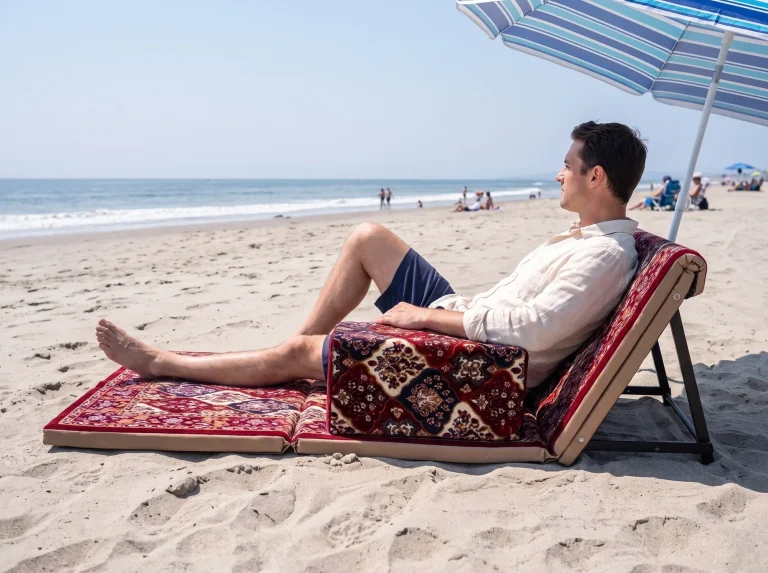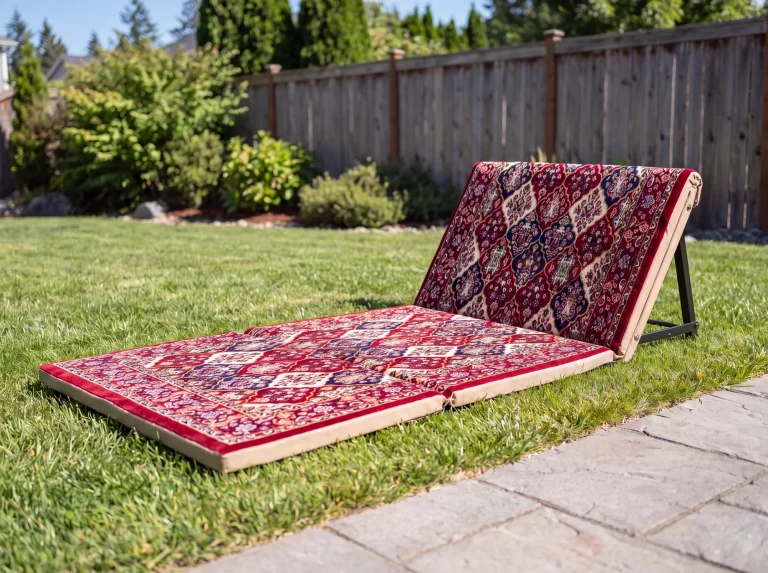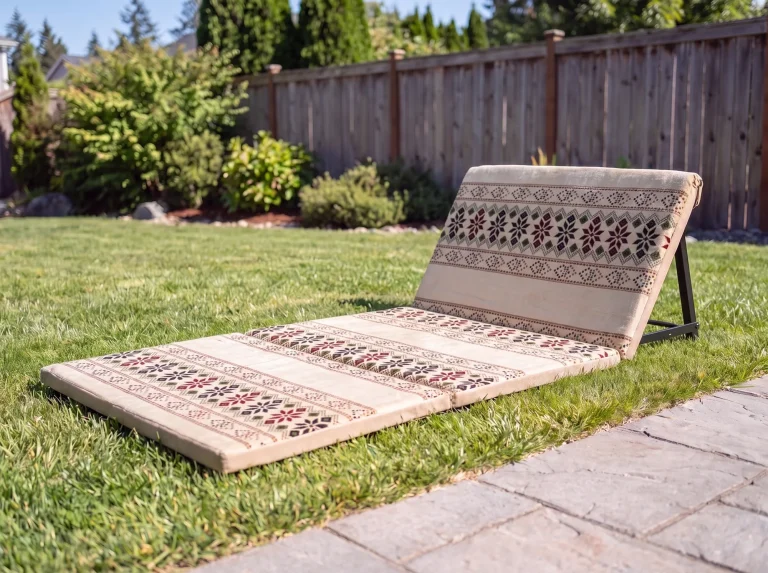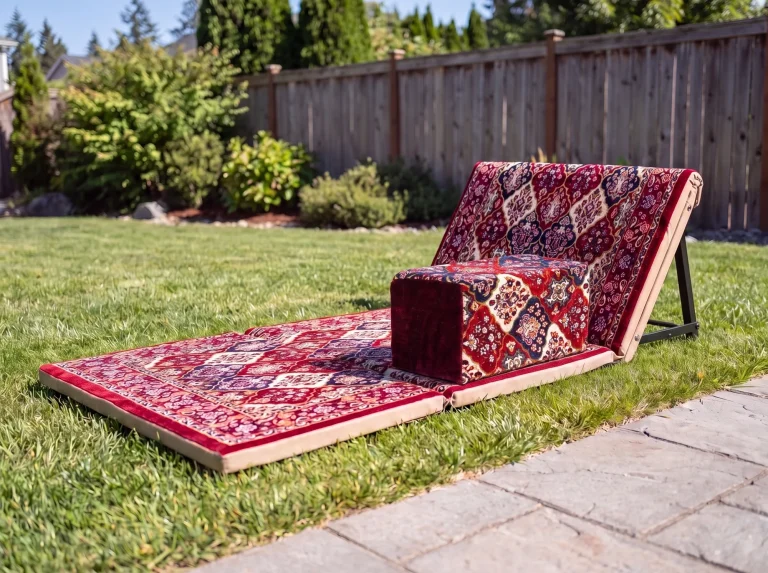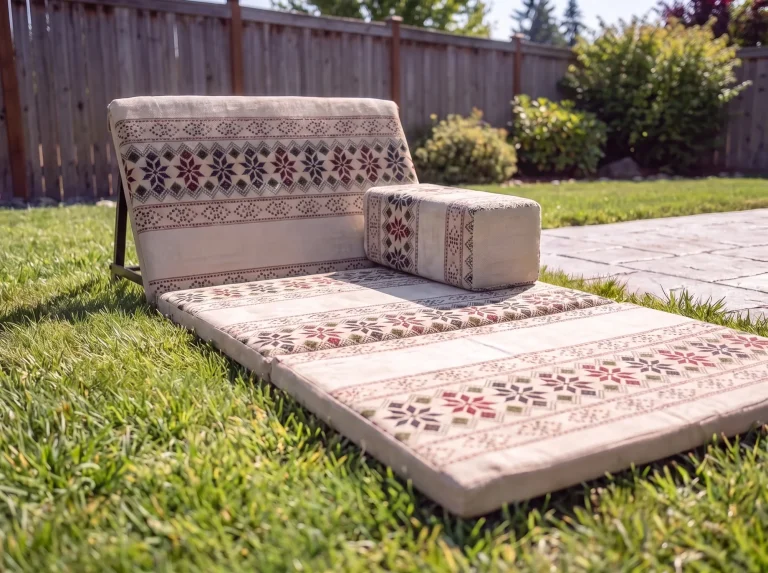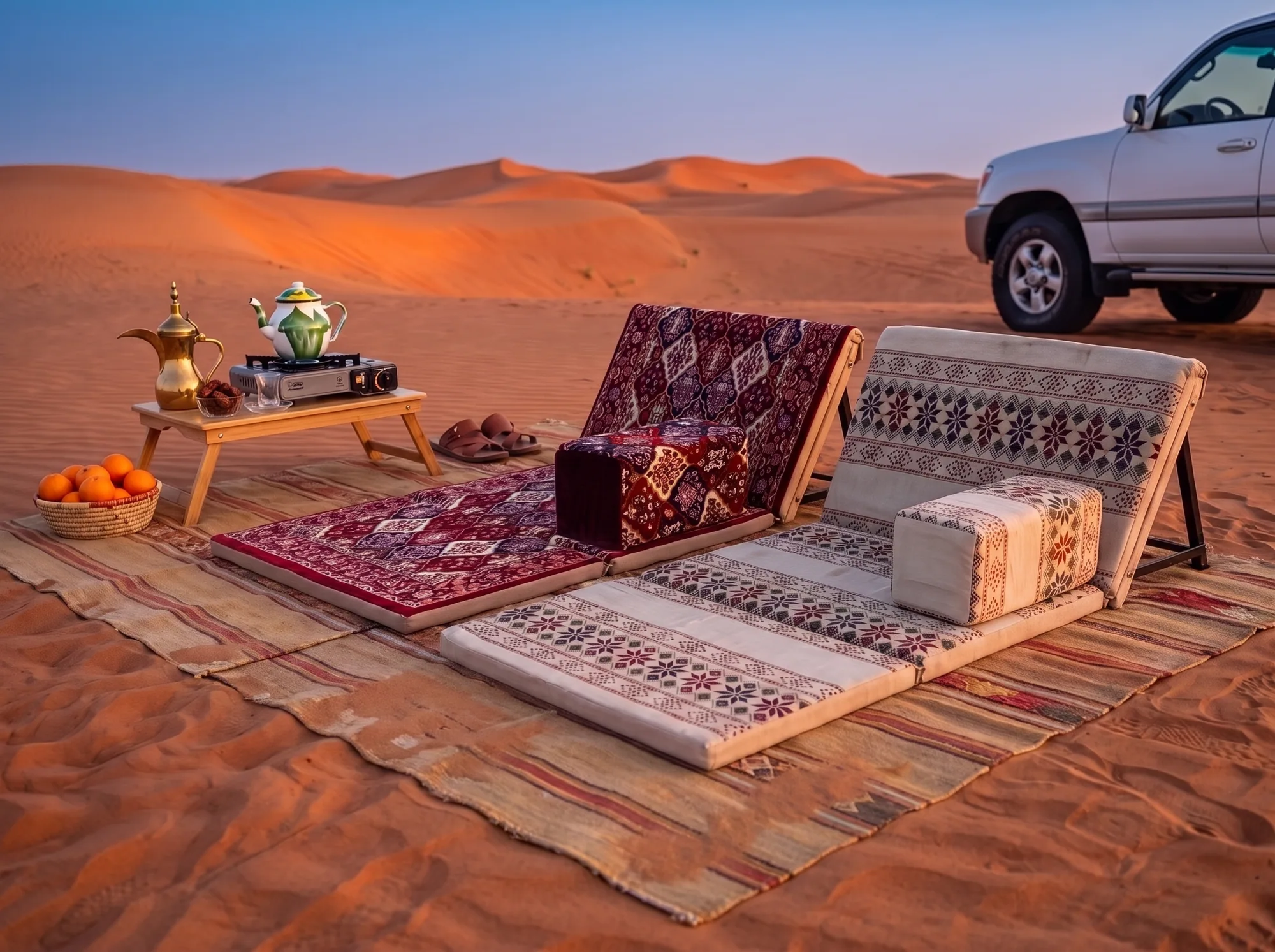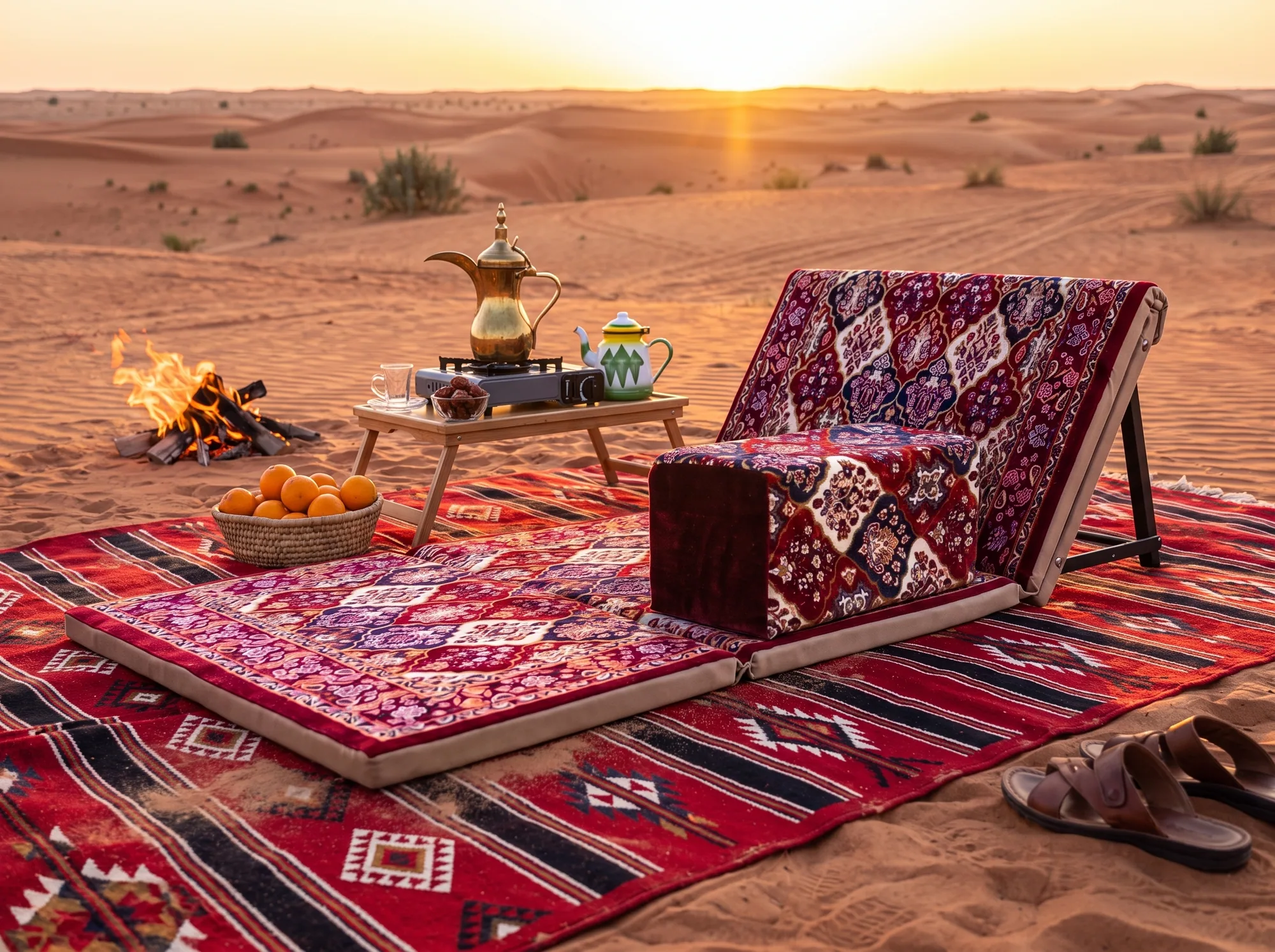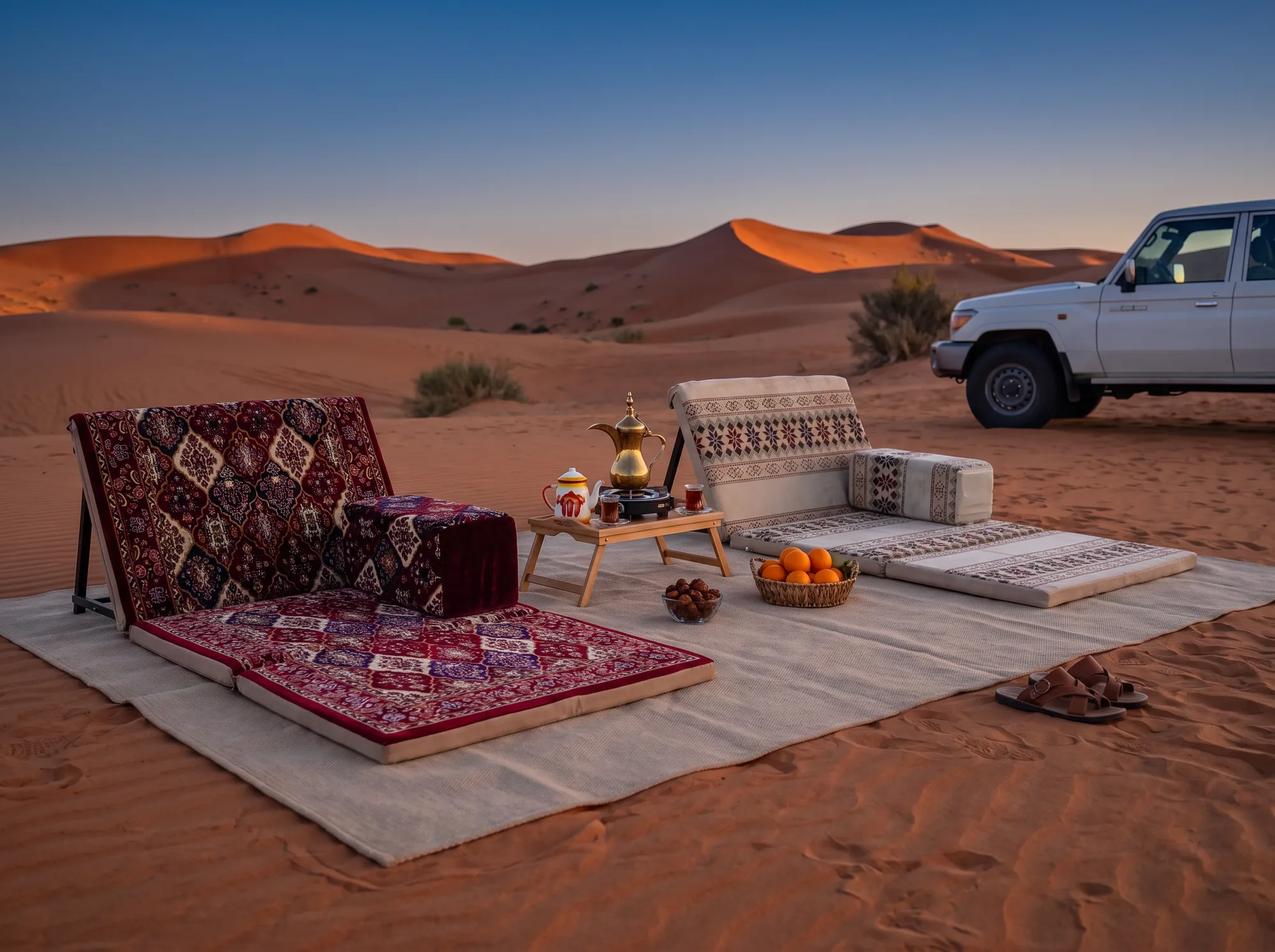
A beach floor lounger is a padded seat that sits directly on the sand with a supported back. The Arabic sunbed from Sofhu is one: three padded panels, a backrest held up by a folding metal frame, and a matching armrest block. Photos show it under a beach umbrella and on park grass, and it folds for carrying.
- Seat type
- Folding padded floor lounger
- Photographed on
- Beach sand and park grass
- Backrest
- Props up on a folding metal frame, or lies flat
- Extras shown
- Armrest block and carry bag
- Colourways shown
- Maroon medallion; beige star bands
- Shipping
- Free worldwide
On this page
A day at the beach or the park usually ends the same way: somebody’s back aches from sitting on a towel. A beach floor lounger fixes that without turning the outing into a furniture delivery. The Arabic sunbed, a new product from Sofhu, is a padded folding lounger that sits on the sand or the grass and gives each adult a seat with a back.
The problem with towels and camp chairs
A towel or blanket gives you a clean patch of ground and nothing else. After half an hour you are leaning on one arm.
A folding camp chair solves the back but lifts you off the ground, away from the food on the blanket and the children playing on it. For families who are used to sitting at floor level, eating from a cloth spread on the ground, that feels wrong. You end up with half the group up on chairs and half down on the blanket.
A floor lounger keeps everyone at the same height. You sit on a padded mat, legs out or crossed, with your back supported.
How the Arabic sunbed is built
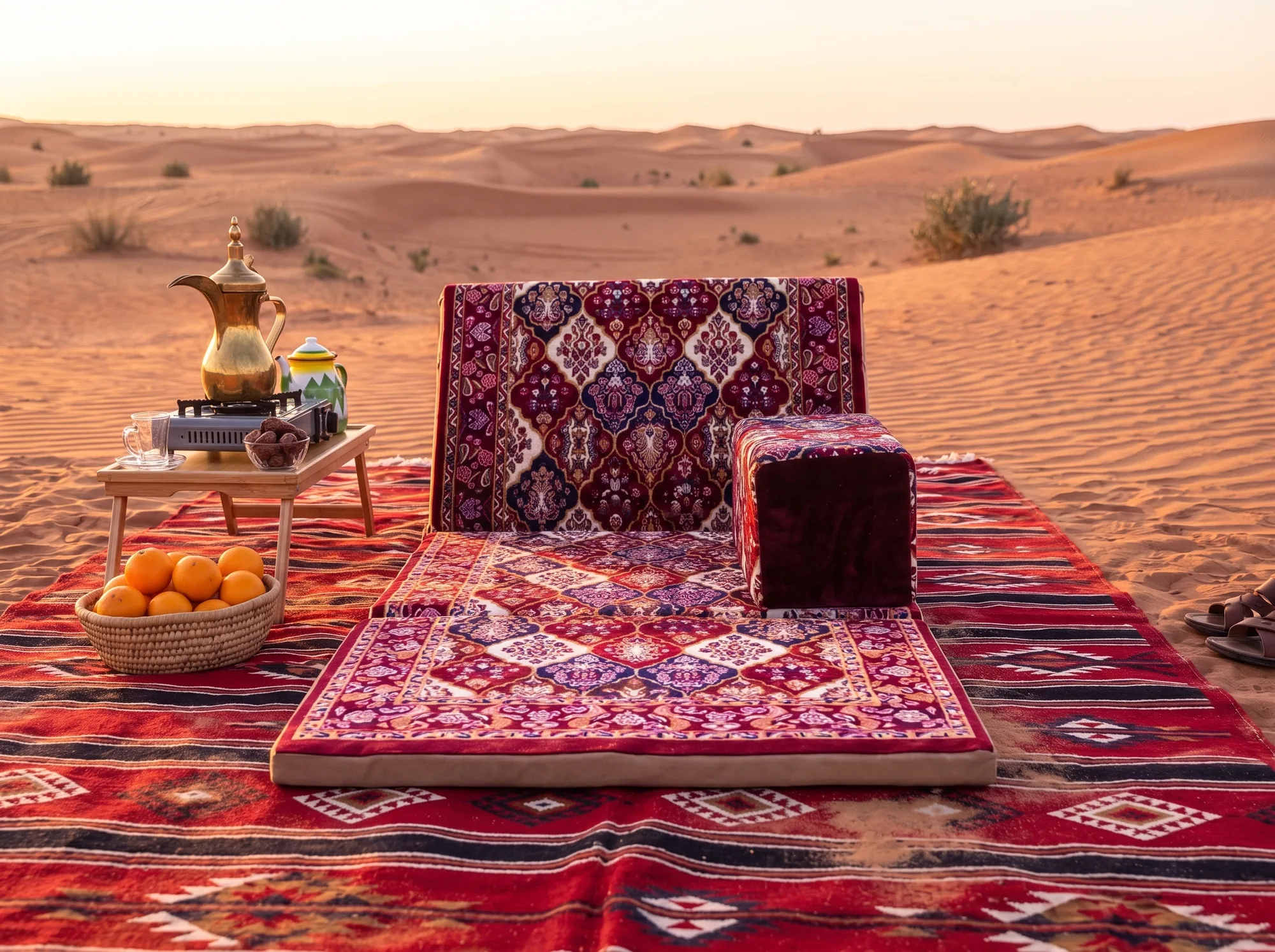
It is three padded panels covered in patterned fabric. Two lie on the ground. The third is hinged to them and tilts up as the backrest, held from behind by a black metal frame that folds out. With the frame folded in, all three panels lie flat as one long mat.
A separate armrest block in the same fabric is shown with it. The block is loose, so you put it where you need it.
It is its own product. It is not a piece taken from an Arabic floor sofa set, which is made for a room and leans on a wall. The Arabic sunbed page has the full description.
On the beach
The beach photos show a man reclining under a striped umbrella, legs stretched along the mat, forearm resting on the armrest block. That is the natural way to use it by the sea: facing the water, shaded, with a book.
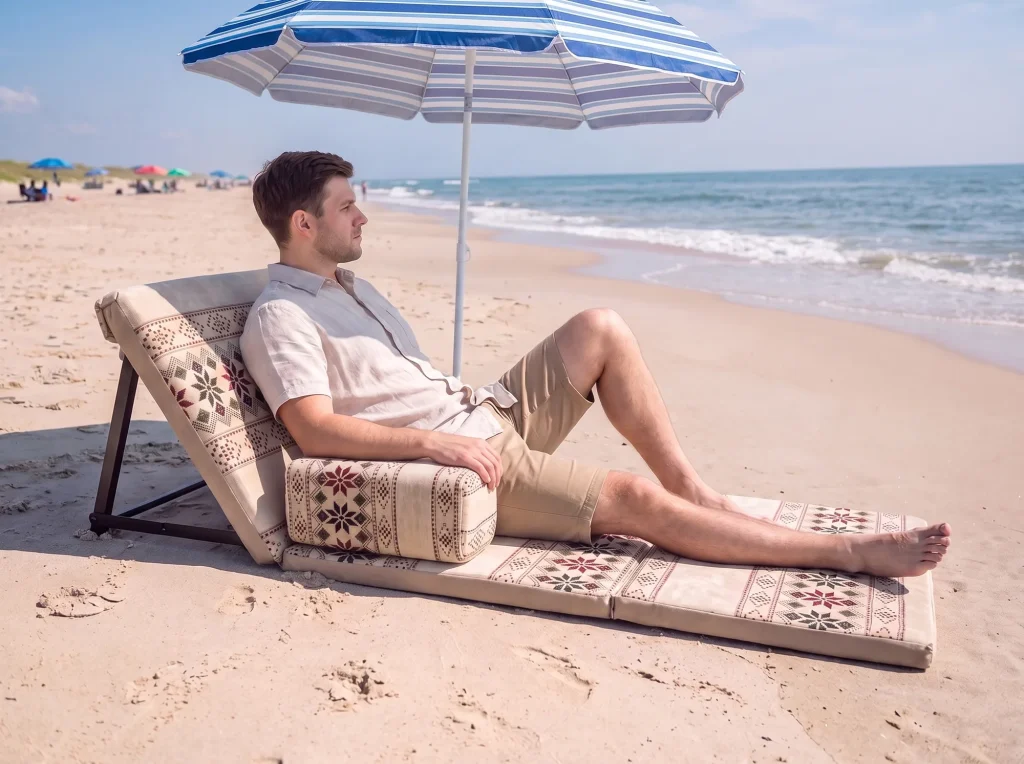
A few habits make beach use easier:
- Set it on dry sand above the tide line and level the sand under it first.
- Open the frame fully before you sit, and check that its base is flat on the ground.
- Angle the umbrella so the shade covers the backrest as the sun moves.
- Put a towel over the mat after swimming.
- Before you leave, stand it up, shake it and brush the folds between the panels.
Nothing has been published on how the fabric handles salt water or long sun exposure, so do not leave it out overnight and do not treat it as a pool float.
A picnic in the park
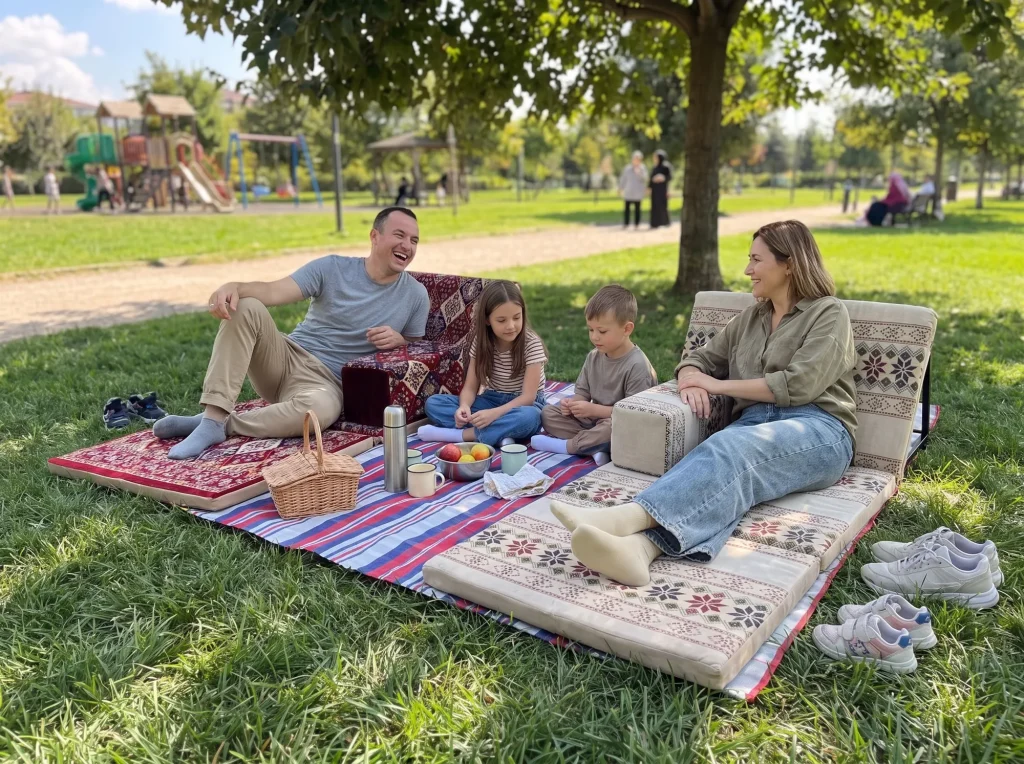
On grass the sunbed sits beside the picnic blanket or half on it. One photo shows the maroon sunbed next to a tartan blanket and a basket. Another shows the beige one under a tree with the armrest block on the seat.
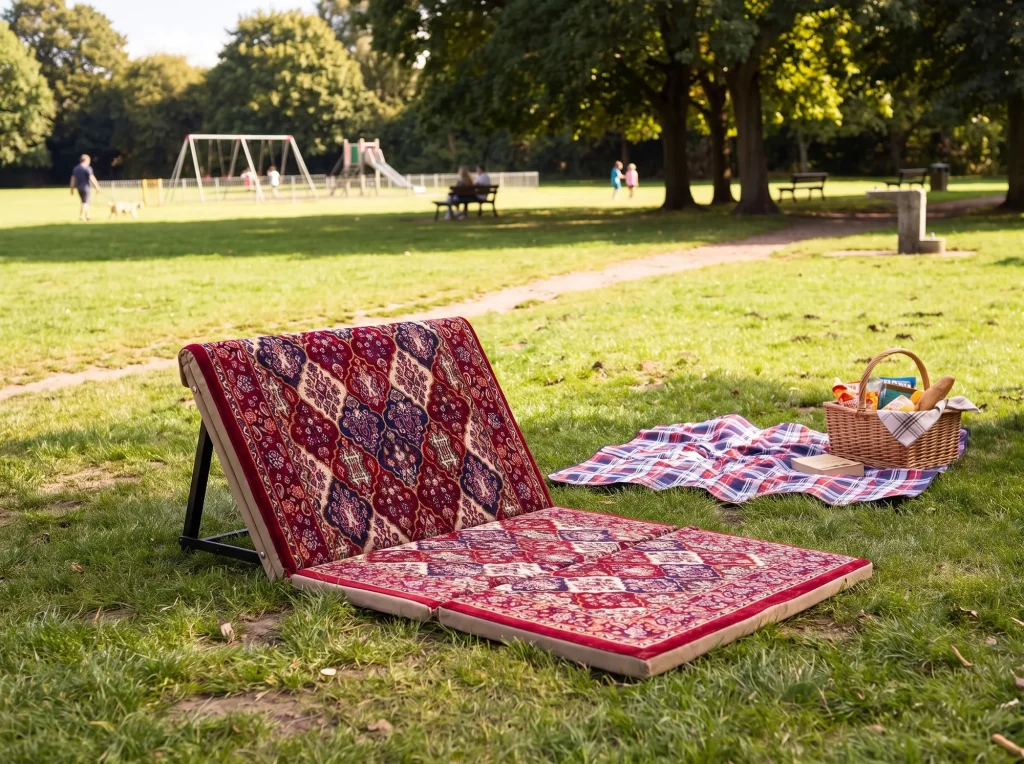
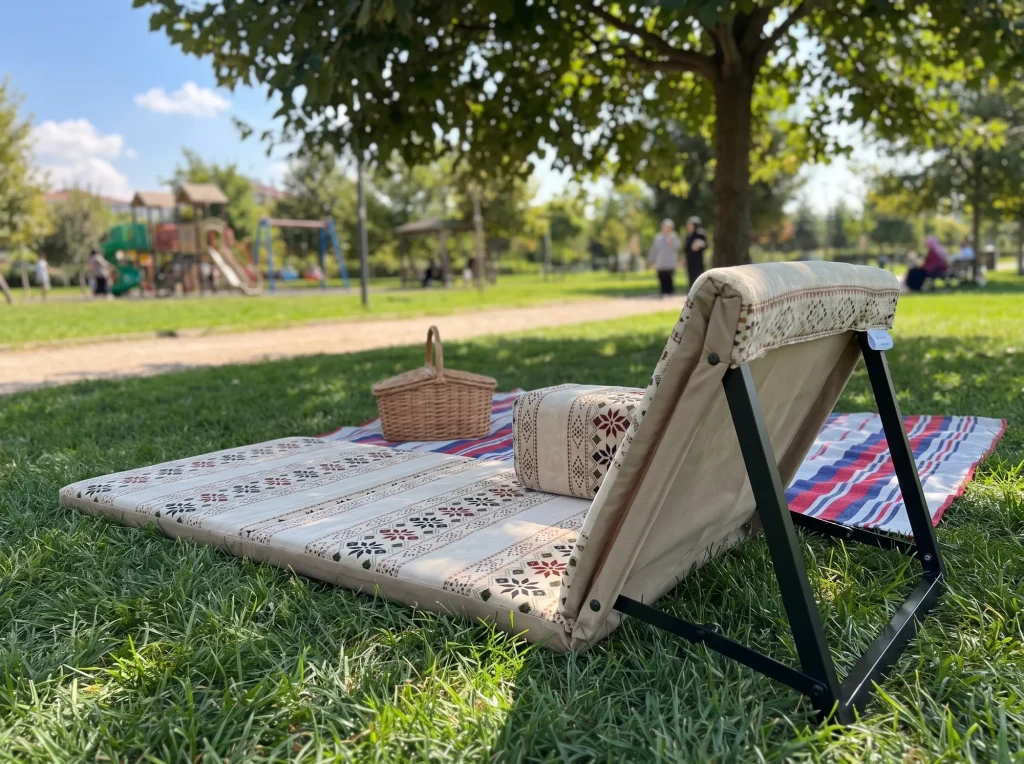
Choose a spot with afternoon shade, since you will stay longer than you planned. Lay the blanket first and place the sunbed at its edge, facing in. The person on the sunbed can reach the food, and the blanket stays clear for plates. If the grass is damp in the morning, keep the whole mat on the blanket.
A picnic floor lounger also earns its place for anyone who will be sitting for a long stretch: a grandparent watching the children, a parent feeding a baby, the person who brought a book.
Seating a whole family
For a family, two sunbeds and one blanket make a complete setup. The family photo shows exactly this: a maroon and a beige sunbed at either end of a striped blanket, a parent on each, two children in the middle with the basket, flask and fruit. Shoes are lined up on the grass.
The arrangement works because the two backrests face each other. The adults can talk across the blanket and see the children between them. The loose armrest blocks can go to whoever needs one, a child included.
For a larger gathering, such as an Eid picnic or a weekend with cousins, add sunbeds around the edge of two blankets laid together. One lounger per adult is the simple rule.
Carrying, folding and storing it
The sunbed folds and is shown with a carry bag. That makes it one item per person to take from the car.
Sofhu has not yet published the folded size or the weight. If you walk a long way from the car park, or drive a small car, ask for the specification sheet with your quote and check the numbers before you order.
At home, let it air after a beach day and store it dry indoors. Between outings it is useful in the garden or on a balcony. There are ideas for small outdoor spaces in balcony and patio majlis ideas, and Sofhu’s outdoor majlis range covers fixed seating for a terrace.
Other places it goes
In the Gulf the same lounger is known as a keshta chair and goes on desert trips; see the Arabic sunbed for a desert keshta. Beach clubs and resorts ordering in numbers can read the sunbed for hotels, resorts and glamping. Every photo of both colourways is in the Arabic sunbed gallery.
How to order
Sofhu makes the sunbed and ships it free worldwide. Send the colourway, maroon or beige, and the number you need through get a quote or WhatsApp. Ask for the specification sheet in the same message, and ask whether the armrest block and carry bag are packed with each one. Duties or taxes may apply depending on your country, and Sofhu can tell you before you order.