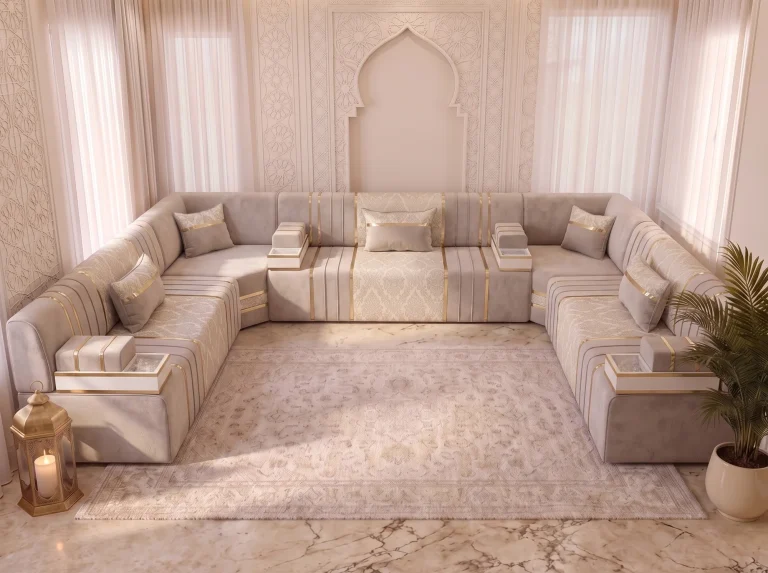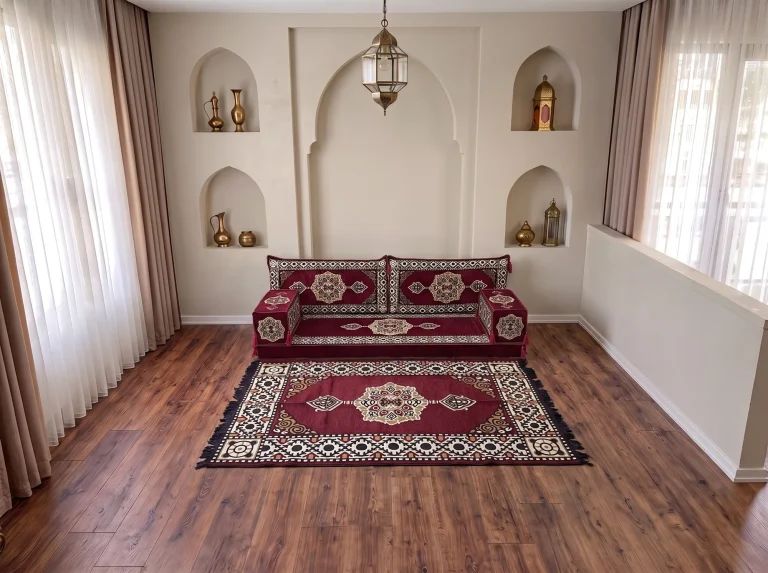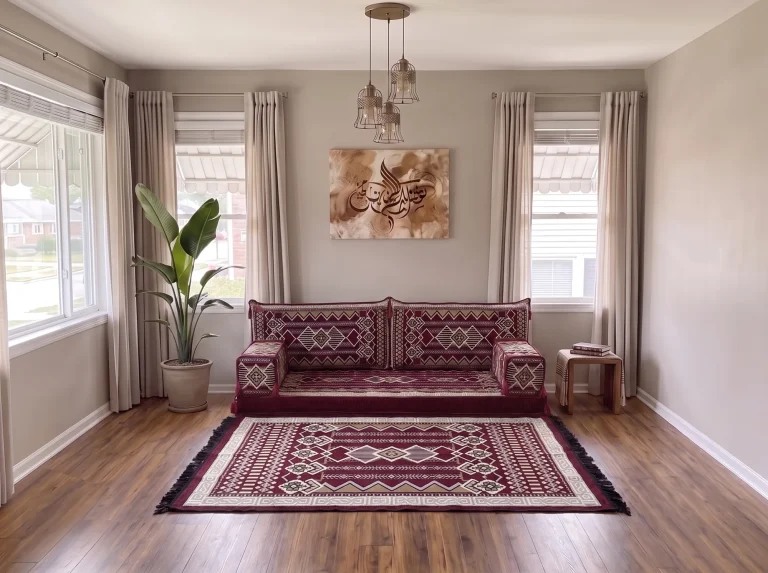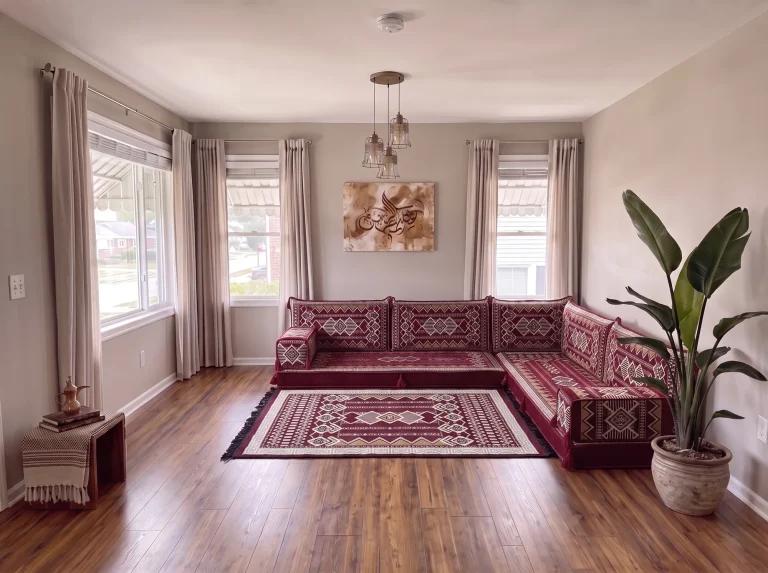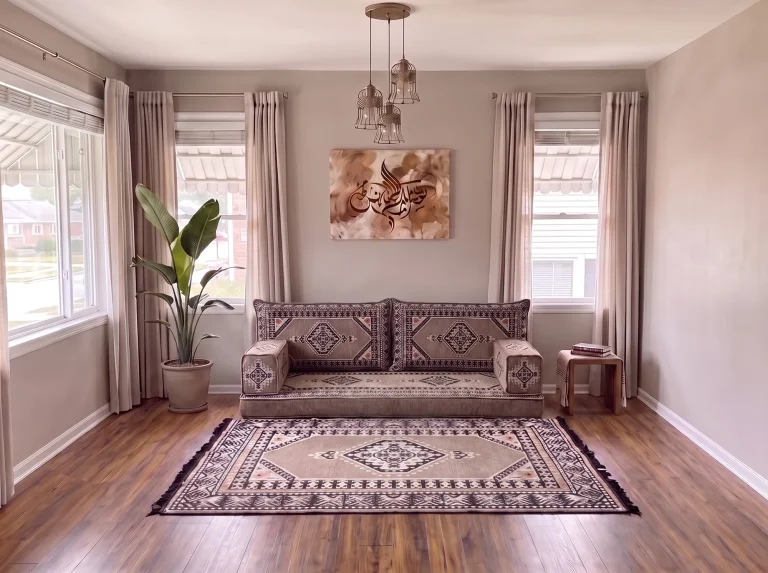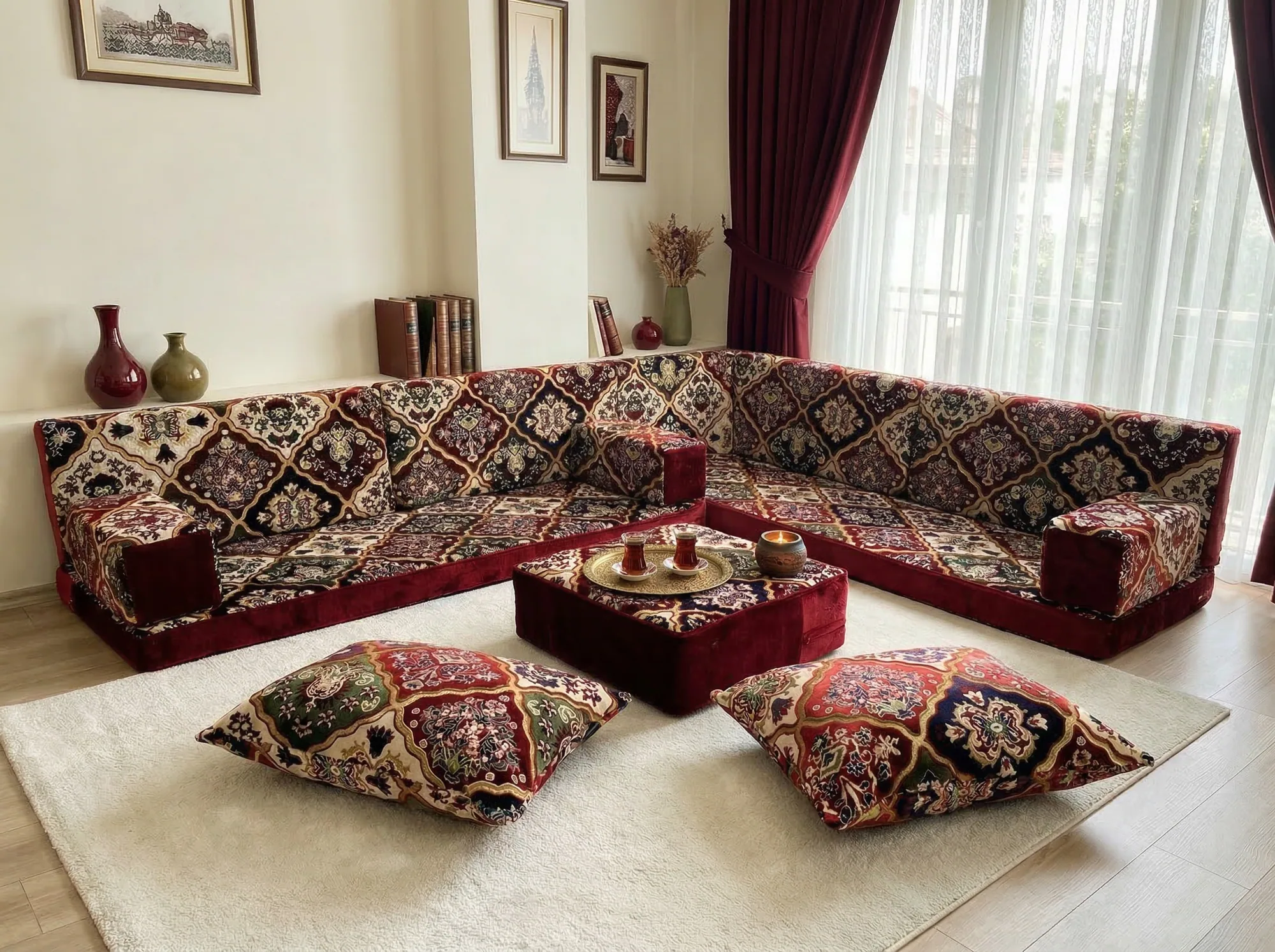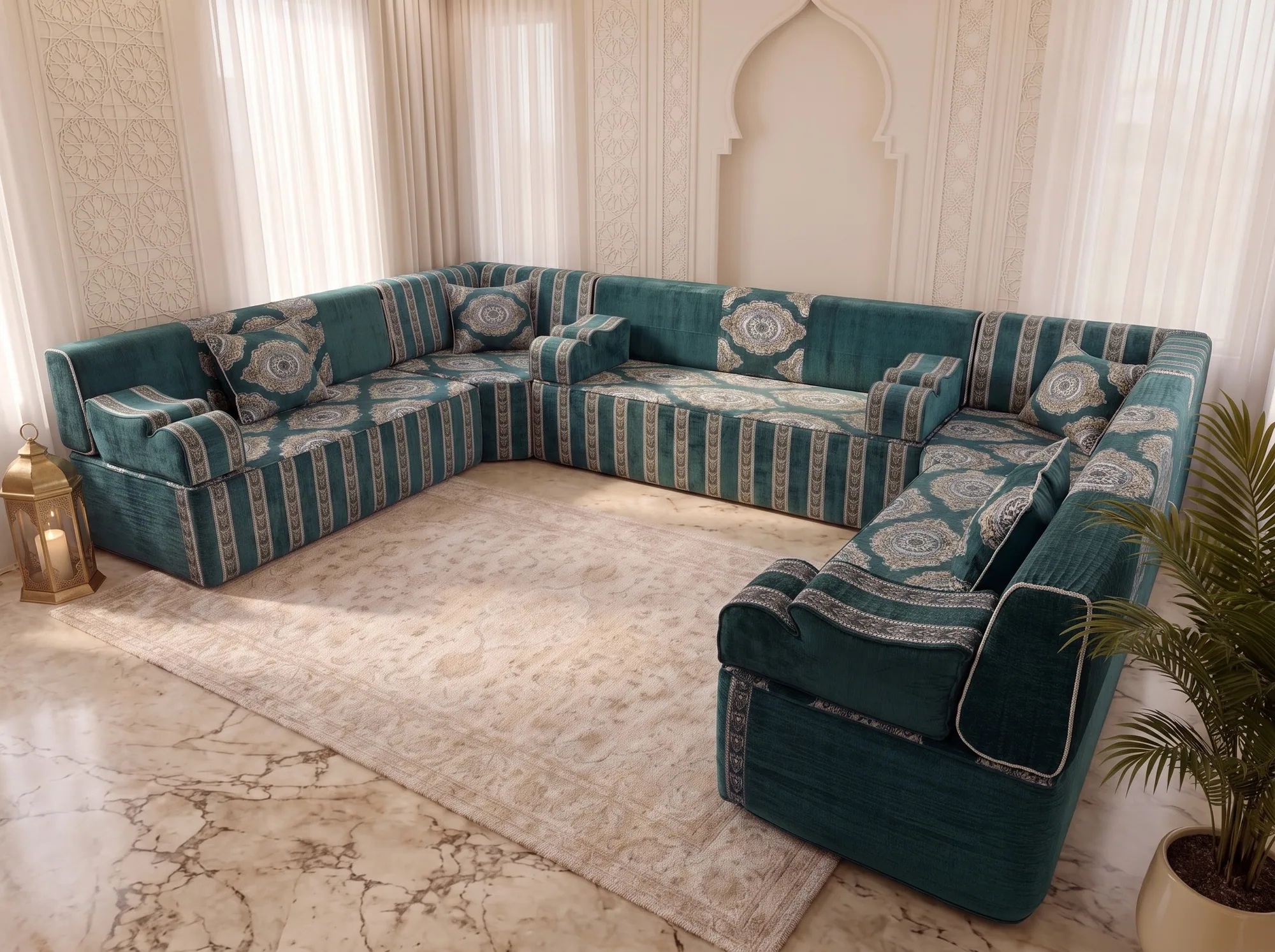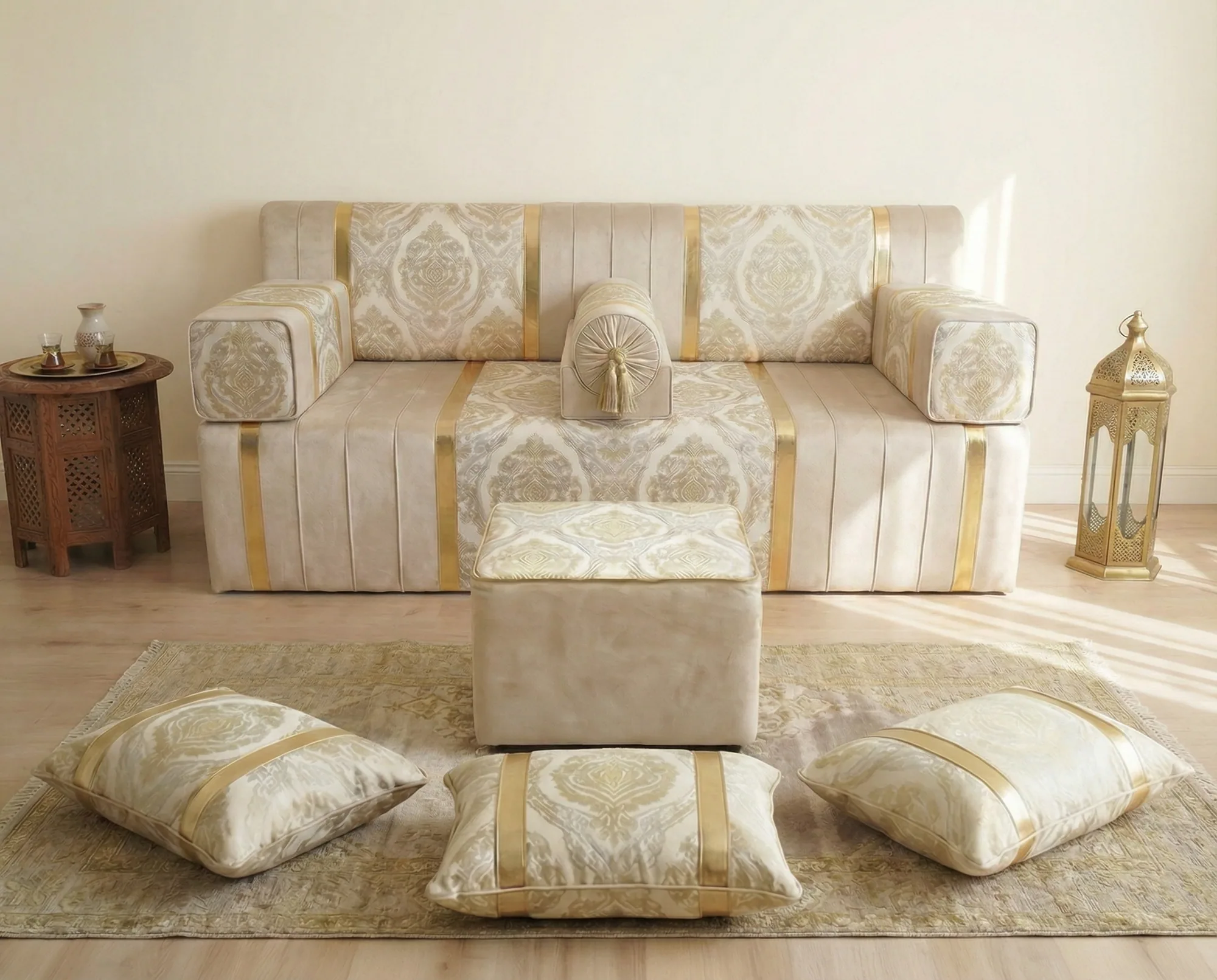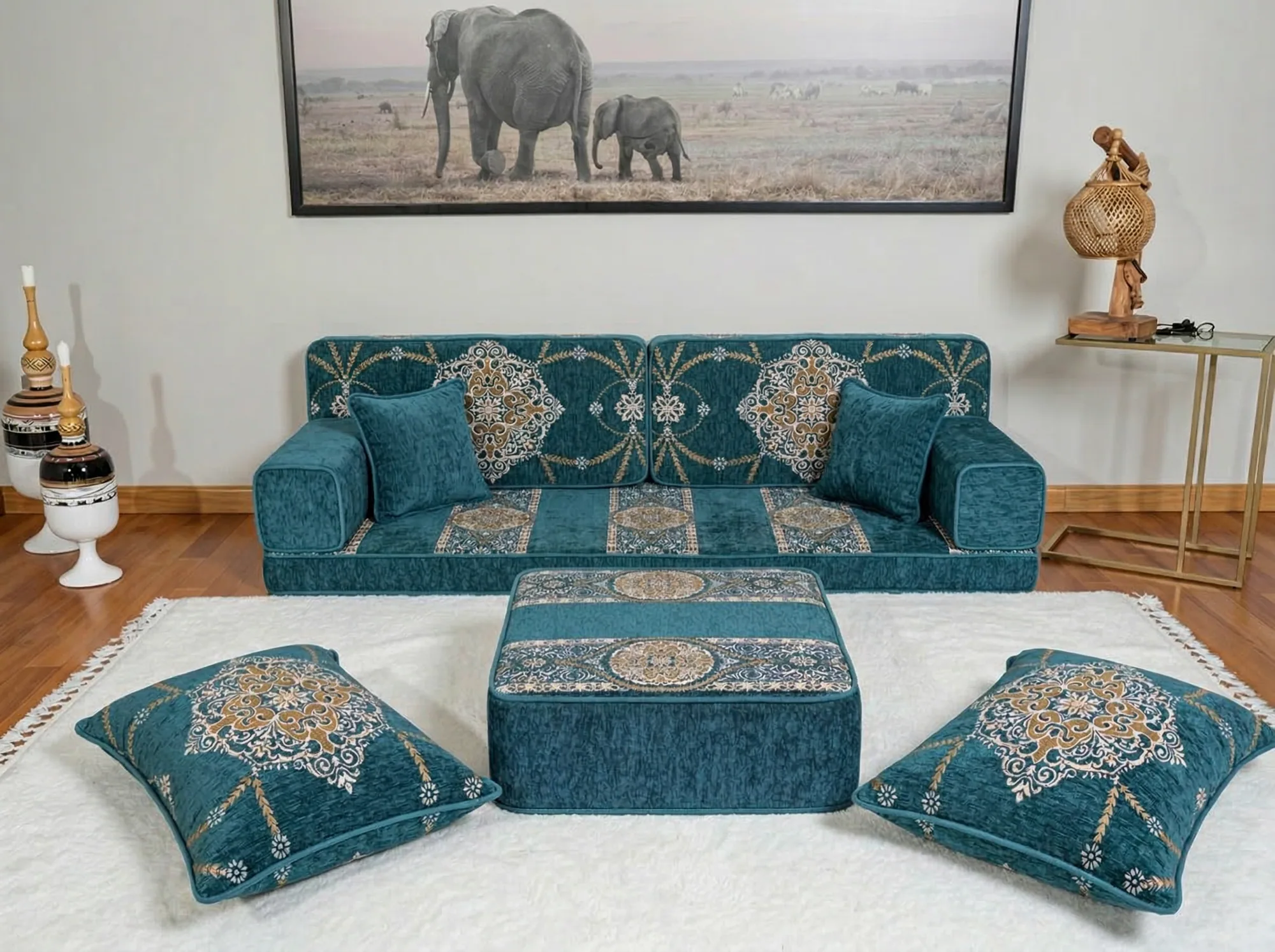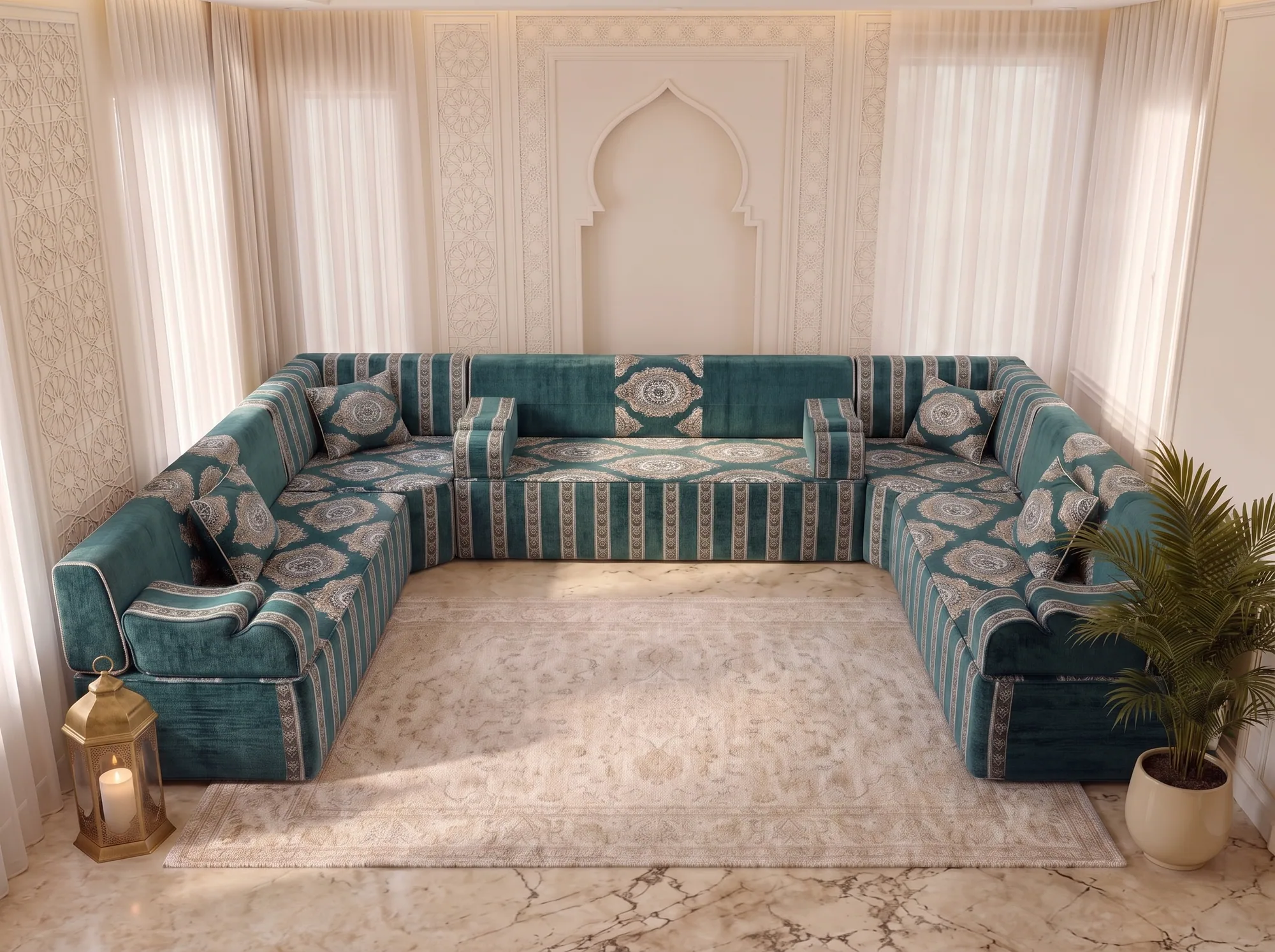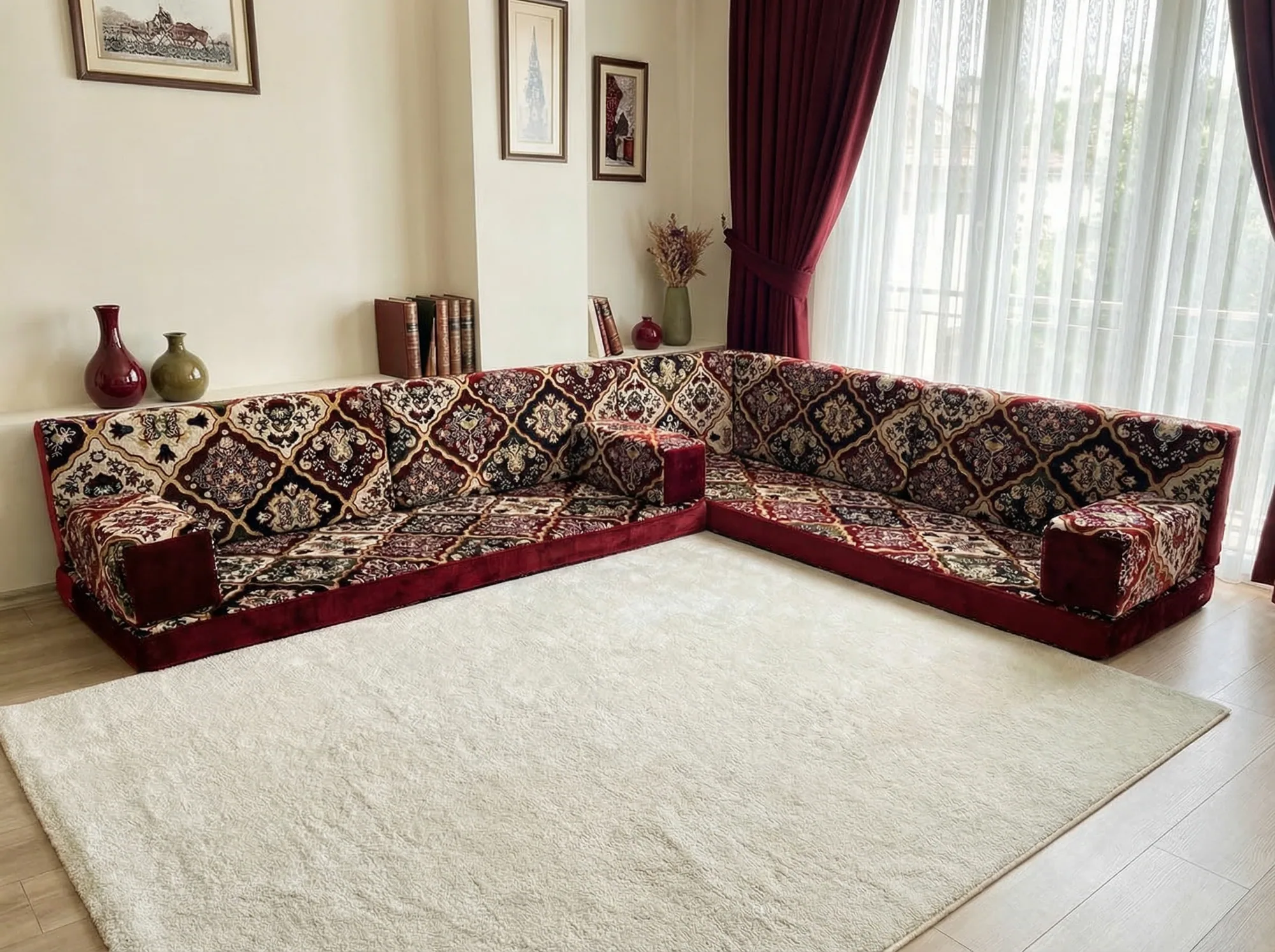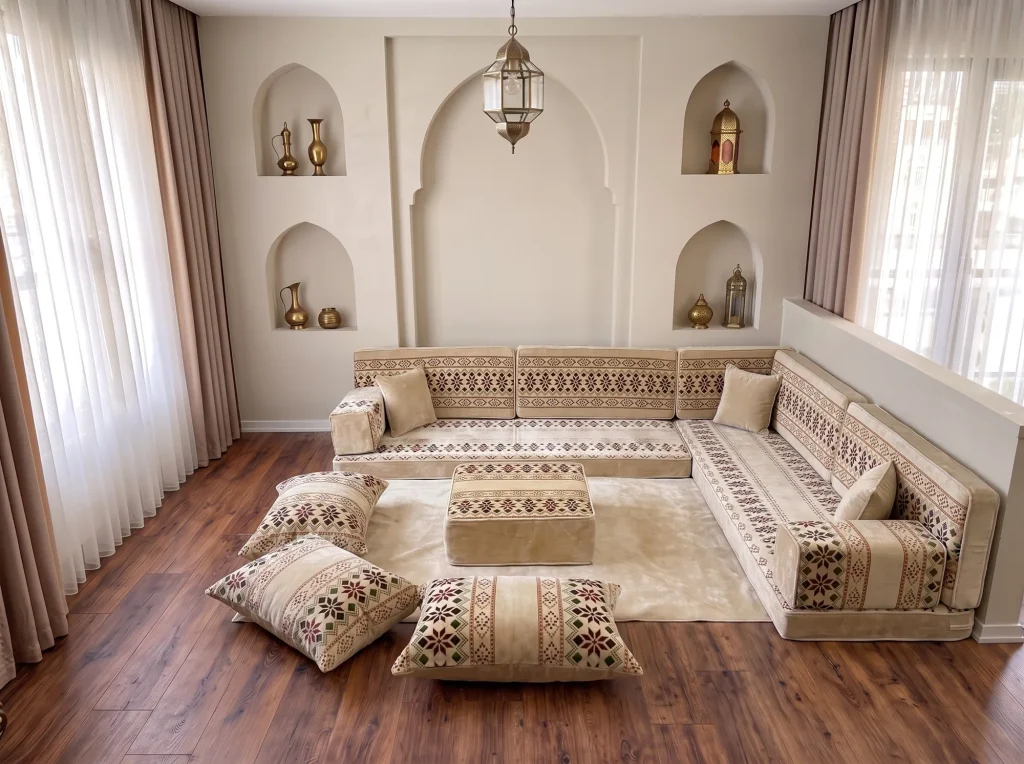
Sofa in Arabic is أريكة (arika) in formal Modern Standard Arabic and كنبة (kanaba) in everyday speech in Egypt, the Levant and the Hijaz. Iraqis and Kuwaitis say قنفة (qanafa). Couch is translated with the same words. For the Arabic seating Sofhu makes, speakers say majlis for the raised set of a guest room and jalsa ardiya for a low floor sofa.
- Formal Arabic
- أريكة, arika
- Everyday (Egypt, Levant, Hijaz)
- كنبة, kanaba
- Iraq and Kuwait
- قنفة, qanafa
- Loan spelling
- صوفا, sofa
- Arabic seating
- مجلس majlis (raised set), جلسة أرضية jalsa ardiya (floor sofa)
- Origin of English sofa
- Arabic صفّة, suffa, a bench
On this page
Sofa in Arabic is أريكة (arika) in formal Arabic and كنبة (kanaba) in everyday speech. Which one you need depends on where you are and who you are talking to, because spoken Arabic changes from country to country. The tables below give the script, a plain pronunciation and the places each word is used, followed by the words for low floor seating, which Arabic treats as a different thing altogether.
Sofa in Arabic: the quick answer
| Arabic | Transliteration | Say it like | Register |
|---|---|---|---|
| أريكة | arika | a-REE-ka | Formal, written Arabic |
| كنبة | kanaba | KA-na-ba | Everyday speech |
| قنفة | qanafa | qa-NA-fa | Everyday, Iraq and Kuwait |
| صوفا | sofa | SO-fa | Borrowed word |
Arika is the word you will find in a dictionary, a novel or a furniture catalogue written in Modern Standard Arabic. Its plural is ara’ik (أرائك). The same word can also mean a throne in older texts, which tells you it once described a seat of some standing.
Kanaba is what people actually say at home. It came into Arabic from French canapé, and its plural is kanab (كنب). If you learn only one word, learn this one. It is understood well beyond the countries where it is native.
How to say couch in Arabic
Use the same words. English separates sofa and couch by habit more than by meaning, and Arabic does not make the distinction at all. A couch in Arabic is an arika on paper and a kanaba or qanafa in conversation. A corner sofa is often called kanaba zawiya (كنبة زاوية), from the word for corner.
The one case where the word changes is when the seat is on the floor. A low set that runs along the wall is not a kanaba to an Arabic speaker. It is a jalsa ardiya, a floor seating set, and the formal upholstered seating of a guest room is a majlis. Both are covered further down.
Sofa in Arabic by country and dialect
| Region | Usual word | Script | Note |
|---|---|---|---|
| Egypt | kanaba | كنبة | Plural kanab |
| Levant | kanabe, kanaba, sofa | كنبة / صوفا | Kanabe in Syria and Lebanon |
| Western Saudi Arabia (Hijaz) | kanaba | كنبة | Same form as Egypt |
| Iraq | qanafa | قنفة | Plural qanafat |
| Kuwait and nearby Gulf | qanafa | قنفة | Also from French canapé |
| Morocco | sedari | سداري | The banquette of a Moroccan salon |
A few notes on reading this table. Kanaba and qanafa are cousins: both come from the same French word and settled into different dialects with different sounds. In Morocco, the seating in a traditional salon is a sedari, a wooden base with a fitted mattress on top, so that is the word a Moroccan family will use for the furniture in its main room. Across the rest of the Gulf, in Yemen and among many families abroad, the room people care most about is furnished with Arabic seating rather than a Western sofa, so the vocabulary shifts to majlis and jalsa.
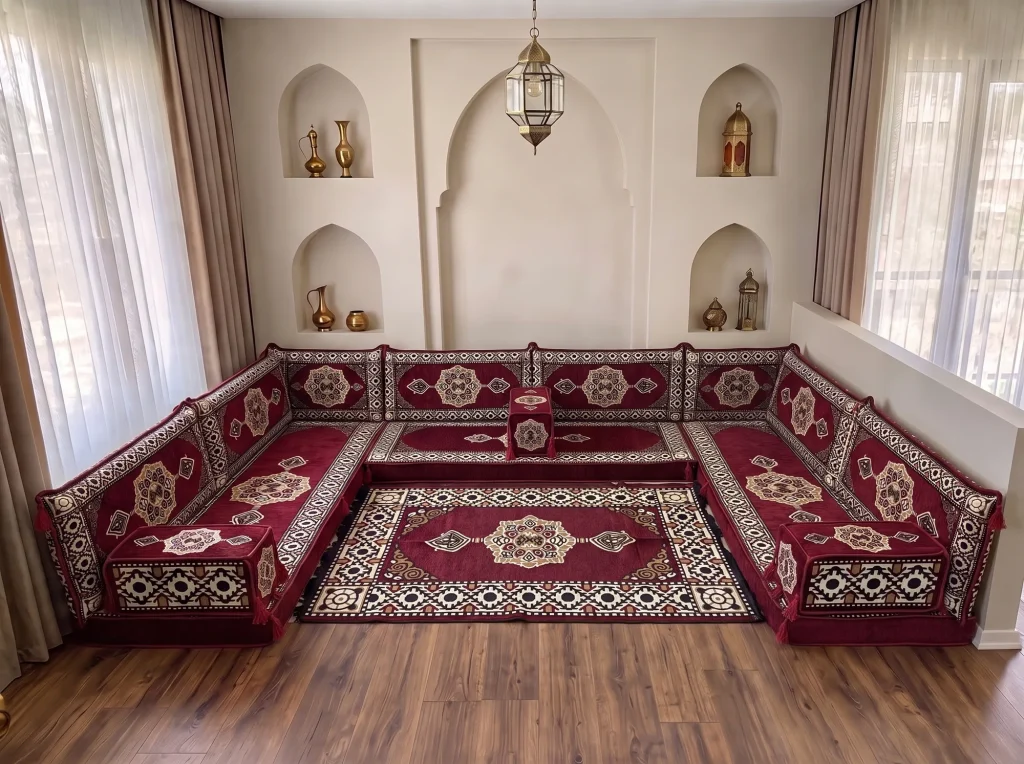
If you are not sure which dialect the person you are speaking to uses, kanaba is the safe choice for a Western sofa and jalsa arabiya for an Arabic set.
Arabic words for majlis and floor seating
Arabic has a richer vocabulary for this seating than English does, because the furniture is older and more varied. These are the words you will meet when shopping for an Arabic sofa or a Middle Eastern sofa.
- majlis (مجلس): the guest room, and by extension the seating set in it. It means “a place of sitting”. Sofhu uses the word for its raised, fully upholstered sets, shown on the Arabic majlis page. See also majlis meaning in English.
- jalsa (جلسة): a sitting or session, and in shops the seating set itself. Jalsa arabiya (جلسة عربية) means Arabic seating, and jalsa ardiya (جلسة أرضية) means floor seating: the low cushion set that Sofhu sells as an Arabic floor sofa.
- diwan (ديوان): a council room or a long cushioned seat, depending on the country.
- farsha (فرشة): the seat mattress laid on the floor. Plural farshat.
- masnad (مسند): the backrest cushion that leans on the wall.
- marka (مركى): the armrest bolster placed between sitters.
- martaba (مرتبة): a mattress in general, the word you would use for a bed.
A floor sofa is built from three of these parts: farsha, masnad and marka. The article on parts of a majlis set names each piece in detail.
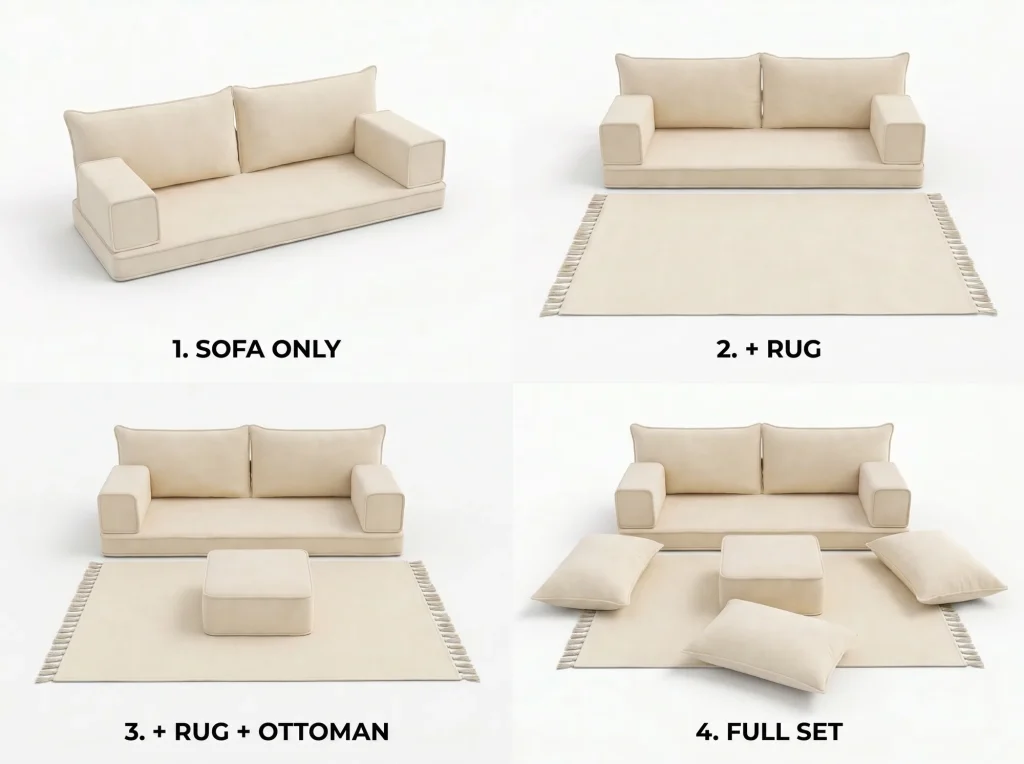
Sofhu makes both kinds of seating in Türkiye, the raised majlis and the low floor sofa. Seats are filled with 32 kg/m³ (32 DNS) high-density foam, covers are zippered and removable, and each set is cut to the customer’s wall measurements and shipped free worldwide. If you already know the Arabic word for what you want, use it when you ask for a quote, and add a photo of the style you have in mind.
Useful phrases around the sofa
A handful of phrases cover most situations in which a sofa comes up, from welcoming a guest to describing a room.
| English | Arabic | Transliteration |
|---|---|---|
| Welcome | أهلا وسهلا | ahlan wa sahlan |
| Please, come in / go ahead | تفضل | tafaddal |
| Please sit down | تفضل اجلس | tafaddal ijlis |
| Make yourself comfortable | استرح | istarih |
Tafaddal is the word to remember. It is said to a man. To a woman it becomes tafaddali (تفضلي) and to a group tafaddalu (تفضلوا). On its own, with a gesture towards the seat, it already means “please sit”.
For rooms:
| English | Arabic | Transliteration |
|---|---|---|
| Living room | غرفة المعيشة | ghurfat al-ma’isha |
| Sitting room | غرفة الجلوس | ghurfat al-julus |
| Guest room | غرفة الضيوف | ghurfat ad-duyuf |
| Salon | صالون | salon |
| Guest reception room | مجلس | majlis |
Notice that julus in “sitting room” shares its root with jalsa and majlis. All three come from the verb jalasa, to sit.
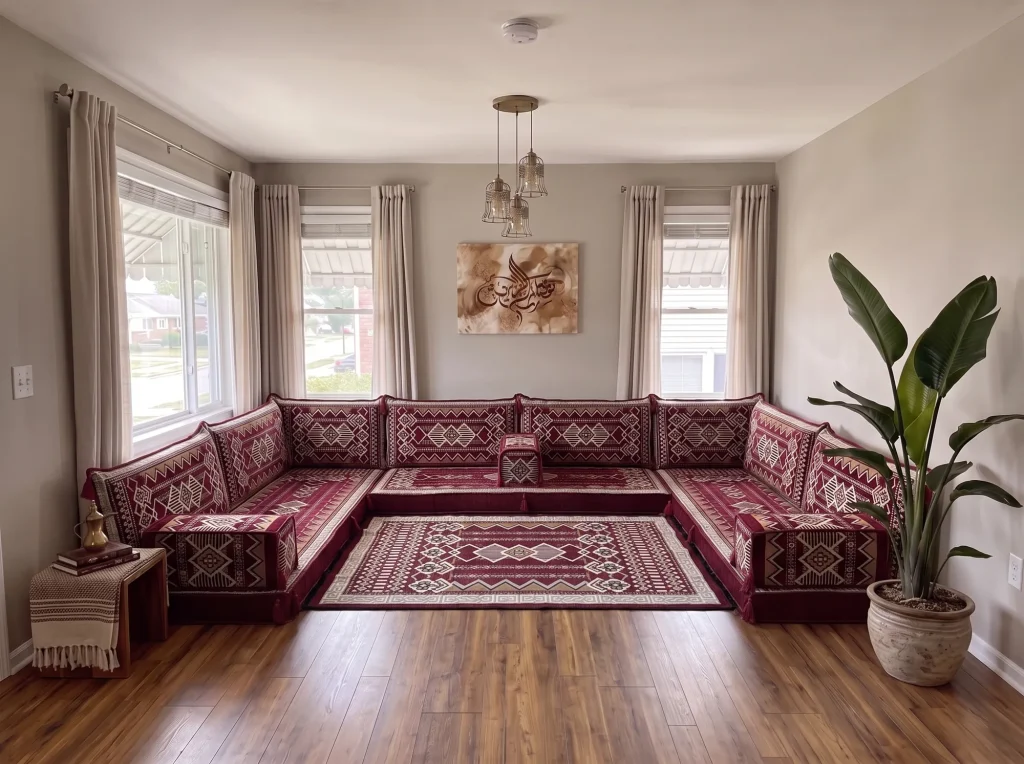
The twist: English “sofa” is an Arabic word
The word you are trying to translate started in Arabic. English sofa goes back to Arabic suffa (صفّة), a long bench or ledge of stone or brick made for sitting. Turkish took the word for a raised part of a room spread with carpets and cushions, and European travellers brought it home. When the word first appeared in English in the seventeenth century it still meant a raised part of a floor spread with carpets and cushions; only later did it settle on the piece of furniture.
Modern Arabic then borrowed the European word back as sofa (صوفا). So an Arabic speaker today can say suffa for a ledge, sofa for a couch, and not think of them as the same word at all.
That is the short version. Sofhu’s article on the history of the Arabic sofa tells the longer story, and our piece on sofa, divan, ottoman and mattress follows three more furniture words along the same road. For every regional name in one table, see floor seating names by country.